

M
Mogwarts_Dropout
Bronze
- Joined
- Nov 25, 2025
- Posts
- 422
- Reputation
- 481
Selk' Nam Southern Argentina Asiatic ethnic group
Unique physical adaptions: had an ability that no other human race had, an ability to withstand extreme cold and freezing temperatures even without clothing. Theorised to have been a gene variation unique completely to them that acted like anti-freeze in the bloodstream. Recently genetic tests shows it was a mutation in the HOXC4 gene. Now completely extinct


The disputes started with ranchers and the Selk'nam, which led to bounty hunters being hired. A few bucks went for each Selk'nam skull retrieved. After murdering their victim the European would decapitate the man/woman below the base of the skull or on the sides of his/her ears. Money was paid higher for the death of Selk'Nam women because the goal was to eradicate their race and women could bare more children.
It is estimated that there was as many as 4,000 Selk'Nam in the early 1880s and by the turn of the 20th century in 1900 as little as 100 were left. Some Selk'nam were captured and sent to human zoos in Europe wherein they quickly died due to European diseases like measles and small pox
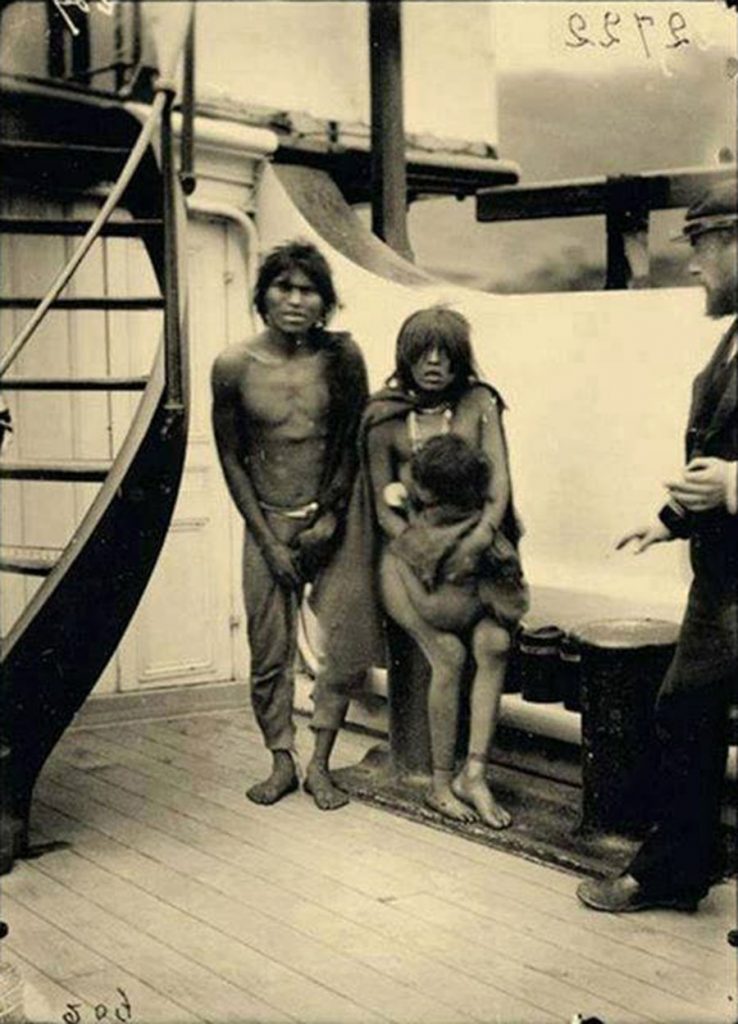
Some missionaries were sent after the worst of the massacres had been undergone to build houses for the Salk'nam and grant them food and water, which they had no access to after having been pushed to the southern most region of the archipelago in chile after the ranchers increased their grazing range and encroached on their land even farther causing the natives to flee their ever increasing range, because being seen near farmers cattle would lead to their immediate execution. When fleeing to the south many froze and starved to death because the Europeans had hunted all of the native fauna to make way for cattle farming or simply for sport.
Soon after the missionaries arrived they left, as there were little more then a dozen not much could be done. After the Selk'nam went extinct their unique and ancient companion the Fuegian Dog was quick to follow them
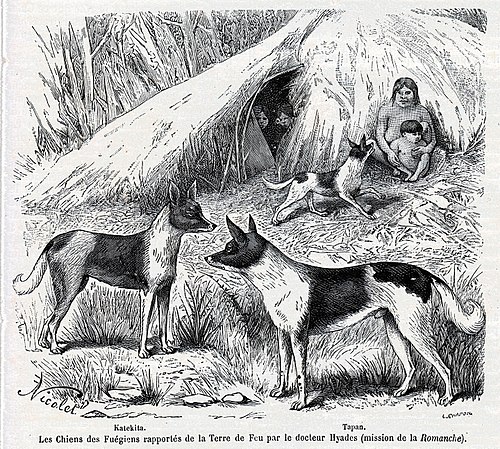
Fuegian Dog (last member of the species seen before 1900)
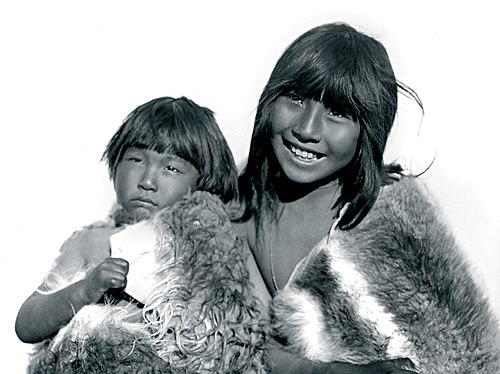
Selk'Nam Children 1898
Unique physical adaptions: had an ability that no other human race had, an ability to withstand extreme cold and freezing temperatures even without clothing. Theorised to have been a gene variation unique completely to them that acted like anti-freeze in the bloodstream. Recently genetic tests shows it was a mutation in the HOXC4 gene. Now completely extinct
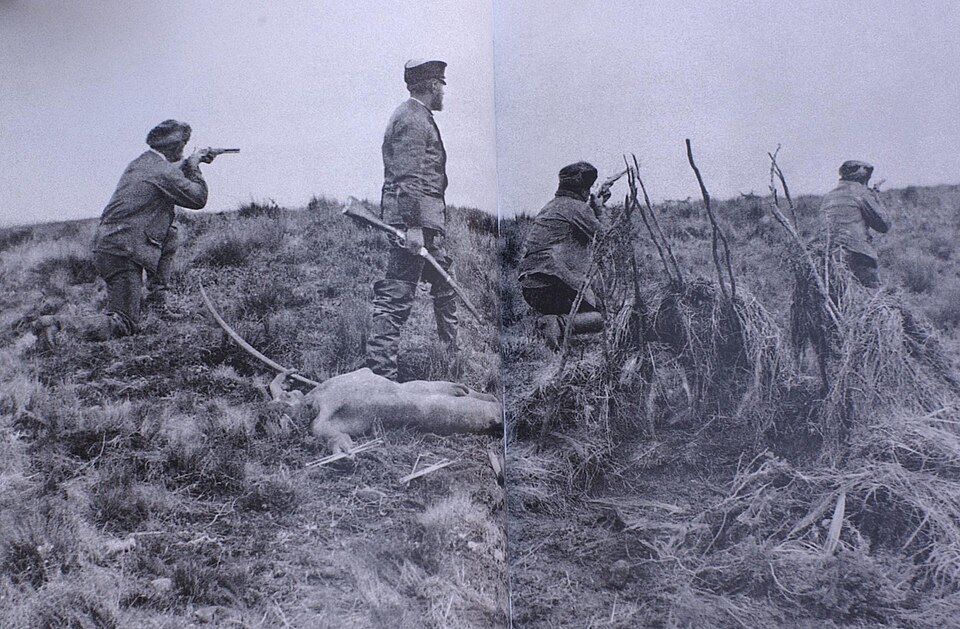
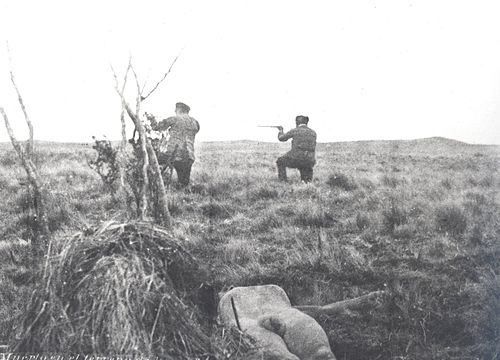
The disputes started with ranchers and the Selk'nam, which led to bounty hunters being hired. A few bucks went for each Selk'nam skull retrieved. After murdering their victim the European would decapitate the man/woman below the base of the skull or on the sides of his/her ears. Money was paid higher for the death of Selk'Nam women because the goal was to eradicate their race and women could bare more children.
It is estimated that there was as many as 4,000 Selk'Nam in the early 1880s and by the turn of the 20th century in 1900 as little as 100 were left. Some Selk'nam were captured and sent to human zoos in Europe wherein they quickly died due to European diseases like measles and small pox
Some missionaries were sent after the worst of the massacres had been undergone to build houses for the Salk'nam and grant them food and water, which they had no access to after having been pushed to the southern most region of the archipelago in chile after the ranchers increased their grazing range and encroached on their land even farther causing the natives to flee their ever increasing range, because being seen near farmers cattle would lead to their immediate execution. When fleeing to the south many froze and starved to death because the Europeans had hunted all of the native fauna to make way for cattle farming or simply for sport.
Soon after the missionaries arrived they left, as there were little more then a dozen not much could be done. After the Selk'nam went extinct their unique and ancient companion the Fuegian Dog was quick to follow them
Fuegian Dog (last member of the species seen before 1900)
Selk'Nam Children 1898


