
caerulean
It's no use crying over spilt milk.
- Joined
- Jan 18, 2026
- Posts
- 586
- Reputation
- 2,121
Preface |
I wrote this to avoid repeating the same explanations whenever questions come up about whether a particular appliance or approach is appropriate. If you find it helpful, a rep would be appreciated.
Introduction |
Angle's classification is a sagittal (anteroposterior) classification of occlusion based on the interarch relationship of the first permanent molars. In the Class I reference relationship, the mesiobuccal cusp of the maxillary first molar occludes in the buccal groove of the mandibular first molar.
Class I |
Definition |
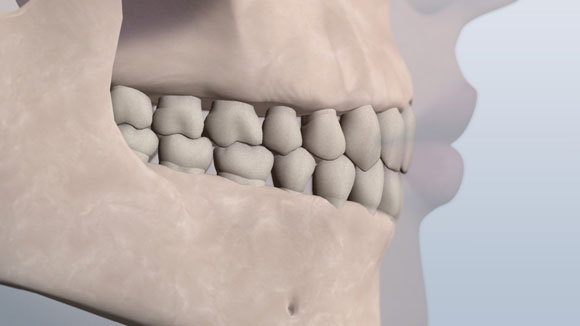
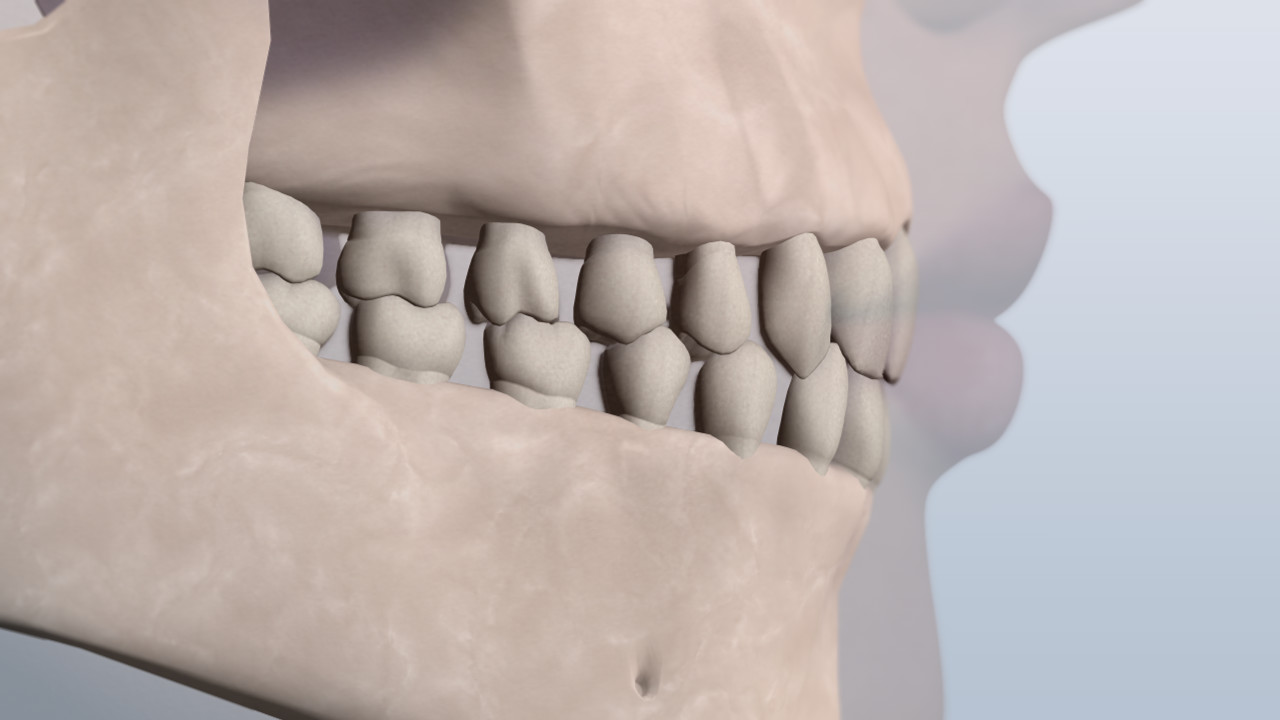
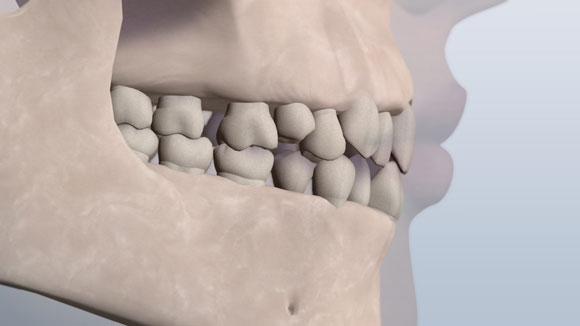
Class I means the first molars are in the Class I relationship. In other words, the upper and lower arches are in the usual sagittal relationship at the molars, even if there are other clinically relevant findings elsewhere in the dentition. You will often still see crowding, spacing, rotations, a deep overbite (increased vertical incisor overlap), an increased overjet (increased horizontal incisor overlap), an open bite (lack of vertical overlap), or a crossbite (transverse discrepancy), despite the Class I molar relationship.
Treatment |
Treatment is planned around the specific problem being corrected. If the main issue is tooth alignment and arch coordination, this is typically done with fixed appliances (braces) or clear aligners, with space created or managed through arch expansion within biological limits, interproximal reduction (IPR; enamel reduction between teeth), and, in some cases, extractions when the space requirement is larger and the diagnosis supports it. Where the maxillary arch is transversely narrow, a maxillary expander may be used; in younger patients this is commonly a tooth borne rapid maxillary expander, whereas in skeletally mature patients true skeletal expansion may require a bone anchored approach or a surgically assisted technique. If the primary issue is a deep bite or open bite, bite-opening or bite-closing approaches are used within the fixed appliance or aligner plan, often with bite turbos or bite blocks and, where appropriate, elastics.
| 
| 
|
Normal | Spacing | Crowding |
Class II (Postnormal) |
Definition |
Class II means the mandibular first molar is positioned distally relative to the maxillary first molar (a distal, or postnormal, molar relationship). Clinically, this often corresponds to a Class II tendency in the canine relationship and frequently presents with increased overjet. When the underlying discrepancy is skeletal rather than purely dentoalveolar, the soft-tissue profile often appears more convex, with a relatively retrusive chin and lower facial third. Class II has two divisions, defined by the inclination of the maxillary incisors; these are described below.
Class II Division 1 |
Definition |
Division 1 describes Class II with proclined maxillary incisors (upper incisors tipped forwards), usually with an increased overjet. The degree of overjet matters clinically because larger overjets are more prone to trauma and are often a driver of treatment need.
Treatment |
In patients who are still growing, treatment commonly combines alignment with growth modification when the case has a meaningful skeletal component. A functional appliance (for example, Twin Block type appliances, or fixed functional appliances such as a Herbst) may be used to reduce the sagittal discrepancy during growth, followed by fixed appliances to align, level, and detail the occlusion. Headgear can be used in selected cases where maxillary restraint or molar distalisation is part of the plan. In the fixed appliance phase, Class II elastics are a common method of reducing overjet and improving interarch relationships, provided anchorage and vertical effects are managed. In adolescents and adults, correction is usually orthodontic camouflage within the limits of the skeletal bases, using braces or aligners with Class II elastics and deliberate space management. Premolar extractions may be indicated when both space is required and incisor retraction is part of the intended outcome; the key point is that extractions are a space-management decision tied to diagnosis and facial objectives. For marked skeletal Class II discrepancies where camouflage would be inadequate, definitive correction is orthodontics combined with orthognathic surgery once growth is complete.
Class II Division 2 |
Definition |
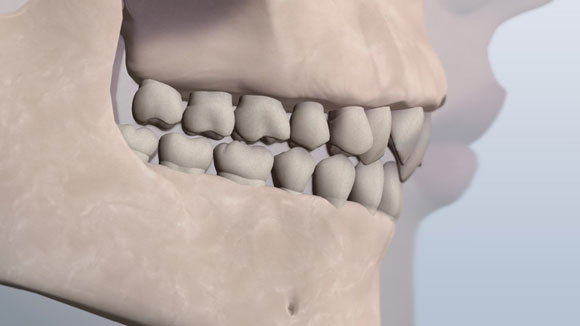
Division 2 describes Class II with retroclined maxillary central incisors (upper central incisors tipped backwards). The overbite is commonly increased, and the anterior bite tends to be deeper and more locked. The overjet may be normal or increased depending on the position of the lateral incisors and the underlying skeletal pattern. This presentation often has a characteristic soft-tissue look, with a more compressed anterior dentition and a profile that can still be convex if the underlying jaw relationship is Class II.
Treatment |
Treatment usually begins by establishing an incisor relationship that allows safe correction of the deep overbite and proper alignment. In practice, that often involves controlled proclination of the maxillary incisors and levelling of the curve of Spee (the sagittal curvature of the mandibular occlusal plane), alongside fixed appliances to align both arches. Deep overbite correction is typically managed with bite-opening measures such as bite turbos or bite blocks and planned vertical control, including incisor intrusion or posterior extrusion depending on the case. In growing patients with a significant skeletal Class II component, a functional appliance may be used once the incisor relationship permits comfortable mandibular advancement, then fixed appliances complete alignment and finishing. In adults with a pronounced skeletal component, treatment is either camouflage where feasible, or combined orthodontic and orthognathic treatment after growth.
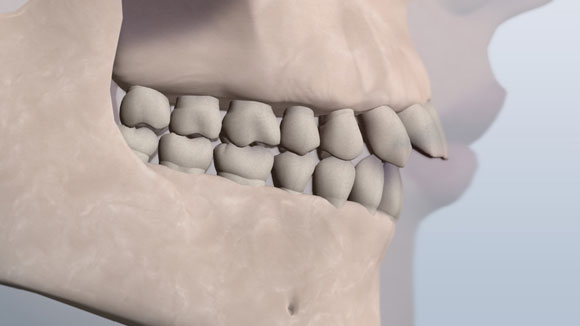
| 
|
Class II Division 1 | Class II Division 2 |
Class III (Prenormal) |
Definition |
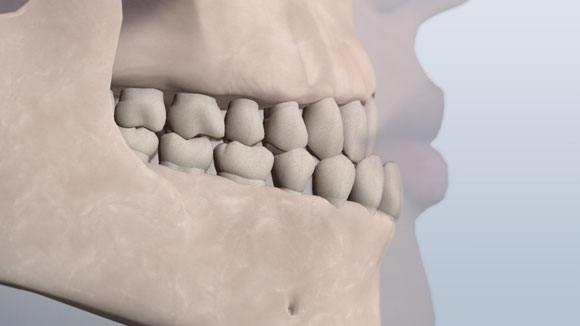
Class III means the mandibular first molar is positioned mesially relative to the maxillary first molar (a mesial, or prenormal, molar relationship). Clinically, this often presents with a reduced or reversed overjet, including an anterior crossbite. When the discrepancy is skeletal, the profile frequently appears straighter to more concave, often with a relatively prominent chin, a deficient maxilla, or both.
Treatment |
In younger patients, management is often directed at the skeletal pattern when the maxilla is deficient. A common approach is maxillary expansion when there is a transverse constriction, combined with maxillary protraction using a reverse pull facemask (protraction headgear), to encourage forward positioning of the maxillary complex during growth. If the anterior crossbite is primarily functional, meaning the mandible is being guided forwards by an early occlusal interference, early correction focuses on removing the interference and correcting the incisor relationship, sometimes with limited fixed appliances. In adolescents and adults, mild to moderate Class III problems may be managed by orthodontic camouflage using braces or aligners with Class III elastics and carefully controlled tooth movements, accepting that the correction is primarily dentoalveolar. Where there is a marked skeletal Class III discrepancy, definitive correction is orthodontics combined with orthognathic surgery after growth is complete, commonly involving maxillary advancement, mandibular setback, or a bimaxillary approach, depending on the diagnosis.
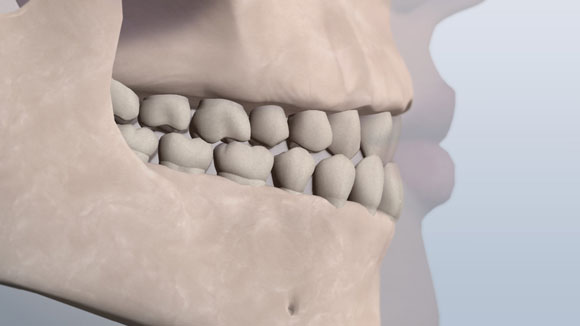
| 
|
Dental | Skeletal |
Last edited: