



Driler
One must imagine Driler happy
- Joined
- Sep 13, 2023
- Posts
- 112
- Reputation
- 127
Firstly I have a video about this if you prefer that format
Intro
In order to construct a proper bs program we determine these elementary variable, there are also some more complex principals that we will talk about in future threads but for this one I will only cover thee 4
Research
Amplitude
Frequency
Volume
Strain Rate
Conclusion
For now lets just say 200-360 daily cycles 2 times a week at 2Hz with a force slightly lighter ten breaking an egg. Soon I will cover some more complex principles and concepts that could even further optimize the pactise
Intro
In order to construct a proper bs program we determine these elementary variable, there are also some more complex principals that we will talk about in future threads but for this one I will only cover thee 4
Research
- Most of this research is done on groups of animals being subjected to mechanical stimulus programs differing only in one variable. Thus the difference in resulted bone row can be attributed to that variable.
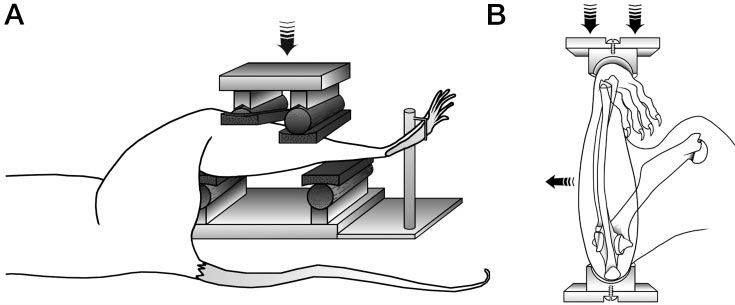
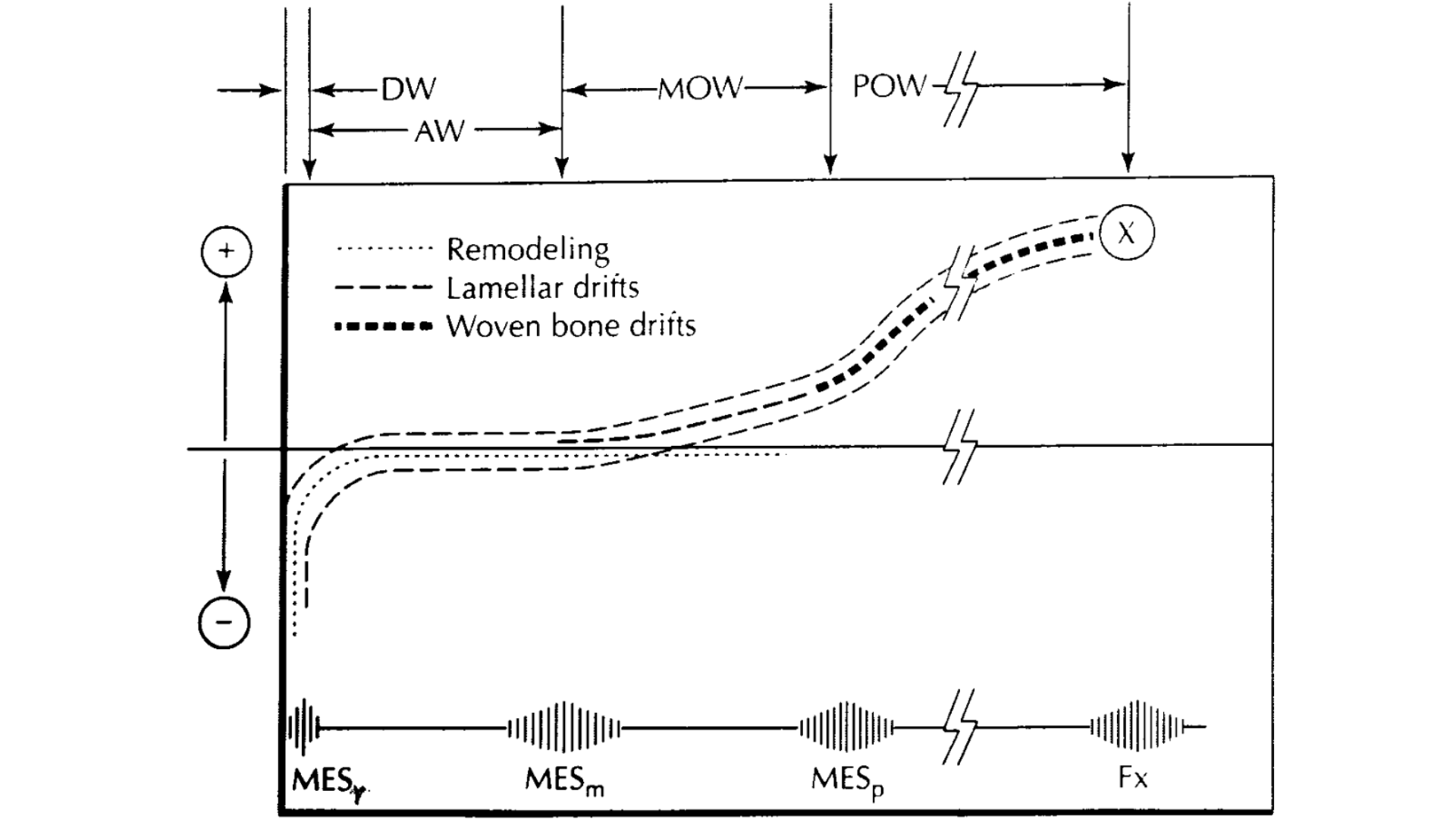
- Mechanical stimulus programs used in research inflict a pulsatile strain pattern meaning there is a high degree of similarity with bs. Typical peak strains reach from 1k to 3k microstrain measured through strain gauges (devices implanted on the bone of these animals) thus it lines up to typical peak strains in bs. Following picture show the way mechanical stimulus is administered
Amplitude
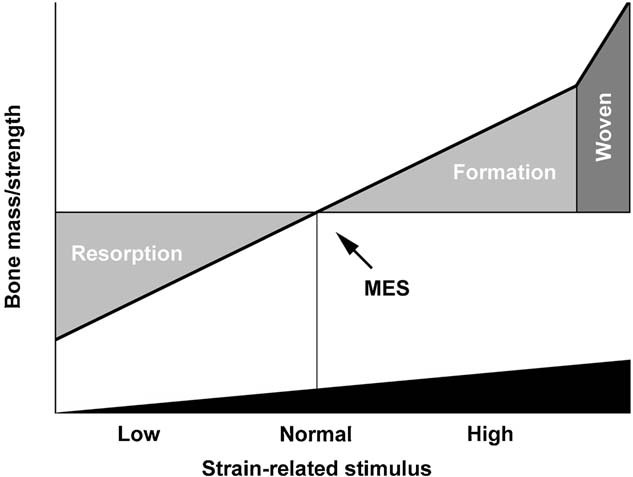
- Firstly it was thought bone response was not so linear to strain increase. This thought was brought so by Harold Frost and his research. The assumed relationship was expressed via this graph (pic1)
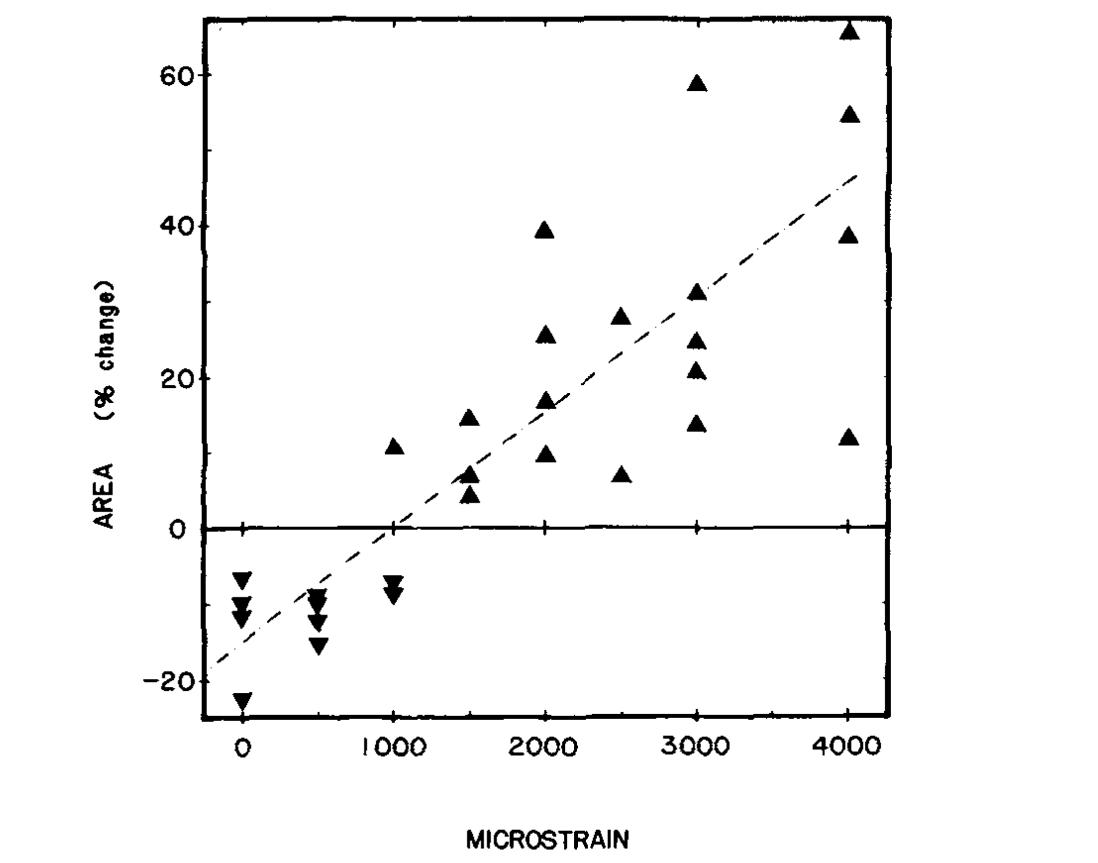
- Newer research showed the actual dependence that the adaptive response has with this variable to be more linear. Resembling this graph. (pic2) This is the current scientific consensus
- That relation was found by observing bone formation between animals administered loading regimens eliciting different peak strain amplitudes and keeping other variables constant obviously.
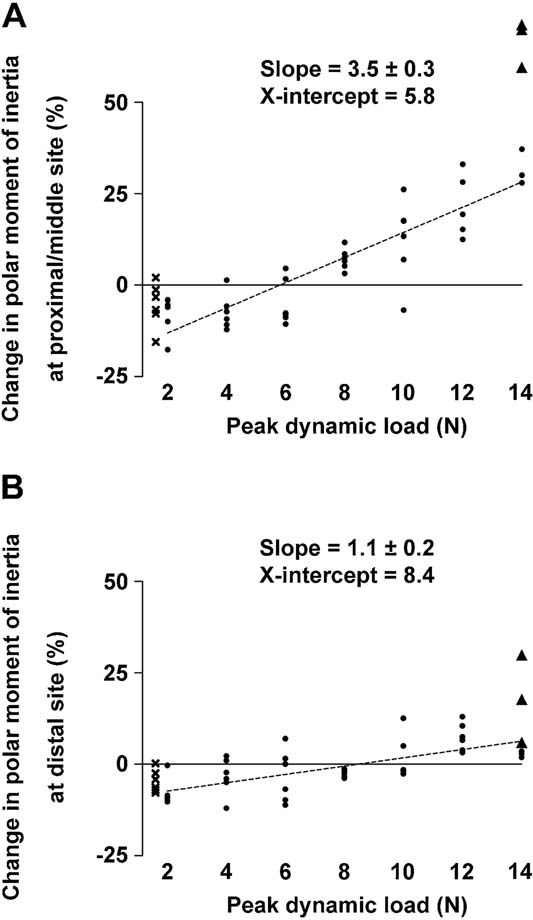
- For example this study (pic3) had turkeys immobilized thus isolating effect only to the artificially administered loading regiment. Lasting 8 weeks of duration and consisting of a everyday stimulus of 100 cycles at a freq of 1 Hz only differing in peak strain Peak strains ranged from zero to 4000 micro-strain thus creating 8 groups. Results show a clear linear correlation between bone formation and peak strain. We could then conclude that harder hit yield more growth. Unfortunately harder hits induce exponentially more bone microdamge and trauma that requires repair and can accumulate thus lead to a stress fracture. That is why i recommend not to play with this variable much as we will soon se there are betters changes we can do to our bs program in order to make it as close to optimal that do not increase risk as drastically as increasing peak strain.
Frequency
- Generality higher freq are associated with a more favorable adaptive response even when adjusting for other variables
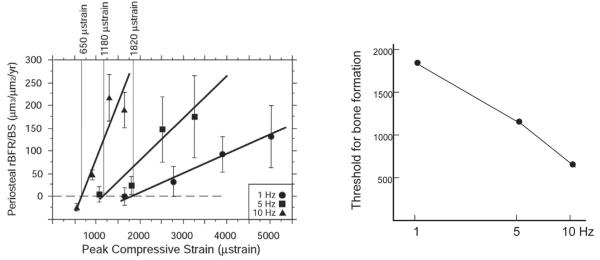
- Studies have shown for an example that “a mechanical load of 500 microstrain has little consequence if applied at 1 Hz, but is highly osteogenic if the frequency is increased to between 10 and 60 Hz”. It was shown that the threshold strain for bone formation is decreased as freq rises (pic2) as well as that the rate at witch bone formation positively correlates to higher strains increases (pic1)
- BS gives us some practical limitations by what we can do with our hand and the most important rule here would be that a higher freq should not come at cost of form. Meaning every hit should be the same. It must hit the same place at the same angle exactly how you planed after accessing your facial structure and determining what kind of growth would suit u and improve your looks the most.
- I will talk about using some tools for high freq BS in the future
Volume
- Daily volume is the number of cycles/hits per day and witch is a core variable in our bonesmashing program
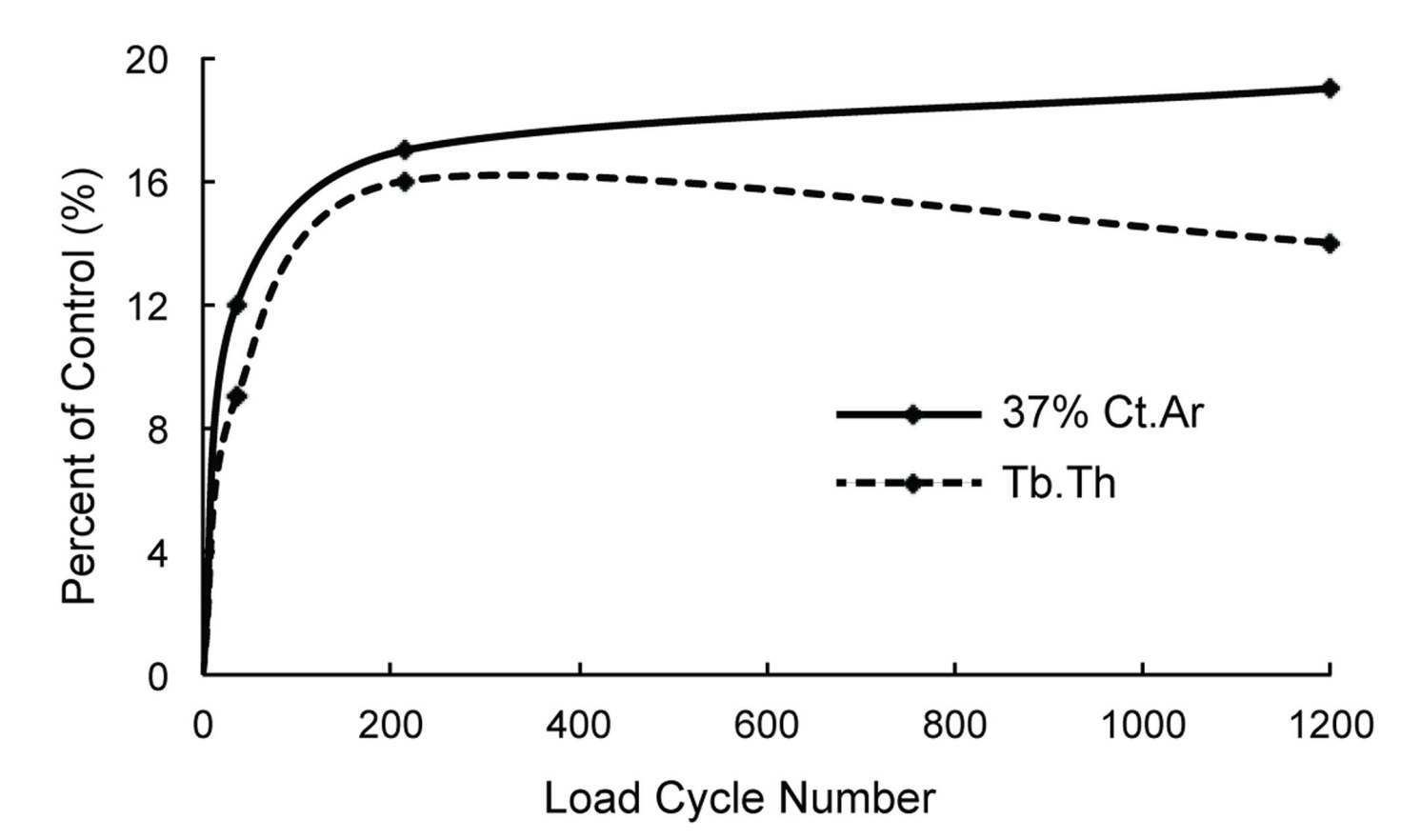
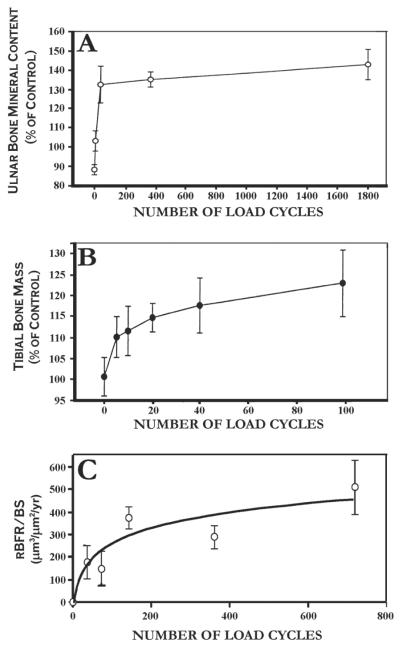
- Study comparing volumes of 36 vs 216 vs 1200 at a 0.5Hz administered 3 times a week for 2 weeks. Results showed bone formation reaches a platoo with the 216 to 1200 jump already providing a quite diminished improvement on the cortical surface (pic 1)
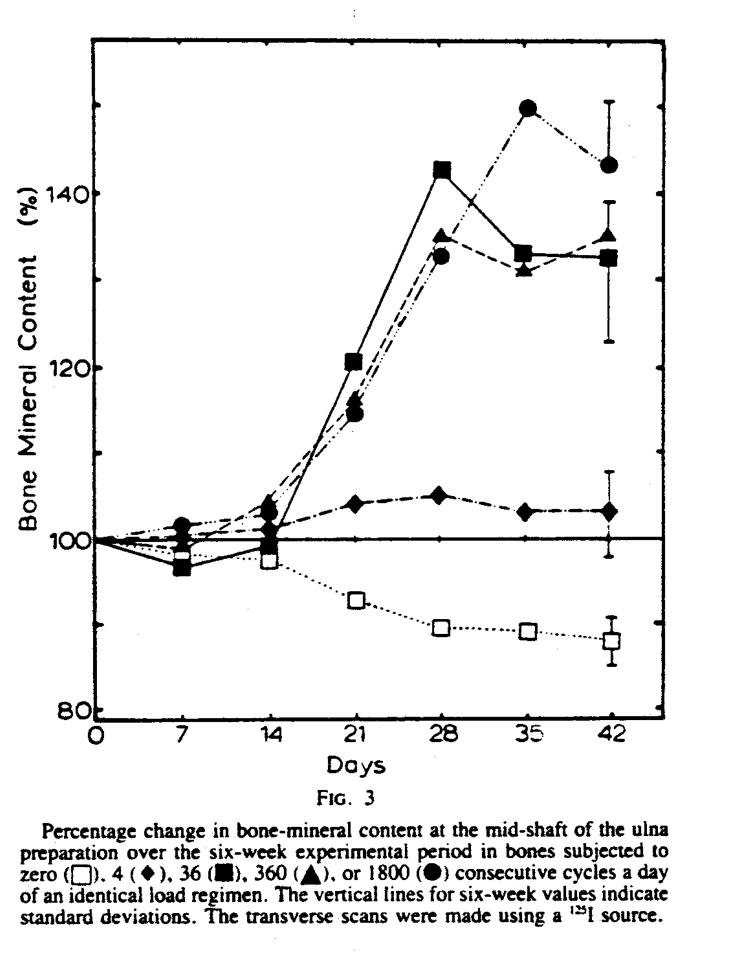
- Another study using an isolated avian ulna model compared effect on bone formation provided by increasing number of loading cycles in a given session of mechanical loading. Animals had their limbs immobilized and were divided into groups received either 4, 36, 360 and 1800 loading cycles at a 0.5 Hz freq each day for six weeks. Result showed a quite diminished effect after increasing volume from 36 to 360 (pic 2)
- Conclusion: In most studies where the aim is to explore some other aspects of bone formation induced via mechanical stimuli the number of cycles varies between 200-360. Thus I would suggest we stick to that same rule witch is also congruent with the data presented here.
Strain Rate
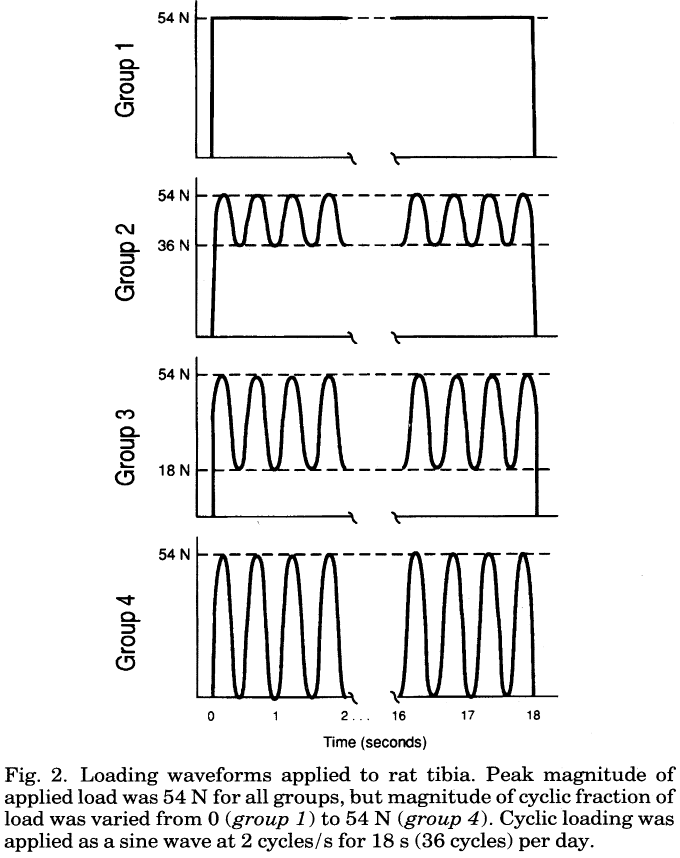
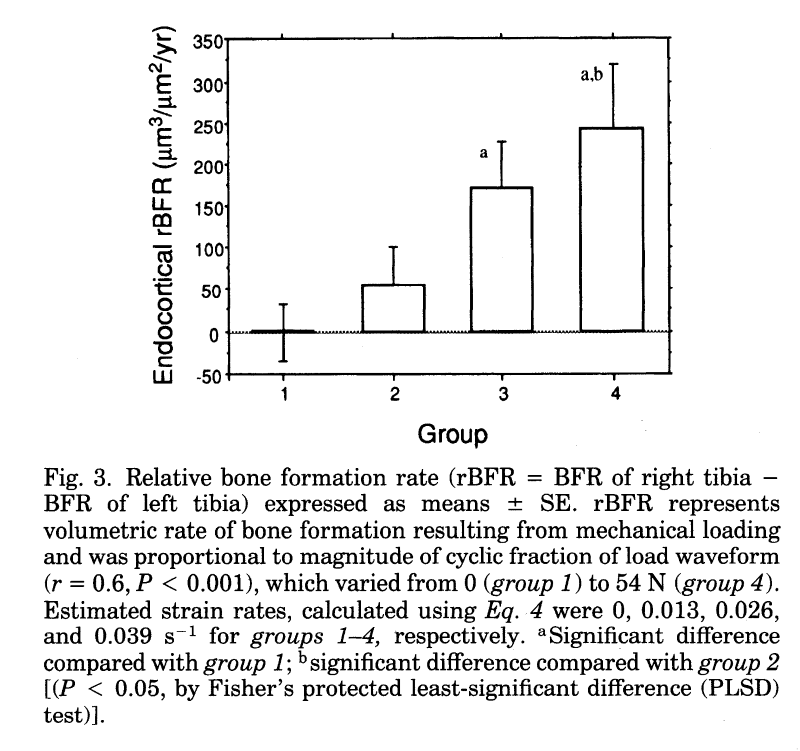
- Strain rate is the speed at witch strain changes and generally research has shown that higher strain rates induce a significantly greater amount of bone formation. The effect is in fact very strong. Luckily for us, impact hits already maximase this variable as in that type of loading the strain is very suddenly increased from zero to one hundred percent thus a very high strain rate
- I will touch upon the number of weekly sessions soon but lets just say for now from my personal experience: 2 at the start and progress to 3 times per week over some time
Conclusion
For now lets just say 200-360 daily cycles 2 times a week at 2Hz with a force slightly lighter ten breaking an egg. Soon I will cover some more complex principles and concepts that could even further optimize the pactise


