


ragu
illuminati
- Joined
- Jul 9, 2025
- Posts
- 1,350
- Reputation
- 2,127
In this thread im going to talk about different height medication other than erdafinitib that everyone already talks about names of this medication are tyra-300 infigratinib vosoritide
Tyra-300
TYRA-300, an FGFR3-selective inhibitor, promotes bone growth in two FGFR3-driven models of chondrodysplasia.Achondroplasia (ACH) and hypochondroplasia (HCH), the two most common types of dwarfism, are each caused by FGFR3 gain-of-function mutations that result in increased FGFR3 signaling, which disrupts chondrogenesis and osteogenesis, resulting in disproportionately shortened long bones. In this study, TYRA-300, a potent and selective FGFR3 inhibitor, was evaluated in 3 genetic contexts: wild-type mice, the Fgfr3Y367C/+ mouse model of ACH, and the Fgfr3N534K/+ mouse model of HCH. In each model, TYRA-300 treatment increased nasoanal length and tibia and femur length. In the two FGFR3-altered models, TYRA-300–induced growth partially restored the disproportionality of long bones. Histologic analysis of the growth plate in Fgfr3Y367C/+mice revealed that TYRA-300 mechanistically increased both proliferation and differentiation of chondrocytes. Importantly, children with ACH can experience medical complications due to foramen magnum stenosis, and TYRA-300 significantly improved the size and shape of the skull and foramen magnum in Fgfr3Y367C/+ mice. Spinal stenosis is also a frequent complication, and TYRA-300 increased the lumbar vertebrae length and improved the shape of the intervertebral discs in both models. Taken together, these studies demonstrate that the selective FGFR3 inhibitor TYRA-300 led to a significant increase in bone growth in two independent FGFR3-driven preclinical models as well as in wild-type mice
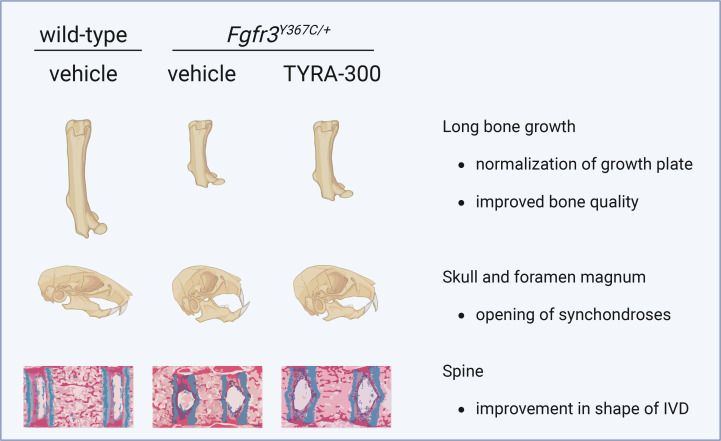
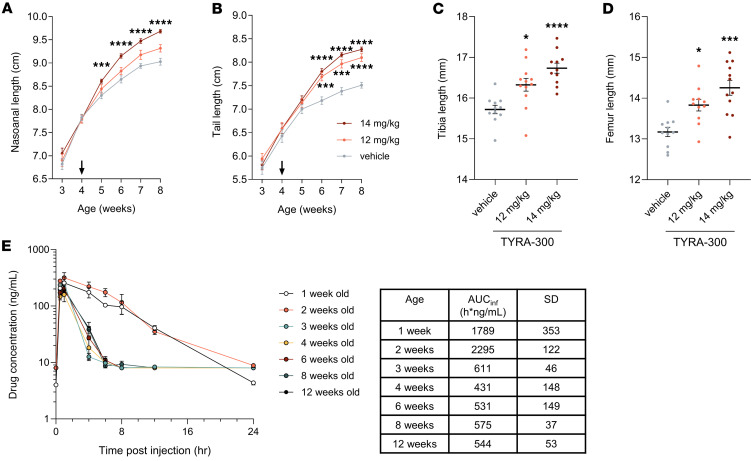
This was tested in mice not humans yet. Three groups: normal mice, an achondroplasia (ACH) mouse model, and a hypochondroplasia (HCH) mouse model. Mice were dosed orally with TYRA-300 once daily from 4 to 8 weeks of age. Compared to vehicle treatment, there was a statistically significant increase in nasoanal length (nose-to-tail-base length) after treatment with 14 mg/kg TYRA-300
The sides
Serious Adverse Events: Serious side effects related to the treatment occurred in about 10% of patients across tested doses (10 mg to 120 mg daily).Diarrhea: One dose-limiting instance of Grade 3 diarrhea was reported at the 90 mg daily dose.Liver Enzymes: Grade 3 increases in ALT (an enzyme that measures liver function) were observed in about 5% of patients at the 90 mg dose, leading to treatment discontinuation in one patient.
Infigratinib
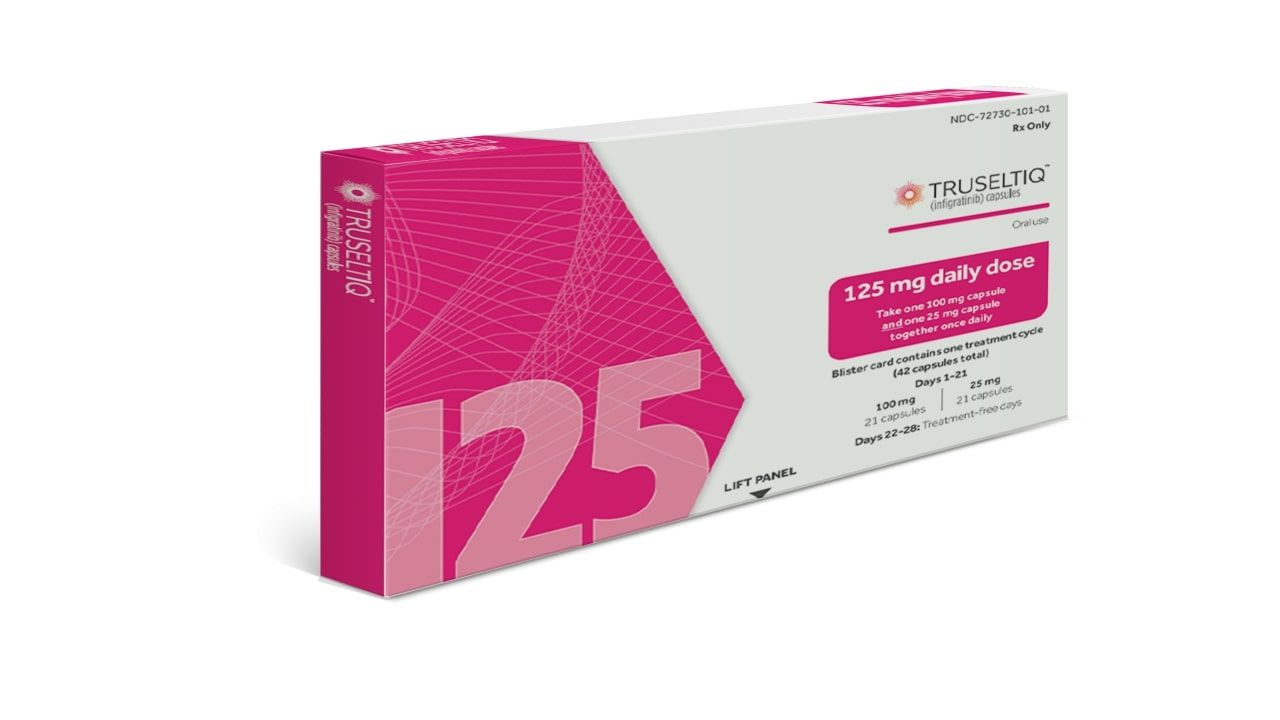
Infigratinib almost same as erdafinitib but instead of targeting fgf receptors 1-4 it targets 1-4 but fgfr4 is much weaker than others Infigratinib (TRUSELTIQTM), a fibroblast growth factor receptor (FGFR)-specific tyrosine kinase inhibitor, is being co-developed by QED Therapeutics and Helsinn for the treatment of cholangiocarcinoma, urothelial carcinoma and other FGFR-driven conditions. Infigratinib was recently approved in the USA for the treatment of previously treated, unresectable locally advanced or metastatic cholangiocarcinoma with a FGFR2 fusion or other rearrangement as detected by a test approved by the US Food and Drug Administration. This article summarizes the milestones in the development of infigratinib leading to this first approval for advanced cholangiocarcinoma.FGFRs play a role in cell proliferation, differentiation and angiogenesis [2]. Infigratinib received its first approval on 28 May 2021 in the USA for the treatment of previously treated, unresectable locally advanced or metastatic cholangiocarcinoma with a FGFR2 fusion or other rearrangement as detected by a test approved by the US Food and Drug Administration (FDA) The recommended dosage of infigratinib is 125 mg orally once daily for 21 consecutive days in a 28-day cycle, continued until disease progression or unacceptable toxicity Infigratinib is also being developed in urothelial carcinoma (currently enrolling a phase III trial) and, at much lower doses, achondroplasia (at phase II)
Sides
Same as erda
Vosoritide
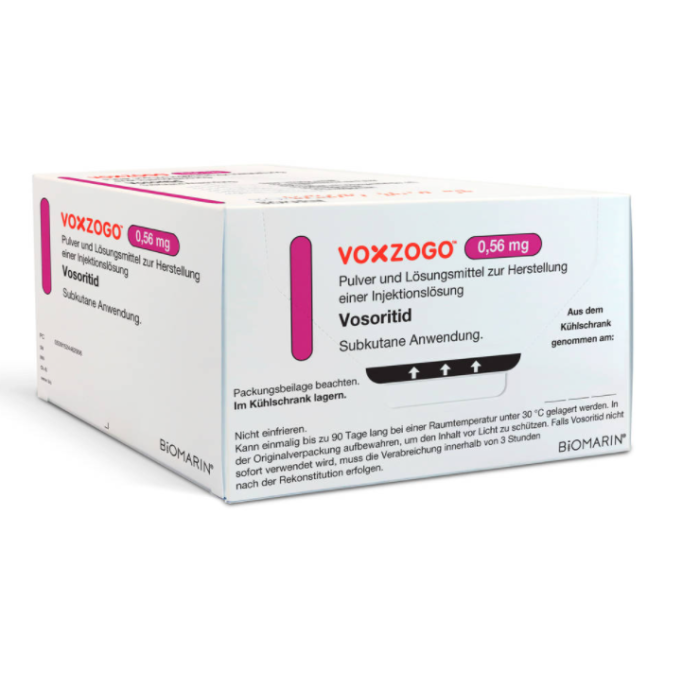
Vosoritide (VOXZOGO®) is the first pharmacological therapy that targets the underlying molecular mechanism of achondroplasia [7]. By binding to natriuretic peptide receptor B (NPR-B) on the surface of chondrocytes, vosoritide stimulates the production of intracellular cyclic guanosine monophosphate (cGMP), leading to the inhibition of aberrant FGFR3 signaling [13]. Thus, vosoritide restores balance to the intracellular messengers that drive endochondral ossification, a process critical to longitudinal bone growth, by allowing chondrocytes in the growth plate to proliferate and differentiate appropriately. Following the announcement of the first Phase III trial results in December 2019, clinical trials have continued to demonstrate significant improvements in annualized growth velocity (AGV) and skeletal proportionality possible via vosoritide-mediated FGFR-3 modulation, leading to FDA approval of the drug for public use in November 2021. This review aims to present the current evidence on vosoritide, focusing on its efficacy, safety profile, and real-world clinical application
Phase II Dose-Escalationand Extension Studies The first Phase II study performed on vosoritide (BMN 111-202) was a dose-escalation, open-label trial conducted in 35 children aged 5-14 years to assess the safety, tolerability, and optimal dosing of vosoritide [25]. Patients received daily subcutaneous vosoritide injections at doses of 2.5, 7.5, 15, and 30 μg/kg for 24 months. Results demonstrated a dose-dependent increase in AGV, with the 15 μg/kg dose saturating the effect on growth velocity [25]. The long-term extension study (BMN 111-205) followed 30 of the original participants for up to seven years, confirming that sustained vosoritide use maintains growth velocity improvements over time with a favorable side-effect profile [26]. These children will continue to be followed until they reach their final adult height.Phase III Randomized, Placebo-Controlled Trial in 5-17-Year-Olds With Achondroplasia
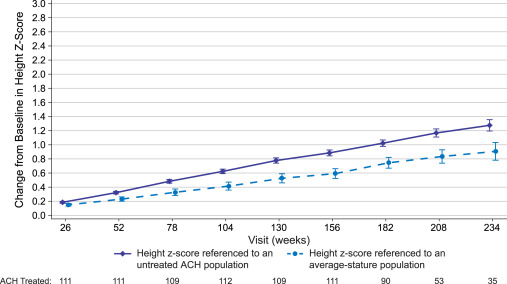
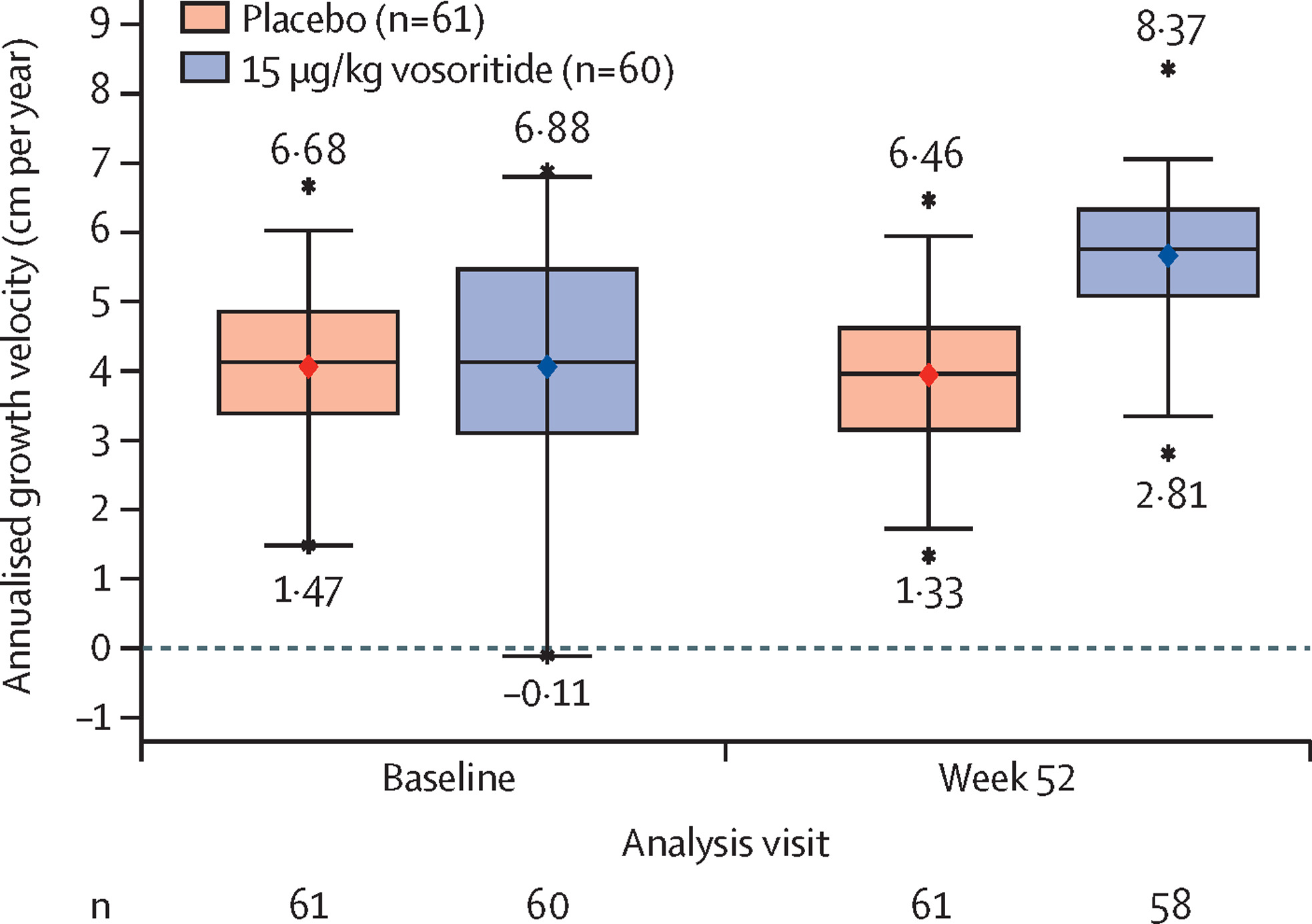
Following the success of Phase II trials, Savarirayan et al. conducted a randomized, placebo-controlled, double-blind trial evaluating 52 weeks of vosoritide treatment in 121 children with achondroplasia aged 5-17 years [3]. Participants were randomized to receive daily vosoritide 15 μg/kg (n = 60) or placebo (n = 61). The primary endpoint was the difference in AGV after one year of treatment. Children treated with vosoritide showed a statistically significant increase in growth velocity of 1.57 cm/year (8.26 cm/year vs. 6.69 cm/year) [3]. Secondary endpoints in the Phase III trial included height z-score and body proportions. Vosoritide-treated children experienced an increase in height z-score (mean: +0.28 vs. -0.01 in the placebo group) over one year, approaching the growth range of age-matched average-staturechildren.PhaseIIIOpenLabelExtensionStudy All 121 children from the Phase III trial were invited to enter an open-label extension, in which both groups received vosoritide to assess the long-term outcomes of therapy. Results from the trial indicate that growth velocity gains were maintained with continued therapy. After two to three years of therapy, children treated with vosoritide accumulated an average of 5.7 cm of additional height compared to untreated peers in natural history comparisons [5]. A December 2024 update reported a median height gain of ~11 cm after seven years of continued therapy [5]. Notably, the annual growth velocity of treated children during these years approached that of age-matched children without achondroplasia, especially before the onset of puberty [5]. Extended treatment was also associated with improved body proportions; one analysis found that after three years, treated children had a significantly lower upper-to-lower body segment ratio (indicating relatively longer limbs) compared to untreated achondroplasia controls Safety data from the extension trial continue to be favorable. With more than 460 patient-years of vosoritide exposure analyzed, there have been no drug-related serious adverse effects or deaths [5]. The observed adverse events were similar to those reported in the first year of treatment, including injection site reactions, brief blood pressure drops, and mild headaches. Taken together, the extension studies support the durability of vosoritide’s growth-promoting effect and suggest that longer-term therapy may offer additional benefits in skeletal proportionality while maintaining a tolerable safety profile
Sides
Injection site reactions: Redness, swelling, bruising, pain, itching, hives, or rash where the medicine is injected.Gastrointestinal: Vomiting, nausea, stomach pain, and diarrhea.Aches and pains: Joint pain (arthralgia) and muscle stiffness or pain.Other: Dry skin, runny nose, ear pain, and headache
Now pricing

so there isn’t any general price I could of found on tyra-300 only thing i found is .10ml for 500$ and 0.3ml for 200$ Infigratinib is the cheapest here i saw some dude on here get for 130$
And now vosoritide
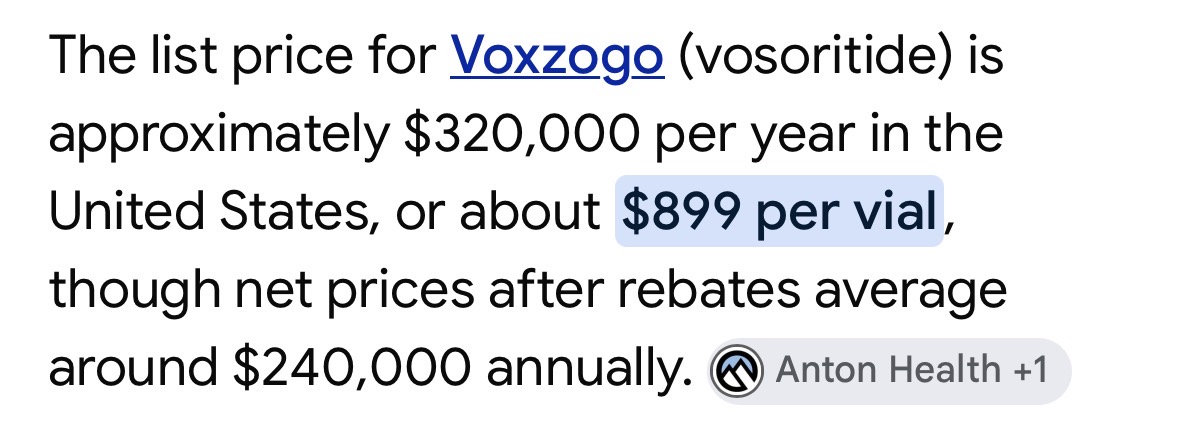
is way too much you have to a millionaire or billionaire to run this for a year

I will do more research maybe il stumble up on something but this is the meds that i found and works and tell me if i missed something
@mltnisme124 @DrRodger @Waffe @DeLarge
Tyra-300
TYRA-300, an FGFR3-selective inhibitor, promotes bone growth in two FGFR3-driven models of chondrodysplasia.Achondroplasia (ACH) and hypochondroplasia (HCH), the two most common types of dwarfism, are each caused by FGFR3 gain-of-function mutations that result in increased FGFR3 signaling, which disrupts chondrogenesis and osteogenesis, resulting in disproportionately shortened long bones. In this study, TYRA-300, a potent and selective FGFR3 inhibitor, was evaluated in 3 genetic contexts: wild-type mice, the Fgfr3Y367C/+ mouse model of ACH, and the Fgfr3N534K/+ mouse model of HCH. In each model, TYRA-300 treatment increased nasoanal length and tibia and femur length. In the two FGFR3-altered models, TYRA-300–induced growth partially restored the disproportionality of long bones. Histologic analysis of the growth plate in Fgfr3Y367C/+mice revealed that TYRA-300 mechanistically increased both proliferation and differentiation of chondrocytes. Importantly, children with ACH can experience medical complications due to foramen magnum stenosis, and TYRA-300 significantly improved the size and shape of the skull and foramen magnum in Fgfr3Y367C/+ mice. Spinal stenosis is also a frequent complication, and TYRA-300 increased the lumbar vertebrae length and improved the shape of the intervertebral discs in both models. Taken together, these studies demonstrate that the selective FGFR3 inhibitor TYRA-300 led to a significant increase in bone growth in two independent FGFR3-driven preclinical models as well as in wild-type mice
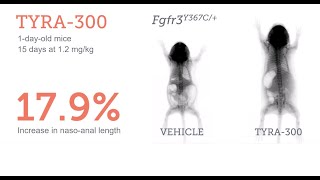
This was tested in mice not humans yet. Three groups: normal mice, an achondroplasia (ACH) mouse model, and a hypochondroplasia (HCH) mouse model. Mice were dosed orally with TYRA-300 once daily from 4 to 8 weeks of age. Compared to vehicle treatment, there was a statistically significant increase in nasoanal length (nose-to-tail-base length) after treatment with 14 mg/kg TYRA-300
The sides
Serious Adverse Events: Serious side effects related to the treatment occurred in about 10% of patients across tested doses (10 mg to 120 mg daily).Diarrhea: One dose-limiting instance of Grade 3 diarrhea was reported at the 90 mg daily dose.Liver Enzymes: Grade 3 increases in ALT (an enzyme that measures liver function) were observed in about 5% of patients at the 90 mg dose, leading to treatment discontinuation in one patient.
Infigratinib
Infigratinib almost same as erdafinitib but instead of targeting fgf receptors 1-4 it targets 1-4 but fgfr4 is much weaker than others Infigratinib (TRUSELTIQTM), a fibroblast growth factor receptor (FGFR)-specific tyrosine kinase inhibitor, is being co-developed by QED Therapeutics and Helsinn for the treatment of cholangiocarcinoma, urothelial carcinoma and other FGFR-driven conditions. Infigratinib was recently approved in the USA for the treatment of previously treated, unresectable locally advanced or metastatic cholangiocarcinoma with a FGFR2 fusion or other rearrangement as detected by a test approved by the US Food and Drug Administration. This article summarizes the milestones in the development of infigratinib leading to this first approval for advanced cholangiocarcinoma.FGFRs play a role in cell proliferation, differentiation and angiogenesis [2]. Infigratinib received its first approval on 28 May 2021 in the USA for the treatment of previously treated, unresectable locally advanced or metastatic cholangiocarcinoma with a FGFR2 fusion or other rearrangement as detected by a test approved by the US Food and Drug Administration (FDA) The recommended dosage of infigratinib is 125 mg orally once daily for 21 consecutive days in a 28-day cycle, continued until disease progression or unacceptable toxicity Infigratinib is also being developed in urothelial carcinoma (currently enrolling a phase III trial) and, at much lower doses, achondroplasia (at phase II)
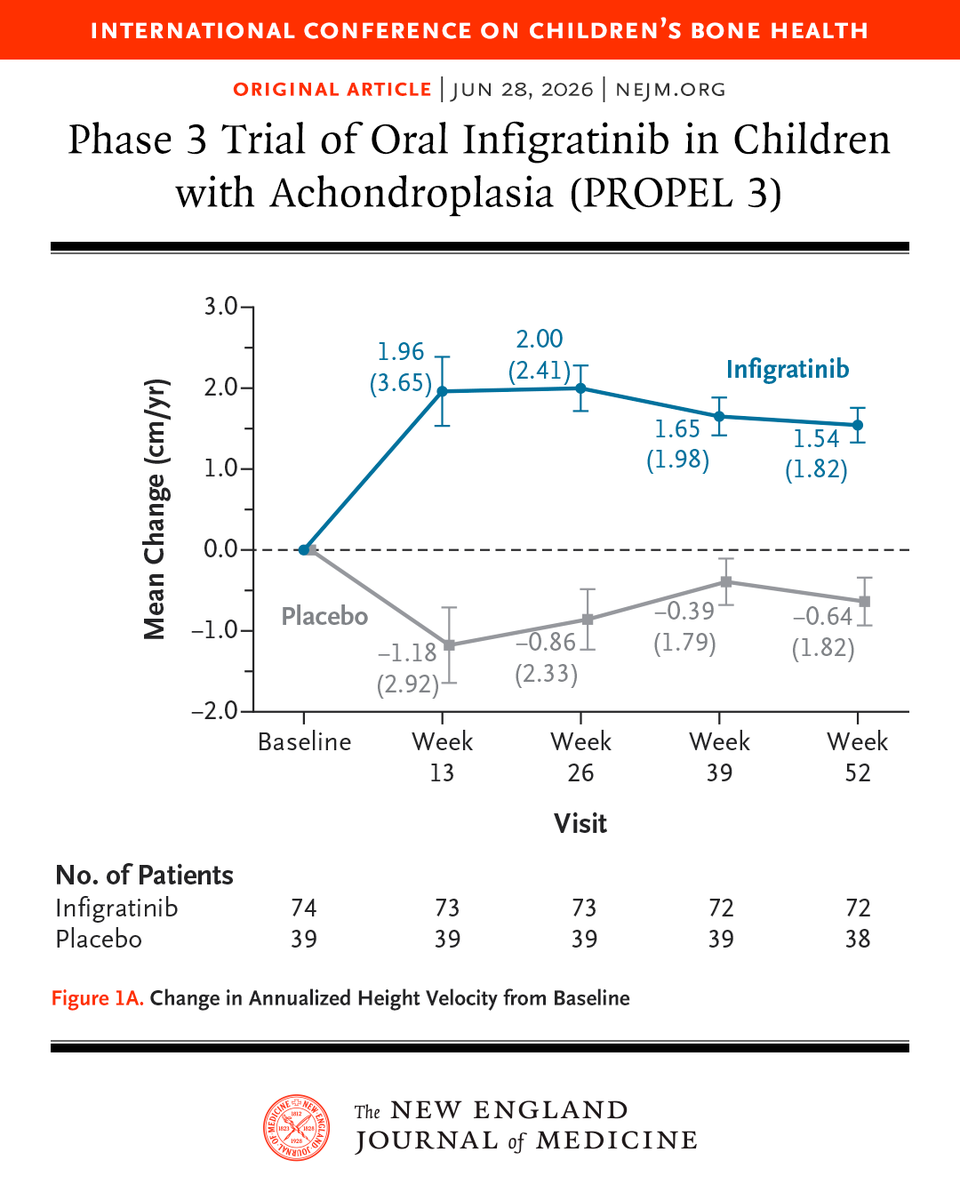
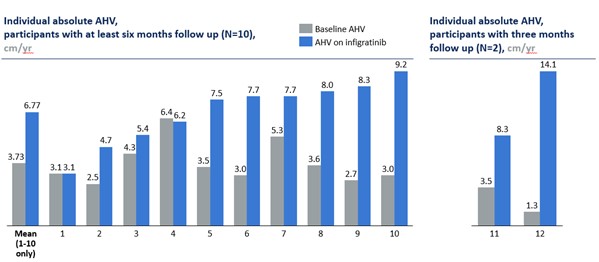
OR27-03 Oral Infigratinib Treatment Is Well Tolerated And Significantly Increases Height Velocity In Children With Achondroplasia: Month 6 Results From The PROPEL 2 Dose-finding Study this study was done on 3-11 years old children I couldn’t find anything higher maybe there is idk open-label study of infigratinib in children 3−11 years of age with ACH who participated for ≥6 months in PROPEL (NCT04035811), a non-interventional clinical assessment study. The PROPEL 2 dose-escalation (DE) phase comprises 5 ascending dose cohorts ranging from 0.016 mg/kg/day to 0.25 mg/kg/day. The primary endpoints are safety; change from baseline (BL) in annualized height velocity (AHV); and infigratinib pharmacokinetics in this population. Secondary endpoints include changes from BL in body proportions, and changes in quality of life. Other parameters of disease burden are evaluated as exploratory endpoints. Summary: Children enrolled in the PROPEL 2 DE phase completed ≥6 months of treatment at the assigned cohort dose. Cohorts 1-3 (n=37; doses 0.016, 0.032, and 0.064 mg/kg/day) did not show a significant increase in AHV and these doses were assessed as non-efficacious. Treatment at the cohort 4 dose (0.128 mg/kg/day) resulted in an increase in AHV from BL of 1.52 cm/year in children ≥5 years old (n=11; p=0.02). Infigratinib at the cohort 5 dose (n=10 with month 6 data, 0.25 mg/kg/day) resulted in a significant mean increase from BL of 3.03 cm/year (p=0.0022). In children considered responders (Δ in AHV ≥25% from BL, n=8/10), the mean change in AHV at the cohort 5 dose was +3.81±1.8 cm/year, with a median of +4.14 cm/year. Infigratinib was well tolerated with no serious AEs or AEs that led to study discontinuation, with most AEs mild or moderate in severity. At the cohort 5 dose level, no grade 3 AEs or treatment-related AEs were reported. Conclusion: Oral infigratinib in children with ACH, up to a dose of 0.25 mg/kg/day, was well tolerated and showed dose-dependent increases in AHV, with a significant mean change from BL of +3.03cm/year at the cohort 5 dose. The safety and efficacy of this oral, once-daily dose of infigratinib at 0.25 mg/kg/day will be further explored in a phase 3 randomized controlled study. If these phase 2 data are confirmed, infigratinib could potentially offer children with ACH the first safe and effective oral therapy to improve growth, enhance functionality and decrease medical complications
Sides
Same as erda
Vosoritide
Vosoritide (VOXZOGO®) is the first pharmacological therapy that targets the underlying molecular mechanism of achondroplasia [7]. By binding to natriuretic peptide receptor B (NPR-B) on the surface of chondrocytes, vosoritide stimulates the production of intracellular cyclic guanosine monophosphate (cGMP), leading to the inhibition of aberrant FGFR3 signaling [13]. Thus, vosoritide restores balance to the intracellular messengers that drive endochondral ossification, a process critical to longitudinal bone growth, by allowing chondrocytes in the growth plate to proliferate and differentiate appropriately. Following the announcement of the first Phase III trial results in December 2019, clinical trials have continued to demonstrate significant improvements in annualized growth velocity (AGV) and skeletal proportionality possible via vosoritide-mediated FGFR-3 modulation, leading to FDA approval of the drug for public use in November 2021. This review aims to present the current evidence on vosoritide, focusing on its efficacy, safety profile, and real-world clinical application
Phase II Dose-Escalationand Extension Studies The first Phase II study performed on vosoritide (BMN 111-202) was a dose-escalation, open-label trial conducted in 35 children aged 5-14 years to assess the safety, tolerability, and optimal dosing of vosoritide [25]. Patients received daily subcutaneous vosoritide injections at doses of 2.5, 7.5, 15, and 30 μg/kg for 24 months. Results demonstrated a dose-dependent increase in AGV, with the 15 μg/kg dose saturating the effect on growth velocity [25]. The long-term extension study (BMN 111-205) followed 30 of the original participants for up to seven years, confirming that sustained vosoritide use maintains growth velocity improvements over time with a favorable side-effect profile [26]. These children will continue to be followed until they reach their final adult height.Phase III Randomized, Placebo-Controlled Trial in 5-17-Year-Olds With Achondroplasia
Following the success of Phase II trials, Savarirayan et al. conducted a randomized, placebo-controlled, double-blind trial evaluating 52 weeks of vosoritide treatment in 121 children with achondroplasia aged 5-17 years [3]. Participants were randomized to receive daily vosoritide 15 μg/kg (n = 60) or placebo (n = 61). The primary endpoint was the difference in AGV after one year of treatment. Children treated with vosoritide showed a statistically significant increase in growth velocity of 1.57 cm/year (8.26 cm/year vs. 6.69 cm/year) [3]. Secondary endpoints in the Phase III trial included height z-score and body proportions. Vosoritide-treated children experienced an increase in height z-score (mean: +0.28 vs. -0.01 in the placebo group) over one year, approaching the growth range of age-matched average-staturechildren.PhaseIIIOpenLabelExtensionStudy All 121 children from the Phase III trial were invited to enter an open-label extension, in which both groups received vosoritide to assess the long-term outcomes of therapy. Results from the trial indicate that growth velocity gains were maintained with continued therapy. After two to three years of therapy, children treated with vosoritide accumulated an average of 5.7 cm of additional height compared to untreated peers in natural history comparisons [5]. A December 2024 update reported a median height gain of ~11 cm after seven years of continued therapy [5]. Notably, the annual growth velocity of treated children during these years approached that of age-matched children without achondroplasia, especially before the onset of puberty [5]. Extended treatment was also associated with improved body proportions; one analysis found that after three years, treated children had a significantly lower upper-to-lower body segment ratio (indicating relatively longer limbs) compared to untreated achondroplasia controls Safety data from the extension trial continue to be favorable. With more than 460 patient-years of vosoritide exposure analyzed, there have been no drug-related serious adverse effects or deaths [5]. The observed adverse events were similar to those reported in the first year of treatment, including injection site reactions, brief blood pressure drops, and mild headaches. Taken together, the extension studies support the durability of vosoritide’s growth-promoting effect and suggest that longer-term therapy may offer additional benefits in skeletal proportionality while maintaining a tolerable safety profile
Sides
Injection site reactions: Redness, swelling, bruising, pain, itching, hives, or rash where the medicine is injected.Gastrointestinal: Vomiting, nausea, stomach pain, and diarrhea.Aches and pains: Joint pain (arthralgia) and muscle stiffness or pain.Other: Dry skin, runny nose, ear pain, and headache
Now pricing
so there isn’t any general price I could of found on tyra-300 only thing i found is .10ml for 500$ and 0.3ml for 200$ Infigratinib is the cheapest here i saw some dude on here get for 130$
And now vosoritide
is way too much you have to a millionaire or billionaire to run this for a year
I will do more research maybe il stumble up on something but this is the meds that i found and works and tell me if i missed something
@mltnisme124 @DrRodger @Waffe @DeLarge


