
topology
igf 1 signaller/sugarmaxxer
- Joined
- May 24, 2025
- Posts
- 5,639
- Reputation
- 8,688
TAG SAYS THEORY BUT THIS IS SCIENCE. I DIDN'T KNOW WHICH OTHER ONE COULD BE USED
As most people know, higher estrogen levels will lead to faster closure of the growth plates. However, estrogen cannot solely drive closure. Without it, as seen in aromatase-deficient individuals, plates fail to fuse entirely and growth continues into adulthood. So why is this the case? I'm going to explain PTHrP, SOX9, and the link to estrogen. This is more of an introduction to the actual biology of height if anything.
The first thing needed is to understand how the plate itself works. I'm going to be simplifying it majorly.
Chondrocytes go through many phases. I'm going to categorize them into 5:
The resting phase transition goes as follows: resting zone cells -> progenitors -> proliferative chondrocytes. I'm not going to expand on this that much as it's not the focus of this thread.
Now, the important step and the focus of this thread is the proliferation -> pre-hypertrophic phase. This happens due to the PTHrP loop. The resting zone -> proliferative phase is also governed by this loop.
The higher the PTHrP ligand concentration, the better. It causes cells to divide more before transitioning to the next stage. The PTHrP-Ihh feedback loop is worth understanding here. PTHrP is produced by resting zone and perichondrial cells, and its signal weakens as a gradient the further you get from that source toward the prehypertrophic zone. When PTHrP drops low enough, prehypertrophic cells begin secreting Ihh, which signals back to the perichondrium to upregulate PTHrP production. This is the core negative feedback that regulates how long cells stay proliferative before transitioning.
The downstream signaling goes like this: PTHrP binds its receptor -> raises cAMP -> activates PKA -> PKA phosphorylates SOX9 (keeping cells proliferative) and also inhibits SIK3, which releases HDAC4 to translocate into the nucleus. HDAC4 then binds and blocks both MEF2C/MEF2D and RUNX2, preventing hypertrophic gene activation. When PTHrP drops, this whole axis drops and doesn't inhibit RUNX2 & MEF2C/MEF2D.
Inside the proliferation stage, the main goal is to just divide, divide, and divide. And before someone uses GPT and it says "muh replication limit," that would be orders of magnitudes too big to be an issue. We are nowhere near optimized.
We want the divisions to keep happening so more and more height can be added.
The logic goes like this: lower PTHrP ligand concentration over time -> cAMP/PKA signaling goes down -> SOX9 phosphorylation drops -> HDAC4 nuclear activity reduced -> MEF2C/MEF2D and RUNX2 inhibition lowers -> pre-hypertrophic transition becomes more and more preferred.
Now it's relevant to know why the cells can either duplicate or go to the next step. It's all due to SOX9. Other limits like ATP or BMP proteins would be an issue later on assuming SOX9 is genetically modified. No studies have been done on humans as the range is pretty static even in outliers. This means we want SOX9 high, but not too high.
If SOX9 is too high, it can over-emphasize cartilage production. It is directly responsible for collagen II and inhibits collagen X. Collagen X marks the transition to hypertrophy and is expressed at the right time in normal endochondral ossification, but when SOX9 is excessively suppressing it prematurely this disrupts the normal progression and causes structural problems. This means we lose efficiency. I also want to mention the PTHrP levels are a gradient. The closer you get to the end of the bone from the proliferation stage, the lower the levels get, as the signaling weakens with distance from the resting zone and perichondrium. This is also why a cycle would be optimal for SOX9 upregulation for height.
But how is this relevant to estrogen? Estrogen interferes with the PTHrP loop indirectly. It accelerates the senescent depletion of resting zone progenitor cells, which are the primary source of PTHrP. As those cells are depleted, PTHrP production drops, causing the chain I described before: lower PTHrP -> lower cAMP/PKA signaling -> SOX9 phosphorylation drops -> HDAC4 loses its nuclear grip -> MEF2C/MEF2D and RUNX2 inhibition lowers -> pre-hypertrophic transition more and more preferred.
Estrogen is also mechanistically required for the actual fusion event itself, not just an accelerant. Without it, cells keep cycling through the stages but terminal fusion does not execute properly. So estrogen is doing two things: speeding the process via resting zone depletion and PTHrP reduction, and being required for the fusion event itself.
This means that estrogen's effect on the PTHrP loop becomes largely irrelevant if you can maintain SOX9 through another mechanism. Also, if we were talking about an ideal height stack, it would be wise to include testosterone as one of its purposes would be to aromatize to estrogen. The bone structural properties estrogen provides are useful for such stacks.
TLDR: cells should be duplicating as much as possible for height. Low PTHrP -> lower cAMP/PKA signaling -> lower SOX9 phosphorylation -> HDAC4 loses inhibition on MEF2C/MEF2D and RUNX2 -> cells prefer to transition and not duplicate as much. Estrogen depletes the resting zone progenitors that produce PTHrP, causing it to drop. It is also required for the actual fusion event. Therefore, estrogen's loop interference is not an issue if you can control SOX9 directly, but the fusion mechanism is a separate problem.
--
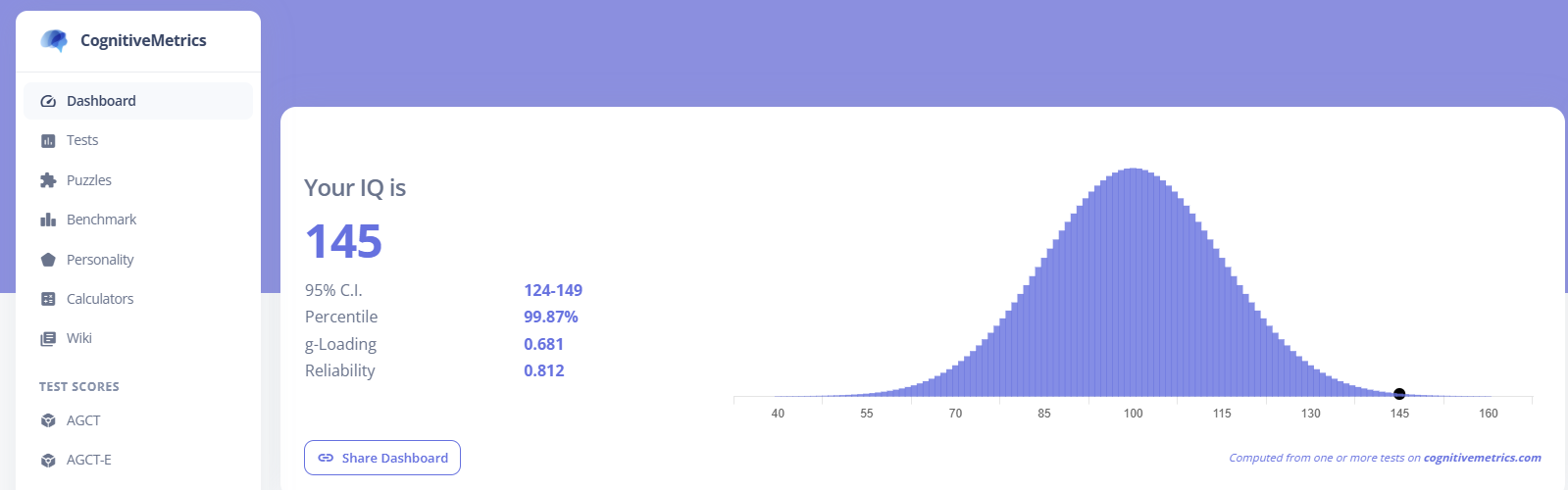
I'm the highest IQ user on this site & most knowledgeable on height.
@iblamexyz @Fridx @Jason Voorhees @Skitsuna @StyIix
As most people know, higher estrogen levels will lead to faster closure of the growth plates. However, estrogen cannot solely drive closure. Without it, as seen in aromatase-deficient individuals, plates fail to fuse entirely and growth continues into adulthood. So why is this the case? I'm going to explain PTHrP, SOX9, and the link to estrogen. This is more of an introduction to the actual biology of height if anything.
The first thing needed is to understand how the plate itself works. I'm going to be simplifying it majorly.
Chondrocytes go through many phases. I'm going to categorize them into 5:
- Resting phase
- Proliferation phase
- Pre-hypertrophic phase
- Hypertrophic phase
- Terminal differentiation -> apoptosis
The resting phase transition goes as follows: resting zone cells -> progenitors -> proliferative chondrocytes. I'm not going to expand on this that much as it's not the focus of this thread.
Now, the important step and the focus of this thread is the proliferation -> pre-hypertrophic phase. This happens due to the PTHrP loop. The resting zone -> proliferative phase is also governed by this loop.
The higher the PTHrP ligand concentration, the better. It causes cells to divide more before transitioning to the next stage. The PTHrP-Ihh feedback loop is worth understanding here. PTHrP is produced by resting zone and perichondrial cells, and its signal weakens as a gradient the further you get from that source toward the prehypertrophic zone. When PTHrP drops low enough, prehypertrophic cells begin secreting Ihh, which signals back to the perichondrium to upregulate PTHrP production. This is the core negative feedback that regulates how long cells stay proliferative before transitioning.
The downstream signaling goes like this: PTHrP binds its receptor -> raises cAMP -> activates PKA -> PKA phosphorylates SOX9 (keeping cells proliferative) and also inhibits SIK3, which releases HDAC4 to translocate into the nucleus. HDAC4 then binds and blocks both MEF2C/MEF2D and RUNX2, preventing hypertrophic gene activation. When PTHrP drops, this whole axis drops and doesn't inhibit RUNX2 & MEF2C/MEF2D.
Inside the proliferation stage, the main goal is to just divide, divide, and divide. And before someone uses GPT and it says "muh replication limit," that would be orders of magnitudes too big to be an issue. We are nowhere near optimized.
We want the divisions to keep happening so more and more height can be added.
The logic goes like this: lower PTHrP ligand concentration over time -> cAMP/PKA signaling goes down -> SOX9 phosphorylation drops -> HDAC4 nuclear activity reduced -> MEF2C/MEF2D and RUNX2 inhibition lowers -> pre-hypertrophic transition becomes more and more preferred.
Now it's relevant to know why the cells can either duplicate or go to the next step. It's all due to SOX9. Other limits like ATP or BMP proteins would be an issue later on assuming SOX9 is genetically modified. No studies have been done on humans as the range is pretty static even in outliers. This means we want SOX9 high, but not too high.
If SOX9 is too high, it can over-emphasize cartilage production. It is directly responsible for collagen II and inhibits collagen X. Collagen X marks the transition to hypertrophy and is expressed at the right time in normal endochondral ossification, but when SOX9 is excessively suppressing it prematurely this disrupts the normal progression and causes structural problems. This means we lose efficiency. I also want to mention the PTHrP levels are a gradient. The closer you get to the end of the bone from the proliferation stage, the lower the levels get, as the signaling weakens with distance from the resting zone and perichondrium. This is also why a cycle would be optimal for SOX9 upregulation for height.
But how is this relevant to estrogen? Estrogen interferes with the PTHrP loop indirectly. It accelerates the senescent depletion of resting zone progenitor cells, which are the primary source of PTHrP. As those cells are depleted, PTHrP production drops, causing the chain I described before: lower PTHrP -> lower cAMP/PKA signaling -> SOX9 phosphorylation drops -> HDAC4 loses its nuclear grip -> MEF2C/MEF2D and RUNX2 inhibition lowers -> pre-hypertrophic transition more and more preferred.
Estrogen is also mechanistically required for the actual fusion event itself, not just an accelerant. Without it, cells keep cycling through the stages but terminal fusion does not execute properly. So estrogen is doing two things: speeding the process via resting zone depletion and PTHrP reduction, and being required for the fusion event itself.
This means that estrogen's effect on the PTHrP loop becomes largely irrelevant if you can maintain SOX9 through another mechanism. Also, if we were talking about an ideal height stack, it would be wise to include testosterone as one of its purposes would be to aromatize to estrogen. The bone structural properties estrogen provides are useful for such stacks.
TLDR: cells should be duplicating as much as possible for height. Low PTHrP -> lower cAMP/PKA signaling -> lower SOX9 phosphorylation -> HDAC4 loses inhibition on MEF2C/MEF2D and RUNX2 -> cells prefer to transition and not duplicate as much. Estrogen depletes the resting zone progenitors that produce PTHrP, causing it to drop. It is also required for the actual fusion event. Therefore, estrogen's loop interference is not an issue if you can control SOX9 directly, but the fusion mechanism is a separate problem.
--
I'm the highest IQ user on this site & most knowledgeable on height.
@iblamexyz @Fridx @Jason Voorhees @Skitsuna @StyIix

 that’s an insane thing to say lmao