

7evenvox22
.
- Joined
- May 29, 2025
- Posts
- 599
- Reputation
- 1,536
Thread Song:
Introduction:
Hello bhai, today you'll learn how potent psychedelics actually are as cognitive enhancers and why emerging research suggests they may outperform many conventional nootropics and SSRIs for neuroplasticity.
To understand how and why they work so effectively, let's go through some basic background first.

The prefrontal cortex and the 5-HT2A receptor:
The prefrontal cortex (PFC) is the brain's executive control center, responsible for cognition, decision-making, and emotional regulation. At the center of these functions lies 5-HT2A, the most highly expressed serotonin receptor in the PFC.
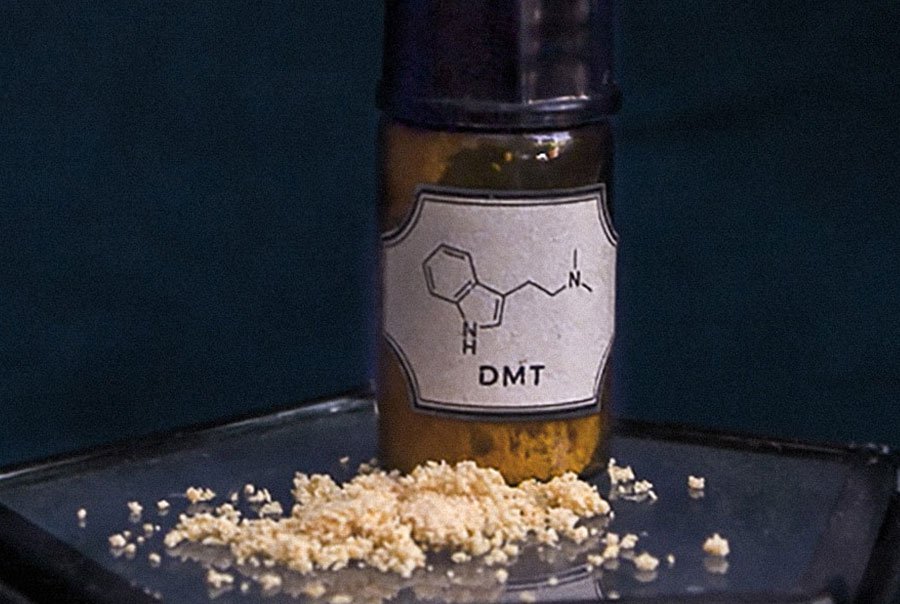
Unlike SSRIs, which simply increase extracellular serotonin for clinical depression management, 5-HT2A agonist psychoplastogens like DMT and psilocybin work through different mechanisms that research indicates enhance neuroplasticity, cognition, and emotional stability through two major pathways.
The first pathway - glutamate modulation:
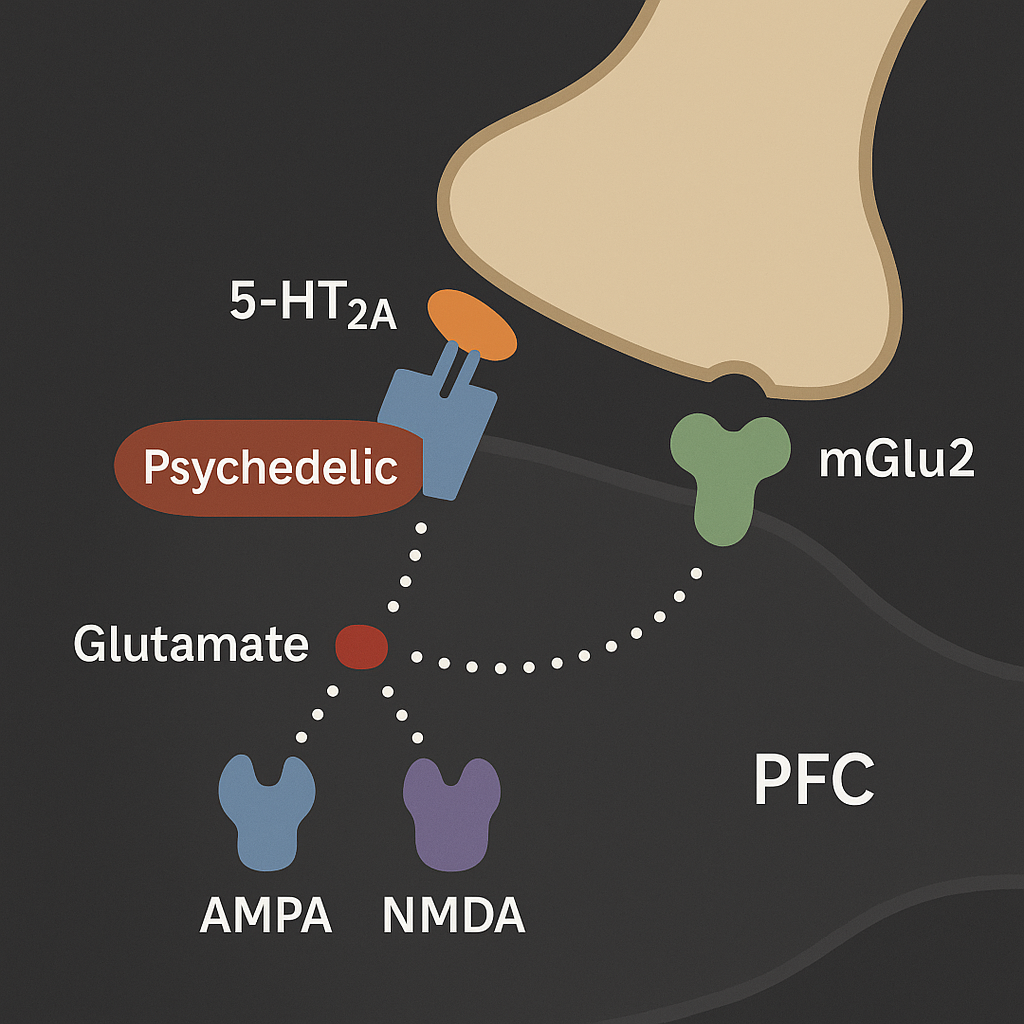
The 5-HT2A receptor forms a heterodimer with mGlu2, which normally exerts inhibitory effects on glutamate release. When psychedelics bind to 5-HT2A, they block this inhibition, leading to increased glutamate release in the PFC and stronger AMPA and NMDA receptor activity.
You probably already know how significant that is for cognition and learning. But glutamate alone isn't enough for true long-term improvements. That’s where the second pathway comes in.
The second pathway - intracellular 5-HT2A activation:
Most serotonin receptors exist on the cell surface, but 5-HT2A is also found inside neurons, particularly in the Golgi apparatus of layer V pyramidal neurons.
This intracellular 5-HT2A receptor appears to be key for long-term neuroplasticity. Research suggests it activates mTOR-C1, which functions as a master regulator for synaptic growth, rewiring, and remodeling of the brain.
Only neuronally permeable 5-HT2A agonists like DMT and psilocin can reach this intracellular receptor. Serotonin itself can't, which is why SSRIs fail to trigger these deeper neuroplastic mechanisms, they simply never reach the target that may truly matter for long-term cognitive remodeling.
Dopamine focus and productivity:
Activity at these receptors doesn't just boost neuroplasticity; it also refines dopamine signaling.
Unlike stimulants, which spike dopamine across all brain regions (which can lead to impulsivity and addiction),
5-HT2A activation directs dopamine toward the PFC, reinforcing high-effort, goal-driven behavior and productivity.
The 5-HT2A receptor also exists on GABAergic interneurons, which help synchronize the firing of pyramidal neurons. This creates gamma oscillations, brainwave patterns strongly associated with improved attention, learning, and memory. These interneurons also prevent excitotoxicity by keeping neural excitation balanced.
Microdosing - the optimal range:
For enhancing motivation, cognition, and neuroplasticity, microdosing is generally considered the practical approach. Too high of a dose becomes counterproductive, you’ll trip before you reach the real cognitive benefits.
DMT is noted as potentially the most effective here, it has the highest neuronal permeability and can strongly activate intracellular 5-HT2A.
LSD and psilocybin can still help, but their perceptual effects become too strong before they reach that same depth of intracellular activation.

Approximate dosing guidelines:
When it comes to DMT microdosing, you're looking at somewhere between 3 to 7 milligrams when smoked or inhaled. This dose stays below the perceptual threshold while still activating those neuroplasticity pathways we talked about. You won't hallucinate, but your brain is still rewiring.
For psilocybin, a typical microdose would be around 0.1 to 0.5 grams of dried mushroom material, or if you're measuring pure psilocybin, somewhere in the range of 0.5 to 2 milligrams. At this level, you get minimal visual effects and can maintain clear cognitive function throughout your day.
LSD microdosing usually sits at around 5 to 15 micrograms. At this dose, you might notice some threshold effects like colors being slightly more vibrant or thoughts flowing more freely, but you're still operating with a clear head and genuine productivity.
As for frequency, most people run protocols involving one to three times per week, or sometimes every other day, with regular breaks built in. The breaks are actually important because they help you assess what's working and prevent your body from building tolerance. Everyone's different though, so what works for one person might not work for another.
Keep in mind these are general reference ranges. Individual sensitivity varies dramatically between people. The smart approach is to start low with whatever you're using, titrate carefully based on how you respond, and do your research thoroughly before you commit to anything. Set and setting matter a lot too, where you are and your mental state going in will influence how this all plays out.

summary:
- 5-HT2A controls cognition, emotion, and neuroplasticity.
- Psychedelics like DMT and psilocin activate both surface and intracellular receptors.
- Intracellular activation appears to trigger mTOR-C1, potentially driving long-term brain remodeling.
- Dopamine signaling is refined toward the PFC, enhancing focus and motivation.
- Gamma oscillations improve learning and memory synchronization.
- Microdosing may provide benefits without heavy hallucinations, though individual responses vary.
Important note:
These compounds carry serious legal, safety, and health considerations that vary significantly depending on where you live and your individual circumstances. Responses differ dramatically from person to person what gives one person incredible cognitive gains might hit another person totally different. Your environment and mental state matter more than people realize.
This thread is for educational purposes only. Before you even think about trying anything, do your own thorough research, look into the legal status where you are, and honestly consider consulting with medical professionals if it's relevant to your situation.

Thank you for reading:
Sorry for not posting a thread for a while bhai. I've been taking some time to work on myself these past days. I'm planning to make a full progress thread soon, showing what I've been doing, the techniques I've been testing, and general tips throughout the process.
Really excited to share it with all of you soon. Thank you again for reading and supporting. It means a lot to me.

Key Research References:
Introduction:
Hello bhai, today you'll learn how potent psychedelics actually are as cognitive enhancers and why emerging research suggests they may outperform many conventional nootropics and SSRIs for neuroplasticity.
To understand how and why they work so effectively, let's go through some basic background first.
The prefrontal cortex and the 5-HT2A receptor:
The prefrontal cortex (PFC) is the brain's executive control center, responsible for cognition, decision-making, and emotional regulation. At the center of these functions lies 5-HT2A, the most highly expressed serotonin receptor in the PFC.
Unlike SSRIs, which simply increase extracellular serotonin for clinical depression management, 5-HT2A agonist psychoplastogens like DMT and psilocybin work through different mechanisms that research indicates enhance neuroplasticity, cognition, and emotional stability through two major pathways.
The first pathway - glutamate modulation:
The 5-HT2A receptor forms a heterodimer with mGlu2, which normally exerts inhibitory effects on glutamate release. When psychedelics bind to 5-HT2A, they block this inhibition, leading to increased glutamate release in the PFC and stronger AMPA and NMDA receptor activity.
You probably already know how significant that is for cognition and learning. But glutamate alone isn't enough for true long-term improvements. That’s where the second pathway comes in.
The second pathway - intracellular 5-HT2A activation:
Most serotonin receptors exist on the cell surface, but 5-HT2A is also found inside neurons, particularly in the Golgi apparatus of layer V pyramidal neurons.
This intracellular 5-HT2A receptor appears to be key for long-term neuroplasticity. Research suggests it activates mTOR-C1, which functions as a master regulator for synaptic growth, rewiring, and remodeling of the brain.
Only neuronally permeable 5-HT2A agonists like DMT and psilocin can reach this intracellular receptor. Serotonin itself can't, which is why SSRIs fail to trigger these deeper neuroplastic mechanisms, they simply never reach the target that may truly matter for long-term cognitive remodeling.
Dopamine focus and productivity:
Activity at these receptors doesn't just boost neuroplasticity; it also refines dopamine signaling.
Unlike stimulants, which spike dopamine across all brain regions (which can lead to impulsivity and addiction),
5-HT2A activation directs dopamine toward the PFC, reinforcing high-effort, goal-driven behavior and productivity.
The 5-HT2A receptor also exists on GABAergic interneurons, which help synchronize the firing of pyramidal neurons. This creates gamma oscillations, brainwave patterns strongly associated with improved attention, learning, and memory. These interneurons also prevent excitotoxicity by keeping neural excitation balanced.
Microdosing - the optimal range:
For enhancing motivation, cognition, and neuroplasticity, microdosing is generally considered the practical approach. Too high of a dose becomes counterproductive, you’ll trip before you reach the real cognitive benefits.
DMT is noted as potentially the most effective here, it has the highest neuronal permeability and can strongly activate intracellular 5-HT2A.
LSD and psilocybin can still help, but their perceptual effects become too strong before they reach that same depth of intracellular activation.
Approximate dosing guidelines:
When it comes to DMT microdosing, you're looking at somewhere between 3 to 7 milligrams when smoked or inhaled. This dose stays below the perceptual threshold while still activating those neuroplasticity pathways we talked about. You won't hallucinate, but your brain is still rewiring.
For psilocybin, a typical microdose would be around 0.1 to 0.5 grams of dried mushroom material, or if you're measuring pure psilocybin, somewhere in the range of 0.5 to 2 milligrams. At this level, you get minimal visual effects and can maintain clear cognitive function throughout your day.
LSD microdosing usually sits at around 5 to 15 micrograms. At this dose, you might notice some threshold effects like colors being slightly more vibrant or thoughts flowing more freely, but you're still operating with a clear head and genuine productivity.
As for frequency, most people run protocols involving one to three times per week, or sometimes every other day, with regular breaks built in. The breaks are actually important because they help you assess what's working and prevent your body from building tolerance. Everyone's different though, so what works for one person might not work for another.
Keep in mind these are general reference ranges. Individual sensitivity varies dramatically between people. The smart approach is to start low with whatever you're using, titrate carefully based on how you respond, and do your research thoroughly before you commit to anything. Set and setting matter a lot too, where you are and your mental state going in will influence how this all plays out.
summary:
- 5-HT2A controls cognition, emotion, and neuroplasticity.
- Psychedelics like DMT and psilocin activate both surface and intracellular receptors.
- Intracellular activation appears to trigger mTOR-C1, potentially driving long-term brain remodeling.
- Dopamine signaling is refined toward the PFC, enhancing focus and motivation.
- Gamma oscillations improve learning and memory synchronization.
- Microdosing may provide benefits without heavy hallucinations, though individual responses vary.
Important note:
These compounds carry serious legal, safety, and health considerations that vary significantly depending on where you live and your individual circumstances. Responses differ dramatically from person to person what gives one person incredible cognitive gains might hit another person totally different. Your environment and mental state matter more than people realize.
This thread is for educational purposes only. Before you even think about trying anything, do your own thorough research, look into the legal status where you are, and honestly consider consulting with medical professionals if it's relevant to your situation.
Thank you for reading:
Sorry for not posting a thread for a while bhai. I've been taking some time to work on myself these past days. I'm planning to make a full progress thread soon, showing what I've been doing, the techniques I've been testing, and general tips throughout the process.
Really excited to share it with all of you soon. Thank you again for reading and supporting. It means a lot to me.
Key Research References:
Barre, A., et al. (2016) - Presynaptic serotonin 2A receptors modulate

 www.pnas.org
Zhang, G., & Stackman, R. W. Jr. (2015) - The role of serotonin 5-HT2A receptors in memory and cognition https://www.frontiersin.org/journals/pharmacology/articles/10.3389/fphar.2015.00225/full
Puig, M. V., et al. (2010) - Serotonin Modulates Fast-Spiking Interneuron and Gamma Oscillations in Prefrontal Cortex https://pmc.ncbi.nlm.nih.gov/articles/PMC6634052/
Vollenweider, F. X., et al. (2007) - AMPA receptor involvement in 5-hydroxytryptamine2A receptor-mediated effects

 pubmed.ncbi.nlm.nih.gov
Ly, C., et al. (2022) - Towards an understanding of psychedelic-induced neuroplasticity
 pmc.ncbi.nlm.nih.gov
Prochazkova, L., et al. (2018) - Psilocybin microdosing improves creative thinking and emotional creativity https://www.sciencedirect.com/science/article/abs/pii/S0278584618301994
Herin, D. V., et al. (2013) - Elevated expression of serotonin 5-HT2A receptors in the rat ventral tegmental area enhances vulnerability to the behavioral effects of cocaine

 www.frontiersin.org
Hadler, M. D., et al. (2024) - Gamma oscillation plasticity is mediated via parvalbumin-positive interneurons
PNAS
Proceedings of the National Academy of Sciences (PNAS), a peer reviewed journal of the National Academy of Sciences (NAS) - an authoritative source of high-impact, original research that broadly spans the biological, physical, and social sciences.
Zhang, G., & Stackman, R. W. Jr. (2015) - The role of serotonin 5-HT2A receptors in memory and cognition https://www.frontiersin.org/journals/pharmacology/articles/10.3389/fphar.2015.00225/full
Puig, M. V., et al. (2010) - Serotonin Modulates Fast-Spiking Interneuron and Gamma Oscillations in Prefrontal Cortex https://pmc.ncbi.nlm.nih.gov/articles/PMC6634052/
Vollenweider, F. X., et al. (2007) - AMPA receptor involvement in 5-hydroxytryptamine2A receptor-mediated effects
AMPA receptor involvement in 5-hydroxytryptamine2A receptor-mediated pre-frontal cortical excitatory synaptic currents and DOI-induced head shakes - PubMed
Glutamate plays an important role in the psychotomimetic effects of both channel blocking N-methyl D-aspartate (NMDA) receptor antagonists and hallucinogenic drugs which activate 5-hydroxytryptamine2A (5-HT2A) receptors. Previous work suggested that activation of non-NMDA ionotropic glutamate...
pubmed.ncbi.nlm.nih.gov
Ly, C., et al. (2022) - Towards an understanding of psychedelic-induced neuroplasticity
Towards an understanding of psychedelic-induced neuroplasticity - PMC
Classic psychedelics, such as LSD, psilocybin, and the DMT-containing beverage ayahuasca, show some potential to treat depression, anxiety, and addiction. Importantly, clinical improvements can last for months or years after treatment. It has been ...
pmc.ncbi.nlm.nih.gov
Prochazkova, L., et al. (2018) - Psilocybin microdosing improves creative thinking and emotional creativity https://www.sciencedirect.com/science/article/abs/pii/S0278584618301994
Herin, D. V., et al. (2013) - Elevated expression of serotonin 5-HT2A receptors in the rat ventral tegmental area enhances vulnerability to the behavioral effects of cocaine
Frontiers | Elevated Expression of Serotonin 5-HT2A Receptors in the Rat Ventral Tegmental Area Enhances Vulnerability to the Behavioral Effects of Cocaine
The dopamine mesocorticoaccumbens pathway which originates in the ventral tegmental area (VTA) and projects to the nucleus accumbens and prefrontal cortex is...
www.frontiersin.org
Hadler, M. D., et al. (2024) - Gamma oscillation plasticity is mediated via parvalbumin-positive interneurons


 It’s about how you do it. when it’s done in controlled microdoses under the right mindset and environment.