
Understanding Iris Pigmentation: Biology, Iridology & Eye Colour Change Theories

Sailor

Sailor

Rien n'est éternel.
Joined
Nov 15, 2025
Posts
795
Reputation
1,789
Table of contents:

1. Is eye colour really important?

2. Kerato Pigmentation

3. Stroma

4. What is iridology? And how we can use iridology to change the colour of our eye.

5. Drugs that could lighten your eye colour?

"is eye color really important?"
Short answer: YES.

"Why is eye colour important?"

"What is iridology? And how we can use iridology to change the colour of our eye?"

Iridology is the study that suggest the iris can act as a “map” of the body where patterns, colours and characteristics of the iris can tell us about your body’s health in a systematic way, Although iridology is widely considered as a pseudoscience due to the lack of evidence and statistics in many studies telling us that iridology is no better than chance in many cases.

While proponents suggest that iridology can reveal sites of irritation, disease, and nutritional imbalances, scientific investigations have largely discredited iridology being able to claim sites of irritation and disease but on the other hand there is not much data to disprove nutritional imbalances. Research indicates that the iris remains relatively unchanged throughout a person's life but me and @Hunter have found evidence to prove that you could potentially “detox” and find out your true eye colour, numerous studies have shown that iridologists do not perform better than chance when attempting to identify health issues based on iris examination. Although considered safe, misinterpretations by practitioners can lead to unnecessary anxiety or misplaced confidence in one's health status, potentially delaying necessary medical treatment. As of the twenty-first century, the medical community largely advises individuals to seek conventional medical care rather than rely on iridology for health assessments.

Studies suggesting iridology is not accurate for diagnosing health problems:

https://pubmed.ncbi.nlm.nih.gov/480560/
Suggests that iridology has no clinical or statistical viability in detecting kidney disease.


https://pubmed.ncbi.nlm.nih.gov/15992238/
iridology has no role in diagnosing cancer.


https://pubmed.ncbi.nlm.nih.gov/10213874/
A systematic review as to why iridology can’t be used to diagnose health problems accurately.
"The process of iridology and when was it first developed?"

The practice of iridology, first described in the 1600s but developed in the nineteenth century by Hungarian physician Ignatz von Péczely, claims that specific markings in the iris correspond to the health and function of organs and tissues in the body. Practitioners use tools such as magnifying glasses and flashlights, along with iris charts that organize the iris into zones linked to various body organs, to analyse patterns, colours, and light variations in the iris.

IMG 4258

But who says it can't be used for looksmaxxing? NOBODY!

How we can use iridology to change the colour of our eye.

Did you or somebody you know have blue or grey eyes at a young age? But the colour faded, becoming a dull brown or green? In many cases this is due to production of melanin in the iris as melanin is usually not fully active at birth.
But this analogy can be seen as inaccurate for changes in characteristics, patterns and colours that develop at a young age dulling your eye colour. “Mainstream” health experts have been led to believe or found “incorrect” evidence that it’s all an increase in melanin, but sometimes it’s because of toxins after all our skin color doesn’t change in colour when we are young and our eye colour is dulling. It is bizarre to assume that our eyes are affected by increased melanin at a older age when this is only the case at a younger age because
Skin melanocytes are active long before birth unlike melanocytes in the eye because the body needs to protect you from UV light immediately, this is why skin tone is stable at birth but your eye colour will dull from
grey → blue → green → hazel → brown depending on your genetics.

But we can’t use this argument to justify why some eyes look like this:
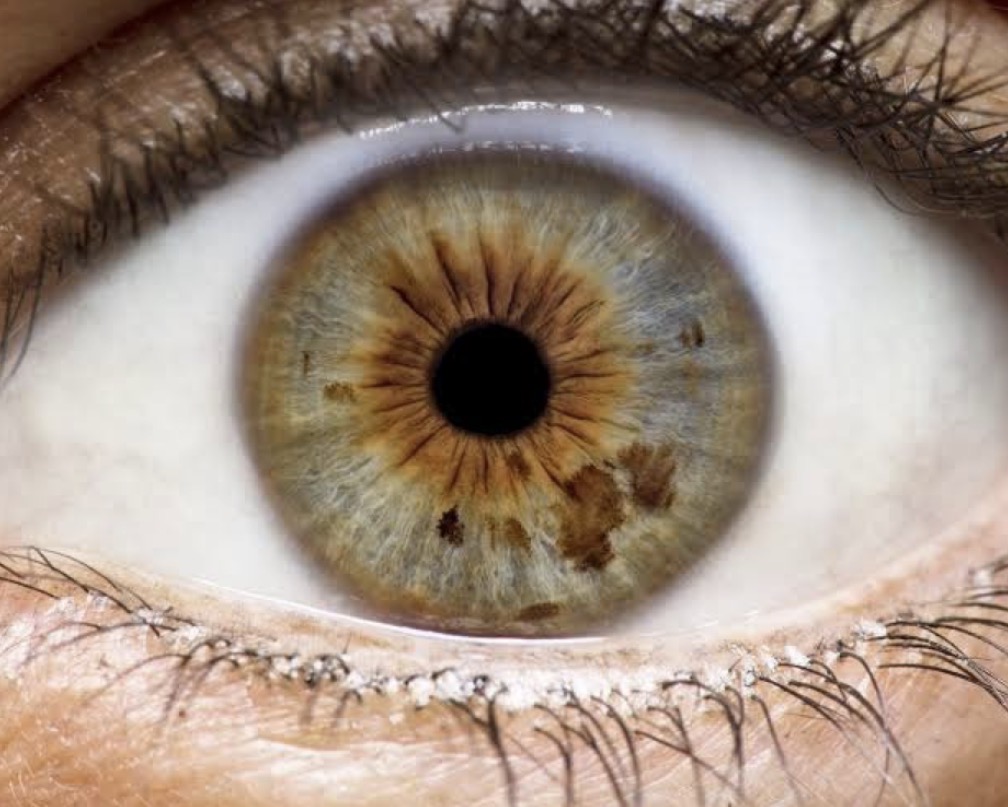
IMG 4259


To determine a real solution, we have to find something that truly accumulates as you age. Of course, the most logical explanation is environmental toxins in our diet and other external factors.

These toxins accumulate in you as you age, dispersing throughout the body. What we see as a “natural” darkening of the iris but it is in fact a layer of toxin on top of the original color of your eye. Typically this is the combination of heavy metals such as lead, copper, and iron.

This is an example of an individual who was injected with poison as part of an assasination attempt. The picture shows how his eyes changed colour within 1 hour of the injections:
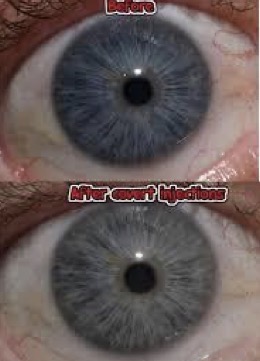
IMG 3857


We can clearly see that his eyes got lighter. The yellow in his eyes and the fibres became looser.This is a testable fact, if certain “toxins” enter your body, your lymphatic system will utilize lymph fluid to move those toxins to safer places.This is why toxins are first moved to fat cells,because when they are stored in your fat, they are less harmful. If it cannot store them in fat cells, it will store them around the organs and even in the organs if the “toxins” aren’t detoxified. This is why people with impaired liver function are always unhealthy overall. The liver is the detox organ of the body it detoxes everything, when you have a non-functioning liver then toxins will start accumulating within tissues. Example of toxins being stored in the eyes, in this case it is copper, and potentially uric acid/sulfur:
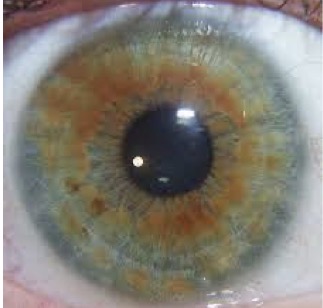
IMG 3858


The two ways eyes actually lighten in practice, Indirect method (detox route slower, but “reveals your true colour”)

Cutting the big lymph-cloggers: seed oils, microplastics, pesticides, tap water chemicals Direct Method (faster, more aggressive & forces more melanin switch Topical eye drops that push the melanin pathway from dark eumelanin → light pheomelanin
(same principle celebrity skin-lightening clinics use with glutathione IVs).

Working stack people are experimenting with (pharma-grade, sterile base):

𝑳-𝑮𝑳𝑼𝑨𝑻𝑨𝑻𝑯𝑰𝑶𝑵𝑬

𝑵𝑨𝑪 𝑶𝑹 𝑵-𝑨𝑪𝑬𝑻𝒀𝑳-𝑮𝑳𝑼𝑪𝑶𝑺𝑨𝑴𝑰𝑵𝑬

𝑴𝑺𝑴 + 𝑫𝑴𝑺𝑶 (𝑪𝒂𝒓𝒓𝒊𝒆𝒓𝒔)

𝑳𝑰𝑪𝑶𝑹𝑰𝑪𝑬 𝑹𝑶𝑶𝑻 𝑬𝑿𝑻𝑹𝑨𝑪𝑻/𝑨𝑳𝑷𝑯𝑨 𝑨𝑹𝑩𝑼𝑻𝑰𝑵 (𝑪𝒐𝒑𝒑𝒆𝒓 𝒄𝒉𝒆𝒍𝒂𝒕𝒐𝒓𝒔)

Some people see visible changes within weeks, some mess their eyes up. Not medical advice, do your own research.
True genetic eye color seems to only be light-medium blue or medium brown.
Almost everything else (green, hazel, central heterochromia, most dark brown) is some degree of overlayed metals, lipofuscin, and waste products. If you actually get your lymph system moving and stop eating junk you could potentially reveal lighter eyes underneath. Some dramatic, some subtle Or you can skip the 5year detox and try the dropper roulette (your call). That’s the whole theory from the looksmaxx angle people actually care about.

@Hunter helped me with this thread.
 
Last edited:
  • +1
  • Love it
Reactions: fraudedmtn, smg, rawmaxing and 14 others
@maximuslaid @11OUTTA10 here's the thread, messed it up the first time
 
  • +1
Reactions: alexias, NinjaRG9, Insomnia and 5 others
@Insomnia @foidhater123 @unon @Volksstaffel @Sink
 
  • +1
Reactions: alexias, NinjaRG9, unon and 5 others
@adeeyeah @Grilldaddy❤️ @Gengar
 
  • +1
Reactions: alexias, NinjaRG9, unon and 2 others
credits @Hunter helping me write this thread.
Table of contents:

1. Is eye colour really important?

2. Kerato Pigmentation

3. Stroma

4. What is iridology? And how we can use iridology to change the colour of our eye.

5. Drugs that could lighten your eye colour?

"is eye color really important?"
Short answer: YES.

"Why is eye colour important?"

"What is iridology? And how we can use iridology to change the colour of our eye?"

Iridology is the study that suggest the iris can act as a “map” of the body where patterns, colours and characteristics of the iris can tell us about your body’s health in a systematic way, Although iridology is widely considered as a pseudoscience due to the lack of evidence and statistics in many studies telling us that iridology is no better than chance in many cases.

While proponents suggest that iridology can reveal sites of irritation, disease, and nutritional imbalances, scientific investigations have largely discredited iridology being able to claim sites of irritation and disease but on the other hand there is not much data to disprove nutritional imbalances. Research indicates that the iris remains relatively unchanged throughout a person's life but me and @Hunter have found evidence to prove that you could potentially “detox” and find out your true eye colour, numerous studies have shown that iridologists do not perform better than chance when attempting to identify health issues based on iris examination. Although considered safe, misinterpretations by practitioners can lead to unnecessary anxiety or misplaced confidence in one's health status, potentially delaying necessary medical treatment. As of the twenty-first century, the medical community largely advises individuals to seek conventional medical care rather than rely on iridology for health assessments.

Studies suggesting iridology is not accurate for diagnosing health problems:

https://pubmed.ncbi.nlm.nih.gov/480560/
Suggests that iridology has no clinical or statistical viability in detecting kidney disease.


https://pubmed.ncbi.nlm.nih.gov/15992238/
iridology has no role in diagnosing cancer.


https://pubmed.ncbi.nlm.nih.gov/10213874/
A systematic review as to why iridology can’t be used to diagnose health problems accurately.
"The process of iridology and when was it first developed? "]The practice of iridology, first described in the 1600s but developed in the nineteenth century by Hungarian physician Ignatz von Péczely, claims that specific markings in the iris correspond to the health and function of organs and tissues in the body. Practitioners use tools such as magnifying glasses and flashlights, along with iris charts that organize the iris into zones linked to various body organs, to analyse patterns, colours, and light variations in the iris.

View attachment 4412602
But who says it can't be used for looksmaxxing? NOBODY!

How we can use iridology to change the colour of our eye.

Did you or somebody you know have blue or grey eyes at a young age? But the colour faded, becoming a dull brown or green? In many cases this is due to production of melanin in the iris as melanin is usually not fully active at birth.
But this analogy can be seen as inaccurate for changes in characteristics, patterns and colours that develop at a young age dulling your eye colour. “Mainstream” health experts have been led to believe or found “incorrect” evidence that it’s all an increase in melanin, but sometimes it’s because of toxins after all our skin color doesn’t change in colour when we are young and our eye colour is dulling. It is bizarre to assume that our eyes are affected by increased melanin at a older age when this is only the case at a younger age because
Skin melanocytes are active long before birth unlike melanocytes in the eye because the body needs to protect you from UV light immediately, this is why skin tone is stable at birth but your eye colour will dull from
grey → blue → green → hazel → brown depending on your genetics.

But we can’t use this argument to justify why some eyes look like this:
View attachment 4412601

To determine a real solution, we have to find something that truly accumulates as you age. Of course, the most logical explanation is environmental toxins in our diet and other external factors.

These toxins accumulate in you as you age, dispersing throughout the body. What we see as a “natural” darkening of the iris but it is in fact a layer of toxin on top of the original color of your eye. Typically this is the combination of heavy metals such as lead, copper, and iron.

This is an example of an individual who was injected with poison as part of an assasination attempt. The picture shows how his eyes changed colour within 1 hour of the injections:

View attachment 4412597

We can clearly see that his eyes got lighter. The yellow in his eyes and the fibres became looser.This is a testable fact, if certain “toxins” enter your body, your lymphatic system will utilize lymph fluid to move those toxins to safer places.This is why toxins are first moved to fat cells,because when they are stored in your fat, they are less harmful. If it cannot store them in fat cells, it will store them around the organs and even in the organs if the “toxins” aren’t detoxified. This is why people with impaired liver function are always unhealthy overall. The liver is the detox organ of the body it detoxes everything, when you have a non-functioning liver then toxins will start accumulating within tissues. Example of toxins being stored in the eyes, in this case it is copper, and potentially uric acid/sulfur:
View attachment 4412596

The two ways eyes actually lighten in practice, Indirect method (detox route slower, but “reveals your true colour”)

Cutting the big lymph-cloggers: seed oils, microplastics, pesticides, tap water chemicals Direct Method (faster, more aggressive & forces more melanin switch Topical eye drops that push the melanin pathway from dark eumelanin → light pheomelanin
(same principle celebrity skin-lightening clinics use with glutathione IVs).

Working stack people are experimenting with (pharma-grade, sterile base):

𝑳-𝑮𝑳𝑼𝑨𝑻𝑨𝑻𝑯𝑰𝑶𝑵𝑬

𝑵𝑨𝑪 𝑶𝑹 𝑵-𝑨𝑪𝑬𝑻𝒀𝑳-𝑮𝑳𝑼𝑪𝑶𝑺𝑨𝑴𝑰𝑵𝑬

𝑴𝑺𝑴 + 𝑫𝑴𝑺𝑶 (𝑪𝒂𝒓𝒓𝒊𝒆𝒓𝒔)

𝑳𝑰𝑪𝑶𝑹𝑰𝑪𝑬 𝑹𝑶𝑶𝑻 𝑬𝑿𝑻𝑹𝑨𝑪𝑻/𝑨𝑳𝑷𝑯𝑨 𝑨𝑹𝑩𝑼𝑻𝑰𝑵 (𝑪𝒐𝒑𝒑𝒆𝒓 𝒄𝒉𝒆𝒍𝒂𝒕𝒐𝒓𝒔)

Some people see visible changes within weeks, some mess their eyes up. Not medical advice, do your own research.
True genetic eye color seems to only be light-medium blue or medium brown.
Almost everything else (green, hazel, central heterochromia, most dark brown) is some degree of overlayed metals, lipofuscin, and waste products. If you actually get your lymph system moving and stop eating junk you could potentially reveal lighter eyes underneath. Some dramatic, some subtle Or you can skip the 5year detox and try the dropper roulette (your call). That’s the whole theory from the looksmaxx angle people actually care about.
My bhai, you always provide top tier threads. Future BOTB regular.
 
  • +1
  • Love it
Reactions: alexias, NinjaRG9, Insomnia and 1 other person
My bhai, you always provide top tier threads. Future BOTB regular.
love you brother, but i don't think so. no one is repping high effort threads anymore
 
  • +1
Reactions: alexias, NinjaRG9 and neuro.
credits @Hunter helping me write this thread.
Table of contents:

1. Is eye colour really important?

2. Kerato Pigmentation

3. Stroma

4. What is iridology? And how we can use iridology to change the colour of our eye.

5. Drugs that could lighten your eye colour?

"is eye color really important?"
Short answer: YES.

"Why is eye colour important?"

"What is iridology? And how we can use iridology to change the colour of our eye?"

Iridology is the study that suggest the iris can act as a “map” of the body where patterns, colours and characteristics of the iris can tell us about your body’s health in a systematic way, Although iridology is widely considered as a pseudoscience due to the lack of evidence and statistics in many studies telling us that iridology is no better than chance in many cases.

While proponents suggest that iridology can reveal sites of irritation, disease, and nutritional imbalances, scientific investigations have largely discredited iridology being able to claim sites of irritation and disease but on the other hand there is not much data to disprove nutritional imbalances. Research indicates that the iris remains relatively unchanged throughout a person's life but me and @Hunter have found evidence to prove that you could potentially “detox” and find out your true eye colour, numerous studies have shown that iridologists do not perform better than chance when attempting to identify health issues based on iris examination. Although considered safe, misinterpretations by practitioners can lead to unnecessary anxiety or misplaced confidence in one's health status, potentially delaying necessary medical treatment. As of the twenty-first century, the medical community largely advises individuals to seek conventional medical care rather than rely on iridology for health assessments.

Studies suggesting iridology is not accurate for diagnosing health problems:

https://pubmed.ncbi.nlm.nih.gov/480560/
Suggests that iridology has no clinical or statistical viability in detecting kidney disease.


https://pubmed.ncbi.nlm.nih.gov/15992238/
iridology has no role in diagnosing cancer.


https://pubmed.ncbi.nlm.nih.gov/10213874/
A systematic review as to why iridology can’t be used to diagnose health problems accurately.
"The process of iridology and when was it first developed? "]The practice of iridology, first described in the 1600s but developed in the nineteenth century by Hungarian physician Ignatz von Péczely, claims that specific markings in the iris correspond to the health and function of organs and tissues in the body. Practitioners use tools such as magnifying glasses and flashlights, along with iris charts that organize the iris into zones linked to various body organs, to analyse patterns, colours, and light variations in the iris.

View attachment 4412602
But who says it can't be used for looksmaxxing? NOBODY!

How we can use iridology to change the colour of our eye.

Did you or somebody you know have blue or grey eyes at a young age? But the colour faded, becoming a dull brown or green? In many cases this is due to production of melanin in the iris as melanin is usually not fully active at birth.
But this analogy can be seen as inaccurate for changes in characteristics, patterns and colours that develop at a young age dulling your eye colour. “Mainstream” health experts have been led to believe or found “incorrect” evidence that it’s all an increase in melanin, but sometimes it’s because of toxins after all our skin color doesn’t change in colour when we are young and our eye colour is dulling. It is bizarre to assume that our eyes are affected by increased melanin at a older age when this is only the case at a younger age because
Skin melanocytes are active long before birth unlike melanocytes in the eye because the body needs to protect you from UV light immediately, this is why skin tone is stable at birth but your eye colour will dull from
grey → blue → green → hazel → brown depending on your genetics.

But we can’t use this argument to justify why some eyes look like this:
View attachment 4412601

To determine a real solution, we have to find something that truly accumulates as you age. Of course, the most logical explanation is environmental toxins in our diet and other external factors.

These toxins accumulate in you as you age, dispersing throughout the body. What we see as a “natural” darkening of the iris but it is in fact a layer of toxin on top of the original color of your eye. Typically this is the combination of heavy metals such as lead, copper, and iron.

This is an example of an individual who was injected with poison as part of an assasination attempt. The picture shows how his eyes changed colour within 1 hour of the injections:

View attachment 4412597

We can clearly see that his eyes got lighter. The yellow in his eyes and the fibres became looser.This is a testable fact, if certain “toxins” enter your body, your lymphatic system will utilize lymph fluid to move those toxins to safer places.This is why toxins are first moved to fat cells,because when they are stored in your fat, they are less harmful. If it cannot store them in fat cells, it will store them around the organs and even in the organs if the “toxins” aren’t detoxified. This is why people with impaired liver function are always unhealthy overall. The liver is the detox organ of the body it detoxes everything, when you have a non-functioning liver then toxins will start accumulating within tissues. Example of toxins being stored in the eyes, in this case it is copper, and potentially uric acid/sulfur:
View attachment 4412596

The two ways eyes actually lighten in practice, Indirect method (detox route slower, but “reveals your true colour”)

Cutting the big lymph-cloggers: seed oils, microplastics, pesticides, tap water chemicals Direct Method (faster, more aggressive & forces more melanin switch Topical eye drops that push the melanin pathway from dark eumelanin → light pheomelanin
(same principle celebrity skin-lightening clinics use with glutathione IVs).

Working stack people are experimenting with (pharma-grade, sterile base):

𝑳-𝑮𝑳𝑼𝑨𝑻𝑨𝑻𝑯𝑰𝑶𝑵𝑬

𝑵𝑨𝑪 𝑶𝑹 𝑵-𝑨𝑪𝑬𝑻𝒀𝑳-𝑮𝑳𝑼𝑪𝑶𝑺𝑨𝑴𝑰𝑵𝑬

𝑴𝑺𝑴 + 𝑫𝑴𝑺𝑶 (𝑪𝒂𝒓𝒓𝒊𝒆𝒓𝒔)

𝑳𝑰𝑪𝑶𝑹𝑰𝑪𝑬 𝑹𝑶𝑶𝑻 𝑬𝑿𝑻𝑹𝑨𝑪𝑻/𝑨𝑳𝑷𝑯𝑨 𝑨𝑹𝑩𝑼𝑻𝑰𝑵 (𝑪𝒐𝒑𝒑𝒆𝒓 𝒄𝒉𝒆𝒍𝒂𝒕𝒐𝒓𝒔)

Some people see visible changes within weeks, some mess their eyes up. Not medical advice, do your own research.
True genetic eye color seems to only be light-medium blue or medium brown.
Almost everything else (green, hazel, central heterochromia, most dark brown) is some degree of overlayed metals, lipofuscin, and waste products. If you actually get your lymph system moving and stop eating junk you could potentially reveal lighter eyes underneath. Some dramatic, some subtle Or you can skip the 5year detox and try the dropper roulette (your call). That’s the whole theory from the looksmaxx angle people actually care about.
High effort
 
  • +1
Reactions: alexias, NinjaRG9 and Sailor
nice thread i will rep
 
  • +1
  • Love it
Reactions: alexias, NinjaRG9 and Sailor
@_xClarityyyy @zentro @Zagrosian. @TechnoBoss @BigBallsLarry
 
  • +1
Reactions: _xClarityyyy, alexias, NinjaRG9 and 3 others
Table of contents:

1. Is eye colour really important?

2. Kerato Pigmentation

3. Stroma

4. What is iridology? And how we can use iridology to change the colour of our eye.

5. Drugs that could lighten your eye colour?

"is eye color really important?"
Short answer: YES.

"Why is eye colour important?"

"What is iridology? And how we can use iridology to change the colour of our eye?"

Iridology is the study that suggest the iris can act as a “map” of the body where patterns, colours and characteristics of the iris can tell us about your body’s health in a systematic way, Although iridology is widely considered as a pseudoscience due to the lack of evidence and statistics in many studies telling us that iridology is no better than chance in many cases.

While proponents suggest that iridology can reveal sites of irritation, disease, and nutritional imbalances, scientific investigations have largely discredited iridology being able to claim sites of irritation and disease but on the other hand there is not much data to disprove nutritional imbalances. Research indicates that the iris remains relatively unchanged throughout a person's life but me and @Hunter have found evidence to prove that you could potentially “detox” and find out your true eye colour, numerous studies have shown that iridologists do not perform better than chance when attempting to identify health issues based on iris examination. Although considered safe, misinterpretations by practitioners can lead to unnecessary anxiety or misplaced confidence in one's health status, potentially delaying necessary medical treatment. As of the twenty-first century, the medical community largely advises individuals to seek conventional medical care rather than rely on iridology for health assessments.

Studies suggesting iridology is not accurate for diagnosing health problems:

https://pubmed.ncbi.nlm.nih.gov/480560/
Suggests that iridology has no clinical or statistical viability in detecting kidney disease.


https://pubmed.ncbi.nlm.nih.gov/15992238/
iridology has no role in diagnosing cancer.


https://pubmed.ncbi.nlm.nih.gov/10213874/
A systematic review as to why iridology can’t be used to diagnose health problems accurately.
"The process of iridology and when was it first developed?"

The practice of iridology, first described in the 1600s but developed in the nineteenth century by Hungarian physician Ignatz von Péczely, claims that specific markings in the iris correspond to the health and function of organs and tissues in the body. Practitioners use tools such as magnifying glasses and flashlights, along with iris charts that organize the iris into zones linked to various body organs, to analyse patterns, colours, and light variations in the iris.

View attachment 4412602
But who says it can't be used for looksmaxxing? NOBODY!

How we can use iridology to change the colour of our eye.

Did you or somebody you know have blue or grey eyes at a young age? But the colour faded, becoming a dull brown or green? In many cases this is due to production of melanin in the iris as melanin is usually not fully active at birth.
But this analogy can be seen as inaccurate for changes in characteristics, patterns and colours that develop at a young age dulling your eye colour. “Mainstream” health experts have been led to believe or found “incorrect” evidence that it’s all an increase in melanin, but sometimes it’s because of toxins after all our skin color doesn’t change in colour when we are young and our eye colour is dulling. It is bizarre to assume that our eyes are affected by increased melanin at a older age when this is only the case at a younger age because
Skin melanocytes are active long before birth unlike melanocytes in the eye because the body needs to protect you from UV light immediately, this is why skin tone is stable at birth but your eye colour will dull from
grey → blue → green → hazel → brown depending on your genetics.

But we can’t use this argument to justify why some eyes look like this:
View attachment 4412601

To determine a real solution, we have to find something that truly accumulates as you age. Of course, the most logical explanation is environmental toxins in our diet and other external factors.

These toxins accumulate in you as you age, dispersing throughout the body. What we see as a “natural” darkening of the iris but it is in fact a layer of toxin on top of the original color of your eye. Typically this is the combination of heavy metals such as lead, copper, and iron.

This is an example of an individual who was injected with poison as part of an assasination attempt. The picture shows how his eyes changed colour within 1 hour of the injections:

View attachment 4412597

We can clearly see that his eyes got lighter. The yellow in his eyes and the fibres became looser.This is a testable fact, if certain “toxins” enter your body, your lymphatic system will utilize lymph fluid to move those toxins to safer places.This is why toxins are first moved to fat cells,because when they are stored in your fat, they are less harmful. If it cannot store them in fat cells, it will store them around the organs and even in the organs if the “toxins” aren’t detoxified. This is why people with impaired liver function are always unhealthy overall. The liver is the detox organ of the body it detoxes everything, when you have a non-functioning liver then toxins will start accumulating within tissues. Example of toxins being stored in the eyes, in this case it is copper, and potentially uric acid/sulfur:
View attachment 4412596

The two ways eyes actually lighten in practice, Indirect method (detox route slower, but “reveals your true colour”)

Cutting the big lymph-cloggers: seed oils, microplastics, pesticides, tap water chemicals Direct Method (faster, more aggressive & forces more melanin switch Topical eye drops that push the melanin pathway from dark eumelanin → light pheomelanin
(same principle celebrity skin-lightening clinics use with glutathione IVs).

Working stack people are experimenting with (pharma-grade, sterile base):

𝑳-𝑮𝑳𝑼𝑨𝑻𝑨𝑻𝑯𝑰𝑶𝑵𝑬

𝑵𝑨𝑪 𝑶𝑹 𝑵-𝑨𝑪𝑬𝑻𝒀𝑳-𝑮𝑳𝑼𝑪𝑶𝑺𝑨𝑴𝑰𝑵𝑬

𝑴𝑺𝑴 + 𝑫𝑴𝑺𝑶 (𝑪𝒂𝒓𝒓𝒊𝒆𝒓𝒔)

𝑳𝑰𝑪𝑶𝑹𝑰𝑪𝑬 𝑹𝑶𝑶𝑻 𝑬𝑿𝑻𝑹𝑨𝑪𝑻/𝑨𝑳𝑷𝑯𝑨 𝑨𝑹𝑩𝑼𝑻𝑰𝑵 (𝑪𝒐𝒑𝒑𝒆𝒓 𝒄𝒉𝒆𝒍𝒂𝒕𝒐𝒓𝒔)

Some people see visible changes within weeks, some mess their eyes up. Not medical advice, do your own research.
True genetic eye color seems to only be light-medium blue or medium brown.
Almost everything else (green, hazel, central heterochromia, most dark brown) is some degree of overlayed metals, lipofuscin, and waste products. If you actually get your lymph system moving and stop eating junk you could potentially reveal lighter eyes underneath. Some dramatic, some subtle Or you can skip the 5year detox and try the dropper roulette (your call). That’s the whole theory from the looksmaxx angle people actually care about.

@Hunter helped me with this thread.
Impressive. Very nice
 
  • +1
  • Love it
Reactions: rawmaxing, alexias, BigBallsLarry and 1 other person
Future contributor
 
  • +1
  • Love it
Reactions: Sailor and alexias
Good shit bhai
 
  • +1
  • Love it
Reactions: alexias, Sailor and unon
Dabelyouuuuuu as always
 
  • +1
  • Love it
Reactions: alexias, Sailor and unon
Just eat raw meat bro
 
  • +1
Reactions: alexias
Table of contents:

1. Is eye colour really important?

2. Kerato Pigmentation

3. Stroma

4. What is iridology? And how we can use iridology to change the colour of our eye.

5. Drugs that could lighten your eye colour?

"is eye color really important?"
Short answer: YES.

"Why is eye colour important?"

"What is iridology? And how we can use iridology to change the colour of our eye?"

Iridology is the study that suggest the iris can act as a “map” of the body where patterns, colours and characteristics of the iris can tell us about your body’s health in a systematic way, Although iridology is widely considered as a pseudoscience due to the lack of evidence and statistics in many studies telling us that iridology is no better than chance in many cases.

While proponents suggest that iridology can reveal sites of irritation, disease, and nutritional imbalances, scientific investigations have largely discredited iridology being able to claim sites of irritation and disease but on the other hand there is not much data to disprove nutritional imbalances. Research indicates that the iris remains relatively unchanged throughout a person's life but me and @Hunter have found evidence to prove that you could potentially “detox” and find out your true eye colour, numerous studies have shown that iridologists do not perform better than chance when attempting to identify health issues based on iris examination. Although considered safe, misinterpretations by practitioners can lead to unnecessary anxiety or misplaced confidence in one's health status, potentially delaying necessary medical treatment. As of the twenty-first century, the medical community largely advises individuals to seek conventional medical care rather than rely on iridology for health assessments.

Studies suggesting iridology is not accurate for diagnosing health problems:

https://pubmed.ncbi.nlm.nih.gov/480560/
Suggests that iridology has no clinical or statistical viability in detecting kidney disease.


https://pubmed.ncbi.nlm.nih.gov/15992238/
iridology has no role in diagnosing cancer.


https://pubmed.ncbi.nlm.nih.gov/10213874/
A systematic review as to why iridology can’t be used to diagnose health problems accurately.
"The process of iridology and when was it first developed?"

The practice of iridology, first described in the 1600s but developed in the nineteenth century by Hungarian physician Ignatz von Péczely, claims that specific markings in the iris correspond to the health and function of organs and tissues in the body. Practitioners use tools such as magnifying glasses and flashlights, along with iris charts that organize the iris into zones linked to various body organs, to analyse patterns, colours, and light variations in the iris.

View attachment 4412602
But who says it can't be used for looksmaxxing? NOBODY!

How we can use iridology to change the colour of our eye.

Did you or somebody you know have blue or grey eyes at a young age? But the colour faded, becoming a dull brown or green? In many cases this is due to production of melanin in the iris as melanin is usually not fully active at birth.
But this analogy can be seen as inaccurate for changes in characteristics, patterns and colours that develop at a young age dulling your eye colour. “Mainstream” health experts have been led to believe or found “incorrect” evidence that it’s all an increase in melanin, but sometimes it’s because of toxins after all our skin color doesn’t change in colour when we are young and our eye colour is dulling. It is bizarre to assume that our eyes are affected by increased melanin at a older age when this is only the case at a younger age because
Skin melanocytes are active long before birth unlike melanocytes in the eye because the body needs to protect you from UV light immediately, this is why skin tone is stable at birth but your eye colour will dull from
grey → blue → green → hazel → brown depending on your genetics.

But we can’t use this argument to justify why some eyes look like this:
View attachment 4412601

To determine a real solution, we have to find something that truly accumulates as you age. Of course, the most logical explanation is environmental toxins in our diet and other external factors.

These toxins accumulate in you as you age, dispersing throughout the body. What we see as a “natural” darkening of the iris but it is in fact a layer of toxin on top of the original color of your eye. Typically this is the combination of heavy metals such as lead, copper, and iron.

This is an example of an individual who was injected with poison as part of an assasination attempt. The picture shows how his eyes changed colour within 1 hour of the injections:

View attachment 4412597

We can clearly see that his eyes got lighter. The yellow in his eyes and the fibres became looser.This is a testable fact, if certain “toxins” enter your body, your lymphatic system will utilize lymph fluid to move those toxins to safer places.This is why toxins are first moved to fat cells,because when they are stored in your fat, they are less harmful. If it cannot store them in fat cells, it will store them around the organs and even in the organs if the “toxins” aren’t detoxified. This is why people with impaired liver function are always unhealthy overall. The liver is the detox organ of the body it detoxes everything, when you have a non-functioning liver then toxins will start accumulating within tissues. Example of toxins being stored in the eyes, in this case it is copper, and potentially uric acid/sulfur:
View attachment 4412596

The two ways eyes actually lighten in practice, Indirect method (detox route slower, but “reveals your true colour”)

Cutting the big lymph-cloggers: seed oils, microplastics, pesticides, tap water chemicals Direct Method (faster, more aggressive & forces more melanin switch Topical eye drops that push the melanin pathway from dark eumelanin → light pheomelanin
(same principle celebrity skin-lightening clinics use with glutathione IVs).

Working stack people are experimenting with (pharma-grade, sterile base):

𝑳-𝑮𝑳𝑼𝑨𝑻𝑨𝑻𝑯𝑰𝑶𝑵𝑬

𝑵𝑨𝑪 𝑶𝑹 𝑵-𝑨𝑪𝑬𝑻𝒀𝑳-𝑮𝑳𝑼𝑪𝑶𝑺𝑨𝑴𝑰𝑵𝑬

𝑴𝑺𝑴 + 𝑫𝑴𝑺𝑶 (𝑪𝒂𝒓𝒓𝒊𝒆𝒓𝒔)

𝑳𝑰𝑪𝑶𝑹𝑰𝑪𝑬 𝑹𝑶𝑶𝑻 𝑬𝑿𝑻𝑹𝑨𝑪𝑻/𝑨𝑳𝑷𝑯𝑨 𝑨𝑹𝑩𝑼𝑻𝑰𝑵 (𝑪𝒐𝒑𝒑𝒆𝒓 𝒄𝒉𝒆𝒍𝒂𝒕𝒐𝒓𝒔)

Some people see visible changes within weeks, some mess their eyes up. Not medical advice, do your own research.
True genetic eye color seems to only be light-medium blue or medium brown.
Almost everything else (green, hazel, central heterochromia, most dark brown) is some degree of overlayed metals, lipofuscin, and waste products. If you actually get your lymph system moving and stop eating junk you could potentially reveal lighter eyes underneath. Some dramatic, some subtle Or you can skip the 5year detox and try the dropper roulette (your call). That’s the whole theory from the looksmaxx angle people actually care about.

@Hunter helped me with this thread.
Mirin bookmarked I will try this once I have enough funds
 
  • +1
Reactions: Sailor and NinjaRG9
Table of contents:

1. Is eye colour really important?

2. Kerato Pigmentation

3. Stroma

4. What is iridology? And how we can use iridology to change the colour of our eye.

5. Drugs that could lighten your eye colour?

"is eye color really important?"
Short answer: YES.

"Why is eye colour important?"

"What is iridology? And how we can use iridology to change the colour of our eye?"

Iridology is the study that suggest the iris can act as a “map” of the body where patterns, colours and characteristics of the iris can tell us about your body’s health in a systematic way, Although iridology is widely considered as a pseudoscience due to the lack of evidence and statistics in many studies telling us that iridology is no better than chance in many cases.

While proponents suggest that iridology can reveal sites of irritation, disease, and nutritional imbalances, scientific investigations have largely discredited iridology being able to claim sites of irritation and disease but on the other hand there is not much data to disprove nutritional imbalances. Research indicates that the iris remains relatively unchanged throughout a person's life but me and @Hunter have found evidence to prove that you could potentially “detox” and find out your true eye colour, numerous studies have shown that iridologists do not perform better than chance when attempting to identify health issues based on iris examination. Although considered safe, misinterpretations by practitioners can lead to unnecessary anxiety or misplaced confidence in one's health status, potentially delaying necessary medical treatment. As of the twenty-first century, the medical community largely advises individuals to seek conventional medical care rather than rely on iridology for health assessments.

Studies suggesting iridology is not accurate for diagnosing health problems:

https://pubmed.ncbi.nlm.nih.gov/480560/
Suggests that iridology has no clinical or statistical viability in detecting kidney disease.


https://pubmed.ncbi.nlm.nih.gov/15992238/
iridology has no role in diagnosing cancer.


https://pubmed.ncbi.nlm.nih.gov/10213874/
A systematic review as to why iridology can’t be used to diagnose health problems accurately.
"The process of iridology and when was it first developed?"

The practice of iridology, first described in the 1600s but developed in the nineteenth century by Hungarian physician Ignatz von Péczely, claims that specific markings in the iris correspond to the health and function of organs and tissues in the body. Practitioners use tools such as magnifying glasses and flashlights, along with iris charts that organize the iris into zones linked to various body organs, to analyse patterns, colours, and light variations in the iris.

View attachment 4412602
But who says it can't be used for looksmaxxing? NOBODY!

How we can use iridology to change the colour of our eye.

Did you or somebody you know have blue or grey eyes at a young age? But the colour faded, becoming a dull brown or green? In many cases this is due to production of melanin in the iris as melanin is usually not fully active at birth.
But this analogy can be seen as inaccurate for changes in characteristics, patterns and colours that develop at a young age dulling your eye colour. “Mainstream” health experts have been led to believe or found “incorrect” evidence that it’s all an increase in melanin, but sometimes it’s because of toxins after all our skin color doesn’t change in colour when we are young and our eye colour is dulling. It is bizarre to assume that our eyes are affected by increased melanin at a older age when this is only the case at a younger age because
Skin melanocytes are active long before birth unlike melanocytes in the eye because the body needs to protect you from UV light immediately, this is why skin tone is stable at birth but your eye colour will dull from
grey → blue → green → hazel → brown depending on your genetics.

But we can’t use this argument to justify why some eyes look like this:
View attachment 4412601

To determine a real solution, we have to find something that truly accumulates as you age. Of course, the most logical explanation is environmental toxins in our diet and other external factors.

These toxins accumulate in you as you age, dispersing throughout the body. What we see as a “natural” darkening of the iris but it is in fact a layer of toxin on top of the original color of your eye. Typically this is the combination of heavy metals such as lead, copper, and iron.

This is an example of an individual who was injected with poison as part of an assasination attempt. The picture shows how his eyes changed colour within 1 hour of the injections:

View attachment 4412597

We can clearly see that his eyes got lighter. The yellow in his eyes and the fibres became looser.This is a testable fact, if certain “toxins” enter your body, your lymphatic system will utilize lymph fluid to move those toxins to safer places.This is why toxins are first moved to fat cells,because when they are stored in your fat, they are less harmful. If it cannot store them in fat cells, it will store them around the organs and even in the organs if the “toxins” aren’t detoxified. This is why people with impaired liver function are always unhealthy overall. The liver is the detox organ of the body it detoxes everything, when you have a non-functioning liver then toxins will start accumulating within tissues. Example of toxins being stored in the eyes, in this case it is copper, and potentially uric acid/sulfur:
View attachment 4412596

The two ways eyes actually lighten in practice, Indirect method (detox route slower, but “reveals your true colour”)

Cutting the big lymph-cloggers: seed oils, microplastics, pesticides, tap water chemicals Direct Method (faster, more aggressive & forces more melanin switch Topical eye drops that push the melanin pathway from dark eumelanin → light pheomelanin
(same principle celebrity skin-lightening clinics use with glutathione IVs).

Working stack people are experimenting with (pharma-grade, sterile base):

𝑳-𝑮𝑳𝑼𝑨𝑻𝑨𝑻𝑯𝑰𝑶𝑵𝑬

𝑵𝑨𝑪 𝑶𝑹 𝑵-𝑨𝑪𝑬𝑻𝒀𝑳-𝑮𝑳𝑼𝑪𝑶𝑺𝑨𝑴𝑰𝑵𝑬

𝑴𝑺𝑴 + 𝑫𝑴𝑺𝑶 (𝑪𝒂𝒓𝒓𝒊𝒆𝒓𝒔)

𝑳𝑰𝑪𝑶𝑹𝑰𝑪𝑬 𝑹𝑶𝑶𝑻 𝑬𝑿𝑻𝑹𝑨𝑪𝑻/𝑨𝑳𝑷𝑯𝑨 𝑨𝑹𝑩𝑼𝑻𝑰𝑵 (𝑪𝒐𝒑𝒑𝒆𝒓 𝒄𝒉𝒆𝒍𝒂𝒕𝒐𝒓𝒔)

Some people see visible changes within weeks, some mess their eyes up. Not medical advice, do your own research.
True genetic eye color seems to only be light-medium blue or medium brown.
Almost everything else (green, hazel, central heterochromia, most dark brown) is some degree of overlayed metals, lipofuscin, and waste products. If you actually get your lymph system moving and stop eating junk you could potentially reveal lighter eyes underneath. Some dramatic, some subtle Or you can skip the 5year detox and try the dropper roulette (your call). That’s the whole theory from the looksmaxx angle people actually care about.

@Hunter helped me with this thread.
nice thread.😀
 
  • +1
Reactions: alexias and Sailor
nice thread, finally something being write by an looksmaxer not an 14y tiktok kid
 
  • +1
Reactions: Insomnia and Sailor
nice thread, finally something being write by an looksmaxer not an 14y tiktok kid
But unfortunately these kind of high effort threads don't get reps. No one even cares its so sad.
 
  • +1
Reactions: fraudedmtn

Similar threads

Prettyboymog
Replies
16
Views
265
Prettyboymog
Prettyboymog
DonaldJTrump
Replies
83
Views
3K
usernameamirite
usernameamirite
L
Replies
1
Views
117
Nexom
Nexom
IlIIlIIl
Replies
16
Views
356
kana
kana

Users who are viewing this thread

Back
Top