

iblamecarter
discord.gg/psl
- Joined
- Dec 7, 2025
- Posts
- 23
- Reputation
- 19
Sidenote: Before I get into this, I'd like to state that this is a guide that I've uploaded to a Discord server from around 2 months ago; it is all my work and my research, but it is nothing new. I simply just want to contribute and help out voicecels
Voicemaxxing Guide
Why bother with voicemaxxing?
In a world where first impressions can make or break opportunities, your voice is a silent powerhouse, shaping how others perceive you in every interaction. A deeper, optimized voice isn't just aesthetics; it profoundly impacts both professional and personal relationships by signaling traits like dominance, confidence, and trustworthiness, leading to better career advancements, stronger social bonds, and heightened romantic appeal. Deep voices are rated as more appealing, dominant, commanding, soothing, seductive, calming, confident, and masculine, giving you an edge in negotiations, leadership roles, and intimate connections where vocal cues predict outcomes like job interview success or dating compatibility.
The Voice Pill: How Brutal It Really Is:
The "voice pill" refers to the harsh reality that vocal traits can be a make-or-break factor in social, professional, and romantic success; often more influential than looks or words alone. Research underscores this: Lower-pitched voices (around 96-120Hz) are linked to perceptions of higher status, better mate quality, and increased trustworthiness, while higher pitches can signal weakness or lower dominance, limiting influence in group settings or relationships. Studies show men with deeper voices are preferred for leadership, seen as more credible, and even judged as less likely to be unfaithful in relationships. In professional contexts, low pitch correlates with higher standing among peers and better outcomes in high-stakes interactions. Personally, it enhances emotional bonds by conveying genuine depth and authority.
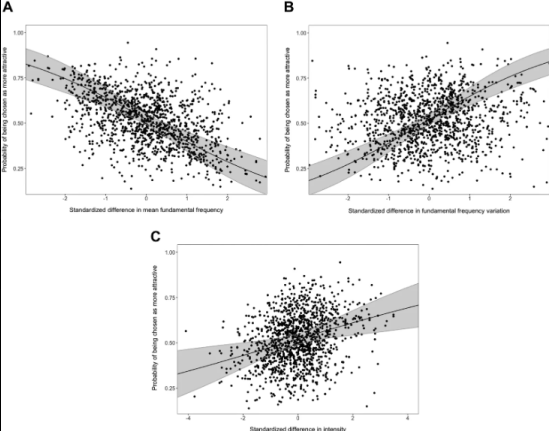
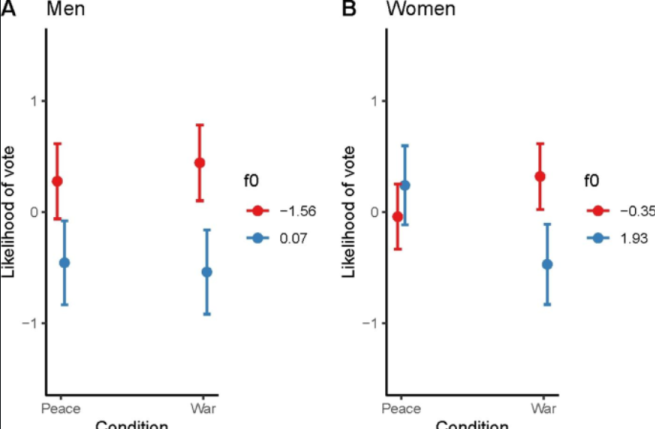
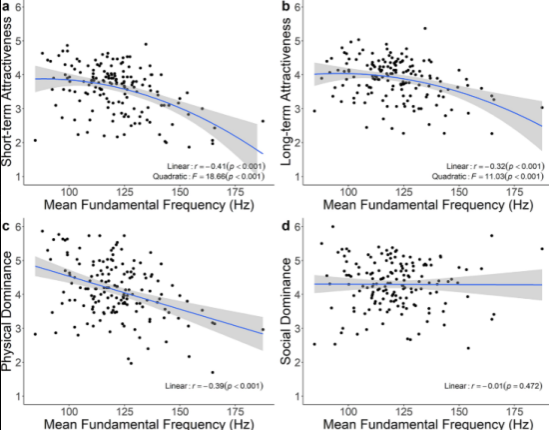
To illustrate the science, here are key graphs from the research:
- This graph shows the relationship between male voice pitch and attractiveness ratings, highlighting an optimal low range for peak appeal.
- depicts how lower pitch boosts perceived dominance and masculinity, with data points emphasizing the non-linear effects.
- This one links vocal parameters to body perceptions and social dominance, underscoring the "brutal" edge a deep voice provides.
Why 96Hz is the Most Attractive Frequency:
Studies on voice attractiveness show that lower-pitched male voices are perceived as more masculine, dominant, and appealing for long-term partnerships. Specifically, research analyzing vocal parameters found that the most attractive male voices hover around 96Hz fundamental frequency (F0), with a non-linear relationship; pitches much lower or higher become less appealing. This is linked to evolutionary signals of health and testosterone levels. Mid-range tones (e.g., 119Hz average) are also rated highly in some cultural contexts, but 96Hz strikes a balance for maximum appeal without sounding overly gravelly.
How to Voicemaxx: Practical Steps
1. Strengthen Your Neck Muscles (Sternocleidomastoids) for Deeper Resonance:
Place your hand on your throat: You'll feel two long muscles running from behind your ear to your collarbone—these are the sternocleidomastoids (SCMs), which enable directional neck movement (up/down, left/right). When tense, they press on your vocal cords, raising pitch and making your voice sound higher, less appealing, less confident, and weaker, limiting your influence in discussions or rooms full of people.
Relaxing and strengthening them lowers your voice naturally by reducing pressure. Train with neck curls (lie on back, lift head toward chest) or neck crunches (similar but with resistance like a plate on forehead for added weight). Start with 3 sets of 10-15 reps, 3-4 times weekly. You'll gain a thicker neck as a bonus, enhancing your masculine appearance.
Record before/after voice samples each session to track progress and adjust form, intensity, or frequency. Note: Your voice may temporarily rise as the untrained muscle adapts, but it will deepen with consistency. Always stretch post-session: Tilt head side-to-side, rotate chin away, and extend backward gently for 20-30 seconds per side to aid recovery and relaxation. Search for tutorial videos on "sternocleidomastoid stretches and exercises" for proper form demonstrations.
2. Master Diaphragmatic Breathing for Deeper Voice and Reduced Tension:
Shallow breathing (shoulders rising when inhaling) creates tension in the upper torso, neck, and vocal cords, raising pitch and limiting depth. Most people do this unconsciously, but it shifts pressure upward and strains the voice.
Switch to diaphragmatic (belly) breathing: Inhale deeply, allowing your stomach to expand outward while keeping your shoulders relaxed and unchanged. This increases airflow to the lungs efficiently, relaxes the larynx, and naturally lowers pitch for a deeper, more resonant voice.
Practice: Take a moment now; inhale slowly through your nose, feel your belly rise (not your chest/shoulders). Exhale fully. Make this a conscious habit like mewing; remind yourself daily until it becomes automatic (typically 30 days). Benefits extend beyond voice: reduces stress, improves oxygen efficiency, and boosts athletic performance and overall posture.
3. Stay Hydrated to Prevent Vocal Cord Shrinkage
Vocal cord depth and resonance depend on their size and hydration; dehydration shrinks them, making your voice thinner and squeakier (even if you're otherwise fit).
Drink plenty of water daily: Aim for 3-4 liters as a starting point (more if active). Avoid excessive soda or caffeine, which dehydrate. While water poisoning is rare and extreme, err on the side of more water for optimal vocal health and a deeper tone.
4. Practice "Down Talking" for Perceived Depth
Down-talking means gradually lowering your pitch toward the end of each sentence (like a subtle drop in tone). This creates a calm, authoritative cadence that makes your voice sound deeper and more commanding.
It improves listener comprehension, response, and perception of confidence. Simply focus on dropping your tone as you finish a thought, practice in recordings or conversations to make it natural.
5. Use the Straw Technique for Vocal Cord Relaxation
Blow bubbles through a straw into a glass of water (or just hum/sigh through it). This increases airflow through the vocal cords, gently stretches and relaxes throat muscles, reducing tension and promoting deeper resonance.
Do this for 5-10 minutes daily—it's a quick, low-effort way to loosen up and access lower registers.
6. Adopt a Monotone Delivery for Enhanced Depth Perception
A monotone voice isn't about being boring; it's about speaking with consistent volume and minimal pitch variation (avoid dramatic ups/downs). This creates a steady, low rumble that makes your voice sound deeper and more controlled.
Effect: Listeners perceive it as calmer, more confident, and authoritative (think stoic leaders). Combine with down-talking for maximum impact, your words carry weight without rising in pitch.
7. Breathe Through Your Nose (Tie to Mewing)
Mouth breathing during speech raises pitch and adds nasality. Nasal breathing (via mewing posture: tongue on the roof of the mouth) keeps airflow low and relaxed, supporting deeper tones.
Habit: Keep your mouth closed when not speaking—nose breathing becomes the default with practice.
8. Incorporate Aspiration for Smooth, Seductive Depth
Aspiration means adding a soft, breathy quality (a gentle "hiss" or airy onset) to your vowels, like Tom Hiddleston’s signature smooth, velvety delivery (e.g., in Loki or interviews).
How to perform: Start words with a light exhale of air before the vowel (e.g., "hello" with a faint "h" breath). This relaxes the vocal cords, reduces harshness, and adds a seductive, calming layer that makes your deep voice more appealing and magnetic.
Social Impact: Deep Voice + Listening = Dominant Masculinity
The most valuable man in the room isn't necessarily the loudest, soft-spoken leaders command respect by being selective, fostering trust and assertiveness. Combining a deep voice with active listening makes your words carry more meaning: You're seen as empathetic, dominant, and masculine, boosting relationships and influence. People lean in, perceiving you as confident and in control.
Track progress with a voice recorder app (aim for 96Hz via pitch analysis). Results vary, but consistency yields changes in weeks. Consult a vocal coach if needed for personalized tweaks.
Videos
- For Diaphragmatic Breathing
- For Example of Aspirating
- For Example on Neck Training
- 96Hz Frequency
- 120Hz Frequency
- Strawmaxxing
If you made it this far, thank you for reading through that. I hope it helped. I tried to provide videos on the methods/related content that may not have been so obvious. ciao fuckers