BAC
Welcome to BP brotha
- Joined
- Jun 20, 2026
- Posts
- 71
- Reputation
- 44
A Mechanical Guide to "Chin Pushing": A New Method for Suprahyoid Hypertrophy
This guide outlines a new training methodology termed Chin Pushing, designed for isolating and hypertrophying the musculature surrounding the hyoid bone—specifically the suprahyoid muscles. The objective of this protocol is to develop the upper neck and enhance the definition of the submental (under-jaw) region through targeted resistance.
Unlike standard neck flexion, this movement utilizes a targeted, vertical resistance path performed from a supine (lying on your back) position.
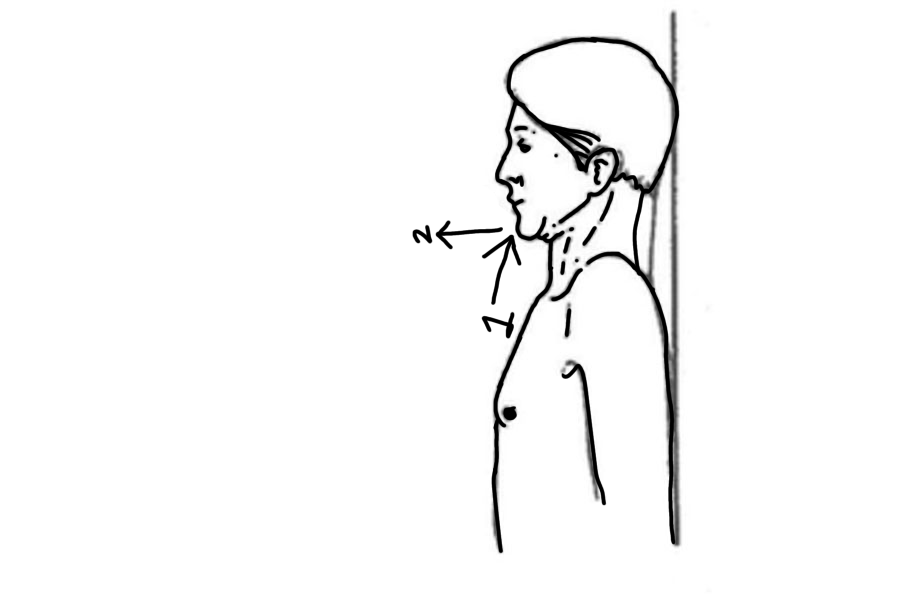
Please refer to this diagram
1. Positioning: Lie completely flat on your back on a solid surface, such as the floor or a flat weight bench.
2. Cushioning: Place a small, folded towel or dense foam padding directly over your chin and jawline. This is necessary to distribute the pressure evenly and prevent the weight from compressing the bone uncomfortably.
Weight Placement [Arrow 1]: Position the resistance (such as a compact dumbbell or a small weight plate) directly onto the cushioned chin area. Use your fingers to lightly steady and stabilize the load to ensure it remains centered throughout the set.
The Chin Push Vector [Arrow 2]: Contract the anterior neck muscles to drive your chin upward and slightly forward against the resistance, following the vector indicated by the arrow. MAKE SURE TO BITE DOWN TO MAKE SURE JAW RECESSION DOESNT HAPPEN. Focus on achieving a deep contraction in the muscles immediately beneath the jawline to maximize tension on the suprahyoid group.
Technical Recommendations
Tempo: Execute each repetition with a slow, deliberate cadence. Avoid using momentum or jerking the weight, as the cervical stabilizers require strict control.
Volume: Target a hypertrophy range of 12 to 20 controlled repetitions per set to maximize the metabolic pump in these specific muscle groups.
Precaution: Maintain manual contact with the weight at all times to prevent the load from shifting or losing balance during the movement.
This guide outlines a new training methodology termed Chin Pushing, designed for isolating and hypertrophying the musculature surrounding the hyoid bone—specifically the suprahyoid muscles. The objective of this protocol is to develop the upper neck and enhance the definition of the submental (under-jaw) region through targeted resistance.
Unlike standard neck flexion, this movement utilizes a targeted, vertical resistance path performed from a supine (lying on your back) position.
Please refer to this diagram
1. Positioning: Lie completely flat on your back on a solid surface, such as the floor or a flat weight bench.
2. Cushioning: Place a small, folded towel or dense foam padding directly over your chin and jawline. This is necessary to distribute the pressure evenly and prevent the weight from compressing the bone uncomfortably.
Weight Placement [Arrow 1]: Position the resistance (such as a compact dumbbell or a small weight plate) directly onto the cushioned chin area. Use your fingers to lightly steady and stabilize the load to ensure it remains centered throughout the set.
The Chin Push Vector [Arrow 2]: Contract the anterior neck muscles to drive your chin upward and slightly forward against the resistance, following the vector indicated by the arrow. MAKE SURE TO BITE DOWN TO MAKE SURE JAW RECESSION DOESNT HAPPEN. Focus on achieving a deep contraction in the muscles immediately beneath the jawline to maximize tension on the suprahyoid group.
Technical Recommendations
Tempo: Execute each repetition with a slow, deliberate cadence. Avoid using momentum or jerking the weight, as the cervical stabilizers require strict control.
Volume: Target a hypertrophy range of 12 to 20 controlled repetitions per set to maximize the metabolic pump in these specific muscle groups.
Precaution: Maintain manual contact with the weight at all times to prevent the load from shifting or losing balance during the movement.
Last edited: