








JohnKing1
Iron
- Joined
- Jun 8, 2025
- Posts
- 103
- Reputation
- 43
ASPD is often perceived as a burden to self and society; however, it can also provide numerous benefits through the various traits associated with having this disorder. In contemporary society, success is primarily rewarded through efficacy rather than virtue, and there are many traits associated with ASPD that support this idea. People who experience little or no guilt, social pressure, or emotional reservations can often pursue their goals with a level of concentration that most people will have difficulty attaining. People may be restricted by their fear of judgment, anxiety regarding failure, or fear about how their behavior impacts others, whereas individuals with ASPD tend to not have these same restrictions. ASPD traits provide a great deal of freedom to operate in a very competitive society and therefore can provide an excellent competitive advantage. Society may claim that it values empathy more than anything; however, the reality is that it always rewards people who are confident, decisive, and willing to place greater importance on outcomes than on feelings.
The economic advantages are also evident. A business's financial success depends on factors such as negotiation, risk-taking, and the ability to make tough, unemotional decisions. Those who exhibit traits associated with ASPD may excel in careers where others would struggle, as they often identify the same opportunities that would seem risky to typical people. They also tend to have a decreased fear of uncertainty, be less sensitive to criticism, and be more willing to pursue their goals despite barriers. In contrast to individuals who spend years questioning themselves, seeking validation, or fearing they might fail, an individual with ASPD might use that same time and energy to advance in their career. Therefore, it is not surprising that competitive systems often reward those who are willing to take risks, challenge traditional values, and put success above comfort. Modern economies are designed almost completely to reward the same traits that contribute to the ASPD characteristics.
The advantages associated with individuals having ASPD in the area of relationships are substantial, although seldom mentioned as part of an overall social context. Individuals possessing characteristics such as confidence, emotional independence, assertiveness and fearlessness are viewed as the most attractive universally in interpersonal relationships, and they often exhibit some if not all of these characteristics naturally. That is, most individuals would present themselves as more confident, less needy and exhibit greater resistance to the threat of rejection than would others in the same peer group. However, while many people will deal with some form of either insecurity, lack of self-esteem, jealousy or fear of abandonment, an individual with ASPD traits will frequently be able to enter and exit all types of relationships (including romantic) with the emotional detachment that protects them from the vast majority of vulnerabilities experienced by individuals who do not have ASPD. As a result, people with ASPD traits will often come across as more confident, stronger, more desirable, and more interesting than individuals without ASPD; thus, it is not uncommon for an individual who has exhibited necessary actions to bring about a successful relationship to receive more attention than others who have not. In summary, confidence (or perceived strength) as a driving force of attraction generally supersedes actions demonstrating kindness in romantic relationships and explains why a person who exhibits those two attributes will frequently receive the greatest amount of attention in romantic environments.
Additionally, the societal advantages associated with ASPD extend beyond relationships and economic contributions to society, to a resource for leadership during crisis situations; specifically, there is a lack of rewards for taking advantage of emotional sensitivity in emergencies. In an emergency situation where danger and chaos or uncertainty exists, decisive action (e.g., to save lives or property) is typically more important than emotional reflection (i.e., whether the person has any natural capacity for empathy). Individuals with ASPD are more likely to be effective in dealing with high-pressure situations because they are less likely to be paralyzed by feelings of fear, guilt or indecision, and therefore they can make difficult decisions in a timely manner, handle pressure without suffering complete breakdowns, and continue to have their action directed towards the desired objective while others are placed in a pausing state by uncertainty. In today’s world, societies depend on individuals who are willing to act when the situation is uncomfortable; ASPD provides that ability.
Individuals with ASPD are typically less susceptible to manipulation via societal variables, such as feelings of shame or social obligation, than individuals without ASPD. An individual's ability to act outside of social norms provides them with the potential for developing originality and nonconformity. The majority of people do not live their lives in accordance with written rules due to their fear of disapproving others, whereas individuals with ASPD may feel little or no obligation to conform to societal norms for any reason. The willingness of people with ASPD traits to disregard the societal norms can give rise to innovative ideas, disruptive behaviours, and new modes of thinking. Almost every significant social advancement can be attributed to one individual deciding to defy accepted societal norms instead of complying with them.
In general, the negative stigma that society has placed upon ASPD traits and behaviours may reflect sociocultural norms rather than reflecting the actual needs of our society. The post-industrial world creates rewards (i.e., wealth) for ambition, confidence, resilience, competitiveness, emotional control, risk tolerance, and independence, all of which are characteristics commonly associated with individuals with ASPD. Critics have focused on the potential negative consequence of possessing SAPD characteristic traits, while neglecting to recognize how frequently these same traits create wealth, develop leaders, attract others, generate ideas and achieve other significant accomplishments.


The economic advantages are also evident. A business's financial success depends on factors such as negotiation, risk-taking, and the ability to make tough, unemotional decisions. Those who exhibit traits associated with ASPD may excel in careers where others would struggle, as they often identify the same opportunities that would seem risky to typical people. They also tend to have a decreased fear of uncertainty, be less sensitive to criticism, and be more willing to pursue their goals despite barriers. In contrast to individuals who spend years questioning themselves, seeking validation, or fearing they might fail, an individual with ASPD might use that same time and energy to advance in their career. Therefore, it is not surprising that competitive systems often reward those who are willing to take risks, challenge traditional values, and put success above comfort. Modern economies are designed almost completely to reward the same traits that contribute to the ASPD characteristics.
The advantages associated with individuals having ASPD in the area of relationships are substantial, although seldom mentioned as part of an overall social context. Individuals possessing characteristics such as confidence, emotional independence, assertiveness and fearlessness are viewed as the most attractive universally in interpersonal relationships, and they often exhibit some if not all of these characteristics naturally. That is, most individuals would present themselves as more confident, less needy and exhibit greater resistance to the threat of rejection than would others in the same peer group. However, while many people will deal with some form of either insecurity, lack of self-esteem, jealousy or fear of abandonment, an individual with ASPD traits will frequently be able to enter and exit all types of relationships (including romantic) with the emotional detachment that protects them from the vast majority of vulnerabilities experienced by individuals who do not have ASPD. As a result, people with ASPD traits will often come across as more confident, stronger, more desirable, and more interesting than individuals without ASPD; thus, it is not uncommon for an individual who has exhibited necessary actions to bring about a successful relationship to receive more attention than others who have not. In summary, confidence (or perceived strength) as a driving force of attraction generally supersedes actions demonstrating kindness in romantic relationships and explains why a person who exhibits those two attributes will frequently receive the greatest amount of attention in romantic environments.
Additionally, the societal advantages associated with ASPD extend beyond relationships and economic contributions to society, to a resource for leadership during crisis situations; specifically, there is a lack of rewards for taking advantage of emotional sensitivity in emergencies. In an emergency situation where danger and chaos or uncertainty exists, decisive action (e.g., to save lives or property) is typically more important than emotional reflection (i.e., whether the person has any natural capacity for empathy). Individuals with ASPD are more likely to be effective in dealing with high-pressure situations because they are less likely to be paralyzed by feelings of fear, guilt or indecision, and therefore they can make difficult decisions in a timely manner, handle pressure without suffering complete breakdowns, and continue to have their action directed towards the desired objective while others are placed in a pausing state by uncertainty. In today’s world, societies depend on individuals who are willing to act when the situation is uncomfortable; ASPD provides that ability.
Individuals with ASPD are typically less susceptible to manipulation via societal variables, such as feelings of shame or social obligation, than individuals without ASPD. An individual's ability to act outside of social norms provides them with the potential for developing originality and nonconformity. The majority of people do not live their lives in accordance with written rules due to their fear of disapproving others, whereas individuals with ASPD may feel little or no obligation to conform to societal norms for any reason. The willingness of people with ASPD traits to disregard the societal norms can give rise to innovative ideas, disruptive behaviours, and new modes of thinking. Almost every significant social advancement can be attributed to one individual deciding to defy accepted societal norms instead of complying with them.
In general, the negative stigma that society has placed upon ASPD traits and behaviours may reflect sociocultural norms rather than reflecting the actual needs of our society. The post-industrial world creates rewards (i.e., wealth) for ambition, confidence, resilience, competitiveness, emotional control, risk tolerance, and independence, all of which are characteristics commonly associated with individuals with ASPD. Critics have focused on the potential negative consequence of possessing SAPD characteristic traits, while neglecting to recognize how frequently these same traits create wealth, develop leaders, attract others, generate ideas and achieve other significant accomplishments.






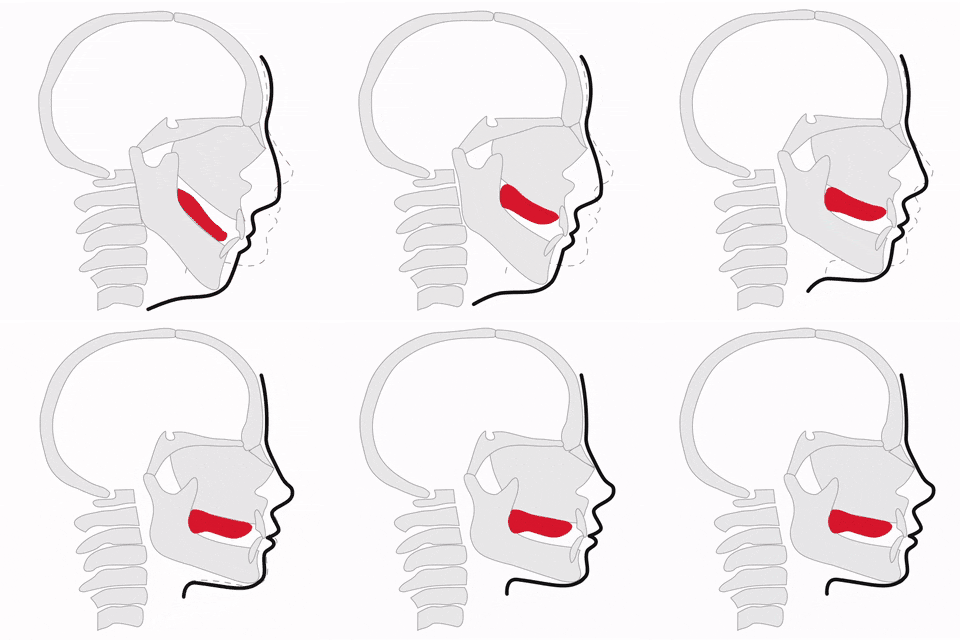
 brother thinks this works


