



Aryan Incel

𝕸𝖊𝖗𝖈𝖊𝖓𝖆𝖗𝖞 𝕮𝖔𝖗𝖕
- Joined
- Apr 30, 2025
- Posts
- 5,673
- Reputation
- 10,583
As many of you know leanmaxxing is the most effective looksmax out there. Now pharmaceuticals can be used to speed up and improve the ease at which people lose weight. Now onto an underrated pharmaceutical in this respect. Cagrilitide.
Now before understanding why to use it, we first need to understand how it works biologically.
Biology
Cagrilintide works by mimicking the hormone amylin and activating amylin signaling pathways.
Amylin is a peptide hormone co-secreted with insulin by pancreatic β-cells after you eat. Amylin’s job is to basically tell your body that you’ve eaten enough.
Cagrilitide activates Calcitonin receptor and RAMP proteins (RAMP1, RAMP2, or RAMP3). These receptors are activated to a greater extent in the postrema area of the brainstem and the nucleus tractus solitarius.
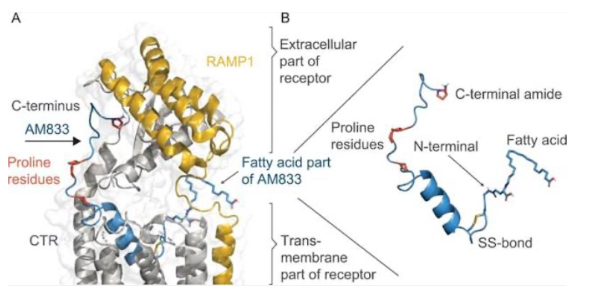
Cag also slows gastric emptying.
However where Cagrilitide differs from Amylin is its been modified to last much longer in the body as well as binding to amylin receptors more strongly.
Why you should use it?
Cagrilitide on its own shows a decrease of around 11.8% (at 2.4 mg) in body weight in a 68 week period compared to the placebo of 2.3%. (1)
This falls short in comparison to other GLP-1’s like Reta (decreases body weight by 24.2% after 48 weeks) (2)
As well as tirz which showed a decrease in bodyweight of 20.2% and semaglutide a decrease of 13.7%. (3)
From what you’ve seen so far you’ll probably be thinking, why are you talking about cag if it has worse weight loss than the GLP-1’s? Well the answer is due to its synergistic nature when combined with the GLP-1’s. This is because unlike GLP-1’s, like Reta, it has different mechanisms of reducing appetite. This enables cag to be stacked with other GLP-1’s for stronger appetite suppression. We know this theory actually holds a lot of truth as this 2025 studied showed adding Cag on top of a GLP-1 enables a significant increase in weight loss compared to just using a GLP-1 by itself. (4)
In terms of how much lean mass cag preserves, it is somewhat unknown. This is because the only study on the effects of cag on lean mass doesn’t account for cag by itself but rather the effects of Semaglutide with Cagrilitide on lean mass. In the study it showed that the combination of Cagrilitide and Semaglutide had similar lean mass loss to Semaglutide by itself. (I would like to clarify the study linked doesn’t directly compare Semaglutide vs Semaglutide + Cagrilitide but rather just shows the lean mass loss of Semaglutide + Cagrilitide, I’m saying it’s similar to Semaglutide due to prior studies showing a similar loss of lean mass to the linked study) (5)
However I would theorize using a combination of Reta and cag would have much better lean mass preservation than what was shown in the prior study.
These are the main benefits of Cag but there are some smaller but noteworthy ones, that are worth talking about.
It lowers post-meal glucose spikes due to cag slowing your gastric emptying so you break down carbs more slowly. (6)
Cag also suppresses post-prandial glucagon. (6)
And doesn’t directly stimulate insulin secretion unlike what GLP-1’s do.
Negatives
It may cause nausea and vomiting. (7)
It can also lead to slowed gastric emptying issues. (6)
How you should use it
How much to take of Cagrilitide and what else should you take?
What else should you take with Cagrilitide?
Although cag can work by itself it’s far more effective when you combine it with a GLP-1 antagonist.
What GLP-1 to take with it?
Only Semaglutide has been studied combined with Cagrilitide and results show a significant increase in effectiveness from just using Semaglutide alone. (4)
That being said I’d opt for a combination of Retatriutide and Cagrilitide instead due to its triple antagonism, compared to Semaglutide single antagonism and Tirzepatide which is a double antagonist. As well as Reta having a whole host of other benefits (highest weight loss on average in studies, highest preservation of lean mass, best improvement of lipid profile, etc).
Even though Reta hasn’t been studied with Cag we can assume that the combination of both will be beneficial. This is due to there synergistic mechanisms, as well as a lot of anecdotal evidence backing up that using both can be effective.
You should take between 5-10 mg of Reta. Start lower at 1 mg, then titrate up to your desired dosage.
Now how much Cag should you take?
From my research they found 2.4 mg to be the ‘sweet spot’ with this dose yielding the least amount of side effects like nausea and diarrhea whilst giving a substantial decrease in appetite.
However they usually used 4.5mg to give the most significant decrease in appetite however it came with an increase in severity in the side effects.
I’d start dosing at 0.2 mg then titrate up until you reach your desired amount of appetite suppression.
Conclusion
Cagrilitide can be an extremely useful tool for people who want to have steeper calorie deficiencies and push the limits of fat loss.
Hoped you enjoyed.
@chadisbeingmade @Orka @TechnoBoss @ybuyhgui @Hernan
Now before understanding why to use it, we first need to understand how it works biologically.
Biology
Cagrilintide works by mimicking the hormone amylin and activating amylin signaling pathways.
Amylin is a peptide hormone co-secreted with insulin by pancreatic β-cells after you eat. Amylin’s job is to basically tell your body that you’ve eaten enough.
Cagrilitide activates Calcitonin receptor and RAMP proteins (RAMP1, RAMP2, or RAMP3). These receptors are activated to a greater extent in the postrema area of the brainstem and the nucleus tractus solitarius.
Cag also slows gastric emptying.
However where Cagrilitide differs from Amylin is its been modified to last much longer in the body as well as binding to amylin receptors more strongly.
Why you should use it?
Cagrilitide on its own shows a decrease of around 11.8% (at 2.4 mg) in body weight in a 68 week period compared to the placebo of 2.3%. (1)
This falls short in comparison to other GLP-1’s like Reta (decreases body weight by 24.2% after 48 weeks) (2)
As well as tirz which showed a decrease in bodyweight of 20.2% and semaglutide a decrease of 13.7%. (3)
From what you’ve seen so far you’ll probably be thinking, why are you talking about cag if it has worse weight loss than the GLP-1’s? Well the answer is due to its synergistic nature when combined with the GLP-1’s. This is because unlike GLP-1’s, like Reta, it has different mechanisms of reducing appetite. This enables cag to be stacked with other GLP-1’s for stronger appetite suppression. We know this theory actually holds a lot of truth as this 2025 studied showed adding Cag on top of a GLP-1 enables a significant increase in weight loss compared to just using a GLP-1 by itself. (4)
In terms of how much lean mass cag preserves, it is somewhat unknown. This is because the only study on the effects of cag on lean mass doesn’t account for cag by itself but rather the effects of Semaglutide with Cagrilitide on lean mass. In the study it showed that the combination of Cagrilitide and Semaglutide had similar lean mass loss to Semaglutide by itself. (I would like to clarify the study linked doesn’t directly compare Semaglutide vs Semaglutide + Cagrilitide but rather just shows the lean mass loss of Semaglutide + Cagrilitide, I’m saying it’s similar to Semaglutide due to prior studies showing a similar loss of lean mass to the linked study) (5)
However I would theorize using a combination of Reta and cag would have much better lean mass preservation than what was shown in the prior study.
These are the main benefits of Cag but there are some smaller but noteworthy ones, that are worth talking about.
It lowers post-meal glucose spikes due to cag slowing your gastric emptying so you break down carbs more slowly. (6)
Cag also suppresses post-prandial glucagon. (6)
And doesn’t directly stimulate insulin secretion unlike what GLP-1’s do.
Negatives
It may cause nausea and vomiting. (7)
It can also lead to slowed gastric emptying issues. (6)
How you should use it
How much to take of Cagrilitide and what else should you take?
What else should you take with Cagrilitide?
Although cag can work by itself it’s far more effective when you combine it with a GLP-1 antagonist.
What GLP-1 to take with it?
Only Semaglutide has been studied combined with Cagrilitide and results show a significant increase in effectiveness from just using Semaglutide alone. (4)
That being said I’d opt for a combination of Retatriutide and Cagrilitide instead due to its triple antagonism, compared to Semaglutide single antagonism and Tirzepatide which is a double antagonist. As well as Reta having a whole host of other benefits (highest weight loss on average in studies, highest preservation of lean mass, best improvement of lipid profile, etc).
Even though Reta hasn’t been studied with Cag we can assume that the combination of both will be beneficial. This is due to there synergistic mechanisms, as well as a lot of anecdotal evidence backing up that using both can be effective.
You should take between 5-10 mg of Reta. Start lower at 1 mg, then titrate up to your desired dosage.
Now how much Cag should you take?
From my research they found 2.4 mg to be the ‘sweet spot’ with this dose yielding the least amount of side effects like nausea and diarrhea whilst giving a substantial decrease in appetite.
However they usually used 4.5mg to give the most significant decrease in appetite however it came with an increase in severity in the side effects.
I’d start dosing at 0.2 mg then titrate up until you reach your desired amount of appetite suppression.
Conclusion
Cagrilitide can be an extremely useful tool for people who want to have steeper calorie deficiencies and push the limits of fat loss.
Hoped you enjoyed.
@chadisbeingmade @Orka @TechnoBoss @ybuyhgui @Hernan















 what else do u do besides studying looksmax related coumpounds jeezz


