





Organ
was it all worth it?
- Joined
- Jul 9, 2026
- Posts
- 534
- Reputation
- 1,808
Canthoplasty Explained: Anatomy, Procedure and Risk
Comprehensive guide by Organ
I am not a medical professional, and the information provided here is for general educational and informational purposes only. It does not constitute professional medical advice, diagnosis, or treatment.
Table of Contents
1. What is a Canthoplasty
2. Who Actually Needs a Canthoplasty
3. The Anatomy
4. Types of Canthoplasty
5. The Procedure
6. Anesthesia & Surgical Time
7. Risks
8. Cost & Logistics
9. Disclaimer
1. What is a Canthoplasty?
Canthoplasty is surgery on the lateral canthal tendon, the anchor point at the outer corner of your eye where your upper & lower lids connect. The surgeon detaches this tendon and reattaches it in a new position, usually higher and tighter than where it started.

People confuse this with canthopexy a lot, canthopexy doesn't detach anything, the tendon just gets reinforced with sutures while staying attached where it already is. It is less invasive, has a less dramatic change, and a way shorter recovery. They are not the same surgery and they do not carry the same risks or recovery.
There's also lateral canthopexy vs medial canthopexy. Medial deals with the inner corner near your tear duct and is a completely different procedure with different risks (you're near the lacrimal drainage system there instead of the lacrimal gland). I am only going to be covering lateral, since that's what almost everyone means when they say canthoplasty and it's the version that comes up in cosmetic contexts.
2. Who Actually Needs a Canthoplasty
1. Cosmetic Surgery
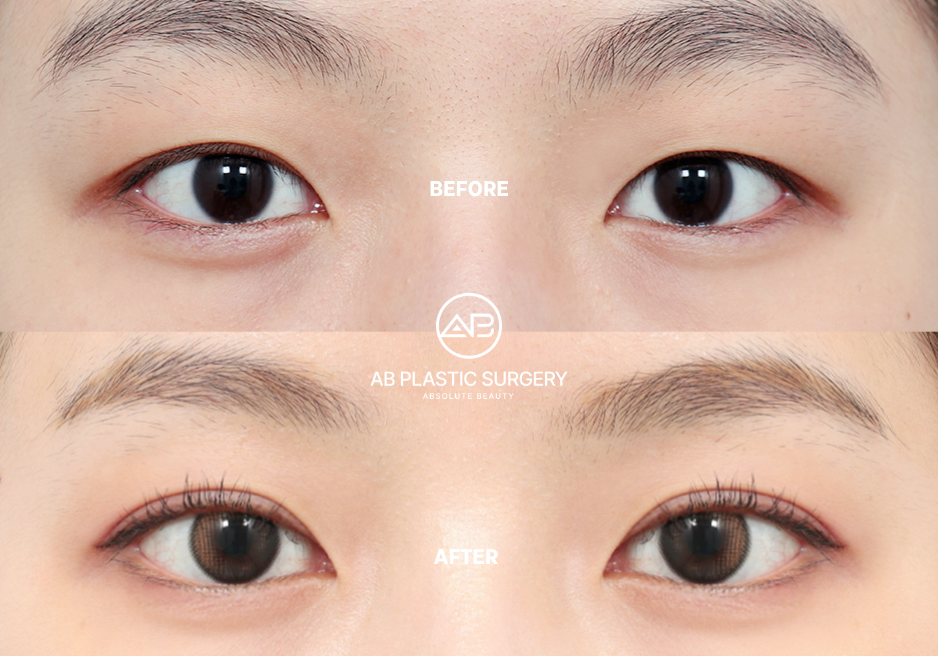
Cosmetic candidates want the eye shape itself changed, usually that upturned almond look, or they want early lid laxity corrected before it becomes a bigger issue. This group of people has more of a choice involved.
2. Medical Surgery
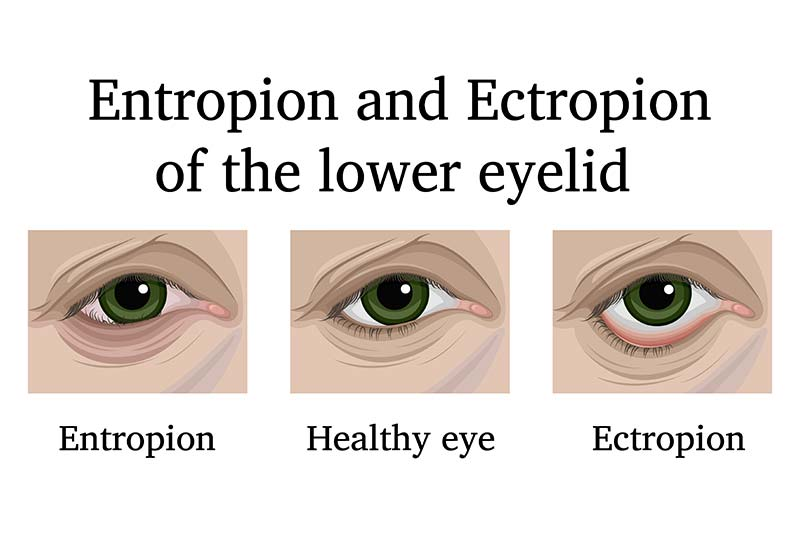
Reconstructive candidates usually have actual damage to the tendon itself: from trauma, from cancer removal surgery, or from a previous cosmetic procedure that left the lower lid too loose or pulled down. If you already have ectropion, entropion, or noticeable scleral show from lid laxity, this isn't really optional at that point, it's addressing an actual functional problem with how your eye protects itself.
A good candidate has decent skin elasticity still, since the surgery relies on the surrounding tissue adapting to a new position. Older patients or people with previous eye surgeries scarring the area are usually higher risk.
3. The Anatomy
The lateral canthal tendon has two parts, the superior and inferior crura, & they both attach to a ridge of bone called Whitnall's tubercle, sitting a few mm inside your orbital rim. There is not much space to work with.
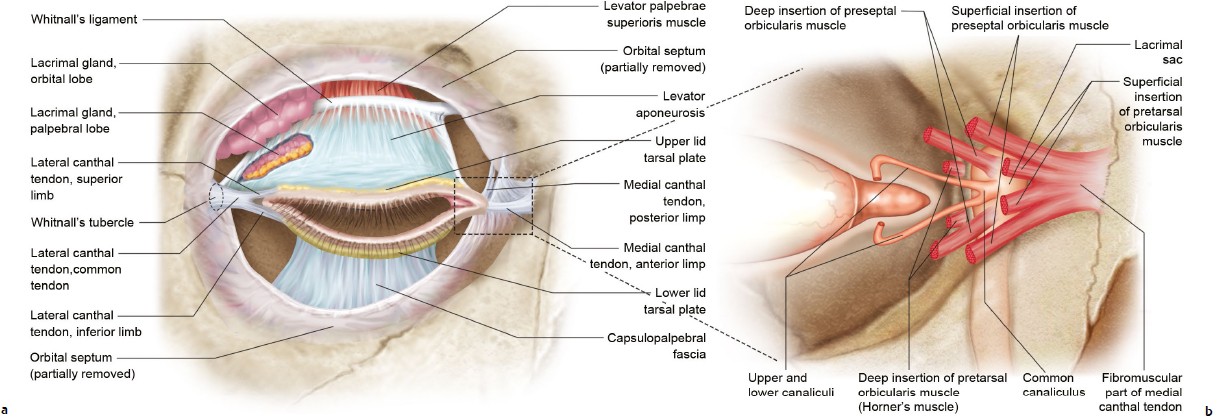
The lacrimal gland sits right above this area. Your actual eyeball sits directly next to it with basically no padding. The nerve branches that control whether your eyelid can even close (the zygomatic branch of the facial nerve specifically) run straight through this exact spot, and the orbital fat pad sits just underneath the tendon itself, meaning there's fat that has to be worked around or through depending on the approach. The lateral orbital thickening, sometimes called Eisler's fat pad, also sits in this region and some surgeons address it directly during the procedure if it's contributing to the lid position.
This is why canthoplasty falls under oculoplastics specifically and not general cosmetic surgery.
4. Types of Canthoplasty
1. Lateral Tarsal Strip
The most common version, used mostly for lid laxity and ectropion. A strip of the tarsal plate and attached tendon gets shortened and reattached higher on the orbital rim, tightening the whole lower lid in the process. This is the version most cosmetic patients end up getting.
2. Inverted-T Canthoplasty
Used when more vertical support is needed on top of horizontal tightening, the tendon gets repositioned along both a vertical and horizontal vector instead of just pulled tighter in one direction. More complex, longer recovery, usually reserved for more significant laxity or full reconstruction cases rather than purely cosmetic ones.
3. Canthoplasty Combined with Blepharoplasty
Very common pairing, since a lot of patients getting excess skin & fat removed from their lids also have some degree of lid laxity that needs addressing at the same time, otherwise the blepharoplasty alone can pull the lower lid down and make things worse instead of better. Surgeons will sometimes bundle these two procedures under one surgery date to reduce total downtime.
4. Cosmetic-only Canthoplasty (no laxity present)
This is the version done purely to change eye shape on someone with normal lid tension already. Higher risk of overcorrection since there's no actual looseness to correct for, the surgeon is creating tension that wasn't there before rather than restoring tension that used to be there. This is the version most likely to end up looking unnatural if not handled properly.
Which version gets used depends on how much laxity there is, whether it's cosmetic or reconstructive, and what else is being done at the same time.
5. The Procedure
Surgeon makes a small incision at the lateral canthus, hidden in the natural crease so it's not visible once healed, usually somewhere between 1-2cm depending on how much access is needed. From there the lateral canthal tendon and the tarsal plate it's attached to get exposed and identified.
In a true canthoplasty the tendon (or the tarsal strip attached to it) gets fully detached, not just reinforced like in a canthopexy. The excess is trimmed off, usually just a few mm, since even small amounts of shortening create a noticeable change in tension. The remaining tendon gets repositioned, usually higher and tighter, then reattached directly to the periosteum of the orbital rim with a permanent, non-absorbable suture, since this suture is what's holding the entire new lid position in place for the rest of your life.
The tension set at this exact moment decides whether you end up botched or not. Some surgeons will have the patient open and close their eyes intraoperatively under light sedation just to check the tension is right before final closure, which isn't possible under general anesthesia, so this is one reason a lot of oculoplastic surgeons prefer local with sedation for this specific procedure.
Then, incision gets closed with fine sutures once the position checks out.
6. Anesthesia & Surgical Time
Local anesthesia with sedation is the most common approach for a standalone lateral canthoplasty, mainly because of the intraoperative tension-check mentioned above. General anesthesia gets used when it's paired with a facelift, full blepharoplasty, or other procedures that need it anyway. Surgery time for canthoplasty alone usually runs 45 minutes to an hour and a half per side, longer if it's combined with anything else or if scar tissue from a previous surgery makes the dissection harder.
Bilateral (both eyes) is more common than unilateral for cosmetic cases, since asymmetry between a corrected and uncorrected eye tends to look worse than either extreme on its own. Unilateral is more common on the reconstructive side, when only one eye actually has damage or laxity to address.
7. Risks
Lagophthalmos is the big one, when the eye can't fully close after surgery, usually from overcorrection or too much tension being placed on the lid. Left untreated this leads to chronic dryness and can damage the cornea over time, sometimes requiring lubricating drops indefinitely or a second surgery just to release some of the tension. Undercorrection is the opposite problem, not enough tension gets placed and the original sagging just comes back within a year or two, meaning the whole thing has to be redone.
Ectropion and entropion can both happen post-op too, the lid turning outward or inward instead of sitting where it's supposed to, and both usually need a revision to fix. Infection and hematoma near the orbit carry more weight than they would almost anywhere else on the face, given how close everything is to the eye itself and how little tissue there is to buffer a bleed or an infection from spreading. Suture granuloma is also possible, since the permanent suture anchored into bone can sometimes cause a small reactive lump under the skin that needs to be addressed months later.
Vision changes are rare but they're worth noting, since orbital structures being disturbed during the procedure can affect more than just eyelid position, and any surgery this close to the globe carries a small risk that isn't zero no matter how experienced the surgeon is.
8. Cost & Logistics
Lateral canthoplasty alone typically runs a few thousand dollars depending on the surgeon and region. Insurance sometimes covers the reconstructive version if it's addressing an actual functional problem like ectropion affecting vision or eye protection. It essentially never covers the purely cosmetic version.
Recovery time off work or in public is usually 1-2 weeks minimum before bruising and swelling are subtle enough to not draw attention, longer if you're combining procedures. This is worth planning around before scheduling anything.
9. Disclaimer
If you want to try and DIY this surgery then go ahead. Theoretically it can be done, but the risks are exremely high.
@Sayori @illusion @Psocho @Lexapro @imontheloose
Comprehensive guide by Organ
I am not a medical professional, and the information provided here is for general educational and informational purposes only. It does not constitute professional medical advice, diagnosis, or treatment.
Table of Contents
1. What is a Canthoplasty
2. Who Actually Needs a Canthoplasty
3. The Anatomy
4. Types of Canthoplasty
5. The Procedure
6. Anesthesia & Surgical Time
7. Risks
8. Cost & Logistics
9. Disclaimer
1. What is a Canthoplasty?
Canthoplasty is surgery on the lateral canthal tendon, the anchor point at the outer corner of your eye where your upper & lower lids connect. The surgeon detaches this tendon and reattaches it in a new position, usually higher and tighter than where it started.
People confuse this with canthopexy a lot, canthopexy doesn't detach anything, the tendon just gets reinforced with sutures while staying attached where it already is. It is less invasive, has a less dramatic change, and a way shorter recovery. They are not the same surgery and they do not carry the same risks or recovery.
There's also lateral canthopexy vs medial canthopexy. Medial deals with the inner corner near your tear duct and is a completely different procedure with different risks (you're near the lacrimal drainage system there instead of the lacrimal gland). I am only going to be covering lateral, since that's what almost everyone means when they say canthoplasty and it's the version that comes up in cosmetic contexts.
2. Who Actually Needs a Canthoplasty
1. Cosmetic Surgery
Cosmetic candidates want the eye shape itself changed, usually that upturned almond look, or they want early lid laxity corrected before it becomes a bigger issue. This group of people has more of a choice involved.
2. Medical Surgery
Reconstructive candidates usually have actual damage to the tendon itself: from trauma, from cancer removal surgery, or from a previous cosmetic procedure that left the lower lid too loose or pulled down. If you already have ectropion, entropion, or noticeable scleral show from lid laxity, this isn't really optional at that point, it's addressing an actual functional problem with how your eye protects itself.
A good candidate has decent skin elasticity still, since the surgery relies on the surrounding tissue adapting to a new position. Older patients or people with previous eye surgeries scarring the area are usually higher risk.
3. The Anatomy
The lateral canthal tendon has two parts, the superior and inferior crura, & they both attach to a ridge of bone called Whitnall's tubercle, sitting a few mm inside your orbital rim. There is not much space to work with.
The lacrimal gland sits right above this area. Your actual eyeball sits directly next to it with basically no padding. The nerve branches that control whether your eyelid can even close (the zygomatic branch of the facial nerve specifically) run straight through this exact spot, and the orbital fat pad sits just underneath the tendon itself, meaning there's fat that has to be worked around or through depending on the approach. The lateral orbital thickening, sometimes called Eisler's fat pad, also sits in this region and some surgeons address it directly during the procedure if it's contributing to the lid position.
This is why canthoplasty falls under oculoplastics specifically and not general cosmetic surgery.
4. Types of Canthoplasty
1. Lateral Tarsal Strip
The most common version, used mostly for lid laxity and ectropion. A strip of the tarsal plate and attached tendon gets shortened and reattached higher on the orbital rim, tightening the whole lower lid in the process. This is the version most cosmetic patients end up getting.
2. Inverted-T Canthoplasty
Used when more vertical support is needed on top of horizontal tightening, the tendon gets repositioned along both a vertical and horizontal vector instead of just pulled tighter in one direction. More complex, longer recovery, usually reserved for more significant laxity or full reconstruction cases rather than purely cosmetic ones.
3. Canthoplasty Combined with Blepharoplasty
Very common pairing, since a lot of patients getting excess skin & fat removed from their lids also have some degree of lid laxity that needs addressing at the same time, otherwise the blepharoplasty alone can pull the lower lid down and make things worse instead of better. Surgeons will sometimes bundle these two procedures under one surgery date to reduce total downtime.
4. Cosmetic-only Canthoplasty (no laxity present)
This is the version done purely to change eye shape on someone with normal lid tension already. Higher risk of overcorrection since there's no actual looseness to correct for, the surgeon is creating tension that wasn't there before rather than restoring tension that used to be there. This is the version most likely to end up looking unnatural if not handled properly.
Which version gets used depends on how much laxity there is, whether it's cosmetic or reconstructive, and what else is being done at the same time.
5. The Procedure
Surgeon makes a small incision at the lateral canthus, hidden in the natural crease so it's not visible once healed, usually somewhere between 1-2cm depending on how much access is needed. From there the lateral canthal tendon and the tarsal plate it's attached to get exposed and identified.
In a true canthoplasty the tendon (or the tarsal strip attached to it) gets fully detached, not just reinforced like in a canthopexy. The excess is trimmed off, usually just a few mm, since even small amounts of shortening create a noticeable change in tension. The remaining tendon gets repositioned, usually higher and tighter, then reattached directly to the periosteum of the orbital rim with a permanent, non-absorbable suture, since this suture is what's holding the entire new lid position in place for the rest of your life.
The tension set at this exact moment decides whether you end up botched or not. Some surgeons will have the patient open and close their eyes intraoperatively under light sedation just to check the tension is right before final closure, which isn't possible under general anesthesia, so this is one reason a lot of oculoplastic surgeons prefer local with sedation for this specific procedure.
Then, incision gets closed with fine sutures once the position checks out.
6. Anesthesia & Surgical Time
Local anesthesia with sedation is the most common approach for a standalone lateral canthoplasty, mainly because of the intraoperative tension-check mentioned above. General anesthesia gets used when it's paired with a facelift, full blepharoplasty, or other procedures that need it anyway. Surgery time for canthoplasty alone usually runs 45 minutes to an hour and a half per side, longer if it's combined with anything else or if scar tissue from a previous surgery makes the dissection harder.
Bilateral (both eyes) is more common than unilateral for cosmetic cases, since asymmetry between a corrected and uncorrected eye tends to look worse than either extreme on its own. Unilateral is more common on the reconstructive side, when only one eye actually has damage or laxity to address.
7. Risks
Lagophthalmos is the big one, when the eye can't fully close after surgery, usually from overcorrection or too much tension being placed on the lid. Left untreated this leads to chronic dryness and can damage the cornea over time, sometimes requiring lubricating drops indefinitely or a second surgery just to release some of the tension. Undercorrection is the opposite problem, not enough tension gets placed and the original sagging just comes back within a year or two, meaning the whole thing has to be redone.
Ectropion and entropion can both happen post-op too, the lid turning outward or inward instead of sitting where it's supposed to, and both usually need a revision to fix. Infection and hematoma near the orbit carry more weight than they would almost anywhere else on the face, given how close everything is to the eye itself and how little tissue there is to buffer a bleed or an infection from spreading. Suture granuloma is also possible, since the permanent suture anchored into bone can sometimes cause a small reactive lump under the skin that needs to be addressed months later.
Vision changes are rare but they're worth noting, since orbital structures being disturbed during the procedure can affect more than just eyelid position, and any surgery this close to the globe carries a small risk that isn't zero no matter how experienced the surgeon is.
8. Cost & Logistics
Lateral canthoplasty alone typically runs a few thousand dollars depending on the surgeon and region. Insurance sometimes covers the reconstructive version if it's addressing an actual functional problem like ectropion affecting vision or eye protection. It essentially never covers the purely cosmetic version.
Recovery time off work or in public is usually 1-2 weeks minimum before bruising and swelling are subtle enough to not draw attention, longer if you're combining procedures. This is worth planning around before scheduling anything.
9. Disclaimer
If you want to try and DIY this surgery then go ahead. Theoretically it can be done, but the risks are exremely high.
@Sayori @illusion @Psocho @Lexapro @imontheloose


