S
Superior_Molecule
Iron
- Joined
- Feb 17, 2026
- Posts
- 130
- Reputation
- 116
Warum sind eigentlich so viele Christen auf dem Forum Nazis? Mann kann nicht beides gleichzeitig sein. Ist das eine spezielle Form des Autismus?
Follow along with the video below to see how to install our site as a web app on your home screen.

Note: this_feature_currently_requires_accessing_site_using_safari


warum sollte man nicht beides sein könnenWarum sind eigentlich so viele Christen auf dem Forum Nazis? Mann kann nicht beides gleichzeitig sein. Ist das eine spezielle Form des Autismus?

Kurz gesagt, Ein Nazi zu sein bedeutet auch voller Hass gegen andere Menschen zu sein die anders aussehen oder eine andere Herkunft haben, Jedoch stand Jesus dafür jeden zu lieben egal woher er kommtwarum sollte man nicht beides sein können
 Gibt noch viele weitere Sachen, wie den holocaust, Verherrlichung des Krieges und Ausbeutung anderer Menschen.
Sag mir wieso das nicht geht?Warum sind eigentlich so viele Christen auf dem Forum Nazis? Mann kann nicht beides gleichzeitig sein. Ist das eine spezielle Form des Autismus?
Rassenideologie und hass Verbreitung. Die Nazis währen die ersten die in die Hölle kommen LolSag mir wieso das nicht geht?
Kannst du mir die Rassenideologie der Nazis aufzeigen, mit ihren eigenen Dokumenten? Hassverbreitung gegenüber wem? Deine dritte Aussage ist sowieso geisteskrank, da muss ich auch nicht weiter drauf eingehenRassenideologie und hass Verbreitung. Die Nazis währen die ersten die in die Hölle kommen Lol
Ich bin der festen Überzeugung, das du geistig behindert bist.Kannst du mir die Rassenideologie der Nazis aufzeigen, mit ihren eigenen Dokumenten? Hassverbreitung gegenüber wem? Deine dritte Aussage ist sowieso geisteskrank, da muss ich auch nicht weiter drauf eingehen

Ein nazi zu sein heißt nicht alle anderen Menschen zu hassen Nazi = Nationalsozialist es ist eine Politische Richtung, nur weil eine Gruppe die Nationalsozialisten waren etwas gemacht hat definiert es nicht den RestKurz gesagt, Ein Nazi zu sein bedeutet auch voller Hass gegen andere Menschen zu sein die anders aussehen oder eine andere Herkunft haben, Jedoch stand Jesus dafür jeden zu lieben egal woher er kommt
Wieso möchtest du plötzlich doch keinen intellektuellen Diskurs mit mir eingehen Herr Alleswisser?Ich bin der festen Überzeugung, das du geistig behindert bist.
Willst du mir allerernstes sagen, Das es keine Hassverbreitung bei den Nazis gab?Wieso möchtest du plötzlich doch keinen intellektuellen Diskurs mit mir eingehen Herr Alleswisser?
Ich habe gefragt „Hassverbreitung gegenüber wem?“ du Idiot, flüchte nicht und versuch nicht mich zum Antworten zu bringen wenn du keine Antworten liefern kannst iqletWillst du mir allerernstes sagen, Das es keine Hassverbreitung bei den Nazis gab?

du glaubst aber auch wirklich alles was man dir sagt oderKurz gesagt, Ein Nazi zu sein bedeutet auch voller Hass gegen andere Menschen zu sein die anders aussehen oder eine andere Herkunft haben, Jedoch stand Jesus dafür jeden zu lieben egal woher er kommt
Da hast du recht, jedoch verfolgen die meisten Nationalsozialisten immernoch dem gleichen Bild wie in der NS zeitEin nazi zu sein heißt nicht alle anderen Menschen zu hassen Nazi = Nationalsozialist es ist eine Politische Richtung, nur weil eine Gruppe die Nationalsozialisten waren etwas gemacht hat definiert es nicht den Rest
Gegenüber den „minderen“ RassenIch habe gefragt „Hassverbreitung gegenüber wem?“ du Idiot, flüchte nicht und versuch nicht mich zum Antworten zu bringen wenn du keine Antworten liefern kannst iqlet
Inwiefern?du glaubst aber auch wirklich alles was man dir sagt oder
Gut, jetzt zeigst du mir bitte aus den Dokumenten der Nazis dass das so stimmt, wirklich authentische Werke wie Reden vom Führer, SS-Handblätter o.Ä. Ich kann dir nähmlich aufweisen dass es nicht so ist, dankeGegenüber den „minderen“ Rassen
Würde mich ehrlich interessieren, bin auf dem Thema noch nicht so belesen und würde gerne wissen was ihr so dazu sagtGut, jetzt zeigst du mir bitte aus den Dokumenten der Nazis dass das so stimmt, wirklich authentische Werke wie Reden vom Führer, SS-Handblätter o.Ä. Ich kann dir nähmlich aufweisen dass es nicht so ist, danke
wenn du denkst das nazi sein sofort ohne frage bedeutet vollen Hass gegen Menschen die anders aussehen oder einer anderen Herkunft zugehörig sind zu haben, dann merkt man einfach direkt dass du kaum mal selber recherchiert hast und meistens einfach das glaubst was dir die medien auftischenInwiefern?
Wollte Mal sehen wie Leute auf dem Forum darauf reagieren, wenn du willst kannst du gerne mal erklären was der Nationalsozialismus für dich bedeutet in deinem eigenen Wortenwenn du denkst das nazi sein sofort ohne frage bedeutet vollen Hass gegen Menschen die anders aussehen oder einer anderen Herkunft zugehörig sind zu haben, dann merkt man einfach direkt dass du kaum mal selber recherchiert hast und meistens einfach das glaubst was dir die medien auftischen
war ein guter zweck eigentlich. in deutschland hat sich damals der lebensstandard enorm erhöht, nachdem juden den wirtschaftscrash verursacht haben und die wichtigsten banken und medien übernahmen. war ein letzter richtiger versuch die aufzuhalten.Wollte Mal sehen wie Leute auf dem Forum darauf reagieren, wenn du willst kannst du gerne mal erklären was der Nationalsozialismus für dich bedeutet in deinem eigenen Worten
Dafür warst du aber eben noch ziemlich voreingenommen, würdest du nicht sagen?Würde mich ehrlich interessieren, bin auf dem Thema noch nicht so belesen und würde gerne wissen was ihr so dazu sagt
Naja Also das es einen Hass bei den Nazis gab, kann man ja nicht leugnen. Würde trotzdem gerne wissen welche Argumente bzw Beweise du dagegen hast, bin offen dafür.Dafür warst du aber eben noch ziemlich voreingenommen, würdest du nicht sagen?
Würdest du sagen, das man es auch anders hätte lösen können oder das es der einzige Ausweg war?war ein guter zweck eigentlich. in deutschland hat sich damals der lebensstandard enorm erhöht, nachdem juden den wirtschaftscrash verursacht haben und die wichtigsten banken und medien übernahmen. war ein letzter richtiger versuch die aufzuhalten.
Naja Also das es einen Hass bei den Nazis gab, kann man ja nicht leugnen. Würde trotzdem gerne wissen welche Argumente bzw Beweise du dagegen hast, bin offen dafür.
Arischer Abstammung (deutschblütig) ist demnach derjenige Mensch, der frei von einem, vom deutschen Volke aus gesehen, fremdrassigen Blutseinschlage ist. Als fremd gilt hier vor allem das Blut der auch im europäischen Siedlungsraume lebenden Juden und Zigeuner, das der asiatischen und afrikanischen Rassen und der Ureinwohner Australiens und Amerikas (Indianer), während z.B. ein Engländer oder Schwede, ein Franzose oder Tscheche, ein Pole oder Italiener, wenn er selbst frei von solchen, auch ihm fremden Blutseinschlägen ist, als verwandt, also als arisch gelten muß, mag er nun in seiner Heimat oder in Ostasien oder in Amerika wohnen oder mag er Bürger der U.S.A. oder eines südamerikanischen Freistaates sein.
Deutsches Ahnenpass-GesetzDas deutsche Blut bildet keine eigene Rasse. Das deutsche Volk besteht aus Vertretern verschiedener Rassen. Aber all diese Rassen zeichnen sich dadurch aus, dass ihr Blut untereinander verträglich ist und eine Mischung dieses Blutes, im Gegensatz zu Blut, das nicht mit ihnen verwandt ist, keine Hindernisse und Spannungen verursacht. Zum deutschen Blut kann man zweifellos das Blut jener Völker gleichsetzen, deren rassische Zusammensetzung mit dem deutschen Volk verwandt ist. Dies gilt für alle Menschen, die die Länder Europas bewohnen. Blut, das mit dem deutschen verwandt ist, wird in alle Richtungen gleichermaßen betrachtet. Daher können Bürger des Reiches Vertreter von Minderheiten werden, die in Deutschland leben, zum Beispiel Polen, Dänen usw.
Robert Ley, Organisationsbuch der NSDAP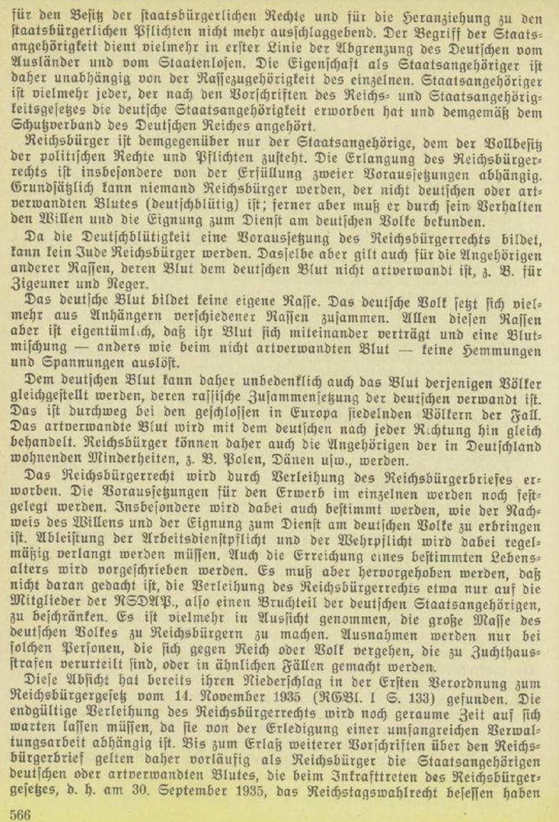
natürlich hätte man es auch anders versuchen können aber das hätte genauso gescheitert, würde ich sagenWürdest du sagen, das man es auch anders hätte lösen können oder das es der einzige Ausweg war?

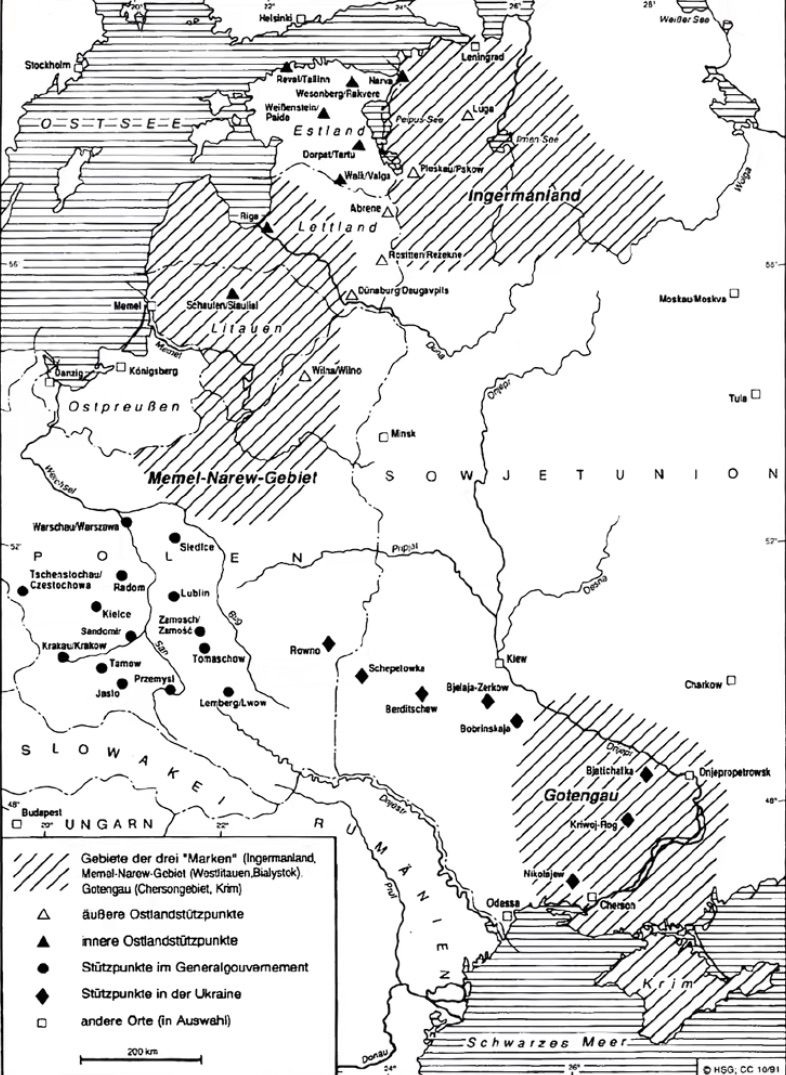
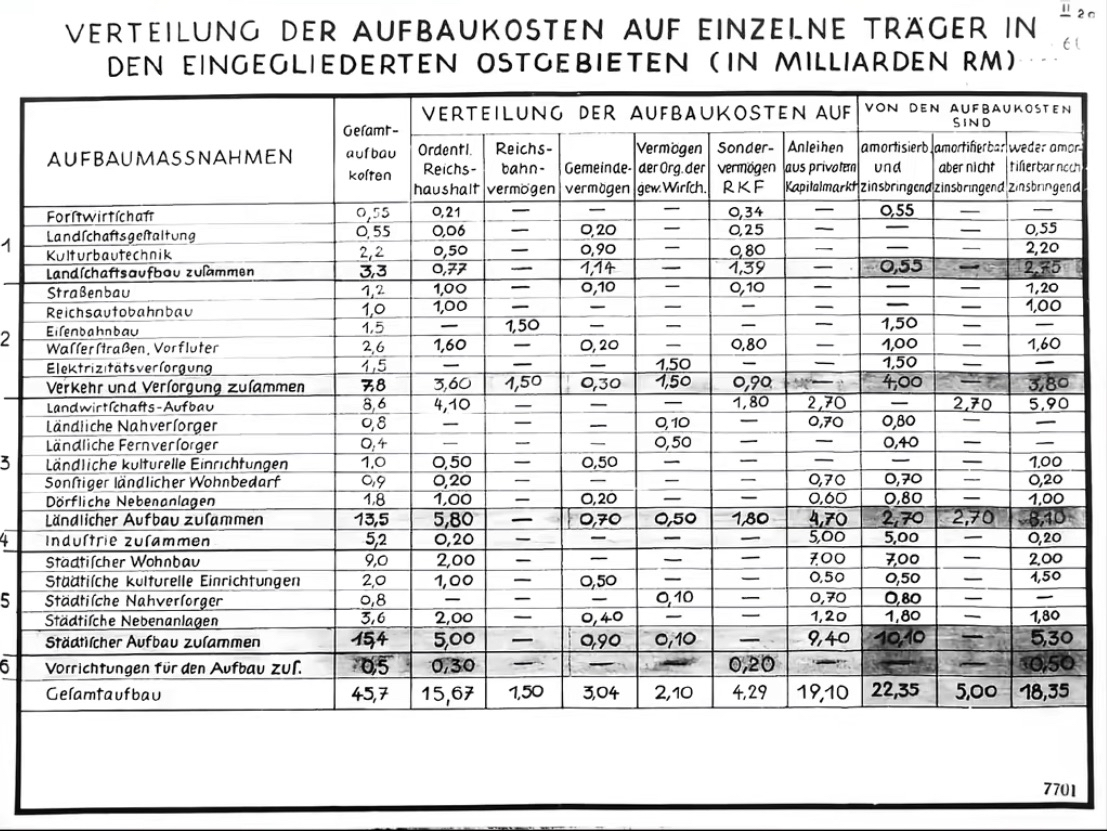
Man hat doch Zigeuner und Juden in Konzentrationslager gesteckt. Der Generalplan Ost war dafür gedacht, die Zivilbevölkerung der Sovietunion zu vertreiben und zu töten für den „Lebensraum“. Zudem finden man in Hitlers Buch „Mein Kampf“ in Band 1 Kapitel 11 „Das Ergebnis jeder rassenmischung ist also das Absinken des Niveau der höheren rasse“. Das zeigt doch, das Adolf Hitler die Menschen in rassen unterteile, und auch niedere „rassen“ verurteilt, oder nicht?Deutsches Ahnenpass-Gesetz
Hass ist es nicht, es ist eine bewusste Distinktion, deutlich unterschiedlicher Ethnien, wie hier angeführt
Hier auch nochmal:
Robert Ley, Organisationsbuch der NSDAP
View attachment 4930960
Nigga don‘t let me start with itThe fact that hitler, deemed christianity as a lesser religion then other religions, just makes it worse
Start with what?Nigga don‘t let me start with it
natürlich hätte man es auch anders versuchen können aber das hätte genauso gescheitert, würde ich sagen
Dazu kommt ja noch, das behinderte Kinder ungebraucht worden sind, und Menschen mit einer anderen Meinung direkt inhaftiert bzw. Ebenfalls in ein Konzentrationslager geschickt worden sind. Bin mir ziemlich sicher das Jesus Christus nicht für all dies standMan hat doch Zigeuner und Juden in Konzentrationslager gesteckt. Der Generalplan Ost war dafür gedacht, die Zivilbevölkerung der Sovietunion zu vertreiben und zu töten für den „Lebensraum“. Zudem finden man in Hitlers Buch „Mein Kampf“ in Band 1 Kapitel 11 „Das Ergebnis jeder rassenmischung ist also das Absinken des Niveau der höheren rasse“. Das zeigt doch, das Adolf Hitler die Menschen in rassen unterteile, und auch niedere „rassen“ verurteilt, oder nicht?

Dafür braucht man nichts auf Papier, man braucht sich nur anzuschauen, was sie mit Menschen anderer Glaubensrichtungen und Rassen gemacht haben…Gut, jetzt zeigst du mir bitte aus den Dokumenten der Nazis dass das so stimmt, wirklich authentische Werke wie Reden vom Führer, SS-Handblätter o.Ä. Ich kann dir nähmlich aufweisen dass es nicht so ist, danke
Zudem muss man auch betrachten, das sehr viele Nazis so schnell wie möglich alle Beweise verbrannt haben damit sie nicht verfolgt werden können.Dafür braucht man nichts auf Papier, man braucht sich nur anzuschauen, was sie mit Menschen anderer Glaubensrichtungen und Rassen gemacht haben…
Es waren Arbeitslager, die gibt es auch heute, nur in moderner FormMan hat doch Zigeuner und Juden in Konzentrationslager gesteckt. Der Generalplan Ost war dafür gedacht, die Zivilbevölkerung der Sovietunion zu vertreiben und zu töten für den „Lebensraum“. Zudem finden man in Hitlers Buch „Mein Kampf“ in Band 1 Kapitel 11 „Das Ergebnis jeder rassenmischung ist also das Absinken des Niveau der höheren rasse“. Das zeigt doch, das Adolf Hitler die Menschen in rassen unterteile, und auch niedere „rassen“ verurteilt, oder nicht?

It‘s not niggaStart with what?
It's true
Ja genauZudem muss man auch betrachten, das sehr viele Nazis so schnell wie möglich alle Beweise verbrannt haben damit sie nicht verfolgt werden können.
Ist halt ebenso eine Lüge lol, wenn du blind glaubst, ist es nicht mein ProblemDazu kommt ja noch, das behinderte Kinder ungebraucht worden sind, und Menschen mit einer anderen Meinung direkt inhaftiert bzw. Ebenfalls in ein Konzentrationslager geschickt worden sind. Bin mir ziemlich sicher das Jesus Christus nicht für all dies stand
Hahhaha das is crazy, einfach alles was einem nicht passt sind fake newsIst halt ebenso eine Lüge lol, wenn du blind glaubst, ist es nicht mein Problem
Heutzutage werden Menschen mit anderen Meinungen, die nicht dem Narrativ ensprechen, auch inhaftiert, merkst du was?
Aktion T4 sowie zehntausende Bundesakten nur ausgedacht?Ist halt ebenso eine Lüge lol, wenn du blind glaubst, ist es nicht mein Problem
Heutzutage werden Menschen mit anderen Meinungen, die nicht dem Narrativ ensprechen, auch inhaftiert, merkst du was?

@Akuzywarum sollte man nicht beides sein können

Das ist für seine Verhältnisse nur die Spitze des Eisbergshab das gerade gelesen und das passt dazu das er in tier 5 gehört
He classified christianity as weak and overly compassionate, and don't even get me started on heinrich himmler and alfred rosenbergIt‘s not nigga
du nigga ich hab nie gesagt das es geht ich wollte einfach nur gründe haben@Akuzy
hab das gerade gelesen und das passt dazu das er in tier 5 gehört
Ich widerlege wortwörtlich die ganze Zeit die claims, hab leider auch ein Leben außerhalb des Forums, weshalb ich auch nicht auf alles ins Detail eingehe lolHahhaha das is crazy, einfach alles was einem nicht passt sind fake news
Einfach der neue trump auf dem forum
Außerdem warum nur JFL auf meinen post reagiert und nicht widerlegt wie du es ja stets selbst erwartest
We can debate on that lol, I assume you‘ll cite Table Talks JFLHe classified christianity as weak and overly compassionate, and don't even get me started on heinrich himmler and alfred rosenberg
What's wrong with table talks lmaoWe can debate on that lol, I assume you‘ll cite Table Talks JFL

They aren‘t a fucking valid source lolWhat's wrong with table talks lmao
They are valid sources
But sure go ahead
Richard C. Carrier, ‘Adolf Hitler‘s Table Talk: Troubling Finds‘, German Studies Review 26 (2003), pp. 561-76Honourable Professor, I come today with an offer for you: We have acquired a manuscript that contains notes from the speeches regarding a series of problems held by AH during dinner at the Führer headquarters. These notes were made by two government clerks from the Department of the Interior on AH's orders. It is an extremely interesting document that sheds light on the history of National Socialism, and it is particularly characteristic of Adolf Hitler's personality.
Nilsson, Mikael, Adolf Hitler Redux: The Incredible History of Adolf Hitler‘s So-Called Table Talks, pp. 58-59Ibid., page 70Ibid., pp. 60, 70-71Ibid., page 63Ibid., page 63Ibid., page 103Ibid., page 98Ibid., page 98Ibid., page 99Ibid., page 102Ibid., page 102Ibid., page 103Ibid., page 95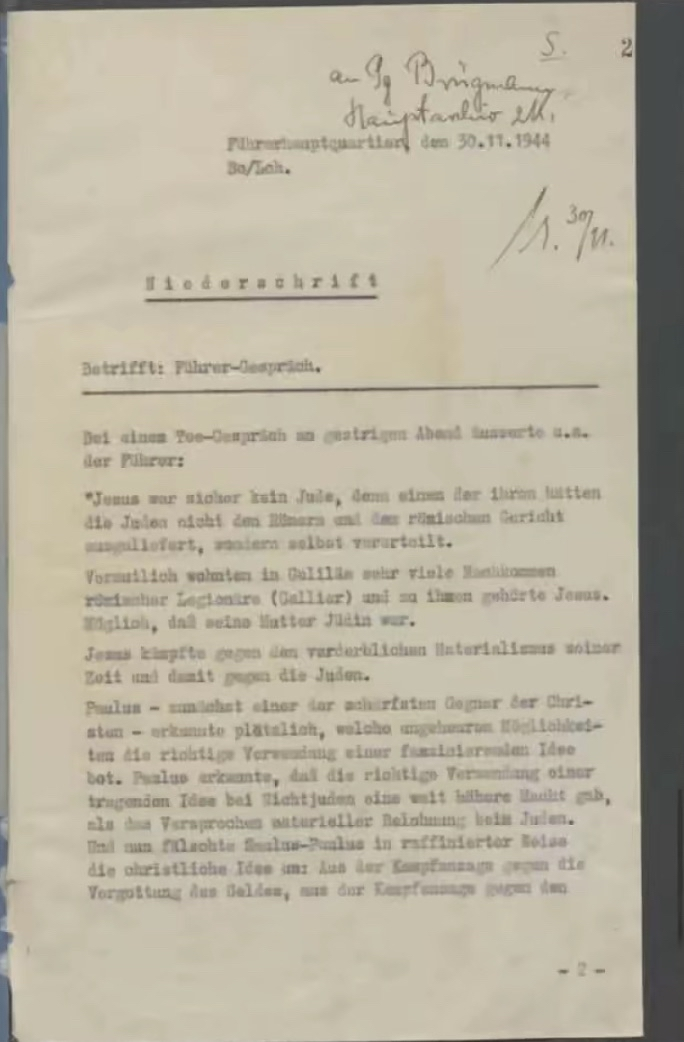
During a tea conversation yesterday evening, the Führer said, e.g.: Jesus was certainly not a Jew. Jesus fought against the pernicious materialism of his time, and thus against the Jews. Saul-Paul cleverly falsified the Christian idea: from the challenge against the deification of money, from the challenge against Jews selfishness, jewish materialism became the supporting idea of the infatuated, the slaves, the oppressed, the ones in money and goods, against the ruling class, against the superior race, "against the oppressors"! Paul's religion, and the Christianity represented from then on, was nothing more than communism!
BArch NS 6/133Nilsson, Mikael, Adolf Hitler Redux: The Icredible History of Adolf Hitler‘s So-Called Table Talks, page 9
Wasn't this debunked a while ago?They aren‘t a fucking valid source lol
THE VARIOUS PUBLISHED VERSIONS
Henry Picker was the first to publish his version of the notes in 1951, under the title Tischgespräche im Führerhauptquartier 1941-1942. This edition included not only Picker's own notes but also some of Heinrich Heim's. The publication was thematically organized by historian Gerhard Ritter and released by Athenäum Verlag in cooperation with the Institut für Zeitgeschichte in Munich.
The first edition, however, was not the last. In 1963, a second edition with the same title was released, this time arranged chronologically and edited by historian Percy Ernst Schramm. This chronological structure provided a different perspective on the content, enhancing its historical value.
In 1952, François Genoud published the first volume of Libres propos sur la guerre et la paix, with the second volume following in 1954. Genoud's edition was based on another manuscript known as the Bormann-Vermerke, which he had acquired after the war. This manuscript largely consisted of Heim's notes but also contained contributions from Picker, Bormann, and Müller. Genoud's efforts went beyond the French editions; in 1953, he published an English version titled AH's Table Talk 1941-1944, introduced and assisted by Hugh R. Trevor-Roper. Additionally, Genoud published an Italian single-volume edition in 1954, broadening the reach of the content across different languages.
The final major edition of these table talks came in 1980 with the German release of Monologe im Führerhauptquartier 1941-1944, edited by historian Werner Jochmann. However, unlike the earlier editions, Monologe did not include Picker's notes due to a copyright dispute. This omission marked a significant difference between the German edition and its predecessors, with Picker's contributions left out of this particular publication.
It was only recently that a serious attempt to critically investigate the various editions and translations was published. In a 2003 article in German Studies Review, Richard C. Carrier compared the English, French, and German versions of the table talks and concluded that historians have a significant amount of source-critical work to undertake before any of the German editions can be regarded as an authoritative record of AH's statements.
Carrier's comparison of the different editions yielded concerning results. He demonstrated that Genoud had added statements in several instances, often making AH appear more critical of Christianity than in the German editions. Furthermore, Carrier proved that Trevor-Roper's English edition was at least partially translated from Genoud's French version, raising further questions about the accuracy and reliability of the English text.
Richard C. Carrier, ‘Adolf Hitler‘s Table Talk: Troubling Finds‘, German Studies Review 26 (2003), pp. 561-76
THE PUBLICATION OF HENRY PICKER'S AH'S TISCHGESPRÄCHE IN 1951
The involvement of the Institute for Contemporary History (IfZ) in the controversial Tischgespräche affair began almost immediately after its formation. In late January 1951, Gerhard Ritter was contacted by Paul W. Junker, the director of the Bonn-based publisher Athenäum Verlag. In his introductory letter, Junker announced the acquisition of a manuscript containing notes from speeches delivered by Hitler during meals at the Führer's headquarters. The letter began in the following way:
Nilsson, Mikael, Adolf Hitler Redux: The Incredible History of Adolf Hitler‘s So-Called Table Talks, pp. 58-59
However, the issue of the text's authenticity soon emerged due to the multiple editorial manipulations made by Heinrich Picker, one of the authors of the transcripts. Picker made numerous stylistic interventions, often without any real necessity dictated by the original manuscript, but rather for aesthetic or readability reasons. Each draft of the text underwent small changes, suggesting a transformation of the content from a historical document into a literary text. This process raised fundamental questions about the reliability of the transcripts, especially for those wishing to conduct a thorough analysis of Hitler‘s ideological thinking. In fact, even a single altered word could radically change the meaning of a statement, making the interpretation of his thoughts uncertain.
Ibid., page 70
The editorial changes were not limited to the content. The organization of the text was also altered. Ritter, for example, expressed dissatisfaction with the titles and subtitles inserted by Picker, judging them inappropriate and personally taking the liberty of correcting them. Although Picker accepted many of Ritter's proposed revisions, the final result did not fully satisfy him, and he sought further improvements.
Ibid., pp. 60, 70-71
An additional issue arose with Picker's own narrative consistency. He claimed, on one hand, that he had made most of the notes without explicit requests from Martin Bormann, but on the other hand, he acknowledged that on at least one occasion, Bormann had specifically instructed him to transcribe Hitler's words. This statement suggests, as noted by Matthias Rheindorf, that Bormann's orders were not exceptional but rather recurring. Therefore, Picker seems to have deliberately omitted the systematic role of Bormann in the production of the notes, raising doubts about his transparency toward readers.
Ibid., page 63
Compounding the issue further is the contradiction between the claim that the notes had been authorized by an unspecified figure, and the simultaneous denial of Hitler's direct involvement. This contradiction becomes more pronounced when Picker claims that Hitler had "acknowledged" the accuracy of his transcripts. However, it remains unclear to whom this recognition was directed and in what context it occurred. Rheindorf found no satisfactory answer to this within the Tischgespräche, while the apparent inconsistency went unnoticed by both Ritter and the If.
Ibid., page 63
Ultimately, the analysis of the publication of the Tischgespräche highlights a series of serious source-critical and historiographical issues. From the outset, the work stirred strong controversies, with accusations directed at the IfZ and Gerhard Ritter for allowing the publication of a text perceived by many as a form of glorification of Hitler, lacking an appropriate critical apparatus. The difficulties Ritter encountered, compounded by Picker's opposition to any form of explanatory commentary, reveal the complexity of the editorial context. Further problems emerged when unauthorized excerpts were published in the magazine Quick, which sparked indignation within the IfZ.
Ibid., page 103
The second edition of Picker's Tischgespräche, published in 1963 and edited by Percy Ernst Schramm, raises significant historiographical concerns regarding the authenticity of Hitler's so called table talks. When historians cite these conversations- regardless of the edition, they are not quoting Adolf Hitler directly, but rather a reconstruction of what he may have said. The spirit of the statements may reflect Hitler's views, but the actual words often do not. Furthermore, since the original notes or audio recordings are not available, there is no way of knowing when the quotes were remembered or recorded verbatim.
Ibid., page 98
The 1963 edition introduced several key changes compared to the original 1951 publication. One notable alteration was the chronological organization of the notes. However, it also included entries and segments that were not present in Ritter's earlier edition. Some of these additions exhibit clear signs of being literary inventions, likely created after 1951. A close comparison with the manuscript on which the edition was based-referred to as Ms. 63-makes these editorial interventions evident.
Ibid., page 98
For instance, a note dated 2 May 1942 claims to capture a conversation that occurred during a train journey from the Berghof to the Wolf's Lair, in which Adolf Hitler supposedly spoke about the centrality of the Berghof in his regime. In Ms. 63, the entry reads:
"I introduced myself to Ribbentrop at the Berghof"
with handwritten edits modifying it to:
"At the Berghof I also introduced myself to Minister Ribbentrop" In the published 1963 edition, the latter version appears. However, this statement is demonstrably false, as Hitler met Ribbentrop-who became Foreign Minister in 1938-as early as 1932 in Berlin. This fabricated detail highlights how Picker altered the text during the manuscript preparation process.
Ibid., page 99
Another noteworthy example involves a quote in which Hitler supposedly declared himself a true Christian for encouraging antisemitic education among German youth. This particular statement does not appear in the Table Talk, which might suggest that Picker invented it. This passage reads:
"In recognizing the importance of this spectacle, and by encouraging it, who can say that I do not act irreproachably Christian!"
Yet, the same sentence is found in Libres propos, indicating that it was indeed part of the version Picker submitted to Bormann in 1942 and was later omitted from Table Talk for unknown reasons.
Ibid., page 102
It is also established that the 1951 edition of Tischgespräche was heavily redacted-far more than Ritter disclosed to readers. It is possible Ritter was unaware of the full extent of Picker's editorial revisions. The alterations made in Ms. 63, some of which appear in the 1963 edition, occasionally bring the text closer to the "original" source, but in many cases, they move it further away.
Ibid., page 102
Ultimately, the subsequent 1963 edition, which has never been critically analyzed until now, reveals significant changes made by Picker compared to the 1951 version-changes that, while seemingly minor, seriously compromise the text's fidelity to the original statements. The lack of critical reflection on these edits, even by the editor Percy Ernst Schramm, points to a broader lack of attention to accuracy by those who have relied on the Tischgespräche without questioning how trustworthy it really is. For this reason, anyone referring to the Tischgespräche should be very cautious: it's often unclear what is actually being quoted, and the reliability of the words attributed to Adolf Hitler remains highly questionable.
Ibid., page 103
THE MYSTERY OF THE BORMANN NOTE FACSIMILE
The mystery surrounding the facsimile of Bormann's note is tied to his focus on political issues he considered most pertinent, such as J, the Volk, and Church- related matters. According to Picker, Bormann was primarily interested in notes regarding these topics, which he believed were essential to his political agenda. On several occasions, Bormann wrote notes himself, although these were not included in Genoud's manuscript. One such note, dated at the end of November 1944, dealt with Jews and Christianity.
Picker asserts that the notes Bormann made were from memory and that, as they were intended to align with his political objectives, he edited them to serve his purposes. He may have also dictated parts of these notes to ensure a sharper formulation.
Ibid., page 95
View attachment 4931718
Translation:
BArch NS 6/133
While Picker's account is valuable, it is not necessary to rely solely on his word. Bormann himself confirmed in the facsimile that any note which did not align with his memory was edited by him. This statement is further corroborated by Peter Longerich's research, which shows that Bormann consistently edited the notes to better align with his own agenda, often tailoring Hitler's words to fit his political needs. Longerich also demonstrates that as Bormann grew more confident in understanding Hitler's mindset, he began to assert Hitler's views on various matters without consulting him directly.
Nilsson, Mikael, Adolf Hitler Redux: The Icredible History of Adolf Hitler‘s So-Called Table Talks, page 9

religion und staat sollte man nicht zussamen tun wenn man was aus seinen land was erfolgreiches machen willWarum sind eigentlich so viele Christen auf dem Forum Nazis? Mann kann nicht beides gleichzeitig sein. Ist das eine spezielle Form des Autismus?