


Pickletoil
Azov won btw
- Joined
- May 17, 2025
- Posts
- 2,175
- Reputation
- 2,323
Racebaiters and Curries started hyperventilating with joy when they saw the title, JFL at you if you believed that curries have the highest SMV for even a second.
Now, to the real point of the post: Today is the 85th Anniversary of Operation Barbarossa, the German-Axis invasion of the Soviet Union, and the largest invasion in history
At 3:15 AM June 22, 1941 a storm of shellfire from thousands of German artillery pieces shattered the calm along a 1800 Kilometer front. As the red blaze of explosives reinforced the light of dawn, thirty Luftwaffe bombers flying in groups of threes delivered terror and destruction to Soviet airfields and cities. Minutes later, from Memel on the Baltic Sea southward to the Prut River, the first wave of 3.5 million German soldiers deployed along the border lunged forward, beginning the greatest military offensive in history.
The invading German force comprised of 3 army groups: Army Group North, Army group center, and army group south
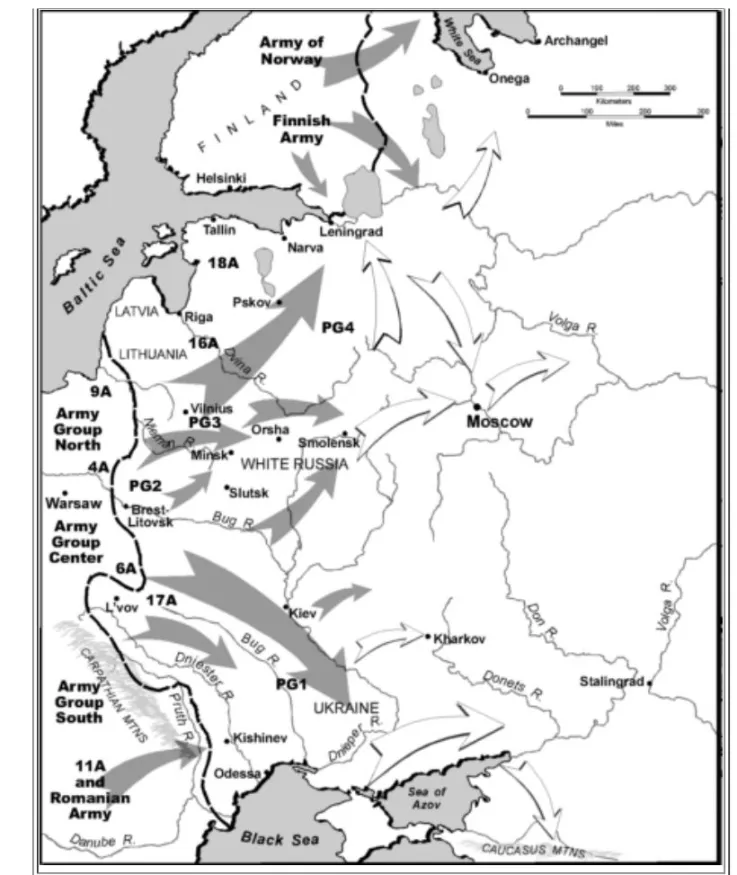
Army Group North was commanded by FM Ritter von Leeb and comprised the 16th Army, 18th Army, and Panzer Group 4. Its main goal was the capture of Leningrad, an important industrial center. Its capture would give the Germans uninterrupted access to the Baltic Sea and sever important Soviet communication lines.
Army Group Center was the largest army group and was commanded by FM Fedor von Bock. It comprised the 4th Army, 9th Army, and Panzer Groups 2 and 3. Its main goal was the capture of Moscow.
Army Group South was commanded by FM Gerd von Rundstedt and comprised the 6th Army, 17th Army, 11th Army, Panzer Group 1, and 4th Romanian Army. Its main goal was to free Ukraine and advance into the Donets Basin.
Of the three army groups, Army Group Center was the most important. German generals had identified Moscow as the center of Soviet power and believed that its capture would bring about the collapse of the Soviet Union, because almost all major railroads in the European part of the USSR ran through it, along with key communication lines, making it the central hub for coordinating transport, supplies, and military operations. Moscow also contained a large share of Soviet industry and administrative institutions. German planners believed that its capture would severely disrupt Soviet military operations by breaking the main logistical network, paralysing command structures, and removing a major industrial base that supported the Soviet war effort.
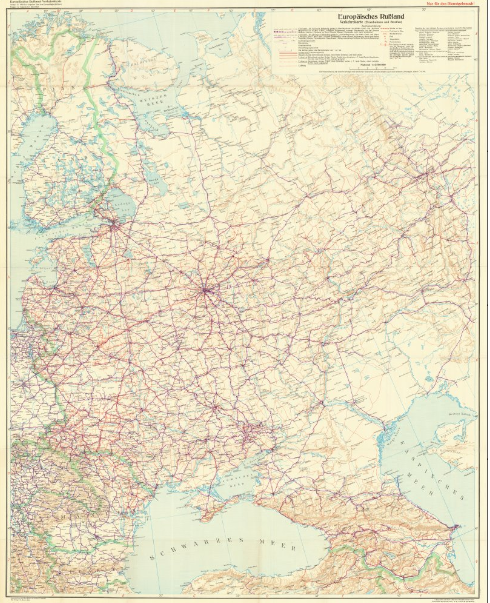
(railway map of the Soviet Union in 1941, note the dense concentration of railways converging on Moscow)
Army Group Center's advance was spearheaded by Panzer Groups 2 and 3, whose rapid advances repeatedly penetrated deep behind Soviet lines and encircled entire Soviet armies.
Within seven days of the invasion, the two panzer groups completed the encirclement of the Soviet forces at Bialystok and Minsk, taking 330,000 Soviet prisoners of war.
Its next objective was Smolensk. After heavier fighting and repeated Soviet counterattacks, Panzer Groups 2 and 3 once again pushed deep behind Soviet lines and completed the encirclement of the city on July 27, 1941. The battle resulted in the capture of approximately 300,000 Soviet prisoners of war.
Meanwhile, Army Group North had advanced rapidly during the opening weeks of the campaign but gradually bogged down due to poor infrastructure and difficult terrain. Army Group South faced similar problems, caused by the large concentration of Soviet forces in its sector.
After the completion of the encirclement of Smolensk in August, the German High Command faced a dilemma. Should the panzer groups of Army Group Center continue their advance toward Moscow, or should they be diverted to assist Army Groups North and South?
Most German generals favored an immediate advance on Moscow. Hitler, however, overruled them and ordered the diversion of Army Group Center's panzer forces to the north and south.
The most significant result of this decision was the Battle of Kiev. Panzer Group 2 swung south and linked up with forces advancing from Army Group South, completing a massive encirclement of Soviet troops around Kiev on September 16, 1941. The pocket was finally eliminated on September 26, resulting in the capture of approximately 660,000 Soviet POWs, making it the largest encirclement in military history.
Following the victory at Kiev, the panzer groups were transferred back to Army Group Center in preparation for a new offensive against Moscow. On October 2, 1941, the Germans launched Operation Typhoon, the final drive on the Soviet capital.
Many German generals believed that the operation was being launched too late in the year and feared that the weather would soon turn against them. Nevertheless, they considered it their last opportunity to achieve a quick defeat of the Soviet Union and proceeded with the offensive.
Operation Typhoon began with another series of large encirclements. Soviet forces around Vyazma and Bryansk, weakened by previous offensives against Army Group Center during the diversion of its panzer forces to the north and south, were quickly surrounded and 800k Soviets soldiers were encircled. By mid-October, the encirclements had been completed and another 670k Soviet soldiers had been taken as prisoners of war, opening the road to Moscow.
However, the advance soon ran into increasing difficulties. Autumn rains transformed the roads into seas of mud during the Rasputitsa (literally time without roads). Tanks, trucks, artillery, and infantry all found movement extremely difficult. The Rasputitsa affected not only the troops at the front but also the supply columns coming from the rear. German logistics were already under severe strain because of the enormous distances involved, and the mud further slowed the delivery of fuel, ammunition, food, and replacements. As a result, the Rasputitsa had a double effect: it hindered both the advance of frontline units and the flow of supplies needed to sustain them.
The Germans therefore waited for the ground to freeze solid. Once the ground had hardened, Army Group Center resumed its advance toward Moscow in November. Contrary to what is often believed, the Germans were not caught completely unprepared by winter; many of the motorized formations actually waited for the ground to freeze solid to improve mobility and resumed their advance once conditions briefly became more favorable. German forces pushed to within sight of the Soviet capital in some sectors, but fierce Soviet resistance, including fresh Soviet reinforcements transferred from Siberia, mounting casualties, exhaustion, and worsening logistical difficulties prevented a breakthrough.
On December 5, 1941, the Red Army launched a major counteroffensive along the Moscow front. Reinforced by fresh reserves from the far east, Soviet forces struck the exhausted German armies and forced them back from the capital. Operation Typhoon had failed, and with it Germany's last realistic chance of defeating the Soviet Union in a short campaign.
All in all, Soviet losses during Operation Barbarossa are estimated at approximately 8 million personnel. This includes roughly 1.0–1.2 million killed, around 2.5–2.8 million wounded, and approximately 3.3–3.5 million taken prisoner.
In terms of equipment losses, the Soviet Union lost approximately 20,000–25,000 tanks and around 15,000–20,000 aircraft, much of it destroyed on the ground in the opening weeks or abandoned during large-scale withdrawals.
German losses were significantly lower in comparison. Total German casualties in 1941 are estimated at approximately 830,000 personnel, including around 173,000 killed, 600,000 wounded, and the remainder missing or captured. German armored forces lost approximately 3,000–4,000 tanks, while the Luftwaffe lost around 2,000–3,000 aircraft during the campaign.
Now, to the real point of the post: Today is the 85th Anniversary of Operation Barbarossa, the German-Axis invasion of the Soviet Union, and the largest invasion in history
At 3:15 AM June 22, 1941 a storm of shellfire from thousands of German artillery pieces shattered the calm along a 1800 Kilometer front. As the red blaze of explosives reinforced the light of dawn, thirty Luftwaffe bombers flying in groups of threes delivered terror and destruction to Soviet airfields and cities. Minutes later, from Memel on the Baltic Sea southward to the Prut River, the first wave of 3.5 million German soldiers deployed along the border lunged forward, beginning the greatest military offensive in history.
The invading German force comprised of 3 army groups: Army Group North, Army group center, and army group south
Army Group North was commanded by FM Ritter von Leeb and comprised the 16th Army, 18th Army, and Panzer Group 4. Its main goal was the capture of Leningrad, an important industrial center. Its capture would give the Germans uninterrupted access to the Baltic Sea and sever important Soviet communication lines.
Army Group Center was the largest army group and was commanded by FM Fedor von Bock. It comprised the 4th Army, 9th Army, and Panzer Groups 2 and 3. Its main goal was the capture of Moscow.
Army Group South was commanded by FM Gerd von Rundstedt and comprised the 6th Army, 17th Army, 11th Army, Panzer Group 1, and 4th Romanian Army. Its main goal was to free Ukraine and advance into the Donets Basin.
Of the three army groups, Army Group Center was the most important. German generals had identified Moscow as the center of Soviet power and believed that its capture would bring about the collapse of the Soviet Union, because almost all major railroads in the European part of the USSR ran through it, along with key communication lines, making it the central hub for coordinating transport, supplies, and military operations. Moscow also contained a large share of Soviet industry and administrative institutions. German planners believed that its capture would severely disrupt Soviet military operations by breaking the main logistical network, paralysing command structures, and removing a major industrial base that supported the Soviet war effort.
(railway map of the Soviet Union in 1941, note the dense concentration of railways converging on Moscow)
Army Group Center's advance was spearheaded by Panzer Groups 2 and 3, whose rapid advances repeatedly penetrated deep behind Soviet lines and encircled entire Soviet armies.
Within seven days of the invasion, the two panzer groups completed the encirclement of the Soviet forces at Bialystok and Minsk, taking 330,000 Soviet prisoners of war.
Its next objective was Smolensk. After heavier fighting and repeated Soviet counterattacks, Panzer Groups 2 and 3 once again pushed deep behind Soviet lines and completed the encirclement of the city on July 27, 1941. The battle resulted in the capture of approximately 300,000 Soviet prisoners of war.
Meanwhile, Army Group North had advanced rapidly during the opening weeks of the campaign but gradually bogged down due to poor infrastructure and difficult terrain. Army Group South faced similar problems, caused by the large concentration of Soviet forces in its sector.
After the completion of the encirclement of Smolensk in August, the German High Command faced a dilemma. Should the panzer groups of Army Group Center continue their advance toward Moscow, or should they be diverted to assist Army Groups North and South?
Most German generals favored an immediate advance on Moscow. Hitler, however, overruled them and ordered the diversion of Army Group Center's panzer forces to the north and south.
The most significant result of this decision was the Battle of Kiev. Panzer Group 2 swung south and linked up with forces advancing from Army Group South, completing a massive encirclement of Soviet troops around Kiev on September 16, 1941. The pocket was finally eliminated on September 26, resulting in the capture of approximately 660,000 Soviet POWs, making it the largest encirclement in military history.
Following the victory at Kiev, the panzer groups were transferred back to Army Group Center in preparation for a new offensive against Moscow. On October 2, 1941, the Germans launched Operation Typhoon, the final drive on the Soviet capital.
Many German generals believed that the operation was being launched too late in the year and feared that the weather would soon turn against them. Nevertheless, they considered it their last opportunity to achieve a quick defeat of the Soviet Union and proceeded with the offensive.
Operation Typhoon began with another series of large encirclements. Soviet forces around Vyazma and Bryansk, weakened by previous offensives against Army Group Center during the diversion of its panzer forces to the north and south, were quickly surrounded and 800k Soviets soldiers were encircled. By mid-October, the encirclements had been completed and another 670k Soviet soldiers had been taken as prisoners of war, opening the road to Moscow.
However, the advance soon ran into increasing difficulties. Autumn rains transformed the roads into seas of mud during the Rasputitsa (literally time without roads). Tanks, trucks, artillery, and infantry all found movement extremely difficult. The Rasputitsa affected not only the troops at the front but also the supply columns coming from the rear. German logistics were already under severe strain because of the enormous distances involved, and the mud further slowed the delivery of fuel, ammunition, food, and replacements. As a result, the Rasputitsa had a double effect: it hindered both the advance of frontline units and the flow of supplies needed to sustain them.
The Germans therefore waited for the ground to freeze solid. Once the ground had hardened, Army Group Center resumed its advance toward Moscow in November. Contrary to what is often believed, the Germans were not caught completely unprepared by winter; many of the motorized formations actually waited for the ground to freeze solid to improve mobility and resumed their advance once conditions briefly became more favorable. German forces pushed to within sight of the Soviet capital in some sectors, but fierce Soviet resistance, including fresh Soviet reinforcements transferred from Siberia, mounting casualties, exhaustion, and worsening logistical difficulties prevented a breakthrough.
On December 5, 1941, the Red Army launched a major counteroffensive along the Moscow front. Reinforced by fresh reserves from the far east, Soviet forces struck the exhausted German armies and forced them back from the capital. Operation Typhoon had failed, and with it Germany's last realistic chance of defeating the Soviet Union in a short campaign.
All in all, Soviet losses during Operation Barbarossa are estimated at approximately 8 million personnel. This includes roughly 1.0–1.2 million killed, around 2.5–2.8 million wounded, and approximately 3.3–3.5 million taken prisoner.
In terms of equipment losses, the Soviet Union lost approximately 20,000–25,000 tanks and around 15,000–20,000 aircraft, much of it destroyed on the ground in the opening weeks or abandoned during large-scale withdrawals.
German losses were significantly lower in comparison. Total German casualties in 1941 are estimated at approximately 830,000 personnel, including around 173,000 killed, 600,000 wounded, and the remainder missing or captured. German armored forces lost approximately 3,000–4,000 tanks, while the Luftwaffe lost around 2,000–3,000 aircraft during the campaign.


