manyllasura
Iron
- Joined
- Nov 19, 2025
- Posts
- 72
- Reputation
- 13
Erdafitinib, also sold under the brand name Balversa is a targeted cancer medication used as an oral tablet, it belongs to a class of medications called kinase inhibitors.
It is specifically prescribed for patients whose cancer has progressed after previous treatments and carries susceptible FGFR3 genetic alterations.
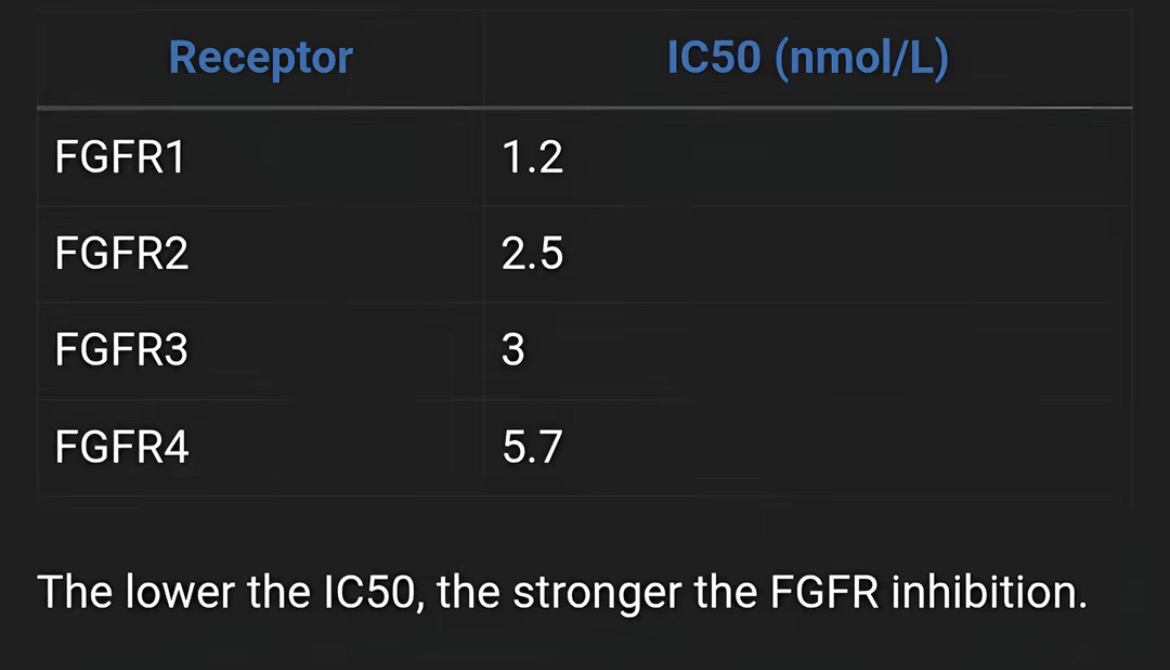
-Is a pan-FGFR inhibitor, it binds to and blocks the enzymatic activity of FGFR1-4
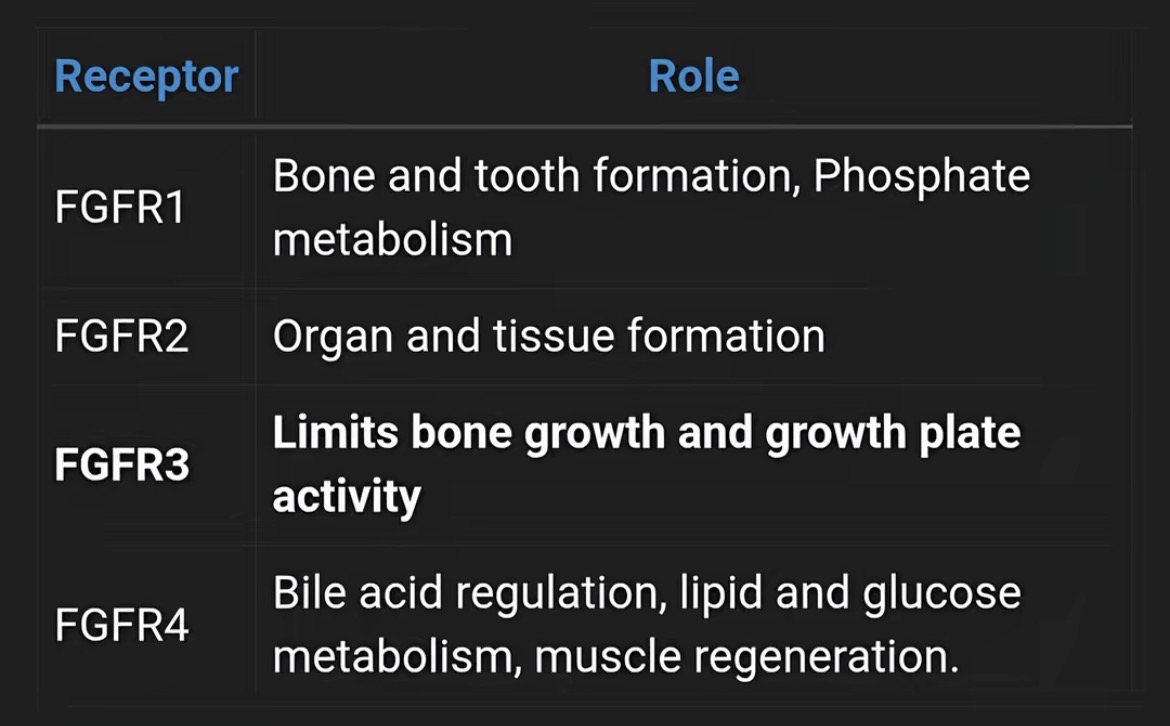
What are FGFRs?
FGFRs (Fibroblast Growth Factor Receptors) are a family of four proteins. They regulate cell growth, division, and tissue development. When these genes mutate or malfunction, they can cause skeletal disorders or drive the uncontrolled growth of various types of cancer.
Patient 1
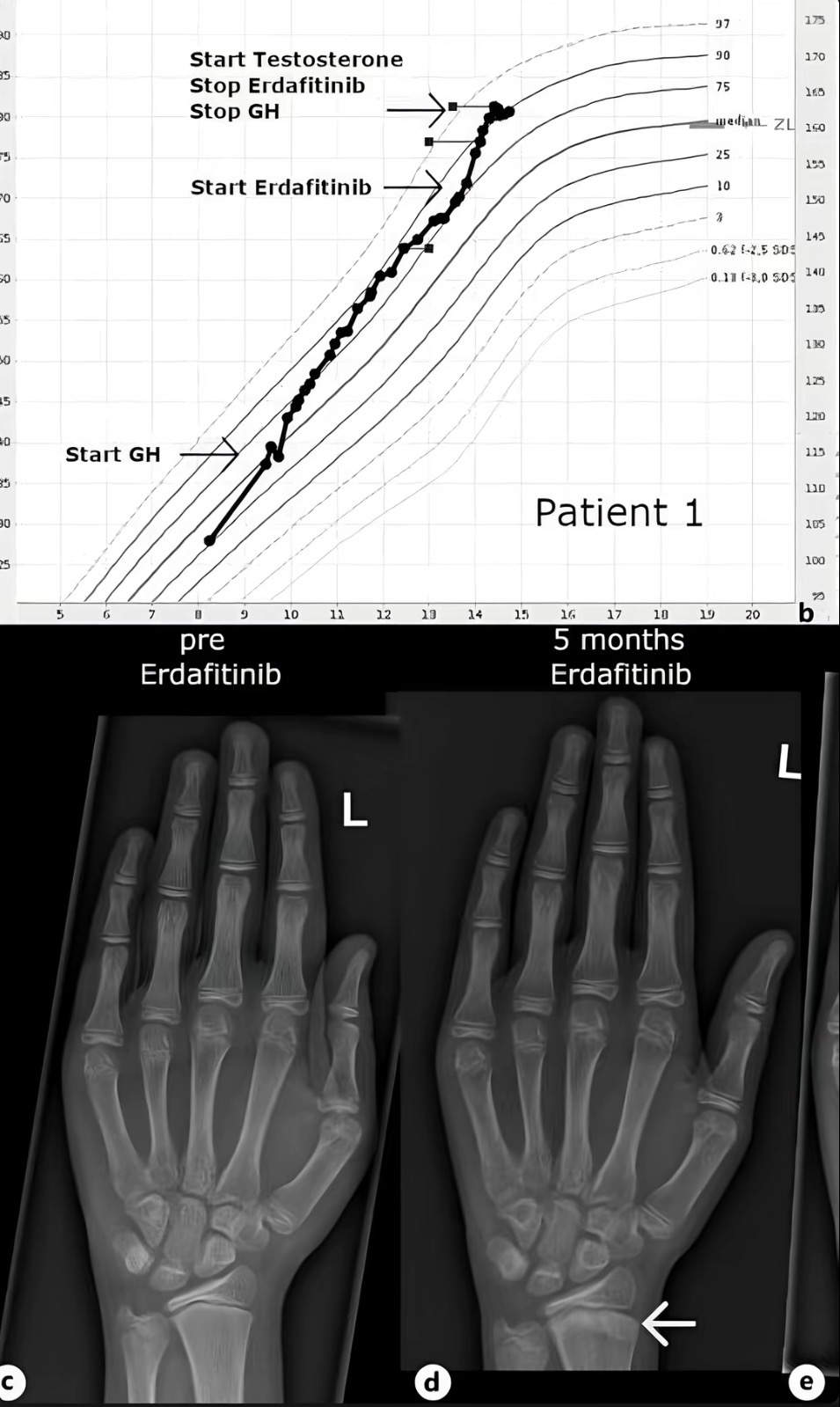
Patient 1 was diagnosed with a mesencephalic glioma grade II-Ill at 5 years of age,
Bioptic reevaluation at local progression in the brainstem at age 12 years revealed a low-grade tumor with an FGFR1 alteration, off-label treatment with erdafitinib was initiated at 13.8 years
The initial erdafitinib dose of 5 mg/day had to be paused and lowered to 3 mg/d for bone pain and abdominal aches
after 6 months of erdafitinib revealed a dramatic growth spurt!
Wrist imaging revealed an atypical physeal widening without apparent progression of bone maturation Testosterone was initiated to advance pubertal development and induce growth plate fusion
Patient 2
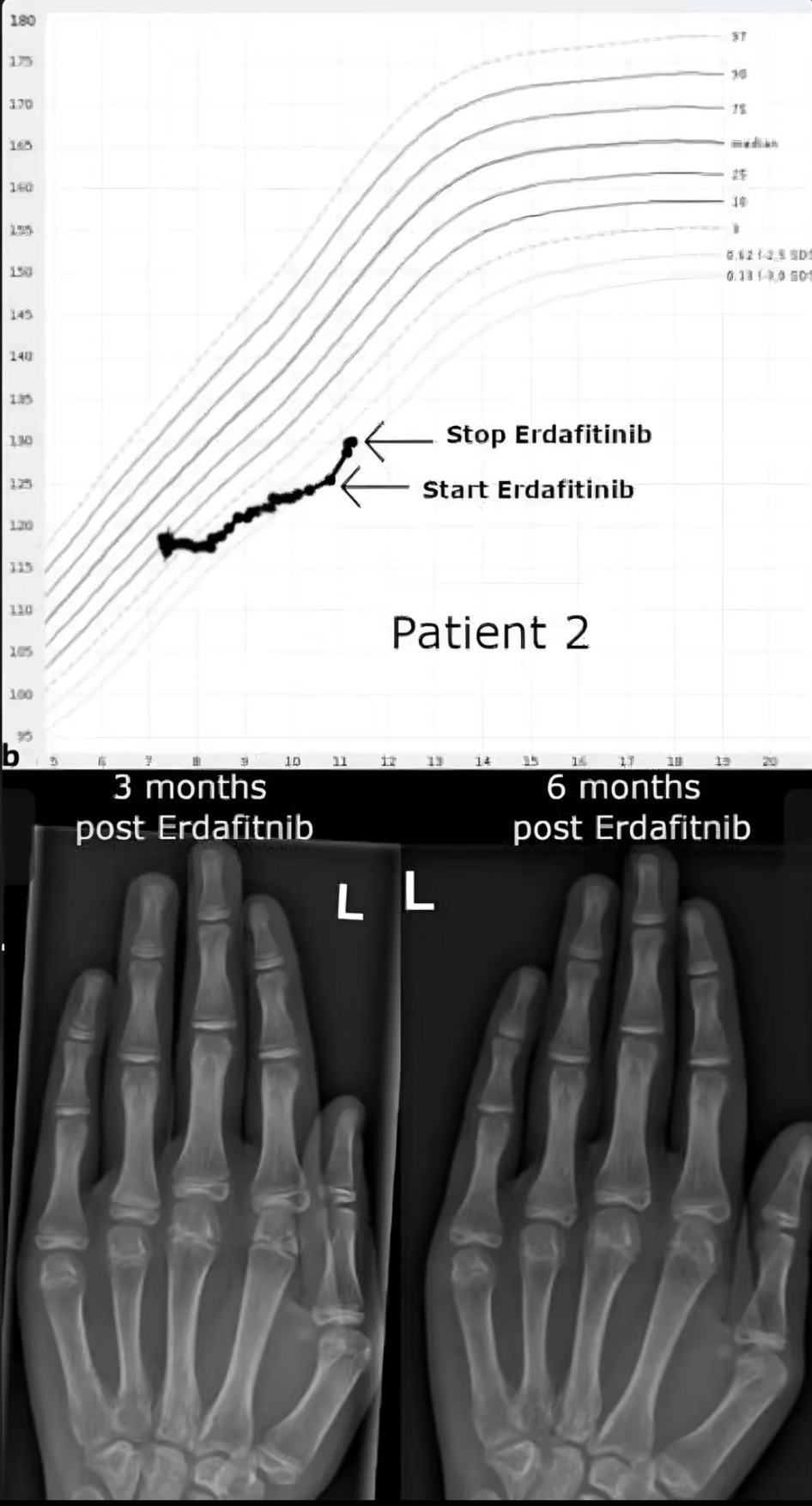
Patient 2 was diagnosed with an FGFR3-overexpressing ependymoma at 4 years of age. There was no alteration of the endocrine function of therapeutic relevance. After standard therapy with irradiation and chemotherapy, she suffered from recurrences and tumor progression. Treatment was switched to erdafitinib at 10.9 years of age.
With onset of treatment with erdafitinib, there was an unanticipated growth spurt despite previous growth retardation.
Low IGF-1, suggesting Erda works independently of the hormonal system yet the growth velocity increased at nearly 4 times.
Erdafitinib can entail dangerous consequences when administered without the appropriate premedications, however, it has been shown to induce rapid growth acceleration in certain individuals.
Why is it so dangerous
When someone takes erdafitinib, it blocks fgfr in the proximal renal tubules of the kidneys, causing the body to massively reabsorb phosphorus into your blood. This triggers hyperphosphatemia.
Sevelamer is a gastric binder meaning it only stops phosphate absorption from your food in the gut. It does absolutely nothing to stop the systemic kidney overload caused by the compound
Teens online think: "Il just pop Sevelamer (phosphate binder) to keep my blood clean while erdafitinib makes me grow."
This is incorrect.
If you take Sevelamer, you suppress your serum phosphate levels. Without a lab, you now have zero visibility into whether the drug is executing 30% inhibition or 90% toxicity tissue damage putting you in a severely dangerous position.
Sevelamer only binds phosphate in the gut from food. It does not stop the kidneys from reabsorbing phosphate internally.
The systemic phosphate still overloads, causing calcium phosphate crystals to precipitate directly into their soft tissues, causing vascular calcification, joint calcification, and permanent retinal damage.
Forskolin (cAMP)
This forced the chondrocytes to align and differentiate smoothly into organised bone columns.
cAMp regulates fluid transport. By opening the cellular channels while erdafitinib handles tissue, it
accelerates fluid pool under the retina moving the timeline for central serous retinopathy forward from month 4 to month i or 2 on a realistic timeline.
Saffron extract
Maintains capillary health and ocular blood flow to stop retinal tissue degradation
The eye damage from erdafitinib isn't from lack of blood flow or oxidative. Erdafitinib cuts off the cellular glue, FGFR2/3 adhesion, holding the retina down. Saffron cannot stop a mechanical
detachment caused by the lack of structural anchor proteins.
TMG (betaine)
Buffer liver enzymes and manage osmoprotection to handle systemic toxicity.
TMG is very effective against chemical stress, but it won't bind minerals. The kidney damage is a plumbing issue, phosphorus spikes so high it binds with calcium and forms stones inside the renal tubules. TMG cannot filter out those crystals.
SCFE on Erdafitinib
Erdafitinib → FGFR1–4 inhibition
↓
Disrupted FGFR signalling in the growth plate
↓
Altered chondrocyte proliferation + growth-plate structure
↓
Wider / more vulnerable physis
↓
More mechanical stress on the growth plate during puberty
↓
Femoral head slips through the weakened physis
↓
SCFE
There’s also another pathway involved:
FGFR inhibition → ↓ FGF23 signalling → ↓ phosphate excretion → ↑ blood phosphate
High phosphate may further affect bone and growth-plate mineralisation.
So the concern isn’t simply that erdafitinib makes you grow faster — it can interfere with the structure and function of an already-stressed growth plate, which can contribute to SCFE.
And importantly, SCFE has actually been reported in pediatric patients receiving erdafitinib.
My final thoughts on erda are its stupid to take you cant really counter any of the sides and there are better ways to grow
It is specifically prescribed for patients whose cancer has progressed after previous treatments and carries susceptible FGFR3 genetic alterations.
-Is a pan-FGFR inhibitor, it binds to and blocks the enzymatic activity of FGFR1-4
What are FGFRs?
FGFRs (Fibroblast Growth Factor Receptors) are a family of four proteins. They regulate cell growth, division, and tissue development. When these genes mutate or malfunction, they can cause skeletal disorders or drive the uncontrolled growth of various types of cancer.
Patient 1
Patient 1 was diagnosed with a mesencephalic glioma grade II-Ill at 5 years of age,
Bioptic reevaluation at local progression in the brainstem at age 12 years revealed a low-grade tumor with an FGFR1 alteration, off-label treatment with erdafitinib was initiated at 13.8 years
The initial erdafitinib dose of 5 mg/day had to be paused and lowered to 3 mg/d for bone pain and abdominal aches
after 6 months of erdafitinib revealed a dramatic growth spurt!
Wrist imaging revealed an atypical physeal widening without apparent progression of bone maturation Testosterone was initiated to advance pubertal development and induce growth plate fusion
Patient 2
Patient 2 was diagnosed with an FGFR3-overexpressing ependymoma at 4 years of age. There was no alteration of the endocrine function of therapeutic relevance. After standard therapy with irradiation and chemotherapy, she suffered from recurrences and tumor progression. Treatment was switched to erdafitinib at 10.9 years of age.
With onset of treatment with erdafitinib, there was an unanticipated growth spurt despite previous growth retardation.
Low IGF-1, suggesting Erda works independently of the hormonal system yet the growth velocity increased at nearly 4 times.
Erdafitinib can entail dangerous consequences when administered without the appropriate premedications, however, it has been shown to induce rapid growth acceleration in certain individuals.
Why is it so dangerous
When someone takes erdafitinib, it blocks fgfr in the proximal renal tubules of the kidneys, causing the body to massively reabsorb phosphorus into your blood. This triggers hyperphosphatemia.
Sevelamer is a gastric binder meaning it only stops phosphate absorption from your food in the gut. It does absolutely nothing to stop the systemic kidney overload caused by the compound
Teens online think: "Il just pop Sevelamer (phosphate binder) to keep my blood clean while erdafitinib makes me grow."
This is incorrect.
If you take Sevelamer, you suppress your serum phosphate levels. Without a lab, you now have zero visibility into whether the drug is executing 30% inhibition or 90% toxicity tissue damage putting you in a severely dangerous position.
Sevelamer only binds phosphate in the gut from food. It does not stop the kidneys from reabsorbing phosphate internally.
The systemic phosphate still overloads, causing calcium phosphate crystals to precipitate directly into their soft tissues, causing vascular calcification, joint calcification, and permanent retinal damage.
Forskolin (cAMP)
This forced the chondrocytes to align and differentiate smoothly into organised bone columns.
cAMp regulates fluid transport. By opening the cellular channels while erdafitinib handles tissue, it
accelerates fluid pool under the retina moving the timeline for central serous retinopathy forward from month 4 to month i or 2 on a realistic timeline.
Saffron extract
Maintains capillary health and ocular blood flow to stop retinal tissue degradation
The eye damage from erdafitinib isn't from lack of blood flow or oxidative. Erdafitinib cuts off the cellular glue, FGFR2/3 adhesion, holding the retina down. Saffron cannot stop a mechanical
detachment caused by the lack of structural anchor proteins.
TMG (betaine)
Buffer liver enzymes and manage osmoprotection to handle systemic toxicity.
TMG is very effective against chemical stress, but it won't bind minerals. The kidney damage is a plumbing issue, phosphorus spikes so high it binds with calcium and forms stones inside the renal tubules. TMG cannot filter out those crystals.
SCFE on Erdafitinib
Erdafitinib → FGFR1–4 inhibition
↓
Disrupted FGFR signalling in the growth plate
↓
Altered chondrocyte proliferation + growth-plate structure
↓
Wider / more vulnerable physis
↓
More mechanical stress on the growth plate during puberty
↓
Femoral head slips through the weakened physis
↓
SCFE
There’s also another pathway involved:
FGFR inhibition → ↓ FGF23 signalling → ↓ phosphate excretion → ↑ blood phosphate
High phosphate may further affect bone and growth-plate mineralisation.
So the concern isn’t simply that erdafitinib makes you grow faster — it can interfere with the structure and function of an already-stressed growth plate, which can contribute to SCFE.
And importantly, SCFE has actually been reported in pediatric patients receiving erdafitinib.
My final thoughts on erda are its stupid to take you cant really counter any of the sides and there are better ways to grow