




illuminati200tcp
The all seeing
- Joined
- Sep 20, 2025
- Posts
- 42
- Reputation
- 35
-High doses of androgens affect the mesolimbic dopamine system, aswell as serotonin Gaba and glutamate signaling. Reviews of AAS neurobiology describes changes in these systems and in reward-circuit function.
The Role of Anabolic Androgenic Steroids in Disruption of the Physiological Function in Discrete Areas of the Central Nervous System
-Sleep loss on high doses of testosterone 500mg vs 250mg weekly. They did a randomized, double blind crossover study in older men.
17 community-dwelling healthy men over the age of 60 yr were randomized to receive three injections of IM testosterone esters at weekly intervals (500 mg, 250 mg, and 250 mg) or matching oil-based placebo and then crossed over to the other treatment after 8 wk of washout.
The High Dose of testosterone treatment:
During the high-dose condition, investigators observed increases in:
Neuropsychiatric effects of anabolic steroids in male normal volunteers
This leads to a very important distinction.
Testosterone can modify:
High-dose Androgen exposure can produce:
A review of anabolic-androgenic steroid psychiatric effects specifically discusses Hypomania/Manic episodes associated with Androgen exposure
Anabolic-androgenic steroids and psychiatric-related effects: a review
Personal Experience DNR if u want:
in Short i was in a state of mania during 450/500mg of testosterone for like 1 month. i went to the ward for 3/4 Weeks, i wanted to kms and hurt other people.
Here's some photos from the ward.


Now for the Important shit, How to Prevent all this or mitigate the sides?
Insomnia from AAS:
Lemborexant.
Our Brain has a wake promoting system centered around Orexin (hypocretin).
Orexin neurons in the hypothalamus essentially help maintain:
Wake -> alertness -> arousal -> motivation -> staying awake
They stimulate several other wake promoting systems, including noradrenergic, dopaminergic, serotonergic and histaminergic pathways.
Lemborexant blocks both orexin receptors: OX1R and OX2R. The FDA describes its mechanism as antagonism of orexin receptors involved in maintaining wakefulness.
Lemborexant (brand Dayvigo)
So rather than forcing the brain into sedation, the basic idea is:
block the wake signal → reduce arousal → allow the normal sleep system to take over.
A 2025 systematic review/meta-analysis of six randomized controlled trials involving 2,257 people found that lemborexant significantly:
Another 2025 meta-analysis involving 1,976 patients found improvements with both 5 mg and 10 mg, including approximately 20–22 minutes less wakefulness after sleep onset in the analyzed comparisons. Somnolence was more common than with placebo.
Efficacy and safety of lemborexant vs placebo in treating adults with insomnia disorder: a systematic review and meta-analysis of 1976 patients
There's also a network meta-analysis comparing lemborexant with other insomnia medications. Lemborexant ranked particularly well for objectively measured total sleep time, sleep-onset latency and sleep efficiency.
Comparative efficacy of lemborexant and other insomnia treatments: a network meta-analysis
5mg vs 10mg are the usual doses.
Interestingly, the clinical evidence doesn't suggest that 10 mg is simply twice as good as 5 mg. Both doses can work, while higher exposure increases the likelihood of next-day sleepiness.
A 2025 meta-analysis found efficacy with both doses, while somnolence was significantly more common with lemborexant than placebo.
Efficacy and safety of lemborexant vs placebo in treating adults with insomnia disorder: a systematic review and meta-analysis of 1976 patients
One thing i like about the mechanism:
Orexin antagonists dont work by globally increasing GABA.
That's fundamentally different from benzodiazepines, Z-drugs or alcohol.
orexin antagonists reduce the wake drive.
That is much closer to manipulating the brain's natural sleep/wake switch.
And the available evidence suggests DORAs don't significantly disrupt normal sleep architecture, and recent comparative literature has not found evidence of physiological tolerance, withdrawal symptoms or rebound insomnia characteristic of some other hypnotics.
Comparative efficacy and safety of daridorexant, lemborexant, and suvorexant for insomnia: a systematic review and network meta-analysis
Half life:
Lemborexant is taken once nightly right before bed, with the usual starting dsose at 5mg and a max of 10mg.
it has a relatively long half life, around 17 to 19 hours depending on dose, so some people may feel next day sleepiness or impaired alertness.
Side effects:
Common:
Serious:
Important Warnings and interactions:
Melatonin❤
What is Melatonin?
Melatonin is a hormone produced mainly by the pineal gland in the brain.
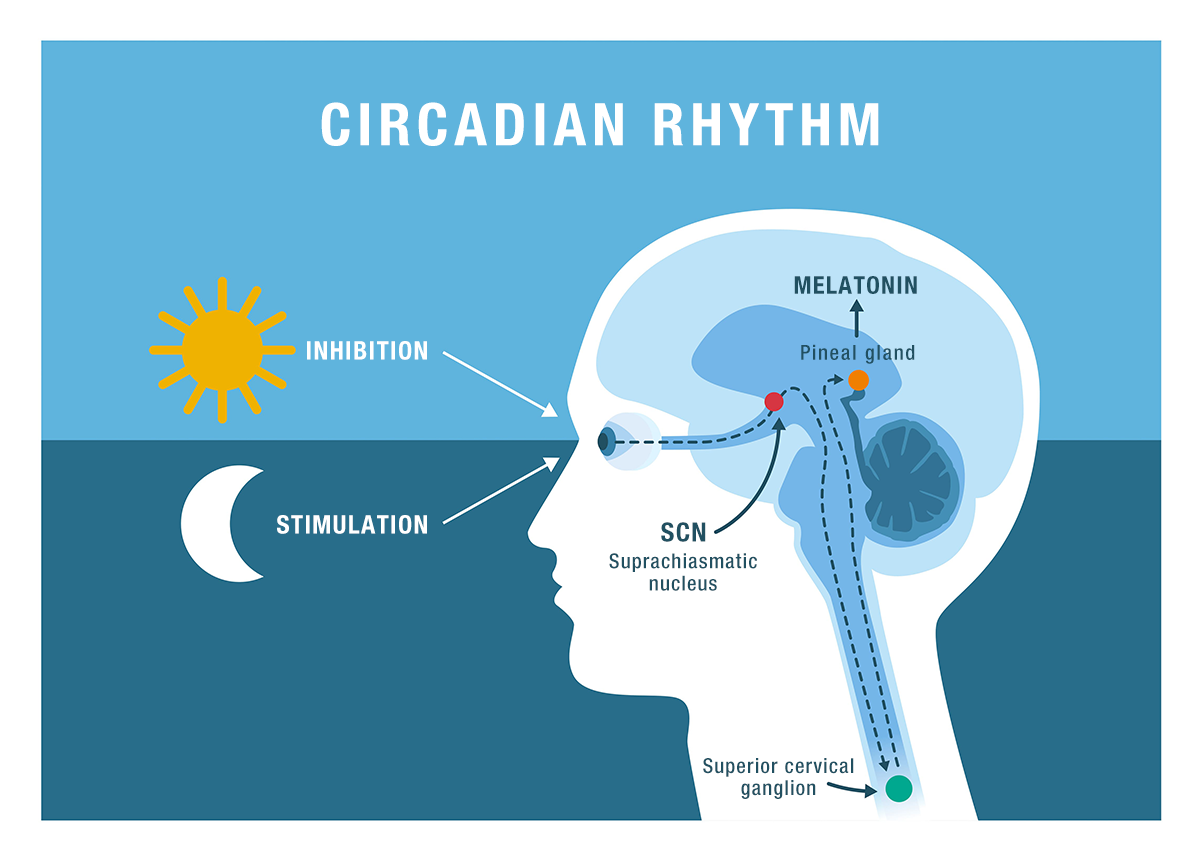
How Melatonin works in the brain:
Melatonin primarily activates two receptors: MT1 and MT2
-MT1 inhibits neuronal activity in the SCN
This helps suppress the circadian wake signal
-MT2 changes the timing/phase of the circadian clock
MT2 is particularly important for phase shifting.
MT1 = more closely associated with acute sleepiness / SCN suppression
MT2 = particularly important for circadian timing
What happens when you take Oral Melatonin?
Oral melatonin is absorbed relatively quickly.
Depending on the formulation, blood concentrations generally rise within roughly 30–60 minutes, although this varies.
Its plasma half-life is short—roughly 30–50 minutes for immediate-release melatonin, with substantial variability.
That's very different from something like lemborexant, which has a much longer duration of action.
This is one reason immediate-release melatonin is better thought of as a timing signal than an all-night sleeping drug.
Dosing of Melatonin:
A huge misconception is "more melatonin=more sleep"
Not necessarily.
Commercial supplements can have 0,3mg up to 10mg for each pill.
but higher dosage dosent always mean better.
With increasing doses you can get:
For many people, 0.3–1 mg can be enough to provide a meaningful circadian signal.
Others respond better to higher doses.
Melatonin dosent cancel directly Testosterone induced CNS activation.
but Melatonin may help with the circadian component, but it isnt an antidote to androgen induced activation.
Quetiapine
Quetiapine is a second-generation (atypical) antipsychotic with a surprisingly broad pharmacology
What quetiapine is used for:
Typical Range for Insomnia/Sleep Problems:
25/100mg at night before bed.
What it does in your brain after assumption.
Quetiapine blocks Histamine H1 Blockade.
H1 antagonism gives sedation.
This is probably the main reason ppl become sleepy on low doses from Quetiapine.
It's similar in principle to what happens with sedating antihistamines, although quetiapine has many additional pharmacological effects.
from 25/100mg strong H1 occupancy, sedation and sleepiness.
This occurs at doses below those normally required for substantial antipsychotic effects.
α1-adrenergic blockade
Quetiapine also blocks α1-adrenergic receptors.
This can produce:
Personal Experience:
Never had problems with low bp from quetiapine or heaviness. only time i felt bad was when i tried to od on truxal, quetiapine and dominal. next day i felt utter shit. NOT reccomended lmao\
Side effects i've encountered.
Quetiapine has substantial activity at several serotonin receptors, particularly:
5-HT2A and 5-HT2C
it also has activity at other serotonin receptors.
The 5-HT2A antagonism is part of its antipsychotic pharmacology.
Its metabolite, norquetiapine, is particularly interesting because it has pharmacological properties that differ from quetiapine itself.
Quetpine and sleep architecture.
Quetiapine isnt simply making you go to sleep.
it alters:
This is one reason it's not equivalent to natural sleep.
Being unconscious/sedated ≠ necessarily producing perfectly physiological sleep.
Metabolic side effects:
Quetiapine can cause:
The metabolic risk is generally less severe than with some antipsychotics such as olanzapine/clozapine, but it is absolutely not negligible.
This is one reason long-term treatment often involves monitoring:
Quetiapine increased my hunger after taking it. my usual dose is 100mg but even at 50 and 25mg it made me a bit hungry.
if you want to implement it in your stack reduce the dose to 25/50mg
i never had problems with insulin resistance or high blood glucose but it did make me bulk up quite a lot thanks to it + the AAS cycles.
So in conclusion.
Lembo id keep it below 5mg around 2.5mg/1.5mg and quetiapine at around 50/75mg or even 100mg if you dont mind strong sedation. melatonin at around 2/3mg every night 1 hour before sleep, incase 2/3 arent enough increase the dosage and play around.
Always monitor HDL/LDL
fasting glucose and insulin sensitivity.
The Role of Anabolic Androgenic Steroids in Disruption of the Physiological Function in Discrete Areas of the Central Nervous System
-Sleep loss on high doses of testosterone 500mg vs 250mg weekly. They did a randomized, double blind crossover study in older men.
17 community-dwelling healthy men over the age of 60 yr were randomized to receive three injections of IM testosterone esters at weekly intervals (500 mg, 250 mg, and 250 mg) or matching oil-based placebo and then crossed over to the other treatment after 8 wk of washout.
The High Dose of testosterone treatment:
- Reduced total sleep by approx. 1 Hour
- Increased Nocturnal Hypoxemia
- Increasedrespiratory disturbances by approximately 7 events/hour
- disrupted sleep even though the researchers didnt find evidence that the airway simply became physically narrower.
- Dopamine
During the high-dose condition, investigators observed increases in:
- Euphoria
- Energy
- Sexual Arousal
- irritability
- mood swings
- hostility
- distractibility
Neuropsychiatric effects of anabolic steroids in male normal volunteers
This leads to a very important distinction.
Testosterone can modify:
- sleep architecture
- respiratory control
- REM/NREM patterns
- ventilatory responses
High-dose Androgen exposure can produce:
- increased energy
- irritability
- racing thoughts
- increased activity
- reduced perceived need for sleep.
A review of anabolic-androgenic steroid psychiatric effects specifically discusses Hypomania/Manic episodes associated with Androgen exposure
Anabolic-androgenic steroids and psychiatric-related effects: a review
Personal Experience DNR if u want:
in Short i was in a state of mania during 450/500mg of testosterone for like 1 month. i went to the ward for 3/4 Weeks, i wanted to kms and hurt other people.
Here's some photos from the ward.
Now for the Important shit, How to Prevent all this or mitigate the sides?
Insomnia from AAS:
Lemborexant.
- Lemborexant is a prescription sleep medication sold as Dayvigo and used to treat adult insomnia, especially when someone has trouble falling asleep, staying asleep or both.
- It belongs to a newer class called dual orexin receptor antagonists, wich means it works by blocking the brain's wake promoting orexin system instead of enchancing GABA like benzodiazepines or Z drugs.
Our Brain has a wake promoting system centered around Orexin (hypocretin).
Orexin neurons in the hypothalamus essentially help maintain:
Wake -> alertness -> arousal -> motivation -> staying awake
They stimulate several other wake promoting systems, including noradrenergic, dopaminergic, serotonergic and histaminergic pathways.
Lemborexant blocks both orexin receptors: OX1R and OX2R. The FDA describes its mechanism as antagonism of orexin receptors involved in maintaining wakefulness.
Lemborexant (brand Dayvigo)
So rather than forcing the brain into sedation, the basic idea is:
block the wake signal → reduce arousal → allow the normal sleep system to take over.
How effective is it?
Pretty good.A 2025 systematic review/meta-analysis of six randomized controlled trials involving 2,257 people found that lemborexant significantly:
- reduced wake after sleep onset
- reduced sleep-onset latency
- increased sleep efficiency.
Another 2025 meta-analysis involving 1,976 patients found improvements with both 5 mg and 10 mg, including approximately 20–22 minutes less wakefulness after sleep onset in the analyzed comparisons. Somnolence was more common than with placebo.
Efficacy and safety of lemborexant vs placebo in treating adults with insomnia disorder: a systematic review and meta-analysis of 1976 patients
There's also a network meta-analysis comparing lemborexant with other insomnia medications. Lemborexant ranked particularly well for objectively measured total sleep time, sleep-onset latency and sleep efficiency.
Comparative efficacy of lemborexant and other insomnia treatments: a network meta-analysis
5mg vs 10mg are the usual doses.
Interestingly, the clinical evidence doesn't suggest that 10 mg is simply twice as good as 5 mg. Both doses can work, while higher exposure increases the likelihood of next-day sleepiness.
A 2025 meta-analysis found efficacy with both doses, while somnolence was significantly more common with lemborexant than placebo.
Efficacy and safety of lemborexant vs placebo in treating adults with insomnia disorder: a systematic review and meta-analysis of 1976 patients
One thing i like about the mechanism:
Orexin antagonists dont work by globally increasing GABA.
That's fundamentally different from benzodiazepines, Z-drugs or alcohol.
orexin antagonists reduce the wake drive.
That is much closer to manipulating the brain's natural sleep/wake switch.
And the available evidence suggests DORAs don't significantly disrupt normal sleep architecture, and recent comparative literature has not found evidence of physiological tolerance, withdrawal symptoms or rebound insomnia characteristic of some other hypnotics.
Comparative efficacy and safety of daridorexant, lemborexant, and suvorexant for insomnia: a systematic review and network meta-analysis
Half life:
Lemborexant is taken once nightly right before bed, with the usual starting dsose at 5mg and a max of 10mg.
it has a relatively long half life, around 17 to 19 hours depending on dose, so some people may feel next day sleepiness or impaired alertness.
Side effects:
Common:
- Drowsiness
- hedache
- abnormal dreams
Serious:
- Sleep paralysis
- hallucinations
- complex sleep behaviors
Important Warnings and interactions:
- Lemorexant shouldnt be used in ppl with narcolepsy
- Alcohol and other sedatings drugs
Melatonin❤
What is Melatonin?
Melatonin is a hormone produced mainly by the pineal gland in the brain.
How Melatonin works in the brain:
Melatonin primarily activates two receptors: MT1 and MT2
-MT1 inhibits neuronal activity in the SCN
This helps suppress the circadian wake signal
-MT2 changes the timing/phase of the circadian clock
MT2 is particularly important for phase shifting.
MT1 = more closely associated with acute sleepiness / SCN suppression
MT2 = particularly important for circadian timing
What happens when you take Oral Melatonin?
Oral melatonin is absorbed relatively quickly.
Depending on the formulation, blood concentrations generally rise within roughly 30–60 minutes, although this varies.
Its plasma half-life is short—roughly 30–50 minutes for immediate-release melatonin, with substantial variability.
That's very different from something like lemborexant, which has a much longer duration of action.
This is one reason immediate-release melatonin is better thought of as a timing signal than an all-night sleeping drug.
Dosing of Melatonin:
A huge misconception is "more melatonin=more sleep"
Not necessarily.
Commercial supplements can have 0,3mg up to 10mg for each pill.
but higher dosage dosent always mean better.
With increasing doses you can get:
- more residual melatonin
- morning grogginess
- vivid dreams
- headache
- dizziness
- nausea
- altered sleep architecture in some people
- potentially less predictable circadian effects.
For many people, 0.3–1 mg can be enough to provide a meaningful circadian signal.
Others respond better to higher doses.
Melatonin dosent cancel directly Testosterone induced CNS activation.
but Melatonin may help with the circadian component, but it isnt an antidote to androgen induced activation.
Quetiapine
Quetiapine is a second-generation (atypical) antipsychotic with a surprisingly broad pharmacology
What quetiapine is used for:
- Schizophrenia
- Bipolar disorder, including manic and depressive episodes
- Maintenance treatment of bipolar disorder
- Major depressive disorder as an adjunct in some formulations/countries
- Sometimes insomnia or anxiety off-label, although this is controversial because its risks can outweigh its benefits when used purely as a sleeping pill.
Typical Range for Insomnia/Sleep Problems:
25/100mg at night before bed.
What it does in your brain after assumption.
Quetiapine blocks Histamine H1 Blockade.
H1 antagonism gives sedation.
This is probably the main reason ppl become sleepy on low doses from Quetiapine.
It's similar in principle to what happens with sedating antihistamines, although quetiapine has many additional pharmacological effects.
from 25/100mg strong H1 occupancy, sedation and sleepiness.
This occurs at doses below those normally required for substantial antipsychotic effects.
α1-adrenergic blockade
Quetiapine also blocks α1-adrenergic receptors.
This can produce:
- lower blood pressure
- dizziness
- orthostatic hypotension
- lightheadedness when standing
- sometimes incresed heart rate
Personal Experience:
Never had problems with low bp from quetiapine or heaviness. only time i felt bad was when i tried to od on truxal, quetiapine and dominal. next day i felt utter shit. NOT reccomended lmao\
Side effects i've encountered.
- grogginess
- slowed reaction time
- dizziness
- impaired concentration
- feeling emotionally flat
- difficulty waking
- The dose is high (300mg+)
- you take it late
- you're sleep deprived
- you combine it with other sedatives
- you're unusually sensitive to it.
Quetiapine has substantial activity at several serotonin receptors, particularly:
5-HT2A and 5-HT2C
it also has activity at other serotonin receptors.
The 5-HT2A antagonism is part of its antipsychotic pharmacology.
Its metabolite, norquetiapine, is particularly interesting because it has pharmacological properties that differ from quetiapine itself.
Quetpine and sleep architecture.
Quetiapine isnt simply making you go to sleep.
it alters:
- REM sleep
- slow-wave sleep
- sleep continuity
- sleep latency
This is one reason it's not equivalent to natural sleep.
Being unconscious/sedated ≠ necessarily producing perfectly physiological sleep.
Metabolic side effects:
Quetiapine can cause:
- Increased appetite
- Weight gain
- Increased triglycerides
- Increased LDL/decreased HDL
- Increased insulin resistance
- Increased blood glucose
The metabolic risk is generally less severe than with some antipsychotics such as olanzapine/clozapine, but it is absolutely not negligible.
This is one reason long-term treatment often involves monitoring:
- weight
- waist circumference
- blood pressure
- fasting glucose/HbA1c
- lipid profile.
Quetiapine increased my hunger after taking it. my usual dose is 100mg but even at 50 and 25mg it made me a bit hungry.
if you want to implement it in your stack reduce the dose to 25/50mg
i never had problems with insulin resistance or high blood glucose but it did make me bulk up quite a lot thanks to it + the AAS cycles.
So in conclusion.
Lembo id keep it below 5mg around 2.5mg/1.5mg and quetiapine at around 50/75mg or even 100mg if you dont mind strong sedation. melatonin at around 2/3mg every night 1 hour before sleep, incase 2/3 arent enough increase the dosage and play around.
Always monitor HDL/LDL
fasting glucose and insulin sensitivity.
Attachments
-
 1788810494656.png404 bytes · Views: 0
 -
 1788810494665.png7.7 KB · Views: 0
 -
 1788810494691.png260 bytes · Views: 0
 -
 1788810494717.png11.7 KB · Views: 0
 -
 1788810494700.png6.2 KB · Views: 0
 -
 1788810494683.png7.8 KB · Views: 0
 -
 1788810494742.png448 bytes · Views: 0
 -
 1788810494674.png404 bytes · Views: 0
 -
 1788810494708.png404 bytes · Views: 0
 -
 1788810494734.png7.1 KB · Views: 0
 -
 1788810494726.png396 bytes · Views: 0


