EYE AREA SOFTMAXXING — WHAT ACTUALLY WORKS
I've seen a lot of people on here talk about the eye area like you can just train your eyes into a completely different shape. That's not really how it works.Your eye area is mostly determined by your orbital anatomy, brow position, eyelids, canthi, surrounding soft tissue and genetics.
You can't naturally turn a negative canthal tilt into a completely different orbital structure with some eye exercise.
But there are still some legit ways to softmaxx the eye area.
1. FIX YOUR SLEEP
Probably the most boring one, but it matters.Poor sleep can make the periorbital area look more tired and can increase the appearance of puffiness and dark circles.
If you're young, getting roughly 8–10 hours is the general recommendation.
Don't underestimate this just because it isn't some crazy looksmaxxing hack.
2. GET YOUR SKIN RIGHT
The skin around the eyes is thin, so things like pigmentation, irritation and dryness can be pretty noticeable.Basic skinmaxxing:
- gentle cleanser
- moisturizer
- SPF
- treat acne if you have it
- don't constantly rub your eyes
3. EYEBROWMAXXING
Your brows have a huge effect on the perceived eye area.Don't completely reshape them.
Usually just clean up obvious stray hairs and maintain the natural shape.
A lower-looking brow can make the upper eyelid area appear more hooded, while a higher brow exposes more upper eyelid.
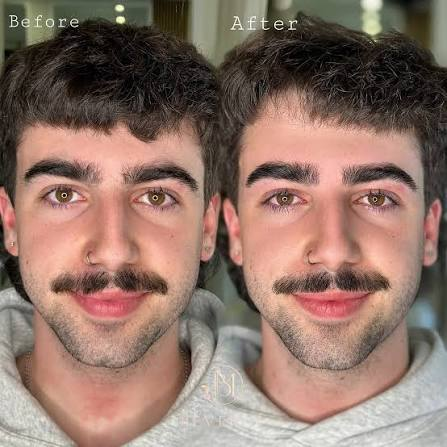
Same face, just better grooming.
4. UNDERSTAND CANTHAL TILT
The medial canthus is the inner corner of the eye and the lateral canthus is the outer corner.If the lateral canthus sits higher than the medial canthus, that's generally described as positive canthal tilt.
If they're roughly level, it's neutral.
If the lateral canthus is lower, it's negative.
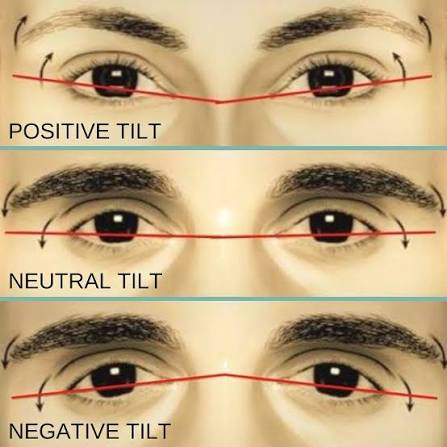
This is useful for describing eye shape, but don't treat it like a PSL score by itself.
Eye area aesthetics are about the whole region, not one measurement.
5. DON'T CONFUSE CANTHAL TILT WITH SCLERAL SHOW
These get mixed up constantly.Scleral show refers to visible white sclera, particularly below the iris.
Increased lower scleral show can be associated with lower-eyelid position or retraction.
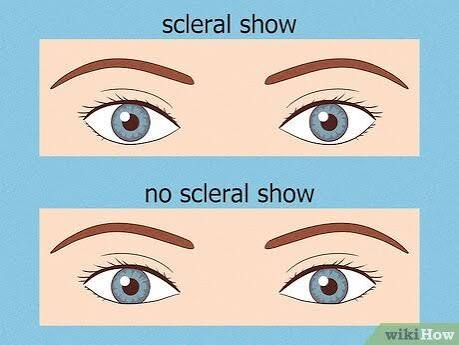
If someone has significant lower-lid retraction, that's not something you fix by doing "eye exercises." That's something an ophthalmologist/oculoplastic specialist can actually assess.
6. EYELID SHOW
Another thing that affects the eye area is how much upper eyelid is visible.Some people naturally have more upper-eyelid show, while others have more hooding.
Your eyelid anatomy and brow position both contribute to this.
Don't assume more or less eyelid show automatically means better.
It's about how everything fits together.
7. HAIRMAXXING HELPS THE EYE AREA TOO
Your hair frames your upper face.A hairstyle that suits your forehead and brow area can make the eyes stand out more.
If you have a large forehead/high hairline, completely exposing it may change the balance of your upper third.
If you already have a long face, adding a ton of vertical height to your hair can exaggerate that.
This is why hairmaxxing and eye-area aesthetics aren't completely separate.
8. WHAT YOU CAN'T NATURALLY CHANGE
Don't waste months trying to "exercise" your way into new:- orbital shape
- orbital depth
- eye spacing
- brow ridge
- canthal anatomy
- bone structure
Normal healthy habits can improve presentation, but they're not going to remodel your adult orbital bones.
9. MEDICAL OPTIONS ARE A DIFFERENT CATEGORY
If someone actually has an anatomical or functional eyelid issue, there are legitimate medical procedures.For example:
Blepharoplasty can address excess eyelid skin/fat.
Ptosis repair can correct certain types of upper-eyelid drooping.
Brow lift changes the position of the eyebrow/forehead soft tissues.
These procedures affect different structures and aren't interchangeable.
I'm not going to go into DIY surgery or give people instructions for performing anything themselves.
TL;DR
If you want to eye-area softmaxx, start with:sleep → skin → brows → grooming → body composition → hair → overall presentation
Learn the anatomy so you actually know what you're looking at.
And don't confuse softmaxxing the appearance of your eye area with physically changing your orbital structure.
A lot of the "eye hacks" online are just people selling a fantasy.
Learn the anatomy first, then decide what actually needs improving.