





Macan
If there is a will, there is a way!
- Joined
- Nov 10, 2024
- Posts
- 90
- Reputation
- 96
What is sebum, and why does it matter?
The skin is made up of sebaceous glands that secrete sebum. In some people this stays within a normal range, in others it doesn't. Excess sebum production, like what's seen in seborrheic dermatitis, can create a favorable environment for fungal growth.
Sebum is a natural, oily substance produced by the sebaceous glands in our skin. Chemically, it's a complex mixture of triglycerides, fatty acids, waxes, squalene, and cellular debris. Even though it's often treated as the enemy of good skin, sebum is actually the skin's first line of defense — it protects against dehydration, external factors, and microorganisms.
The amount produced varies from person to person and depends on genetic predisposition (nothing we can do about that), hormones, diet, and external factors.
The skin is made up of three layers: the epidermis, the dermis (where the sebaceous glands are located), and the hypodermis.
Sebum is even healthy for the skin — it helps with hydration, defends the skin, and rebuilds the skin barrier, among other things. Overproduction, though, can lead to an unfavorable environment, clogged pores, and breakouts.
It's typically secreted most heavily in the T-zone — nose, forehead, and cheeks.
Topical treatments for oily skin
Retinoids are a family of compounds derived from vitamin A, including natural forms like retinol, retinaldehyde, retinoic acid, and retinyl esters, as well as synthetic forms like adapalene and tazarotene.
Mechanism of action:
Retinoids work by binding to nuclear receptors in skin cells. Human skin contains three types of RAR (retinoic acid receptor) — RAR-α, RAR-β, and RAR-γ. To become functional, an RAR receptor has to pair with an RXR receptor (retinoid X receptor), forming what's called a heterodimer.
In the epidermis, RAR-γ makes up about 90% of all RAR receptors, and RXR-α makes up about 90% of all RXR receptors. Because of this, human skin is mostly regulated by the RAR-γ/RXR-α heterodimer combination.
What happens next:
This heterodimer binds to a specific region of DNA called the RARE (retinoic acid response element). That binding triggers transcription of genes responsible for repair of photodamaged skin (sun damage), growth and differentiation of keratinocytes (skin cells), anti-inflammatory effects, and reduced sebum secretion.
Retinoids have been shown to significantly reduce proliferation, maturation, and sebum production.
Tazarotene and tretinoin have also been shown to meaningfully shrink pore size. Pore size is tied to sebum secretion — smaller pores mean less sebum gets secreted.
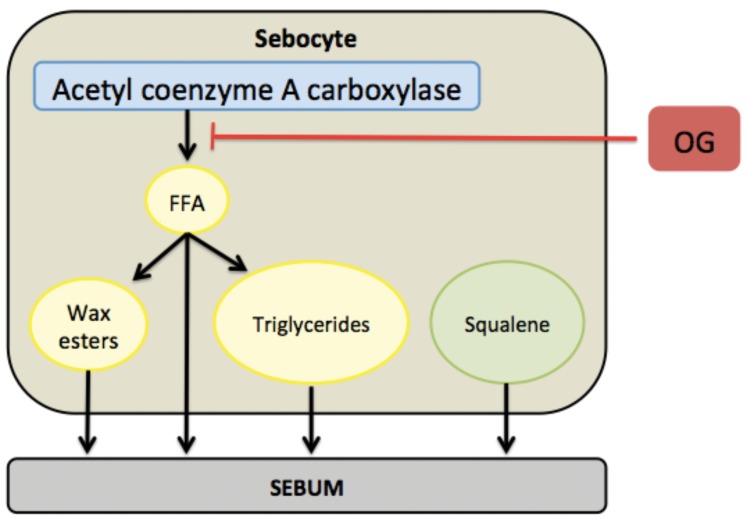
Olumacostat glasaretil (DRM01)
Its function is to inhibit an enzyme (acetyl coenzyme-A carboxylase) responsible for sebum production.
In the end, Dermira pulled the cream after phase 3, because it failed against placebo.
There may be more to say about this cream and its properties down the line.
---------------------------------------------------------------------------------------------------------------------------------------------------------------------------------------------
Niacinamide at a 2% concentration was tested on 100 patients in a double-blind, placebo-controlled study, showing a significant reduction in sebum secretion after two and four weeks of use. The exact percentage of reduction isn't stated in the source.
Green tea was tested in two studies — one with 10 patients using a 3% emulsion for eight weeks, and another with 22 participants over 60 days. Both studies showed a statistically significant reduction in sebum production from baseline, measured with a sebumeter, though again no exact percentage is given.
L-carnitine at 2% is naturally produced in the body and boosts β-oxidation, the process of breaking down fatty acids. It's been shown to significantly reduce fatty acid content inside sebocytes (the cells that produce sebum), resulting in a significant reduction in sebum. No percentage is given here either.
Systemic approaches
Isotretinoin can reduce sebum production by up to 90%.
One year after isotretinoin therapy, sebum secretion remains significantly suppressed.
A lower dose of isotretinoin (under 0.5 mg/kg/day) is often used when treating oily skin alone, without nodulocystic acne, but this lower dose is clearly linked to a higher relapse rate.
Even when the recommended cumulative dose of 120 to 150 mg/kg is reached (the standard "curative" target), up to 17% of patients will still need a second course of oral isotretinoin.
Spironolactone is a drug typically used as a diuretic, but it also has sebum-suppressing properties through androgen blockade and inhibition of 5α-reductase. The oral route could be harmful for men, while topical application might help reduce sebum secretion.
Don't use the oral option. I'd be cautious with this one.
Estriol cream 0.05%
Estriol cream helps fight sebum by reducing androgenic activity at the local level. It's been found to inhibit excessive sebaceous gland activity. When applied topically, it doesn't enter the bloodstream systemically. This is the weakest option of the bunch.
Other possible treatments include Botox, photodynamic therapy, and lasers.
L-carnitine 2% + EGCG 5% moisturizing cream
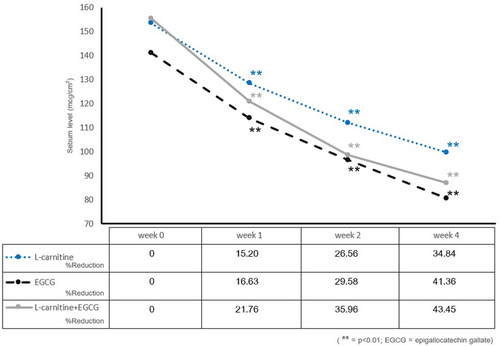
A study looked at how these ingredients, individually and combined in a single cream, affect sebum production.
There were 90 participants — 60% women, 40% men — split into three groups. They didn't know which cream they were using (L-carnitine 2%, EGCG 5% moisturizing cream, or L-carnitine 2% + EGCG 5% moisturizing cream) and applied it to their face every morning and evening. Average age was 27.
They also strictly controlled for other variables, like baseline sebum levels and other products used (nothing else was allowed).
All three creams significantly reduced sebum production (25–30%), with L-carnitine 2% + EGCG 5% performing best, and L-carnitine 2% alone performing worst.
Green-tea-containing creams can also achieve these effects, though at lower levels — still significant, though.
Diet
Vitamins that are crucial for keratinocyte proliferation in the epidermis include vitamin C, calcium, and linoleic acid. Probiotics and borage oil are also relevant.
@aids @Seth Walsh @Brava


