coastal
#1 ranked oxyfarmer
- Joined
- Apr 8, 2026
- Posts
- 4,782
- Reputation
- 9,119
### FULL RAW MEAT GUIDE ###
by me!!  @coastal
@coastalThis is the most complete science-backed guide on meat, with:
human anatomy, overall nutrition, raw Vs cooked, digestion & safety
i also didn't go too far into detail to keep this normie friendly
1. WHY RAW?
The mainstream consensus on germ theory, cooking and pasteurization mainly came out of "muh parasite" paranoia fueled by horrible conditions animals were placed in after the industrial revolution. human anatomy, overall nutrition, raw Vs cooked, digestion & safety
i also didn't go too far into detail to keep this normie friendly
1. WHY RAW?
But humans are designed to consume raw nutrients in their natural state, not food destroyed by fire.Real science on human digestion anatomy:
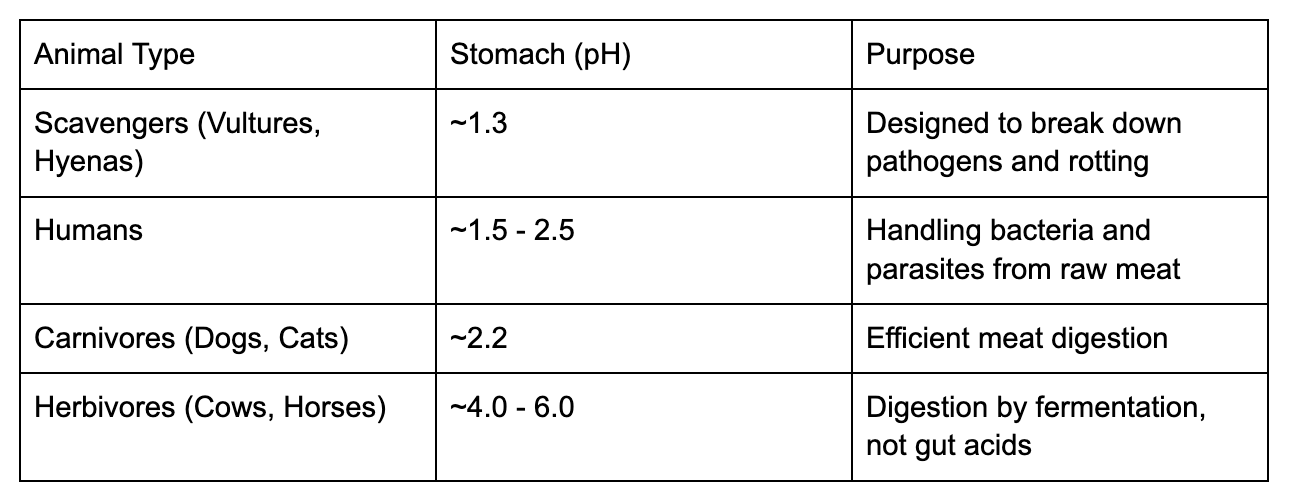
Digestion in carnivores is based on stomach acidity, while herbivores use fermentation and gut bacteria to extract nutrients from normally indigestible fibre. And our lower stomach pH is actually closer to scavengers like hyenas than to carnivores like lions, which shows our innate ability to consume and properly digest RAW MEAT
I'll touch on bioavailability and other reasons for why raw is better in the next section, but just the stomach acidity should be enough to show that we're adapted to eat meat with no issues even if it's rotten, since our gut acidity will neutralize the "harmful" bacteria.
2. RAW VS COOKED
Over the last 10 years there's been numerous cooked/raw carnivore influencers, each with their "science" on what's better. So let's break down the actual macro & micronutrient profiles of both ways to consume meat.
Below is a full NUTRIENT LOSS breakdown based on sited studies and adjusted to a regular sized beef steak cooked on a pan for 15 minutes at medium-high heat:
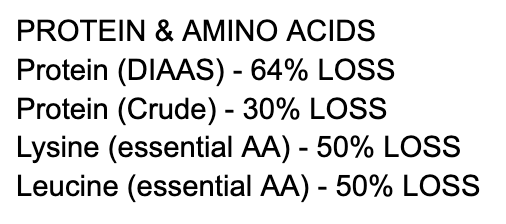
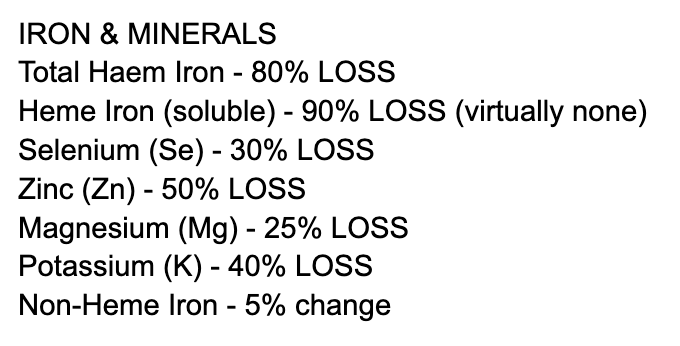
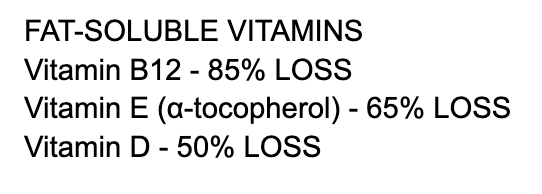
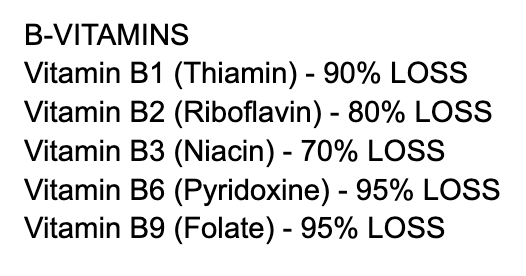
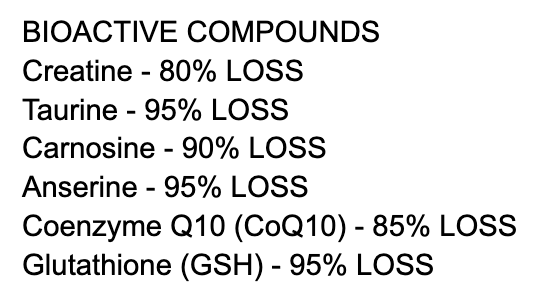
The nutrient loss percentages in my table were determined using a standardized True Retention (TR) method + bioavailability, which isolates the actual chemical degradation of nutrients from simple water loss, then multiplies it by its digestibility percentage value. This approach is the accepted scientific standard for assessing the impact of heat on food.
It works by first calculating the Cooking Yield (CY) - the weight of the cooked food divided by the weight of the raw food. for example, if 100g of raw meat weighs 70g after cooking the CY is 0.70. This accounts for moisture loss, which would otherwise make cooked food appear more nutrient-dense per gram than it actually is.
Once CY is established, the TR is calculated using a formula that factors out the physical loss of water and fat, leaving the actual nutrient loss caused by heat degradation and leaching into cooking liquids.
After calculating the molecule (!!!) loss, i multiplied the amount of new molecules by their current bioavailability value to determine how much of those will actually get digested:
Final Retention (%) = ((Nutrient per g cooked * g cooked food) * cooked bioavailability) / ((Nutrient per g raw * g raw food) * raw bioavailability) * 100
Therefore, a loss percentage in the table (e.g., 30%) means that for every 100 digestible molecules of a nutrient present in raw meat, only 70 remained as digestible after cooking, even accounting for water loss. These values are averages derived from meta-analyses of multiple studies, so a 10% SD range can be present.
It works by first calculating the Cooking Yield (CY) - the weight of the cooked food divided by the weight of the raw food. for example, if 100g of raw meat weighs 70g after cooking the CY is 0.70. This accounts for moisture loss, which would otherwise make cooked food appear more nutrient-dense per gram than it actually is.
Once CY is established, the TR is calculated using a formula that factors out the physical loss of water and fat, leaving the actual nutrient loss caused by heat degradation and leaching into cooking liquids.
After calculating the molecule (!!!) loss, i multiplied the amount of new molecules by their current bioavailability value to determine how much of those will actually get digested:
Final Retention (%) = ((Nutrient per g cooked * g cooked food) * cooked bioavailability) / ((Nutrient per g raw * g raw food) * raw bioavailability) * 100
Therefore, a loss percentage in the table (e.g., 30%) means that for every 100 digestible molecules of a nutrient present in raw meat, only 70 remained as digestible after cooking, even accounting for water loss. These values are averages derived from meta-analyses of multiple studies, so a 10% SD range can be present.
Protein and amino-acids:
pubmed.ncbi.nlm.nih.gov/32089140 pubmed.ncbi.nlm.nih.gov/30204886
Heme iron and minerals:
agris.fao.org/records/65dea00e6eef00c2cea0cb67 doi.org/10.1016/0955-2863(95)00166-2 pubmed.ncbi.nlm.nih.gov/22063048
Fat soluble vitamins:
pmc.ncbi.nlm.nih.gov/articles/PMC12470217 cir.nii.ac.jp/crid/1361137043703481728
B group vitamins:
pubmed.ncbi.nlm.nih.gov/17002590
+ more studies from less known publishers i used for better range for my overall data.
pubmed.ncbi.nlm.nih.gov/32089140 pubmed.ncbi.nlm.nih.gov/30204886
Heme iron and minerals:
agris.fao.org/records/65dea00e6eef00c2cea0cb67 doi.org/10.1016/0955-2863(95)00166-2 pubmed.ncbi.nlm.nih.gov/22063048
Fat soluble vitamins:
pmc.ncbi.nlm.nih.gov/articles/PMC12470217 cir.nii.ac.jp/crid/1361137043703481728
B group vitamins:
pubmed.ncbi.nlm.nih.gov/17002590
+ more studies from less known publishers i used for better range for my overall data.
3. DIGESTION
Raw meat digests much easier, causes less weight in your stomach and less gut problems. Since the protein structure isn't destroyed by heat, our body (which are adapted to breaking down meat) can digest it easier than destroyed unnatural cooked meat
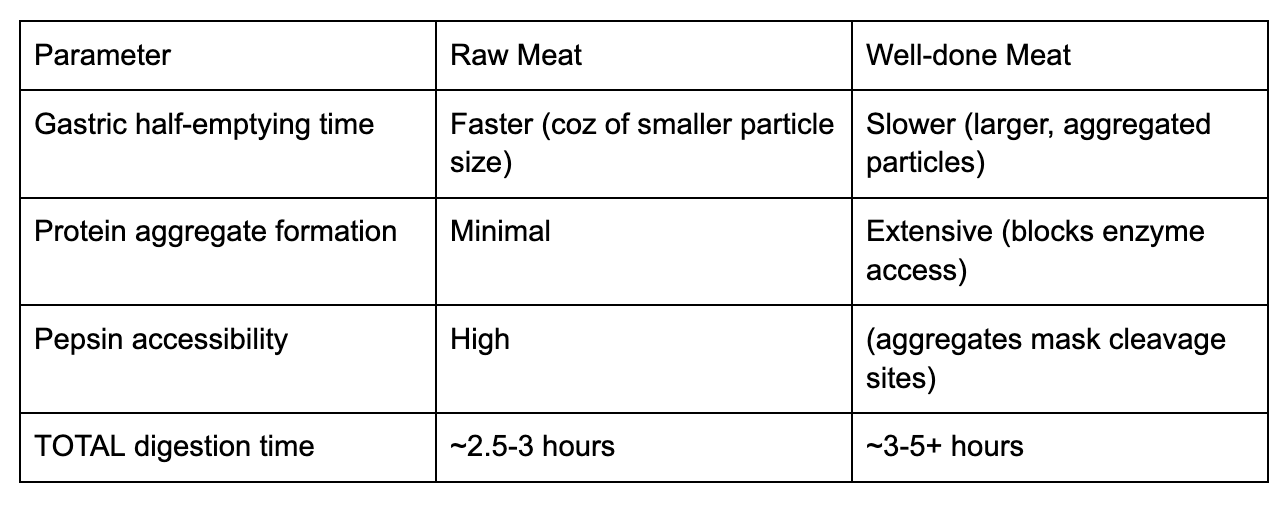
In human studies, 100g of beef products evacuate the stomach in an average of 2 hours and 35 minutes, while for cooked meat this number can be up to 5h+. Cooking meat also coagulates proteins.
Your body then has to fight to break these hard clumps apart. Raw meat retains its natural enzyme activity and cell structure, making it MUCH easier for your stomach acid to digest it.For better digestion you can also Pate your meat (aka chop finely/use a blender/meat dringer). A 1981 radionuclide gastric emptying study in Gastroenterology tracked how different particle sizes of liver emptied from the human stomach simultaneously:

Why this Happens? (Protein denaturalisation)
High-temperature cooking causes proteins to denature and aggregate. These aggregates are less accessible to pepsin (the stomach's primary protein-digesting enzyme) and require significantly more time to break down
Overall digestion comparison:
4. SOURCING
Grass fed + pasture-raised is the best, but grain fed meat is honestly NOT AS BAD as people make it out to be (even tho still not ideal). Since most toxins are stored in fatty tissue (fat, organs, brain, bone marrow), eating lean meat even from the store is actually pretty safe.
Also you wont have to worry about heavy metals, since in raw meat over 98% of them are completely indigestible. In comparison, in cooked meat you'll be able to DIGEST up to 95% of the toxins and heavy metals, since the fat it's stored in is broken down and denatured.
Best way to source is from a local farm/butcher, they'll also have unique cuts you wont be able to easily find in the store: organs, bones (for broth), fat (for home made beef tallow to cook with) etc.
5. SAFETY
Most things you hear about raw meat is just fear mongering. Even tho there are some legit concerns, most of it just comes down to meat quality and freshness.
Salmonella, E. coli, Campylobacter:they exist, but for a metabolically healthy individual with strong stomach acid (pH 1.5–2.5), most of these pathogens are destroyed straight on contact. And the ones who get sick from it are almost always traced back to processed/commercially prepared meats and poultry, not fresh cuts of raw meat from a high-quality source.
Most of us already have a string of E. coli or some other "harmful" stuff inside of us, because those are just groups of microorganisms. They're not harmful by themselves if you're a healthy person with good stomach acidity
Also the entire germ theory is disproven by it's own methodology, since 70%+ of cases of "infection" with for example Salmonella is without symptoms which directly contradicts the bar for proving it causes disease. Basically it's a bunch of correlation studies jfl.
Parasites: Certain parasites like toxoplasma gondii and trichinella are risks with pork and wild game. These are mitigated by quality control and common sense (dont eat raw fatty meat from walmart).
CONCLUSION!!! Cooking meat is a coping mechanism for low quality meat and a low t digestive system that's been so fucked by our diets we cant eat what we're supposed to
Obviously do your research too, because this topic is still highly debated, but the science on the most important issues is clear as day. Cooking destroys macro and micronutrients, minerals, vitamins, denatures proteins, and basically robs you of the full biological potential of your food.
Raw meat is healthier, with no carcinogens, more bioavailable nutrients and less heavy metal toxicity potential. And most of the "muh bacteria" "muh parasites" is based on correlation studies, usually with no to low causal evidence
RAW IS LAW. Stay healthy and you wont have to spend 1000s of $$ fixing what could've been prevented by your habits.
Yes, a good diet wont fix your recessed bones, but you'll be happier, have more energy, live longer and just overall have a better life. + free health indicators
This was a very high effort thread i spent 6+ hours writing, thanks for reading
i hope you liked the pepes.
Last edited: