BonesGrowth
Iron
- Joined
- Nov 10, 2025
- Posts
- 205
- Reputation
- 240
Sleepmaxxing & HGHMaxxing
Why should you sleepmax ?
Nighttime is when your body upgrades itself, sleepmaxxing decides if that happens or not.
Deep sleep is where the signal happens.
Not theory, established endocrinology.
• ~70% of nocturnal GH secretion is temporally linked to slow-wave sleep (1)
• GH pulses are largest and most consistent during early-night deep sleep
• Reduced or delayed deep sleep = blunted GH output
Key point most people miss:
Total sleep duration is secondary. Deep sleep proportion is primary.
8h with fragmented / shallow sleep
<
6–7h with consolidated deep sleep cycles
Sleepmaxxing isn’t about “rest”.
It’s about capturing sleep density before it collapses with age, stress, light exposure and bad timing.
Circadian rhythm
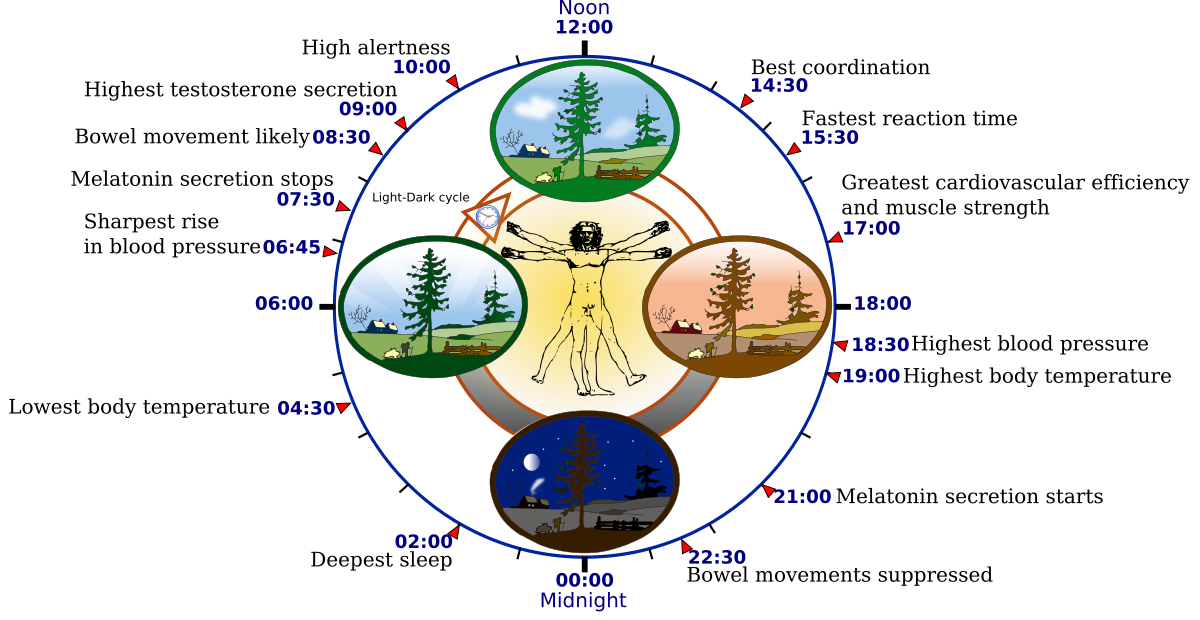
The circadian rhythm is the internal timing system that determines when sleep is biologically efficient. It regulates sleep, wake timing, hormone release and nighttime recovery processes independently of how tired you feel.
Sleep quality is constrained by this timing. Sleep obtained outside the biological night is objectively lighter and more fragmented, even when total sleep duration is similar.
Controlled human studies show that circadian misalignment leads to:
– reduced sleep efficiency
– increased nocturnal awakenings
– lower proportion of deep sleep
These effects persist even when time in bed is kept constant, meaning bad timing cannot be compensated by sleeping longer (1)(2).
Circadian disruption also alters the normal nocturnal hormonal profile. Delayed or irregular sleep timing is associated with:
– increased nocturnal cortisol exposure
– altered nighttime hormone secretion
– impaired physiological recovery
These changes are driven by circadian phase rather than sleep duration itself (1)(3).
This explains why late sleepers often report longer sleep but worse recovery. Sleeping out of phase consistently produces lower-quality sleep with higher fragmentation and reduced physiological efficiency.
Circadian alignment is therefore a prerequisite for high-density sleep.
Sleep duration without alignment does not produce equivalent outcomes.
What to avoid
1) Light exposure at night
Exposure to light during the biological night suppresses melatonin secretion in a dose-dependent manner. Human studies show that even low levels of artificial light reduce melatonin and impair sleep consolidation, leading to lighter and more fragmented sleep with reduced deep sleep proportion. Screen exposure and indoor lighting late at night directly interfere with normal sleep physiology (1)(2).
2) Eating close to bedtime
Food intake late in the evening increases metabolic and digestive activity during a phase normally characterized by physiological downregulation. Studies show that late meals delay sleep onset, increase nocturnal awakenings and reduce overall sleep quality. Eating within 2–3 hours of bedtime consistently impairs sleep depth and efficiency (3) (4)
3) Waking up with an alarm
Abrupt awakening by an alarm interrupts sleep regardless of sleep stage, increasing sleep inertia and impairing subjective and objective recovery. Research shows that forced awakenings are associated with grogginess, reduced cognitive performance and incomplete sleep termination. While often unavoidable during school or fixed schedules, alarm dependence reflects insufficient or poorly timed sleep (5).
4) Sleeping in a warm environment
Thermoregulation is a key component of sleep initiation and maintenance. Elevated ambient temperature impairs the nocturnal decline in core body temperature, leading to reduced sleep efficiency, more awakenings and lighter sleep. Cooler sleep environments consistently improve sleep continuity and depth (6).
These factors independently reduce sleep quality. Combined, they significantly degrade sleep density even when total sleep duration appears adequate.
What you should do and how to actually optimize gh production
1) Oral GABA and GH
There is human evidence that oral γ-aminobutyric acid (GABA) increases circulating GH levels. In a randomized, double-blind, placebo-controlled crossover study with resistance-trained men, ingestion of GABA before rest or exercise significantly elevated plasma growth hormone concentrations compared with placebo. This shows a direct link between supplemental GABA intake and acute GH release in humans. (1)
2) Melatonin and GH secretion
Melatonin appears to influence growth hormone regulation, though the effect varies across studies and protocols. One controlled human study found that oral melatonin administration increased basal GH release and enhanced the GH response to growth hormone–releasing hormone (GHRH), suggesting a facilitation of GH secretion at the hypothalamic level. (1)
Another study showed that oral melatonin before resistance exercise led to a larger GH increase than placebo, indicating that melatonin may help enhance GH response when combined with physical stimulus. (2)
3) Heavy resistance training
Growth hormone secretion is strongly influenced by prior daytime energy demand. High-intensity resistance exercise is a well-established stimulus for acute GH release in humans. Studies show that both aerobic and resistance exercise significantly increase circulating GH levels, with the magnitude depending on intensity, volume and muscle mass involved. (1)
This exercise-induced GH response represents a physiological signal for subsequent recovery processes that occur during sleep. Without sufficient training stimulus, the nocturnal anabolic response is reduced, as there is less demand for repair and adaptation. (2)
4) Circadian timing and hormonal regulation
Hormone secretion follows circadian and sleep-dependent patterns. Growth hormone release is regulated by both sleep onset and circadian phase. Human endocrine research shows that misalignment between sleep timing and circadian rhythms alters the amplitude and timing of nocturnal hormone pulses, including GH. (1)
Disruption of circadian timing leads to altered endocrine profiles, independent of total sleep duration. Proper alignment of sleep with the internal circadian clock is therefore required for normal nocturnal hormonal signaling. (2)
Thanks for reading
hope this helps some of you and if I got anything wrong or missed something feel free to point it out.