

◈ THE MAXILLARY GROWTH PROTOCOL: HOW TO ACTUALLY EXPAND YOUR PALATE THROUGH HARD CHEWING AND TONGUE POSTURE◈
[ITA]✦ the science-backed guide to exploit mechanotransduction during your growth window ✦[/ITA]
◌ ◌ ◌ ◌ ◌ ◌ ◌ ◌ ◌ ◌ ◌ ◌ ◌ ◌ ◌ ◌ ◌ ◌ ◌ ◌ ◌ ◌ ◌ ◌ ◌ ◌ ◌ ◌ ◌
[ITA]✦ the science-backed guide to exploit mechanotransduction during your growth window ✦[/ITA]
◌ ◌ ◌ ◌ ◌ ◌ ◌ ◌ ◌ ◌ ◌ ◌ ◌ ◌ ◌ ◌ ◌ ◌ ◌ ◌ ◌ ◌ ◌ ◌ ◌ ◌ ◌ ◌ ◌
Fair warning: if your sutures are already fused, you will need to explore a completely different methodology. This thread is targeted to active teens who have unmineralized mesenchymal cells and malleable cranial sutures.
▸ 1. THE MECHANOTRANSDUCTION ENGINE: HARD CHEWING
◌ ◌ ◌ ◌ ◌ ◌ ◌ ◌ ◌ ◌ ◌ ◌ ◌ ◌ ◌ ◌ ◌ ◌ ◌ ◌ ◌ ◌ ◌ ◌ ◌ ◌ ◌ ◌ ◌
Most people think of the facial skeleton as a piece of unchanging plastic, but the truth is that it can be quite dynamic during growth.
❖ osteocyte strain sensing
When high-magnitude loads are applied on the face via chewing or other resistance gum, the embedded osteocytes within your sutural tissues sense this stress and strain.
❖ the osteogenic response
As shown by Inoue et al (2019), intense mastication activates mechanoreceptors, which in turn change their local cytokine expression to induce bone formation along stress vectors, manifesting as a stouter jawbone, and not just teeth tipping.
❖ condylar and skeletal adaptation
Masticatory forces have been shown to have a direct impact on the physiology and morphology of the craniofacial complex via the condyles (Enomoto et al, 2014).
▸ 2. TONGUE CHEWING: THE INTERNAL ORTHOPEDIC EXPANDER
◌ ◌ ◌ ◌ ◌ ◌ ◌ ◌ ◌ ◌ ◌ ◌ ◌ ◌ ◌ ◌ ◌ ◌ ◌ ◌ ◌ ◌ ◌ ◌ ◌ ◌ ◌ ◌ ◌
While the masseters do the dirty work from the outside, your tongue is a mighty hydraulic hammer from within.
❖ functional matrix dynamics
Growth is dictated by the space given as dictated by the matrix. Constant heavy pressure against the palate from a low-tide tongue induces an orthopedic loading response on the mid-palatal and circummaxillary sutures.
❖ vector control
Tongue chewing, or cranking a piece of gum or bolus flat against the upper palate with a wave-like motion beginning anterior and working posterior of the tongue, will recruit the suprahyoids to force the maxilla into a transverse expansion and forward-downward rotation, rather than an upright and narrow shape.
▸ 3. MUSCLE-BONE CROSSTALK: THE BIOCHEMICAL FEEDBACK LOOP
◌ ◌ ◌ ◌ ◌ ◌ ◌ ◌ ◌ ◌ ◌ ◌ ◌ ◌ ◌ ◌ ◌ ◌ ◌ ◌ ◌ ◌ ◌ ◌ ◌ ◌ ◌ ◌ ◌
The relationship between muscular activity and osseous loading is both physical and biochemical.
Here is my transformation:
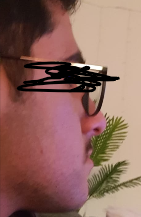
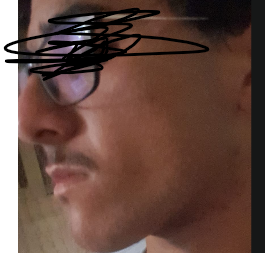
4 months only
❖ paracrine signaling
Muscles and bone have been shown to secrete paracrine molecules that affect one another. The increased recruitment of your masticatory sling can induce a new cytokine environment on the bone entheses and joints, modifying growth-factor expression (Buvinic et al, 2021).
❖ cellular proliferation
Dietary and functional loading studies have shown that there is a direct link between strain loading and the proliferative capacity of secondary cartilages and cranial neural crest cells.
❖ suture stability
As shown by Gorucu-Coskuner et al (2024), masticatory function has a directly measurable effect on the stability and adaptability of the craniofacial sutures in developing subjects.
▸ 4. ACTIONABLE PROTOCOL FOR TEENS
◌ ◌ ◌ ◌ ◌ ◌ ◌ ◌ ◌ ◌ ◌ ◌ ◌ ◌ ◌ ◌ ◌ ◌ ◌ ◌ ◌ ◌ ◌ ◌ ◌ ◌ ◌ ◌ ◌
❖ progressive hard chewing
Include chewing activities in your daily life that induce high resistance mastication, focusing on symmetrical chewing rather than chewing on one side
❖ active tongue chewing
Incorporate tongue chewing exercises into your oral hygiene routine, pressing a piece of gum or your thumb against the palate and flattening it as you would with any regular piece of gum, just with more surface area. Hold a mewing position between sessions.
▸ REFERENCES
◌ ◌ ◌ ◌ ◌ ◌ ◌ ◌ ◌ ◌ ◌ ◌ ◌ ◌ ◌ ◌ ◌ ◌ ◌ ◌ ◌ ◌ ◌ ◌ ◌ ◌ ◌ ◌ ◌
- Enomoto, A., Watahiki, J., Nampo, T., Irie, T., Ichikawa, Y., Tachikawa, T., & Maki, K. (2014). Mastication markedly affects mandibular condylar cartilage growth, gene expression, and morphology. American Journal of Orthodontics and Dentofacial Orthopedics, 146 (3), 355–363. https://doi.org/10.1016/j.ajodo.2014.05.028
- Inoue, M., Ono, T., Kameo, Y., Sasaki, F., Ono, T., Adachi, T., & Nakashima, T. (2019). Forceful mastication activates osteocytes and builds a stout jawbone. Scientific Reports, 9, 4046. https://doi.org/10.1038/s41598-019-40463-3
- Buvinic, S., Balanta-Melo, J., Kupczik, K., Vásquez, W., Beato, C., & Toro-Ibacache, V. (2021). Muscle-bone crosstalk in the masticatory system: From biomechanical to molecular interactions. Frontiers in Endocrinology, 11, 606947. https://doi.org/10.3389/fendo.2020.606947
- Gorucu-Coskuner, H., Al-Yassary, M., Billiaert, K., Kiliaridis, S., & Antonarakis, G. S. (2024). Effect of masticatory muscle function on the craniofacial sutures of the anterior viscerocranium in growing rats. European Journal of Oral Sciences, 132 (6), e13027. https://doi.org/10.1111/eos.13027
◈ END OF THREAD ◈
Last edited:




