


High Grades are Not equal to Intelligence

toji.

toji.

Diamond
Joined
Oct 8, 2023
Posts
1,390
Reputation
1,695
I want to share something important. I have just finished my university degree in Sociology and graduated with a GPA of 3.4—hardly glorious, and one I judge myself rather harshly for. I am a first-generation university graduate in my family; my father is an immigrant shaped by the coups d’état that took place in South America during the 1970s.

I am French and studied at a prestigious university in this region of Europe. It may surprise you to know that many people graduate with extremely high grades and yet make little real use of their intellect. I am referring to individuals who have mastered the educational system—the system of assessments and grading—who know how to please professors, and who attain positions not so much through intelligence as through their understanding of how the system works.

Now, I am not saying that this is inherently negative; I do not wish to be misunderstood. I myself was unaware of many of the strategies and “tricks” of the educational system, partly because my family did not attend university and partly because I was unable to connect with others. During my first two years at university, I struggled intensely with anxiety and depression. Had I known more, I would undoubtedly have achieved better results.

What I am getting at is that many people stop there: they master the system and forget how to think. I met several of the top-ranked students in my cohort who were incapable of reflecting on what they read, because they read only in order to obtain good grades.

This is deeply sad and, in a way, leads me to believe that intelligence often has little to do with grades and much more to do with the ability to truly understand what one learns and to apply it in life—to create, to help others, and to help oneself as well. That, I believe, is what defines a truly intelligent person.

Now that I have completed this process, I feel completely free. I am going to look for a job and start my journey in looksmaxing. I will be able to work and earn money just for myself and to cultivate myself.

I want to read what I like and learn from it, and do it not to satisfy a system that is foreign to me, but to satisfy myself and, from there, try to help others.

I have always loved philosophy, but I was not allowed to study it because of fears about my future. However, I believe that not listening to myself was the worst decision I have ever made.
 
  • +1
  • JFL
Reactions: shngstaaaa107, Jeremy Meeks, primalsubhumanlarp and 4 others
bro failed his finals dnr
 
  • +1
Reactions: Jeremy Meeks and primalsubhumanlarp
what are you planning on doing with sociology
 
  • +1
Reactions: 310reqiuem_
I want to share something important. I have just finished my university degree in Sociology and graduated with a GPA of 3.4—hardly glorious, and one I judge myself rather harshly for. I am a first-generation university graduate in my family; my father is an immigrant shaped by the coups d’état that took place in South America during the 1970s.

I am French and studied at a prestigious university in this region of Europe. It may surprise you to know that many people graduate with extremely high grades and yet make little real use of their intellect. I am referring to individuals who have mastered the educational system—the system of assessments and grading—who know how to please professors, and who attain positions not so much through intelligence as through their understanding of how the system works.

Now, I am not saying that this is inherently negative; I do not wish to be misunderstood. I myself was unaware of many of the strategies and “tricks” of the educational system, partly because my family did not attend university and partly because I was unable to connect with others. During my first two years at university, I struggled intensely with anxiety and depression. Had I known more, I would undoubtedly have achieved better results.

What I am getting at is that many people stop there: they master the system and forget how to think. I met several of the top-ranked students in my cohort who were incapable of reflecting on what they read, because they read only in order to obtain good grades.

This is deeply sad and, in a way, leads me to believe that intelligence often has little to do with grades and much more to do with the ability to truly understand what one learns and to apply it in life—to create, to help others, and to help oneself as well. That, I believe, is what defines a truly intelligent person.

Now that I have completed this process, I feel completely free. I am going to look for a job and start my journey in looksmaxing. I will be able to work and earn money just for myself and to cultivate myself.

I want to read what I like and learn from it, and do it not to satisfy a system that is foreign to me, but to satisfy myself and, from there, try to help others.

I have always loved philosophy, but I was not allowed to study it because of fears about my future. However, I believe that not listening to myself was the worst decision I have ever made.
not a single one. A SINGLE MOLECULE
 
  • JFL
Reactions: mrdouchebag
Took a sociology degree to realize your parents expectations are not what you want nor are
 
  • +1
Reactions: Jeremy Meeks and toji.
Dnr plus what your bhai says after failing every exam known to mankind
 
  • +1
Reactions: shngstaaaa107 and primalsubhumanlarp
what are you planning on doing with sociology
There are many career opportunities available. You can work in public office, political positions, be part of a public policy team, or work in social management and communications in large companies. You can also be hired as a data scientist, etc. The latter two are particularly lucrative career paths.
 
  • +1
Reactions: inversions
There are many career opportunities available. You can work in public office, political positions, be part of a public policy team, or work in social management and communications in large companies. You can also be hired as a data scientist, etc. The latter two are particularly lucrative career paths.
Yeah but what are YOU planning on doing?
 
  • +1
Reactions: toji.
In fact, I raised my grades too much this past year; these last two years I had a GPA of 3.8-4.0. The thing is, my first two years were terrible.
babys first larp :feelskek:
 
Took a sociology degree to realize your parents expectations are not what you want nor are
Something like that. I wanted to study philosophy, but they pushed me to choose a similar option that would offer better job prospects.

I don't judge them; maybe it was a good alternative. But it made me very unhappy.

I know it's not a typical degree, like law or medicine, but it's not particularly easy either. I had courses in calculus, economics, social theory, and data analysis. It was quite comprehensive. At least in my department.
 
  • +1
Reactions: taai
what are you planning on doing with sociology
plenty of pathways after sociology you could be a bin man, brick layer, cleaner and many more respected professions
 
  • JFL
Reactions: acm, inversions and toji.
Something like that. I wanted to study philosophy, but they pushed me to choose a similar option that would offer better job prospects.

I don't judge them; maybe it was a good alternative. But it made me very unhappy.

I know it's not a typical degree, like law or medicine, but it's not particularly easy either. I had courses in calculus, economics, social theory, and data analysis. It was quite comprehensive. At least in my department.
It's completely normal. I studied CS and wanted to study philosophy so I kept reading over the years.

I try to see the positive, now I have a good job where I can start to build life as I want outside of their expectations as I am truly free (to do that). Parents excel at being overly protective and cucking their sons because they were lied to about what the future would be.
 
  • +1
Reactions: toji.
plenty of pathways after sociology you could be a bin man, brick layer, cleaner and many more respected professions
tbh its uni > course and if he said he went to a good uni I'll believe him
 
  • +1
Reactions: larpcel and toji.
plenty of pathways after sociology you could be a bin man, brick layer, cleaner and many more respected professions
Hahaha, almost all degrees have poor job prospects these days. I was never interested in a career where I would earn a lot of money; I always wanted to study something I liked.
 
  • +1
Reactions: taai and larpcel
What an original thought. I have never heard something like this said before.
 
  • +1
Reactions: GoErOnFoids and toji.
It's completely normal. I studied CS and wanted to study philosophy so I kept reading over the years.

I try to see the positive, now I have a good job where I can start to build life as I want outside of their expectations as I am truly free (to do that). Parents excel at being overly protective and cucking their sons because they were lied to about what the future would be.
That's great, bro! Congratulations, I guess you really like the logic part of philosophy. It's very interesting.
 
  • +1
Reactions: taai
That's great, bro! Congratulations, I guess you really like the logic part of philosophy. It's very interesting.
I tend to metaphysics a lot but I'm very into Frankfurt school.
 
  • +1
Reactions: toji.
I want to share something important. I have just finished my university degree in Sociology and graduated with a GPA of 3.4—hardly glorious, and one I judge myself rather harshly for. I am a first-generation university graduate in my family; my father is an immigrant shaped by the coups d’état that took place in South America during the 1970s.

I am French and studied at a prestigious university in this region of Europe. It may surprise you to know that many people graduate with extremely high grades and yet make little real use of their intellect. I am referring to individuals who have mastered the educational system—the system of assessments and grading—who know how to please professors, and who attain positions not so much through intelligence as through their understanding of how the system works.

Now, I am not saying that this is inherently negative; I do not wish to be misunderstood. I myself was unaware of many of the strategies and “tricks” of the educational system, partly because my family did not attend university and partly because I was unable to connect with others. During my first two years at university, I struggled intensely with anxiety and depression. Had I known more, I would undoubtedly have achieved better results.

What I am getting at is that many people stop there: they master the system and forget how to think. I met several of the top-ranked students in my cohort who were incapable of reflecting on what they read, because they read only in order to obtain good grades.

This is deeply sad and, in a way, leads me to believe that intelligence often has little to do with grades and much more to do with the ability to truly understand what one learns and to apply it in life—to create, to help others, and to help oneself as well. That, I believe, is what defines a truly intelligent person.

Now that I have completed this process, I feel completely free. I am going to look for a job and start my journey in looksmaxing. I will be able to work and earn money just for myself and to cultivate myself.

I want to read what I like and learn from it, and do it not to satisfy a system that is foreign to me, but to satisfy myself and, from there, try to help others.

I have always loved philosophy, but I was not allowed to study it because of fears about my future. However, I believe that not listening to myself was the worst decision I have ever made.
What bro sends me after failing test 😂haha, fucking robots say that hope they fuckin die

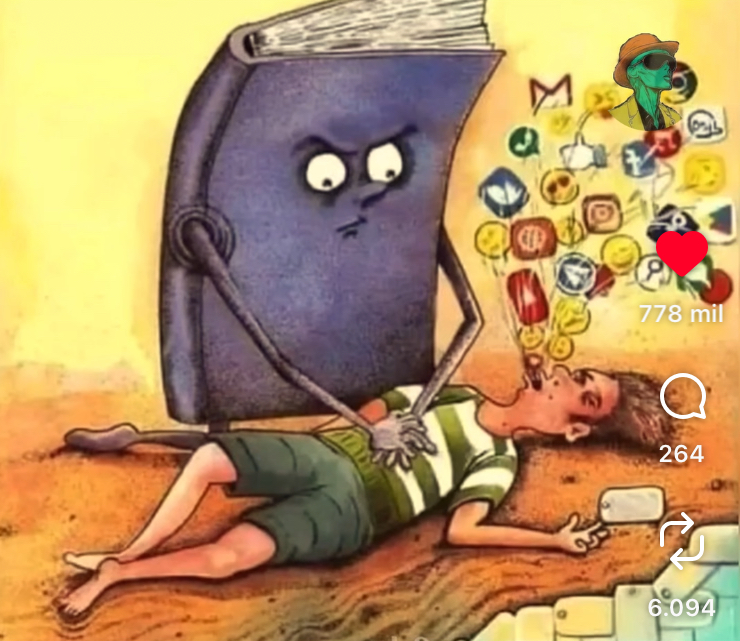
 
Hahaha, almost all degrees have poor job prospects these days. I was never interested in a career where I would earn a lot of money; I always wanted to study something I liked.
Ye I respect that just playing around
 
  • +1
Reactions: toji.
What bro sends me after failing test 😂haha, fucking robots say that hope they fuckin die
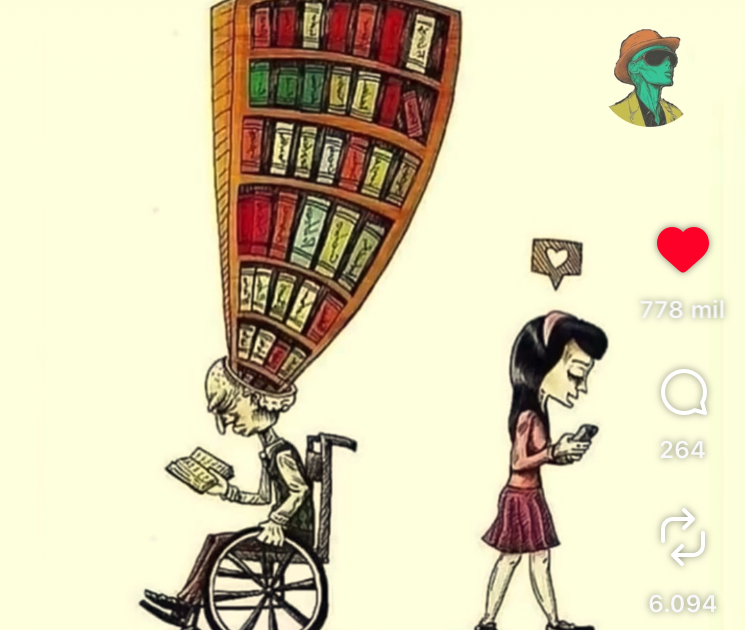
1766007988774
1766008008765
1766008024499
 
I tend to metaphysics a lot but I'm very into Frankfurt school.
The first generation, the second or the third generation?

I quite like Horkheimer and Adorno, and Honneth, who is more of a third-generation thinker, has caught my attention. Recently, I have been reading a lot more Deleuze, who, although not part of the school, shares many of its turning points, he also do interesting critiques at that school. He is sometimes considered part of it, but only from a symbolic perspective.

@faustianspirit He is also quite passionate about philosophy.
 
  • +1
Reactions: taai
The first generation, the second or the third generation?

I quite like Horkheimer and Adorno, and Honneth, who is more of a third-generation thinker, has caught my attention. Recently, I have been reading a lot more Deleuze, who, although not part of the school, shares many of its turning points, he also do interesting critiques at that school. He is sometimes considered part of it, but only from a symbolic perspective.

@faustianspirit He is also quite passionate about philosophy.
Mostly Adorno and Marcuse, however I've been reading Walter Benjamin lately, who isn't Frankfurt but well he's really around there, I'm very into history and I guess it's easy to assume I have Marxist/Hegelian references/beliefs.
 
  • +1
Reactions: toji.
The first generation, the second or the third generation?

I quite like Horkheimer and Adorno, and Honneth, who is more of a third-generation thinker, has caught my attention. Recently, I have been reading a lot more Deleuze, who, although not part of the school, shares many of its turning points, he also do interesting critiques at that school. He is sometimes considered part of it, but only from a symbolic perspective.

@faustianspirit He is also quite passionate about philosophy.
I tried Deleuze for a a bit, but I didn't have the time it actually needs, I had the same happen with Lacan and I have other backlog so it's a pending for me but they catch my interest
 
  • +1
Reactions: toji.
Mostly Adorno and Marcuse, however I've been reading Walter Benjamin lately, who isn't Frankfurt but well he's really around there, I'm very into history and I guess it's easy to assume I have Marxist/Hegelian references/beliefs.
I recommend Gadamer. I assume you have already read the pedagogical writings on Hegel's philosophy of history. Honneth has his Hegelian moments. I think he has a text called Anerkennung that addresses how social conflict arises from the human desire to be recognized by others. Robert Pippin is also good.
 
  • +1
Reactions: taai
I tried Deleuze for a a bit, but I didn't have the time it actually needs, I had the same happen with Lacan and I have other backlog so it's a pending for me but they catch my interest
How interesting, I thought you liked logic more, because of your interest in computer science. How nice.
 
  • +1
Reactions: taai
How interesting, I thought you liked logic more, because of your interest in computer science. How nice.
I only like it so much, after all the logic in CS is formal algebra in the strict sense. Only in computational theory you start doing actual hypotheses and demonstrations but you only do this if you study what it used to be IA studies. I graduated almost 7 years ago now and it think they don't teach that anymore and even then was rare.
 
I recommend Gadamer. I assume you have already read the pedagogical writings on Hegel's philosophy of history. Honneth has his Hegelian moments. I think he has a text called Anerkennung that addresses how social conflict arises from the human desire to be recognized by others. Robert Pippin is also good.
Thanks new names to add to the list! I sometimes feel overwhelmed by how much I feel I need to study
 
  • +1
Reactions: toji.
That’s true but low grades do mean stupidity
 
That’s true but low grades do mean stupidity
It is true that there is a high correlation, but there is also a high margin of error.

People who have poor grades can be attributed to two reasons:

1. They have not acquired the expected content.

2. They do not understand the dynamics behind educational assessments.

The second reason is often more important than the first. There are many people who, without learning the content but with a good understanding of educational dynamics, achieve very good results. However, it is very common for the opposite case (understanding the content very well but not understanding the dynamics) to result in poor grades. And I don't think this is due to ‘low intelligence’.

Whether or not they understand these dynamics, I believe, stems more from a lack of experience than from intelligence, for example, the dynamics of an oral or written test, report, essay, etc. And from the above, the educational deficiencies that an individual may have had during their school years become apparent.
 
  • +1
Reactions: try2beme

Similar threads

nellii
Replies
15
Views
78
dnrwarrior11
dnrwarrior11
59H390
Replies
13
Views
82
MouthBreathingElite
MouthBreathingElite
Dip3shx
Replies
26
Views
303
James47Max
James47Max
jdoggyincel
Replies
12
Views
55
jdoggyincel
jdoggyincel
River25
Replies
2
Views
53
Ascension/777
Ascension/777

Users who are viewing this thread

  • ngannou
Back
Top