High zygomaxilary height vs high cheekbone (wide part of zygos) what’s more important

datboijj

datboijj

Fuchsia
Joined
Nov 15, 2020
Posts
13,488
Reputation
16,926
Ok I’m too lazy to make this thread. So one of you guys do it. Here are some notes I got. I found out People with large ab insertions have high zygomaxilary height with no exceptions. And some other stuff I’m too lazy to talk about
1766518966418


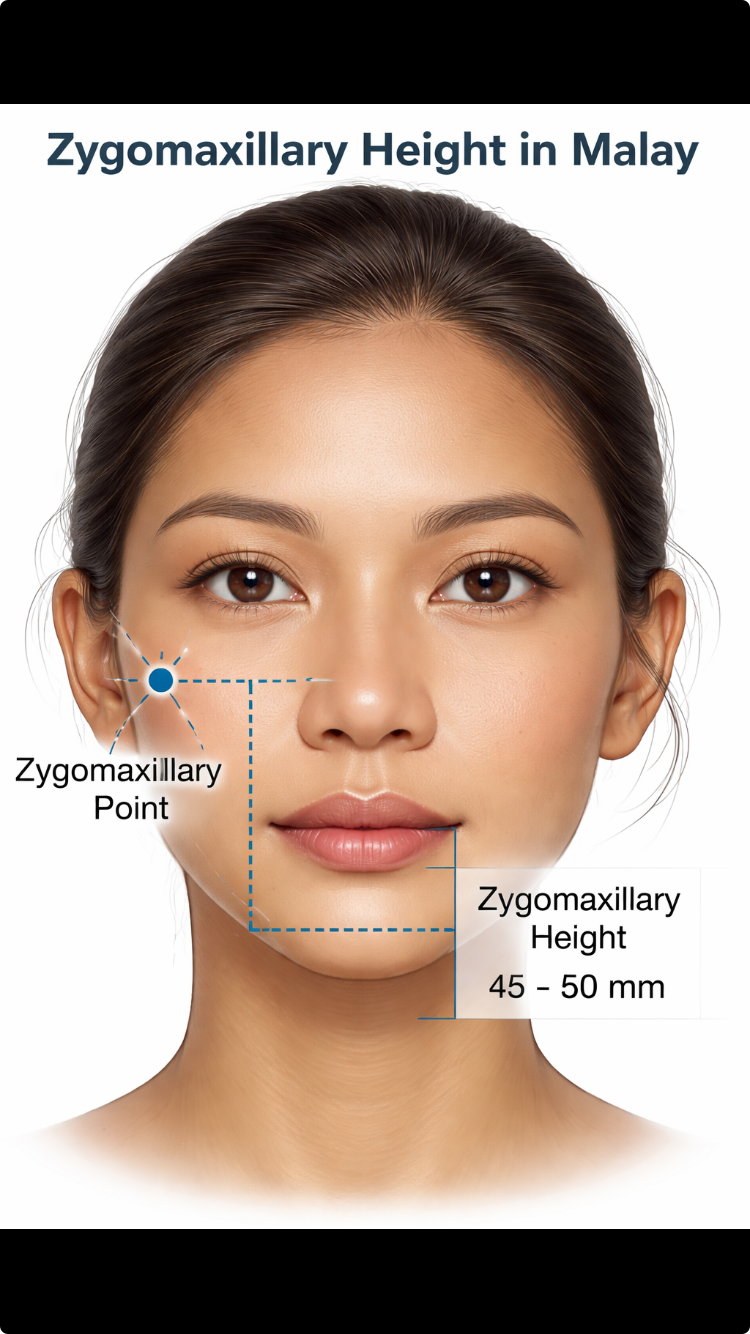
Main scientific structure being shown

1. Zygomaxillary point
Label: Zygomaxillary Point

This is a real anatomical landmark.
Scientifically:
  • It is the point where the zygomatic bone (cheekbone) meets the maxilla (upper jaw)
  • It sits above the upper molars, not at the widest part of the face
  • This is why people often confuse it with “high cheekbones”

✔️ When people say “high cheekbones”, they usually mean:

High vertical placement of the zygomaxillary region, not wide cheekbones.


2. Vertical dotted line.
This vertical line represents zygomaxillary height.

What it measures:
  • The vertical distance from the zygoma/maxilla junction
  • Down toward the oral region (lips / maxillary alveolar area)
This answers your key question:
“How far forward/down the cheekbone sits compared to the lips and front of the face”
So this is not width — it is vertical facial height of the midface.

3. Why the line goes vertical first
Vertical = height measurement
In craniofacial science:

Vertical measurements = facial height
  • Horizontal measurements = facial projection or reference planes
They draw vertical first because the primary variable being studied is height, not depth.

4. Why the line turns horizontal
This is very important
The horizontal line is NOT another measurement — it is a projection reference.
Why it exists:
  • Vertical distances must be measured to a defined facial plane
  • You can’t just stop mid-air
  • So the vertical line is “anchored” to:
    • The lip plane
    • Or the anterior facial surface
  • In short:
The horizontal segment shows where the vertical height ends, not a second dimension

5. Why the line stops
Because:
  • The measurement ends at a standardized anatomical endpoint
  • Usually:
    • Upper lip (labrale superius)
    • Or maxillary alveolar plane
  • Once that endpoint is reached, the measurement is complete, so the line stops.
6. “Zygomaxillary Height: 45–50 mm”
This is an average range, not a rule.
It means:
  • From the zygomaxillary point
  • To the lip/anterior maxillary reference plane
  • The vertical distance averages ~45–50 mm in studied Malay populations
Important:
  • This varies by sex, age, and individual
  • Men usually slightly higher
  • Shorter height = “lower cheekbones”
  • Larger height = “high cheekbones look”
How this relates to appearance (non-aesthetic, anatomical)
Higher zygomaxillary height tends to:
  • Make the cheekbone appear higher-set
  • Shorten the visible midface
  • Increase the “sculpted” cheek look even without width
Lower height:
  • Makes cheeks look lower
  • Midface looks longer
  • Cheekbones may still be wide but appear “low”
Summary in simple terms
  • High cheekbones ≠ wide face
  • People usually mean high zygomaxillary height
  • The image measures vertical cheekbone position relative to lips
  • The horizontal line is just a reference plane
  • “Malay” is the population reference, not language
 
  • Love it
  • +1
Reactions: volikerza and thecel
Turned into a journalist when wrote this one
 
Chatgpt
 
  • JFL
Reactions: datboijj
Ok I’m too lazy to make this thread. So one of you guys do it. Here are some notes I got. I found out People with large ab insertions have high zygomaxilary height with no exceptions. And some other stuff I’m too lazy to talk about

View attachment 4455478


Main scientific structure being shown

1. Zygomaxillary point
Label: Zygomaxillary Point

This is a real anatomical landmark.
Scientifically:
  • It is the point where the zygomatic bone (cheekbone) meets the maxilla (upper jaw)
  • It sits above the upper molars, not at the widest part of the face
  • This is why people often confuse it with “high cheekbones”

✔️ When people say “high cheekbones”, they usually mean:

High vertical placement of the zygomaxillary region, not wide cheekbones.


2. Vertical dotted line.
This vertical line represents zygomaxillary height.

What it measures:
  • The vertical distance from the zygoma/maxilla junction
  • Down toward the oral region (lips / maxillary alveolar area)
This answers your key question:
“How far forward/down the cheekbone sits compared to the lips and front of the face”
So this is not width — it is vertical facial height of the midface.

3. Why the line goes vertical first
Vertical = height measurement
In craniofacial science:

Vertical measurements = facial height
  • Horizontal measurements = facial projection or reference planes
They draw vertical first because the primary variable being studied is height, not depth.

4. Why the line turns horizontal
This is very important
The horizontal line is NOT another measurement — it is a projection reference.
Why it exists:
  • Vertical distances must be measured to a defined facial plane
  • You can’t just stop mid-air
  • So the vertical line is “anchored” to:
    • The lip plane
    • Or the anterior facial surface
  • In short:
The horizontal segment shows where the vertical height ends, not a second dimension

5. Why the line stops
Because:
  • The measurement ends at a standardized anatomical endpoint
  • Usually:
    • Upper lip (labrale superius)
    • Or maxillary alveolar plane
  • Once that endpoint is reached, the measurement is complete, so the line stops.
6. “Zygomaxillary Height: 45–50 mm”
This is an average range, not a rule.
It means:
  • From the zygomaxillary point
  • To the lip/anterior maxillary reference plane
  • The vertical distance averages ~45–50 mm in studied Malay populations
Important:
  • This varies by sex, age, and individual
  • Men usually slightly higher
  • Shorter height = “lower cheekbones”
  • Larger height = “high cheekbones look”
How this relates to appearance (non-aesthetic, anatomical)
Higher zygomaxillary height tends to:
  • Make the cheekbone appear higher-set
  • Shorten the visible midface
  • Increase the “sculpted” cheek look even without width
Lower height:
  • Makes cheeks look lower
  • Midface looks longer
  • Cheekbones may still be wide but appear “low”
Summary in simple terms
  • High cheekbones ≠ wide face
  • People usually mean high zygomaxillary height
  • The image measures vertical cheekbone position relative to lips
  • The horizontal line is just a reference plane
  • “Malay” is the population reference, not langua
 
  • +1
Reactions: datboijj
Ok I’m too lazy to make this thread. So one of you guys do it. Here are some notes I got. I found out People with large ab insertions have high zygomaxilary height with no exceptions. And some other stuff I’m too lazy to talk about

View attachment 4455478


Main scientific structure being shown

1. Zygomaxillary point
Label: Zygomaxillary Point

This is a real anatomical landmark.
Scientifically:
  • It is the point where the zygomatic bone (cheekbone) meets the maxilla (upper jaw)
  • It sits above the upper molars, not at the widest part of the face
  • This is why people often confuse it with “high cheekbones”

✔️ When people say “high cheekbones”, they usually mean:

High vertical placement of the zygomaxillary region, not wide cheekbones.


2. Vertical dotted line.
This vertical line represents zygomaxillary height.

What it measures:
  • The vertical distance from the zygoma/maxilla junction
  • Down toward the oral region (lips / maxillary alveolar area)
This answers your key question:
“How far forward/down the cheekbone sits compared to the lips and front of the face”
So this is not width — it is vertical facial height of the midface.

3. Why the line goes vertical first
Vertical = height measurement
In craniofacial science:

Vertical measurements = facial height
  • Horizontal measurements = facial projection or reference planes
They draw vertical first because the primary variable being studied is height, not depth.

4. Why the line turns horizontal
This is very important
The horizontal line is NOT another measurement — it is a projection reference.
Why it exists:
  • Vertical distances must be measured to a defined facial plane
  • You can’t just stop mid-air
  • So the vertical line is “anchored” to:
    • The lip plane
    • Or the anterior facial surface
  • In short:
The horizontal segment shows where the vertical height ends, not a second dimension

5. Why the line stops
Because:
  • The measurement ends at a standardized anatomical endpoint
  • Usually:
    • Upper lip (labrale superius)
    • Or maxillary alveolar plane
  • Once that endpoint is reached, the measurement is complete, so the line stops.
6. “Zygomaxillary Height: 45–50 mm”
This is an average range, not a rule.
It means:
  • From the zygomaxillary point
  • To the lip/anterior maxillary reference plane
  • The vertical distance averages ~45–50 mm in studied Malay populations
Important:
  • This varies by sex, age, and individual
  • Men usually slightly higher
  • Shorter height = “lower cheekbones”
  • Larger height = “high cheekbones look”
How this relates to appearance (non-aesthetic, anatomical)
Higher zygomaxillary height tends to:
  • Make the cheekbone appear higher-set
  • Shorten the visible midface
  • Increase the “sculpted” cheek look even without width
Lower height:
  • Makes cheeks look lower
  • Midface looks longer
  • Cheekbones may still be wide but appear “low”
Summary in simple terms
  • High cheekbones ≠ wide face
  • People usually mean high zygomaxillary height
  • The image measures vertical cheekbone position relative to lips
  • The horizontal line is just a reference plane
  • “Malay” is the population reference, not language

Decent thread bro but water is wet lol

-
Explain how higher cheekbones make the midface appear shortened? Usually especially if the zygoma has some vertical size, you're going to need a longer face for the cheekbones to still appear high set
1770675290384
1770675400182
1770675539774
 
  • +1
Reactions: datboijj

Similar threads

ntstephn
Replies
13
Views
211
framemonke
framemonke
I
Replies
5
Views
45
kjhcfad
kjhcfad
sinistertfr333
Replies
17
Views
64
Tyroid
Tyroid
bluebandz
Replies
18
Views
153
bluebandz
bluebandz
Diavolu_turcu
Replies
1
Views
57
nathan_Bs123
nathan_Bs123

Users who are viewing this thread

Back
Top