Jason Voorhees

𝕸𝖊𝖗𝖈𝖊𝖓𝖆𝖗𝖞 𝕮𝖔𝖗𝖕 • 𝟐𝟎𝟐𝟒🥇
- Joined
- May 15, 2020
- Posts
- 96,737
- Reputation
- 293,948
If you want to start reading into politics without swallowing the bait and misleads one thing that you have to get it through your head is that all modern political media thrives on a currency of manufactured outrage. They don't give a shit about you, the government, unraveling the truth or any of the basic principles of journalism. They only care about PR ratings and viewership.
Like Fox News knows their viewers want right wing hair so they are hyper focused on cultural wedge issues, culture wars, and border panic that has been running on their shoes since 2000s
MSNBC / CNN are perma left wing hideout. Always moral responsibility. Institution blaming and blame everything as democratic apocalypse.
Some Tips
1. News Article reads like a looksmax.orh evisceration title
Immediate redflag. You always strip the Adjectives and Adverbs. If a headline says "Politician X brutally eviscerates opponent with unhinged, dangerous rhetoric" start reading it as “Politician X disagreed with Politician Y's stance on [Policy] because that's probably what happened
2. Never believe a political commentator
Never let a pundit tell you what a piece of legislation says. If a bill is doing massive public meltdown skip them and search for the actual text of the bill or executive order. Even ChatGPT can do better job and give a more neutral stance than these muh pundits
3. Never believe anything from Tiktok or Instagram
99% of the information on X, Tiktok and Instagram is just blatant lies with again the insentive of rage baiting. Ignore them all.
4. Only trust peer reviewed meta analysis studies
This goes for anything. Not just politics. You can find a study to prove almost anything if you warp the variables enough and media loves to weaponize data and the viewers too ignorant to realize they are being brain washed. Look exclusively for peer-reviewed meta-analyses. Basically studies that aggregate data from dozens of independent trials or papers with multiple people agreeing with it. That is true verified data you can rely on.
5. Look at their funding
This is the number 1 thing to do. Whenever someone has something to say look at his background. Like is that independent expert that is brough to validate a political narrative. Does he have any stakes in it? Follow the money. Are they funded by defense contractors? Part of an industry that has a vested interest etc. 99% of the time it's a pr stunt
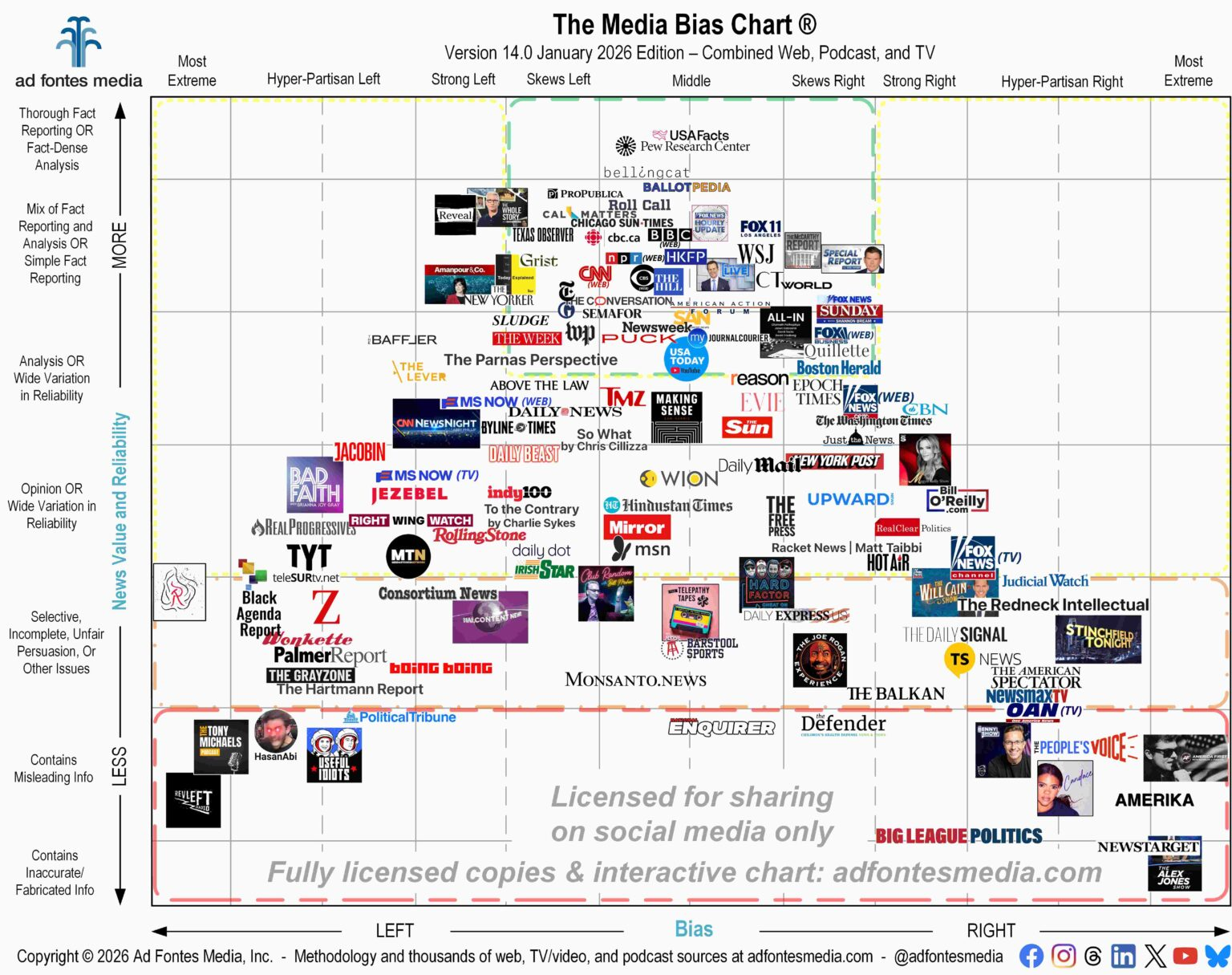
Some US media houses that are neutral
The Wires (Reuters & Associated Press)
They generate the raw, dry fact-sheets that downstream media operations buy. Their buisness is mostly B2B so they don't care about viewer retention
C-SPAN & USAFacts.org:
Pure policy inputs. C-SPAN gives you zero talking heads telling you what to think. USAFacts aggregates government budget data without the narrative layer
I don't follow the UK media too much but I've heard BBC News, Hansard and the financial Times are neutra.
They aren't flawless but their survival depends on functioning as utilities rather than entertainment. If a source feels tedious, dry, and boring, it’s usually a good indicator that it’s safe to consume.
Problem with neutrality
Neutrality isn't the same as objective truth. To avoid looking biased places like Reuters or the BBC often start treating a verified fact and a total lie with the exact same weight just to seem fair and refuse to take any strong stances. Plus because they need inside access to politicians they naturally protect them.
Like Fox News knows their viewers want right wing hair so they are hyper focused on cultural wedge issues, culture wars, and border panic that has been running on their shoes since 2000s
MSNBC / CNN are perma left wing hideout. Always moral responsibility. Institution blaming and blame everything as democratic apocalypse.
Some Tips
1. News Article reads like a looksmax.orh evisceration title
Immediate redflag. You always strip the Adjectives and Adverbs. If a headline says "Politician X brutally eviscerates opponent with unhinged, dangerous rhetoric" start reading it as “Politician X disagreed with Politician Y's stance on [Policy] because that's probably what happened
2. Never believe a political commentator
Never let a pundit tell you what a piece of legislation says. If a bill is doing massive public meltdown skip them and search for the actual text of the bill or executive order. Even ChatGPT can do better job and give a more neutral stance than these muh pundits
3. Never believe anything from Tiktok or Instagram
99% of the information on X, Tiktok and Instagram is just blatant lies with again the insentive of rage baiting. Ignore them all.
4. Only trust peer reviewed meta analysis studies
This goes for anything. Not just politics. You can find a study to prove almost anything if you warp the variables enough and media loves to weaponize data and the viewers too ignorant to realize they are being brain washed. Look exclusively for peer-reviewed meta-analyses. Basically studies that aggregate data from dozens of independent trials or papers with multiple people agreeing with it. That is true verified data you can rely on.
5. Look at their funding
This is the number 1 thing to do. Whenever someone has something to say look at his background. Like is that independent expert that is brough to validate a political narrative. Does he have any stakes in it? Follow the money. Are they funded by defense contractors? Part of an industry that has a vested interest etc. 99% of the time it's a pr stunt
Some US media houses that are neutral
The Wires (Reuters & Associated Press)
They generate the raw, dry fact-sheets that downstream media operations buy. Their buisness is mostly B2B so they don't care about viewer retention
C-SPAN & USAFacts.org:
Pure policy inputs. C-SPAN gives you zero talking heads telling you what to think. USAFacts aggregates government budget data without the narrative layer
I don't follow the UK media too much but I've heard BBC News, Hansard and the financial Times are neutra.
They aren't flawless but their survival depends on functioning as utilities rather than entertainment. If a source feels tedious, dry, and boring, it’s usually a good indicator that it’s safe to consume.
Problem with neutrality
Neutrality isn't the same as objective truth. To avoid looking biased places like Reuters or the BBC often start treating a verified fact and a total lie with the exact same weight just to seem fair and refuse to take any strong stances. Plus because they need inside access to politicians they naturally protect them.