toxoplasma
Iron
- Joined
- Jan 22, 2025
- Posts
- 76
- Reputation
- 47
Since there aren't many detailed and comprehensive threads covering this topic, I decided to put together a guide focused specifically on hairline correction and the options available for people who are unhappy with their hairlines.
Over the past few years, I've developed a strong interest in hair science, dermatology, facial aesthetics, and the surgical approaches used to address hairline-related concerns. As a result, I've spent a considerable amount of time researching hairline design, hair transplantation techniques, forehead reduction surgery, donor management, and the long-term planning required to achieve natural-looking results.
It is important to note that this thread focuses exclusively on surgical hairline correction. It is not intended to be a guide on hair loss prevention, medications, hair regrowth protocols, or general hair preservation strategies. Instead, the goal is to discuss the surgical options available for correcting a poor hairline, their advantages and disadvantages, and the situations in which each approach may or may not be appropriate.
So enjoy this extensively written highly sought after , detailed Thread on ;
how to fix a naturally bad Hairline
Lets start by Differencing a bad Hairline from a bad upper third
examples of longer Upper third+high set hairline

Matt Bomer is a useful example of someone who appears to have a relatively long upper third despite having excellent overall facial aesthetics.
If you are concerned about your hairline and also happen to have a relatively long upper third like our beloved Matt, you should generally be very cautious when considering aggressive hairline-lowering procedures.
The reason is simple:
It doesn't actually shorten the face.
The underlying bone structure remains exactly the same. Lowering the hairline only creates the visual impression of a shorter forehead. In some cases, the upper third may still appear long even after the procedure, and depending on the design, it can sometimes draw even more attention to the facial proportions rather than less.
Facial proportions can become unnatural.
If the upper third is long but still reasonably balanced with the rest of the face, lowering the hairline too aggressively can create an artificial appearance. Instead of improving harmony, you may end up with a hairline that simply looks out of place on your face.
The goal is not to achieve the lowest possible hairline. The goal is to achieve the most natural-looking result.
So in cases like these, I would often recommend focusing on other aesthetic improvements rather than obsessing over the hairline itself. Sometimes the hairline is not the main issue, and trying to force a correction can create a bigger problem than the one you started with.
Or, to put it less professionally: sometimes you just have to accept the cards you were dealt, because if you push things too far, you might go from looking like Matt Bomer to looking like a fucking egg.
So lets say you only suffer from a higher set hairline without suffering from having a longer upper third,
that leaves us with the question;
When can you Fix a higher set hairline ???
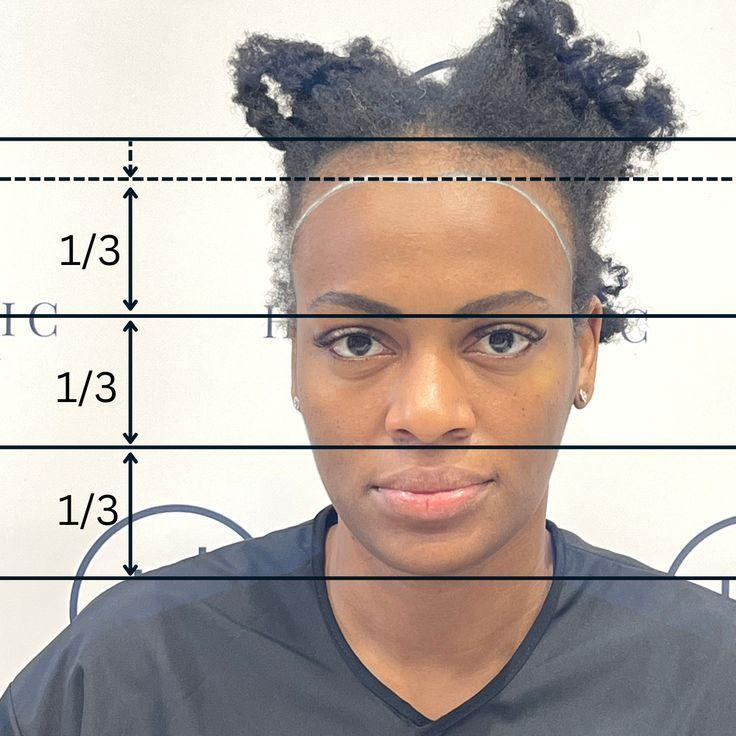
This image demonstrates why the facial rule of thirds is important when planning hairline lowering procedures .
which i wont really much explain in this thread because it speaks for itself lol .
Although this woman has a relatively high forehead, her upper facial third does not appear excessively long compared to the middle and lower thirds of the face. The facial proportions remain fairly balanced, which means there is room to lower the hairline without creating an unnaturally short forehead or disrupting overall facial harmony.
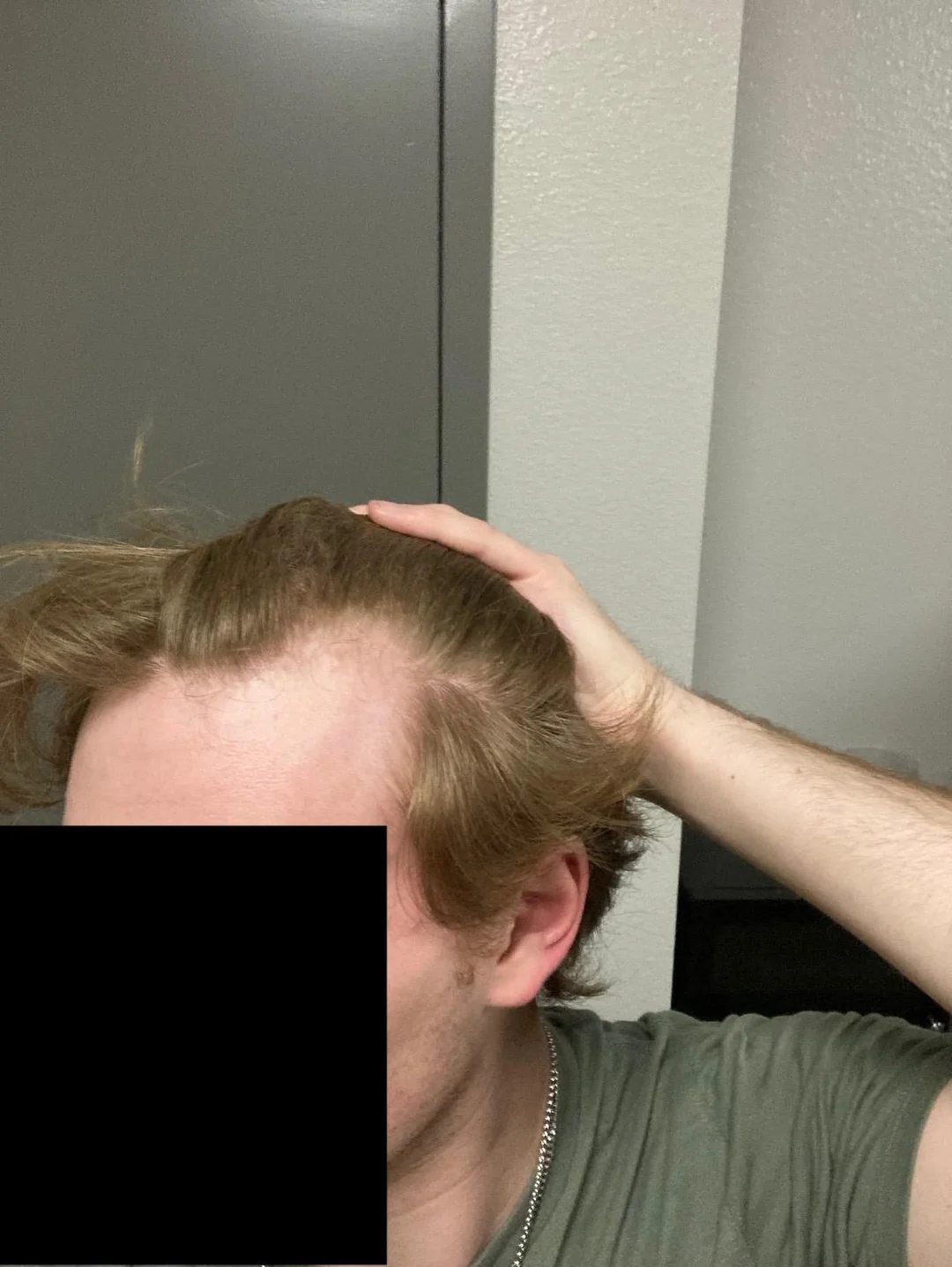
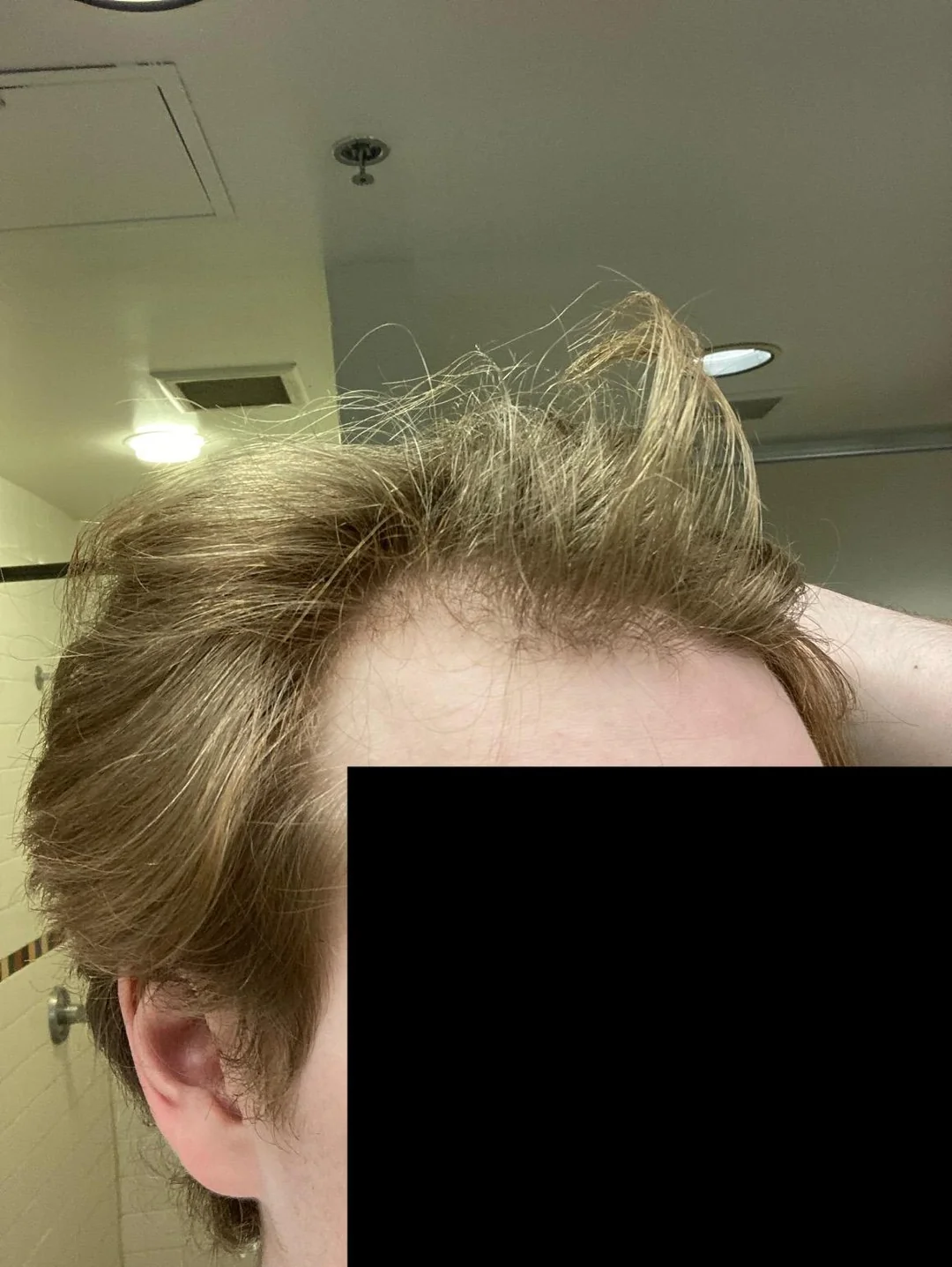
Ive studied his case extensively and he used a Hairtransplant to not only recreate his youthful hairline , he even lowered it by a bit and archieved great density while still being at 50cm2.
This guy was 21 btw so keep in mind what could potentially be a future risk when not hopping on DHT blockers /preservation meds etc.
There is no universal minimum age for a hair transplant. However, younger patients should be especially cautious, as future hair loss progression can be difficult to predict.
A great hairline at 21 still needs to make sense at 31, 41, and beyond so also make sure to stay on meds lol.
One reason his result looks much denser than the actual graft count would suggest is the way the grafts were distributed.
Instead of placing the hairs in straight rows or directly behind one another, the surgeon used a more natural, irregular pattern. This creates what I like to call the "forest principle."
In a forest, you don't see trees lined up perfectly one behind another. Trees are scattered at different distances and angles, creating depth, layering, and visual coverage. Even though there may be empty space between individual trees, the forest still appears dense.
The same concept applies to hair transplantation. When grafts are strategically scattered and layered, they create shadows, overlap, and visual depth. As a result, a density of around 50 grafts/cm² can often appear much fuller than the number alone suggests and may visually resemble a much higher density when viewed from normal social distances.
The illusion of density is therefore not determined solely by grafts per square centimeter, but also by distribution, angulation, layering, and how effectively the surgeon creates visual coverage.
Thats why you stay away from botchclinics and rather pay more .
Good hairlines are designed. Great hairlines are planned. Stay informed.
Over the past few years, I've developed a strong interest in hair science, dermatology, facial aesthetics, and the surgical approaches used to address hairline-related concerns. As a result, I've spent a considerable amount of time researching hairline design, hair transplantation techniques, forehead reduction surgery, donor management, and the long-term planning required to achieve natural-looking results.
It is important to note that this thread focuses exclusively on surgical hairline correction. It is not intended to be a guide on hair loss prevention, medications, hair regrowth protocols, or general hair preservation strategies. Instead, the goal is to discuss the surgical options available for correcting a poor hairline, their advantages and disadvantages, and the situations in which each approach may or may not be appropriate.
So enjoy this extensively written highly sought after , detailed Thread on ;
how to fix a naturally bad Hairline
Lets start by Differencing a bad Hairline from a bad upper third
examples of longer Upper third+high set hairline
Matt Bomer is a useful example of someone who appears to have a relatively long upper third despite having excellent overall facial aesthetics.
If you are concerned about your hairline and also happen to have a relatively long upper third like our beloved Matt, you should generally be very cautious when considering aggressive hairline-lowering procedures.
The reason is simple:
It doesn't actually shorten the face.
The underlying bone structure remains exactly the same. Lowering the hairline only creates the visual impression of a shorter forehead. In some cases, the upper third may still appear long even after the procedure, and depending on the design, it can sometimes draw even more attention to the facial proportions rather than less.
Facial proportions can become unnatural.
If the upper third is long but still reasonably balanced with the rest of the face, lowering the hairline too aggressively can create an artificial appearance. Instead of improving harmony, you may end up with a hairline that simply looks out of place on your face.
The goal is not to achieve the lowest possible hairline. The goal is to achieve the most natural-looking result.
So in cases like these, I would often recommend focusing on other aesthetic improvements rather than obsessing over the hairline itself. Sometimes the hairline is not the main issue, and trying to force a correction can create a bigger problem than the one you started with.
Or, to put it less professionally: sometimes you just have to accept the cards you were dealt, because if you push things too far, you might go from looking like Matt Bomer to looking like a fucking egg.
So lets say you only suffer from a higher set hairline without suffering from having a longer upper third,
that leaves us with the question;
When can you Fix a higher set hairline ???
This image demonstrates why the facial rule of thirds is important when planning hairline lowering procedures .
which i wont really much explain in this thread because it speaks for itself lol .
Although this woman has a relatively high forehead, her upper facial third does not appear excessively long compared to the middle and lower thirds of the face. The facial proportions remain fairly balanced, which means there is room to lower the hairline without creating an unnaturally short forehead or disrupting overall facial harmony.
- In cases like this, the issue is primarily a high hairline rather than an excessively long upper facial third. Therefore, a conservative hairline lowering procedure could potentially improve facial balance while still maintaining natural proportions.
- This is different from someone who already has an excessively long upper third of the face. In such cases, aggressively lowering the hairline can create disproportionate facial thirds and a less natural appearance.
So keep in mind to not fuck up ur ratios and go with the golden rule of thirds instead
SURGICAL OPTIONS
Finally the only real two solutions you got that will permanentely lower youre hairline which are 1. Forehead Reduction Surgery (Hairline Lowering Surgery)
- Also known as hairline advancement surgery.
- A strip of forehead skin is removed.
- The scalp is then advanced forward and sutured in a lower position.
- This provides an immediate reduction in forehead height.
- It is performed much more commonly in women than in men.
Can also be used to correct asymetric eyebrows at the same time , since face will be lifted
- This may grant instant solutions but comes with way more potential risks and downsides than number two ,
which is my favourite .
Risks contain; - Main risks of Forehead Reduction Surgery / Hairline Lowering Surgery, especially in men:
- Visible scar
- The incision is placed along the hairline.
- If the scar heals poorly or hair density is low, it can become noticeable.
- This is one of the biggest concerns in male patients.
- Future hair loss
- Men have a higher risk of progressive hair loss.
- If the hairline recedes later, the scar that was once hidden may become exposed.
- Unnatural-looking hairline
- Lowering the hairline too aggressively can create an unnatural appearance.
- A hairline that looks appropriate on a woman may look unusual on a man.
- Scar widening (scar stretching)
- Tension from advancing the scalp can cause the scar to widen over time.
- Temporary or permanent numbness
- Some patients experience reduced sensation in the scalp or forehead.
- Usually improves, but can occasionally persist.
- Shock loss
- Hair near the incision may temporarily shed after surgery.
- Most cases recover, but not always completely.
- Asymmetry
- The hairline may heal slightly unevenly.
- Limited amount of lowering
- The scalp can only be advanced so far without excessive tension.
- Patients with a tight scalp may not achieve the desired reduction.
- Need for additional procedures
- Some patients later undergo a hair transplant to soften or camouflage the scar.
So fuck that , since its mainly for woman anyway and rarely practiced on men and requires a hair transplant after in most cases anyway , so why not start directly with one ???
lets cover my favourite way to fix or restore a trashy hairline which will be getting a ;
2. Hairtransplant
- A hair transplant can often lower the hairline by a greater amount than a hairline lowering surgery, as it is not limited by scalp laxity or the amount the scalp can safely be advanced.
- It is also a less invasive procedure. Your forehead is not surgically excised, there is no long hairline incision, and the recovery process is generally much easier compared to forehead reduction surgery.
- Another major advantage is the level of customization. You can design a hairline that suits your facial proportions, including the shape, density, temple points, and overall position.
- In theory, the hairline can be lowered very aggressively. However, this does not mean it should be. The lower you move the hairline, the more important it becomes to consider facial harmony, forehead wrinkles, future hair loss, and the natural movement of the forehead during facial expression.
- A hairline that looks good on paper is not always a hairline that looks natural in real life. The goal should be to create a hairline that complements the face rather than simply placing it as low as possible.
- The images below highlight another important limitation of hair transplantation: the forehead wrinkle zone and how it can affect aggressive hairline lowering.
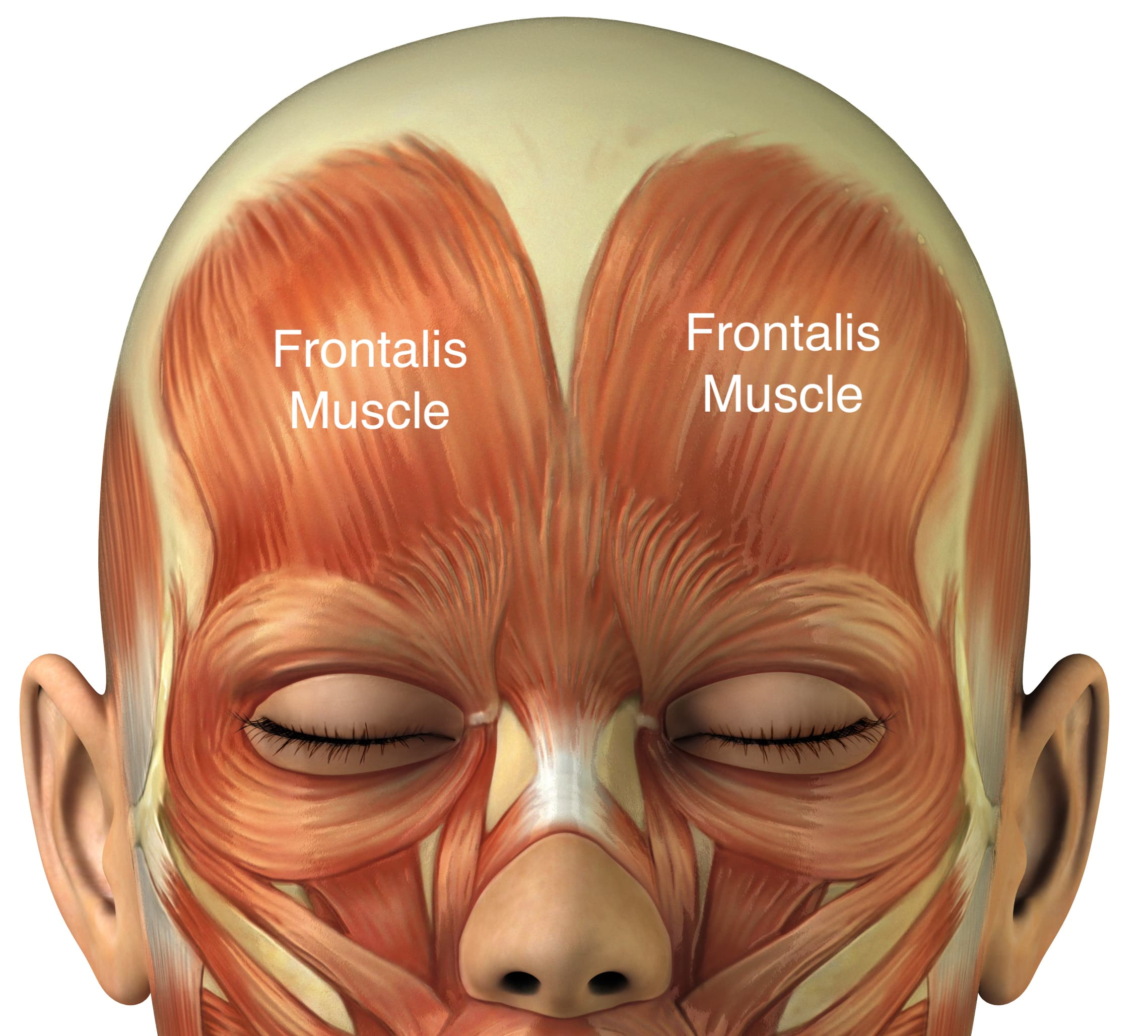
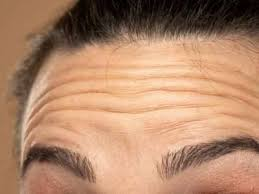
At some point, grafts may need to be placed into areas that are anatomically part of the forehead rather than the natural hair-bearing scalp that beeing the wrinkle area shown above .
- Some surgeons and patients argue that these lower forehead regions may provide a less ideal environment for transplanted grafts compared with the native scalp. In addition, when grafts are placed very low on the forehead, they may lie closer to areas influenced by the frontalis muscle, which is responsible for raising the eyebrows and creating forehead wrinkles.
- This can potentially create aesthetic concerns. During facial expression, the skin overlying the frontalis muscle moves significantly, and an extremely low hairline may appear less natural because the transplanted hairs move together with forehead motion. Some practitioners have discussed the temporary use of botulinum toxin (Botox) to reduce muscle activity during healing, although this is not considered a standard requirement for hair transplantation.
- For this reason, many surgeons prefer to maintain a conservative and anatomically appropriate hairline rather than aggressively lowering it into the forehead. The goal is not only graft survival, but also achieving a natural appearance both at rest and during facial expression.
So keep the Ideal Zone in mind , dont lower youre hairline too much , create a realistic design and remember the rule of thirds .
-More downsides contain ;
1. limited donor hair capability , you dont have infinite hair to use for transplanting , usually 6000-8000 Grafts (Hairfollicles).
that can be taken from the back of the head , where hair is usually more dht resistant and thicker .
your donor area will mainly be the back of ur head .
- To put donor management into perspective, even a seemingly small amount of hairline lowering can require a surprisingly large number of grafts.
Depending on the width of the hairline, the density being targeted, and whether temple work is included, lowering the hairline by just 1–2 cm can easily require anywhere from 1,500 to well over 3,000 grafts.
For example, a conservative hairline lowering targeting roughly 30–40 grafts/cm² may require significantly fewer grafts than an aggressive dense-packing procedure targeting 50–70 grafts/cm².
Many patients underestimate how quickly grafts are consumed during hairline restoration. What may seem like a small cosmetic adjustment can consume a substantial portion of the grafts available to you over a lifetime.
This is why donor management and long-term planning are so important, especially for younger patients who may continue to lose hair in the future.
2. Multiple Procedures
One thing many people fail to realize is that achieving a truly dense and natural-looking hairline often requires more than a single procedure.
While natural hair density typically ranges between 90–110 follicular units per cm², hair transplants cannot safely recreate that density in a single session. To maximize graft survival and minimize unnecessary risks, most clinics work at significantly lower densities during the first procedure.
Average clinics often transplant around 30–40 grafts/cm², while highly skilled surgeons may perform dense-packing sessions in the 50–70 grafts/cm² range under favorable conditions.
This is because as graft density increases, blood supply, healing, and graft survival become increasingly important factors. Trying to place too many grafts into a small area at once can compromise overall growth and lead to less predictable results.
For patients seeking maximum density, a staged approach is often the smartest option.
For example:- Procedure #1: ~50 grafts/cm²
- Procedure #2: Additional 40–50 grafts/cm²
- This allows the surgeon to gradually build density while preserving graft survival and maintaining natural aesthetics.
However, this approach comes with several disadvantages:- Higher procedure costs
- Additional travel and hotel expenses
- More time spent recovering
- More time walking around with a shaved head or buzzcut
- A longer overall timeline before reaching the final result
- Many surgeons shave both the donor and recipient areas, although some offer partial-shave or unshaven procedures at a significantly higher cost. These procedures allow you to keep most of your existing hairstyle, but they are generally more expensive and technically demanding.
Another factor many people fail to consider is donor preservation.
Donor hair is a finite resource. Most patients only have a limited number of grafts available throughout their lifetime, and every graft used today is a graft that cannot be used tomorrow.
This is why many experienced hair restoration surgeons emphasize hair loss prevention alongside surgical restoration. If you are genetically prone to androgenetic hair loss, preserving your existing hair can often be more efficient than trying to replace it later through surgery.
From a donor management perspective, preventing the loss of native hair is usually preferable to spending thousands of grafts restoring areas that could potentially have been preserved in the first place.
Hair transplantation should be viewed as the last line of defense, not the first.
The more native hair you are able to keep, the more flexibility you retain for future procedures should they ever become necessary.
It is also important to remember that hair transplants require patience. A procedure should generally not be judged before the 12-month mark. If you decide to undergo a second session for additional density, the timeline effectively starts again.
As a result, achieving a truly refined, high-density hairline can easily become a two-year journey from the first surgery to the final result.
The reward, however, is the potential to achieve a natural-looking, dense hairline while preserving valuable donor resources for the future.
So remember to
CHOOSE A GOOD FUCKING SURGEON + Hairloss preventation
- One of the most common things I hear is:
"I'll just go to Turkey and get my hairline fixed."
At the same time, many of these people are already showing early signs of hair loss while putting little to no thought into long-term hair preservation.
This is where many patients make a critical mistake.
A hair transplant can restore or lower a hairline, but it does not stop the underlying process that caused the hair loss in the first place. If that process continues unchecked, the surrounding native hair may continue to miniaturize and disappear over time, potentially creating the need for additional procedures in the future.
For this reason, anyone considering hairline correction should think not only about the transplant itself, but also about the long-term stability of their existing hair.
- Hair is life.
By the time you're 18, most of the major developmental effects of DHT have already taken place. What DHT is most likely to do from that point forward is slowly attack your hair follicles if you're genetically prone to hair loss.
So for many men, the trade-off becomes pretty simple: keep protecting a hormone that has already done most of its developmental job, or protect the hair that frames your face every single day.
Fair or not, hair has a huge impact on attractiveness, first impressions, and perceived age. A great haircut can improve your appearance dramatically, while significant hair loss can do the opposite.
That's why many men decide that preserving their hair is worth it. You can always argue about hormones, but once a follicle is gone, getting it back is much harder than keeping it in the first place.
So don't make the mistake of spending thousands on surgery while completely ignoring hair preservation. - Sourcing a good Surgeon
- Another aspect many patients overlook is who is actually performing the procedure.
In many clinics, a substantial portion of the transplant is carried out by technicians who work under the supervision of the surgeon. The surgeon is typically responsible for the treatment plan, hairline design, graft distribution strategy, and the most critical aesthetic aspects of the procedure, while the technicians assist with graft extraction, preparation, and placement.
This is not necessarily a bad thing. Highly experienced technicians who have been trained and supervised by a skilled surgeon can play an important role in achieving excellent results.
However, the quality of the final outcome is often heavily influenced by the training, experience, and standards of the team carrying out the procedure. This is why researching not only the surgeon, but also the clinic and the team behind the surgeon, is so important.
And those technicians are not always equally skilled.
While some are highly experienced and well-trained by the surgeon, others may have very little experience and are left to perform large parts of the procedure on their own.
A bad technician can ruin an otherwise good transplant by placing grafts poorly, wasting donor hair, or creating unnatural-looking results.
That's why researching the surgeon alone isn't enough. You should also know who is actually working on your head for 6–10 hours.
The photos below show examples of poor work despite densities of roughly 25–35 grafts/cm² with horrible graft placement .
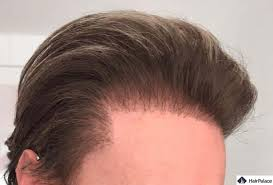
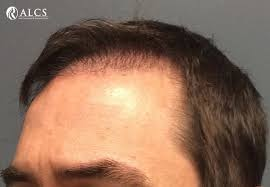
Keep in mind that choosing the right surgeon is just as important as deciding to get a hair transplant in the first place.
Only a relatively small number of surgeons consistently perform high-density transplants in the range of 45–70 grafts/cm², a technique often referred to as "dense packing." Before committing to a procedure, make sure your surgeon has a proven track record of achieving these results and genuinely cares about their reputation and patient outcomes.
Unfortunately, not every clinic operates with the same standards. Some clinics focus on volume rather than quality, taking on as many patients as possible while delivering mediocre results. In the worst cases, patients are left with poor density, unnatural hairlines, or other issues, only to be encouraged to return a year later for a costly "repair" or "touch-up" procedure.
Do your research, study long-term patient results, and choose a surgeon whose work speaks for itself. A hair transplant is something you will live with every day, so make sure you get it right the first time.
Stay away from ; - ELITHAIR
- VERA clinic
- many high-volume package clinics such as named above
Many of these clinics don't just produce mediocre results — they often use far more donor hair than necessary while delivering less density and poorer overall aesthetics than top-tier surgeons.
What makes them attractive to many patients is not necessarily the quality of their work, but the convenience. They advertise all-inclusive packages, airport transfers, hotel accommodations, translators, and other perks. However, these extras can distract from the one thing that actually matters: the surgical result.
The reality is that donor hair is a limited resource. Wasting grafts on poor planning, low density, or inefficient placement can permanently reduce your options for future procedures.
In many cases, these clinics either expect you to accept the disappointing result and never come back, or they hope you'll return a year later for a second procedure to "fix" what should have been done properly the first time. For some clinics, repair surgeries and second passes are a significant part of the business model.
This is why researching the surgeon—not the package—is so important. You are choosing someone to manage a finite donor supply that you will have for the rest of your life.
How and where to source???
id recommend to source ur surgeons/clinics from people who gained experience by being someone who underwent the proceadure .
or i highly also recommend subreddits dedicated to such thematics or certain youtubers talking about such topics .
https://www.mrhairline.com/getyourhairbacknow
Mr.Hairline has a list of great rep surgeons and posts a lot about such thematics and about his journey i linked his page above .
So make sure you know exactly who will be operating on you, who is extracting the grafts, and who is designing your hairline. Do your research, choose carefully, and don't put yourself in a position where you're left dealing with a botched result that could have been avoided.
And, of course, don't forget about hair loss prevention. If you're genetically prone to androgenetic hair loss, maintaining your existing hair is often just as important as restoring it. Many people focus entirely on the transplant while ignoring the underlying cause of their hair loss.
That being said, this thread is not intended to be a guide on hair regrowth or long-term hair loss management. The purpose of this thread is to discuss hairline correction—what makes a hairline look good or bad, what can realistically be improved, and when correction is or isn't possible.
Btw heres a last example what one 50cm2 good Hairtransplant session may look like
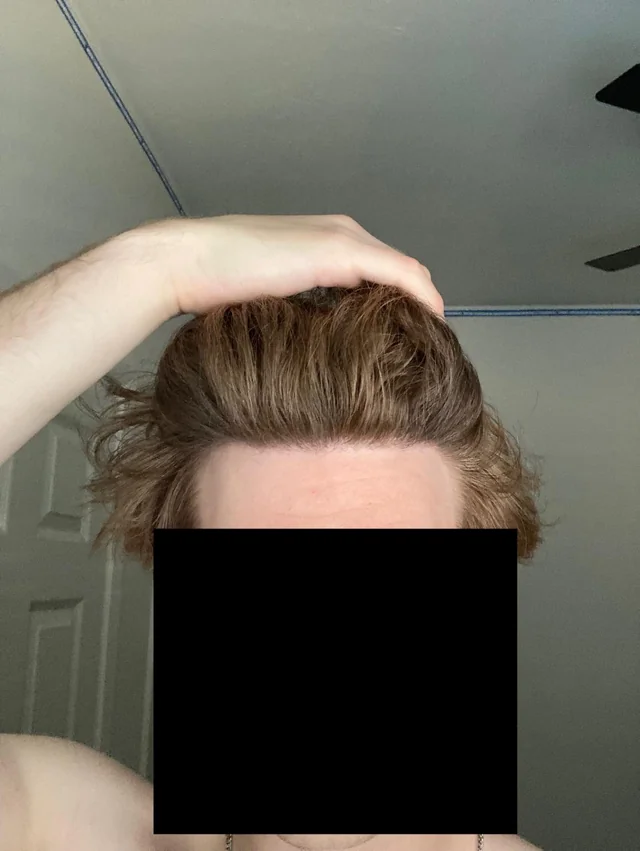
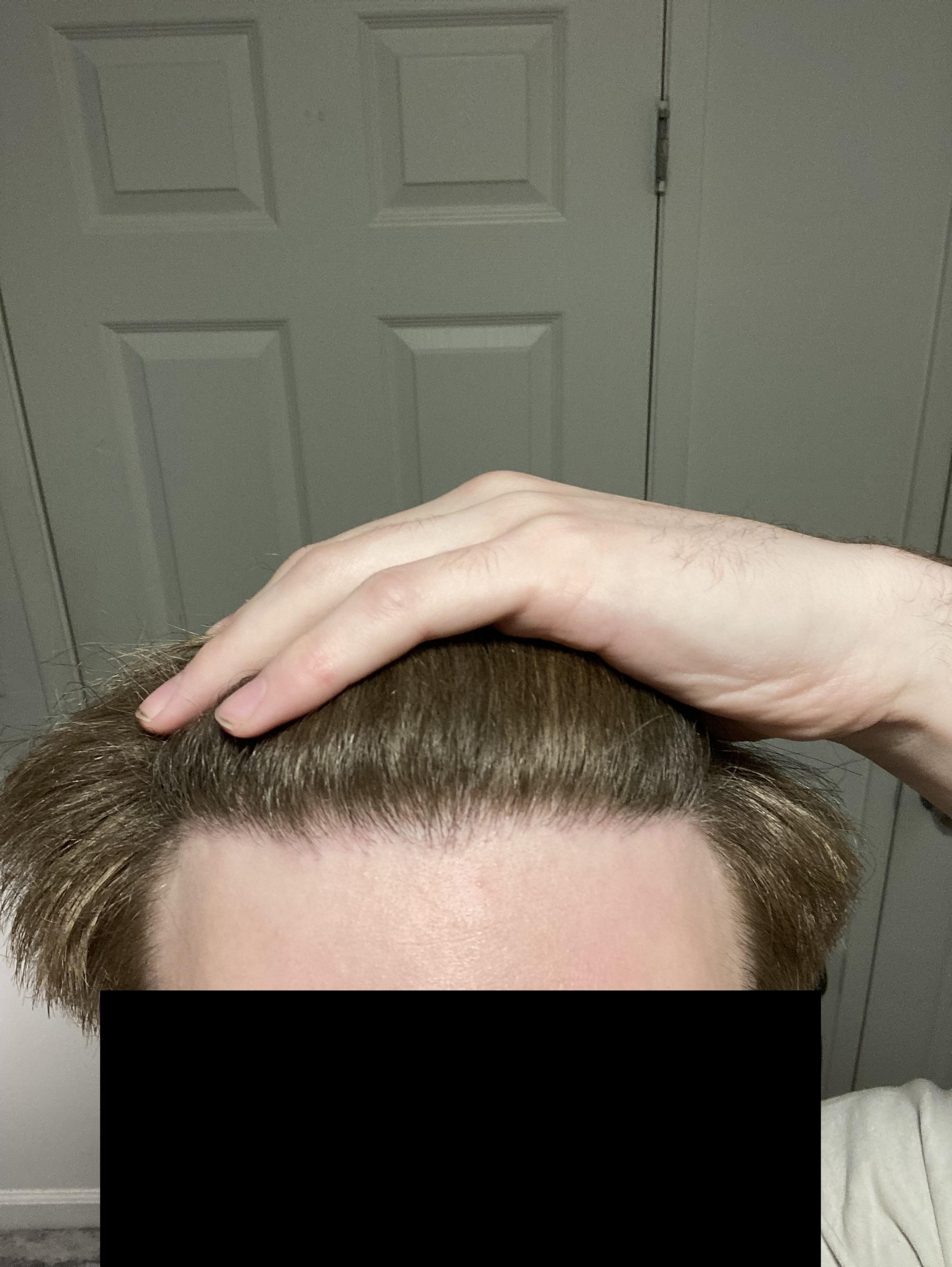
keep in mind thats only 50cm2 while natural density rests at typical 90-110cm2
That surgical outcome is near perfect and comes from a single procedure , if the guy wanted to he could add another 40cm2 to make it look even more perfect .
and here are his before pictures
- Some patients later undergo a hair transplant to soften or camouflage the scar.
- Visible scar
Ive studied his case extensively and he used a Hairtransplant to not only recreate his youthful hairline , he even lowered it by a bit and archieved great density while still being at 50cm2.
This guy was 21 btw so keep in mind what could potentially be a future risk when not hopping on DHT blockers /preservation meds etc.
There is no universal minimum age for a hair transplant. However, younger patients should be especially cautious, as future hair loss progression can be difficult to predict.
A great hairline at 21 still needs to make sense at 31, 41, and beyond so also make sure to stay on meds lol.
One reason his result looks much denser than the actual graft count would suggest is the way the grafts were distributed.
Instead of placing the hairs in straight rows or directly behind one another, the surgeon used a more natural, irregular pattern. This creates what I like to call the "forest principle."
In a forest, you don't see trees lined up perfectly one behind another. Trees are scattered at different distances and angles, creating depth, layering, and visual coverage. Even though there may be empty space between individual trees, the forest still appears dense.
The same concept applies to hair transplantation. When grafts are strategically scattered and layered, they create shadows, overlap, and visual depth. As a result, a density of around 50 grafts/cm² can often appear much fuller than the number alone suggests and may visually resemble a much higher density when viewed from normal social distances.
The illusion of density is therefore not determined solely by grafts per square centimeter, but also by distribution, angulation, layering, and how effectively the surgeon creates visual coverage.
Thats why you stay away from botchclinics and rather pay more .
Good hairlines are designed. Great hairlines are planned. Stay informed.
Last edited: