How to measure dimorphism, and what to know about it.

buccalfatremoval

buccalfatremoval

KHHV
Joined
Jun 30, 2024
Posts
1,736
Reputation
2,183
Alright bhais this is kinda high effort (especially because i feel like shit) so have fun reading :feelswhere:
INTRODUCTION
Human faces are sexually dimorphic in shape and features, hence the obvious facial differences between a male and female.
Male faces tend to have more sloped foreheads, more prominent brows, larger noses, and wider chins, whereas female faces have more vertical foreheads, fuller cheeks, and tapered chins, and body wise male bodies often have a wider bidelt, narrower hip, better fat distribution, and bigger bodies. Whereas females have a narrower frame, wider hips, naturally carry more fat and usually smaller in size.
Within each sex, individuals vary in their expression of these sexually dimorphic traits so facial sexual dimorphism is a continuous trait, with variations linked to processes in development.
However studies in this field have been commonly conflicting (at least from what I’ve seen).

Various concepts of facial sexual dimorphism have been proposed including subjective ratings of perceived “masculinity” and “femininity”, as well as objective measurements of facial shape dimorphism
Perceived ratings typically have a low to moderate correlation with underlying shape differences between the sexes, and they are influenced by psychological and cultural factos.

Researchers use various ways to measure dimorphism, One category of methods uses linear distances, angles, or ratios measured between a set of anatomical landmarks that differ significantly between males and females. The fwthr is by far the most commonly used measure in this category. Males are reported to have shorter midfaces relative to their facial width than females causing it to be a common way to differentiate between dimorphism.
Some researchers have developed a method that combined zygo prominence and relative lower facial height by converting both measurements to zscores and adding them to produce a single index.

A second category of methods try to capture the entire facial sexual dimorphism. These measures which can be taken from sets of linear distances like landmark configurations or photographic measurements attempt to quantify facial sexual dimorphism without making a priori hypotheses about which features contribute most to male female shape difference.
Geometric morphometric analysis of two or 3D coordinates is a popular approach that falls into this category.

Height is also an important factor when measuring dimorphism due to it being directly linked to skull development.
Taller people tend to have larger, longer, and more prognathic faces.


METHODS
There are many ways I’ll go over some.

The most common and easiest way is through visual analysis, The shape of the skull is one of the most important. The male skull has squarer and lower eye sockets, while the female skull has rounder and higher eye sockets. And as I mentioned earlier the male skull has more pronounced brow ridges and a protrusion at the top of the eyebrows, while in contrast females have a larger and rounder eye socket, much more rounded forehead and not so bony brow ridge.
(Interesting fact this is due to them not contributing in hunting rituals but instead caring for children so it resulted in this skull development to further emphasize facial expression communication to infants and so.)

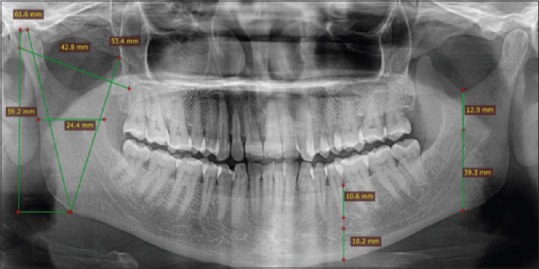
this one study used mandibular measurements, I’ll provide what they measured and the results.

Tubercle: A small bony elevation of inferior margin of ramus of the mandible
Coronion: The craniometric landmark on coronoid process of the mandible
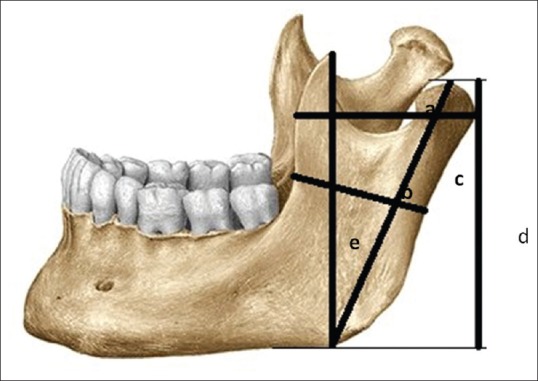
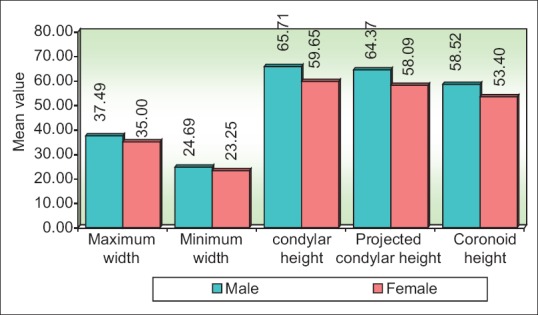
Maximum ramus breadth (MxRB): Measured from anterior most point of the ramus and line connecting the posterior most point on condyle and angle of mandible
Minimum ramus breadth (MiRB): Smallest anteroposterior breadth of the ramus
Condylar height (CH)/maximum ramus height: Ramus height of the mandible from the superior most point on condyle to the tubercle or most projected part of the lower border of the ramus
Projective height of ramus (PHTR): Point between the highest part of the mandibular condyle and lowest border of the bone
Coronoid height (CoH): Measurement from coronion and lower part of the bone.

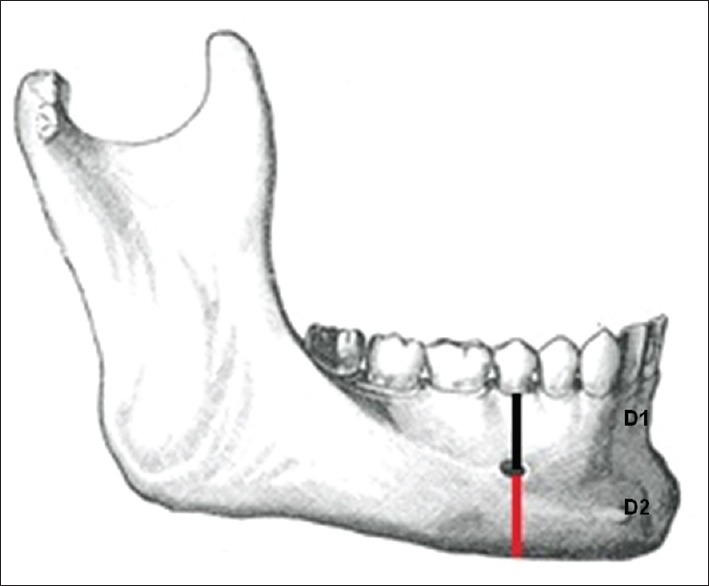
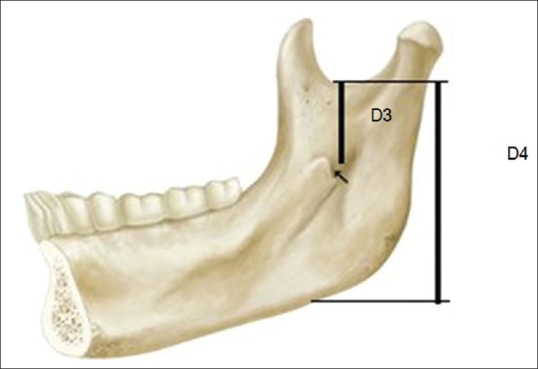
For visual reference.
D1: The distance from the bottom of the mental foramen (small hole in the lower jaw) to the bottom edge of the mandible (jawbone).
D2: The distance from the top of the mental foramen to the top edge of the alveolar crest (the part of the jaw that holds the teeth).
D3: The distance from the mandibular notch (dip at the top of the jawbone) to the top edge of the mandibular foramen (opening on the inner side of the jaw).
D4: The distance from the mandibular notch to the bottom edge of the mandibular ramus (vertical back part of the jaw).
IMG 5893
IMG 5894

IMG 5895
IMG 5896

The results are as followed:

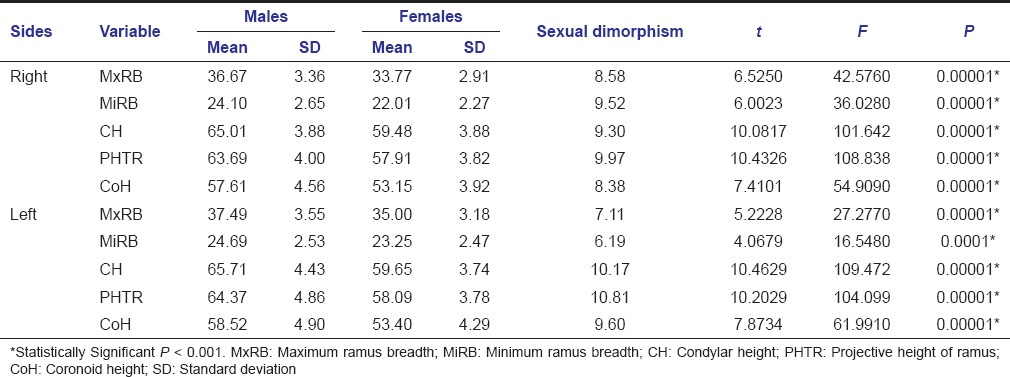
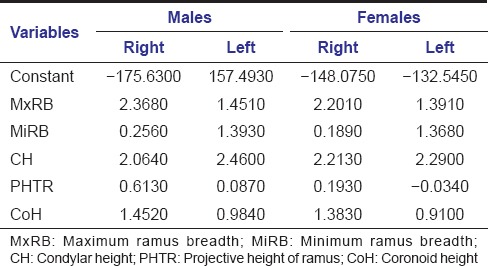
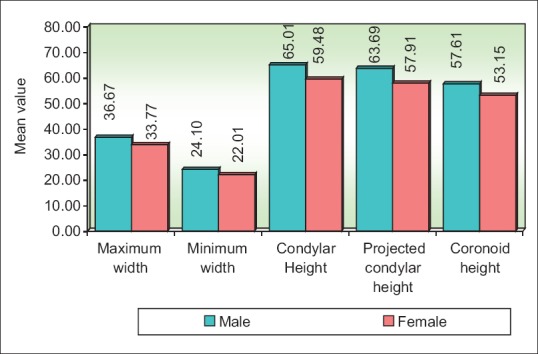
The statistics the researchers test showed males have higher values for all measurements, and all variables showed statistically significant differences (P < 0.001), with males having larger measurements on both sides of the mandible. The measurements showing the highest sexual dimorphism were PHTR, followed by CH and CoH. The mean values for males and females were also illustrated using bar diagrams.
I’ll provide them below.

IMG 5897

IMG 5900

IMG 5898
IMG 5899


On the right side​

DMale: − 175.6300 + 2.3680 (MxRB) + 0.2560 (MiRB) + 2.0640 (CH) + 0.6130 (PHTR) + 1.4520 (CoH)

DFemale: − 148.0750 + 2.2010 (MxRB) + 0.1890 (MiRB) + 2.2130 (CH) + 0.1930 (PHTR) + 1.3830 (CoH).

On the left side​

DMale: − 157.4930 + 1.4510 (MxRB) + 1.3930 (MiRB) + 2.4600 (CH) + 0.0870 (PHTR) + 0.9840 (CoH)

DFemale: −132.5450 + 1.3910 (MxRB) + 1.3680 (MiRB) + 2.2900 (CH) − 0.0340 (PHTR) + 0.9100 (CoH).

the distance between the superior margins of the mental foramen to the inferior border of the mandible (SM-IB), the distance between the inferior margins of the mental foramen to the inferior border of the mandible (IM-IB), and the distance between the superior margin of the mental foramen to the alveolar crest (SM-AC) showed statistically significant values and helps in discriminating males from females.

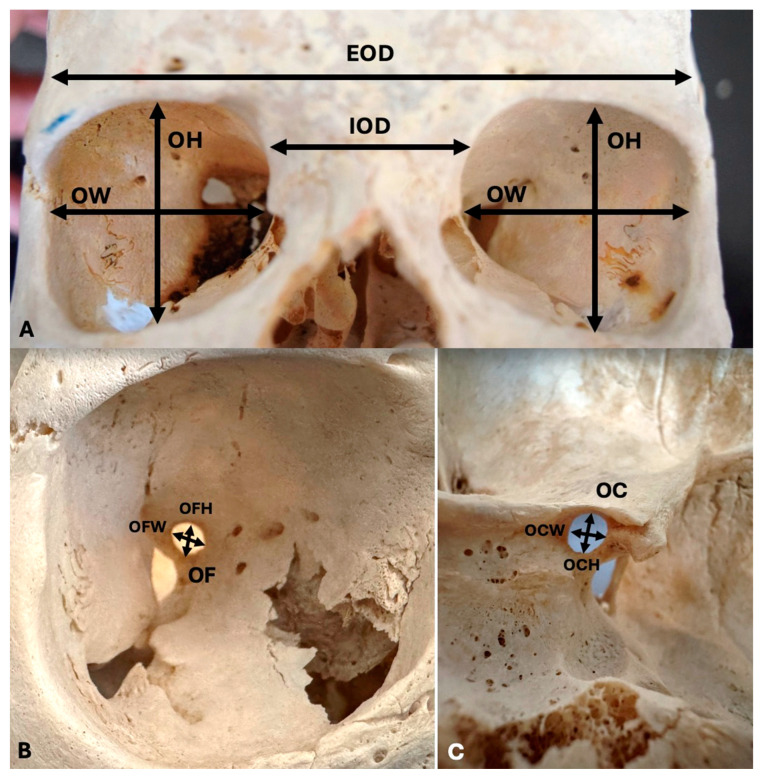
This other study used orbitals as a way to measure dimorphism, the study was ran on 120 skulls of unknown age.
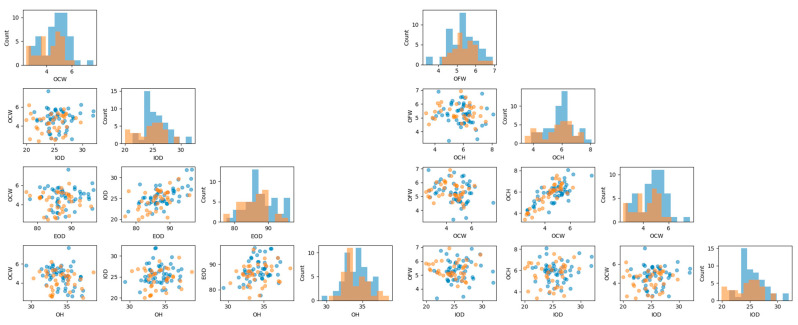
Three anatomists (G.Tr., M.P., and G.Ts.) conducted the anatomical investigations (Figure 1). The following orbital measurements were recorded: orbit width (OW), orbit height (OH), infraorbital distance (IOD), extraorbital distance (EOD), optic foramen width (OFW), optic foramen height (OFH), optic canal width (OCW), and optic canal height (OCH).

The orbit index (OI) was calculated as:

OI=OHOW×100OI=OWOH×100

The optic canal index (OCI) was calculated as:

OCI=OCHOCW×100OCI=OCWOCH×100

The optic foramen index (OFI) was calculated as:

OFI=OFHOFW×100OFI=OFWOFH×100

with each measurement repeated twice and recorded to an accuracy of 0.1 mm.

IMG 5901
Blue (females, orange (males).
IMG 5902

The results of the research weren’t significant between the sexes, only significant differences in the left OCW (p = 0.003), the EOD (p = 0.040), and the left OW (p = 0.010).

Another study used tomographic scans of the maxilla and mandible from 100 patients using Cone Beam Computed Tomography (CBCT). Measurements included inter premolar width, inter molar width, maxillary width, inter pterygoid width, nasal cavity width, nostril width, and maxillary length.

Several machine learning algorithms were used to develop predictive models, not going to mention them couldn’t be bothered but I’ll mention some in the results

The results.​

Univariate analysis showed statistically significant differences (p < 0.10) for all skeletal and dental measurements. Nostril width was the most important variable in two models, while inter molar width was the most significant dental measurement. The predictive models achieved accuracy values between 0.75 and 0.85. Logistic Regression, Random Forest, Decision Tree, and SVM showed the highest AUC values, while SVM demonstrated the most consistent performance between cross validation and test data.

Another research (which I’m really into) measured dimorphism between different phenotypes.
I recommend reading it yourself as it’s quite long.
It’s named Measuring Sexual Dimorphism With a Race–Gender Face Space by David E. Huber, university of Massachusetts, Amherst.

“Okay buccal that’s cool and all but how can we measure dimorphism at home without all this fancy shmancy bullshit?”
Alright the best way to effectively measure dimorphism at home is as follows.
We’re simply going to analyze.
I believe someone already inserted these ratios in their guide but I’ll state them again.

Neck to Jaw Ratio: 90-100%
Jaw Frontal Angle: 84.6° - 95°
Midface ratio: 0.95-1.01
Jaw to Cheekbone Ratio: 86% - 92%
Canthal Tilt: Positive tilt between 5.2° - 5.8°
Chin to Philtrum Ratio: 2.05 - 2.55
Lower Third Proportion: 30.6% - 35% of total facial height
Facial Thirds Harmony: between 31.5% - 34.5% of the total height.
FWHR (Facial Width to Height Ratio): 1.85 - 1.9
TFWHR (Total Facial Width to Height Ratio):1.33 - 1.38
Eye Aspect Ratio: 2.8 - 3.6

Technique: Use a vernier caliper or photograph yourself with a neutral expression at eye level, then analyze the image using digital tools (like ImageJ) to get precise landmark measurements.

As for body measurements.

Shoulder to waist ratio: 1.618
Waist to hip (WHR): 0.80-0.85
2D:4D Digit Ratio: below 0.94
Voice pitch: 85-100hz

Other easy ways to tell someone is of high dimorphism (it would be obvious just looking at them), is a fully developed skull, outward gonions, square projected chin, projected zygos, well developed temples, dense brow ridge, sloped forehead, straight hairline, supras, ideal eye hooding, dense low set thick eyebrows, and usually a more outward projected nose.

These are the ideal dimorphic ratios we are chasing.

Kinda useful to know how to measure your face.


Kinda got lazy at the end sorry:incel:
 
  • +1
  • Love it
Reactions: Gandy'sOrbitalVecto, Gengar’s Ghost, idont and 22 others
dnr

might read:forcedsmile:
 
  • +1
Reactions: FramepiII, astatin and buccalfatremoval
inb4botb
 
  • +1
  • JFL
Reactions: idont, FramepiII and buccalfatremoval
Alright bhais this is kinda high effort (especially because i feel like shit) so have fun reading :feelswhere:
INTRODUCTION
Human faces are sexually dimorphic in shape and features, hence the obvious facial differences between a male and female.
Male faces tend to have more sloped foreheads, more prominent brows, larger noses, and wider chins, whereas female faces have more vertical foreheads, fuller cheeks, and tapered chins, and body wise male bodies often have a wider bidelt, narrower hip, better fat distribution, and bigger bodies. Whereas females have a narrower frame, wider hips, naturally carry more fat and usually smaller in size.
Within each sex, individuals vary in their expression of these sexually dimorphic traits so facial sexual dimorphism is a continuous trait, with variations linked to processes in development.
However studies in this field have been commonly conflicting (at least from what I’ve seen).

Various concepts of facial sexual dimorphism have been proposed including subjective ratings of perceived “masculinity” and “femininity”, as well as objective measurements of facial shape dimorphism
Perceived ratings typically have a low to moderate correlation with underlying shape differences between the sexes, and they are influenced by psychological and cultural factos.

Researchers use various ways to measure dimorphism, One category of methods uses linear distances, angles, or ratios measured between a set of anatomical landmarks that differ significantly between males and females. The fwthr is by far the most commonly used measure in this category. Males are reported to have shorter midfaces relative to their facial width than females causing it to be a common way to differentiate between dimorphism.
Some researchers have developed a method that combined zygo prominence and relative lower facial height by converting both measurements to zscores and adding them to produce a single index.

A second category of methods try to capture the entire facial sexual dimorphism. These measures which can be taken from sets of linear distances like landmark configurations or photographic measurements attempt to quantify facial sexual dimorphism without making a priori hypotheses about which features contribute most to male female shape difference.
Geometric morphometric analysis of two or 3D coordinates is a popular approach that falls into this category.

Height is also an important factor when measuring dimorphism due to it being directly linked to skull development.
Taller people tend to have larger, longer, and more prognathic faces.


METHODS
There are many ways I’ll go over some.

The most common and easiest way is through visual analysis, The shape of the skull is one of the most important. The male skull has squarer and lower eye sockets, while the female skull has rounder and higher eye sockets. And as I mentioned earlier the male skull has more pronounced brow ridges and a protrusion at the top of the eyebrows, while in contrast females have a larger and rounder eye socket, much more rounded forehead and not so bony brow ridge.
(Interesting fact this is due to them not contributing in hunting rituals but instead caring for children so it resulted in this skull development to further emphasize facial expression communication to infants and so.)

this one study used mandibular measurements, I’ll provide what they measured and the results.

Tubercle: A small bony elevation of inferior margin of ramus of the mandible
Coronion: The craniometric landmark on coronoid process of the mandible
Maximum ramus breadth (MxRB): Measured from anterior most point of the ramus and line connecting the posterior most point on condyle and angle of mandible
Minimum ramus breadth (MiRB): Smallest anteroposterior breadth of the ramus
Condylar height (CH)/maximum ramus height: Ramus height of the mandible from the superior most point on condyle to the tubercle or most projected part of the lower border of the ramus
Projective height of ramus (PHTR): Point between the highest part of the mandibular condyle and lowest border of the bone
Coronoid height (CoH): Measurement from coronion and lower part of the bone.

For visual reference.
D1: The distance from the bottom of the mental foramen (small hole in the lower jaw) to the bottom edge of the mandible (jawbone).
D2: The distance from the top of the mental foramen to the top edge of the alveolar crest (the part of the jaw that holds the teeth).
D3: The distance from the mandibular notch (dip at the top of the jawbone) to the top edge of the mandibular foramen (opening on the inner side of the jaw).
D4: The distance from the mandibular notch to the bottom edge of the mandibular ramus (vertical back part of the jaw).
View attachment 5053313View attachment 5053314
View attachment 5053315View attachment 5053317
The results are as followed:

The statistics the researchers test showed males have higher values for all measurements, and all variables showed statistically significant differences (P < 0.001), with males having larger measurements on both sides of the mandible. The measurements showing the highest sexual dimorphism were PHTR, followed by CH and CoH. The mean values for males and females were also illustrated using bar diagrams.
I’ll provide them below.

View attachment 5053333
View attachment 5053334
View attachment 5053335View attachment 5053336

On the right side​

DMale: − 175.6300 + 2.3680 (MxRB) + 0.2560 (MiRB) + 2.0640 (CH) + 0.6130 (PHTR) + 1.4520 (CoH)

DFemale: − 148.0750 + 2.2010 (MxRB) + 0.1890 (MiRB) + 2.2130 (CH) + 0.1930 (PHTR) + 1.3830 (CoH).

On the left side​

DMale: − 157.4930 + 1.4510 (MxRB) + 1.3930 (MiRB) + 2.4600 (CH) + 0.0870 (PHTR) + 0.9840 (CoH)

DFemale: −132.5450 + 1.3910 (MxRB) + 1.3680 (MiRB) + 2.2900 (CH) − 0.0340 (PHTR) + 0.9100 (CoH).

the distance between the superior margins of the mental foramen to the inferior border of the mandible (SM-IB), the distance between the inferior margins of the mental foramen to the inferior border of the mandible (IM-IB), and the distance between the superior margin of the mental foramen to the alveolar crest (SM-AC) showed statistically significant values and helps in discriminating males from females.

This other study used orbitals as a way to measure dimorphism, the study was ran on 120 skulls of unknown age.
Three anatomists (G.Tr., M.P., and G.Ts.) conducted the anatomical investigations (Figure 1). The following orbital measurements were recorded: orbit width (OW), orbit height (OH), infraorbital distance (IOD), extraorbital distance (EOD), optic foramen width (OFW), optic foramen height (OFH), optic canal width (OCW), and optic canal height (OCH).

The orbit index (OI) was calculated as:

OI=OHOW×100OI=OWOH×100

The optic canal index (OCI) was calculated as:

OCI=OCHOCW×100OCI=OCWOCH×100

The optic foramen index (OFI) was calculated as:

OFI=OFHOFW×100OFI=OFWOFH×100

with each measurement repeated twice and recorded to an accuracy of 0.1 mm.

View attachment 5053391Blue (females, orange (males).View attachment 5053392
The results of the research weren’t significant between the sexes, only significant differences in the left OCW (p = 0.003), the EOD (p = 0.040), and the left OW (p = 0.010).

Another study used tomographic scans of the maxilla and mandible from 100 patients using Cone Beam Computed Tomography (CBCT). Measurements included inter premolar width, inter molar width, maxillary width, inter pterygoid width, nasal cavity width, nostril width, and maxillary length.

Several machine learning algorithms were used to develop predictive models, not going to mention them couldn’t be bothered but I’ll mention some in the results

The results.​

Univariate analysis showed statistically significant differences (p < 0.10) for all skeletal and dental measurements. Nostril width was the most important variable in two models, while inter molar width was the most significant dental measurement. The predictive models achieved accuracy values between 0.75 and 0.85. Logistic Regression, Random Forest, Decision Tree, and SVM showed the highest AUC values, while SVM demonstrated the most consistent performance between cross validation and test data.

Another research (which I’m really into) measured dimorphism between different phenotypes.
I recommend reading it yourself as it’s quite long.
It’s named Measuring Sexual Dimorphism With a Race–Gender Face Space by David E. Huber, university of Massachusetts, Amherst.

“Okay buccal that’s cool and all but how can we measure dimorphism at home without all this fancy shmancy bullshit?”
Alright the best way to effectively measure dimorphism at home is as follows.
We’re simply going to analyze.
I believe someone already inserted these ratios in their guide but I’ll state them again.

Neck to Jaw Ratio: 90-100%
Jaw Frontal Angle: 84.6° - 95°
Midface ratio: 0.95-1.01
Jaw to Cheekbone Ratio: 86% - 92%
Canthal Tilt: Positive tilt between 5.2° - 5.8°
Chin to Philtrum Ratio: 2.05 - 2.55
Lower Third Proportion: 30.6% - 35% of total facial height
Facial Thirds Harmony: between 31.5% - 34.5% of the total height.
FWHR (Facial Width to Height Ratio): 1.85 - 1.9
TFWHR (Total Facial Width to Height Ratio):1.33 - 1.38
Eye Aspect Ratio: 2.8 - 3.6

Technique: Use a vernier caliper or photograph yourself with a neutral expression at eye level, then analyze the image using digital tools (like ImageJ) to get precise landmark measurements.

As for body measurements.

Shoulder to waist ratio: 1.618
Waist to hip (WHR): 0.80-0.85
2D:4D Digit Ratio: below 0.94
Voice pitch: 85-100hz

Other easy ways to tell someone is of high dimorphism (it would be obvious just looking at them), is a fully developed skull, outward gonions, square projected chin, projected zygos, well developed temples, dense brow ridge, sloped forehead, straight hairline, supras, ideal eye hooding, dense low set thick eyebrows, and usually a more outward projected nose.

These are the ideal dimorphic ratios we are chasing.

Kinda useful to know how to measure your face.


Kinda got lazy at the end sorry:incel:

dnr nice thread
 
  • +1
  • Love it
Reactions: IbalmeHponeMin, FramepiII and buccalfatremoval
Nice! Will read in a minute.
Will you do one for misc too?
 
  • +1
Reactions: buccalfatremoval
high iq I think idk
 
  • +1
  • JFL
Reactions: buccalfatremoval and Nutsack2000
Nice! Will read in a minute.
Will you do one for misc too?
Was just gonna mention you lol
Thought you meant masculine no? 😭
Or did you mean actual misc like miscellaneous
 
  • +1
Reactions: coastal and Topkra
Alright bhais this is kinda high effort (especially because i feel like shit) so have fun reading :feelswhere:
INTRODUCTION
Human faces are sexually dimorphic in shape and features, hence the obvious facial differences between a male and female.
Male faces tend to have more sloped foreheads, more prominent brows, larger noses, and wider chins, whereas female faces have more vertical foreheads, fuller cheeks, and tapered chins, and body wise male bodies often have a wider bidelt, narrower hip, better fat distribution, and bigger bodies. Whereas females have a narrower frame, wider hips, naturally carry more fat and usually smaller in size.
Within each sex, individuals vary in their expression of these sexually dimorphic traits so facial sexual dimorphism is a continuous trait, with variations linked to processes in development.
However studies in this field have been commonly conflicting (at least from what I’ve seen).

Various concepts of facial sexual dimorphism have been proposed including subjective ratings of perceived “masculinity” and “femininity”, as well as objective measurements of facial shape dimorphism
Perceived ratings typically have a low to moderate correlation with underlying shape differences between the sexes, and they are influenced by psychological and cultural factos.

Researchers use various ways to measure dimorphism, One category of methods uses linear distances, angles, or ratios measured between a set of anatomical landmarks that differ significantly between males and females. The fwthr is by far the most commonly used measure in this category. Males are reported to have shorter midfaces relative to their facial width than females causing it to be a common way to differentiate between dimorphism.
Some researchers have developed a method that combined zygo prominence and relative lower facial height by converting both measurements to zscores and adding them to produce a single index.

A second category of methods try to capture the entire facial sexual dimorphism. These measures which can be taken from sets of linear distances like landmark configurations or photographic measurements attempt to quantify facial sexual dimorphism without making a priori hypotheses about which features contribute most to male female shape difference.
Geometric morphometric analysis of two or 3D coordinates is a popular approach that falls into this category.

Height is also an important factor when measuring dimorphism due to it being directly linked to skull development.
Taller people tend to have larger, longer, and more prognathic faces.


METHODS
There are many ways I’ll go over some.

The most common and easiest way is through visual analysis, The shape of the skull is one of the most important. The male skull has squarer and lower eye sockets, while the female skull has rounder and higher eye sockets. And as I mentioned earlier the male skull has more pronounced brow ridges and a protrusion at the top of the eyebrows, while in contrast females have a larger and rounder eye socket, much more rounded forehead and not so bony brow ridge.
(Interesting fact this is due to them not contributing in hunting rituals but instead caring for children so it resulted in this skull development to further emphasize facial expression communication to infants and so.)

this one study used mandibular measurements, I’ll provide what they measured and the results.

Tubercle: A small bony elevation of inferior margin of ramus of the mandible
Coronion: The craniometric landmark on coronoid process of the mandible
Maximum ramus breadth (MxRB): Measured from anterior most point of the ramus and line connecting the posterior most point on condyle and angle of mandible
Minimum ramus breadth (MiRB): Smallest anteroposterior breadth of the ramus
Condylar height (CH)/maximum ramus height: Ramus height of the mandible from the superior most point on condyle to the tubercle or most projected part of the lower border of the ramus
Projective height of ramus (PHTR): Point between the highest part of the mandibular condyle and lowest border of the bone
Coronoid height (CoH): Measurement from coronion and lower part of the bone.

For visual reference.
D1: The distance from the bottom of the mental foramen (small hole in the lower jaw) to the bottom edge of the mandible (jawbone).
D2: The distance from the top of the mental foramen to the top edge of the alveolar crest (the part of the jaw that holds the teeth).
D3: The distance from the mandibular notch (dip at the top of the jawbone) to the top edge of the mandibular foramen (opening on the inner side of the jaw).
D4: The distance from the mandibular notch to the bottom edge of the mandibular ramus (vertical back part of the jaw).
View attachment 5053313View attachment 5053314
View attachment 5053315View attachment 5053317
The results are as followed:

The statistics the researchers test showed males have higher values for all measurements, and all variables showed statistically significant differences (P < 0.001), with males having larger measurements on both sides of the mandible. The measurements showing the highest sexual dimorphism were PHTR, followed by CH and CoH. The mean values for males and females were also illustrated using bar diagrams.
I’ll provide them below.
View attachment 5053333
View attachment 5053334
View attachment 5053335View attachment 5053336

On the right side​

DMale: − 175.6300 + 2.3680 (MxRB) + 0.2560 (MiRB) + 2.0640 (CH) + 0.6130 (PHTR) + 1.4520 (CoH)

DFemale: − 148.0750 + 2.2010 (MxRB) + 0.1890 (MiRB) + 2.2130 (CH) + 0.1930 (PHTR) + 1.3830 (CoH).

On the left side​

DMale: − 157.4930 + 1.4510 (MxRB) + 1.3930 (MiRB) + 2.4600 (CH) + 0.0870 (PHTR) + 0.9840 (CoH)

DFemale: −132.5450 + 1.3910 (MxRB) + 1.3680 (MiRB) + 2.2900 (CH) − 0.0340 (PHTR) + 0.9100 (CoH).

the distance between the superior margins of the mental foramen to the inferior border of the mandible (SM-IB), the distance between the inferior margins of the mental foramen to the inferior border of the mandible (IM-IB), and the distance between the superior margin of the mental foramen to the alveolar crest (SM-AC) showed statistically significant values and helps in discriminating males from females.

This other study used orbitals as a way to measure dimorphism, the study was ran on 120 skulls of unknown age.
Three anatomists (G.Tr., M.P., and G.Ts.) conducted the anatomical investigations (Figure 1). The following orbital measurements were recorded: orbit width (OW), orbit height (OH), infraorbital distance (IOD), extraorbital distance (EOD), optic foramen width (OFW), optic foramen height (OFH), optic canal width (OCW), and optic canal height (OCH).

The orbit index (OI) was calculated as:

OI=OHOW×100OI=OWOH×100

The optic canal index (OCI) was calculated as:

OCI=OCHOCW×100OCI=OCWOCH×100

The optic foramen index (OFI) was calculated as:

OFI=OFHOFW×100OFI=OFWOFH×100

with each measurement repeated twice and recorded to an accuracy of 0.1 mm.

View attachment 5053391Blue (females, orange (males).View attachment 5053392
The results of the research weren’t significant between the sexes, only significant differences in the left OCW (p = 0.003), the EOD (p = 0.040), and the left OW (p = 0.010).

Another study used tomographic scans of the maxilla and mandible from 100 patients using Cone Beam Computed Tomography (CBCT). Measurements included inter premolar width, inter molar width, maxillary width, inter pterygoid width, nasal cavity width, nostril width, and maxillary length.

Several machine learning algorithms were used to develop predictive models, not going to mention them couldn’t be bothered but I’ll mention some in the results

The results.​

Univariate analysis showed statistically significant differences (p < 0.10) for all skeletal and dental measurements. Nostril width was the most important variable in two models, while inter molar width was the most significant dental measurement. The predictive models achieved accuracy values between 0.75 and 0.85. Logistic Regression, Random Forest, Decision Tree, and SVM showed the highest AUC values, while SVM demonstrated the most consistent performance between cross validation and test data.

Another research (which I’m really into) measured dimorphism between different phenotypes.
I recommend reading it yourself as it’s quite long.
It’s named Measuring Sexual Dimorphism With a Race–Gender Face Space by David E. Huber, university of Massachusetts, Amherst.

“Okay buccal that’s cool and all but how can we measure dimorphism at home without all this fancy shmancy bullshit?”
Alright the best way to effectively measure dimorphism at home is as follows.
We’re simply going to analyze.
I believe someone already inserted these ratios in their guide but I’ll state them again.

Neck to Jaw Ratio: 90-100%
Jaw Frontal Angle: 84.6° - 95°
Midface ratio: 0.95-1.01
Jaw to Cheekbone Ratio: 86% - 92%
Canthal Tilt: Positive tilt between 5.2° - 5.8°
Chin to Philtrum Ratio: 2.05 - 2.55
Lower Third Proportion: 30.6% - 35% of total facial height
Facial Thirds Harmony: between 31.5% - 34.5% of the total height.
FWHR (Facial Width to Height Ratio): 1.85 - 1.9
TFWHR (Total Facial Width to Height Ratio):1.33 - 1.38
Eye Aspect Ratio: 2.8 - 3.6

Technique: Use a vernier caliper or photograph yourself with a neutral expression at eye level, then analyze the image using digital tools (like ImageJ) to get precise landmark measurements.

As for body measurements.

Shoulder to waist ratio: 1.618
Waist to hip (WHR): 0.80-0.85
2D:4D Digit Ratio: below 0.94
Voice pitch: 85-100hz

Other easy ways to tell someone is of high dimorphism (it would be obvious just looking at them), is a fully developed skull, outward gonions, square projected chin, projected zygos, well developed temples, dense brow ridge, sloped forehead, straight hairline, supras, ideal eye hooding, dense low set thick eyebrows, and usually a more outward projected nose.

These are the ideal dimorphic ratios we are chasing.

Kinda useful to know how to measure your face.


Kinda got lazy at the end sorry:incel:

@coastal @primal_shitmuncher @combatingNorwooding @lemureater
Yall will be my to tag niggas
 
  • +1
  • Love it
Reactions: lemureater, coastal and combatingNorwooding
Alright bhais this is kinda high effort (especially because i feel like shit) so have fun reading :feelswhere:
INTRODUCTION
Human faces are sexually dimorphic in shape and features, hence the obvious facial differences between a male and female.
Male faces tend to have more sloped foreheads, more prominent brows, larger noses, and wider chins, whereas female faces have more vertical foreheads, fuller cheeks, and tapered chins, and body wise male bodies often have a wider bidelt, narrower hip, better fat distribution, and bigger bodies. Whereas females have a narrower frame, wider hips, naturally carry more fat and usually smaller in size.
Within each sex, individuals vary in their expression of these sexually dimorphic traits so facial sexual dimorphism is a continuous trait, with variations linked to processes in development.
However studies in this field have been commonly conflicting (at least from what I’ve seen).

Various concepts of facial sexual dimorphism have been proposed including subjective ratings of perceived “masculinity” and “femininity”, as well as objective measurements of facial shape dimorphism
Perceived ratings typically have a low to moderate correlation with underlying shape differences between the sexes, and they are influenced by psychological and cultural factos.

Researchers use various ways to measure dimorphism, One category of methods uses linear distances, angles, or ratios measured between a set of anatomical landmarks that differ significantly between males and females. The fwthr is by far the most commonly used measure in this category. Males are reported to have shorter midfaces relative to their facial width than females causing it to be a common way to differentiate between dimorphism.
Some researchers have developed a method that combined zygo prominence and relative lower facial height by converting both measurements to zscores and adding them to produce a single index.

A second category of methods try to capture the entire facial sexual dimorphism. These measures which can be taken from sets of linear distances like landmark configurations or photographic measurements attempt to quantify facial sexual dimorphism without making a priori hypotheses about which features contribute most to male female shape difference.
Geometric morphometric analysis of two or 3D coordinates is a popular approach that falls into this category.

Height is also an important factor when measuring dimorphism due to it being directly linked to skull development.
Taller people tend to have larger, longer, and more prognathic faces.


METHODS
There are many ways I’ll go over some.

The most common and easiest way is through visual analysis, The shape of the skull is one of the most important. The male skull has squarer and lower eye sockets, while the female skull has rounder and higher eye sockets. And as I mentioned earlier the male skull has more pronounced brow ridges and a protrusion at the top of the eyebrows, while in contrast females have a larger and rounder eye socket, much more rounded forehead and not so bony brow ridge.
(Interesting fact this is due to them not contributing in hunting rituals but instead caring for children so it resulted in this skull development to further emphasize facial expression communication to infants and so.)

this one study used mandibular measurements, I’ll provide what they measured and the results.

Tubercle: A small bony elevation of inferior margin of ramus of the mandible
Coronion: The craniometric landmark on coronoid process of the mandible
Maximum ramus breadth (MxRB): Measured from anterior most point of the ramus and line connecting the posterior most point on condyle and angle of mandible
Minimum ramus breadth (MiRB): Smallest anteroposterior breadth of the ramus
Condylar height (CH)/maximum ramus height: Ramus height of the mandible from the superior most point on condyle to the tubercle or most projected part of the lower border of the ramus
Projective height of ramus (PHTR): Point between the highest part of the mandibular condyle and lowest border of the bone
Coronoid height (CoH): Measurement from coronion and lower part of the bone.

For visual reference.
D1: The distance from the bottom of the mental foramen (small hole in the lower jaw) to the bottom edge of the mandible (jawbone).
D2: The distance from the top of the mental foramen to the top edge of the alveolar crest (the part of the jaw that holds the teeth).
D3: The distance from the mandibular notch (dip at the top of the jawbone) to the top edge of the mandibular foramen (opening on the inner side of the jaw).
D4: The distance from the mandibular notch to the bottom edge of the mandibular ramus (vertical back part of the jaw).

View attachment 5053313View attachment 5053314
View attachment 5053315View attachment 5053317
The results are as followed:

The statistics the researchers test showed males have higher values for all measurements, and all variables showed statistically significant differences (P < 0.001), with males having larger measurements on both sides of the mandible. The measurements showing the highest sexual dimorphism were PHTR, followed by CH and CoH. The mean values for males and females were also illustrated using bar diagrams.
I’ll provide them below.
View attachment 5053333
View attachment 5053334
View attachment 5053335View attachment 5053336

On the right side​

DMale: − 175.6300 + 2.3680 (MxRB) + 0.2560 (MiRB) + 2.0640 (CH) + 0.6130 (PHTR) + 1.4520 (CoH)

DFemale: − 148.0750 + 2.2010 (MxRB) + 0.1890 (MiRB) + 2.2130 (CH) + 0.1930 (PHTR) + 1.3830 (CoH).

On the left side​

DMale: − 157.4930 + 1.4510 (MxRB) + 1.3930 (MiRB) + 2.4600 (CH) + 0.0870 (PHTR) + 0.9840 (CoH)

DFemale: −132.5450 + 1.3910 (MxRB) + 1.3680 (MiRB) + 2.2900 (CH) − 0.0340 (PHTR) + 0.9100 (CoH).

the distance between the superior margins of the mental foramen to the inferior border of the mandible (SM-IB), the distance between the inferior margins of the mental foramen to the inferior border of the mandible (IM-IB), and the distance between the superior margin of the mental foramen to the alveolar crest (SM-AC) showed statistically significant values and helps in discriminating males from females.

This other study used orbitals as a way to measure dimorphism, the study was ran on 120 skulls of unknown age.
Three anatomists (G.Tr., M.P., and G.Ts.) conducted the anatomical investigations (Figure 1). The following orbital measurements were recorded: orbit width (OW), orbit height (OH), infraorbital distance (IOD), extraorbital distance (EOD), optic foramen width (OFW), optic foramen height (OFH), optic canal width (OCW), and optic canal height (OCH).

The orbit index (OI) was calculated as:

OI=OHOW×100OI=OWOH×100

The optic canal index (OCI) was calculated as:

OCI=OCHOCW×100OCI=OCWOCH×100

The optic foramen index (OFI) was calculated as:

OFI=OFHOFW×100OFI=OFWOFH×100

with each measurement repeated twice and recorded to an accuracy of 0.1 mm.

View attachment 5053391Blue (females, orange (males).View attachment 5053392
The results of the research weren’t significant between the sexes, only significant differences in the left OCW (p = 0.003), the EOD (p = 0.040), and the left OW (p = 0.010).

Another study used tomographic scans of the maxilla and mandible from 100 patients using Cone Beam Computed Tomography (CBCT). Measurements included inter premolar width, inter molar width, maxillary width, inter pterygoid width, nasal cavity width, nostril width, and maxillary length.

Several machine learning algorithms were used to develop predictive models, not going to mention them couldn’t be bothered but I’ll mention some in the results

The results.​

Univariate analysis showed statistically significant differences (p < 0.10) for all skeletal and dental measurements. Nostril width was the most important variable in two models, while inter molar width was the most significant dental measurement. The predictive models achieved accuracy values between 0.75 and 0.85. Logistic Regression, Random Forest, Decision Tree, and SVM showed the highest AUC values, while SVM demonstrated the most consistent performance between cross validation and test data.

Another research (which I’m really into) measured dimorphism between different phenotypes.
I recommend reading it yourself as it’s quite long.
It’s named Measuring Sexual Dimorphism With a Race–Gender Face Space by David E. Huber, university of Massachusetts, Amherst.

“Okay buccal that’s cool and all but how can we measure dimorphism at home without all this fancy shmancy bullshit?”
Alright the best way to effectively measure dimorphism at home is as follows.
We’re simply going to analyze.
I believe someone already inserted these ratios in their guide but I’ll state them again.

Neck to Jaw Ratio: 90-100%
Jaw Frontal Angle: 84.6° - 95°
Midface ratio: 0.95-1.01
Jaw to Cheekbone Ratio: 86% - 92%
Canthal Tilt: Positive tilt between 5.2° - 5.8°
Chin to Philtrum Ratio: 2.05 - 2.55
Lower Third Proportion: 30.6% - 35% of total facial height
Facial Thirds Harmony: between 31.5% - 34.5% of the total height.
FWHR (Facial Width to Height Ratio): 1.85 - 1.9
TFWHR (Total Facial Width to Height Ratio):1.33 - 1.38
Eye Aspect Ratio: 2.8 - 3.6

Technique: Use a vernier caliper or photograph yourself with a neutral expression at eye level, then analyze the image using digital tools (like ImageJ) to get precise landmark measurements.

As for body measurements.

Shoulder to waist ratio: 1.618
Waist to hip (WHR): 0.80-0.85
2D:4D Digit Ratio: below 0.94
Voice pitch: 85-100hz

Other easy ways to tell someone is of high dimorphism (it would be obvious just looking at them), is a fully developed skull, outward gonions, square projected chin, projected zygos, well developed temples, dense brow ridge, sloped forehead, straight hairline, supras, ideal eye hooding, dense low set thick eyebrows, and usually a more outward projected nose.

These are the ideal dimorphic ratios we are chasing.

Kinda useful to know how to measure your face.


Kinda got lazy at the end sorry:incel:

Dimo is cope just dress as a femboy

Will read tho
 
  • +1
Reactions: buccalfatremoval
Alright bhais this is kinda high effort (especially because i feel like shit) so have fun reading :feelswhere:
INTRODUCTION
Human faces are sexually dimorphic in shape and features, hence the obvious facial differences between a male and female.
Male faces tend to have more sloped foreheads, more prominent brows, larger noses, and wider chins, whereas female faces have more vertical foreheads, fuller cheeks, and tapered chins, and body wise male bodies often have a wider bidelt, narrower hip, better fat distribution, and bigger bodies. Whereas females have a narrower frame, wider hips, naturally carry more fat and usually smaller in size.
Within each sex, individuals vary in their expression of these sexually dimorphic traits so facial sexual dimorphism is a continuous trait, with variations linked to processes in development.
However studies in this field have been commonly conflicting (at least from what I’ve seen).

Various concepts of facial sexual dimorphism have been proposed including subjective ratings of perceived “masculinity” and “femininity”, as well as objective measurements of facial shape dimorphism
Perceived ratings typically have a low to moderate correlation with underlying shape differences between the sexes, and they are influenced by psychological and cultural factos.

Researchers use various ways to measure dimorphism, One category of methods uses linear distances, angles, or ratios measured between a set of anatomical landmarks that differ significantly between males and females. The fwthr is by far the most commonly used measure in this category. Males are reported to have shorter midfaces relative to their facial width than females causing it to be a common way to differentiate between dimorphism.
Some researchers have developed a method that combined zygo prominence and relative lower facial height by converting both measurements to zscores and adding them to produce a single index.

A second category of methods try to capture the entire facial sexual dimorphism. These measures which can be taken from sets of linear distances like landmark configurations or photographic measurements attempt to quantify facial sexual dimorphism without making a priori hypotheses about which features contribute most to male female shape difference.
Geometric morphometric analysis of two or 3D coordinates is a popular approach that falls into this category.

Height is also an important factor when measuring dimorphism due to it being directly linked to skull development.
Taller people tend to have larger, longer, and more prognathic faces.


METHODS
There are many ways I’ll go over some.

The most common and easiest way is through visual analysis, The shape of the skull is one of the most important. The male skull has squarer and lower eye sockets, while the female skull has rounder and higher eye sockets. And as I mentioned earlier the male skull has more pronounced brow ridges and a protrusion at the top of the eyebrows, while in contrast females have a larger and rounder eye socket, much more rounded forehead and not so bony brow ridge.
(Interesting fact this is due to them not contributing in hunting rituals but instead caring for children so it resulted in this skull development to further emphasize facial expression communication to infants and so.)

this one study used mandibular measurements, I’ll provide what they measured and the results.

Tubercle: A small bony elevation of inferior margin of ramus of the mandible
Coronion: The craniometric landmark on coronoid process of the mandible
Maximum ramus breadth (MxRB): Measured from anterior most point of the ramus and line connecting the posterior most point on condyle and angle of mandible
Minimum ramus breadth (MiRB): Smallest anteroposterior breadth of the ramus
Condylar height (CH)/maximum ramus height: Ramus height of the mandible from the superior most point on condyle to the tubercle or most projected part of the lower border of the ramus
Projective height of ramus (PHTR): Point between the highest part of the mandibular condyle and lowest border of the bone
Coronoid height (CoH): Measurement from coronion and lower part of the bone.

For visual reference.
D1: The distance from the bottom of the mental foramen (small hole in the lower jaw) to the bottom edge of the mandible (jawbone).
D2: The distance from the top of the mental foramen to the top edge of the alveolar crest (the part of the jaw that holds the teeth).
D3: The distance from the mandibular notch (dip at the top of the jawbone) to the top edge of the mandibular foramen (opening on the inner side of the jaw).
D4: The distance from the mandibular notch to the bottom edge of the mandibular ramus (vertical back part of the jaw).

View attachment 5053313View attachment 5053314
View attachment 5053315View attachment 5053317
The results are as followed:

The statistics the researchers test showed males have higher values for all measurements, and all variables showed statistically significant differences (P < 0.001), with males having larger measurements on both sides of the mandible. The measurements showing the highest sexual dimorphism were PHTR, followed by CH and CoH. The mean values for males and females were also illustrated using bar diagrams.
I’ll provide them below.
View attachment 5053333
View attachment 5053334
View attachment 5053335View attachment 5053336

On the right side​

DMale: − 175.6300 + 2.3680 (MxRB) + 0.2560 (MiRB) + 2.0640 (CH) + 0.6130 (PHTR) + 1.4520 (CoH)

DFemale: − 148.0750 + 2.2010 (MxRB) + 0.1890 (MiRB) + 2.2130 (CH) + 0.1930 (PHTR) + 1.3830 (CoH).

On the left side​

DMale: − 157.4930 + 1.4510 (MxRB) + 1.3930 (MiRB) + 2.4600 (CH) + 0.0870 (PHTR) + 0.9840 (CoH)

DFemale: −132.5450 + 1.3910 (MxRB) + 1.3680 (MiRB) + 2.2900 (CH) − 0.0340 (PHTR) + 0.9100 (CoH).

the distance between the superior margins of the mental foramen to the inferior border of the mandible (SM-IB), the distance between the inferior margins of the mental foramen to the inferior border of the mandible (IM-IB), and the distance between the superior margin of the mental foramen to the alveolar crest (SM-AC) showed statistically significant values and helps in discriminating males from females.

This other study used orbitals as a way to measure dimorphism, the study was ran on 120 skulls of unknown age.
Three anatomists (G.Tr., M.P., and G.Ts.) conducted the anatomical investigations (Figure 1). The following orbital measurements were recorded: orbit width (OW), orbit height (OH), infraorbital distance (IOD), extraorbital distance (EOD), optic foramen width (OFW), optic foramen height (OFH), optic canal width (OCW), and optic canal height (OCH).

The orbit index (OI) was calculated as:

OI=OHOW×100OI=OWOH×100

The optic canal index (OCI) was calculated as:

OCI=OCHOCW×100OCI=OCWOCH×100

The optic foramen index (OFI) was calculated as:

OFI=OFHOFW×100OFI=OFWOFH×100

with each measurement repeated twice and recorded to an accuracy of 0.1 mm.
View attachment 5053391Blue (females, orange (males).View attachment 5053392
The results of the research weren’t significant between the sexes, only significant differences in the left OCW (p = 0.003), the EOD (p = 0.040), and the left OW (p = 0.010).

Another study used tomographic scans of the maxilla and mandible from 100 patients using Cone Beam Computed Tomography (CBCT). Measurements included inter premolar width, inter molar width, maxillary width, inter pterygoid width, nasal cavity width, nostril width, and maxillary length.

Several machine learning algorithms were used to develop predictive models, not going to mention them couldn’t be bothered but I’ll mention some in the results

The results.​

Univariate analysis showed statistically significant differences (p < 0.10) for all skeletal and dental measurements. Nostril width was the most important variable in two models, while inter molar width was the most significant dental measurement. The predictive models achieved accuracy values between 0.75 and 0.85. Logistic Regression, Random Forest, Decision Tree, and SVM showed the highest AUC values, while SVM demonstrated the most consistent performance between cross validation and test data.

Another research (which I’m really into) measured dimorphism between different phenotypes.
I recommend reading it yourself as it’s quite long.
It’s named Measuring Sexual Dimorphism With a Race–Gender Face Space by David E. Huber, university of Massachusetts, Amherst.

“Okay buccal that’s cool and all but how can we measure dimorphism at home without all this fancy shmancy bullshit?”
Alright the best way to effectively measure dimorphism at home is as follows.
We’re simply going to analyze.
I believe someone already inserted these ratios in their guide but I’ll state them again.

Neck to Jaw Ratio: 90-100%
Jaw Frontal Angle: 84.6° - 95°
Midface ratio: 0.95-1.01
Jaw to Cheekbone Ratio: 86% - 92%
Canthal Tilt: Positive tilt between 5.2° - 5.8°
Chin to Philtrum Ratio: 2.05 - 2.55
Lower Third Proportion: 30.6% - 35% of total facial height
Facial Thirds Harmony: between 31.5% - 34.5% of the total height.
FWHR (Facial Width to Height Ratio): 1.85 - 1.9
TFWHR (Total Facial Width to Height Ratio):1.33 - 1.38
Eye Aspect Ratio: 2.8 - 3.6

Technique: Use a vernier caliper or photograph yourself with a neutral expression at eye level, then analyze the image using digital tools (like ImageJ) to get precise landmark measurements.

As for body measurements.

Shoulder to waist ratio: 1.618
Waist to hip (WHR): 0.80-0.85
2D:4D Digit Ratio: below 0.94
Voice pitch: 85-100hz

Other easy ways to tell someone is of high dimorphism (it would be obvious just looking at them), is a fully developed skull, outward gonions, square projected chin, projected zygos, well developed temples, dense brow ridge, sloped forehead, straight hairline, supras, ideal eye hooding, dense low set thick eyebrows, and usually a more outward projected nose.

These are the ideal dimorphic ratios we are chasing.

Kinda useful to know how to measure your face.


Kinda got lazy at the end sorry:incel:

Bump im willing to beg the mods for botb
 
Alright bhais this is kinda high effort (especially because i feel like shit) so have fun reading :feelswhere:
INTRODUCTION
Human faces are sexually dimorphic in shape and features, hence the obvious facial differences between a male and female.
Male faces tend to have more sloped foreheads, more prominent brows, larger noses, and wider chins, whereas female faces have more vertical foreheads, fuller cheeks, and tapered chins, and body wise male bodies often have a wider bidelt, narrower hip, better fat distribution, and bigger bodies. Whereas females have a narrower frame, wider hips, naturally carry more fat and usually smaller in size.
Within each sex, individuals vary in their expression of these sexually dimorphic traits so facial sexual dimorphism is a continuous trait, with variations linked to processes in development.
However studies in this field have been commonly conflicting (at least from what I’ve seen).

Various concepts of facial sexual dimorphism have been proposed including subjective ratings of perceived “masculinity” and “femininity”, as well as objective measurements of facial shape dimorphism
Perceived ratings typically have a low to moderate correlation with underlying shape differences between the sexes, and they are influenced by psychological and cultural factos.

Researchers use various ways to measure dimorphism, One category of methods uses linear distances, angles, or ratios measured between a set of anatomical landmarks that differ significantly between males and females. The fwthr is by far the most commonly used measure in this category. Males are reported to have shorter midfaces relative to their facial width than females causing it to be a common way to differentiate between dimorphism.
Some researchers have developed a method that combined zygo prominence and relative lower facial height by converting both measurements to zscores and adding them to produce a single index.

A second category of methods try to capture the entire facial sexual dimorphism. These measures which can be taken from sets of linear distances like landmark configurations or photographic measurements attempt to quantify facial sexual dimorphism without making a priori hypotheses about which features contribute most to male female shape difference.
Geometric morphometric analysis of two or 3D coordinates is a popular approach that falls into this category.

Height is also an important factor when measuring dimorphism due to it being directly linked to skull development.
Taller people tend to have larger, longer, and more prognathic faces.


METHODS
There are many ways I’ll go over some.

The most common and easiest way is through visual analysis, The shape of the skull is one of the most important. The male skull has squarer and lower eye sockets, while the female skull has rounder and higher eye sockets. And as I mentioned earlier the male skull has more pronounced brow ridges and a protrusion at the top of the eyebrows, while in contrast females have a larger and rounder eye socket, much more rounded forehead and not so bony brow ridge.
(Interesting fact this is due to them not contributing in hunting rituals but instead caring for children so it resulted in this skull development to further emphasize facial expression communication to infants and so.)

this one study used mandibular measurements, I’ll provide what they measured and the results.

Tubercle: A small bony elevation of inferior margin of ramus of the mandible
Coronion: The craniometric landmark on coronoid process of the mandible
Maximum ramus breadth (MxRB): Measured from anterior most point of the ramus and line connecting the posterior most point on condyle and angle of mandible
Minimum ramus breadth (MiRB): Smallest anteroposterior breadth of the ramus
Condylar height (CH)/maximum ramus height: Ramus height of the mandible from the superior most point on condyle to the tubercle or most projected part of the lower border of the ramus
Projective height of ramus (PHTR): Point between the highest part of the mandibular condyle and lowest border of the bone
Coronoid height (CoH): Measurement from coronion and lower part of the bone.

For visual reference.
D1: The distance from the bottom of the mental foramen (small hole in the lower jaw) to the bottom edge of the mandible (jawbone).
D2: The distance from the top of the mental foramen to the top edge of the alveolar crest (the part of the jaw that holds the teeth).
D3: The distance from the mandibular notch (dip at the top of the jawbone) to the top edge of the mandibular foramen (opening on the inner side of the jaw).
D4: The distance from the mandibular notch to the bottom edge of the mandibular ramus (vertical back part of the jaw).

View attachment 5053313View attachment 5053314
View attachment 5053315View attachment 5053317
The results are as followed:

The statistics the researchers test showed males have higher values for all measurements, and all variables showed statistically significant differences (P < 0.001), with males having larger measurements on both sides of the mandible. The measurements showing the highest sexual dimorphism were PHTR, followed by CH and CoH. The mean values for males and females were also illustrated using bar diagrams.
I’ll provide them below.

View attachment 5053333
View attachment 5053334
View attachment 5053335View attachment 5053336

On the right side​

DMale: − 175.6300 + 2.3680 (MxRB) + 0.2560 (MiRB) + 2.0640 (CH) + 0.6130 (PHTR) + 1.4520 (CoH)

DFemale: − 148.0750 + 2.2010 (MxRB) + 0.1890 (MiRB) + 2.2130 (CH) + 0.1930 (PHTR) + 1.3830 (CoH).

On the left side​

DMale: − 157.4930 + 1.4510 (MxRB) + 1.3930 (MiRB) + 2.4600 (CH) + 0.0870 (PHTR) + 0.9840 (CoH)

DFemale: −132.5450 + 1.3910 (MxRB) + 1.3680 (MiRB) + 2.2900 (CH) − 0.0340 (PHTR) + 0.9100 (CoH).

the distance between the superior margins of the mental foramen to the inferior border of the mandible (SM-IB), the distance between the inferior margins of the mental foramen to the inferior border of the mandible (IM-IB), and the distance between the superior margin of the mental foramen to the alveolar crest (SM-AC) showed statistically significant values and helps in discriminating males from females.

This other study used orbitals as a way to measure dimorphism, the study was ran on 120 skulls of unknown age.
Three anatomists (G.Tr., M.P., and G.Ts.) conducted the anatomical investigations (Figure 1). The following orbital measurements were recorded: orbit width (OW), orbit height (OH), infraorbital distance (IOD), extraorbital distance (EOD), optic foramen width (OFW), optic foramen height (OFH), optic canal width (OCW), and optic canal height (OCH).

The orbit index (OI) was calculated as:

OI=OHOW×100OI=OWOH×100

The optic canal index (OCI) was calculated as:

OCI=OCHOCW×100OCI=OCWOCH×100

The optic foramen index (OFI) was calculated as:

OFI=OFHOFW×100OFI=OFWOFH×100

with each measurement repeated twice and recorded to an accuracy of 0.1 mm.

View attachment 5053391Blue (females, orange (males).View attachment 5053392
The results of the research weren’t significant between the sexes, only significant differences in the left OCW (p = 0.003), the EOD (p = 0.040), and the left OW (p = 0.010).

Another study used tomographic scans of the maxilla and mandible from 100 patients using Cone Beam Computed Tomography (CBCT). Measurements included inter premolar width, inter molar width, maxillary width, inter pterygoid width, nasal cavity width, nostril width, and maxillary length.

Several machine learning algorithms were used to develop predictive models, not going to mention them couldn’t be bothered but I’ll mention some in the results

The results.​

Univariate analysis showed statistically significant differences (p < 0.10) for all skeletal and dental measurements. Nostril width was the most important variable in two models, while inter molar width was the most significant dental measurement. The predictive models achieved accuracy values between 0.75 and 0.85. Logistic Regression, Random Forest, Decision Tree, and SVM showed the highest AUC values, while SVM demonstrated the most consistent performance between cross validation and test data.

Another research (which I’m really into) measured dimorphism between different phenotypes.
I recommend reading it yourself as it’s quite long.
It’s named Measuring Sexual Dimorphism With a Race–Gender Face Space by David E. Huber, university of Massachusetts, Amherst.

“Okay buccal that’s cool and all but how can we measure dimorphism at home without all this fancy shmancy bullshit?”
Alright the best way to effectively measure dimorphism at home is as follows.
We’re simply going to analyze.
I believe someone already inserted these ratios in their guide but I’ll state them again.

Neck to Jaw Ratio: 90-100%
Jaw Frontal Angle: 84.6° - 95°
Midface ratio: 0.95-1.01
Jaw to Cheekbone Ratio: 86% - 92%
Canthal Tilt: Positive tilt between 5.2° - 5.8°
Chin to Philtrum Ratio: 2.05 - 2.55
Lower Third Proportion: 30.6% - 35% of total facial height
Facial Thirds Harmony: between 31.5% - 34.5% of the total height.
FWHR (Facial Width to Height Ratio): 1.85 - 1.9
TFWHR (Total Facial Width to Height Ratio):1.33 - 1.38
Eye Aspect Ratio: 2.8 - 3.6

Technique: Use a vernier caliper or photograph yourself with a neutral expression at eye level, then analyze the image using digital tools (like ImageJ) to get precise landmark measurements.

As for body measurements.

Shoulder to waist ratio: 1.618
Waist to hip (WHR): 0.80-0.85
2D:4D Digit Ratio: below 0.94
Voice pitch: 85-100hz

Other easy ways to tell someone is of high dimorphism (it would be obvious just looking at them), is a fully developed skull, outward gonions, square projected chin, projected zygos, well developed temples, dense brow ridge, sloped forehead, straight hairline, supras, ideal eye hooding, dense low set thick eyebrows, and usually a more outward projected nose.

These are the ideal dimorphic ratios we are chasing.

Kinda useful to know how to measure your face.


Kinda got lazy at the end sorry:incel:

read every pixel mirin the effort!!
 
  • +1
Reactions: buccalfatremoval
Alright bhais this is kinda high effort (especially because i feel like shit) so have fun reading :feelswhere:
INTRODUCTION
Human faces are sexually dimorphic in shape and features, hence the obvious facial differences between a male and female.
Male faces tend to have more sloped foreheads, more prominent brows, larger noses, and wider chins, whereas female faces have more vertical foreheads, fuller cheeks, and tapered chins, and body wise male bodies often have a wider bidelt, narrower hip, better fat distribution, and bigger bodies. Whereas females have a narrower frame, wider hips, naturally carry more fat and usually smaller in size.
Within each sex, individuals vary in their expression of these sexually dimorphic traits so facial sexual dimorphism is a continuous trait, with variations linked to processes in development.
However studies in this field have been commonly conflicting (at least from what I’ve seen).

Various concepts of facial sexual dimorphism have been proposed including subjective ratings of perceived “masculinity” and “femininity”, as well as objective measurements of facial shape dimorphism
Perceived ratings typically have a low to moderate correlation with underlying shape differences between the sexes, and they are influenced by psychological and cultural factos.

Researchers use various ways to measure dimorphism, One category of methods uses linear distances, angles, or ratios measured between a set of anatomical landmarks that differ significantly between males and females. The fwthr is by far the most commonly used measure in this category. Males are reported to have shorter midfaces relative to their facial width than females causing it to be a common way to differentiate between dimorphism.
Some researchers have developed a method that combined zygo prominence and relative lower facial height by converting both measurements to zscores and adding them to produce a single index.

A second category of methods try to capture the entire facial sexual dimorphism. These measures which can be taken from sets of linear distances like landmark configurations or photographic measurements attempt to quantify facial sexual dimorphism without making a priori hypotheses about which features contribute most to male female shape difference.
Geometric morphometric analysis of two or 3D coordinates is a popular approach that falls into this category.

Height is also an important factor when measuring dimorphism due to it being directly linked to skull development.
Taller people tend to have larger, longer, and more prognathic faces.


METHODS
There are many ways I’ll go over some.

The most common and easiest way is through visual analysis, The shape of the skull is one of the most important. The male skull has squarer and lower eye sockets, while the female skull has rounder and higher eye sockets. And as I mentioned earlier the male skull has more pronounced brow ridges and a protrusion at the top of the eyebrows, while in contrast females have a larger and rounder eye socket, much more rounded forehead and not so bony brow ridge.
(Interesting fact this is due to them not contributing in hunting rituals but instead caring for children so it resulted in this skull development to further emphasize facial expression communication to infants and so.)

this one study used mandibular measurements, I’ll provide what they measured and the results.

Tubercle: A small bony elevation of inferior margin of ramus of the mandible
Coronion: The craniometric landmark on coronoid process of the mandible
Maximum ramus breadth (MxRB): Measured from anterior most point of the ramus and line connecting the posterior most point on condyle and angle of mandible
Minimum ramus breadth (MiRB): Smallest anteroposterior breadth of the ramus
Condylar height (CH)/maximum ramus height: Ramus height of the mandible from the superior most point on condyle to the tubercle or most projected part of the lower border of the ramus
Projective height of ramus (PHTR): Point between the highest part of the mandibular condyle and lowest border of the bone
Coronoid height (CoH): Measurement from coronion and lower part of the bone.

For visual reference.
D1: The distance from the bottom of the mental foramen (small hole in the lower jaw) to the bottom edge of the mandible (jawbone).
D2: The distance from the top of the mental foramen to the top edge of the alveolar crest (the part of the jaw that holds the teeth).
D3: The distance from the mandibular notch (dip at the top of the jawbone) to the top edge of the mandibular foramen (opening on the inner side of the jaw).
D4: The distance from the mandibular notch to the bottom edge of the mandibular ramus (vertical back part of the jaw).

View attachment 5053313View attachment 5053314
View attachment 5053315View attachment 5053317
The results are as followed:

The statistics the researchers test showed males have higher values for all measurements, and all variables showed statistically significant differences (P < 0.001), with males having larger measurements on both sides of the mandible. The measurements showing the highest sexual dimorphism were PHTR, followed by CH and CoH. The mean values for males and females were also illustrated using bar diagrams.
I’ll provide them below.

View attachment 5053333
View attachment 5053334
View attachment 5053335View attachment 5053336

On the right side​

DMale: − 175.6300 + 2.3680 (MxRB) + 0.2560 (MiRB) + 2.0640 (CH) + 0.6130 (PHTR) + 1.4520 (CoH)

DFemale: − 148.0750 + 2.2010 (MxRB) + 0.1890 (MiRB) + 2.2130 (CH) + 0.1930 (PHTR) + 1.3830 (CoH).

On the left side​

DMale: − 157.4930 + 1.4510 (MxRB) + 1.3930 (MiRB) + 2.4600 (CH) + 0.0870 (PHTR) + 0.9840 (CoH)

DFemale: −132.5450 + 1.3910 (MxRB) + 1.3680 (MiRB) + 2.2900 (CH) − 0.0340 (PHTR) + 0.9100 (CoH).

the distance between the superior margins of the mental foramen to the inferior border of the mandible (SM-IB), the distance between the inferior margins of the mental foramen to the inferior border of the mandible (IM-IB), and the distance between the superior margin of the mental foramen to the alveolar crest (SM-AC) showed statistically significant values and helps in discriminating males from females.

This other study used orbitals as a way to measure dimorphism, the study was ran on 120 skulls of unknown age.
Three anatomists (G.Tr., M.P., and G.Ts.) conducted the anatomical investigations (Figure 1). The following orbital measurements were recorded: orbit width (OW), orbit height (OH), infraorbital distance (IOD), extraorbital distance (EOD), optic foramen width (OFW), optic foramen height (OFH), optic canal width (OCW), and optic canal height (OCH).

The orbit index (OI) was calculated as:

OI=OHOW×100OI=OWOH×100

The optic canal index (OCI) was calculated as:

OCI=OCHOCW×100OCI=OCWOCH×100

The optic foramen index (OFI) was calculated as:

OFI=OFHOFW×100OFI=OFWOFH×100

with each measurement repeated twice and recorded to an accuracy of 0.1 mm.

View attachment 5053391Blue (females, orange (males).View attachment 5053392
The results of the research weren’t significant between the sexes, only significant differences in the left OCW (p = 0.003), the EOD (p = 0.040), and the left OW (p = 0.010).

Another study used tomographic scans of the maxilla and mandible from 100 patients using Cone Beam Computed Tomography (CBCT). Measurements included inter premolar width, inter molar width, maxillary width, inter pterygoid width, nasal cavity width, nostril width, and maxillary length.

Several machine learning algorithms were used to develop predictive models, not going to mention them couldn’t be bothered but I’ll mention some in the results

The results.​

Univariate analysis showed statistically significant differences (p < 0.10) for all skeletal and dental measurements. Nostril width was the most important variable in two models, while inter molar width was the most significant dental measurement. The predictive models achieved accuracy values between 0.75 and 0.85. Logistic Regression, Random Forest, Decision Tree, and SVM showed the highest AUC values, while SVM demonstrated the most consistent performance between cross validation and test data.

Another research (which I’m really into) measured dimorphism between different phenotypes.
I recommend reading it yourself as it’s quite long.
It’s named Measuring Sexual Dimorphism With a Race–Gender Face Space by David E. Huber, university of Massachusetts, Amherst.

“Okay buccal that’s cool and all but how can we measure dimorphism at home without all this fancy shmancy bullshit?”
Alright the best way to effectively measure dimorphism at home is as follows.
We’re simply going to analyze.
I believe someone already inserted these ratios in their guide but I’ll state them again.

Neck to Jaw Ratio: 90-100%
Jaw Frontal Angle: 84.6° - 95°
Midface ratio: 0.95-1.01
Jaw to Cheekbone Ratio: 86% - 92%
Canthal Tilt: Positive tilt between 5.2° - 5.8°
Chin to Philtrum Ratio: 2.05 - 2.55
Lower Third Proportion: 30.6% - 35% of total facial height
Facial Thirds Harmony: between 31.5% - 34.5% of the total height.
FWHR (Facial Width to Height Ratio): 1.85 - 1.9
TFWHR (Total Facial Width to Height Ratio):1.33 - 1.38
Eye Aspect Ratio: 2.8 - 3.6

Technique: Use a vernier caliper or photograph yourself with a neutral expression at eye level, then analyze the image using digital tools (like ImageJ) to get precise landmark measurements.

As for body measurements.

Shoulder to waist ratio: 1.618
Waist to hip (WHR): 0.80-0.85
2D:4D Digit Ratio: below 0.94
Voice pitch: 85-100hz

Other easy ways to tell someone is of high dimorphism (it would be obvious just looking at them), is a fully developed skull, outward gonions, square projected chin, projected zygos, well developed temples, dense brow ridge, sloped forehead, straight hairline, supras, ideal eye hooding, dense low set thick eyebrows, and usually a more outward projected nose.

These are the ideal dimorphic ratios we are chasing.

Kinda useful to know how to measure your face.


Kinda got lazy at the end sorry:incel:

Bump 😅:forcedsmile:
 
Alright bhais this is kinda high effort (especially because i feel like shit) so have fun reading :feelswhere:
INTRODUCTION
Human faces are sexually dimorphic in shape and features, hence the obvious facial differences between a male and female.
Male faces tend to have more sloped foreheads, more prominent brows, larger noses, and wider chins, whereas female faces have more vertical foreheads, fuller cheeks, and tapered chins, and body wise male bodies often have a wider bidelt, narrower hip, better fat distribution, and bigger bodies. Whereas females have a narrower frame, wider hips, naturally carry more fat and usually smaller in size.
Within each sex, individuals vary in their expression of these sexually dimorphic traits so facial sexual dimorphism is a continuous trait, with variations linked to processes in development.
However studies in this field have been commonly conflicting (at least from what I’ve seen).

Various concepts of facial sexual dimorphism have been proposed including subjective ratings of perceived “masculinity” and “femininity”, as well as objective measurements of facial shape dimorphism
Perceived ratings typically have a low to moderate correlation with underlying shape differences between the sexes, and they are influenced by psychological and cultural factos.

Researchers use various ways to measure dimorphism, One category of methods uses linear distances, angles, or ratios measured between a set of anatomical landmarks that differ significantly between males and females. The fwthr is by far the most commonly used measure in this category. Males are reported to have shorter midfaces relative to their facial width than females causing it to be a common way to differentiate between dimorphism.
Some researchers have developed a method that combined zygo prominence and relative lower facial height by converting both measurements to zscores and adding them to produce a single index.

A second category of methods try to capture the entire facial sexual dimorphism. These measures which can be taken from sets of linear distances like landmark configurations or photographic measurements attempt to quantify facial sexual dimorphism without making a priori hypotheses about which features contribute most to male female shape difference.
Geometric morphometric analysis of two or 3D coordinates is a popular approach that falls into this category.

Height is also an important factor when measuring dimorphism due to it being directly linked to skull development.
Taller people tend to have larger, longer, and more prognathic faces.


METHODS
There are many ways I’ll go over some.

The most common and easiest way is through visual analysis, The shape of the skull is one of the most important. The male skull has squarer and lower eye sockets, while the female skull has rounder and higher eye sockets. And as I mentioned earlier the male skull has more pronounced brow ridges and a protrusion at the top of the eyebrows, while in contrast females have a larger and rounder eye socket, much more rounded forehead and not so bony brow ridge.
(Interesting fact this is due to them not contributing in hunting rituals but instead caring for children so it resulted in this skull development to further emphasize facial expression communication to infants and so.)

this one study used mandibular measurements, I’ll provide what they measured and the results.

Tubercle: A small bony elevation of inferior margin of ramus of the mandible
Coronion: The craniometric landmark on coronoid process of the mandible
Maximum ramus breadth (MxRB): Measured from anterior most point of the ramus and line connecting the posterior most point on condyle and angle of mandible
Minimum ramus breadth (MiRB): Smallest anteroposterior breadth of the ramus
Condylar height (CH)/maximum ramus height: Ramus height of the mandible from the superior most point on condyle to the tubercle or most projected part of the lower border of the ramus
Projective height of ramus (PHTR): Point between the highest part of the mandibular condyle and lowest border of the bone
Coronoid height (CoH): Measurement from coronion and lower part of the bone.

For visual reference.
D1: The distance from the bottom of the mental foramen (small hole in the lower jaw) to the bottom edge of the mandible (jawbone).
D2: The distance from the top of the mental foramen to the top edge of the alveolar crest (the part of the jaw that holds the teeth).
D3: The distance from the mandibular notch (dip at the top of the jawbone) to the top edge of the mandibular foramen (opening on the inner side of the jaw).
D4: The distance from the mandibular notch to the bottom edge of the mandibular ramus (vertical back part of the jaw).

View attachment 5053313View attachment 5053314
View attachment 5053315View attachment 5053317
The results are as followed:

The statistics the researchers test showed males have higher values for all measurements, and all variables showed statistically significant differences (P < 0.001), with males having larger measurements on both sides of the mandible. The measurements showing the highest sexual dimorphism were PHTR, followed by CH and CoH. The mean values for males and females were also illustrated using bar diagrams.
I’ll provide them below.

View attachment 5053333
View attachment 5053334
View attachment 5053335View attachment 5053336

On the right side​

DMale: − 175.6300 + 2.3680 (MxRB) + 0.2560 (MiRB) + 2.0640 (CH) + 0.6130 (PHTR) + 1.4520 (CoH)

DFemale: − 148.0750 + 2.2010 (MxRB) + 0.1890 (MiRB) + 2.2130 (CH) + 0.1930 (PHTR) + 1.3830 (CoH).

On the left side​

DMale: − 157.4930 + 1.4510 (MxRB) + 1.3930 (MiRB) + 2.4600 (CH) + 0.0870 (PHTR) + 0.9840 (CoH)

DFemale: −132.5450 + 1.3910 (MxRB) + 1.3680 (MiRB) + 2.2900 (CH) − 0.0340 (PHTR) + 0.9100 (CoH).

the distance between the superior margins of the mental foramen to the inferior border of the mandible (SM-IB), the distance between the inferior margins of the mental foramen to the inferior border of the mandible (IM-IB), and the distance between the superior margin of the mental foramen to the alveolar crest (SM-AC) showed statistically significant values and helps in discriminating males from females.

This other study used orbitals as a way to measure dimorphism, the study was ran on 120 skulls of unknown age.
Three anatomists (G.Tr., M.P., and G.Ts.) conducted the anatomical investigations (Figure 1). The following orbital measurements were recorded: orbit width (OW), orbit height (OH), infraorbital distance (IOD), extraorbital distance (EOD), optic foramen width (OFW), optic foramen height (OFH), optic canal width (OCW), and optic canal height (OCH).

The orbit index (OI) was calculated as:

OI=OHOW×100OI=OWOH×100

The optic canal index (OCI) was calculated as:

OCI=OCHOCW×100OCI=OCWOCH×100

The optic foramen index (OFI) was calculated as:

OFI=OFHOFW×100OFI=OFWOFH×100

with each measurement repeated twice and recorded to an accuracy of 0.1 mm.

View attachment 5053391Blue (females, orange (males).View attachment 5053392
The results of the research weren’t significant between the sexes, only significant differences in the left OCW (p = 0.003), the EOD (p = 0.040), and the left OW (p = 0.010).

Another study used tomographic scans of the maxilla and mandible from 100 patients using Cone Beam Computed Tomography (CBCT). Measurements included inter premolar width, inter molar width, maxillary width, inter pterygoid width, nasal cavity width, nostril width, and maxillary length.

Several machine learning algorithms were used to develop predictive models, not going to mention them couldn’t be bothered but I’ll mention some in the results

The results.​

Univariate analysis showed statistically significant differences (p < 0.10) for all skeletal and dental measurements. Nostril width was the most important variable in two models, while inter molar width was the most significant dental measurement. The predictive models achieved accuracy values between 0.75 and 0.85. Logistic Regression, Random Forest, Decision Tree, and SVM showed the highest AUC values, while SVM demonstrated the most consistent performance between cross validation and test data.

Another research (which I’m really into) measured dimorphism between different phenotypes.
I recommend reading it yourself as it’s quite long.
It’s named Measuring Sexual Dimorphism With a Race–Gender Face Space by David E. Huber, university of Massachusetts, Amherst.

“Okay buccal that’s cool and all but how can we measure dimorphism at home without all this fancy shmancy bullshit?”
Alright the best way to effectively measure dimorphism at home is as follows.
We’re simply going to analyze.
I believe someone already inserted these ratios in their guide but I’ll state them again.

Neck to Jaw Ratio: 90-100%
Jaw Frontal Angle: 84.6° - 95°
Midface ratio: 0.95-1.01
Jaw to Cheekbone Ratio: 86% - 92%
Canthal Tilt: Positive tilt between 5.2° - 5.8°
Chin to Philtrum Ratio: 2.05 - 2.55
Lower Third Proportion: 30.6% - 35% of total facial height
Facial Thirds Harmony: between 31.5% - 34.5% of the total height.
FWHR (Facial Width to Height Ratio): 1.85 - 1.9
TFWHR (Total Facial Width to Height Ratio):1.33 - 1.38
Eye Aspect Ratio: 2.8 - 3.6

Technique: Use a vernier caliper or photograph yourself with a neutral expression at eye level, then analyze the image using digital tools (like ImageJ) to get precise landmark measurements.

As for body measurements.

Shoulder to waist ratio: 1.618
Waist to hip (WHR): 0.80-0.85
2D:4D Digit Ratio: below 0.94
Voice pitch: 85-100hz

Other easy ways to tell someone is of high dimorphism (it would be obvious just looking at them), is a fully developed skull, outward gonions, square projected chin, projected zygos, well developed temples, dense brow ridge, sloped forehead, straight hairline, supras, ideal eye hooding, dense low set thick eyebrows, and usually a more outward projected nose.

These are the ideal dimorphic ratios we are chasing.

Kinda useful to know how to measure your face.


Kinda got lazy at the end sorry:incel:

Bump 😅:forcedsmile:
Alright bhais this is kinda high effort (especially because i feel like shit) so have fun reading :feelswhere:
INTRODUCTION
Human faces are sexually dimorphic in shape and features, hence the obvious facial differences between a male and female.
Male faces tend to have more sloped foreheads, more prominent brows, larger noses, and wider chins, whereas female faces have more vertical foreheads, fuller cheeks, and tapered chins, and body wise male bodies often have a wider bidelt, narrower hip, better fat distribution, and bigger bodies. Whereas females have a narrower frame, wider hips, naturally carry more fat and usually smaller in size.
Within each sex, individuals vary in their expression of these sexually dimorphic traits so facial sexual dimorphism is a continuous trait, with variations linked to processes in development.
However studies in this field have been commonly conflicting (at least from what I’ve seen).

Various concepts of facial sexual dimorphism have been proposed including subjective ratings of perceived “masculinity” and “femininity”, as well as objective measurements of facial shape dimorphism
Perceived ratings typically have a low to moderate correlation with underlying shape differences between the sexes, and they are influenced by psychological and cultural factos.

Researchers use various ways to measure dimorphism, One category of methods uses linear distances, angles, or ratios measured between a set of anatomical landmarks that differ significantly between males and females. The fwthr is by far the most commonly used measure in this category. Males are reported to have shorter midfaces relative to their facial width than females causing it to be a common way to differentiate between dimorphism.
Some researchers have developed a method that combined zygo prominence and relative lower facial height by converting both measurements to zscores and adding them to produce a single index.

A second category of methods try to capture the entire facial sexual dimorphism. These measures which can be taken from sets of linear distances like landmark configurations or photographic measurements attempt to quantify facial sexual dimorphism without making a priori hypotheses about which features contribute most to male female shape difference.
Geometric morphometric analysis of two or 3D coordinates is a popular approach that falls into this category.

Height is also an important factor when measuring dimorphism due to it being directly linked to skull development.
Taller people tend to have larger, longer, and more prognathic faces.


METHODS
There are many ways I’ll go over some.

The most common and easiest way is through visual analysis, The shape of the skull is one of the most important. The male skull has squarer and lower eye sockets, while the female skull has rounder and higher eye sockets. And as I mentioned earlier the male skull has more pronounced brow ridges and a protrusion at the top of the eyebrows, while in contrast females have a larger and rounder eye socket, much more rounded forehead and not so bony brow ridge.
(Interesting fact this is due to them not contributing in hunting rituals but instead caring for children so it resulted in this skull development to further emphasize facial expression communication to infants and so.)

this one study used mandibular measurements, I’ll provide what they measured and the results.

Tubercle: A small bony elevation of inferior margin of ramus of the mandible
Coronion: The craniometric landmark on coronoid process of the mandible
Maximum ramus breadth (MxRB): Measured from anterior most point of the ramus and line connecting the posterior most point on condyle and angle of mandible
Minimum ramus breadth (MiRB): Smallest anteroposterior breadth of the ramus
Condylar height (CH)/maximum ramus height: Ramus height of the mandible from the superior most point on condyle to the tubercle or most projected part of the lower border of the ramus
Projective height of ramus (PHTR): Point between the highest part of the mandibular condyle and lowest border of the bone
Coronoid height (CoH): Measurement from coronion and lower part of the bone.

For visual reference.
D1: The distance from the bottom of the mental foramen (small hole in the lower jaw) to the bottom edge of the mandible (jawbone).
D2: The distance from the top of the mental foramen to the top edge of the alveolar crest (the part of the jaw that holds the teeth).
D3: The distance from the mandibular notch (dip at the top of the jawbone) to the top edge of the mandibular foramen (opening on the inner side of the jaw).
D4: The distance from the mandibular notch to the bottom edge of the mandibular ramus (vertical back part of the jaw).

View attachment 5053313View attachment 5053314
View attachment 5053315View attachment 5053317
The results are as followed:

The statistics the researchers test showed males have higher values for all measurements, and all variables showed statistically significant differences (P < 0.001), with males having larger measurements on both sides of the mandible. The measurements showing the highest sexual dimorphism were PHTR, followed by CH and CoH. The mean values for males and females were also illustrated using bar diagrams.
I’ll provide them below.

View attachment 5053333
View attachment 5053334
View attachment 5053335View attachment 5053336

On the right side​

DMale: − 175.6300 + 2.3680 (MxRB) + 0.2560 (MiRB) + 2.0640 (CH) + 0.6130 (PHTR) + 1.4520 (CoH)

DFemale: − 148.0750 + 2.2010 (MxRB) + 0.1890 (MiRB) + 2.2130 (CH) + 0.1930 (PHTR) + 1.3830 (CoH).

On the left side​

DMale: − 157.4930 + 1.4510 (MxRB) + 1.3930 (MiRB) + 2.4600 (CH) + 0.0870 (PHTR) + 0.9840 (CoH)

DFemale: −132.5450 + 1.3910 (MxRB) + 1.3680 (MiRB) + 2.2900 (CH) − 0.0340 (PHTR) + 0.9100 (CoH).

the distance between the superior margins of the mental foramen to the inferior border of the mandible (SM-IB), the distance between the inferior margins of the mental foramen to the inferior border of the mandible (IM-IB), and the distance between the superior margin of the mental foramen to the alveolar crest (SM-AC) showed statistically significant values and helps in discriminating males from females.

This other study used orbitals as a way to measure dimorphism, the study was ran on 120 skulls of unknown age.
Three anatomists (G.Tr., M.P., and G.Ts.) conducted the anatomical investigations (Figure 1). The following orbital measurements were recorded: orbit width (OW), orbit height (OH), infraorbital distance (IOD), extraorbital distance (EOD), optic foramen width (OFW), optic foramen height (OFH), optic canal width (OCW), and optic canal height (OCH).

The orbit index (OI) was calculated as:

OI=OHOW×100OI=OWOH×100

The optic canal index (OCI) was calculated as:

OCI=OCHOCW×100OCI=OCWOCH×100

The optic foramen index (OFI) was calculated as:

OFI=OFHOFW×100OFI=OFWOFH×100

with each measurement repeated twice and recorded to an accuracy of 0.1 mm.

View attachment 5053391Blue (females, orange (males).View attachment 5053392
The results of the research weren’t significant between the sexes, only significant differences in the left OCW (p = 0.003), the EOD (p = 0.040), and the left OW (p = 0.010).

Another study used tomographic scans of the maxilla and mandible from 100 patients using Cone Beam Computed Tomography (CBCT). Measurements included inter premolar width, inter molar width, maxillary width, inter pterygoid width, nasal cavity width, nostril width, and maxillary length.

Several machine learning algorithms were used to develop predictive models, not going to mention them couldn’t be bothered but I’ll mention some in the results

The results.​

Univariate analysis showed statistically significant differences (p < 0.10) for all skeletal and dental measurements. Nostril width was the most important variable in two models, while inter molar width was the most significant dental measurement. The predictive models achieved accuracy values between 0.75 and 0.85. Logistic Regression, Random Forest, Decision Tree, and SVM showed the highest AUC values, while SVM demonstrated the most consistent performance between cross validation and test data.

Another research (which I’m really into) measured dimorphism between different phenotypes.
I recommend reading it yourself as it’s quite long.
It’s named Measuring Sexual Dimorphism With a Race–Gender Face Space by David E. Huber, university of Massachusetts, Amherst.

“Okay buccal that’s cool and all but how can we measure dimorphism at home without all this fancy shmancy bullshit?”
Alright the best way to effectively measure dimorphism at home is as follows.
We’re simply going to analyze.
I believe someone already inserted these ratios in their guide but I’ll state them again.

Neck to Jaw Ratio: 90-100%
Jaw Frontal Angle: 84.6° - 95°
Midface ratio: 0.95-1.01
Jaw to Cheekbone Ratio: 86% - 92%
Canthal Tilt: Positive tilt between 5.2° - 5.8°
Chin to Philtrum Ratio: 2.05 - 2.55
Lower Third Proportion: 30.6% - 35% of total facial height
Facial Thirds Harmony: between 31.5% - 34.5% of the total height.
FWHR (Facial Width to Height Ratio): 1.85 - 1.9
TFWHR (Total Facial Width to Height Ratio):1.33 - 1.38
Eye Aspect Ratio: 2.8 - 3.6

Technique: Use a vernier caliper or photograph yourself with a neutral expression at eye level, then analyze the image using digital tools (like ImageJ) to get precise landmark measurements.

As for body measurements.

Shoulder to waist ratio: 1.618
Waist to hip (WHR): 0.80-0.85
2D:4D Digit Ratio: below 0.94
Voice pitch: 85-100hz

Other easy ways to tell someone is of high dimorphism (it would be obvious just looking at them), is a fully developed skull, outward gonions, square projected chin, projected zygos, well developed temples, dense brow ridge, sloped forehead, straight hairline, supras, ideal eye hooding, dense low set thick eyebrows, and usually a more outward projected nose.

These are the ideal dimorphic ratios we are chasing.

Kinda useful to know how to measure your face.


Kinda got lazy at the end sorry:incel:

bump please
 
  • +1
Reactions: lemureater
Alright bhais this is kinda high effort (especially because i feel like shit) so have fun reading :feelswhere:
INTRODUCTION
Human faces are sexually dimorphic in shape and features, hence the obvious facial differences between a male and female.
Male faces tend to have more sloped foreheads, more prominent brows, larger noses, and wider chins, whereas female faces have more vertical foreheads, fuller cheeks, and tapered chins, and body wise male bodies often have a wider bidelt, narrower hip, better fat distribution, and bigger bodies. Whereas females have a narrower frame, wider hips, naturally carry more fat and usually smaller in size.
Within each sex, individuals vary in their expression of these sexually dimorphic traits so facial sexual dimorphism is a continuous trait, with variations linked to processes in development.
However studies in this field have been commonly conflicting (at least from what I’ve seen).

Various concepts of facial sexual dimorphism have been proposed including subjective ratings of perceived “masculinity” and “femininity”, as well as objective measurements of facial shape dimorphism
Perceived ratings typically have a low to moderate correlation with underlying shape differences between the sexes, and they are influenced by psychological and cultural factos.

Researchers use various ways to measure dimorphism, One category of methods uses linear distances, angles, or ratios measured between a set of anatomical landmarks that differ significantly between males and females. The fwthr is by far the most commonly used measure in this category. Males are reported to have shorter midfaces relative to their facial width than females causing it to be a common way to differentiate between dimorphism.
Some researchers have developed a method that combined zygo prominence and relative lower facial height by converting both measurements to zscores and adding them to produce a single index.

A second category of methods try to capture the entire facial sexual dimorphism. These measures which can be taken from sets of linear distances like landmark configurations or photographic measurements attempt to quantify facial sexual dimorphism without making a priori hypotheses about which features contribute most to male female shape difference.
Geometric morphometric analysis of two or 3D coordinates is a popular approach that falls into this category.

Height is also an important factor when measuring dimorphism due to it being directly linked to skull development.
Taller people tend to have larger, longer, and more prognathic faces.


METHODS
There are many ways I’ll go over some.

The most common and easiest way is through visual analysis, The shape of the skull is one of the most important. The male skull has squarer and lower eye sockets, while the female skull has rounder and higher eye sockets. And as I mentioned earlier the male skull has more pronounced brow ridges and a protrusion at the top of the eyebrows, while in contrast females have a larger and rounder eye socket, much more rounded forehead and not so bony brow ridge.
(Interesting fact this is due to them not contributing in hunting rituals but instead caring for children so it resulted in this skull development to further emphasize facial expression communication to infants and so.)

this one study used mandibular measurements, I’ll provide what they measured and the results.

Tubercle: A small bony elevation of inferior margin of ramus of the mandible
Coronion: The craniometric landmark on coronoid process of the mandible
Maximum ramus breadth (MxRB): Measured from anterior most point of the ramus and line connecting the posterior most point on condyle and angle of mandible
Minimum ramus breadth (MiRB): Smallest anteroposterior breadth of the ramus
Condylar height (CH)/maximum ramus height: Ramus height of the mandible from the superior most point on condyle to the tubercle or most projected part of the lower border of the ramus
Projective height of ramus (PHTR): Point between the highest part of the mandibular condyle and lowest border of the bone
Coronoid height (CoH): Measurement from coronion and lower part of the bone.

For visual reference.
D1: The distance from the bottom of the mental foramen (small hole in the lower jaw) to the bottom edge of the mandible (jawbone).
D2: The distance from the top of the mental foramen to the top edge of the alveolar crest (the part of the jaw that holds the teeth).
D3: The distance from the mandibular notch (dip at the top of the jawbone) to the top edge of the mandibular foramen (opening on the inner side of the jaw).
D4: The distance from the mandibular notch to the bottom edge of the mandibular ramus (vertical back part of the jaw).

View attachment 5053313View attachment 5053314
View attachment 5053315View attachment 5053317
The results are as followed:

The statistics the researchers test showed males have higher values for all measurements, and all variables showed statistically significant differences (P < 0.001), with males having larger measurements on both sides of the mandible. The measurements showing the highest sexual dimorphism were PHTR, followed by CH and CoH. The mean values for males and females were also illustrated using bar diagrams.
I’ll provide them below.

View attachment 5053333
View attachment 5053334
View attachment 5053335View attachment 5053336

On the right side​

DMale: − 175.6300 + 2.3680 (MxRB) + 0.2560 (MiRB) + 2.0640 (CH) + 0.6130 (PHTR) + 1.4520 (CoH)

DFemale: − 148.0750 + 2.2010 (MxRB) + 0.1890 (MiRB) + 2.2130 (CH) + 0.1930 (PHTR) + 1.3830 (CoH).

On the left side​

DMale: − 157.4930 + 1.4510 (MxRB) + 1.3930 (MiRB) + 2.4600 (CH) + 0.0870 (PHTR) + 0.9840 (CoH)

DFemale: −132.5450 + 1.3910 (MxRB) + 1.3680 (MiRB) + 2.2900 (CH) − 0.0340 (PHTR) + 0.9100 (CoH).

the distance between the superior margins of the mental foramen to the inferior border of the mandible (SM-IB), the distance between the inferior margins of the mental foramen to the inferior border of the mandible (IM-IB), and the distance between the superior margin of the mental foramen to the alveolar crest (SM-AC) showed statistically significant values and helps in discriminating males from females.

This other study used orbitals as a way to measure dimorphism, the study was ran on 120 skulls of unknown age.
Three anatomists (G.Tr., M.P., and G.Ts.) conducted the anatomical investigations (Figure 1). The following orbital measurements were recorded: orbit width (OW), orbit height (OH), infraorbital distance (IOD), extraorbital distance (EOD), optic foramen width (OFW), optic foramen height (OFH), optic canal width (OCW), and optic canal height (OCH).

The orbit index (OI) was calculated as:

OI=OHOW×100OI=OWOH×100

The optic canal index (OCI) was calculated as:

OCI=OCHOCW×100OCI=OCWOCH×100

The optic foramen index (OFI) was calculated as:

OFI=OFHOFW×100OFI=OFWOFH×100

with each measurement repeated twice and recorded to an accuracy of 0.1 mm.

View attachment 5053391Blue (females, orange (males).View attachment 5053392
The results of the research weren’t significant between the sexes, only significant differences in the left OCW (p = 0.003), the EOD (p = 0.040), and the left OW (p = 0.010).

Another study used tomographic scans of the maxilla and mandible from 100 patients using Cone Beam Computed Tomography (CBCT). Measurements included inter premolar width, inter molar width, maxillary width, inter pterygoid width, nasal cavity width, nostril width, and maxillary length.

Several machine learning algorithms were used to develop predictive models, not going to mention them couldn’t be bothered but I’ll mention some in the results

The results.​

Univariate analysis showed statistically significant differences (p < 0.10) for all skeletal and dental measurements. Nostril width was the most important variable in two models, while inter molar width was the most significant dental measurement. The predictive models achieved accuracy values between 0.75 and 0.85. Logistic Regression, Random Forest, Decision Tree, and SVM showed the highest AUC values, while SVM demonstrated the most consistent performance between cross validation and test data.

Another research (which I’m really into) measured dimorphism between different phenotypes.
I recommend reading it yourself as it’s quite long.
It’s named Measuring Sexual Dimorphism With a Race–Gender Face Space by David E. Huber, university of Massachusetts, Amherst.

“Okay buccal that’s cool and all but how can we measure dimorphism at home without all this fancy shmancy bullshit?”
Alright the best way to effectively measure dimorphism at home is as follows.
We’re simply going to analyze.
I believe someone already inserted these ratios in their guide but I’ll state them again.

Neck to Jaw Ratio: 90-100%
Jaw Frontal Angle: 84.6° - 95°
Midface ratio: 0.95-1.01
Jaw to Cheekbone Ratio: 86% - 92%
Canthal Tilt: Positive tilt between 5.2° - 5.8°
Chin to Philtrum Ratio: 2.05 - 2.55
Lower Third Proportion: 30.6% - 35% of total facial height
Facial Thirds Harmony: between 31.5% - 34.5% of the total height.
FWHR (Facial Width to Height Ratio): 1.85 - 1.9
TFWHR (Total Facial Width to Height Ratio):1.33 - 1.38
Eye Aspect Ratio: 2.8 - 3.6

Technique: Use a vernier caliper or photograph yourself with a neutral expression at eye level, then analyze the image using digital tools (like ImageJ) to get precise landmark measurements.

As for body measurements.

Shoulder to waist ratio: 1.618
Waist to hip (WHR): 0.80-0.85
2D:4D Digit Ratio: below 0.94
Voice pitch: 85-100hz

Other easy ways to tell someone is of high dimorphism (it would be obvious just looking at them), is a fully developed skull, outward gonions, square projected chin, projected zygos, well developed temples, dense brow ridge, sloped forehead, straight hairline, supras, ideal eye hooding, dense low set thick eyebrows, and usually a more outward projected nose.

These are the ideal dimorphic ratios we are chasing.

Kinda useful to know how to measure your face.


Kinda got lazy at the end sorry:incel:

bookmarked and read

heavenly effort

read every molecule
 
  • +1
Reactions: chang cypionate and buccalfatremoval
Will read seems like good thread. Dimos my biggest failo.
 
  • +1
Reactions: lemureater and buccalfatremoval
Will read seems like good thread. Dimos my biggest failo.
Assuming you’re on test c run it long enough and hopefully you’ll get some dimo
Asians naturally have a weaker dimo so it’s normal
 
  • +1
Reactions: lemureater and chang cypionate
making good guides to get a positive rep ratio :love:
 
  • +1
Reactions: lemureater and buccalfatremoval
How is knowing these measurements gonna help though ? Like you say you can tell someone's dimorphism just by looking at them, so you probably do already know where you stand without having to measure yourself. Specifically changing these ratios, except for neck to jaw is also impossible, because if you try to individually work on one it will mess with the others as well. You should try to increase your dimorphism but I'm not sure how knowing these measurements would help with that. If you increase dimorphism the ratios will get closer to the ideal by themselves and like you said one look is enough to understand if you are actually getting closer to the goal. It's wired in our brains, you don't need measurements.
 
How is knowing these measurements gonna help though ? Like you say you can tell someone's dimorphism just by looking at them, so you probably do already know where you stand without having to measure yourself. Specifically changing these ratios, except for neck to jaw is also impossible, because if you try to individually work on one it will mess with the others as well. You should try to increase your dimorphism but I'm not sure how knowing these measurements would help with that. If you increase dimorphism the ratios will get closer to the ideal by themselves and like you said one look is enough to understand if you are actually getting closer to the goal. It's wired in our brains, you don't need measurements.
It’s useful in ratings that’s pretty much all, and you can improve them by roiding naturally near to impossible
 
It’s useful in ratings that’s pretty much all, and you can improve them by roiding naturally near to impossible
Fair, I think ratings are the dumbest thing ever but ok. I also do not think it's impossible to improve them naturally
 
  • +1
Reactions: buccalfatremoval
Will read seems like good thread. Dimos my biggest failo.
Knowing the measurements that indicate it isn't gonna help you make it better though. Just like op said one look is enough if you wanna know where you stand
 
  • +1
Reactions: chang cypionate and buccalfatremoval
Alright bhais this is kinda high effort (especially because i feel like shit) so have fun reading :feelswhere:
INTRODUCTION
Human faces are sexually dimorphic in shape and features, hence the obvious facial differences between a male and female.
Male faces tend to have more sloped foreheads, more prominent brows, larger noses, and wider chins, whereas female faces have more vertical foreheads, fuller cheeks, and tapered chins, and body wise male bodies often have a wider bidelt, narrower hip, better fat distribution, and bigger bodies. Whereas females have a narrower frame, wider hips, naturally carry more fat and usually smaller in size.
Within each sex, individuals vary in their expression of these sexually dimorphic traits so facial sexual dimorphism is a continuous trait, with variations linked to processes in development.
However studies in this field have been commonly conflicting (at least from what I’ve seen).

Various concepts of facial sexual dimorphism have been proposed including subjective ratings of perceived “masculinity” and “femininity”, as well as objective measurements of facial shape dimorphism
Perceived ratings typically have a low to moderate correlation with underlying shape differences between the sexes, and they are influenced by psychological and cultural factos.

Researchers use various ways to measure dimorphism, One category of methods uses linear distances, angles, or ratios measured between a set of anatomical landmarks that differ significantly between males and females. The fwthr is by far the most commonly used measure in this category. Males are reported to have shorter midfaces relative to their facial width than females causing it to be a common way to differentiate between dimorphism.
Some researchers have developed a method that combined zygo prominence and relative lower facial height by converting both measurements to zscores and adding them to produce a single index.

A second category of methods try to capture the entire facial sexual dimorphism. These measures which can be taken from sets of linear distances like landmark configurations or photographic measurements attempt to quantify facial sexual dimorphism without making a priori hypotheses about which features contribute most to male female shape difference.
Geometric morphometric analysis of two or 3D coordinates is a popular approach that falls into this category.

Height is also an important factor when measuring dimorphism due to it being directly linked to skull development.
Taller people tend to have larger, longer, and more prognathic faces.


METHODS
There are many ways I’ll go over some.

The most common and easiest way is through visual analysis, The shape of the skull is one of the most important. The male skull has squarer and lower eye sockets, while the female skull has rounder and higher eye sockets. And as I mentioned earlier the male skull has more pronounced brow ridges and a protrusion at the top of the eyebrows, while in contrast females have a larger and rounder eye socket, much more rounded forehead and not so bony brow ridge.
(Interesting fact this is due to them not contributing in hunting rituals but instead caring for children so it resulted in this skull development to further emphasize facial expression communication to infants and so.)

this one study used mandibular measurements, I’ll provide what they measured and the results.

Tubercle: A small bony elevation of inferior margin of ramus of the mandible
Coronion: The craniometric landmark on coronoid process of the mandible
Maximum ramus breadth (MxRB): Measured from anterior most point of the ramus and line connecting the posterior most point on condyle and angle of mandible
Minimum ramus breadth (MiRB): Smallest anteroposterior breadth of the ramus
Condylar height (CH)/maximum ramus height: Ramus height of the mandible from the superior most point on condyle to the tubercle or most projected part of the lower border of the ramus
Projective height of ramus (PHTR): Point between the highest part of the mandibular condyle and lowest border of the bone
Coronoid height (CoH): Measurement from coronion and lower part of the bone.

For visual reference.
D1: The distance from the bottom of the mental foramen (small hole in the lower jaw) to the bottom edge of the mandible (jawbone).
D2: The distance from the top of the mental foramen to the top edge of the alveolar crest (the part of the jaw that holds the teeth).
D3: The distance from the mandibular notch (dip at the top of the jawbone) to the top edge of the mandibular foramen (opening on the inner side of the jaw).
D4: The distance from the mandibular notch to the bottom edge of the mandibular ramus (vertical back part of the jaw).

View attachment 5053313View attachment 5053314
View attachment 5053315View attachment 5053317
The results are as followed:

The statistics the researchers test showed males have higher values for all measurements, and all variables showed statistically significant differences (P < 0.001), with males having larger measurements on both sides of the mandible. The measurements showing the highest sexual dimorphism were PHTR, followed by CH and CoH. The mean values for males and females were also illustrated using bar diagrams.
I’ll provide them below.

View attachment 5053333
View attachment 5053334
View attachment 5053335View attachment 5053336

On the right side​

DMale: − 175.6300 + 2.3680 (MxRB) + 0.2560 (MiRB) + 2.0640 (CH) + 0.6130 (PHTR) + 1.4520 (CoH)

DFemale: − 148.0750 + 2.2010 (MxRB) + 0.1890 (MiRB) + 2.2130 (CH) + 0.1930 (PHTR) + 1.3830 (CoH).

On the left side​

DMale: − 157.4930 + 1.4510 (MxRB) + 1.3930 (MiRB) + 2.4600 (CH) + 0.0870 (PHTR) + 0.9840 (CoH)

DFemale: −132.5450 + 1.3910 (MxRB) + 1.3680 (MiRB) + 2.2900 (CH) − 0.0340 (PHTR) + 0.9100 (CoH).

the distance between the superior margins of the mental foramen to the inferior border of the mandible (SM-IB), the distance between the inferior margins of the mental foramen to the inferior border of the mandible (IM-IB), and the distance between the superior margin of the mental foramen to the alveolar crest (SM-AC) showed statistically significant values and helps in discriminating males from females.

This other study used orbitals as a way to measure dimorphism, the study was ran on 120 skulls of unknown age.
Three anatomists (G.Tr., M.P., and G.Ts.) conducted the anatomical investigations (Figure 1). The following orbital measurements were recorded: orbit width (OW), orbit height (OH), infraorbital distance (IOD), extraorbital distance (EOD), optic foramen width (OFW), optic foramen height (OFH), optic canal width (OCW), and optic canal height (OCH).

The orbit index (OI) was calculated as:

OI=OHOW×100OI=OWOH×100

The optic canal index (OCI) was calculated as:

OCI=OCHOCW×100OCI=OCWOCH×100

The optic foramen index (OFI) was calculated as:

OFI=OFHOFW×100OFI=OFWOFH×100

with each measurement repeated twice and recorded to an accuracy of 0.1 mm.

View attachment 5053391Blue (females, orange (males).View attachment 5053392
The results of the research weren’t significant between the sexes, only significant differences in the left OCW (p = 0.003), the EOD (p = 0.040), and the left OW (p = 0.010).

Another study used tomographic scans of the maxilla and mandible from 100 patients using Cone Beam Computed Tomography (CBCT). Measurements included inter premolar width, inter molar width, maxillary width, inter pterygoid width, nasal cavity width, nostril width, and maxillary length.

Several machine learning algorithms were used to develop predictive models, not going to mention them couldn’t be bothered but I’ll mention some in the results

The results.​

Univariate analysis showed statistically significant differences (p < 0.10) for all skeletal and dental measurements. Nostril width was the most important variable in two models, while inter molar width was the most significant dental measurement. The predictive models achieved accuracy values between 0.75 and 0.85. Logistic Regression, Random Forest, Decision Tree, and SVM showed the highest AUC values, while SVM demonstrated the most consistent performance between cross validation and test data.

Another research (which I’m really into) measured dimorphism between different phenotypes.
I recommend reading it yourself as it’s quite long.
It’s named Measuring Sexual Dimorphism With a Race–Gender Face Space by David E. Huber, university of Massachusetts, Amherst.

“Okay buccal that’s cool and all but how can we measure dimorphism at home without all this fancy shmancy bullshit?”
Alright the best way to effectively measure dimorphism at home is as follows.
We’re simply going to analyze.
I believe someone already inserted these ratios in their guide but I’ll state them again.

Neck to Jaw Ratio: 90-100%
Jaw Frontal Angle: 84.6° - 95°
Midface ratio: 0.95-1.01
Jaw to Cheekbone Ratio: 86% - 92%
Canthal Tilt: Positive tilt between 5.2° - 5.8°
Chin to Philtrum Ratio: 2.05 - 2.55
Lower Third Proportion: 30.6% - 35% of total facial height
Facial Thirds Harmony: between 31.5% - 34.5% of the total height.
FWHR (Facial Width to Height Ratio): 1.85 - 1.9
TFWHR (Total Facial Width to Height Ratio):1.33 - 1.38
Eye Aspect Ratio: 2.8 - 3.6

Technique: Use a vernier caliper or photograph yourself with a neutral expression at eye level, then analyze the image using digital tools (like ImageJ) to get precise landmark measurements.

As for body measurements.

Shoulder to waist ratio: 1.618
Waist to hip (WHR): 0.80-0.85
2D:4D Digit Ratio: below 0.94
Voice pitch: 85-100hz

Other easy ways to tell someone is of high dimorphism (it would be obvious just looking at them), is a fully developed skull, outward gonions, square projected chin, projected zygos, well developed temples, dense brow ridge, sloped forehead, straight hairline, supras, ideal eye hooding, dense low set thick eyebrows, and usually a more outward projected nose.

These are the ideal dimorphic ratios we are chasing.

Kinda useful to know how to measure your face.


Kinda got lazy at the end sorry:incel:

mirin. was here before botb
 
  • +1
Reactions: buccalfatremoval
Alright bhais this is kinda high effort (especially because i feel like shit) so have fun reading :feelswhere:
INTRODUCTION
Human faces are sexually dimorphic in shape and features, hence the obvious facial differences between a male and female.
Male faces tend to have more sloped foreheads, more prominent brows, larger noses, and wider chins, whereas female faces have more vertical foreheads, fuller cheeks, and tapered chins, and body wise male bodies often have a wider bidelt, narrower hip, better fat distribution, and bigger bodies. Whereas females have a narrower frame, wider hips, naturally carry more fat and usually smaller in size.
Within each sex, individuals vary in their expression of these sexually dimorphic traits so facial sexual dimorphism is a continuous trait, with variations linked to processes in development.
However studies in this field have been commonly conflicting (at least from what I’ve seen).

Various concepts of facial sexual dimorphism have been proposed including subjective ratings of perceived “masculinity” and “femininity”, as well as objective measurements of facial shape dimorphism
Perceived ratings typically have a low to moderate correlation with underlying shape differences between the sexes, and they are influenced by psychological and cultural factos.

Researchers use various ways to measure dimorphism, One category of methods uses linear distances, angles, or ratios measured between a set of anatomical landmarks that differ significantly between males and females. The fwthr is by far the most commonly used measure in this category. Males are reported to have shorter midfaces relative to their facial width than females causing it to be a common way to differentiate between dimorphism.
Some researchers have developed a method that combined zygo prominence and relative lower facial height by converting both measurements to zscores and adding them to produce a single index.

A second category of methods try to capture the entire facial sexual dimorphism. These measures which can be taken from sets of linear distances like landmark configurations or photographic measurements attempt to quantify facial sexual dimorphism without making a priori hypotheses about which features contribute most to male female shape difference.
Geometric morphometric analysis of two or 3D coordinates is a popular approach that falls into this category.

Height is also an important factor when measuring dimorphism due to it being directly linked to skull development.
Taller people tend to have larger, longer, and more prognathic faces.


METHODS
There are many ways I’ll go over some.

The most common and easiest way is through visual analysis, The shape of the skull is one of the most important. The male skull has squarer and lower eye sockets, while the female skull has rounder and higher eye sockets. And as I mentioned earlier the male skull has more pronounced brow ridges and a protrusion at the top of the eyebrows, while in contrast females have a larger and rounder eye socket, much more rounded forehead and not so bony brow ridge.
(Interesting fact this is due to them not contributing in hunting rituals but instead caring for children so it resulted in this skull development to further emphasize facial expression communication to infants and so.)

this one study used mandibular measurements, I’ll provide what they measured and the results.

Tubercle: A small bony elevation of inferior margin of ramus of the mandible
Coronion: The craniometric landmark on coronoid process of the mandible
Maximum ramus breadth (MxRB): Measured from anterior most point of the ramus and line connecting the posterior most point on condyle and angle of mandible
Minimum ramus breadth (MiRB): Smallest anteroposterior breadth of the ramus
Condylar height (CH)/maximum ramus height: Ramus height of the mandible from the superior most point on condyle to the tubercle or most projected part of the lower border of the ramus
Projective height of ramus (PHTR): Point between the highest part of the mandibular condyle and lowest border of the bone
Coronoid height (CoH): Measurement from coronion and lower part of the bone.

For visual reference.
D1: The distance from the bottom of the mental foramen (small hole in the lower jaw) to the bottom edge of the mandible (jawbone).
D2: The distance from the top of the mental foramen to the top edge of the alveolar crest (the part of the jaw that holds the teeth).
D3: The distance from the mandibular notch (dip at the top of the jawbone) to the top edge of the mandibular foramen (opening on the inner side of the jaw).
D4: The distance from the mandibular notch to the bottom edge of the mandibular ramus (vertical back part of the jaw).

View attachment 5053313View attachment 5053314
View attachment 5053315View attachment 5053317
The results are as followed:

The statistics the researchers test showed males have higher values for all measurements, and all variables showed statistically significant differences (P < 0.001), with males having larger measurements on both sides of the mandible. The measurements showing the highest sexual dimorphism were PHTR, followed by CH and CoH. The mean values for males and females were also illustrated using bar diagrams.
I’ll provide them below.

View attachment 5053333
View attachment 5053334
View attachment 5053335View attachment 5053336

On the right side​

DMale: − 175.6300 + 2.3680 (MxRB) + 0.2560 (MiRB) + 2.0640 (CH) + 0.6130 (PHTR) + 1.4520 (CoH)

DFemale: − 148.0750 + 2.2010 (MxRB) + 0.1890 (MiRB) + 2.2130 (CH) + 0.1930 (PHTR) + 1.3830 (CoH).

On the left side​

DMale: − 157.4930 + 1.4510 (MxRB) + 1.3930 (MiRB) + 2.4600 (CH) + 0.0870 (PHTR) + 0.9840 (CoH)

DFemale: −132.5450 + 1.3910 (MxRB) + 1.3680 (MiRB) + 2.2900 (CH) − 0.0340 (PHTR) + 0.9100 (CoH).

the distance between the superior margins of the mental foramen to the inferior border of the mandible (SM-IB), the distance between the inferior margins of the mental foramen to the inferior border of the mandible (IM-IB), and the distance between the superior margin of the mental foramen to the alveolar crest (SM-AC) showed statistically significant values and helps in discriminating males from females.

This other study used orbitals as a way to measure dimorphism, the study was ran on 120 skulls of unknown age.
Three anatomists (G.Tr., M.P., and G.Ts.) conducted the anatomical investigations (Figure 1). The following orbital measurements were recorded: orbit width (OW), orbit height (OH), infraorbital distance (IOD), extraorbital distance (EOD), optic foramen width (OFW), optic foramen height (OFH), optic canal width (OCW), and optic canal height (OCH).

The orbit index (OI) was calculated as:

OI=OHOW×100OI=OWOH×100

The optic canal index (OCI) was calculated as:

OCI=OCHOCW×100OCI=OCWOCH×100

The optic foramen index (OFI) was calculated as:

OFI=OFHOFW×100OFI=OFWOFH×100

with each measurement repeated twice and recorded to an accuracy of 0.1 mm.

View attachment 5053391Blue (females, orange (males).View attachment 5053392
The results of the research weren’t significant between the sexes, only significant differences in the left OCW (p = 0.003), the EOD (p = 0.040), and the left OW (p = 0.010).

Another study used tomographic scans of the maxilla and mandible from 100 patients using Cone Beam Computed Tomography (CBCT). Measurements included inter premolar width, inter molar width, maxillary width, inter pterygoid width, nasal cavity width, nostril width, and maxillary length.

Several machine learning algorithms were used to develop predictive models, not going to mention them couldn’t be bothered but I’ll mention some in the results

The results.​

Univariate analysis showed statistically significant differences (p < 0.10) for all skeletal and dental measurements. Nostril width was the most important variable in two models, while inter molar width was the most significant dental measurement. The predictive models achieved accuracy values between 0.75 and 0.85. Logistic Regression, Random Forest, Decision Tree, and SVM showed the highest AUC values, while SVM demonstrated the most consistent performance between cross validation and test data.

Another research (which I’m really into) measured dimorphism between different phenotypes.
I recommend reading it yourself as it’s quite long.
It’s named Measuring Sexual Dimorphism With a Race–Gender Face Space by David E. Huber, university of Massachusetts, Amherst.

“Okay buccal that’s cool and all but how can we measure dimorphism at home without all this fancy shmancy bullshit?”
Alright the best way to effectively measure dimorphism at home is as follows.
We’re simply going to analyze.
I believe someone already inserted these ratios in their guide but I’ll state them again.

Neck to Jaw Ratio: 90-100%
Jaw Frontal Angle: 84.6° - 95°
Midface ratio: 0.95-1.01
Jaw to Cheekbone Ratio: 86% - 92%
Canthal Tilt: Positive tilt between 5.2° - 5.8°
Chin to Philtrum Ratio: 2.05 - 2.55
Lower Third Proportion: 30.6% - 35% of total facial height
Facial Thirds Harmony: between 31.5% - 34.5% of the total height.
FWHR (Facial Width to Height Ratio): 1.85 - 1.9
TFWHR (Total Facial Width to Height Ratio):1.33 - 1.38
Eye Aspect Ratio: 2.8 - 3.6

Technique: Use a vernier caliper or photograph yourself with a neutral expression at eye level, then analyze the image using digital tools (like ImageJ) to get precise landmark measurements.

As for body measurements.

Shoulder to waist ratio: 1.618
Waist to hip (WHR): 0.80-0.85
2D:4D Digit Ratio: below 0.94
Voice pitch: 85-100hz

Other easy ways to tell someone is of high dimorphism (it would be obvious just looking at them), is a fully developed skull, outward gonions, square projected chin, projected zygos, well developed temples, dense brow ridge, sloped forehead, straight hairline, supras, ideal eye hooding, dense low set thick eyebrows, and usually a more outward projected nose.

These are the ideal dimorphic ratios we are chasing.

Kinda useful to know how to measure your face.


Kinda got lazy at the end sorry:incel:

dnr nigga but can we watch keyboard porn together
 
  • +1
Reactions: buccalfatremoval
v
Alright bhais this is kinda high effort (especially because i feel like shit) so have fun reading :feelswhere:
INTRODUCTION
Human faces are sexually dimorphic in shape and features, hence the obvious facial differences between a male and female.
Male faces tend to have more sloped foreheads, more prominent brows, larger noses, and wider chins, whereas female faces have more vertical foreheads, fuller cheeks, and tapered chins, and body wise male bodies often have a wider bidelt, narrower hip, better fat distribution, and bigger bodies. Whereas females have a narrower frame, wider hips, naturally carry more fat and usually smaller in size.
Within each sex, individuals vary in their expression of these sexually dimorphic traits so facial sexual dimorphism is a continuous trait, with variations linked to processes in development.
However studies in this field have been commonly conflicting (at least from what I’ve seen).

Various concepts of facial sexual dimorphism have been proposed including subjective ratings of perceived “masculinity” and “femininity”, as well as objective measurements of facial shape dimorphism
Perceived ratings typically have a low to moderate correlation with underlying shape differences between the sexes, and they are influenced by psychological and cultural factos.

Researchers use various ways to measure dimorphism, One category of methods uses linear distances, angles, or ratios measured between a set of anatomical landmarks that differ significantly between males and females. The fwthr is by far the most commonly used measure in this category. Males are reported to have shorter midfaces relative to their facial width than females causing it to be a common way to differentiate between dimorphism.
Some researchers have developed a method that combined zygo prominence and relative lower facial height by converting both measurements to zscores and adding them to produce a single index.

A second category of methods try to capture the entire facial sexual dimorphism. These measures which can be taken from sets of linear distances like landmark configurations or photographic measurements attempt to quantify facial sexual dimorphism without making a priori hypotheses about which features contribute most to male female shape difference.
Geometric morphometric analysis of two or 3D coordinates is a popular approach that falls into this category.

Height is also an important factor when measuring dimorphism due to it being directly linked to skull development.
Taller people tend to have larger, longer, and more prognathic faces.


METHODS
There are many ways I’ll go over some.

The most common and easiest way is through visual analysis, The shape of the skull is one of the most important. The male skull has squarer and lower eye sockets, while the female skull has rounder and higher eye sockets. And as I mentioned earlier the male skull has more pronounced brow ridges and a protrusion at the top of the eyebrows, while in contrast females have a larger and rounder eye socket, much more rounded forehead and not so bony brow ridge.
(Interesting fact this is due to them not contributing in hunting rituals but instead caring for children so it resulted in this skull development to further emphasize facial expression communication to infants and so.)

this one study used mandibular measurements, I’ll provide what they measured and the results.

Tubercle: A small bony elevation of inferior margin of ramus of the mandible
Coronion: The craniometric landmark on coronoid process of the mandible
Maximum ramus breadth (MxRB): Measured from anterior most point of the ramus and line connecting the posterior most point on condyle and angle of mandible
Minimum ramus breadth (MiRB): Smallest anteroposterior breadth of the ramus
Condylar height (CH)/maximum ramus height: Ramus height of the mandible from the superior most point on condyle to the tubercle or most projected part of the lower border of the ramus
Projective height of ramus (PHTR): Point between the highest part of the mandibular condyle and lowest border of the bone
Coronoid height (CoH): Measurement from coronion and lower part of the bone.

For visual reference.
D1: The distance from the bottom of the mental foramen (small hole in the lower jaw) to the bottom edge of the mandible (jawbone).
D2: The distance from the top of the mental foramen to the top edge of the alveolar crest (the part of the jaw that holds the teeth).
D3: The distance from the mandibular notch (dip at the top of the jawbone) to the top edge of the mandibular foramen (opening on the inner side of the jaw).
D4: The distance from the mandibular notch to the bottom edge of the mandibular ramus (vertical back part of the jaw).

View attachment 5053313View attachment 5053314
View attachment 5053315View attachment 5053317
The results are as followed:

The statistics the researchers test showed males have higher values for all measurements, and all variables showed statistically significant differences (P < 0.001), with males having larger measurements on both sides of the mandible. The measurements showing the highest sexual dimorphism were PHTR, followed by CH and CoH. The mean values for males and females were also illustrated using bar diagrams.
I’ll provide them below.

View attachment 5053333
View attachment 5053334
View attachment 5053335View attachment 5053336

On the right side​

DMale: − 175.6300 + 2.3680 (MxRB) + 0.2560 (MiRB) + 2.0640 (CH) + 0.6130 (PHTR) + 1.4520 (CoH)

DFemale: − 148.0750 + 2.2010 (MxRB) + 0.1890 (MiRB) + 2.2130 (CH) + 0.1930 (PHTR) + 1.3830 (CoH).

On the left side​

DMale: − 157.4930 + 1.4510 (MxRB) + 1.3930 (MiRB) + 2.4600 (CH) + 0.0870 (PHTR) + 0.9840 (CoH)

DFemale: −132.5450 + 1.3910 (MxRB) + 1.3680 (MiRB) + 2.2900 (CH) − 0.0340 (PHTR) + 0.9100 (CoH).

the distance between the superior margins of the mental foramen to the inferior border of the mandible (SM-IB), the distance between the inferior margins of the mental foramen to the inferior border of the mandible (IM-IB), and the distance between the superior margin of the mental foramen to the alveolar crest (SM-AC) showed statistically significant values and helps in discriminating males from females.

This other study used orbitals as a way to measure dimorphism, the study was ran on 120 skulls of unknown age.
Three anatomists (G.Tr., M.P., and G.Ts.) conducted the anatomical investigations (Figure 1). The following orbital measurements were recorded: orbit width (OW), orbit height (OH), infraorbital distance (IOD), extraorbital distance (EOD), optic foramen width (OFW), optic foramen height (OFH), optic canal width (OCW), and optic canal height (OCH).

The orbit index (OI) was calculated as:

OI=OHOW×100OI=OWOH×100

The optic canal index (OCI) was calculated as:

OCI=OCHOCW×100OCI=OCWOCH×100

The optic foramen index (OFI) was calculated as:

OFI=OFHOFW×100OFI=OFWOFH×100

with each measurement repeated twice and recorded to an accuracy of 0.1 mm.

View attachment 5053391Blue (females, orange (males).View attachment 5053392
The results of the research weren’t significant between the sexes, only significant differences in the left OCW (p = 0.003), the EOD (p = 0.040), and the left OW (p = 0.010).

Another study used tomographic scans of the maxilla and mandible from 100 patients using Cone Beam Computed Tomography (CBCT). Measurements included inter premolar width, inter molar width, maxillary width, inter pterygoid width, nasal cavity width, nostril width, and maxillary length.

Several machine learning algorithms were used to develop predictive models, not going to mention them couldn’t be bothered but I’ll mention some in the results

The results.​

Univariate analysis showed statistically significant differences (p < 0.10) for all skeletal and dental measurements. Nostril width was the most important variable in two models, while inter molar width was the most significant dental measurement. The predictive models achieved accuracy values between 0.75 and 0.85. Logistic Regression, Random Forest, Decision Tree, and SVM showed the highest AUC values, while SVM demonstrated the most consistent performance between cross validation and test data.

Another research (which I’m really into) measured dimorphism between different phenotypes.
I recommend reading it yourself as it’s quite long.
It’s named Measuring Sexual Dimorphism With a Race–Gender Face Space by David E. Huber, university of Massachusetts, Amherst.

“Okay buccal that’s cool and all but how can we measure dimorphism at home without all this fancy shmancy bullshit?”
Alright the best way to effectively measure dimorphism at home is as follows.
We’re simply going to analyze.
I believe someone already inserted these ratios in their guide but I’ll state them again.

Neck to Jaw Ratio: 90-100%
Jaw Frontal Angle: 84.6° - 95°
Midface ratio: 0.95-1.01
Jaw to Cheekbone Ratio: 86% - 92%
Canthal Tilt: Positive tilt between 5.2° - 5.8°
Chin to Philtrum Ratio: 2.05 - 2.55
Lower Third Proportion: 30.6% - 35% of total facial height
Facial Thirds Harmony: between 31.5% - 34.5% of the total height.
FWHR (Facial Width to Height Ratio): 1.85 - 1.9
TFWHR (Total Facial Width to Height Ratio):1.33 - 1.38
Eye Aspect Ratio: 2.8 - 3.6

Technique: Use a vernier caliper or photograph yourself with a neutral expression at eye level, then analyze the image using digital tools (like ImageJ) to get precise landmark measurements.

As for body measurements.

Shoulder to waist ratio: 1.618
Waist to hip (WHR): 0.80-0.85
2D:4D Digit Ratio: below 0.94
Voice pitch: 85-100hz

Other easy ways to tell someone is of high dimorphism (it would be obvious just looking at them), is a fully developed skull, outward gonions, square projected chin, projected zygos, well developed temples, dense brow ridge, sloped forehead, straight hairline, supras, ideal eye hooding, dense low set thick eyebrows, and usually a more outward projected nose.

These are the ideal dimorphic ratios we are chasing.

Kinda useful to know how to measure your face.


Kinda got lazy at the end sorry:incel:

Very nice
 
  • +1
Reactions: buccalfatremoval

Similar threads

Avskinov
Replies
103
Views
634
tastas
tastas
lalalandopy
Replies
20
Views
114
lalalandopy
lalalandopy

Users who are viewing this thread

Back
Top