






enzyme
It's never over
- Joined
- May 31, 2026
- Posts
- 44
- Reputation
- 19
So this is my first big post, lets see how it goes

Sources are at the end and throughout marked with these "[20]", enjoy!
Which diet is optimal? Vegan, Vegetarian or Carnivorous?
We have all seen Goatis [13] or Aajonus Vonderplanitz [14] talking about consuming raw milk or raw meat. As I'm a Biological Technical Assistant, I was fed the information that raw dietary products are potentially dangerous, as I myself watched bacteria grow and have worked with dangerous bacterial, viral and fungi strains. So I never questioned that statement, that “raw is bad!” Until my TikTok feed was filled with Goatis eating raw meat on the street or Aajonus preaching to us to just “drink that raw milk!” Whilst my mother fed me bone marrow and actually a good diet as a child, I cannot say that it has hurt me nor impeded my life in any way. The occasional raw milk from my granny's neighbour's farm also tasted pretty good.
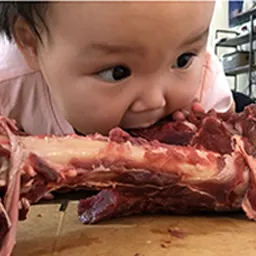
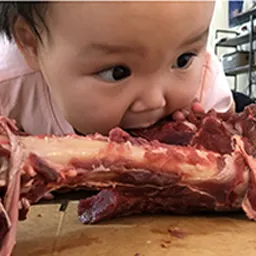
But because of my education as a BTA, my view was changed because I believed, “If science can say it is so, it must be so. They study this and have a way more thorough understanding of what they are talking about. I will just believe them.” I was also under the impression, until my last year of the education, that only university attendees could access scientific studies, so I never bothered to try and search (idk why I thought that).
But as I said, the question arose, so I started to research and asked myself many questions to answer this. I never made a distinct document for this topic specifically. I usually do this for anything I question myself on so I can quickly access studies or proof of my views, as some are controversial, just like this, even though it is hardly debatable if you look at some actual studies and evidence.
By now, I have started to live hypercarnivorously again, but I could be more optimal. My problem is simply that I can't stand the taste and texture of raw meat, so I have to cook and prepare it in a way that it's tasty, the bioavailability isn't eliminated completely, and I still get some nutrients and it's tender. I'm really picky, apparently. “Wow! What a cunt!” lmao.
So without further ado, I will continue with this document on .org because I'm on here more than in my “documents,” so I can more quickly go back to this file or post than to my files ngl.
Post music is:
So the first question iis:
Which kind of diets exist?
First of all, we need to distinguish ourselves from other animals and how they eat. There are many “-vores,” and I've stumbled upon some really weirdly sounding ones, but I guess they just exist. Some are frugivores (A frugivore is an animal that thrives mostly on fruits. Approximately 20% of mammalian herbivores eat fruit.) or cucinivores (Cucinivore is a dietary classification for species that rely primarily on non-thermally and/or thermally prepared (cooked) foods for sustenance.), so really exotic sounding. We will simply discuss omnivores, herbivores, and carnivores.
Omnivores are classified to be animals which can eat both plant and animal matter (sounds like shit? Animal matter, why would they say it like that). Obtaining energy and nutrients from plant and animal matter, omnivores digest carbohydrates, protein, fat, and fiber and metabolize the nutrients and energy of the sources absorbed [2].
Herbivores are animals which anatomically or physiologically evolved to feed on plants, especially upon vascular tissues such as foliage, fruits, or seeds, as the main component of their diet [3].
A carnivore, however, spoiler; “what we are!1!”, or a meat-eater, is an animal or plant whose nutrition and energy requirements are met by consumption of animal tissues (mainly muscle, fat, and other soft tissues) as food, whether through predation or scavenging (this will be important) [4]. As the source states also, carnivores are classified as hypocarnivores, less than 30%; mesocarnivores, more than 30%; and hypercarnivores, which have a diet consisting of 70%, or more, animal tissues.
Now, the rest of the 100% for hypercarnivores isn’t “needed” per se; it just provides some micronutrients but isn’t used as a primary fuel source in the way grass is for a cow or leaves are for a koala.
Onto the next one!
Which Protein is more optimal for Humans, plant- versus Animal-based Protein sources?
A little biology lesson for the introduction of this question, beware iqcels, this could get slightly biochemical and, well, difficult for you to understand, so I will keep it as simple as possible:
Proteins are simply just folded chains of amino acids. Our body “creates” these amino acid chains in the ribosome. After a successful transcription [5], the RNA proceeds from the nucleus to the small subunit of the ribosome [6], and TRNA’s bind to the respective position and then create an amino acid chain (AAC). The Amino Acids are bound to the “top” of the TRNA, which change “slots” in the ribosome and then attach to each other via a peptide bond, somewhat easy visualization of that [7].
Protein source matters because not all amino acids can be produced by the body; we must obtain the essential ones from the food we eat to successfully build complete protein chains. Whilst I don’t really like to use the Digestible Indispensable Amino Acid Score (DIAAS), we will use it for now… Animal Proteins usually have a DIAAS of about 100% or higher, this means that 95-100% of the protein is digested and absorbed. And plant proteins, in comparison, only reach 70-90%, this is mostly due to the fiber or cellulose walls that are hard (or impossible) for humans to break down. Additionally, plants contain anti-nutrients like phytates, oxalates [8], tannins [9,10], and goitrogen is debatable to be the WORST antinutrient [11] because it is an inhibitor for iodine uptake in the thyroid gland, suppressing thyroid hormone expression [12].
Now, as I said before “[…] this is mostly due to the fiber or cellulose walls that are hard (or impossible) for humans to break down […]” we will continue discuss this more thoroughly following the next question.
What biological characteristics determine whether humans are carnivorous, herbivorous, omnivorous, or something else?
So, debating this topic I always like to use scavenger animals like vultures and hyenas, there are many factors to determine these characteristics. The best way we can determine this is by comparison firstly, we compare human Tooth morphology, jaw movement, stomach acidity (see where I was going with the vultures and hyenas? No? Well, I’ll explain it anyway), intestinal length, colon size, hand structure (predation ability) to Herbivores, Omnivores and Carnivores, so comparative anatomy, Evolutionary Biology, Nutritional Requirements and if that’s not enough I’ll also do, fuck shit cause that should be enough.
Comparative Anatomy
So to proceed, as an Herbivore we’ll look at a simple highland cow, Bos taurus. First, look at the tooth morphology. Unlike a carnivore, a cow has no upper incisors; instead, they have a tough, fibrous dental pad to tear grass against their lower teeth [15]. Their cheek teeth are massive, flat grinders designed to crush cellulose, not slice meat. This dictates their jaw movement: they can’t chop up or down like a human or a hyena. Their jaw is built for a wide, side-to-side grinding motion, to break down plant fibers.
Then there’s the gut. A cow’s stomach acidity is very very different to a carnivores. The first three chambers (the rumen) [16] are barely acidic, holding a pH of 5.5 to 7.0 [17] to host the bacteria needed to ferment grass, like Fibrobacter succhinogenes, Ruminococcus flavefaciens, Rominucoccus albus and Butyrivibrio fibrisolvens [18] to name a few. It’s only in the final chamber, the abomasum (the true stomach), that acidity spikes to 2.0–4.0, similar to a human. But the real giveaway is the intestinal length. A cow’s small intestine runs 30 to 40 meters long, roughly 30 times (the size of my cock compared to yours) their body length. Their colon is equally massive, featuring a complex spiral structure to squeeze every drop of nutrient out of low-quality vegetation.
Finally, check the hand structure (or lack thereof). Cows have hooves, not hands. They have zero dexterity, no claws, and no ability to grasp [19]. They are herbivores with zero predation ability. They don’t hunt; they run or kick to survive. [20]
Now well look at the Omnivore for the same points, let’s take a basic American Crow, Corvus brachyrhynchos. Checking the tooth morphology we see. Unlike the cow’s flat grinders, the crow has a sharp, pointed beak with no teeth at all. This isn’t a grinding tool for fiber (grass); it’s a multi-purpose pick. It’s strong enough to crack nuts and hard insect shells, but sharp enough to tear flesh and rip into carrion. This versatility dictates their jaw movement: they use a powerful up-and-down pecking motion to crush or tear, combined with a side-to-side head tilt to manipulate food, rather than the side-to-side grind of an herbivore.
Their stomach acidity is a kinda middle ground. They possess a gizzard (a muscular stomach) to mechanically grind food since they lack teeth [21], but the chemical stomach (proventriculus) is highly acidic, dropping to a pH of 1.5 to 2.5 [22].
The intestinal length is roughly 3 to 4 times their body length. It’s long enough to absorb nutrients from seeds and grains, but short enough to process high-energy meat quickly without the massive fermentation vats a cow needs. Their colon is very short and simple, designed for rapid elimination of waste to keep them light for flight, lacking the complex spiral fermentation structure of the herbivore.
Then the hand structure (predation ability). Crows don’t have hands (no shit), they have feet with sharp, curved claws and a specialized opposable hallux (toe). They are dexterous enough to manipulate objects, use tools, and even hold food. In terms of predation, they are active hunters and scavengers. They will hunt small rodents, lizards, and insects, but they also raid nests and scavenge carrion. They have the physical tools to kill and the digestive system to process it all.
And then Finally, we’ve arrived at the carnivore, for this well take the spotted hyena, Crocuta Crocuta.
Looking at the tooth morphology first. These aren’t grinders or tearers; they are bonecrushers. Hyenas have massive, pyramidal premolars and carnassial teeth designed with a broad base and sharp edges specifically to pulverize skeletal material. Unlike the cow’s flat ridges or the crow’s pointed beak, the hyena’s teeth are built to snap through bone and access the marrow inside, a nutrient source most animals can’t touch [23] (another point to eat marrow cause it’s just so good a whole species dental signature has evolved to consume it).
This dictates their jaw movement. The hyena doesn’t grind side-to-side or peck up-and-down. It generates a vertical crushing force of roughly 1,100 PSI, one of the strongest bite forces in the animal kingdom, surpassing even lions [23]. Their skull architecture, with a prominent sagittal crest [25], anchors massive jaw muscles that allow them to clamp down with enough pressure to shatter bone in a single bite [24].
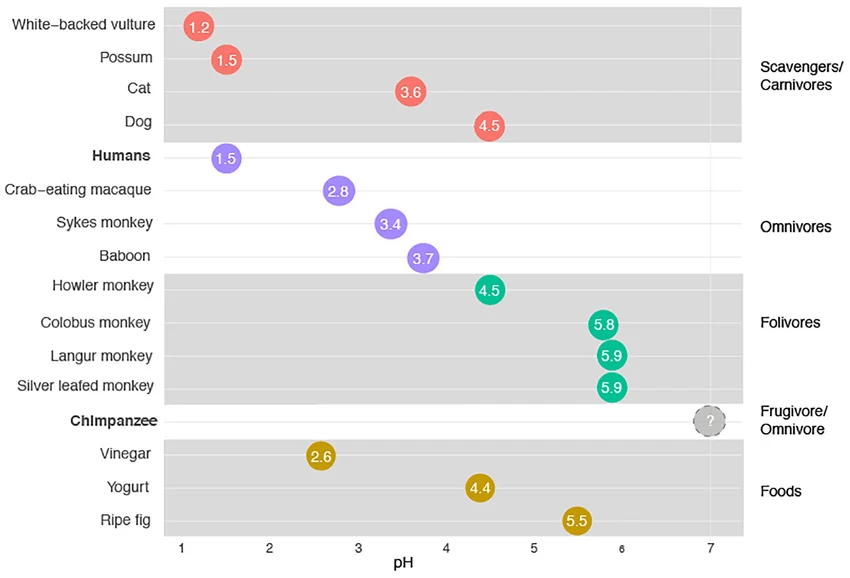
Then there’s the stomach acidity. To survive on rotting carrion and raw bone. It maintains a pH of roughly 1.5 to 2.0, which is among the most acidic in the animal kingdom [26].
The intestinal length and colon size reflect this high-energy, low-fiber diet. The gut is extremely short relative to body size, often just 4 to 5 times the body length. There is no need for long fermentation vats; protein and fat from meat are digested rapidly [27]. (If you’re noticing I’m cutting this short because I don’t like how long it will get)
Finally, the hand structure (predation ability). Hyenas have paws with non-retractable claws, but their real weapon is the mouth. They are active, social hunters capable of taking down large prey like zebras and wildebeest in packs, not just scavengers. They have the dexterity to manipulate carcasses and the sheer power to consume the entire animal, bones and all.
Now to the fun part, let's compare this to us, humans, Homo sapiens.
Looking at the tooth morphology again, we have upper incisors, like carnivores, though we miss the prominent canines or strong bite force. We most likely make up for it with our intelligence to use very advanced weaponry to kill our prey. We also have the vertical movement of our jaw to ensure bite and ripping to an extent. We can also slightly move it side-to-side, but it is uncomfortable to eat in this way, and vertical chewing motion is more comfortable, suggesting meat consumption still, or the argument that we are hypercarnivores, remember? 70% of the diet consists of meat.
Now to the stomach acid, my favorite argument; many people, like the biologist Adriana Heguy from the Forbes article [27], say we are omnivores, but the data just doesn’t support that. We have the stomach acid of a species fitting perfectly into the “carnivore” part of any chart, taking this one for now [26]. And people still say we are omnivores. If you remember, an omnivore is a kind of animal which needs a mixed diet to survive, we just don’t. We are perfectly fine with every kind of nutrient from animal tissue. And besides, every organism evolves to be as efficient as possible, it would be too energetically expensive for the body to upkeep the rapid renewing of the stomach lining due to the stomach acidity if we wouldn’t actually need it.
Our intestinal length and colon size are perfectly comparable to a Panthera leo or Crocuta crocuta. In similar relation, our intestinal length is about 2-3x our body height because we are bipedal, and our colon size is also only 1.5 meters long, only suggesting EVEN MORE that we resemble an animal like the lion or hyena. You see where I'm getting at? I just don’t get how scientists can assume we are Omnivores if all criteria for a carnivorous animal are totally profitable to us. Now the hands are trivial; we evolved to climb and throw weapons (spears/sharp sticks), so we don’t kill using our “hands”.
Evolutionary Biology
Some more evidence suggesting we are hypercarnivores.
Fossil tooth wear patterns reveal changes in early human diets. Australopithecus (4-2 mya) [28] had heavily worn teeth with large pits, indicating they often chewed hard, abrasive foods such as nuts, seeds, and roots. Later, members of the genus Homo (2 mya+) [29] developed smaller teeth with wear patterns more suited to slicing than crushing. This suggests a shift toward softer, higher-quality foods, including meat and possibly cooked starchy plants. The evidence indicates that as Homo evolved, nutrient-dense foods that required less chewing became a more important part of the diet.
Stable isotope analysis of fossil bones helps reveal what early humans ate. Higher levels of nitrogen-15 in Homo erectus fossils indicate substantial consumption of animal protein, comparable to that of modern carnivores. Carbon-13 ratios show that early humans consumed both C3 plants (such as fruits and leaves) and C4 resources (such as grasses, sedges, underground tubers, or animals that fed on these plants). This evidence suggests that Ancestors were flexible. They ate whatever was available, but the nitrogen signature confirms meat was a critical, non-negotiable part of the diet for brain expansion.
Animal bones found at early human archaeological sites provide direct evidence of meat consumption. Sites such as Olduvai Gorge [30] and Koobi Fora [31] contain bones with stone-tool cut marks, showing that early humans processed animal carcasses. Many bones were deliberately broken to extract nutrient-rich marrow. The pattern of cut marks and predator tooth marks indicates that early humans both scavenged and hunted animals. Overall, meat and marrow were central. Whether hunted or scavenged, the ability to access animal protein was a primary driver of biological evolution.
Stone tools provide evidence that early humans actively processed meat. Oldowan (2.6 mya) tools were used to cut meat and break bones, while Acheulean handaxes (1.7 mya) were suited for heavier tasks such as butchering and possibly digging for tubers. These tools helped early humans access foods that would have been difficult to consume using teeth alone (like monkeys using sticks to get ants). Later evolutionary changes, including smaller guts in species such as Homo erectus, is linked to improved food processing. The invention of tools was a direct response to a high-meat, high-starch diet. You cannot survive on raw meat and tough tubers without tools to process them efficiently.
Nutritional Requirements
Now, let’s get to the Nutritional Requirements. This is where the “humans are naturally vegan” or “my body is a garden not a graveyard” crowd usually tries to pull a fast one, so let’s look at the hard constraints. What nutrients must humans obtain, and where do the limits occur?
The big questions are: Can humans survive on only plants? Yes, but only if you supplement like a biohacker and pray your gut absorbs enough iron. Can humans survive on only animal foods? Absolutely, and we did for long stretches of our history. Which nutrients become limiting? This is it. If you go 100% plant, Vitamin B12 is the immediate showstopper; it’s not in plants, it’s made by bacteria in animal guts, and without it, you get nerve damage and anemia. “If you go 100% animal, Fiber vanishes (which messes up your gut microbiome)” Is what some might say but it’s just not true, it doesn’t mess up your gut microbiome lmao, we have too little microbia in our gut anyway, if you compare it to our ancestors. Besides fiber is also an antinutrient and a good one at that [32, 33]. And you might run low on Vitamin C if you don’t eat raw organ meats, though cooked meat won’t kill you instantly.
DHA/EPA is hard to get from plants; you have to convert ALA from flax or algae, and humans are terrible at that conversion rate [34]. Taurine? Almost non-existent in plants, and it’s critical for heart and eye health. Vitamin C? We lost the ability to make it ourselves, so we must get it from outside, whether that’s an orange (this contains soluble fiber, all fruits contain soluble and insoluble fiber but fruits are acceptable) or a raw liver.
Conclusion
So in summary, we get better nutrients from animals, our MPS and protein absorption is triggered in favour to animal protein, we are physically made to eat meat and even rotting meat or raw meat and we have always eaten in a way that suggests we were and still are hypercarnivores. Eating any other way is suboptimal and counterintuitive. So listen to Goatis and Aajonus, with a grain of salt, but still do.
THIS IS NOT MEDICAL ADVICE; THIS IS AN EFFORT TO DOCUMENT MY OWN PERSONAL RESEARCH PURPOSES DO NOT ATTEMPT ANY OF THIS IF YOU ARE UNSURE AND CONTINUE TO READ ALL OF THE SOURCES. or just trust me bro
Pastebin sources:
Sources:
[1] Chinese baby eating raw meat: copy it from the pastebin above .org keeps making it a embed automatically
[2] Omnivore description: https://en.wikipedia.org/wiki/Omnivore
[3] Herbivore description: https://en.wikipedia.org/wiki/Herbivore
[4] Carnivore description: https://en.wikipedia.org/wiki/Carnivore
[5] Transcription: https://en.wikipedia.org/wiki/Transcription_(biology)
[6] subunit of the ribosome and general information, probably, I’m doing most of this from the top of my head: https://en.wikipedia.org/wiki/Ribosome
[7] Animation of Translation: https://upload.wikimedia.org/wikipedia/commons/9/94/Protein_translation.gif
[8] Antinutrients: https://en.wikipedia.org/wiki/Antinutrient
[9] Tannins as a Antinutrient, just do ctrl+F and enter “Properties for animal nutrition”: https://en.wikipedia.org/wiki/Tannin
[10] Another Tannin document: https://pmc.ncbi.nlm.nih.gov/articles/PMC9007702/
[11] Goitrogens: https://en.wikipedia.org/wiki/Goitrogen
[12] Goitrogens intefere with Iodine uptake by the thyroid gland: https://www.jcdr.net/articles/PDF/7092/15195_CE(RA1)_F(T)_PF1(Bm_Om)_PFA(AK)_PF2(PAG).pdf
[13] Goatis: https://www.youtube.com/@GoatisReviews
[14] Aajonus Vonderplanitz: https://en.wikipedia.org/wiki/Aajonus_Vonderplanitz
[15] Bor taurus teeth anatomy: https://veterinaryanatomyguide.com/cow-teeth-anatomy/
[16] Bor taurus gut anatomy: https://extension.umn.edu/dairy-nutrition/ruminant-digestive-system
[17] Rumen and Stomach pH: https://books.publisso.de/en/publisso_gold/publishing/books/overview/53/186
[18] Bacteria in a cows rumen: https://www.mdpi.com/2076-2615/12/21/3020
[19] Cow hooves: https://diamondhoofcare.com/blog/ho...he-differences-and-importance-of-proper-care/
[20] I don’t seriously need a source to prove that cows kick, right?
[21] Gizzard: https://en.wikipedia.org/wiki/Gizzard
[22] Proventriculus: https://en.wikipedia.org/wiki/Proventriculus
[23] Hyena Biting: https://www.africa-safaris.com/Hyena-Bite-Force
[24] Hyena Skull: https://taxidermyandskulls.com/product/spotted-hyena-skull-for-sale/
[25] Sagittal Crest: https://en.wikipedia.org/wiki/Sagittal_crest
[26] Stomach pH as a function of animal species: https://www.researchgate.net/figure...s-neutral-Data-for-chimpanzees_fig1_339359018
[27] Hyenas can eat rotting meat: https://www.forbes.com/sites/quora/...ight-not-fare-too-badly-on-a-scavengers-diet/
[28] Australopithecus: https://en.wikipedia.org/wiki/Australopithecus
[29] Early Homos: https://en.wikipedia.org/wiki/Early_modern_human
[30] Olduvai Gorge: https://en.wikipedia.org/wiki/Olduvai_Gorge
[31] Koobi Fora: https://en.wikipedia.org/wiki/Koobi_Fora
[32] Antinutrient, Fiber P1: https://pubmed.ncbi.nlm.nih.gov/8988315/
[33] Antinutrient, Fiber P2: https://www.suburbandiagnostics.com/blog/fiber-the-anti-nutrient/
[34] ALA conversion rate: https://pubmed.ncbi.nlm.nih.gov/9637947/
Sources are at the end and throughout marked with these "[20]", enjoy!
Which diet is optimal? Vegan, Vegetarian or Carnivorous?
We have all seen Goatis [13] or Aajonus Vonderplanitz [14] talking about consuming raw milk or raw meat. As I'm a Biological Technical Assistant, I was fed the information that raw dietary products are potentially dangerous, as I myself watched bacteria grow and have worked with dangerous bacterial, viral and fungi strains. So I never questioned that statement, that “raw is bad!” Until my TikTok feed was filled with Goatis eating raw meat on the street or Aajonus preaching to us to just “drink that raw milk!” Whilst my mother fed me bone marrow and actually a good diet as a child, I cannot say that it has hurt me nor impeded my life in any way. The occasional raw milk from my granny's neighbour's farm also tasted pretty good.
But because of my education as a BTA, my view was changed because I believed, “If science can say it is so, it must be so. They study this and have a way more thorough understanding of what they are talking about. I will just believe them.” I was also under the impression, until my last year of the education, that only university attendees could access scientific studies, so I never bothered to try and search (idk why I thought that).
But as I said, the question arose, so I started to research and asked myself many questions to answer this. I never made a distinct document for this topic specifically. I usually do this for anything I question myself on so I can quickly access studies or proof of my views, as some are controversial, just like this, even though it is hardly debatable if you look at some actual studies and evidence.
By now, I have started to live hypercarnivorously again, but I could be more optimal. My problem is simply that I can't stand the taste and texture of raw meat, so I have to cook and prepare it in a way that it's tasty, the bioavailability isn't eliminated completely, and I still get some nutrients and it's tender. I'm really picky, apparently. “Wow! What a cunt!” lmao.
So without further ado, I will continue with this document on .org because I'm on here more than in my “documents,” so I can more quickly go back to this file or post than to my files ngl.
Post music is:
So the first question iis:
Which kind of diets exist?
First of all, we need to distinguish ourselves from other animals and how they eat. There are many “-vores,” and I've stumbled upon some really weirdly sounding ones, but I guess they just exist. Some are frugivores (A frugivore is an animal that thrives mostly on fruits. Approximately 20% of mammalian herbivores eat fruit.) or cucinivores (Cucinivore is a dietary classification for species that rely primarily on non-thermally and/or thermally prepared (cooked) foods for sustenance.), so really exotic sounding. We will simply discuss omnivores, herbivores, and carnivores.
Omnivores are classified to be animals which can eat both plant and animal matter (sounds like shit? Animal matter, why would they say it like that). Obtaining energy and nutrients from plant and animal matter, omnivores digest carbohydrates, protein, fat, and fiber and metabolize the nutrients and energy of the sources absorbed [2].
Herbivores are animals which anatomically or physiologically evolved to feed on plants, especially upon vascular tissues such as foliage, fruits, or seeds, as the main component of their diet [3].
A carnivore, however, spoiler; “what we are!1!”, or a meat-eater, is an animal or plant whose nutrition and energy requirements are met by consumption of animal tissues (mainly muscle, fat, and other soft tissues) as food, whether through predation or scavenging (this will be important) [4]. As the source states also, carnivores are classified as hypocarnivores, less than 30%; mesocarnivores, more than 30%; and hypercarnivores, which have a diet consisting of 70%, or more, animal tissues.
Now, the rest of the 100% for hypercarnivores isn’t “needed” per se; it just provides some micronutrients but isn’t used as a primary fuel source in the way grass is for a cow or leaves are for a koala.
Onto the next one!
Which Protein is more optimal for Humans, plant- versus Animal-based Protein sources?
A little biology lesson for the introduction of this question, beware iqcels, this could get slightly biochemical and, well, difficult for you to understand, so I will keep it as simple as possible:
Proteins are simply just folded chains of amino acids. Our body “creates” these amino acid chains in the ribosome. After a successful transcription [5], the RNA proceeds from the nucleus to the small subunit of the ribosome [6], and TRNA’s bind to the respective position and then create an amino acid chain (AAC). The Amino Acids are bound to the “top” of the TRNA, which change “slots” in the ribosome and then attach to each other via a peptide bond, somewhat easy visualization of that [7].
Protein source matters because not all amino acids can be produced by the body; we must obtain the essential ones from the food we eat to successfully build complete protein chains. Whilst I don’t really like to use the Digestible Indispensable Amino Acid Score (DIAAS), we will use it for now… Animal Proteins usually have a DIAAS of about 100% or higher, this means that 95-100% of the protein is digested and absorbed. And plant proteins, in comparison, only reach 70-90%, this is mostly due to the fiber or cellulose walls that are hard (or impossible) for humans to break down. Additionally, plants contain anti-nutrients like phytates, oxalates [8], tannins [9,10], and goitrogen is debatable to be the WORST antinutrient [11] because it is an inhibitor for iodine uptake in the thyroid gland, suppressing thyroid hormone expression [12].
Now, as I said before “[…] this is mostly due to the fiber or cellulose walls that are hard (or impossible) for humans to break down […]” we will continue discuss this more thoroughly following the next question.
What biological characteristics determine whether humans are carnivorous, herbivorous, omnivorous, or something else?
So, debating this topic I always like to use scavenger animals like vultures and hyenas, there are many factors to determine these characteristics. The best way we can determine this is by comparison firstly, we compare human Tooth morphology, jaw movement, stomach acidity (see where I was going with the vultures and hyenas? No? Well, I’ll explain it anyway), intestinal length, colon size, hand structure (predation ability) to Herbivores, Omnivores and Carnivores, so comparative anatomy, Evolutionary Biology, Nutritional Requirements and if that’s not enough I’ll also do, fuck shit cause that should be enough.
Comparative Anatomy
So to proceed, as an Herbivore we’ll look at a simple highland cow, Bos taurus. First, look at the tooth morphology. Unlike a carnivore, a cow has no upper incisors; instead, they have a tough, fibrous dental pad to tear grass against their lower teeth [15]. Their cheek teeth are massive, flat grinders designed to crush cellulose, not slice meat. This dictates their jaw movement: they can’t chop up or down like a human or a hyena. Their jaw is built for a wide, side-to-side grinding motion, to break down plant fibers.
Then there’s the gut. A cow’s stomach acidity is very very different to a carnivores. The first three chambers (the rumen) [16] are barely acidic, holding a pH of 5.5 to 7.0 [17] to host the bacteria needed to ferment grass, like Fibrobacter succhinogenes, Ruminococcus flavefaciens, Rominucoccus albus and Butyrivibrio fibrisolvens [18] to name a few. It’s only in the final chamber, the abomasum (the true stomach), that acidity spikes to 2.0–4.0, similar to a human. But the real giveaway is the intestinal length. A cow’s small intestine runs 30 to 40 meters long, roughly 30 times (the size of my cock compared to yours) their body length. Their colon is equally massive, featuring a complex spiral structure to squeeze every drop of nutrient out of low-quality vegetation.
Finally, check the hand structure (or lack thereof). Cows have hooves, not hands. They have zero dexterity, no claws, and no ability to grasp [19]. They are herbivores with zero predation ability. They don’t hunt; they run or kick to survive. [20]
Now well look at the Omnivore for the same points, let’s take a basic American Crow, Corvus brachyrhynchos. Checking the tooth morphology we see. Unlike the cow’s flat grinders, the crow has a sharp, pointed beak with no teeth at all. This isn’t a grinding tool for fiber (grass); it’s a multi-purpose pick. It’s strong enough to crack nuts and hard insect shells, but sharp enough to tear flesh and rip into carrion. This versatility dictates their jaw movement: they use a powerful up-and-down pecking motion to crush or tear, combined with a side-to-side head tilt to manipulate food, rather than the side-to-side grind of an herbivore.
Their stomach acidity is a kinda middle ground. They possess a gizzard (a muscular stomach) to mechanically grind food since they lack teeth [21], but the chemical stomach (proventriculus) is highly acidic, dropping to a pH of 1.5 to 2.5 [22].
The intestinal length is roughly 3 to 4 times their body length. It’s long enough to absorb nutrients from seeds and grains, but short enough to process high-energy meat quickly without the massive fermentation vats a cow needs. Their colon is very short and simple, designed for rapid elimination of waste to keep them light for flight, lacking the complex spiral fermentation structure of the herbivore.
Then the hand structure (predation ability). Crows don’t have hands (no shit), they have feet with sharp, curved claws and a specialized opposable hallux (toe). They are dexterous enough to manipulate objects, use tools, and even hold food. In terms of predation, they are active hunters and scavengers. They will hunt small rodents, lizards, and insects, but they also raid nests and scavenge carrion. They have the physical tools to kill and the digestive system to process it all.
And then Finally, we’ve arrived at the carnivore, for this well take the spotted hyena, Crocuta Crocuta.
Looking at the tooth morphology first. These aren’t grinders or tearers; they are bonecrushers. Hyenas have massive, pyramidal premolars and carnassial teeth designed with a broad base and sharp edges specifically to pulverize skeletal material. Unlike the cow’s flat ridges or the crow’s pointed beak, the hyena’s teeth are built to snap through bone and access the marrow inside, a nutrient source most animals can’t touch [23] (another point to eat marrow cause it’s just so good a whole species dental signature has evolved to consume it).
This dictates their jaw movement. The hyena doesn’t grind side-to-side or peck up-and-down. It generates a vertical crushing force of roughly 1,100 PSI, one of the strongest bite forces in the animal kingdom, surpassing even lions [23]. Their skull architecture, with a prominent sagittal crest [25], anchors massive jaw muscles that allow them to clamp down with enough pressure to shatter bone in a single bite [24].
Then there’s the stomach acidity. To survive on rotting carrion and raw bone. It maintains a pH of roughly 1.5 to 2.0, which is among the most acidic in the animal kingdom [26].
The intestinal length and colon size reflect this high-energy, low-fiber diet. The gut is extremely short relative to body size, often just 4 to 5 times the body length. There is no need for long fermentation vats; protein and fat from meat are digested rapidly [27]. (If you’re noticing I’m cutting this short because I don’t like how long it will get)
Finally, the hand structure (predation ability). Hyenas have paws with non-retractable claws, but their real weapon is the mouth. They are active, social hunters capable of taking down large prey like zebras and wildebeest in packs, not just scavengers. They have the dexterity to manipulate carcasses and the sheer power to consume the entire animal, bones and all.
Now to the fun part, let's compare this to us, humans, Homo sapiens.
Looking at the tooth morphology again, we have upper incisors, like carnivores, though we miss the prominent canines or strong bite force. We most likely make up for it with our intelligence to use very advanced weaponry to kill our prey. We also have the vertical movement of our jaw to ensure bite and ripping to an extent. We can also slightly move it side-to-side, but it is uncomfortable to eat in this way, and vertical chewing motion is more comfortable, suggesting meat consumption still, or the argument that we are hypercarnivores, remember? 70% of the diet consists of meat.
Now to the stomach acid, my favorite argument; many people, like the biologist Adriana Heguy from the Forbes article [27], say we are omnivores, but the data just doesn’t support that. We have the stomach acid of a species fitting perfectly into the “carnivore” part of any chart, taking this one for now [26]. And people still say we are omnivores. If you remember, an omnivore is a kind of animal which needs a mixed diet to survive, we just don’t. We are perfectly fine with every kind of nutrient from animal tissue. And besides, every organism evolves to be as efficient as possible, it would be too energetically expensive for the body to upkeep the rapid renewing of the stomach lining due to the stomach acidity if we wouldn’t actually need it.
Our intestinal length and colon size are perfectly comparable to a Panthera leo or Crocuta crocuta. In similar relation, our intestinal length is about 2-3x our body height because we are bipedal, and our colon size is also only 1.5 meters long, only suggesting EVEN MORE that we resemble an animal like the lion or hyena. You see where I'm getting at? I just don’t get how scientists can assume we are Omnivores if all criteria for a carnivorous animal are totally profitable to us. Now the hands are trivial; we evolved to climb and throw weapons (spears/sharp sticks), so we don’t kill using our “hands”.
Evolutionary Biology
Some more evidence suggesting we are hypercarnivores.
Fossil tooth wear patterns reveal changes in early human diets. Australopithecus (4-2 mya) [28] had heavily worn teeth with large pits, indicating they often chewed hard, abrasive foods such as nuts, seeds, and roots. Later, members of the genus Homo (2 mya+) [29] developed smaller teeth with wear patterns more suited to slicing than crushing. This suggests a shift toward softer, higher-quality foods, including meat and possibly cooked starchy plants. The evidence indicates that as Homo evolved, nutrient-dense foods that required less chewing became a more important part of the diet.
Stable isotope analysis of fossil bones helps reveal what early humans ate. Higher levels of nitrogen-15 in Homo erectus fossils indicate substantial consumption of animal protein, comparable to that of modern carnivores. Carbon-13 ratios show that early humans consumed both C3 plants (such as fruits and leaves) and C4 resources (such as grasses, sedges, underground tubers, or animals that fed on these plants). This evidence suggests that Ancestors were flexible. They ate whatever was available, but the nitrogen signature confirms meat was a critical, non-negotiable part of the diet for brain expansion.
Animal bones found at early human archaeological sites provide direct evidence of meat consumption. Sites such as Olduvai Gorge [30] and Koobi Fora [31] contain bones with stone-tool cut marks, showing that early humans processed animal carcasses. Many bones were deliberately broken to extract nutrient-rich marrow. The pattern of cut marks and predator tooth marks indicates that early humans both scavenged and hunted animals. Overall, meat and marrow were central. Whether hunted or scavenged, the ability to access animal protein was a primary driver of biological evolution.
Stone tools provide evidence that early humans actively processed meat. Oldowan (2.6 mya) tools were used to cut meat and break bones, while Acheulean handaxes (1.7 mya) were suited for heavier tasks such as butchering and possibly digging for tubers. These tools helped early humans access foods that would have been difficult to consume using teeth alone (like monkeys using sticks to get ants). Later evolutionary changes, including smaller guts in species such as Homo erectus, is linked to improved food processing. The invention of tools was a direct response to a high-meat, high-starch diet. You cannot survive on raw meat and tough tubers without tools to process them efficiently.
Nutritional Requirements
Now, let’s get to the Nutritional Requirements. This is where the “humans are naturally vegan” or “my body is a garden not a graveyard” crowd usually tries to pull a fast one, so let’s look at the hard constraints. What nutrients must humans obtain, and where do the limits occur?
The big questions are: Can humans survive on only plants? Yes, but only if you supplement like a biohacker and pray your gut absorbs enough iron. Can humans survive on only animal foods? Absolutely, and we did for long stretches of our history. Which nutrients become limiting? This is it. If you go 100% plant, Vitamin B12 is the immediate showstopper; it’s not in plants, it’s made by bacteria in animal guts, and without it, you get nerve damage and anemia. “If you go 100% animal, Fiber vanishes (which messes up your gut microbiome)” Is what some might say but it’s just not true, it doesn’t mess up your gut microbiome lmao, we have too little microbia in our gut anyway, if you compare it to our ancestors. Besides fiber is also an antinutrient and a good one at that [32, 33]. And you might run low on Vitamin C if you don’t eat raw organ meats, though cooked meat won’t kill you instantly.
DHA/EPA is hard to get from plants; you have to convert ALA from flax or algae, and humans are terrible at that conversion rate [34]. Taurine? Almost non-existent in plants, and it’s critical for heart and eye health. Vitamin C? We lost the ability to make it ourselves, so we must get it from outside, whether that’s an orange (this contains soluble fiber, all fruits contain soluble and insoluble fiber but fruits are acceptable) or a raw liver.
Conclusion
So in summary, we get better nutrients from animals, our MPS and protein absorption is triggered in favour to animal protein, we are physically made to eat meat and even rotting meat or raw meat and we have always eaten in a way that suggests we were and still are hypercarnivores. Eating any other way is suboptimal and counterintuitive. So listen to Goatis and Aajonus, with a grain of salt, but still do.
THIS IS NOT MEDICAL ADVICE; THIS IS AN EFFORT TO DOCUMENT MY OWN PERSONAL RESEARCH PURPOSES DO NOT ATTEMPT ANY OF THIS IF YOU ARE UNSURE AND CONTINUE TO READ ALL OF THE SOURCES. or just trust me bro
Pastebin sources:
Sources:
[1] Chinese baby eating raw meat: copy it from the pastebin above .org keeps making it a embed automatically
[2] Omnivore description: https://en.wikipedia.org/wiki/Omnivore
[3] Herbivore description: https://en.wikipedia.org/wiki/Herbivore
[4] Carnivore description: https://en.wikipedia.org/wiki/Carnivore
[5] Transcription: https://en.wikipedia.org/wiki/Transcription_(biology)
[6] subunit of the ribosome and general information, probably, I’m doing most of this from the top of my head: https://en.wikipedia.org/wiki/Ribosome
[7] Animation of Translation: https://upload.wikimedia.org/wikipedia/commons/9/94/Protein_translation.gif
[8] Antinutrients: https://en.wikipedia.org/wiki/Antinutrient
[9] Tannins as a Antinutrient, just do ctrl+F and enter “Properties for animal nutrition”: https://en.wikipedia.org/wiki/Tannin
[10] Another Tannin document: https://pmc.ncbi.nlm.nih.gov/articles/PMC9007702/
[11] Goitrogens: https://en.wikipedia.org/wiki/Goitrogen
[12] Goitrogens intefere with Iodine uptake by the thyroid gland: https://www.jcdr.net/articles/PDF/7092/15195_CE(RA1)_F(T)_PF1(Bm_Om)_PFA(AK)_PF2(PAG).pdf
[13] Goatis: https://www.youtube.com/@GoatisReviews
[14] Aajonus Vonderplanitz: https://en.wikipedia.org/wiki/Aajonus_Vonderplanitz
[15] Bor taurus teeth anatomy: https://veterinaryanatomyguide.com/cow-teeth-anatomy/
[16] Bor taurus gut anatomy: https://extension.umn.edu/dairy-nutrition/ruminant-digestive-system
[17] Rumen and Stomach pH: https://books.publisso.de/en/publisso_gold/publishing/books/overview/53/186
[18] Bacteria in a cows rumen: https://www.mdpi.com/2076-2615/12/21/3020
[19] Cow hooves: https://diamondhoofcare.com/blog/ho...he-differences-and-importance-of-proper-care/
[20] I don’t seriously need a source to prove that cows kick, right?
[21] Gizzard: https://en.wikipedia.org/wiki/Gizzard
[22] Proventriculus: https://en.wikipedia.org/wiki/Proventriculus
[23] Hyena Biting: https://www.africa-safaris.com/Hyena-Bite-Force
[24] Hyena Skull: https://taxidermyandskulls.com/product/spotted-hyena-skull-for-sale/
[25] Sagittal Crest: https://en.wikipedia.org/wiki/Sagittal_crest
[26] Stomach pH as a function of animal species: https://www.researchgate.net/figure...s-neutral-Data-for-chimpanzees_fig1_339359018
[27] Hyenas can eat rotting meat: https://www.forbes.com/sites/quora/...ight-not-fare-too-badly-on-a-scavengers-diet/
[28] Australopithecus: https://en.wikipedia.org/wiki/Australopithecus
[29] Early Homos: https://en.wikipedia.org/wiki/Early_modern_human
[30] Olduvai Gorge: https://en.wikipedia.org/wiki/Olduvai_Gorge
[31] Koobi Fora: https://en.wikipedia.org/wiki/Koobi_Fora
[32] Antinutrient, Fiber P1: https://pubmed.ncbi.nlm.nih.gov/8988315/
[33] Antinutrient, Fiber P2: https://www.suburbandiagnostics.com/blog/fiber-the-anti-nutrient/
[34] ALA conversion rate: https://pubmed.ncbi.nlm.nih.gov/9637947/
Attachments
Last edited:


