
HYPERGAMY & EUGENICS – Two Sides of the Same Evolutionary Force

Atra

Atra

勝者
Joined
Nov 24, 2022
Posts
7,012
Reputation
22,188
Hello everyone,

I can imagine that many of you are already familiar with the topics of Hypergamy and Eugenics. Nevertheless, with this thread I mainly want to educate new users and those who haven’t delved deeply into it yet. I’ll try to explain the connections as clearly and structured as possible.


For a calm and fitting atmosphere while reading, I recommend:


Hypergamy


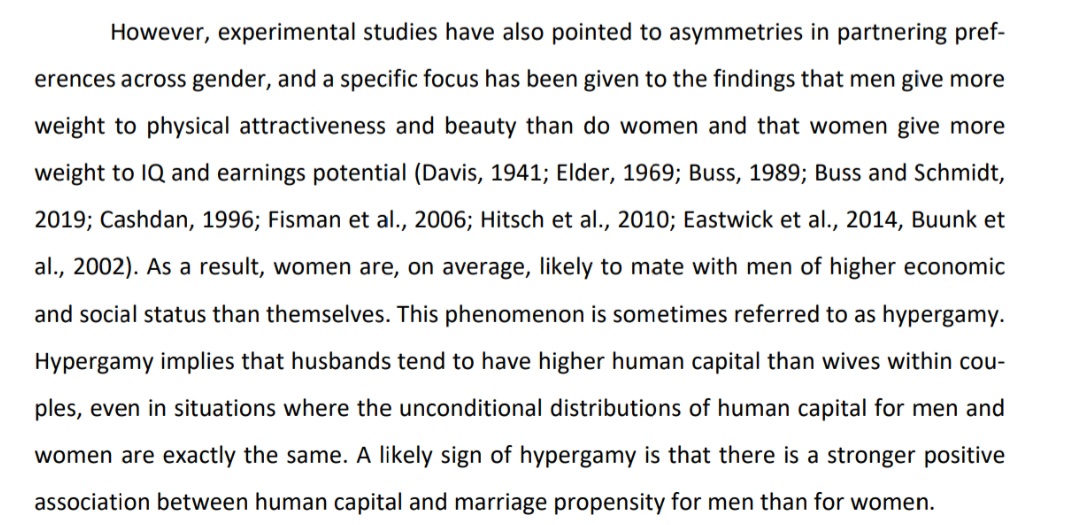
Hypergamy refers to the evolved female tendency to select partners who rank higher in at least one important dimension:


★ Genetic quality (health, facial attractiveness, cognitive ability, immune system

★ Resources and social status

★ Protection and dominance


This is not a modern invention or purely cultural behavior. It has deep biological roots. Because women carry the higher reproductive cost (pregnancy, childbirth, and long-term dependency of offspring), stronger selectivity in mate choice became advantageous over evolutionary time.


A useful distinction is made between short-term and long-term hypergamy:


★ Short-term: Emphasis lies more on immediate genetic signals (symmetry, masculine features, physical dominance).

★ Long-term: Resources and reliability gain greater importance.

IMG 8680


Evolutionary Background


In our evolutionary past, choosing the wrong partner could be life-threatening for a woman and her children. A genetically weak or low-resource male significantly lowered the survival chances of offspring.

Women who instinctively preferred higher-quality partners had a clear reproductive advantage. Over hundreds of thousands of years, this preference became a stable psychological mechanism.

Men, by contrast, could theoretically reproduce with multiple partners. This favored competitive behavior rather than extreme selectivity.

Hypergamy is therefore a form of female sexual selection — one of the strongest evolutionary pressures that has shaped the human gene pool.


Hypergamy as Natural Eugenics


This is where the core connection appears:

Eugenics, in its fundamental sense, means improving the genetic quality of a population through selection.

In pre-modern environments, this process occurred naturally through female mate choice. Women unconsciously favored men with higher genetic promise. These men achieved greater reproductive success. Over generations, the gene pool gradually shifted toward higher average fitness in traits that mattered for survival and reproduction.

This was natural eugenics — not directed by any authority. It was simply the outcome of individual mate preferences acting over long periods of time.

In this view, hypergamy represents the evolutionary expression of eugenic principles, carried out through female choice.


Modern Changes to Hypergamy


The natural constraints that once limited hypergamy have largely been removed in modern environments:

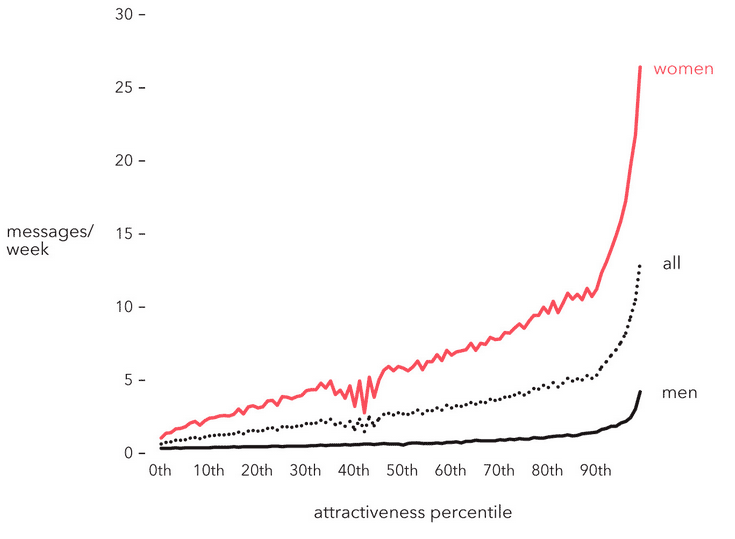
★ Dating apps and social media give women direct access to the highest-ranking men across wide geographic areas.

★ Welfare systems lower the personal costs of suboptimal mate choices.

★ Female economic independence allows longer waiting times or parallel options.


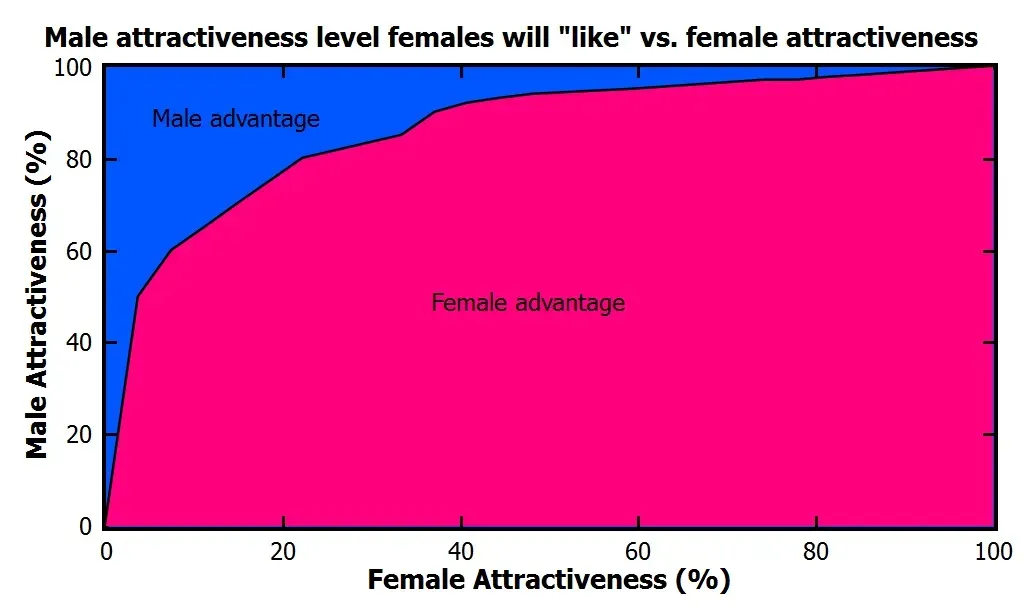
As a result, hypergamy has become significantly amplified. Female attention concentrates more heavily on the top tier of men. Data from dating platforms consistently shows a large gap between how women and men evaluate attractiveness.
IMG 8681


Dysgenics in Modern Society


When natural selection pressures such as hypergamy are weakened or reversed, we observe dysgenics — a gradual decline in the average genetic quality of a population.

Documented patterns in developed societies include:


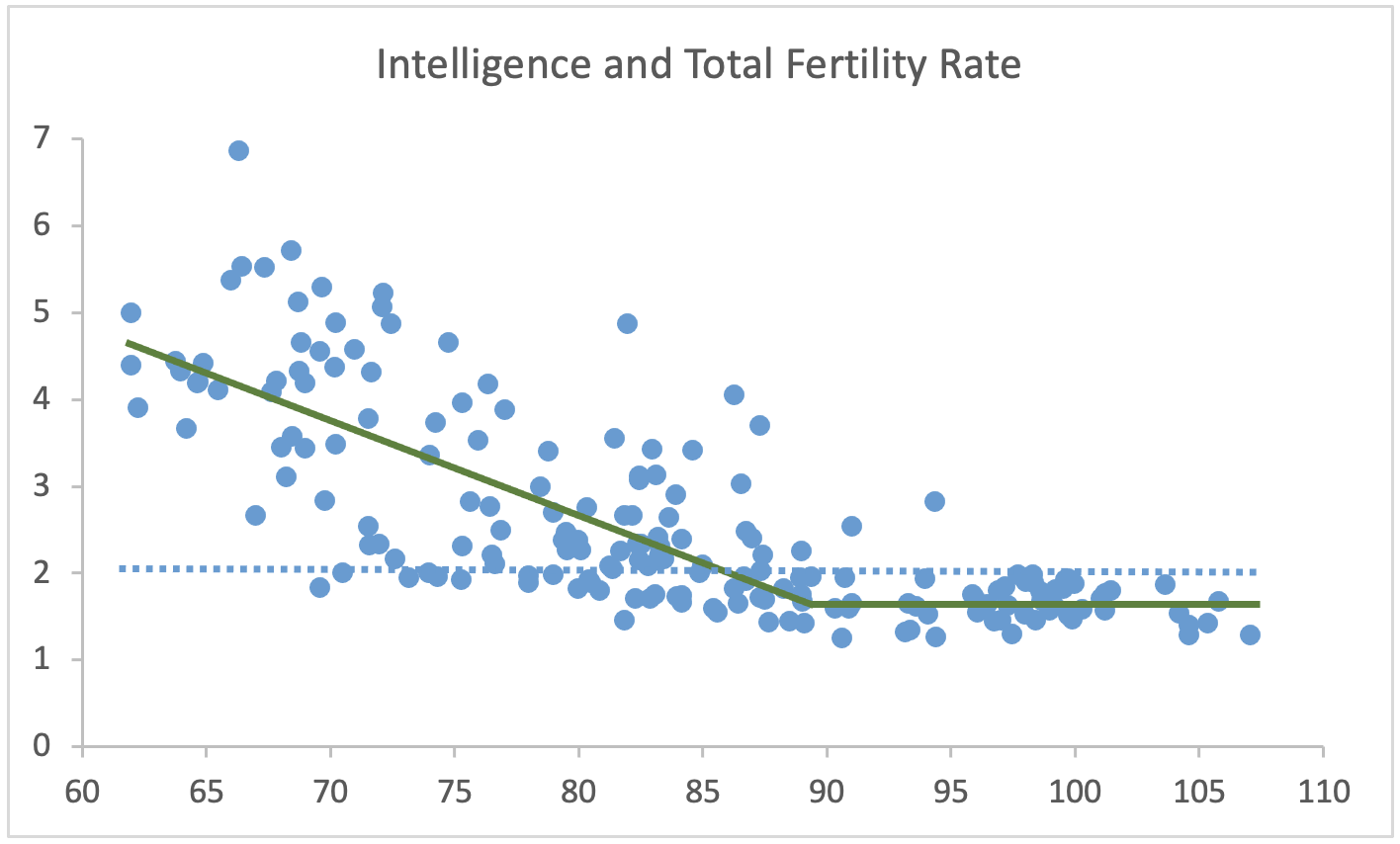
★ Higher-educated women (who statistically also tend to score above average in other fitness-relevant traits) tend to have fewer children on average.

★ Delayed family formation reduces the number of generations within a given timeframe.

★ Reproductive success becomes increasingly concentrated among a smaller segment of men.

★ Welfare systems can partially reduce the reproductive disadvantages of lower fitness.


These trends appear clearly in fertility data by education level and in behavioral genetics research on trait heritability.
IMG 8679


Conclusion

Hypergamy and eugenics describe the same underlying process from two perspectives.

Hypergamy is the evolved mechanism of female selection for genetic and status quality.

Eugenics, in its original biological sense, is the cumulative effect of that selection on the gene pool across generations.

In ancestral environments, both operated in close alignment. In modern environments, technology, welfare systems, and cultural shifts have amplified and partially distorted this selection process. The result is observable dysgenic pressure visible in demographic and genetic patterns.

Understanding these dynamics gives insight not only into individual dating outcomes, but also into broader, long-term population-level developments.


Discussion:

How strongly do you see the link between female hypergamy and natural genetic selection?

Which dysgenic effects appear most clearly supported by evidence?

Should these processes be understood primarily through a biological or a cultural lens?

Only serious, fact-based contributions.

This thread is especially for those who want to understand the mechanisms behind mate choice and genetic selection.


Hypergamy is the evolved female tendency to select partners higher in genetic quality, status, or resources. It exists because women bear higher reproductive costs.

This functions as natural eugenics: better genes are preferentially passed on across generations.

Modern conditions (dating apps, welfare, female independence) have strongly amplified hypergamy, leading to dysgenic trends such as lower fertility among higher-educated groups and reproduction becoming concentrated among fewer men.


Many traits under selection (attractiveness, intelligence, health) are highly heritable.
 
Last edited:

  • +1
  • JFL
Reactions: iblamexyz, Abusive, kisslessvirgin and 6 others
@afroheadluke @kdev @Starborn @Subhuman @Wuzzdio
 
  • +1
Reactions: Niebvll, Mast, unon and 2 others
Hello everyone,

I can imagine that many of you are already familiar with the topics of Hypergamy and Eugenics. Nevertheless, with this thread I mainly want to educate new users and those who haven’t delved deeply into it yet. I’ll try to explain the connections as clearly and structured as possible.


For a calm and fitting atmosphere while reading, I recommend:


Hypergamy


Hypergamy refers to the evolved female tendency to select partners who rank higher in at least one important dimension:


★ Genetic quality (health, facial attractiveness, cognitive ability, immune system

★ Resources and social status

★ Protection and dominance


This is not a modern invention or purely cultural behavior. It has deep biological roots. Because women carry the higher reproductive cost (pregnancy, childbirth, and long-term dependency of offspring), stronger selectivity in mate choice became advantageous over evolutionary time.


A useful distinction is made between short-term and long-term hypergamy:


★ Short-term: Emphasis lies more on immediate genetic signals (symmetry, masculine features, physical dominance).

★ Long-term: Resources and reliability gain greater importance.


View attachment 5197958


Evolutionary Background


In our evolutionary past, choosing the wrong partner could be life-threatening for a woman and her children. A genetically weak or low-resource male significantly lowered the survival chances of offspring.

Women who instinctively preferred higher-quality partners had a clear reproductive advantage. Over hundreds of thousands of years, this preference became a stable psychological mechanism.

Men, by contrast, could theoretically reproduce with multiple partners. This favored competitive behavior rather than extreme selectivity.

Hypergamy is therefore a form of female sexual selection — one of the strongest evolutionary pressures that has shaped the human gene pool.


Hypergamy as Natural Eugenics


This is where the core connection appears:

Eugenics, in its fundamental sense, means improving the genetic quality of a population through selection.

In pre-modern environments, this process occurred naturally through female mate choice. Women unconsciously favored men with higher genetic promise. These men achieved greater reproductive success. Over generations, the gene pool gradually shifted toward higher average fitness in traits that mattered for survival and reproduction.

This was natural eugenics — not directed by any authority. It was simply the outcome of individual mate preferences acting over long periods of time.

In this view, hypergamy represents the evolutionary expression of eugenic principles, carried out through female choice.


ModernChanges to Hypergamy


The natural constraints that once limited hypergamy have largely been removed in modern environments:

★ Dating apps and social media give women direct access to the highest-ranking men across wide geographic areas.

★ Welfare systems lower the personal costs of suboptimal mate choices.

★ Female economic independence allows longer waiting times or parallel options.


As a result, hypergamy has become significantly amplified. Female attention concentrates more heavily on the top tier of men. Data from dating platforms consistently shows a large gap between how women and men evaluate attractiveness.

View attachment 5197960


Dysgenics in Modern Society


When natural selection pressures such as hypergamy are weakened or reversed, we observe dysgenics — a gradual decline in the average genetic quality of a population.

Documented patterns in developed societies include:


★ Higher-educated women (who statistically also tend to score above average in other fitness-relevant traits) tend to have fewer children on average.

★ Delayed family formation reduces the number of generations within a given timeframe.

★ Reproductive success becomes increasingly concentrated among a smaller segment of men.

★ Welfare systems can partially reduce the reproductive disadvantages of lower fitness.


These trends appear clearly in fertility data by education level and in behavioral genetics research on trait heritability.

View attachment 5197954


Conclusion

Hypergamy and eugenics describe the same underlying process from two perspectives.

Hypergamy is the evolved mechanism of female selection for genetic and status quality.

Eugenics, in its original biological sense, is the cumulative effect of that selection on the gene pool across generations.

In ancestral environments, both operated in close alignment. In modern environments, technology, welfare systems, and cultural shifts have amplified and partially distorted this selection process. The result is observable dysgenic pressure visible in demographic and genetic patterns.

Understanding these dynamics gives insight not only into individual dating outcomes, but also into broader, long-term population-level developments.


Discussion:

How strongly do you see the link between female hypergamy and natural genetic selection?

Which dysgenic effects appear most clearly supported by evidence?

Should these processes be understood primarily through a biological or a cultural lens?

Only serious, fact-based contributions.

This thread is especially for those who want to understand the mechanisms behind mate choice and genetic selection.


Hypergamy is the evolved female tendency to select partners higher in genetic quality, status, or resources. It exists because women bear higher reproductive costs.

This functions as natural eugenics: better genes are preferentially passed on across generations.

Modern conditions (dating apps, welfare, female independence) have strongly amplified hypergamy, leading to dysgenic trends such as lower fertility among higher-educated groups and reproduction becoming concentrated among fewer men.


Many traits under selection (attractiveness, intelligence, health) are highly heritable.

https://looksmax.org/threads/everything-the-psychopath-atra-did-to-me.2128039/
thoughts on this @Atra
 
  • +1
  • JFL
Reactions: Niebvll, Mast and unon
Niggas are just ignoring my work:AYAYAHYPER:
 
  • +1
  • JFL
Reactions: Niebvll, Mast and unon
Hello everyone,

I can imagine that many of you are already familiar with the topics of Hypergamy and Eugenics. Nevertheless, with this thread I mainly want to educate new users and those who haven’t delved deeply into it yet. I’ll try to explain the connections as clearly and structured as possible.


For a calm and fitting atmosphere while reading, I recommend:


Hypergamy


Hypergamy refers to the evolved female tendency to select partners who rank higher in at least one important dimension:


★ Genetic quality (health, facial attractiveness, cognitive ability, immune system

★ Resources and social status

★ Protection and dominance


This is not a modern invention or purely cultural behavior. It has deep biological roots. Because women carry the higher reproductive cost (pregnancy, childbirth, and long-term dependency of offspring), stronger selectivity in mate choice became advantageous over evolutionary time.


A useful distinction is made between short-term and long-term hypergamy:


★ Short-term: Emphasis lies more on immediate genetic signals (symmetry, masculine features, physical dominance).

★ Long-term: Resources and reliability gain greater importance.


View attachment 5197958


Evolutionary Background


In our evolutionary past, choosing the wrong partner could be life-threatening for a woman and her children. A genetically weak or low-resource male significantly lowered the survival chances of offspring.

Women who instinctively preferred higher-quality partners had a clear reproductive advantage. Over hundreds of thousands of years, this preference became a stable psychological mechanism.

Men, by contrast, could theoretically reproduce with multiple partners. This favored competitive behavior rather than extreme selectivity.

Hypergamy is therefore a form of female sexual selection — one of the strongest evolutionary pressures that has shaped the human gene pool.


Hypergamy as Natural Eugenics


This is where the core connection appears:

Eugenics, in its fundamental sense, means improving the genetic quality of a population through selection.

In pre-modern environments, this process occurred naturally through female mate choice. Women unconsciously favored men with higher genetic promise. These men achieved greater reproductive success. Over generations, the gene pool gradually shifted toward higher average fitness in traits that mattered for survival and reproduction.

This was natural eugenics — not directed by any authority. It was simply the outcome of individual mate preferences acting over long periods of time.

In this view, hypergamy represents the evolutionary expression of eugenic principles, carried out through female choice.


ModernChanges to Hypergamy


The natural constraints that once limited hypergamy have largely been removed in modern environments:

★ Dating apps and social media give women direct access to the highest-ranking men across wide geographic areas.

★ Welfare systems lower the personal costs of suboptimal mate choices.

★ Female economic independence allows longer waiting times or parallel options.


As a result, hypergamy has become significantly amplified. Female attention concentrates more heavily on the top tier of men. Data from dating platforms consistently shows a large gap between how women and men evaluate attractiveness.

View attachment 5197960


Dysgenics in Modern Society


When natural selection pressures such as hypergamy are weakened or reversed, we observe dysgenics — a gradual decline in the average genetic quality of a population.

Documented patterns in developed societies include:


★ Higher-educated women (who statistically also tend to score above average in other fitness-relevant traits) tend to have fewer children on average.

★ Delayed family formation reduces the number of generations within a given timeframe.

★ Reproductive success becomes increasingly concentrated among a smaller segment of men.

★ Welfare systems can partially reduce the reproductive disadvantages of lower fitness.


These trends appear clearly in fertility data by education level and in behavioral genetics research on trait heritability.

View attachment 5197954


Conclusion

Hypergamy and eugenics describe the same underlying process from two perspectives.

Hypergamy is the evolved mechanism of female selection for genetic and status quality.

Eugenics, in its original biological sense, is the cumulative effect of that selection on the gene pool across generations.

In ancestral environments, both operated in close alignment. In modern environments, technology, welfare systems, and cultural shifts have amplified and partially distorted this selection process. The result is observable dysgenic pressure visible in demographic and genetic patterns.

Understanding these dynamics gives insight not only into individual dating outcomes, but also into broader, long-term population-level developments.


Discussion:

How strongly do you see the link between female hypergamy and natural genetic selection?

Which dysgenic effects appear most clearly supported by evidence?

Should these processes be understood primarily through a biological or a cultural lens?

Only serious, fact-based contributions.

This thread is especially for those who want to understand the mechanisms behind mate choice and genetic selection.


Hypergamy is the evolved female tendency to select partners higher in genetic quality, status, or resources. It exists because women bear higher reproductive costs.

This functions as natural eugenics: better genes are preferentially passed on across generations.

Modern conditions (dating apps, welfare, female independence) have strongly amplified hypergamy, leading to dysgenic trends such as lower fertility among higher-educated groups and reproduction becoming concentrated among fewer men.


Many traits under selection (attractiveness, intelligence, health) are highly heritable.

Nigga
 
  • +1
  • JFL
Reactions: Niebvll, Mast and Atra
bump! idk why niggas arent reading ts
 
  • +1
  • JFL
Reactions: Niebvll, Mast and Atra
  • +1
  • JFL
Reactions: Niebvll, Mast and Atra
Hello everyone,

I can imagine that many of you are already familiar with the topics of Hypergamy and Eugenics. Nevertheless, with this thread I mainly want to educate new users and those who haven’t delved deeply into it yet. I’ll try to explain the connections as clearly and structured as possible.


For a calm and fitting atmosphere while reading, I recommend:


Hypergamy


Hypergamy refers to the evolved female tendency to select partners who rank higher in at least one important dimension:


★ Genetic quality (health, facial attractiveness, cognitive ability, immune system

★ Resources and social status

★ Protection and dominance


This is not a modern invention or purely cultural behavior. It has deep biological roots. Because women carry the higher reproductive cost (pregnancy, childbirth, and long-term dependency of offspring), stronger selectivity in mate choice became advantageous over evolutionary time.


A useful distinction is made between short-term and long-term hypergamy:


★ Short-term: Emphasis lies more on immediate genetic signals (symmetry, masculine features, physical dominance).

★ Long-term: Resources and reliability gain greater importance.


View attachment 5197958


Evolutionary Background


In our evolutionary past, choosing the wrong partner could be life-threatening for a woman and her children. A genetically weak or low-resource male significantly lowered the survival chances of offspring.

Women who instinctively preferred higher-quality partners had a clear reproductive advantage. Over hundreds of thousands of years, this preference became a stable psychological mechanism.

Men, by contrast, could theoretically reproduce with multiple partners. This favored competitive behavior rather than extreme selectivity.

Hypergamy is therefore a form of female sexual selection — one of the strongest evolutionary pressures that has shaped the human gene pool.


Hypergamy as Natural Eugenics


This is where the core connection appears:

Eugenics, in its fundamental sense, means improving the genetic quality of a population through selection.

In pre-modern environments, this process occurred naturally through female mate choice. Women unconsciously favored men with higher genetic promise. These men achieved greater reproductive success. Over generations, the gene pool gradually shifted toward higher average fitness in traits that mattered for survival and reproduction.

This was natural eugenics — not directed by any authority. It was simply the outcome of individual mate preferences acting over long periods of time.

In this view, hypergamy represents the evolutionary expression of eugenic principles, carried out through female choice.


ModernChanges to Hypergamy


The natural constraints that once limited hypergamy have largely been removed in modern environments:

★ Dating apps and social media give women direct access to the highest-ranking men across wide geographic areas.

★ Welfare systems lower the personal costs of suboptimal mate choices.

★ Female economic independence allows longer waiting times or parallel options.


As a result, hypergamy has become significantly amplified. Female attention concentrates more heavily on the top tier of men. Data from dating platforms consistently shows a large gap between how women and men evaluate attractiveness.

View attachment 5197960


Dysgenics in Modern Society


When natural selection pressures such as hypergamy are weakened or reversed, we observe dysgenics — a gradual decline in the average genetic quality of a population.

Documented patterns in developed societies include:


★ Higher-educated women (who statistically also tend to score above average in other fitness-relevant traits) tend to have fewer children on average.

★ Delayed family formation reduces the number of generations within a given timeframe.

★ Reproductive success becomes increasingly concentrated among a smaller segment of men.

★ Welfare systems can partially reduce the reproductive disadvantages of lower fitness.


These trends appear clearly in fertility data by education level and in behavioral genetics research on trait heritability.

View attachment 5197954


Conclusion

Hypergamy and eugenics describe the same underlying process from two perspectives.

Hypergamy is the evolved mechanism of female selection for genetic and status quality.

Eugenics, in its original biological sense, is the cumulative effect of that selection on the gene pool across generations.

In ancestral environments, both operated in close alignment. In modern environments, technology, welfare systems, and cultural shifts have amplified and partially distorted this selection process. The result is observable dysgenic pressure visible in demographic and genetic patterns.

Understanding these dynamics gives insight not only into individual dating outcomes, but also into broader, long-term population-level developments.


Discussion:

How strongly do you see the link between female hypergamy and natural genetic selection?

Which dysgenic effects appear most clearly supported by evidence?

Should these processes be understood primarily through a biological or a cultural lens?

Only serious, fact-based contributions.

This thread is especially for those who want to understand the mechanisms behind mate choice and genetic selection.


Hypergamy is the evolved female tendency to select partners higher in genetic quality, status, or resources. It exists because women bear higher reproductive costs.

This functions as natural eugenics: better genes are preferentially passed on across generations.

Modern conditions (dating apps, welfare, female independence) have strongly amplified hypergamy, leading to dysgenic trends such as lower fertility among higher-educated groups and reproduction becoming concentrated among fewer men.


Many traits under selection (attractiveness, intelligence, health) are highly heritable.

1000042113

@ICL explain in simple words...
 
  • +1
Reactions: Atra
cute thread
 
  • +1
Reactions: Atra and Niebvll
Lovely thread and formatting but you forgot the space between modern and changes
 
  • +1
Reactions: Atra
Kind of water but very good thread buddy boyo
 
  • +1
Reactions: Atra
Kind of water but very good thread buddy boyo

Hello everyone,

I can imagine that many of you are already familiar with the topics of Hypergamy and Eugenics. Nevertheless, with this thread I mainly want to educate new users and those who haven’t delved deeply into it yet. I’ll try to explain the connections as clearly and structured as possible.
 
  • +1
Reactions: Abusive
Hello everyone,

I can imagine that many of you are already familiar with the topics of Hypergamy and Eugenics. Nevertheless, with this thread I mainly want to educate new users and those who haven’t delved deeply into it yet. I’ll try to explain the connections as clearly and structured as possible.


For a calm and fitting atmosphere while reading, I recommend:


Hypergamy


Hypergamy refers to the evolved female tendency to select partners who rank higher in at least one important dimension:


★ Genetic quality (health, facial attractiveness, cognitive ability, immune system

★ Resources and social status

★ Protection and dominance


This is not a modern invention or purely cultural behavior. It has deep biological roots. Because women carry the higher reproductive cost (pregnancy, childbirth, and long-term dependency of offspring), stronger selectivity in mate choice became advantageous over evolutionary time.


A useful distinction is made between short-term and long-term hypergamy:


★ Short-term: Emphasis lies more on immediate genetic signals (symmetry, masculine features, physical dominance).

★ Long-term: Resources and reliability gain greater importance.


View attachment 5197958


Evolutionary Background


In our evolutionary past, choosing the wrong partner could be life-threatening for a woman and her children. A genetically weak or low-resource male significantly lowered the survival chances of offspring.

Women who instinctively preferred higher-quality partners had a clear reproductive advantage. Over hundreds of thousands of years, this preference became a stable psychological mechanism.

Men, by contrast, could theoretically reproduce with multiple partners. This favored competitive behavior rather than extreme selectivity.

Hypergamy is therefore a form of female sexual selection — one of the strongest evolutionary pressures that has shaped the human gene pool.


Hypergamy as Natural Eugenics


This is where the core connection appears:

Eugenics, in its fundamental sense, means improving the genetic quality of a population through selection.

In pre-modern environments, this process occurred naturally through female mate choice. Women unconsciously favored men with higher genetic promise. These men achieved greater reproductive success. Over generations, the gene pool gradually shifted toward higher average fitness in traits that mattered for survival and reproduction.

This was natural eugenics — not directed by any authority. It was simply the outcome of individual mate preferences acting over long periods of time.

In this view, hypergamy represents the evolutionary expression of eugenic principles, carried out through female choice.


Modern Changes to Hypergamy


The natural constraints that once limited hypergamy have largely been removed in modern environments:

★ Dating apps and social media give women direct access to the highest-ranking men across wide geographic areas.

★ Welfare systems lower the personal costs of suboptimal mate choices.

★ Female economic independence allows longer waiting times or parallel options.


As a result, hypergamy has become significantly amplified. Female attention concentrates more heavily on the top tier of men. Data from dating platforms consistently shows a large gap between how women and men evaluate attractiveness.

View attachment 5197960


Dysgenics in Modern Society


When natural selection pressures such as hypergamy are weakened or reversed, we observe dysgenics — a gradual decline in the average genetic quality of a population.

Documented patterns in developed societies include:


★ Higher-educated women (who statistically also tend to score above average in other fitness-relevant traits) tend to have fewer children on average.

★ Delayed family formation reduces the number of generations within a given timeframe.

★ Reproductive success becomes increasingly concentrated among a smaller segment of men.

★ Welfare systems can partially reduce the reproductive disadvantages of lower fitness.


These trends appear clearly in fertility data by education level and in behavioral genetics research on trait heritability.

View attachment 5197954


Conclusion

Hypergamy and eugenics describe the same underlying process from two perspectives.

Hypergamy is the evolved mechanism of female selection for genetic and status quality.

Eugenics, in its original biological sense, is the cumulative effect of that selection on the gene pool across generations.

In ancestral environments, both operated in close alignment. In modern environments, technology, welfare systems, and cultural shifts have amplified and partially distorted this selection process. The result is observable dysgenic pressure visible in demographic and genetic patterns.

Understanding these dynamics gives insight not only into individual dating outcomes, but also into broader, long-term population-level developments.


Discussion:

How strongly do you see the link between female hypergamy and natural genetic selection?

Which dysgenic effects appear most clearly supported by evidence?

Should these processes be understood primarily through a biological or a cultural lens?

Only serious, fact-based contributions.

This thread is especially for those who want to understand the mechanisms behind mate choice and genetic selection.


Hypergamy is the evolved female tendency to select partners higher in genetic quality, status, or resources. It exists because women bear higher reproductive costs.

This functions as natural eugenics: better genes are preferentially passed on across generations.

Modern conditions (dating apps, welfare, female independence) have strongly amplified hypergamy, leading to dysgenic trends such as lower fertility among higher-educated groups and reproduction becoming concentrated among fewer men.


Many traits under selection (attractiveness, intelligence, health) are highly heritable.

prolly high effort
 
  • +1
Reactions: Atra
Hello everyone,

I can imagine that many of you are already familiar with the topics of Hypergamy and Eugenics. Nevertheless, with this thread I mainly want to educate new users and those who haven’t delved deeply into it yet. I’ll try to explain the connections as clearly and structured as possible.


For a calm and fitting atmosphere while reading, I recommend:


Hypergamy


Hypergamy refers to the evolved female tendency to select partners who rank higher in at least one important dimension:


★ Genetic quality (health, facial attractiveness, cognitive ability, immune system

★ Resources and social status

★ Protection and dominance


This is not a modern invention or purely cultural behavior. It has deep biological roots. Because women carry the higher reproductive cost (pregnancy, childbirth, and long-term dependency of offspring), stronger selectivity in mate choice became advantageous over evolutionary time.


A useful distinction is made between short-term and long-term hypergamy:


★ Short-term: Emphasis lies more on immediate genetic signals (symmetry, masculine features, physical dominance).

★ Long-term: Resources and reliability gain greater importance.


View attachment 5197958


Evolutionary Background


In our evolutionary past, choosing the wrong partner could be life-threatening for a woman and her children. A genetically weak or low-resource male significantly lowered the survival chances of offspring.

Women who instinctively preferred higher-quality partners had a clear reproductive advantage. Over hundreds of thousands of years, this preference became a stable psychological mechanism.

Men, by contrast, could theoretically reproduce with multiple partners. This favored competitive behavior rather than extreme selectivity.

Hypergamy is therefore a form of female sexual selection — one of the strongest evolutionary pressures that has shaped the human gene pool.


Hypergamy as Natural Eugenics


This is where the core connection appears:

Eugenics, in its fundamental sense, means improving the genetic quality of a population through selection.

In pre-modern environments, this process occurred naturally through female mate choice. Women unconsciously favored men with higher genetic promise. These men achieved greater reproductive success. Over generations, the gene pool gradually shifted toward higher average fitness in traits that mattered for survival and reproduction.

This was natural eugenics — not directed by any authority. It was simply the outcome of individual mate preferences acting over long periods of time.

In this view, hypergamy represents the evolutionary expression of eugenic principles, carried out through female choice.


Modern Changes to Hypergamy


The natural constraints that once limited hypergamy have largely been removed in modern environments:

★ Dating apps and social media give women direct access to the highest-ranking men across wide geographic areas.

★ Welfare systems lower the personal costs of suboptimal mate choices.

★ Female economic independence allows longer waiting times or parallel options.


As a result, hypergamy has become significantly amplified. Female attention concentrates more heavily on the top tier of men. Data from dating platforms consistently shows a large gap between how women and men evaluate attractiveness.

View attachment 5197960


Dysgenics in Modern Society


When natural selection pressures such as hypergamy are weakened or reversed, we observe dysgenics — a gradual decline in the average genetic quality of a population.

Documented patterns in developed societies include:


★ Higher-educated women (who statistically also tend to score above average in other fitness-relevant traits) tend to have fewer children on average.

★ Delayed family formation reduces the number of generations within a given timeframe.

★ Reproductive success becomes increasingly concentrated among a smaller segment of men.

★ Welfare systems can partially reduce the reproductive disadvantages of lower fitness.


These trends appear clearly in fertility data by education level and in behavioral genetics research on trait heritability.

View attachment 5197954


Conclusion

Hypergamy and eugenics describe the same underlying process from two perspectives.

Hypergamy is the evolved mechanism of female selection for genetic and status quality.

Eugenics, in its original biological sense, is the cumulative effect of that selection on the gene pool across generations.

In ancestral environments, both operated in close alignment. In modern environments, technology, welfare systems, and cultural shifts have amplified and partially distorted this selection process. The result is observable dysgenic pressure visible in demographic and genetic patterns.

Understanding these dynamics gives insight not only into individual dating outcomes, but also into broader, long-term population-level developments.


Discussion:

How strongly do you see the link between female hypergamy and natural genetic selection?

Which dysgenic effects appear most clearly supported by evidence?

Should these processes be understood primarily through a biological or a cultural lens?

Only serious, fact-based contributions.

This thread is especially for those who want to understand the mechanisms behind mate choice and genetic selection.


Hypergamy is the evolved female tendency to select partners higher in genetic quality, status, or resources. It exists because women bear higher reproductive costs.

This functions as natural eugenics: better genes are preferentially passed on across generations.

Modern conditions (dating apps, welfare, female independence) have strongly amplified hypergamy, leading to dysgenic trends such as lower fertility among higher-educated groups and reproduction becoming concentrated among fewer men.


Many traits under selection (attractiveness, intelligence, health) are highly heritable.

Hypergamy is worse than eugenics, at least in eugenics there’s some kind of sparing or forced removal of most if not all the less desirable people from society, in hypergamy it’s the lower tier women with the highest tier men.
 
  • +1
Reactions: Atra
The only real evidence of moder hypergamy are dating apps studies which I don't think are reliable at all
 
  • Hmm...
Reactions: Atra
Hypergamy is worse than eugenics, at least in eugenics there’s some kind of sparing or forced removal of most if not all the less desirable people from society, in hypergamy it’s the lower tier women with the highest tier men.
Didn’t I say that?:AYAYAHYPER:
 

Similar threads

Joestar$
Replies
8
Views
66
Joestar$
Joestar$
Paul Paulovski
Replies
1
Views
21
holyhair6767
holyhair6767
ltnpsycho
Replies
3
Views
50
LETMETHEFUCKIN
LETMETHEFUCKIN
appeal_clone
Replies
10
Views
73
appeal_clone
appeal_clone

Users who are viewing this thread

  • MidTierNormie
  • Peco
  • etrof
  • csdax
  • RealisticNihlism
  • khrome
  • TheBWCKing
  • youriblamegenetics
  • kisslessvirgin
  • elxbp
  • P.Siddy
  • iblamesociety0967
  • arabMaxx
  • Montcalm_1000
  • duzxk1
  • Aën Fаrhis
  • Bruiser17
  • acm
Back
Top