


Seth Walsh

Iconoclast
Contributor
- Joined
- Jan 12, 2020
- Posts
- 11,142
- Reputation
- 22,787
This sentence contains an entire social-class structure.
Most people hear:
"I need to get paid."
and interpret it as:
"I want money."
That is not what it means.
It means:
I cannot allow the income stream to stop.
And once you understand that, you understand an enormous amount about work, obedience, risk-taking, negotiation, debt, careers, and class.
THE COERCION PILL
The most powerful form of coercion usually does not look like coercion.
Nobody has to physically force you to go to work.
Nobody has to threaten you.
Nobody has to say:
"Do this or else."
The threat already exists.
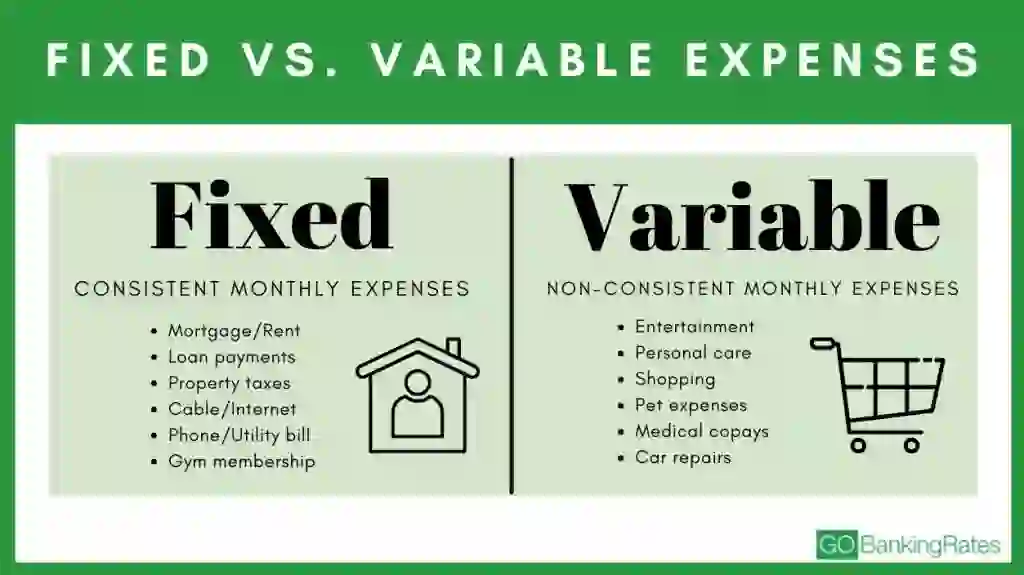
Rent.
Mortgage.
Debt.
Car finance.
Childcare.
Insurance.
Food.
Utilities.
Credit cards.
Lifestyle expenditure.
Every month these obligations arrive whether you feel like working or not.
So the actual choice is not:
Work or don't work.
It is:
Work, or absorb the consequences of losing the income required to service your life.
That is a radically different choice.
The coercion is embedded in the payoff structure.
THE INCENTIVE PILL
Imagine you have almost no savings.
You owe money.
Your fixed expenses are high.
Your salary arrives every month and almost immediately gets allocated elsewhere.
Now your employer asks you to:
People love pretending the answer is:
"Stand up for yourself."
But your incentives may scream:
DO NOT ENDANGER THE PAYCHEQUE.
That is the point.
The person who desperately needs continued income is not merely psychologically timid.
They are economically incentivised to tolerate more bullshit.

THE DEBT PILL
Debt intensifies this enormously.
Debt means part of your future income already belongs to somebody else.
You have consumed today.
You repay with future labour.
So every debt payment creates another reason that tomorrow's salary must arrive.
A €700 monthly car payment is not just €700.
It is an incentive.
A €2,500 mortgage is not just €2,500.
It is an incentive.
A €600 loan repayment is not just €600.
It is an incentive.
Each obligation says:
KEEP THE INCOME COMING.
This is why debt is socially important far beyond the interest rate.
Debt alters behaviour.
It changes what risks you can tolerate.
It changes what treatment you will endure.
It changes how aggressively you can negotiate.
It changes how long you can remain unemployed.
It changes whether saying "fuck this" is a realistic option.
Debt reduces the set of actions available to you.


THE EMPLOYER DOESN'T NEED TO KNOW
Your employer does not need to know your bank balance.
They do not need to know your mortgage payment.
They do not need to know you have €4,000 sitting in your current account.
They do not need to know the car is financed.
The incentive structure still exists.
You know.
That is enough.
When a negotiation happens, two calculations are occurring.
The employer calculates:
How little can we give this person while retaining them?
You calculate:
How much can I push without risking the income stream?
If losing the job would be catastrophic, the second calculation dominates.
Your reservation point collapses.
You become easier to retain cheaply.
Not because you are stupid.
Because your outside option is weak.

THE OUTSIDE OPTION PILL
This is the part people miss completely.
Power in negotiation is heavily determined by:
What happens if no agreement is reached?
If no agreement means:
You may be brilliant.
You may be highly educated.
You may earn €100,000.
You may have a prestigious title.
It does not matter.
Your fallback position is bad.
And bad fallback positions create compliance.
THE RUNWAY PILL
Now introduce substantial liquid savings.
Low fixed expenses.
No consumer debt.
No financed lifestyle.
Investments.
A paid-off car.
Cheap housing.
Suddenly the same workplace looks completely different.
Your employer says:
"We're freezing salaries this year."
You can genuinely consider leaving.
They expand your role without expanding your compensation.
You can refuse.
A recruiter offers something mediocre.
You can decline it.
You lose your job.
You do not need another one next Friday.
That changes everything.
The crucial resource is not simply money.
It is time without compulsory monetisation.
Savings buy months.
Assets can buy years.
Low expenditure stretches both.

WHY CASH CHANGES PERSONALITY
People observe somebody who is unusually calm in negotiations and say:
"He's confident."
Maybe.
But confidence is much easier when the downside is bounded.
Imagine negotiating compensation when you have eighteen months of expenses sitting in cash.
Now imagine negotiating when you have six weeks.
Same human.
Different balance sheet.
Different behaviour.
The first can say:
"No."
and mean it.
The second may say no while internally praying they do not call the bluff.
This is why supposedly psychological traits can have material foundations.
Independence.
Patience.
Assertiveness.
Risk tolerance.
Career selectivity.
They are easier to express when the consequences of disagreement are survivable.

THE HIGH-SALARY SERVITUDE PILL
This is why high earners can become bizarrely trapped.
Salary rises.
Then:
bigger house.
Better car.
Private school.
More subscriptions.
More holidays.
More restaurants.
More debt.
Higher baseline consumption.
Soon the person earning €150,000 has built a life that requires €150,000.
Now losing the salary is terrifying.
The income increased.
But so did the dependency.
They did not buy freedom.
They purchased a more expensive amount of required labour.
This is lifestyle inflation's hidden cost.
It raises the minimum price at which you can afford to sell your time.
THE MONTHLY CLAIMANTS
Watch what happens on payday.
Salary arrives.
And immediately everybody starts collecting.
The landlord collects.
The bank collects.
The car lender collects.
The credit-card company collects.
The insurer collects.
The utility company collects.
The subscriptions collect.
The lifestyle collects.
What remains is yours.
And then the clock resets.
Thirty days until:
I NEED TO GET PAID.
Again.
This is why gross salary tells you far less than people think.
The meaningful question is:
How much of your life requires the next paycheque to arrive on schedule?
THE CLASS PILL
Social class is usually discussed through visible consumption.
Clothes.
Accent.
Schools.
Postcodes.
Cars.
Restaurants.
Job titles.
But there is another dimension beneath all of this:
How economically coercible are you?
Can somebody threaten your income and therefore strongly influence your behaviour?
Can you absorb unemployment?
Can you refuse bad terms?
Can you wait?
Can you relocate?
Can you retrain?
Can you pursue something uncertain?
Can you walk away?
This is why accumulated capital changes class position in a way income alone cannot.
Capital weakens the connection between:
obedience today
and
survival tomorrow.

THE REFUSAL POWER PILL
This is what money eventually becomes.
Not watches.
Not cars.
Not steak dinners.
Refusal power.
The ability to say:
"No."
"Not at that salary."
"Not under those conditions."
"I'll wait."
"I'll leave."
"I'll spend six months learning something else."
"I don't need this badly enough."
That sentence:
"I don't need this badly enough."
is an extraordinary economic privilege.
Because the person who NEEDS the deal has weaker bargaining power than the person who can walk away from it.
Always.

THE FIXED-EXPENSE TRAP
This is also why low expenses are massively underrated.
Savings alone are not enough.
What matters is:
Savings relative to burn.
€50,000 with €5,000 monthly expenses:
10 months.
€50,000 with €1,000 monthly expenses:
50 months.
Same money.
Completely different degree of freedom.
Cutting permanent expenditure does something strange:
it makes every euro you already own more powerful.
Your runway expands without earning another cent.
Your employer's leverage falls without your salary changing.
Your tolerance for unemployment rises.
Your ability to wait increases.
Low burn is not merely frugality.
It is bargaining power.
THE BEHAVIOURAL LOOP
No assets.
High expenses.
Debt.
↓
Need continuous income.
↓
Cannot tolerate unemployment.
↓
Must protect employment.
↓
Accept weaker terms.
↓
Avoid risky career moves.
↓
Avoid long periods of retraining.
↓
Take the first acceptable offer.
↓
Remain dependent on salary.
↓
Repeat.
That is one loop.
Now the opposite.
Assets.
Liquidity.
Low expenditure.
Little debt.
↓
Long runway.
↓
Can survive unemployment.
↓
Can reject weak offers.
↓
Can negotiate harder.
↓
Can wait for better opportunities.
↓
Can take calculated career risks.
↓
Potentially capture more upside.
↓
Accumulate more assets.
↓
Become even less dependent on salary.
That is the other loop.
The difference compounds.
THE REAL QUESTION
Stop asking only:
"What does he earn?"
Ask:
"What happens to him if the income stops?"
That reveals far more.
How many months before panic?
How many obligations keep arriving?
How much debt requires servicing?
How much liquid capital exists?
How much expenditure is genuinely mandatory?
How quickly must another employer be found?
How bad an offer would eventually have to be accepted?
That is where the coercion lives.
THE FINAL PILL
The worker who says:
"I NEED TO GET PAID."
is telling you something deeper than:
"I want a salary."
They are saying:
"The cost of losing access to income is sufficiently high that it constrains my behaviour today."
That constraint affects:
Wealth changes incentives.
And changed incentives change behaviour.
The ultimate financial flex is not earning an enormous salary.
It is constructing your life so that no individual salary payment has much power over you.
Because there is an enormous difference between:
"I get paid."
and:
"I NEED TO GET PAID."
Most people hear:
"I need to get paid."
and interpret it as:
"I want money."
That is not what it means.
It means:
I cannot allow the income stream to stop.
And once you understand that, you understand an enormous amount about work, obedience, risk-taking, negotiation, debt, careers, and class.
THE COERCION PILL
The most powerful form of coercion usually does not look like coercion.
Nobody has to physically force you to go to work.
Nobody has to threaten you.
Nobody has to say:
"Do this or else."
The threat already exists.
Rent.
Mortgage.
Debt.
Car finance.
Childcare.
Insurance.
Food.
Utilities.
Credit cards.
Lifestyle expenditure.
Every month these obligations arrive whether you feel like working or not.
So the actual choice is not:
Work or don't work.
It is:
Work, or absorb the consequences of losing the income required to service your life.
That is a radically different choice.
The coercion is embedded in the payoff structure.
THE INCENTIVE PILL
Imagine you have almost no savings.
You owe money.
Your fixed expenses are high.
Your salary arrives every month and almost immediately gets allocated elsewhere.
Now your employer asks you to:
What is the rational response?stay late
absorb another person's workload
accept a bad manager
tolerate disrespect
postpone a raise
accept a weak bonus
commute farther
return to the office
take on duties outside your role
survive another restructure
People love pretending the answer is:
"Stand up for yourself."
But your incentives may scream:
DO NOT ENDANGER THE PAYCHEQUE.
That is the point.
The person who desperately needs continued income is not merely psychologically timid.
They are economically incentivised to tolerate more bullshit.
THE DEBT PILL
Debt intensifies this enormously.
Debt means part of your future income already belongs to somebody else.
You have consumed today.
You repay with future labour.
So every debt payment creates another reason that tomorrow's salary must arrive.
A €700 monthly car payment is not just €700.
It is an incentive.
A €2,500 mortgage is not just €2,500.
It is an incentive.
A €600 loan repayment is not just €600.
It is an incentive.
Each obligation says:
KEEP THE INCOME COMING.
This is why debt is socially important far beyond the interest rate.
Debt alters behaviour.
It changes what risks you can tolerate.
It changes what treatment you will endure.
It changes how aggressively you can negotiate.
It changes how long you can remain unemployed.
It changes whether saying "fuck this" is a realistic option.
Debt reduces the set of actions available to you.
THE EMPLOYER DOESN'T NEED TO KNOW
Your employer does not need to know your bank balance.
They do not need to know your mortgage payment.
They do not need to know you have €4,000 sitting in your current account.
They do not need to know the car is financed.
The incentive structure still exists.
You know.
That is enough.
When a negotiation happens, two calculations are occurring.
The employer calculates:
How little can we give this person while retaining them?
You calculate:
How much can I push without risking the income stream?
If losing the job would be catastrophic, the second calculation dominates.
Your reservation point collapses.
You become easier to retain cheaply.
Not because you are stupid.
Because your outside option is weak.
THE OUTSIDE OPTION PILL
This is the part people miss completely.
Power in negotiation is heavily determined by:
What happens if no agreement is reached?
If no agreement means:
then your bargaining power is weak.financial panic
missed payments
rapidly disappearing savings
forced job search
accepting the first offer available
You may be brilliant.
You may be highly educated.
You may earn €100,000.
You may have a prestigious title.
It does not matter.
Your fallback position is bad.
And bad fallback positions create compliance.
THE RUNWAY PILL
Now introduce substantial liquid savings.
Low fixed expenses.
No consumer debt.
No financed lifestyle.
Investments.
A paid-off car.
Cheap housing.
Suddenly the same workplace looks completely different.
Your employer says:
"We're freezing salaries this year."
You can genuinely consider leaving.
They expand your role without expanding your compensation.
You can refuse.
A recruiter offers something mediocre.
You can decline it.
You lose your job.
You do not need another one next Friday.
That changes everything.
The crucial resource is not simply money.
It is time without compulsory monetisation.
Savings buy months.
Assets can buy years.
Low expenditure stretches both.
WHY CASH CHANGES PERSONALITY
People observe somebody who is unusually calm in negotiations and say:
"He's confident."
Maybe.
But confidence is much easier when the downside is bounded.
Imagine negotiating compensation when you have eighteen months of expenses sitting in cash.
Now imagine negotiating when you have six weeks.
Same human.
Different balance sheet.
Different behaviour.
The first can say:
"No."
and mean it.
The second may say no while internally praying they do not call the bluff.
This is why supposedly psychological traits can have material foundations.
Independence.
Patience.
Assertiveness.
Risk tolerance.
Career selectivity.
They are easier to express when the consequences of disagreement are survivable.
THE HIGH-SALARY SERVITUDE PILL
This is why high earners can become bizarrely trapped.
Salary rises.
Then:
bigger house.
Better car.
Private school.
More subscriptions.
More holidays.
More restaurants.
More debt.
Higher baseline consumption.
Soon the person earning €150,000 has built a life that requires €150,000.
Now losing the salary is terrifying.
The income increased.
But so did the dependency.
They did not buy freedom.
They purchased a more expensive amount of required labour.
This is lifestyle inflation's hidden cost.
It raises the minimum price at which you can afford to sell your time.
THE MONTHLY CLAIMANTS
Watch what happens on payday.
Salary arrives.
And immediately everybody starts collecting.
The landlord collects.
The bank collects.
The car lender collects.
The credit-card company collects.
The insurer collects.
The utility company collects.
The subscriptions collect.
The lifestyle collects.
What remains is yours.
And then the clock resets.
Thirty days until:
I NEED TO GET PAID.
Again.
This is why gross salary tells you far less than people think.
The meaningful question is:
How much of your life requires the next paycheque to arrive on schedule?
THE CLASS PILL
Social class is usually discussed through visible consumption.
Clothes.
Accent.
Schools.
Postcodes.
Cars.
Restaurants.
Job titles.
But there is another dimension beneath all of this:
How economically coercible are you?
Can somebody threaten your income and therefore strongly influence your behaviour?
Can you absorb unemployment?
Can you refuse bad terms?
Can you wait?
Can you relocate?
Can you retrain?
Can you pursue something uncertain?
Can you walk away?
This is why accumulated capital changes class position in a way income alone cannot.
Capital weakens the connection between:
obedience today
and
survival tomorrow.
THE REFUSAL POWER PILL
This is what money eventually becomes.
Not watches.
Not cars.
Not steak dinners.
Refusal power.
The ability to say:
"No."
"Not at that salary."
"Not under those conditions."
"I'll wait."
"I'll leave."
"I'll spend six months learning something else."
"I don't need this badly enough."
That sentence:
"I don't need this badly enough."
is an extraordinary economic privilege.
Because the person who NEEDS the deal has weaker bargaining power than the person who can walk away from it.
Always.
THE FIXED-EXPENSE TRAP
This is also why low expenses are massively underrated.
Savings alone are not enough.
What matters is:
Savings relative to burn.
€50,000 with €5,000 monthly expenses:
10 months.
€50,000 with €1,000 monthly expenses:
50 months.
Same money.
Completely different degree of freedom.
Cutting permanent expenditure does something strange:
it makes every euro you already own more powerful.
Your runway expands without earning another cent.
Your employer's leverage falls without your salary changing.
Your tolerance for unemployment rises.
Your ability to wait increases.
Low burn is not merely frugality.
It is bargaining power.
THE BEHAVIOURAL LOOP
No assets.
High expenses.
Debt.
↓
Need continuous income.
↓
Cannot tolerate unemployment.
↓
Must protect employment.
↓
Accept weaker terms.
↓
Avoid risky career moves.
↓
Avoid long periods of retraining.
↓
Take the first acceptable offer.
↓
Remain dependent on salary.
↓
Repeat.
That is one loop.
Now the opposite.
Assets.
Liquidity.
Low expenditure.
Little debt.
↓
Long runway.
↓
Can survive unemployment.
↓
Can reject weak offers.
↓
Can negotiate harder.
↓
Can wait for better opportunities.
↓
Can take calculated career risks.
↓
Potentially capture more upside.
↓
Accumulate more assets.
↓
Become even less dependent on salary.
That is the other loop.
The difference compounds.
THE REAL QUESTION
Stop asking only:
"What does he earn?"
Ask:
"What happens to him if the income stops?"
That reveals far more.
How many months before panic?
How many obligations keep arriving?
How much debt requires servicing?
How much liquid capital exists?
How much expenditure is genuinely mandatory?
How quickly must another employer be found?
How bad an offer would eventually have to be accepted?
That is where the coercion lives.
THE FINAL PILL
The worker who says:
"I NEED TO GET PAID."
is telling you something deeper than:
"I want a salary."
They are saying:
"The cost of losing access to income is sufficiently high that it constrains my behaviour today."
That constraint affects:
This is why wealth is not merely consumption capacity.what they tolerate
what they demand
what they risk
what they refuse
how long they can wait
how hard they negotiate
how easily they can leave
Wealth changes incentives.
And changed incentives change behaviour.
The ultimate financial flex is not earning an enormous salary.
It is constructing your life so that no individual salary payment has much power over you.
Because there is an enormous difference between:
"I get paid."
and:
"I NEED TO GET PAID."


