


currentlylarping
Iron
- Joined
- Aug 23, 2026
- Posts
- 36
- Reputation
- 14

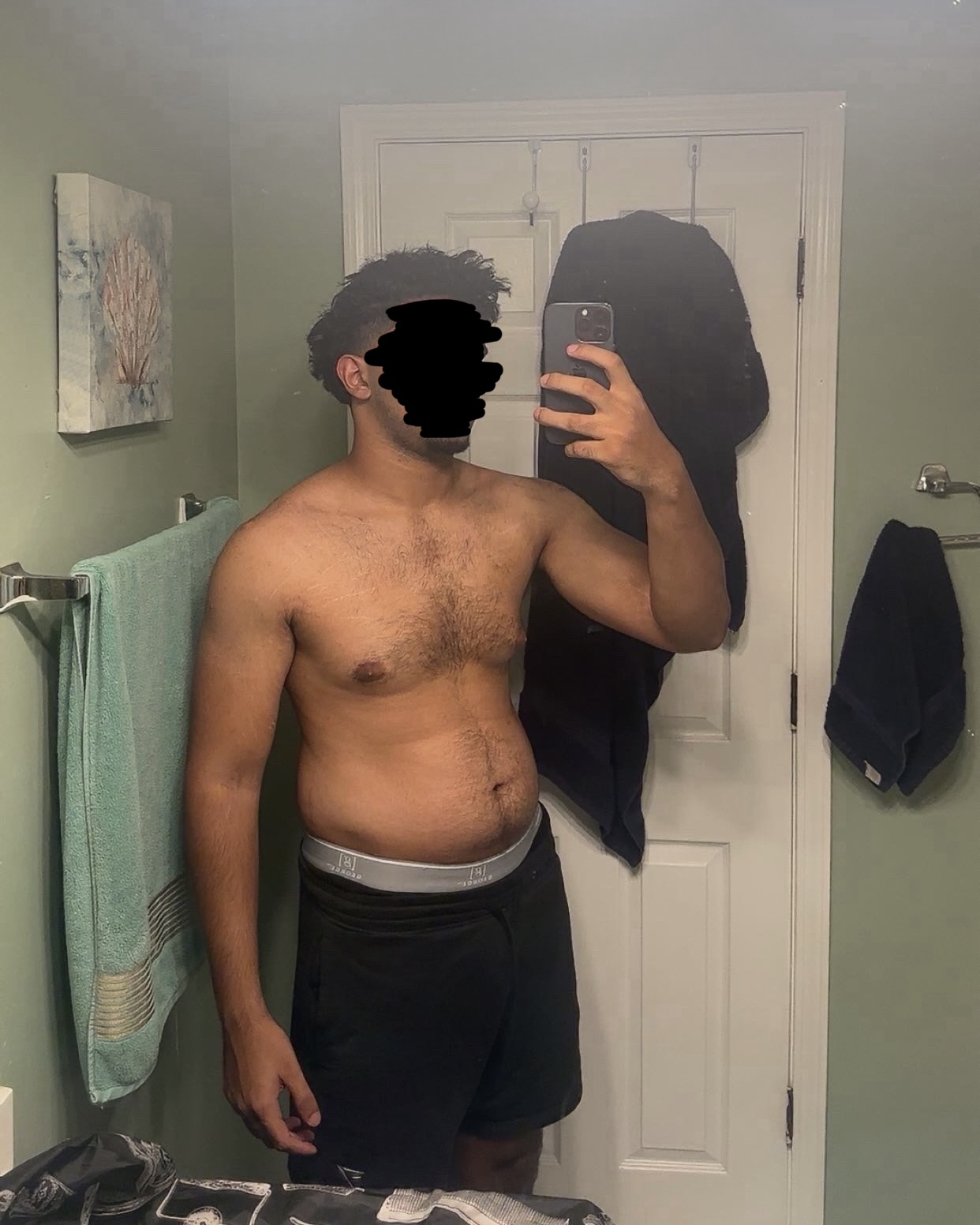
My Starting Point
August 29th, 2025.I took my shirt off, stood in front of the mirror, and was disgusted with myself.
I was around 200 lbs at 6'1", probably around 25% body fat. I wanted visible abs. At that point, it honestly seemed impossible. But I was determined to get them anyway.
I'd already been lifting (but eating whatever and however much I wanted) for at least two years, so I had some muscle underneath all the fat. You just couldn't really tell.
Fast forward 9 months to May 21st, 2026. I weighed around 173 lbs. I had lost 25+ lbs and finally got what I wanted. I had visible abs.
I'm now around 12% body fat and have been maintaining it ever since. I chose this body fat percentage because I think it's lean enough to look good without making my life miserable trying to maintain it.
So here's exactly what I did. I want to share this in hopes that someone out there who wants to achieve a similar goal, but maybe lacks all the information needed to get there, can look at this and get the whole system that actually works.
And yes, I did it without cardio.
I fucking hate cardio. It's boring as fuck and I'd rather spend that time doing literally anything else.
The Caloric Deficit
I'll keep this part short because most of you probably already know this, but it needs to be said.A caloric deficit is what causes you to lose body fat. It is the single most important factor to this fat loss system.
The first step to creating a caloric deficit is to calculate your TDEE. Your Total Daily Energy Expenditure (TDEE) is roughly how many calories you burn throughout the day. It includes your basal metabolic rate, digestion, exercise, and general activity.
If you consistently eat less than your TDEE, your body will be forced to lose weight.
That's really all there is to it.
You don't need cardio to lose fat. Cardio is just one way of burning more calories. I didn't want to do it, so I created my deficit through my diet instead.
How I Set My Calories
I used TDEE Calculator to get an estimate of my TDEE.I took that number and initially subtracted around 700 to 800 calories.
I tracked my calories and macros every day. The two things I cared about most were calories and protein.
For protein, I aimed for around 0.8 g per pound of body weight.
My diet was pretty repetitive, for simplicity's sake. Also because I am a college student and don't have time to figure out different recipes.
Every morning for breakfast I'd have eggs and/or egg whites. Lunch and dinner were usually always chicken breast with potatoes or white rice.
I cooked the chicken in an air fryer because I'm lazy and it's easy.
If I had very few calories left but still needed protein, I'd have Fairlife chocolate milk or a can of tuna.
You don't need to copy my exact diet. The point is to find foods you actually like that make it easy to stay within your calories and hit your protein target.
Dealing With Hunger
You're going to be hungry. There's no way around it.When I was hungry, caffeine, water, and diet soda helped me a lot.
But probably the biggest thing I learned was to save a lot of my calories for dinner.
I'd sometimes eat very little earlier in the day so I could have a big dinner.
This made dieting much easier for me mentally.
If you go to sleep completely full, dieting isn't that bad. If you're lying in bed starving, you're going to have a much harder time sleeping and you're probably going to start thinking about eating everything in your house.
What worked for me was skipping breakfast. Do whatever works for you.
I also had to make some sacrifices socially.
Sometimes my friends would go out to eat and I'd literally bring my own food from home and eat it while they were eating burgers and shit.
It sucks, but that's what consistency looks like. It all comes back to how badly you want it.
The biggest factor wasn't finding some magical diet. It was actually sticking to the calorie target for months. Consistency is the name of the game.
Protein
Protein is important during a cut because you don't just want to lose weight. You want to lose fat while keeping as much muscle as possible.Getting enough protein helps preserve lean mass during an energy deficit, supports muscle protein synthesis, and also helps with satiety.
I aimed for around 0.8 g per pound of body weight. You don’t need to eat anymore than that, but it’s fine if you do. It doesn’t add any extra benefit IMO.
It's simple:
Body weight × 0.8 = daily protein target
If you're 180 lbs, that's about 144 g of protein.
You don't need to hit the number perfectly every day. Just get close and be consistent.
Weight Training
This is where things get annoying.You're going to get tired as the cut goes on. Your energy is going to be lower and you're probably not going to feel like spending hours in the gym.
That's why I kept my volume low.
For every exercise, I did one warm-up set with very light weight, then 2 working sets taken to failure. That’s all you need.
I tried to keep my sets and reps around the same throughout the cut. Sometimes my strength dropped a little bit. That's normal. Don't freak out if you lose a few reps as you get deeper into the deficit.
As long as you're still training hard (2 sets until failure) you’ll be fine. You won’t lose muscle mass.
My Training Split
This was the exact split I used.Everything was 2 working sets.
For most exercises, I'd recommend around 8 to 12 reps. For isolation exercises, lateral raises, wrist curls, and cable work, 15-20 reps is fine.
Don't obsess over the exact number. Use a weight that lets you perform the exercise properly and train hard. The key principle is training until you literally can’t do another rep.
Day 1: Chest / Biceps / Abs
Incline Chest Press Machine: 2 sets, 8 to 10 repsFlat Chest Press Machine: 2 sets, 8 to 10 reps
Pec Deck: 2 sets, 10 to 12 reps
Bayesian Cable Curl: 2 sets, 10 to 12 reps
Hammer Curl: 2 sets, 10 to 12 reps
Cable Crunch: 2 sets, 15 to 20 reps
Day 2: Back (Width) / Triceps / Forearms
Lat Pulldown: 2 sets, 8 to 10 repsLat Pullover Machine: 2 sets, 10 to 12 reps
Overhead Cable Triceps Extension: 2 sets, 10 to 12 reps
Triceps Bar Pushdown: 2 sets, 10 to 12 reps
Wrist Curl: 2 sets, 15 to 20 reps
Reverse Wrist Curl: 2 sets, 15 to 20 reps
Day 3: Legs / Abs
Hack Squat: 2 sets, 8 to 10 repsLeg Extension: 2 sets, 10 to 12 reps
Leg Curl: 2 sets, 10 to 12 reps
Calf Raise: 2 sets, 10 to 12 reps
Captain's Chair Leg Raise: 2 sets, 15 to 20 reps
Day 4: Arms / Forearms
Incline Dumbbell Curl: 2 sets, 10 to 12 repsRope Hammer Curl: 2 sets, 10 to 12 reps
Overhead Cable Triceps Extension: 2 sets, 10 to 12 reps
Triceps Rope Pushdown: 2 sets, 10 to 12 reps
Wrist Curl: 2 sets, 15 to 20 reps
EZ Bar Reverse Curl: 2 sets, 10 to 12 reps
Day 5: Rest
Rest.Day 6: Chest / Biceps / Abs
Incline Chest Press Machine: 2 sets, 8 to 10 repsFlat Chest Press Machine: 2 sets, 8 to 10 reps
Incline Pec Deck: 2 sets, 10 to 12 reps
Preacher Curl: 2 sets, 10 to 12 reps
Barbell Curl: 2 sets, 8 to 10 reps
Cable Crunch: 2 sets, 15 to 20 reps
Day 7: Back (Thickness) / Triceps / Forearms
Barbell Row or T Bar Row: 2 sets, 8 to 10 repsSeated Cable Row: 2 sets, 10 to 12 reps
Reverse Cable Fly: 2 sets, 15 to 20 reps
Overhead Cable Triceps Extension: 2 sets, 10 to 12 reps
Triceps Rope Pushdown: 2 sets, 10 to 12 reps
Wrist Curl: 2 sets, 15 to 20 reps
Reverse Wrist Curl: 2 sets, 15 to 20 reps
Then repeat.
Side Delts
Don't forget your side delts.You're already getting a ton of front-delt stimulation from all the pressing movements, so I didn't bother adding extra front-delt work.
On any 2 days, just throw in 2 sets of lateral raises for around 10 to 20 reps.
That's it.
You Have to Train Your Abs
Getting lean is what reveals your abs, but actually building your abs will make them look better once you're lean.It’s super simple.
You need one exercise for upper abs, and one for lower abs. Cable crunches are the best for upper, and captain's chair leg raises or weighted decline sit-ups are the best for lower.
I trained my abs at the end of my workouts.
Train them every other day. The abdominals are small muscles and recover quickly.
Get them enough hard sets to grow, then let them recover.
Your TDEE Will Change
This is something you need to understand if you're going to do a long cut.Your TDEE at 200 lbs isn't going to be the same as your TDEE at 180 lbs.
You're lighter, so your body doesn't need as much energy to maintain itself. You're also moving less body mass around.
On top of that, when you're dieting for a long time, you can subconsciously move less throughout the day and your total energy expenditure can decrease.
This means the calories that gave you a big deficit at the beginning might eventually become close to your new maintenance calories.
So yes, you have to adjust your calories as you lose weight. You could do this yourself by lowering calories by 200-300 whenever you hit a plateau (weight isn’t decreasing for a week or two).
I used MacroFactor for this.
It's a paid app, but if you're serious about doing a cut, I think it's worth it.
And no, I didn't have to keep increasing my steps or start doing cardio every time my weight loss slowed down.
I just dropped my calories slightly.
How I Measured Progress
I weighed myself every morning right after waking up and taking a piss. Make sure you weigh yourself on an empty stomach. Even taking a sip of water can make your weight show up inaccurate. I would take this scale weight and plug it into my MacroFactor app.I wasn't concerned about the individual number on the scale. Daily body weight can fluctuate a lot because of water, glycogen, sodium, food in your digestive system, hydration, etc.
You can literally be losing fat and wake up heavier the next morning.
That's why I looked at my trend weight instead.
MacroFactor takes your daily weigh-ins and calculates your underlying weight trend. That's what I cared about. You could also technically do it yourself if you wanted to.
Adjust your calories until you’re losing weight at the rate you intended. Remember, if you're losing weight too quickly, you’re putting yourself at risk of losing muscle.
If you're losing too slowly, you're just making the cut take longer than it needs to. Best to get it over with.
The goal is to lose fat while keeping your muscle, as fast as possible.
The Final & Most Underrated Part: Maintaining It
This is the part most people leave out.Anyone can tell you how to lose weight.
Not everyone tells you how to actually keep it off.
Once you get lean, you need to figure out your maintenance calories.
You have two options.
Option A is you reverse diet, which essentially means you take whatever amount of calories you were eating at the end of your weight loss phase, and add 200-300 calories to it. You keep doing this until your weight steadies. You’ve found your new maintenance. The pro to this is it makes it less likely you’ll overshoot your calories and start gaining weight that you worked hard to lose. The con is you’ll stay in a caloric deficit longer than you need to. I’d rather just get it over with.
Option B is you jump directly to your new maintenance calories when you’re happy with your weight loss and you feel you’ve reached your goal.
I did the second option because MacroFactor had enough data to estimate my maintenance calories.
Also, don't freak out when your weight goes up after you stop cutting.
Your weight will probably increase a little.
That doesn't automatically mean you gained fat.
When you eat more carbohydrates, your muscles replenish glycogen, and glycogen is stored with water. You'll also have more food sitting in your digestive system.
So don't see the scale go up and immediately assume you fucked up your cut.
This is my first time making a guide like this, so I hope it helps. Let me know if you have any questions or if I missed anything.
Disclaimer: Everything in this guide is my own personal experience, ideas, and original writing. To proofread the post and help correct grammar, spelling, punctuation, clarity, and organization, I utilized ChatGPT.


