I'm leaning towards communism because of AI

SecularIslamist

SecularIslamist

𝕯𝖝𝕯 intersectional feminist and Islamist jihadi
Joined
Nov 21, 2022
Posts
28,590
Reputation
57,403
If automation is truly going to replace a lot of jobs and render entire life long skills and years of study useless then where does that leave a majority of people? Of course some fields will be left untouched but it's not like everyone can do them and need to anyway.

I used to laugh at people like Andrew Yang who would propose things like universal basic income, but it's starting to make sense as technology develops. Marx was wrong and was a Jew anyway. But business owners and leaders, getting rid of staff increases their profit margins. They are no longer responsible for the means of production. Nowadays we can produce value at the click of a few buttons. We don't need people to run the economy. If we don't need people, what do people do if they aren't required?
 
  • +1
Reactions: Deleted member 16275, wollet2, LooksThinker and 8 others
Eat Ze Bugs
 
  • JFL
  • Love it
Reactions: Deleted member 20422, Deleted member 29167 and Deleted member 26859
we already have communism and ubi. food stamp accounts are federally funded, and it's easy to get access to general relief. ubi would be designed to exclude rich people. so it's the exact same sytem we already have. ubi was a scam to repackage wellfare and trick people into thinking they're voting for some revolutionary concept :soy: :soy:
 
  • +1
Reactions: thereallegend and SecularIslamist
If automation is truly going to replace a lot of jobs and render entire life long skills and years of study useless then where does that leave a majority of people? Of course some fields will be left untouched but it's not like everyone can do them and need to anyway.

I used to laugh at people like Andrew Yang who would propose things like universal basic income, but it's starting to make sense as technology develops. Marx was wrong and was a Jew anyway. But business owners and leaders, getting rid of staff increases their profit margins. They are no longer responsible for the means of production. Nowadays we can produce value at the click of a few buttons. We don't need people to run the economy. If we don't need people, what do people do if they aren't required?
And this is why in Romania during the communist era they avoided a lot of automation, just to give people jobs - a lot of stuff was made using simply manual labor, everyone was employed then, there was zero unemployment.
 
  • +1
Reactions: SecularIslamist
If automation is truly going to replace a lot of jobs and render entire life long skills and years of study useless then where does that leave a majority of people? Of course some fields will be left untouched but it's not like everyone can do them and need to anyway.

I used to laugh at people like Andrew Yang who would propose things like universal basic income, but it's starting to make sense as technology develops. Marx was wrong and was a Jew anyway. But business owners and leaders, getting rid of staff increases their profit margins. They are no longer responsible for the means of production. Nowadays we can produce value at the click of a few buttons. We don't need people to run the economy. If we don't need people, what do people do if they aren't required?
communism is what the jews want because if ubi actually becomes a thing it will be literally 1984 @Klaus Schwab
 
  • +1
Reactions: Deleted member 29167 and SecularIslamist
  • +1
Reactions: aspiringexcel, Myth and OGJBSLAYER
And this is why in Romania during the communist era they avoided a lot of automation, just to give people jobs - a lot of stuff was made using simply manual labor, everyone was employed then, there was zero unemployment.
Communists are supposed to use automation to shorten the working day.
 
  • Hmm...
  • +1
Reactions: try2beme and Gonthar
In America, I believe the Dems could get something done like making the Earned Income Child Tax Credit permanently. That’s a free $300/mo for families.

Anything else like cancelling student debt or avoiding works requirements for Medicaid & food stamps will get stonewalled by a Republican Supreme Court and House of Representatives.
 
Communists are supposed to use automation to shorten the working day.
No, you had to work, what else would you do instead...? Many jobs in fact were pretty much pointless, they hired everyone even dumb, incompetent, retarded people and it was hard for them to get fired, since there was no unemployment in communism, so they were put as guards, supervisors, etc. even in places where there was nothing to guard or supervise...
 
No, you had to work, what else would you do instead...? Many jobs in fact were pretty much pointless, they hired everyone even dumb, incompetent, retarded people and it was hard for them to get fired, since there was no unemployment in communism, so they were put as guards, supervisors, etc. even in places where there was nothing to guard or supervise...
It’s possible for a full employment society and for AI to shorten the working days.
Just cut everybody’s hours and keep their wages the same.
 
  • Hmm...
Reactions: Gonthar
It’s possible for a full employment society and for AI to shorten the working days.
Just cut everybody’s hours and keep their wages the same.
Yeah, that wasn't considered ideal....people might have too much free time and get funny ideas like planning an anticommunist revolution, etc. - the citizens' time had to be filled only with stuff that the government could control. Keeping everyone for 8 hours in a controlled work environment was a good strategy - every workplace had informers that reported everything suspicious to the secret police.
 
Yeah, that wasn't considered ideal....people might have too much free time and get funny ideas like planning an anticommunist revolution, etc. - the citizens' time had to be filled only with stuff that the government could control. Keeping everyone for 8 hours in a controlled work environment was a good strategy - every workplace had informers that reported everything suspicious to the secret police.
Communism did well for Romania. If only they could’ve kept it going and kept perfecting it.
 
  • JFL
Reactions: datboijj, Deleted member 20835 and Gonthar
Communism did well for Romania. If only they could’ve kept it going and kept perfecting it.
Lol, we were like the poorest country in Eastern Europe, our communism borrowed heavily from the North Korean hardcore type of communism, and we had all of their problems too, like lack of food, shortages of basic items, tons of propaganda and a cult of personality for the leader, etc.
 
Lol, we were like the poorest country in Eastern Europe, our communism borrowed heavily from the North Korean hardcore type of communism, and we had all of their problems too, like lack of food, shortages of basic items, tons of propaganda and a cult of personality for the leader, etc.
its actually incredible how westerners nowadays think that eastern europe was flourishing during the ussr days jfl they are still poor and behind countries like france and germany because of communism
 
  • +1
Reactions: Deleted member 26859 and Gonthar
Can people first educate themselves about what communism means, preferably from a Marxist view?
It is semantics here
 
  • +1
Reactions: thereallegend
Can people first educate themselves about what communism means, preferably from a Marxist view?
It is semantics here
face nerd GIF by JoyPixels
 
  • +1
Reactions: Myth
its actually incredible how westerners nowadays think that eastern europe was flourishing during the ussr days jfl they are still poor and behind countries like france and germany because of communism
look at Eastern Europe after communism

The Soviets did EVERYTHING for you guys
 
whatever the west is doing , mogs. thats why they're doing it

you can not defeat them.
 
Meanwhile Rohingya Muslims and Niggers in sub saharan Africa are pumping out 11 kids per women.
 
its actually incredible how westerners nowadays think that eastern europe was flourishing during the ussr days jfl they are still poor and behind countries like france and germany because of communism
Walmart, Amazon etc. are mastering planned economy. We dont need Soviets to proof the underlying framework of socialist theory
 
  • Love it
  • JFL
Reactions: thereallegend and Deleted member 20835
whatever the west is doing , mogs. thats why they're doing it

you can not defeat them.
1685815246803

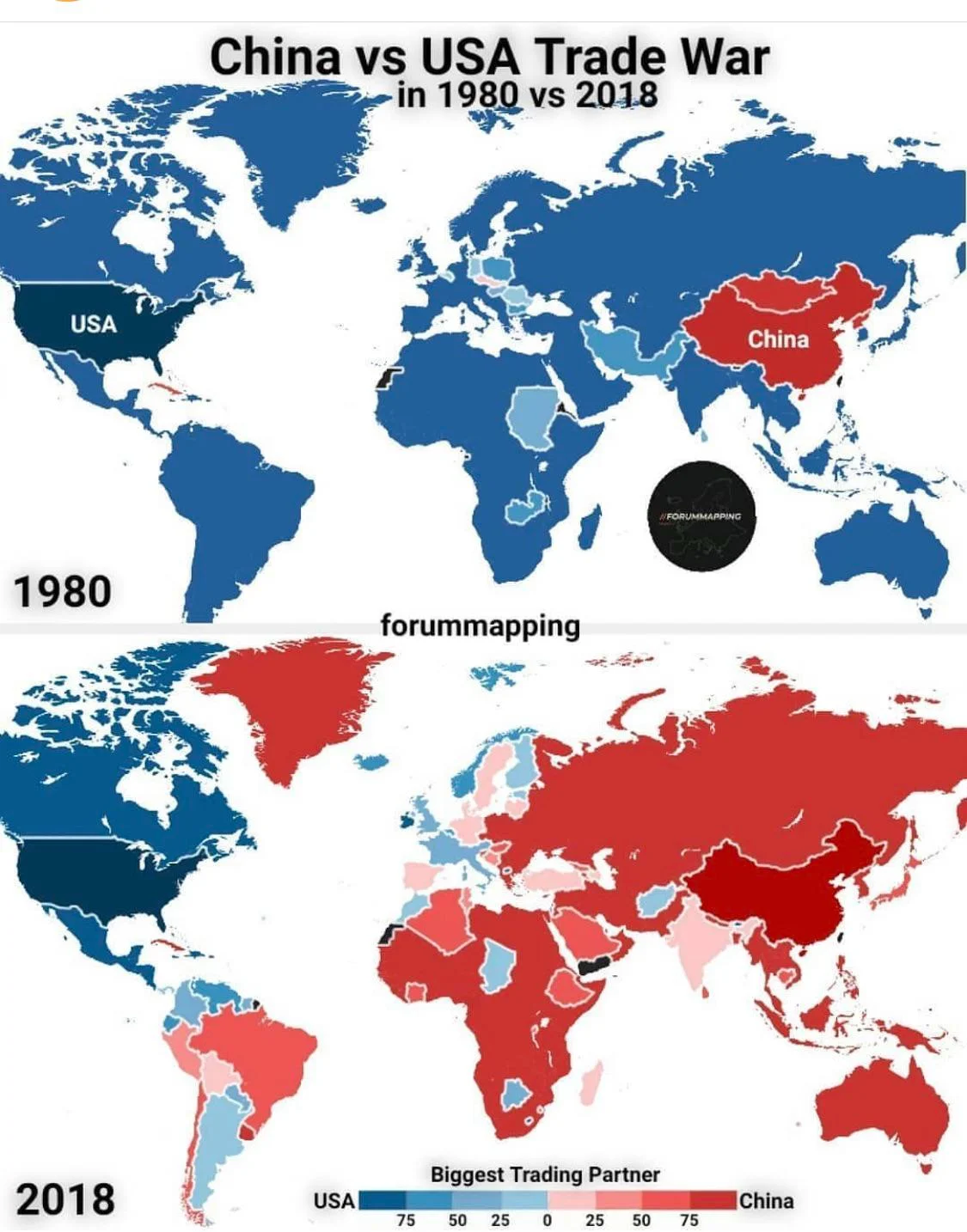
I dont like China, but you said West specifically, so
 
  • +1
Reactions: SecularIslamist
Walmart, Amazon etc. are mastering planned economy. We dont need Soviets to proof the underlying framework of socialist theory
That's because Amazon and Walmart grew and developed under competitive pressure making them efficient. In fact they have to stay efficient to prevent other players from disrupting them hence why they are constantly innovating and optimizing their supply chain, distribution, warehousing, inventory management etc. creating a better experience for customers and lower costs (and higher profits for the company)

You can't extrapolate their business model to an entire centralized command economy and expect the same result without competitive pressures & a profit motive. History has shown us so many times that doesn't work and leads to waste and inefficiency. God how do people still cope with socialism.
 
Last edited:
yeah but realistically we will just be cucked if we're not one of the ppl making our own money. the money will always be made by the ppl owning the companies.

ideally all the hard labour will be done by AI while everybody lives the same middle-high class life, but in reality the wealth will be controlled by the elites while drip feeding us UBI

the majority of ppl will just eat ze bugs while klaus & co feast on infants while getting sucked off by models

reject all cdbc schemes and USE MONERO
 
fertility rate is lowering fast in africa: https://www.afd.fr/en/actualites/dramatic-drop-fertility-across-africa

just some lifefuel for you

Nigeria will have 1billion people by 2070.

by 2100 , 1 out of every 3 baby born will be African.

they are ghttps://www.quora.com/Why-cant-Africa-control-its-population-Africas-population-will-grow-to-more-than-4-Billion-before-the-end-of-this-centuryonna poison the whole human genome. cause they wont build their nations and just migrate to all other countries.

so your predictions is not lifefuel .

world in no way can not survive 14 billion people its hardly surviving now at 8 billion.

a population purge is needed for Africa. Indian subcontinent actually achieved an average TFR rate of 1.93, so purge is not needed , Pakistan has a bit high TFR but they are physically fit and good looking so it is a plus for human genome.


we need to purge Africa.

https://www.quora.com/Why-cant-Afri...than-4-Billion-before-the-end-of-this-century
 
communism is what the jews want because if ubi actually becomes a thing it will be literally 1984 @Klaus Schwab
UBI will become a thing and you wont be able to stop us
 
  • Love it
  • So Sad
  • +1
Reactions: Deleted member 23558, thereallegend and Deleted member 20835
That's because Amazon and Walmart grew and developed under competitive pressure making them efficient. In fact they have to stay efficient to prevent other players from disrupting them hence why they are constantly innovating and optimizing their supply chain, distribution, warehousing, inventory management etc. creating a better experience for customers and lower costs (and higher profits for the company)

You can't extrapolate their business model to an entire centralized command economy and expect the same result without competitive pressures & a profit motive. History has shown us so many times that doesn't work and leads to waste and inefficiency. God how do people still cope with socialism.
Monopolised megacorporations who are actually able to predict consumption, against the belief of famous pro-capitalism intellectuals like Hayek and Mises, and have made such a centralised and planned economy and logistics internally that the Soviet bureaucrats would rub their eyes. Selling online information is and has been a huge market and it does not go into a blackhole. Huge central banks who pretty much plan and discuss what credits to give out or to whom, or interest rate, printing money. Each of the biggest companies sitting in eachothers board of directors. Artificially lowering prices for a while to destroy smaller businesses, who do not have as much capital as reserve. Planned obsolescence (e.g. light bulbs in the early 20th century were artificially made worse by a cartel of the biggest producers, because it is more profitable). This is late stage capitalism, where the early competition of small producers have duked it out well enough that only few battle hardened veterans are standing. No one has a say except them.
Also, a profit motive in the sense of surplus value can still exist in Socialism.

Loss of competition, loss of markets, loss of the "invisible hand". Once the supposed darlings of capitalist advocators its demise predicted by Marx as in the contradictions of capitalism.
Do you want to argue for a return for a pre-monopoly capitalism? What is your stake? What is your view?
 
  • +1
Reactions: SecularIslamist and thereallegend
we already have communism and ubi. food stamp accounts are federally funded, and it's easy to get access to general relief. ubi would be designed to exclude rich people. so it's the exact same sytem we already have. ubi was a scam to repackage wellfare and trick people into thinking they're voting for some revolutionary concept :soy: :soy:
but ill have more time to neet because theres less steps to convert the food stamps to ketamine now
 
Monopolised megacorporations who are actually able to predict consumption, against the belief of famous pro-capitalism intellectuals like Hayek and Mises, and have made such a centralised and planned economy and logistics internally that the Soviet bureaucrats would rub their eyes. Selling online information is and has been a huge market and it does not go into a blackhole. Huge central banks who pretty much plan and discuss what credits to give out or to whom, or interest rate, printing money. Each of the biggest companies sitting in eachothers board of directors. Artificially lowering prices for a while to destroy smaller businesses, who do not have as much capital as reserve. Planned obsolescence (e.g. light bulbs in the early 20th century were artificially made worse by a cartel of the biggest producers, because it is more profitable). This is late stage capitalism, where the early competition of small producers have duked it out well enough that only few battle hardened veterans are standing. No one has a say except them.
Also, a profit motive in the sense of surplus value can still exist in Socialism.

Loss of competition, loss of markets, loss of the "invisible hand". Once the supposed darlings of capitalist advocators its demise predicted by Marx as in the contradictions of capitalism.
Do you want to argue for a return for a pre-monopoly capitalism? What is your stake? What is your view?
These mega-corporations you cite and take as examples of the possibility of predicting consumption are products of capitalism, which is ironic really... They grew under the pressure of competition and under the shadow of large incumbents that they disrupted through innovation and brilliance. As a result, they have delivered tremendous value to consumers while employing hundreds of thousands and reducing prices for the benefit of all. Capitalism did all of this. Competition and the profit motive did all of this. So not only does capitalism create value for the consumer, it's also better at creating the centralized planning apparatuses that socialist so highly covet. Ha.

Walmart, for instance, had to learn how to aggressively manage costs to disrupt the more traditional department stores and local grocery stores that ruled the market. To do so it had to build out a new hub-and-spoke distribution and warehousing system at scale, learn how to manage inventory aggressively and accurately, etc. All of these tactics have allowed Walmart to offer a wide range of products to customers at lower costs. Again, pressure made diamonds.

Amazon also had to disrupt incumbent players. Amazon started off selling books. Its' biggest competitor was Barnes & Noble. To disrupt them Amazon built up a massive inventory of books, undercut its' competitors' pricing, innovated with the Kindle and more. From there Amazon has grown into the behemoth it is today to the benefit of millions of consumers. Again, capitalism at work. This capitalism you criticize has created so much value for people and bestowed us with the most incredible things . At least recognize that.

It's ironic you'd take these 2 examples because Amazon has been disrupting Walmart and taking their market share for over a decade. Your two examples therefore disprove your thesis: You are quite simply wrong to argue that we are at a stage when only monopolies rule to the detriment of the consumer. There is constant disruption, constant dislocation of incumbents by new players. Both these mega-corporations you cite once achieved this in the past and both are under threat from new-gen players. Even Google, for instance, which has held a seemingly unshakeable grasp on search is under threat from ChatGPT. As long as you give people a profit motive and strong capital markets they will continue to innovate and continue to try to dislocate sluggish behemoth mega-corporations that become bogged down in bureaucracy and risk aversion. And in the worst case, we break down the monopoly through regulation. Because yes, there is a place for well-dosed regulation in capitalism. However, there is no need to topple the entire system that has kept us fed, housed, and clothed to replace it with a dysfunctional and naive system that is underpinned by the vulgar reveries of rubes like Marx.


Capitalism and innovation, along with reasonable government intervention, will allow the human race to further prosper and evolve.

Edit: I forgot to mention that your entire idea that Amazon is a centralized economy is risible. Most of Amazon's inventory comes from third party sellers. This means Amazon is basically an online marketplace where buyers and sellers can converge and transact. The inventory mix fluctuates based on demand and price signals which are obvious attributes of market capitalism. Amazon is just online capitalism buddy.
 
Last edited:
  • +1
Reactions: SecularIslamist and looksmaxxed
Nigeria will have 1billion people by 2070.

by 2100 , 1 out of every 3 baby born will be African.

they are ghttps://www.quora.com/Why-cant-Africa-control-its-population-Africas-population-will-grow-to-more-than-4-Billion-before-the-end-of-this-centuryonna poison the whole human genome. cause they wont build their nations and just migrate to all other countries.

so your predictions is not lifefuel .

world in no way can not survive 14 billion people its hardly surviving now at 8 billion.

a population purge is needed for Africa. Indian subcontinent actually achieved an average TFR rate of 1.93, so purge is not needed , Pakistan has a bit high TFR but they are physically fit and good looking so it is a plus for human genome.


we need to purge Africa.

https://www.quora.com/Why-cant-Afri...than-4-Billion-before-the-end-of-this-century
those estimates are assuming the fertility rate is always going to stay the same, even though our evidence shows it's in the process of lowering, you can't really do accurate estimations.

my prediction is it's going to reach the TFR rate of 2 or lower 20 years later, as africans are actually starting to gain literacy, it's already at a tfr rate of 4,5 which while high, is muc lower than it used to be.

even the estimators said the declining birthrate is contradicting the estimates: https://businessday.ng/business-eco...e of 6.763,by research platform, Macro trends.

the prediction is flawed.

stop jacking off to blacked.com
 
Last edited:
These mega-corporations you cite and take as examples of the possibility of predicting consumption are products of capitalism, which is ironic really... They grew under the pressure of competition and under the shadow of large incumbents that they disrupted through innovation and brilliance. As a result, they have delivered tremendous value to consumers while employing hundreds of thousands and reducing prices for the benefit of all. Capitalism did all of this. Competition and the profit motive did all of this. So not only does capitalism create value for the consumer, it's also better at creating the centralized planning apparatuses that socialist so highly covet. Ha.

Walmart, for instance, had to learn how to aggressively manage costs to disrupt the more traditional department stores and local grocery stores that ruled the market. To do so it had to build out a new hub-and-spoke distribution and warehousing system at scale, learn how to manage inventory aggressively and accurately, etc. All of these tactics have allowed Walmart to offer a wide range of products to customers at lower costs. Again, pressure made diamonds.

Amazon also had to disrupt incumbent players. Amazon started off selling books. Its' biggest competitor was Barnes & Noble. To disrupt them Amazon built up a massive inventory of books, undercut its' competitors' pricing, innovated with the Kindle and more. From there Amazon has grown into the behemoth it is today to the benefit of millions of consumers. Again, capitalism at work. This capitalism you criticize has created so much value for people and bestowed us with the most incredible things . At least recognize that.

It's ironic you'd take these 2 examples because Amazon has been disrupting Walmart and taking their market share for over a decade. Your two examples therefore disprove your thesis: You are quite simply wrong to argue that we are at a stage when only monopolies rule to the detriment of the consumer. There is constant disruption, constant dislocation of incumbents by new players. Both these mega-corporations you cite once achieved this in the past and both are under threat from new-gen players. Even Google, for instance, which has held a seemingly unshakeable grasp on search is under threat from ChatGPT. As long as you give people a profit motive and strong capital markets they will continue to innovate and continue to try to dislocate sluggish behemoth mega-corporations that become bogged down in bureaucracy and risk aversion. And in the worst case, we break down the monopoly through regulation. Because yes, there is a place for well-dosed regulation in capitalism. However, there is no need to topple the entire system that has kept us fed, housed, and clothed to replace it with a dysfunctional and naive system that is underpinned by the vulgar reveries of rubes like Marx.


Capitalism and innovation, along with reasonable government intervention, will allow the human race to further prosper and evolve.

Edit: I forgot to mention that your entire idea that Amazon is a centralized economy is risible. Most of Amazon's inventory comes from third party sellers. This means Amazon is basically an online marketplace where buyers and sellers can converge and transact. The inventory mix fluctuates based on demand and price signals which are obvious attributes of market capitalism. Amazon is just online capitalism buddy.
If corporations get bigger and monopolise, they plan and centralise internally, logically, else you would end up like Sears where they competed within and the different departments actually spied, undercut eachother and actually contracted with outside companies because it was more profitable instead of the in-house brands. Walmart would fail hard if its deliverers had to make contracts with each store or department. It is logical of course to not do that kind of competition.
Eventually there are few big players and the big banks having a big stake in eachothers companies, plan together, prevent competition from happening or eating it up immediately, banks planning whom to give credits, central banks planning the monetary system, state bailing out again if it did not work. This is pretty anti-"competitive" and mimics the Soviet's Gosplan etc. from its near centralised and planned economy. This planning is just in favour for the profit of the private capitalists or shareholders, oriented to profit.

One of the biggest economical problems in the USSR has been the consumer market, which was hard to plan or predict, especially with the calculations they made by hand back then etc.
Amazon and similar companies passed this hurdle by collecting insane amounts of information to perfect their algorithm and predict what you might want to buy. They even change prices, based on how desperate they sense you are.

While we are at the USSR, there actually was competition like Stakhanov movement or over exceeding 5 year plans for reward, which had its perks and drawbacks of course, but it is unlike the, ideally, competition of capitalism, which borders on extermination.

If I say that Walmart and Amazon are mastering planned economy, then I want to remind you that planned economy is not exclusive to Socialism, but the latter in turn can learn from what e.g. Amazon is doing, because planned economy goes nicely together with Socialism. There is also marketsocialism, think of it what you will of course.
Amazon is predicting and planning and does not leave its future for price signalling and to the "invisible hand" of the market
Even if there were no Socialist countries present in the world, Capitalists would still ripen planned economy (but for their purpose). War economies increasingly centralise and plan and the same companies make huge profits afterwards (WW2 USA etc.), railways were built as state project in many countries, most "innovations" come from public funding and planning like Internet, GPS, microchips and many many more. Capitalists buy the patents up for cheap or privatise it eventually. There is competition outside of capitalism, planned economy can exist to a big extent in capitalism, socialist countries can employ capitalist methods or economy (USSR's NEP), you dont need a profit-motive or competition for innovation either really.
Amazon and Walmart are doing planned economy because market signals are too inefficient for them, does not matter if they earned their high position from capitalist competition.
They are fixing the problems past socialist experiments had. The question about capitalism itself, as in private ownership of the means of productions and buying labour power, was not quite my scope here but it is the actual dysfunctional system and the "reveries" of Marx were objective enough that his analysis, not reveries, actually influenced a lot of billionaires who learned from him, since economies are a natural force and can not be bent fully. Marxists want to abolish the contradictions of capitalism, which leads itself into crisis every few years through boom and bust cycles, being forced to wage war to increase profit because of the tendency of the rate of profit to fall or other measures. Capitalism is dysfunctional and contradictory enough already and will eventually abolish itself if economy accelerates (automation setting many people on the streets, war or heavily reduced living stands which make the (former) workers more likely to revolt).
 
These mega-corporations you cite and take as examples of the possibility of predicting consumption are products of capitalism, which is ironic really... They grew under the pressure of competition and under the shadow of large incumbents that they disrupted through innovation and brilliance. As a result, they have delivered tremendous value to consumers while employing hundreds of thousands and reducing prices for the benefit of all. Capitalism did all of this. Competition and the profit motive did all of this. So not only does capitalism create value for the consumer, it's also better at creating the centralized planning apparatuses that socialist so highly covet. Ha.

Walmart, for instance, had to learn how to aggressively manage costs to disrupt the more traditional department stores and local grocery stores that ruled the market. To do so it had to build out a new hub-and-spoke distribution and warehousing system at scale, learn how to manage inventory aggressively and accurately, etc. All of these tactics have allowed Walmart to offer a wide range of products to customers at lower costs. Again, pressure made diamonds.

Amazon also had to disrupt incumbent players. Amazon started off selling books. Its' biggest competitor was Barnes & Noble. To disrupt them Amazon built up a massive inventory of books, undercut its' competitors' pricing, innovated with the Kindle and more. From there Amazon has grown into the behemoth it is today to the benefit of millions of consumers. Again, capitalism at work. This capitalism you criticize has created so much value for people and bestowed us with the most incredible things . At least recognize that.

It's ironic you'd take these 2 examples because Amazon has been disrupting Walmart and taking their market share for over a decade. Your two examples therefore disprove your thesis: You are quite simply wrong to argue that we are at a stage when only monopolies rule to the detriment of the consumer. There is constant disruption, constant dislocation of incumbents by new players. Both these mega-corporations you cite once achieved this in the past and both are under threat from new-gen players. Even Google, for instance, which has held a seemingly unshakeable grasp on search is under threat from ChatGPT. As long as you give people a profit motive and strong capital markets they will continue to innovate and continue to try to dislocate sluggish behemoth mega-corporations that become bogged down in bureaucracy and risk aversion. And in the worst case, we break down the monopoly through regulation. Because yes, there is a place for well-dosed regulation in capitalism. However, there is no need to topple the entire system that has kept us fed, housed, and clothed to replace it with a dysfunctional and naive system that is underpinned by the vulgar reveries of rubes like Marx.


Capitalism and innovation, along with reasonable government intervention, will allow the human race to further prosper and evolve.

Edit: I forgot to mention that your entire idea that Amazon is a centralized economy is risible. Most of Amazon's inventory comes from third party sellers. This means Amazon is basically an online marketplace where buyers and sellers can converge and transact. The inventory mix fluctuates based on demand and price signals which are obvious attributes of market capitalism. Amazon is just online capitalism buddy.
Countries compete to innovate. Communism is the latest innovation.
 
If automation is truly going to replace a lot of jobs and render entire life long skills and years of study useless then where does that leave a majority of people? Of course some fields will be left untouched but it's not like everyone can do them and need to anyway.

I used to laugh at people like Andrew Yang who would propose things like universal basic income, but it's starting to make sense as technology develops. Marx was wrong and was a Jew anyway. But business owners and leaders, getting rid of staff increases their profit margins. They are no longer responsible for the means of production. Nowadays we can produce value at the click of a few buttons. We don't need people to run the economy. If we don't need people, what do people do if they aren't required?

check this out
 
it's just industrial revolution 2.0
 
That's the @Ai Impact innit
 
  • JFL
Reactions: Deleted member 26859
Communism is about workers if AI takes over and you aren't a worker you are screwed
 
If corporations get bigger and monopolise, they plan and centralise internally, logically, else you would end up like Sears where they competed within and the different departments actually spied, undercut eachother and actually contracted with outside companies because it was more profitable instead of the in-house brands. Walmart would fail hard if its deliverers had to make contracts with each store or department. It is logical of course to not do that kind of competition.
Eventually there are few big players and the big banks having a big stake in eachothers companies, plan together, prevent competition from happening or eating it up immediately, banks planning whom to give credits, central banks planning the monetary system, state bailing out again if it did not work. This is pretty anti-"competitive" and mimics the Soviet's Gosplan etc. from its near centralised and planned economy. This planning is just in favour for the profit of the private capitalists or shareholders, oriented to profit.
You keep missing my point. These corporations refine their internal planning because they are under competitive pressure to do so. They need to avoid getting undercut. Efficient inventory management (which is what you are referring to) occurs because it is necessary for survival. A soviet centralized state would be under no pressure (that's why there's a lot of waste in state owned enterprises and privatizing a company and allowing competitors to emerge has usually led to better economic management)

Banks don't have stakes in these companies they are middle-men that help companies find capital (through investment banking). The most these companies get from banks are usually minor loans (revolvers or Term loans in fewer cases) but definitely not equity. And there are alternative sources of capital for disruptors to dislocate incumbents (seed, angel, VC, growth equity investors, venture debt) so no it's not just large corporations that have access to capital...

The fed doesn't usually bail out companies unless they are financial institutions that hold customer deposits (like in the recent case of SVB) but even in those cases the equity-holders got wiped out.
One of the biggest economical problems in the USSR has been the consumer market, which was hard to plan or predict, especially with the calculations they made by hand back then etc.
Amazon and similar companies passed this hurdle by collecting insane amounts of information to perfect their algorithm and predict what you might want to buy. They even change prices, based on how desperate they sense you are.
You don't really understand Amazon's business model. a lot of the pricing is market-based as Amazon has third party sellers (so Amazon functions as an online marketplace)

There is also dynamic pricing and algorithmic pricing like you mention. However, these algorithms that help Amazon price properly arose from capitalism. The reason why Amazon worked hard to create these algorithms was to improve its margins and undercut its competitors. So AGAIN capitalism helped make Amazon the beast it is. CAPITALISM

Also, these algorithms do take into account market signals like demand so there is an aspect of the invisible hand.


Even if there were no Socialist countries present in the world, Capitalists would still ripen planned economy (but for their purpose). War economies increasingly centralise and plan and the same companies make huge profits afterwards (WW2 USA etc.), railways were built as state project in many countries, most "innovations" come from public funding and planning like Internet, GPS, microchips and many many more. Capitalists buy the patents up for cheap or privatise it eventually. There is competition outside of capitalism, planned economy can exist to a big extent in capitalism, socialist countries can employ capitalist methods or economy (USSR's NEP), you dont need a profit-motive or competition for innovation either really.
Amazon and Walmart are doing planned economy because market signals are too inefficient for them, does not matter if they earned their high position from capitalist competition.
They are fixing the problems past socialist experiments had. The question about capitalism itself, as in private ownership of the means of productions and buying labour power, was not quite my scope here but it is the actual dysfunctional system and the "reveries" of Marx were objective enough that his analysis, not reveries, actually influenced a lot of billionaires who learned from him, since economies are a natural force and can not be bent fully. Marxists want to abolish the contradictions of capitalism, which leads itself into crisis every few years through boom and bust cycles, being forced to wage war to increase profit because of the tendency of the rate of profit to fall or other measures. Capitalism is dysfunctional and contradictory enough already and will eventually abolish itself if economy accelerates (automation setting many people on the streets, war or heavily reduced living stands which make the (former) workers more likely to revolt).

Yes agreed. Military spending for instance leads to a lot of tech that gets commercialized later on by entrepreneurs. That is what leads to the harnessing of technologies into useful consumer and business applications. At least you recognize that. I advocate for military spending and close co-operation between research universities and the venture ecosystem.

Regarding the USSR's NEP. If anything the NEP was Lenin compromising on his Marxist inclinations because he recognized the importance of certain capitalist concepts such as the profit motive. Even Lenin recognized that and I believe there was a bit of backlash. And yes peasants were allowed to sell their surplus and generate a profit.

Profit motive and competition are very important for innovation. Sure, you might have innovation without it, but competition will juice innovation and boost commercialization like mentioned above (because pure innovation without commercialization isn't very useful)

Yes it does matter that Amazon and Walmart earned their high position from capitalist competition. That means only capitalism is able to lead to efficient resource allocation that socialists talk about in their centralized economy.

You can try to control the boom and bust cycle without over-throwing capitalism. That's what monetary policy is for. Does it always work? No? But it does an okay job. The boom and bust cycle either way is better than the grinding inefficiency of communist state.

I disagree with your point that capitalism causes war. Definitely not a hard rule. If anything peace and stability lead to much much better profits and prosperity, stable supply chains etc.

Regarding automation: it's possible that automation will lead to higher tax rates and welfare but that's not 100% sure. We'll have to see whether there is new job and opportunity creation. If not, then yes a higher tax rate (not marxism but capitalism with more re-distribution) would make sense.

Countries compete to innovate. Communism is the latest innovation.
?? So all countries would have to be communist for this to work? How is that going to happen? WW3?

Also no, communist countries that are being outcompeted by harder working countries (probably those with free market elements) would institute trade barriers such as import tariffs or trade bans etc. That's what socialism is. Rigging the game to prevent the hard working and talented from winning. Would happen on the level of countries too and then competitive pressures would be wiped out reducing productivity and innovation. Socialism is about protecting your right to be lazy. "I want to take but I don't want to give."

I'm all for some redistribution and undoing of market failures but thinking communism actually works is ridiculous.
 
Last edited:
  • +1
Reactions: SecularIslamist and Shekelberg
?? So all countries would have to be communist for this to work? How is that going to happen? WW3?

Also no, communist countries that are being outcompeted by harder working countries (probably those with free market elements) would institute trade barriers such as import tariffs or trade bans etc. That's what socialism is. Rigging the game to prevent the hard working and talented from winning. Would happen on the level of countries too and then competitive pressures would be wiped out reducing productivity and innovation. Socialism is about protecting your right to be lazy. "I want to take but I don't want to give."

I'm all for some redistribution and undoing of market failures but thinking communism actually works is ridiculous.
Soviet Union, China, Cuba, Vietnam are perfect examples that whole world doesn’t need to be communist at once
 
Soviet Union, China, Cuba, Vietnam are perfect examples that whole world doesn’t need to be communist at once
Bro... how can you give me those examples?

China was a shit-hole until Deng Xiao Ping opened up its economy and instituted free-market concepts. Mao literally created the deadliest famines in history. He killed 40+mm people.

Cuba is a shit-hole with a dual economy. All the people who make money are those that operate the tourism industry (one of the only industries in the country with capitalist inclinations) while everyone else rots in poverty. a country that regularly has shortages.

The Soviet Union was a disaster with some of the worst famines of all time and a nuclear reactor that went boom boom. People in East germany were all clamouring to get out.

Vietnam with a GDP per capita of 3k. LOL.

You are misguided.
 
If automation is truly going to replace a lot of jobs and render entire life long skills and years of study useless then where does that leave a majority of people? Of course some fields will be left untouched but it's not like everyone can do them and need to anyway.

I used to laugh at people like Andrew Yang who would propose things like universal basic income, but it's starting to make sense as technology develops. Marx was wrong and was a Jew anyway. But business owners and leaders, getting rid of staff increases their profit margins. They are no longer responsible for the means of production. Nowadays we can produce value at the click of a few buttons. We don't need people to run the economy. If we don't need people, what do people do if they aren't required?
Too fucking late the femoids will use Ai and robot to eliminate all low tier men
 
  • +1
Reactions: SecularIslamist

Similar threads

hitmancrewzz
Replies
9
Views
63
hitmancrewzz
hitmancrewzz
astatin
Replies
1
Views
41
dexamphethamine
dexamphethamine
durmo
Discussion AI
Replies
0
Views
17
durmo
durmo
Reinhard Lohengramm
Replies
4
Views
31
Dancin
Dancin

Users who are viewing this thread

Back
Top