SamosaChutneyCel
BBC porn is chicken soup for my soul
- Joined
- Jan 26, 2024
- Posts
- 963
- Reputation
- 1,976
The fascination some Indian men express toward white women, often extending to a desire for mixed-race children with lighter skin, is a visible pattern in online discourse, diaspora communities, and certain segments of Indian society. This is not a universal trait—millions of Indian men form happy, endogamous relationships and marriages within their communities—but it appears frequently enough in forums, social media, dating data, and personal accounts to warrant serious examination. The drivers are complex and intertwined with India’s deep-seated colourism, the historical and social structures of the caste system, legacies of colonialism, status signaling, economic mobility, and elements of internalized devaluation of one’s own phenotypic traits.
This essay explores these dynamics in depth, drawing on observable social patterns, genetic and historical context, and real examples from public discourse on X (formerly Twitter). It treats the topic as a human biodiversity and social psychology phenomenon rather than moral judgment. Preferences exist across all groups; the Indian case is notable for how explicitly colourism and status intersect with partner choice and aspirations for offspring.
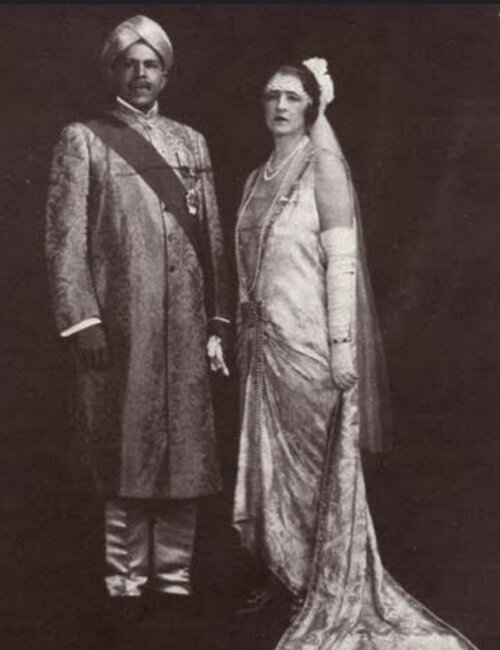
Pre-colonial texts and art sometimes idealized fairer complexions in certain contexts (e.g., some descriptions of deities or elites). Colonial rule entrenched Eurocentric standards: British administrators, media, and social hierarchies positioned “white” as superior. Post-independence, this persisted through Bollywood (fair-skinned heroines dominating casting until recent shifts), fairness cream advertising (a multi-billion-dollar industry), matrimonial ads explicitly requesting “fair” brides, and everyday language where “gori” (fair/white) carries positive connotations while darker skin faces subtle or overt bias.
Studies and surveys consistently document this. Men in various Indian samples express stronger preference for lighter-skinned partners in dating and marriage contexts. Employment bias research has shown colourism affecting opportunities, with lighter skin conferring advantages in some professional and social settings. In marriage markets—still heavily arranged or semi-arranged in much of India—skin tone remains a factor alongside caste, education, and income. Darker-skinned women often report greater difficulty in the arranged marriage system, while lighter skin is framed as an asset.
This colourism directly fuels fascination with white women. White skin represents the extreme end of the preferred spectrum. For some men, a white partner is not just aesthetic preference but a way to “upgrade” the next generation’s starting position in a colourist society. Mixed children typically inherit intermediate to lighter skin tones compared to average Indian baselines (skin color being polygenic). In colourist environments, these children may face fewer biases in marriage prospects, media representation, social perception, or even certain job markets. The desire for “light skin babies” is repeatedly voiced in online spaces as a practical strategy for giving offspring advantages within existing hierarchies.
Colonialism did not invent colourism but weaponized and globalized it. Western media, Hollywood beauty standards, and the historical association of whiteness with power, wealth, and modernity reinforced it. In the diaspora, exposure to these standards intensifies the effect for some individuals.
This does not mean caste equals skin color—enormous individual variation exists, and environment, nutrition, and selection play roles. However, the correlation contributes to colourism reinforcing caste-like thinking. Marrying lighter or “up” in phenotype can be perceived (consciously or not) as status elevation, even if crossing traditional caste lines. Some discussions frame white partners as the ultimate “upgrade” beyond caste—transcending local hierarchies by accessing global phenotypic prestige.
In practice, many families still prioritize caste compatibility in marriages. Yet the pull toward white partners among some upwardly mobile men reflects a hybrid logic: traditional endogamy for cultural continuity combined with phenotypic aspiration for offspring. Online voices sometimes describe diluting “lineages with whites like an achievement,” viewing it as outsmarting both internal colourism/caste constraints and external stereotypes.
Caste endogamy historically preserved ancestry clusters. Colourism within and across castes amplified preferences for lighter partners. The result is a feedback loop where lighter skin signals higher status, and white women represent the apex of that signal for some observers.
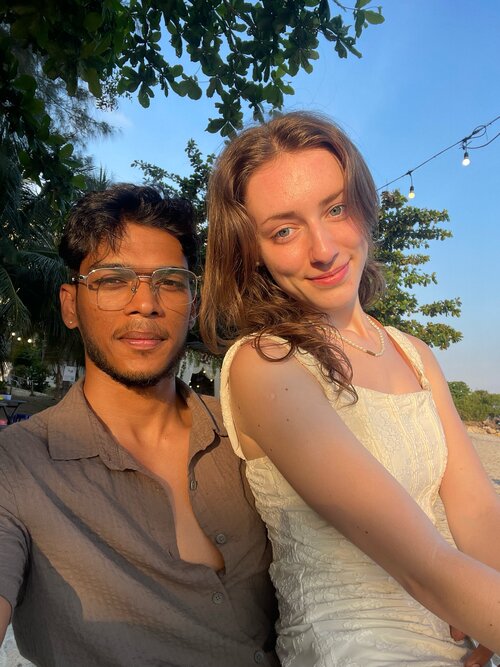
In Western diaspora contexts (US, UK, Canada, Australia), high-earning Indian men—common in tech, medicine, finance, and entrepreneurship—possess significant resources and status. Dating markets reward these traits. Some white women are attracted to successful, culturally distinct partners. For the men, a white partner can represent:
Dynamics are bidirectional but asymmetrical in perception. Some Indian men report white women as status trophies or genuine attractions. Critics label it internalized racism or fetishization. Real-world outcomes vary: many mixed relationships are stable and loving; others reflect status-seeking or mismatched expectations. Children of such unions often benefit from dual cultural exposure and, in colourist contexts, phenotypic advantages.
This appears in online expressions where Indian men describe Indian women as “toxic” or less desirable compared to white women, or express shame about aspects of Indian dating culture while elevating white alternatives. Bollywood’s historical promotion of fair heroines and the fairness industry reinforce the message that lighter is better. For some, fascination with white women stems partly from this devaluation: the white partner validates or “corrects” perceived shortcomings in one’s own group.
Not all expressions are internalized self-hate. Individual aesthetic preferences exist independently—people of all backgrounds have varied tastes. However, when patterns cluster around skin tone, status, and “upgrade” language for offspring, colourism and historical conditioning are evident contributors. Tweets and posts frequently link insecurity about “shit skin” or caste hierarchies directly to seeking white partners as elevation.
Another post observed: “Both of the genders love outsmarting each other by diluting their lineages with the whites like an achievement.” Here the language of lineage “dilution” with whites frames mixed offspring as a strategic win, echoing desires for lighter babies and status through admixture.57
Discussions around Bollywood influence appear: “Indian men grow up on this delusion from Bollywood that white girls will want them, but they literally are rated as the least desirable to date, worldwide…” This highlights media-driven expectations clashing with dating market realities, fueling both fascination and frustration.60
Preferences are sometimes stated plainly: “The majority of Indians prefer white women because they are beautiful and aren’t toxic like Indian women.” While this generalizes, it captures the framing of white women as superior in beauty and temperament for some men.53
Other posts defend or contextualize: Indian men marrying white women described as “GOOD men,” or shame expressed toward perceived behaviors of some Indian women leading to preference for alternatives.64
Colourism threads often intersect: posts about darker skin being seen as “uglier” or less marriageable in India, with lighter partners (including across racial lines) framed as desirable catches.54
These examples are not exhaustive but representative of vocal segments in online Indian and diaspora discourse. They reveal recurring motifs: beauty standards tied to lightness, status via white partners, lineage “upgrade” through mixed children, and links to caste hierarchies or internalized insecurities.
Counter-dynamics exist. Many Indian men prioritize cultural compatibility, family approval, shared values, and endogamy. Surveys and marriage data show the majority of marriages in India remain within communities. Diaspora second-generation individuals often navigate hybrid identities, sometimes preferring partners with similar backgrounds. White women are not monolithic; preferences and outcomes vary widely.
Fetishization versus genuine connection is another axis. Some relationships reduce partners to racial categories (skin, “exotic” status). Others are ordinary attractions amplified by globalized dating apps. Mixed children’s experiences differ: many thrive with advantages in multicultural settings; others navigate identity questions or residual colourism.
Money and status create power imbalances in some cases. High-earning Indian men may attract partners partly through resources, mirroring patterns in other successful immigrant groups. This can fuel perceptions of transactional elements, though individual relationships defy generalizations.
At the same time, these patterns highlight universal human tendencies: status-seeking in mate choice, aesthetic preferences shaped by environment and media, and strategic thinking about offspring outcomes. Similar dynamics appear in other groups with colourism histories or status hierarchies. Ashkenazi Jewish historical admixture with Europeans offers a parallel long-term example of phenotypic shift through unions and selection, though driven by different historical circumstances.
Individual agency matters most. Preferences are personal. Societal colourism and caste structures create the environment where such fascinations gain traction for some. Reducing colourism—through media representation, challenging fairness industries, and cultural shifts—would likely diminish the intensity of these patterns over time.
The desire for “mixed babies” specifically ties back to practical colourism: lighter offspring navigating Indian marriage markets, social perception, or global contexts with fewer phenotypic penalties. It is a rational response within existing hierarchies, even if the hierarchies themselves are suboptimal.
In summary, Indian male fascination with white women and mixed offspring, where it exists, stems primarily from entrenched colourism (amplified by colonialism and media), caste-linked ancestry and status perceptions, economic mobility enabling broader options, and elements of internalized valuation of lighter phenotypes. Public discourse on platforms like X reveals these threads explicitly through discussions of beauty, toxicity contrasts, lineage upgrades, and hierarchical elevation. These are observable social dynamics, not monolithic traits of any group. Understanding them requires separating individual choice from structural influences while recognizing that human mate preferences have always involved status, aesthetics, and legacy considerations across all populations.
@Chadeep
@Resonance
@Awest
@160cmcurry
This essay explores these dynamics in depth, drawing on observable social patterns, genetic and historical context, and real examples from public discourse on X (formerly Twitter). It treats the topic as a human biodiversity and social psychology phenomenon rather than moral judgment. Preferences exist across all groups; the Indian case is notable for how explicitly colourism and status intersect with partner choice and aspirations for offspring.
Colourism as the Foundational Driver
Colourism—the preference for lighter skin within a racial or ethnic group—runs deep in Indian society. It predates British colonialism but was significantly amplified by it. Genetic studies show that Indian populations carry varying proportions of Ancient North Indian (ANI, with West Eurasian/Steppe ancestry often linked to relatively lighter pigmentation) and Ancient South Indian (ASI, darker baseline) components. Higher average ANI ancestry in many North Indian and certain higher-caste groups correlates statistically with lighter skin tones on average. This is not deterministic for individuals but creates population-level gradients.Pre-colonial texts and art sometimes idealized fairer complexions in certain contexts (e.g., some descriptions of deities or elites). Colonial rule entrenched Eurocentric standards: British administrators, media, and social hierarchies positioned “white” as superior. Post-independence, this persisted through Bollywood (fair-skinned heroines dominating casting until recent shifts), fairness cream advertising (a multi-billion-dollar industry), matrimonial ads explicitly requesting “fair” brides, and everyday language where “gori” (fair/white) carries positive connotations while darker skin faces subtle or overt bias.
Studies and surveys consistently document this. Men in various Indian samples express stronger preference for lighter-skinned partners in dating and marriage contexts. Employment bias research has shown colourism affecting opportunities, with lighter skin conferring advantages in some professional and social settings. In marriage markets—still heavily arranged or semi-arranged in much of India—skin tone remains a factor alongside caste, education, and income. Darker-skinned women often report greater difficulty in the arranged marriage system, while lighter skin is framed as an asset.
This colourism directly fuels fascination with white women. White skin represents the extreme end of the preferred spectrum. For some men, a white partner is not just aesthetic preference but a way to “upgrade” the next generation’s starting position in a colourist society. Mixed children typically inherit intermediate to lighter skin tones compared to average Indian baselines (skin color being polygenic). In colourist environments, these children may face fewer biases in marriage prospects, media representation, social perception, or even certain job markets. The desire for “light skin babies” is repeatedly voiced in online spaces as a practical strategy for giving offspring advantages within existing hierarchies.
Colonialism did not invent colourism but weaponized and globalized it. Western media, Hollywood beauty standards, and the historical association of whiteness with power, wealth, and modernity reinforced it. In the diaspora, exposure to these standards intensifies the effect for some individuals.
Caste System Intersections and Ancestry Realities
The caste system adds another layer. While primarily a system of endogamous social groups (jatis) with historical varna classifications, genetic data reveals correlations between certain caste categories and ancestry proportions. Groups traditionally labeled “higher” in some hierarchies often show elevated West Eurasian/ANI components on average, which aligns with lighter average skin tones in population studies. Lower average admixture in other groups correlates with darker baselines.This does not mean caste equals skin color—enormous individual variation exists, and environment, nutrition, and selection play roles. However, the correlation contributes to colourism reinforcing caste-like thinking. Marrying lighter or “up” in phenotype can be perceived (consciously or not) as status elevation, even if crossing traditional caste lines. Some discussions frame white partners as the ultimate “upgrade” beyond caste—transcending local hierarchies by accessing global phenotypic prestige.
In practice, many families still prioritize caste compatibility in marriages. Yet the pull toward white partners among some upwardly mobile men reflects a hybrid logic: traditional endogamy for cultural continuity combined with phenotypic aspiration for offspring. Online voices sometimes describe diluting “lineages with whites like an achievement,” viewing it as outsmarting both internal colourism/caste constraints and external stereotypes.
Caste endogamy historically preserved ancestry clusters. Colourism within and across castes amplified preferences for lighter partners. The result is a feedback loop where lighter skin signals higher status, and white women represent the apex of that signal for some observers.
Status, Money, and Economic Mobility Dynamics
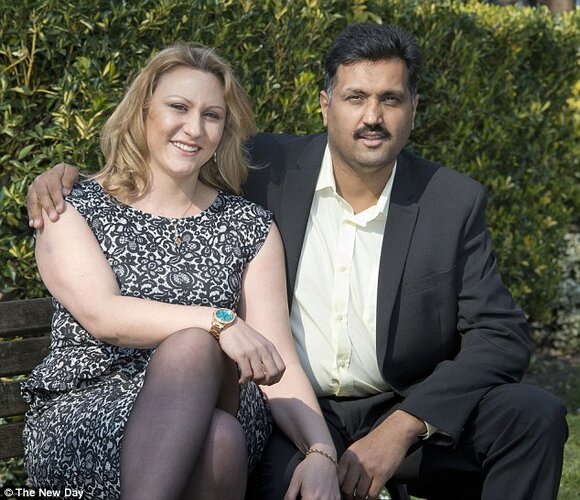
Economic success amplifies these patterns. In India, particularly in smaller towns or conservative communities, bringing home a white (“gori”) wife or girlfriend is often treated as a major status symbol. It signals international exposure, wealth, or cosmopolitan success. Articles and anecdotal reports describe bragging rights in family and social circles—“I married a foreigner.” This is not unique to Indians; status through exotic or high-prestige partners appears across cultures. For Indian men, it intersects with colourism: the white partner embodies both foreign prestige and the preferred skin tone extreme.In Western diaspora contexts (US, UK, Canada, Australia), high-earning Indian men—common in tech, medicine, finance, and entrepreneurship—possess significant resources and status. Dating markets reward these traits. Some white women are attracted to successful, culturally distinct partners. For the men, a white partner can represent:
- Aesthetic preference (features, skin, hair variation).
- Status confirmation (“I made it”).
- Escape from perceived toxicity or cultural pressures in Indian dating scenes (arranged marriage expectations, family involvement, or stereotypes about Indian women).
Dynamics are bidirectional but asymmetrical in perception. Some Indian men report white women as status trophies or genuine attractions. Critics label it internalized racism or fetishization. Real-world outcomes vary: many mixed relationships are stable and loving; others reflect status-seeking or mismatched expectations. Children of such unions often benefit from dual cultural exposure and, in colourist contexts, phenotypic advantages.
Internalized Racism and Self-Devaluation Elements
A recurring theme in discussions is internalized racism or colourism—internalizing societal devaluation of darker skin or Indian features. Colonial education, media, and global beauty standards can lead some to view their own group’s average phenotype as inferior. White features become idealized.This appears in online expressions where Indian men describe Indian women as “toxic” or less desirable compared to white women, or express shame about aspects of Indian dating culture while elevating white alternatives. Bollywood’s historical promotion of fair heroines and the fairness industry reinforce the message that lighter is better. For some, fascination with white women stems partly from this devaluation: the white partner validates or “corrects” perceived shortcomings in one’s own group.
Not all expressions are internalized self-hate. Individual aesthetic preferences exist independently—people of all backgrounds have varied tastes. However, when patterns cluster around skin tone, status, and “upgrade” language for offspring, colourism and historical conditioning are evident contributors. Tweets and posts frequently link insecurity about “shit skin” or caste hierarchies directly to seeking white partners as elevation.
Real Examples from Public Discourse on X
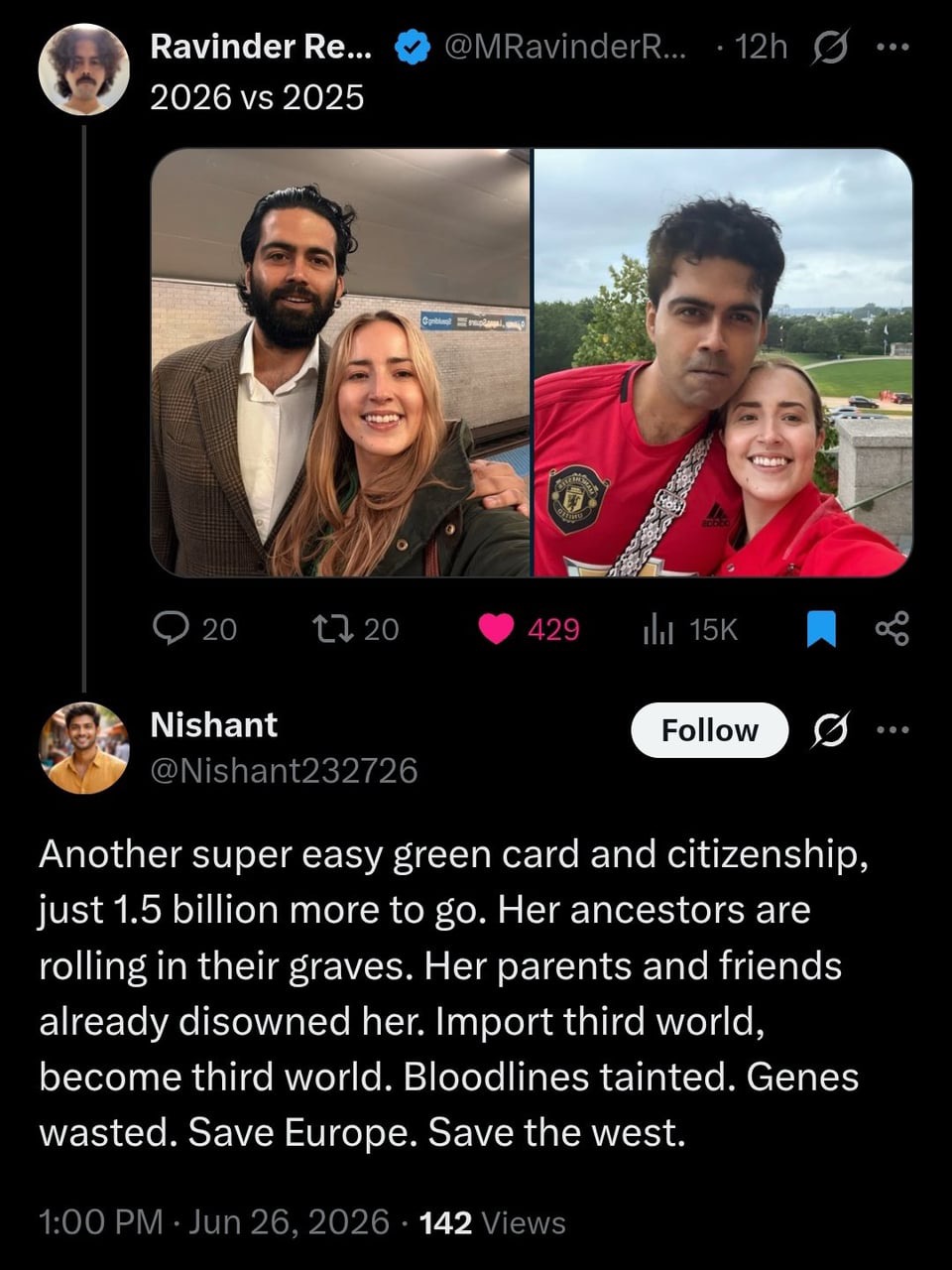
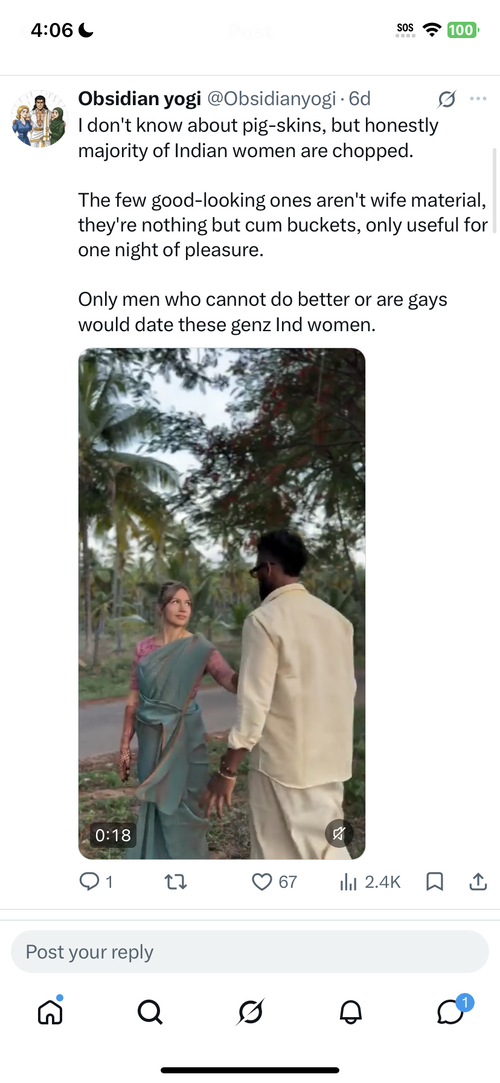
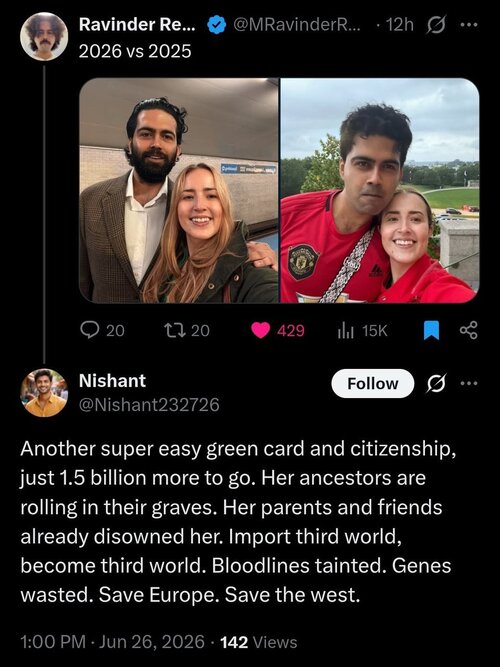
Public posts on X illustrate these dynamics vividly. One user noted: “Indians are insecure about their shit skin, and also the caste system hierarchy they grow up make some feel inferior while others superior. And Finding white partners seems an upgrade for them.” This directly ties colourism, caste perception, and white preference as status elevation.59Another post observed: “Both of the genders love outsmarting each other by diluting their lineages with the whites like an achievement.” Here the language of lineage “dilution” with whites frames mixed offspring as a strategic win, echoing desires for lighter babies and status through admixture.57
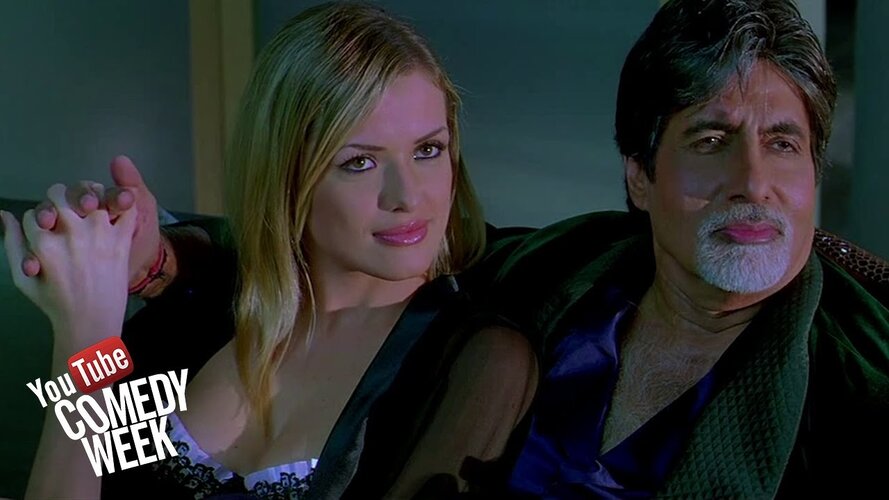
Discussions around Bollywood influence appear: “Indian men grow up on this delusion from Bollywood that white girls will want them, but they literally are rated as the least desirable to date, worldwide…” This highlights media-driven expectations clashing with dating market realities, fueling both fascination and frustration.60
Preferences are sometimes stated plainly: “The majority of Indians prefer white women because they are beautiful and aren’t toxic like Indian women.” While this generalizes, it captures the framing of white women as superior in beauty and temperament for some men.53
Other posts defend or contextualize: Indian men marrying white women described as “GOOD men,” or shame expressed toward perceived behaviors of some Indian women leading to preference for alternatives.64
Colourism threads often intersect: posts about darker skin being seen as “uglier” or less marriageable in India, with lighter partners (including across racial lines) framed as desirable catches.54
These examples are not exhaustive but representative of vocal segments in online Indian and diaspora discourse. They reveal recurring motifs: beauty standards tied to lightness, status via white partners, lineage “upgrade” through mixed children, and links to caste hierarchies or internalized insecurities.
Broader Dynamics and Variations
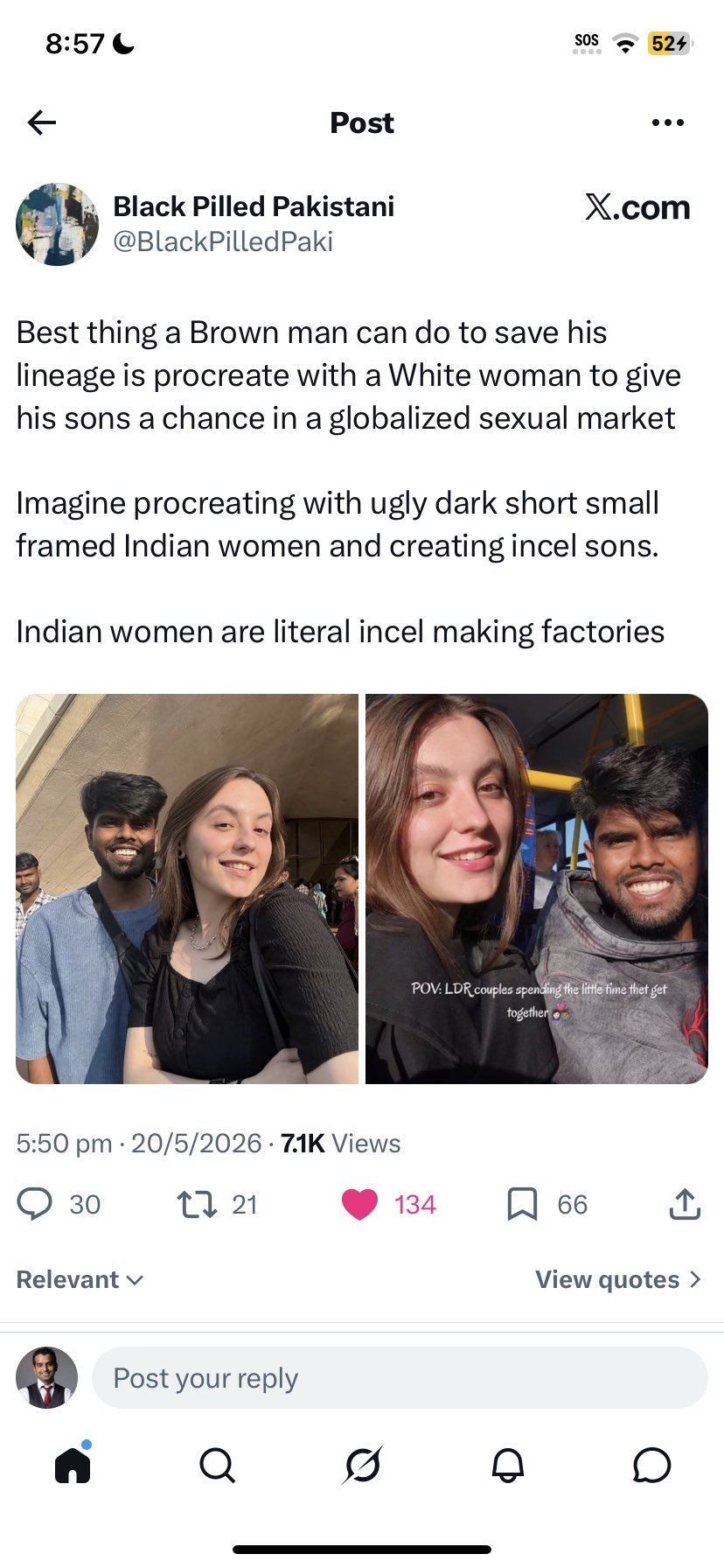
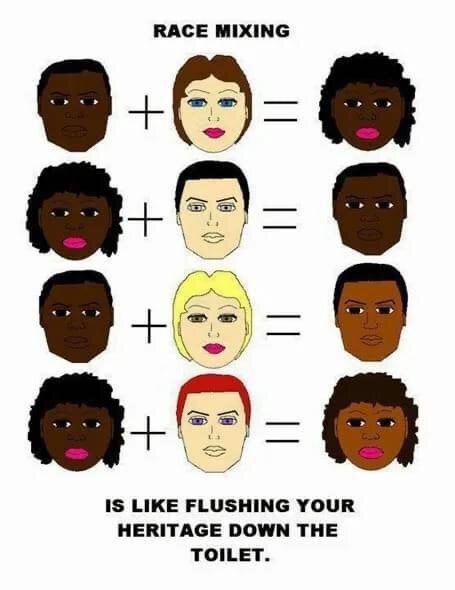
The pattern is stronger in certain subgroups: upwardly mobile, Western-exposed, or online-active men (tech professionals, students abroad, forum participants). In looksmax or blackpill-adjacent spaces, it manifests as explicit strategy—“race mixing with white women as final solution to the currycel problem”—where lighter offspring are seen as escaping average SMV penalties, colourist biases, and stereotypes.Counter-dynamics exist. Many Indian men prioritize cultural compatibility, family approval, shared values, and endogamy. Surveys and marriage data show the majority of marriages in India remain within communities. Diaspora second-generation individuals often navigate hybrid identities, sometimes preferring partners with similar backgrounds. White women are not monolithic; preferences and outcomes vary widely.
Fetishization versus genuine connection is another axis. Some relationships reduce partners to racial categories (skin, “exotic” status). Others are ordinary attractions amplified by globalized dating apps. Mixed children’s experiences differ: many thrive with advantages in multicultural settings; others navigate identity questions or residual colourism.
Money and status create power imbalances in some cases. High-earning Indian men may attract partners partly through resources, mirroring patterns in other successful immigrant groups. This can fuel perceptions of transactional elements, though individual relationships defy generalizations.
Implications and Human Context
This fascination and the aspiration for mixed offspring reflect real pressures from colourism and caste legacies. Lighter skin confers measurable social advantages in parts of Indian society and global perception. For some men, white partners and lighter children represent escape velocity from those constraints—status, phenotypic upgrade, and legacy improvement.At the same time, these patterns highlight universal human tendencies: status-seeking in mate choice, aesthetic preferences shaped by environment and media, and strategic thinking about offspring outcomes. Similar dynamics appear in other groups with colourism histories or status hierarchies. Ashkenazi Jewish historical admixture with Europeans offers a parallel long-term example of phenotypic shift through unions and selection, though driven by different historical circumstances.
Individual agency matters most. Preferences are personal. Societal colourism and caste structures create the environment where such fascinations gain traction for some. Reducing colourism—through media representation, challenging fairness industries, and cultural shifts—would likely diminish the intensity of these patterns over time.
The desire for “mixed babies” specifically ties back to practical colourism: lighter offspring navigating Indian marriage markets, social perception, or global contexts with fewer phenotypic penalties. It is a rational response within existing hierarchies, even if the hierarchies themselves are suboptimal.
In summary, Indian male fascination with white women and mixed offspring, where it exists, stems primarily from entrenched colourism (amplified by colonialism and media), caste-linked ancestry and status perceptions, economic mobility enabling broader options, and elements of internalized valuation of lighter phenotypes. Public discourse on platforms like X reveals these threads explicitly through discussions of beauty, toxicity contrasts, lineage upgrades, and hierarchical elevation. These are observable social dynamics, not monolithic traits of any group. Understanding them requires separating individual choice from structural influences while recognizing that human mate preferences have always involved status, aesthetics, and legacy considerations across all populations.
@Chadeep
@Resonance
@Awest
@160cmcurry
Attachments
-
 IMG_8409.jpeg173.7 KB · Views: 0
 -
 IMG_8767.jpeg36.8 KB · Views: 0
 -
 IMG_8710.jpeg126.3 KB · Views: 0
 -
 IMG_8711.jpeg58.6 KB · Views: 0
 -
 IMG_8712.jpeg98.6 KB · Views: 0
 -
 IMG_8616.jpeg223.8 KB · Views: 0
 -
 IMG_8613.png969.7 KB · Views: 0
 -
 IMG_8601.jpeg85.6 KB · Views: 0
 -
 IMG_8598.jpeg728.7 KB · Views: 0
 -
 IMG_8599.png1.8 MB · Views: 0
 -
 IMG_8595.jpeg46.9 KB · Views: 0
 -
 IMG_8527.jpeg44 KB · Views: 0
 -
 IMG_8521.jpeg89.3 KB · Views: 0
 -
 IMG_8523.jpeg279.2 KB · Views: 0
 -
 IMG_8520.jpeg258.7 KB · Views: 0
 -
 IMG_8493.jpeg105.7 KB · Views: 0
 -
 IMG_8476.png3.2 MB · Views: 0
 -
 IMG_8478.jpeg237.8 KB · Views: 0
 -
 IMG_8437.jpeg144.5 KB · Views: 0
 -
 IMG_8376.jpeg125.5 KB · Views: 0
 -
 IMG_8377.jpeg113.1 KB · Views: 0
 -
 IMG_8378.jpeg217.9 KB · Views: 0
 -
 IMG_8375.jpeg103.3 KB · Views: 0
 -
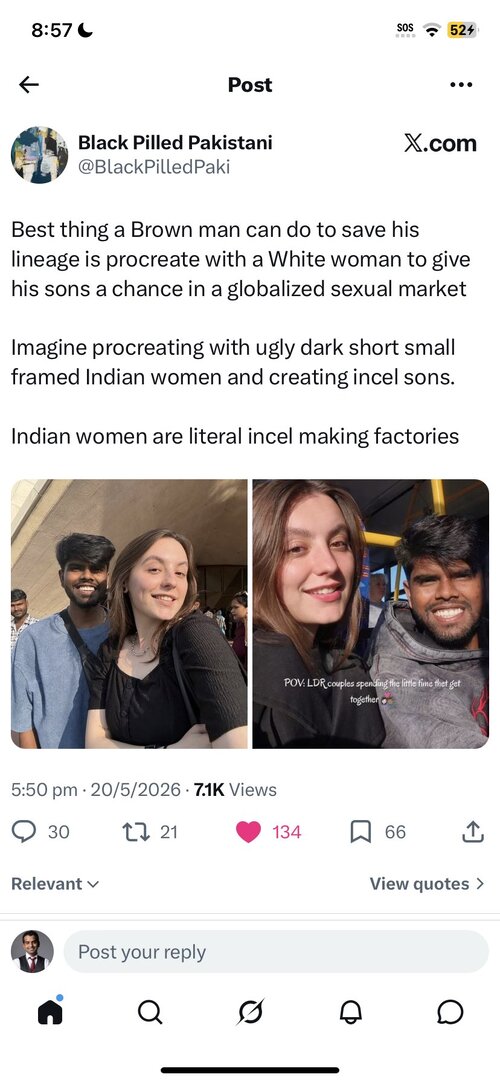 image.jpeg197.6 KB · Views: 0