


Vass
I'm not attracted to femboys.
- Joined
- Dec 21, 2025
- Posts
- 962
- Reputation
- 1,524
CaHA is a revolutionary and underrated filler
What is CaHA filler?
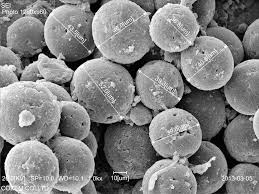
CaHA stands for Calcium Hydroxylapatite. CaHA fillers contain calcium microspheres suspended in a gel. When the gel dissolves, the calcium microspheres remain and act as structural support. CaHA fillers are meant to be injected in deep tissue, such as deep fat pads or the supraperiosteum. CaHA is fully biodegradable (both the gel and the microspheres) and it's effects commonly last from 12-18 months. CaHA has an EXTREMELY high viscosity (high G') and can effectively mimic bone. G', or G-Prime, refers to the measure of a dermal filler's stiffness, structural support, and elasticity. It dictates how well a product resists deformation under pressure.
Calcium Hydroxylapatite vs Hyaluronic Acid
Both CaHA and HA are fully biodegradable as they are made by materials naturally found in the body. However unlike HA which can be dissolved via the enzyme Hyaluronidase in 24 hours, there is no enzyme or shit that you can stick into your CaHA and dissolve it. If you make a mistake you will just have to wait it out until it naturally metabolizes.
The biggest difference and benefit of CaHA and HA is that CaHA is MUCH more viscous and high G' than HA. According to lab data, the PA (pascal, the standard international unit for pressure) of a high G' Hyaluronic Acid filler such as Revolax SubQ is 280PA. The PA for CaHA filler such as from Radiesse is 1450PA. It's not fucking close bro, CaHA is that much harder. Of course it's infinitely weaker than bone, which can withstand up to 250 megapascals before fracturing.
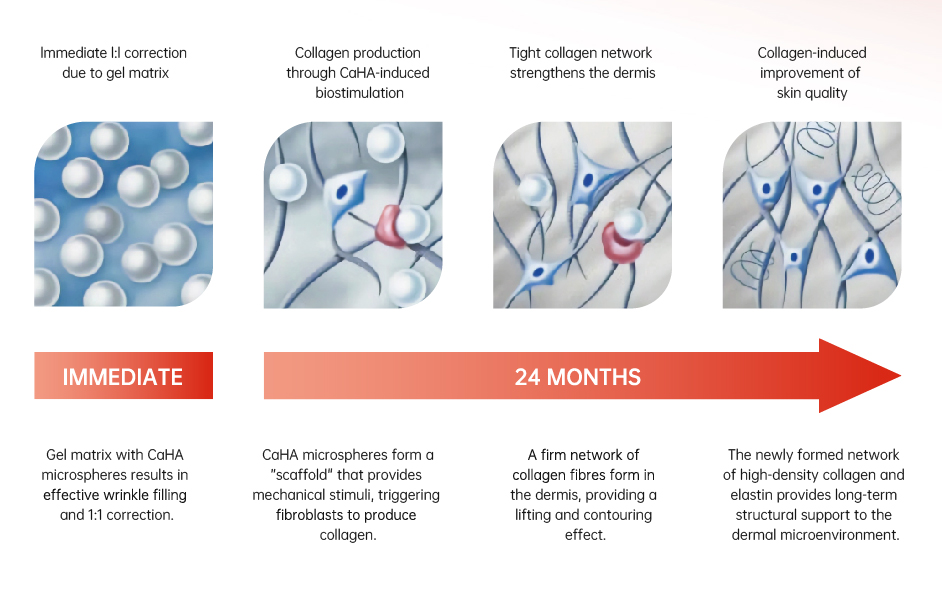
CaHA stimulates collagen production whereas HA does this minimally. This means that even after CaHA is metabolized, the collagen will still be providing some amount of lift.
Looksmaxxing applications
Now what the fuck is there to say, it's literally HA but better. Unfortunately I can't try this right now because I just ordered Revolax SubQ and THEN learned about CaHA. Kinda buns cuz CaHA literally has a 5x stronger PA. Anyways, hard filler that can mimic bone? You all should try this I don't know why anybody hasn't made a thread about this yet. From my research there seems to be no downsides compared to HA except that it cannot be instantly dissolved, but is that so big of a deal, like unless you make an ASS result and absolutely botch yourself, you won't need to dissolve it.
In the near future I will certainly be trying this, maybe after my HA naturally dissolves and i'm ready for my next round of filler i'll go for CaHA.
@Senescence @Eggshells @kdev @Blobmob
What is CaHA filler?
CaHA stands for Calcium Hydroxylapatite. CaHA fillers contain calcium microspheres suspended in a gel. When the gel dissolves, the calcium microspheres remain and act as structural support. CaHA fillers are meant to be injected in deep tissue, such as deep fat pads or the supraperiosteum. CaHA is fully biodegradable (both the gel and the microspheres) and it's effects commonly last from 12-18 months. CaHA has an EXTREMELY high viscosity (high G') and can effectively mimic bone. G', or G-Prime, refers to the measure of a dermal filler's stiffness, structural support, and elasticity. It dictates how well a product resists deformation under pressure.
Calcium Hydroxylapatite vs Hyaluronic Acid
Both CaHA and HA are fully biodegradable as they are made by materials naturally found in the body. However unlike HA which can be dissolved via the enzyme Hyaluronidase in 24 hours, there is no enzyme or shit that you can stick into your CaHA and dissolve it. If you make a mistake you will just have to wait it out until it naturally metabolizes.
The biggest difference and benefit of CaHA and HA is that CaHA is MUCH more viscous and high G' than HA. According to lab data, the PA (pascal, the standard international unit for pressure) of a high G' Hyaluronic Acid filler such as Revolax SubQ is 280PA. The PA for CaHA filler such as from Radiesse is 1450PA. It's not fucking close bro, CaHA is that much harder. Of course it's infinitely weaker than bone, which can withstand up to 250 megapascals before fracturing.
CaHA stimulates collagen production whereas HA does this minimally. This means that even after CaHA is metabolized, the collagen will still be providing some amount of lift.
Looksmaxxing applications
Now what the fuck is there to say, it's literally HA but better. Unfortunately I can't try this right now because I just ordered Revolax SubQ and THEN learned about CaHA. Kinda buns cuz CaHA literally has a 5x stronger PA. Anyways, hard filler that can mimic bone? You all should try this I don't know why anybody hasn't made a thread about this yet. From my research there seems to be no downsides compared to HA except that it cannot be instantly dissolved, but is that so big of a deal, like unless you make an ASS result and absolutely botch yourself, you won't need to dissolve it.
In the near future I will certainly be trying this, maybe after my HA naturally dissolves and i'm ready for my next round of filler i'll go for CaHA.
@Senescence @Eggshells @kdev @Blobmob



 , CaHa filler is a retarded diy just stick to "TRUE DIY FILLER" HA my pookie


