Iamspace
- Joined
- Jan 3, 2026
- Posts
- 916
- Reputation
- 961
The Missing Piece in Looksmaxxing: Soft Tissue
The looksmaxxing community often treats the face like it is nothing more than a collection of bones. Almost every discussion eventually turns into jaw projection, cheekbone width, orbital shape, or chin development. While skeletal structure does play a major role in facial appearance, the obsession with bones has made people overlook another huge factor: the soft tissues that actually create the final appearance of the face. A person's attractiveness is not determined by their skull alone, but by the relationship between their bones, muscles, fat pads, skin, and how all of those structures interact.Two people can have very similar bone structure and look completely different because their soft tissue composition changes how their features are displayed. Fat distribution can either sharpen or blur the underlying structure. A person with strong cheekbones may not have a visible midface contour if their malar fat pads are fuller or positioned differently. Meanwhile, someone with average bone structure can appear more defined because their facial fat distribution creates better shadows and angles.
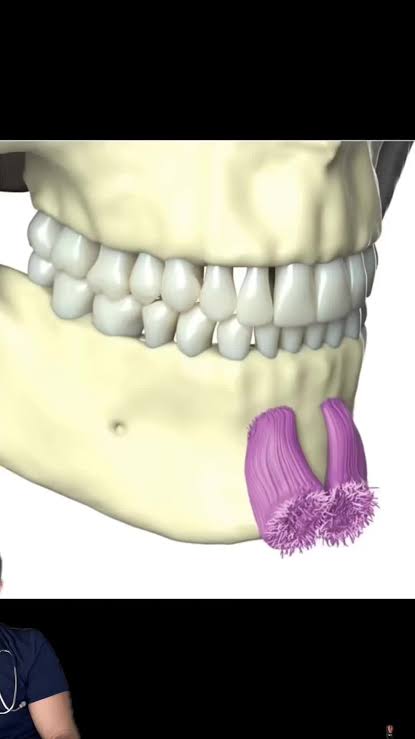
Example: The chin
The chin may or may not be the ugliest fucking muscle in the human body but its a great example. You can have shit chin projection with a mediocre mandible and its going to going to cause the chin muscle to hypertrophy in a chance to support your lips.
This will end up with you looking near identical to someone with a average mandible and average chin. A lot of your desires like bonemass can be frauded by some stupid shit like winking often which in turn grows the muscle in your supra and or infra possibly your zygos aswell if your a dumbass like myself who needs to put his full face into something like a wink
Facial Fat Pads: The Hidden Architecture of the Face
Facial fat is often discussed as if it is simply "extra weight," but it is much more complicated than that. The face contains multiple fat compartments, including the buccal fat pad, malar fat pads, nasolabial fat, and areas around the temples and jaw. These structures influence things like cheek projection, facial width, under-eye appearance, and the transition between different facial regions.For example, the buccal fat pad can influence how hollow or full the cheeks appear. However, removing or reducing facial fat is not automatically an improvement because youthful faces usually have strategic fullness in certain areas. The goal is not just having the least amount of facial fat possible; it is having balanced distribution. Too much fullness can hide structure, but too little can create a gaunt or aged appearance.
A lot of people chase sharper cheekbones and jawlines without realizing that their actual limitation might not be their bones. Sometimes the structure is already there but is hidden by soft tissue. Improving body composition, maintaining healthy skin, and understanding facial fat distribution can change someone's appearance without altering their skeletal structure.
Facial Muscles: The Features People Ignore
Muscle is another overlooked part of facial aesthetics. The face is not static; it is a dynamic structure controlled by dozens of muscles that affect expression, shape, and tension. The masseter, temporalis, orbicularis oculi, and muscles around the mouth all contribute to how a person's face reads.The masseter, for example, can influence lower-face width and jaw definition. The temporalis can affect the appearance of the temples and upper face. Even muscles involved in posture and the neck can influence how the jawline is perceived by changing the relationship between the chin, neck, and lower face.
However, the conversation is usually reduced to "get a better jaw," when the appearance of the jaw is actually a combination of mandibular structure, muscle size, body fat, skin quality, and surrounding tissue. A strong jawbone with underdeveloped surrounding structures may not create the same effect as a balanced combination of bone and muscle.
Bone Is the Framework, Not the Entire Building
Bones create the foundation, but soft tissue determines how that foundation is presented. The skull provides the structure that everything sits on, but the final appearance comes from the layers covering it. This is why changes in body fat, muscle development, aging, hormones, and even hydration can noticeably change someone's face.A person with excellent genetics is not necessarily someone with the largest jaw or widest cheekbones. Often it is someone whose bone structure, facial fat distribution, muscle development, and skin quality work together harmoniously. A balanced face is created by proportions and relationships, not one isolated measurement.
The looksmaxxing community would benefit from moving beyond the idea that every facial difference can be explained by bone. Understanding soft tissue gives a much more complete picture of why faces look the way they do and why improving appearance involves more than simply chasing skeletal traits.
Hope this thread was cool guys love you
havent been getting repped lately had to push out some decent quality bullshit jfl


@xqety
@swt
@cooled
@sphenoidnr
@blamingmylife
@simplybreathing