yoloololzz
Iron
- Joined
- Aug 10, 2026
- Posts
- 9
- Reputation
- 3
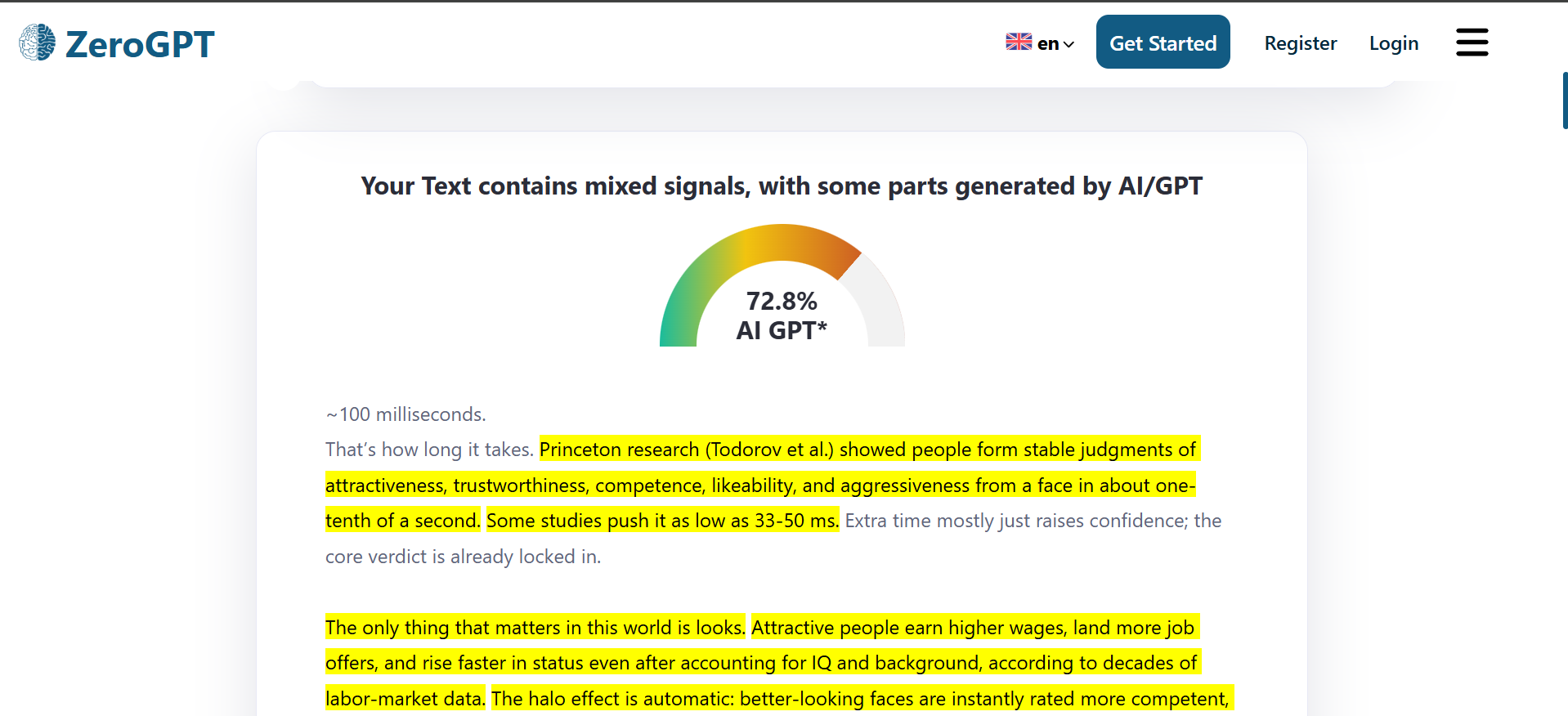
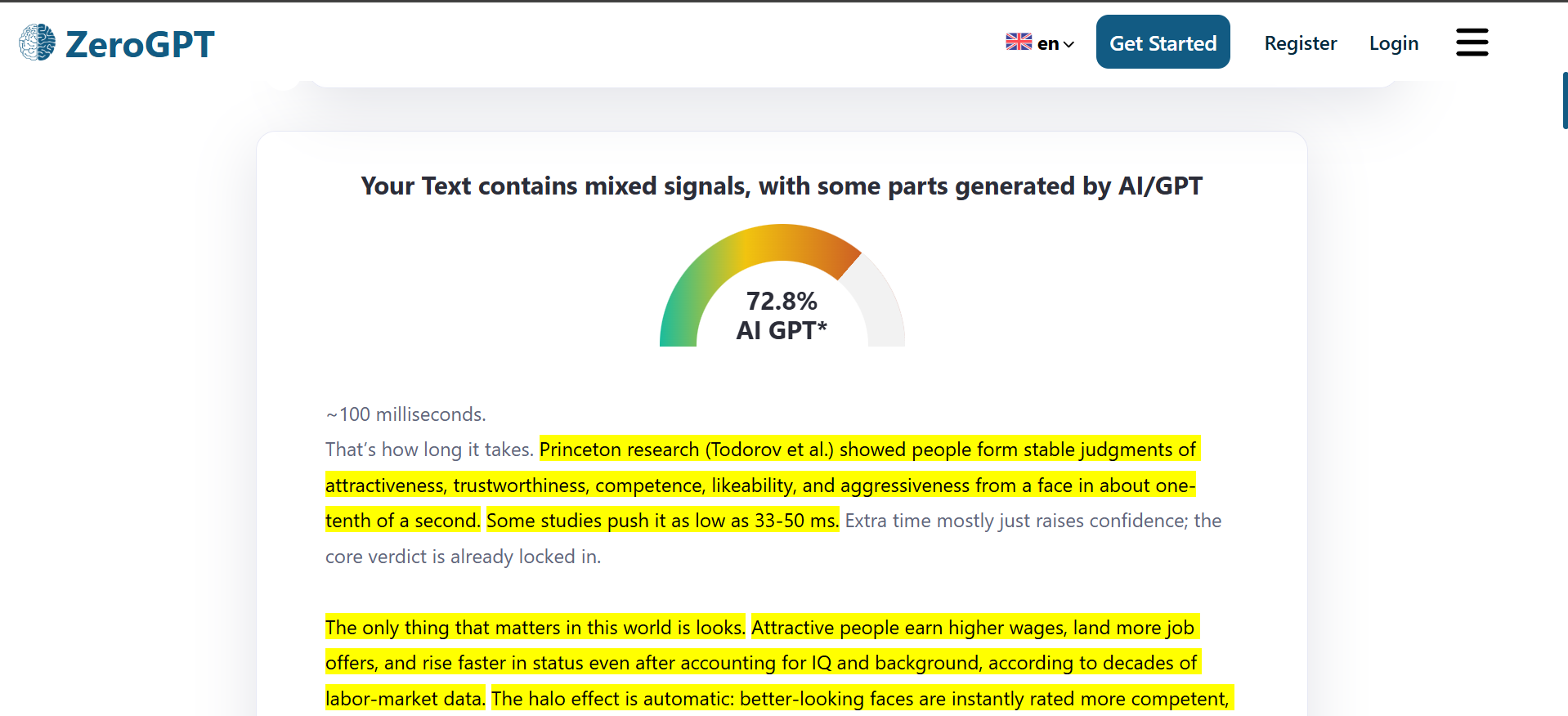
~100 milliseconds.
That’s how long it takes. Princeton research (Todorov et al.) showed people form stable judgments of attractiveness, trustworthiness, competence, likeability, and aggressiveness from a face in about one-tenth of a second. Some studies push it as low as 33-50 ms. Extra time mostly just raises confidence; the core verdict is already locked in.
The only thing that matters in this world is looks. Attractive people earn higher wages, land more job offers, and rise faster in status even after accounting for IQ and background, according to decades of labor-market data. The halo effect is automatic: better-looking faces are instantly rated more competent, trustworthy, and intelligent across cultures. In dating and mating markets the pattern is absolute—looks decide who gets chosen first and most often. Everything else is secondary noise.
Attractive people get hired more, paid more, trusted more, and given the benefit of the doubt on competence and character within a tenth of a second. Ugly people get the opposite: fewer callbacks, lower wages, harsher judgments, and automatic assumptions of lower status or ability. The halo effect is automatic and measurable-better-looking faces are rated higher on intelligence, trustworthiness, and success even when the data says otherwise. Treatment follows the face, not the resume or the personality.
Being ugly is the single worst thing that can happen to a human. Every measurable outcome turns against you: lower wages, fewer job callbacks, weaker social networks, and constant negative snap judgments on competence and trustworthiness within 100 milliseconds.
Attractive people get the beauty premium—higher earnings, promotions, and the benefit of the doubt—while the unattractive face an automatic penalty that compounds for decades. Dating markets discard you first; hiring managers do the same. The data is clear and brutal: looks decide treatment more than almost anything else, so being ugly is permanent, visible, and inescapable disadvantage.
So in short, Looks are everything. First impressions form in under 100 milliseconds from the face alone, locking in judgments of trust, competence, and status before a word is spoken. Attractive people get higher wages, more opportunities, and automatic positive treatment; ugly people get the reverse penalty that compounds for life. "True love" is a myth—romantic attachment is driven by physical attraction and lust, with the brain wiring desire first and attaching stories later. Mating data confirms it: looks dominate initial selection and long-term pair bonding far more than personality or shared values. Everything else is secondary noise.
That’s how long it takes. Princeton research (Todorov et al.) showed people form stable judgments of attractiveness, trustworthiness, competence, likeability, and aggressiveness from a face in about one-tenth of a second. Some studies push it as low as 33-50 ms. Extra time mostly just raises confidence; the core verdict is already locked in.
The only thing that matters in this world is looks. Attractive people earn higher wages, land more job offers, and rise faster in status even after accounting for IQ and background, according to decades of labor-market data. The halo effect is automatic: better-looking faces are instantly rated more competent, trustworthy, and intelligent across cultures. In dating and mating markets the pattern is absolute—looks decide who gets chosen first and most often. Everything else is secondary noise.
Attractive people get hired more, paid more, trusted more, and given the benefit of the doubt on competence and character within a tenth of a second. Ugly people get the opposite: fewer callbacks, lower wages, harsher judgments, and automatic assumptions of lower status or ability. The halo effect is automatic and measurable-better-looking faces are rated higher on intelligence, trustworthiness, and success even when the data says otherwise. Treatment follows the face, not the resume or the personality.
Being ugly is the single worst thing that can happen to a human. Every measurable outcome turns against you: lower wages, fewer job callbacks, weaker social networks, and constant negative snap judgments on competence and trustworthiness within 100 milliseconds.
Attractive people get the beauty premium—higher earnings, promotions, and the benefit of the doubt—while the unattractive face an automatic penalty that compounds for decades. Dating markets discard you first; hiring managers do the same. The data is clear and brutal: looks decide treatment more than almost anything else, so being ugly is permanent, visible, and inescapable disadvantage.
So in short, Looks are everything. First impressions form in under 100 milliseconds from the face alone, locking in judgments of trust, competence, and status before a word is spoken. Attractive people get higher wages, more opportunities, and automatic positive treatment; ugly people get the reverse penalty that compounds for life. "True love" is a myth—romantic attachment is driven by physical attraction and lust, with the brain wiring desire first and attaching stories later. Mating data confirms it: looks dominate initial selection and long-term pair bonding far more than personality or shared values. Everything else is secondary noise.