i wanna mog
Iron
- Joined
- Oct 12, 2024
- Posts
- 232
- Reputation
- 138
MANDIBLE GROWTH
S ince the 2007 Cochrane Review on Class II correction,1 the prevailing catch-cry has been that “you can’t grow mandibles”. The fallacy of this blithe extrapolation lies in the fact that the main criteria used in the comparison of early and late Class II correction was measurement of overjet (mm) and ANB angle (the cephalometric relationship of the maxilla to the mandible). In no way do these measurements accurately compare the differences in mandibular “growth” between the two approaches. We do know that early treatment with functional appliances tends to be more protrusive of the mandible, while later treatment with braces tends to be more retractive of the maxilla. Nonetheless, both approaches will result in reduction of overjet and ANB angle. A slightly better cephalometric measurement would be the facial angle (angle between Frankfort horizontal plane and Nasion to Pogonion), to determine the final position of the mandible relative to the cranial base. As the dental community continues to realise that their precious teeth are actually attached to a head and a body, everyone has suddenly become more airway-conscious. Most dentists and orthodontists now realise that extraction and retraction orthodontics may leave the maxilla and mandible in a posterior position and may decrease oropharyngeal airway volume.
Don’t we need to retract in some cases?
Class II cases can comprise either a retrognathic mandible, prognathic maxilla, or both. However, Mcnamara found as early as 1981 in his publication Components of Class II malocclusion in children 8-10 years of age, that less than 4% of his Class II patients displayed a prognathic maxilla and this figure would be even less if we apply modern standards of an acceptable SNA angle.2 Therefore, the overwhelming majority of Class II cases demand not only development of the mandible, but also development of the maxilla.
WILL THERE BE MANDIBLE GROWTH?
maybe, the studies support both the sides
How can we get the mandible forwards?
1. Elastics
A comprehensive systematic review by Janson et al. (2013) found Class II correction with elastics is mainly dentoalveolar and causes lingual tipping, retrusion and extrusion of upper incisors, with intrusion of lower incisors.
Therefore, there is no good evidence that demonstrates these can translate the mandible.
2. Functional appliances
The largest systematic review (2015) ever conducted into functional appliances for Class II correction screened a massive 2835 studies and found functional treatment by removable appliances may produce effective skeletal outcomes, especially if performed during the pubertal growth phase.
3. Orthognathic Surgery
Mandibular advancement surgery has been used for a long period of time to good short-term effect. According to Proffit’s seminal 2007 review into orthognathic surgery (incorporating over 100 papers, 50 invited contributions and book chapters and 2264 patients), mandibular advancement of less than 10mm overjet during the first year is considered “highly stable”.4 However, after this first year, as much as 20% of mandibular advancement patients experience decrease in mandibular length. In their systematic review, Joss et al. (2010) found that 60% may experience relapse in the long-term and other studies put the figure at 100%.5,6 The most compelling reason for relapse, whether surgical or otherwise, is the nonadaption of the soft tissue environment. “Whenever there is a struggle between muscle and bone, bone yields,” writes Graber in his lauded 1963 manifesto on the influence of muscles on malformation and malocclusion. More recently, a systematic review into BSSO advancement surgery found “as muscles attempt to return to their original positions, they rotate the mandible in a clockwise position, open the bite, and cause relapse”.7 Pepicelli et al. (2005) corroborates it is “well accepted” that the position and function of the facial and mandibular muscles are “critical influences” on alignment and stability.
TLDR :
Mandibular advancement surgery can move the jaw forward effectively, but long-term relapse can occur. relapse may happen because muscles and surrounding soft tissues resist the new mandibular position. Their pull can rotate the mandible backward, alter the bite, and reduce the stability of the advancement.
4. Myofunctional appliances
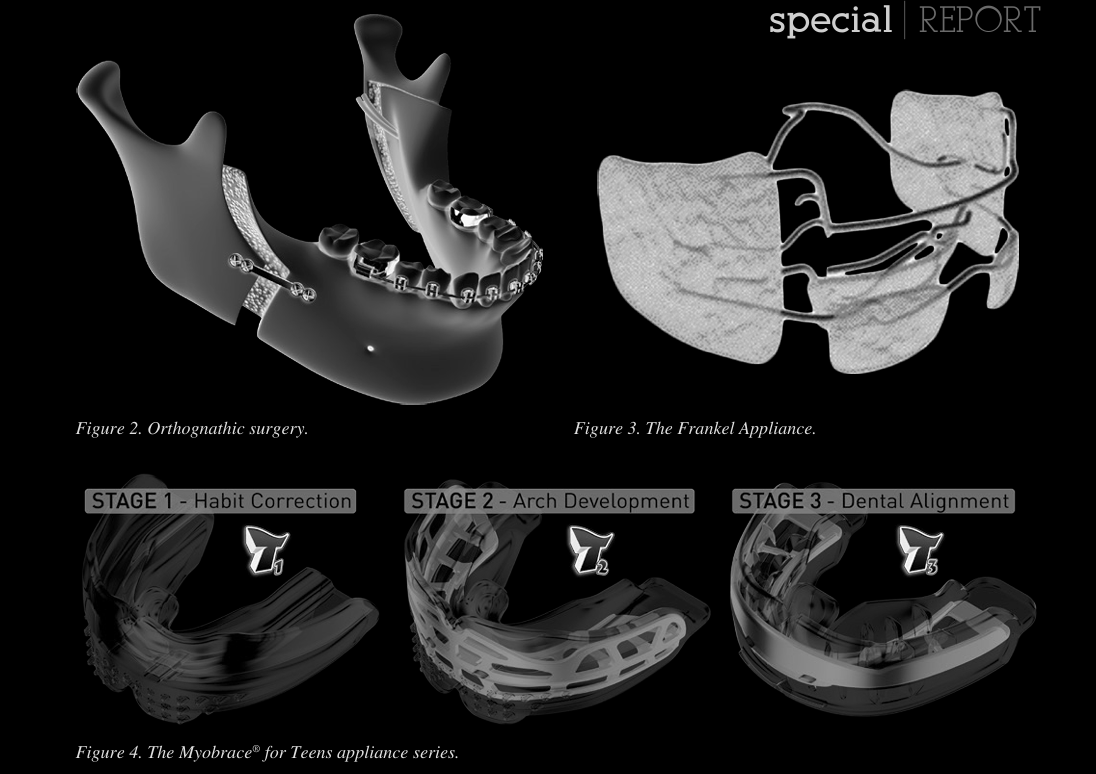
A surprisingly common misconception amongst orthodontic practitioners is that functional appliances are the same as myofunctional appliances. In fact, they are polar opposites, both in terms of underpinning philosophy as well as mechanism of action. Functional appliances simply expand maxillas and posture mandibles forward without correcting soft tissue dysfunction at all. Myofunctional appliances, conversely, directly target these underlying muscular causes. Myofunctional appliances have been used for many years, beginning in the 1950s with the Frankel appliance (Figure 3). Not many children in the 21st century will be amenable to using Frankel appliances, however, modern iterations, such as the Trainer and Myobrace® Pre-Orthodontic Systems, have been used to much success over the last 25 years. The mechanism of action is to deactivate the causative labio-mentalis activity, which allows the mandible to assume its natural position. Tripathi and Patil (2011) found the pre-orthodontic Trainer “significantly stimulates growth of the mandible”,9 while Usumez et al. (2004) found the myofunctional Trainer group of subjects showed “sagittal growth of the mandible, increased SNB and facial height, reduced ANB... and overjet reduction.”10 Here are two cases that demonstrate the potential of myofunctional treatments in Class II correction.
TLDR :
functional and myofunctional appliances are different:
S ince the 2007 Cochrane Review on Class II correction,1 the prevailing catch-cry has been that “you can’t grow mandibles”. The fallacy of this blithe extrapolation lies in the fact that the main criteria used in the comparison of early and late Class II correction was measurement of overjet (mm) and ANB angle (the cephalometric relationship of the maxilla to the mandible). In no way do these measurements accurately compare the differences in mandibular “growth” between the two approaches. We do know that early treatment with functional appliances tends to be more protrusive of the mandible, while later treatment with braces tends to be more retractive of the maxilla. Nonetheless, both approaches will result in reduction of overjet and ANB angle. A slightly better cephalometric measurement would be the facial angle (angle between Frankfort horizontal plane and Nasion to Pogonion), to determine the final position of the mandible relative to the cranial base. As the dental community continues to realise that their precious teeth are actually attached to a head and a body, everyone has suddenly become more airway-conscious. Most dentists and orthodontists now realise that extraction and retraction orthodontics may leave the maxilla and mandible in a posterior position and may decrease oropharyngeal airway volume.
Don’t we need to retract in some cases?
Class II cases can comprise either a retrognathic mandible, prognathic maxilla, or both. However, Mcnamara found as early as 1981 in his publication Components of Class II malocclusion in children 8-10 years of age, that less than 4% of his Class II patients displayed a prognathic maxilla and this figure would be even less if we apply modern standards of an acceptable SNA angle.2 Therefore, the overwhelming majority of Class II cases demand not only development of the mandible, but also development of the maxilla.
WILL THERE BE MANDIBLE GROWTH?
maybe, the studies support both the sides
How can we get the mandible forwards?
1. Elastics
A comprehensive systematic review by Janson et al. (2013) found Class II correction with elastics is mainly dentoalveolar and causes lingual tipping, retrusion and extrusion of upper incisors, with intrusion of lower incisors.
Therefore, there is no good evidence that demonstrates these can translate the mandible.
2. Functional appliances
The largest systematic review (2015) ever conducted into functional appliances for Class II correction screened a massive 2835 studies and found functional treatment by removable appliances may produce effective skeletal outcomes, especially if performed during the pubertal growth phase.
3. Orthognathic Surgery
Mandibular advancement surgery has been used for a long period of time to good short-term effect. According to Proffit’s seminal 2007 review into orthognathic surgery (incorporating over 100 papers, 50 invited contributions and book chapters and 2264 patients), mandibular advancement of less than 10mm overjet during the first year is considered “highly stable”.4 However, after this first year, as much as 20% of mandibular advancement patients experience decrease in mandibular length. In their systematic review, Joss et al. (2010) found that 60% may experience relapse in the long-term and other studies put the figure at 100%.5,6 The most compelling reason for relapse, whether surgical or otherwise, is the nonadaption of the soft tissue environment. “Whenever there is a struggle between muscle and bone, bone yields,” writes Graber in his lauded 1963 manifesto on the influence of muscles on malformation and malocclusion. More recently, a systematic review into BSSO advancement surgery found “as muscles attempt to return to their original positions, they rotate the mandible in a clockwise position, open the bite, and cause relapse”.7 Pepicelli et al. (2005) corroborates it is “well accepted” that the position and function of the facial and mandibular muscles are “critical influences” on alignment and stability.
TLDR :
Mandibular advancement surgery can move the jaw forward effectively, but long-term relapse can occur. relapse may happen because muscles and surrounding soft tissues resist the new mandibular position. Their pull can rotate the mandible backward, alter the bite, and reduce the stability of the advancement.
4. Myofunctional appliances
A surprisingly common misconception amongst orthodontic practitioners is that functional appliances are the same as myofunctional appliances. In fact, they are polar opposites, both in terms of underpinning philosophy as well as mechanism of action. Functional appliances simply expand maxillas and posture mandibles forward without correcting soft tissue dysfunction at all. Myofunctional appliances, conversely, directly target these underlying muscular causes. Myofunctional appliances have been used for many years, beginning in the 1950s with the Frankel appliance (Figure 3). Not many children in the 21st century will be amenable to using Frankel appliances, however, modern iterations, such as the Trainer and Myobrace® Pre-Orthodontic Systems, have been used to much success over the last 25 years. The mechanism of action is to deactivate the causative labio-mentalis activity, which allows the mandible to assume its natural position. Tripathi and Patil (2011) found the pre-orthodontic Trainer “significantly stimulates growth of the mandible”,9 while Usumez et al. (2004) found the myofunctional Trainer group of subjects showed “sagittal growth of the mandible, increased SNB and facial height, reduced ANB... and overjet reduction.”10 Here are two cases that demonstrate the potential of myofunctional treatments in Class II correction.
TLDR :
functional and myofunctional appliances are different:
- Functional appliances: primarily posture the mandible forward and/or expand the maxilla.
- Myofunctional appliances: additionally aim to correct muscle and oral-function problems, such as excessive labio-mentalis activity.
- The article says reducing these abnormal muscle forces may allow the mandible to assume a more natural position.
- It cites studies reporting sagittal mandibular growth, increased SNB, increased facial height, and reduced ANB/overjet with myofunctional Trainer treatment
THE TWO CASES
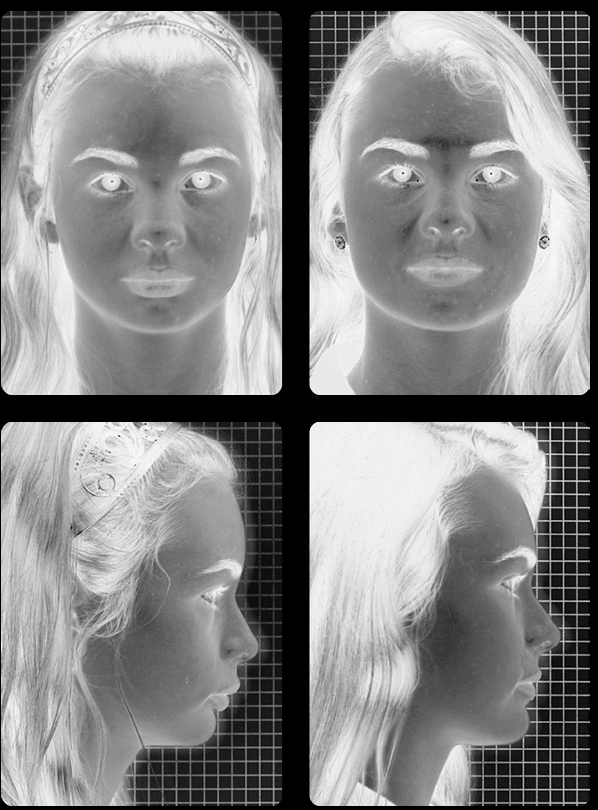
Case 1: 13y 6m. This girl was a mouth breather with subsequent lowered tongue posture and labio-mentalis activity on swallowing. She was treated with the Myobrace for Teens system and showed a significant reduction in overjet and overbite, together with clear translation of the mandible on viewing the facial profile.
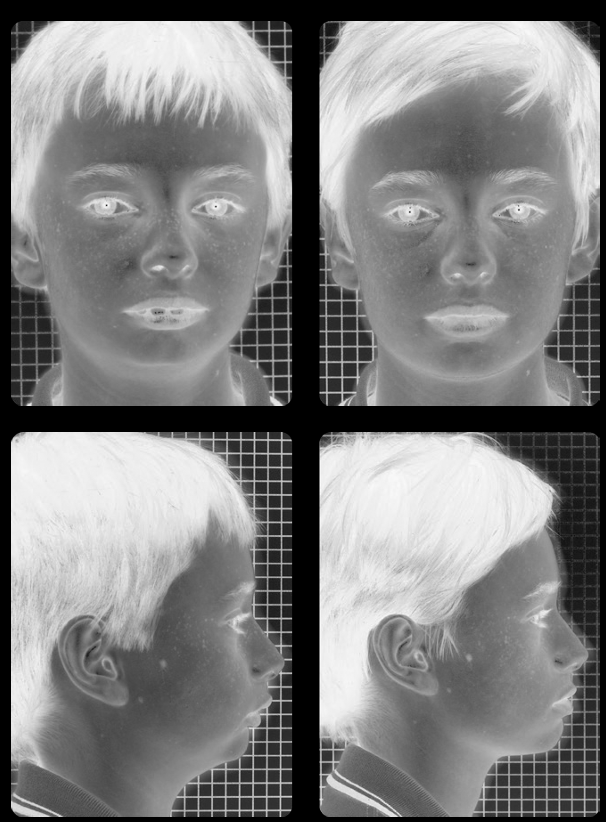
Case 2: 11y 3m. This boy presented simply for correction of jaw development, having been recommended surgery by multiple previous practitioners. His lower lip trap had flared his upper anterior dentition and severe mentalis activity had resulted in a retrognathic mandible. He also used the Myobrace for Teens system to retrain his tongue resting posture and to swallow without peri-oral muscular tension. It is anticipated he will no longer require surgery.