



Chef227
Iron
- Joined
- Dec 24, 2025
- Posts
- 47
- Reputation
- 32
I know this topic is already talked about a lot on other online spaces but this will just be a kinda mixing pot of stuff i've found.
Ok, you've probably heard "mechanical tension (MT) and motor unit recruitment (MUR)" like a billion times, but what actually are they? According to sandcresearch.medium.com, "Mechanical tension is the physical, stretching force experienced by muscle fibers when they contract against an external load or are passively stretched". According to Wikipedia, "Motor unit recruitment is the progressive activation of additional motor units (a motor neuron and its muscle fibers) to increase muscle force, regulated by the central nervous system". An analogy I found a while back (No idea where so I cannot link the video) was comparing hypertrophy to teaching a kindergartener calculus. You can give them the materials (MT) but they don't have the ability (MUR) to understand and process the information. On the other hand if you give a Highschool student the same materials (MT) they would be able to understand it a lot more and learn (MUR).
I don't feel like going into the biology shit of growth one because its a lot and two because I don't know it all and Im trying to make this as reliable as I can.
Now that the nerdy shit is over how should training be structured and why? There are a few factors to take into account, volume, intensity, frequency, exercise selection, and I guess rest time
Frequency/Volume
I'm combining these two because they really go hand in hand and its also easier to explain them together.
Volume is the amount of work you do in a workout or exercise, the best way imo to track this in most situations is through counting the sets. Your volume will be based off of your frequency because you need to get a certain weekly volume in. If you have 3 training sessions for an exercise per week and 10 sets than your volume per workout would be 3 or 4 sets. Larger muscles or movements that use a lot of muscle will have a larger SRA curve time. SRA is the chart used to track your recovery to the stimulus.
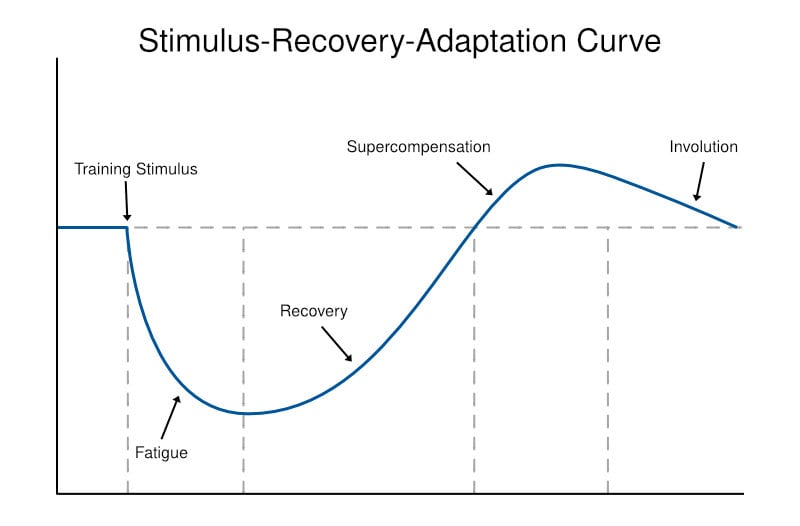
Exercises that cause more muscular fatigue will take longer to recover from meaning the training frequency would have to be less to compensate. Generally you want to be training the movement pattern 2-4 times per week depending on personal preference or your schedule. An example of how I would program an exercise for someone could be 3 sets of 5-8 with 0 RIR for three sessions. This adds a combined volume total of 9 sets per week with higher intensity.
Intensity
I don't have much to write for this but there are two ways most people measure the intensity of a set RPE (Rate of Perceived Exertion) or RIR (Reps in reserve). Rir imo is more preferred because RPE becomes inaccurate on lower stress exercise. Not training with intensity because of cortosol is some bs even though it is a joke lol. Going to failure or 1 RIR is best for most people unless you have some sort of injury I guess. Progressive overload is also EXTREMELY important. You will never progress if you stay at the same weight forever because as your muscles grow you will obviously get stronger. Because of this if you do not progress weight at all for a while (2-3 weeks) than you could try changing something about your program. Changes that could be made could be your form, volume, intensity, or if nothing else works your exercise selection. You shouldn't change your exercise selection unless absolutely necessary. One misconception i'd hope people don't believe anymore is that the burn is beneficial at all. Lactic acid does not cause hypertrophy. Also why high reps are worse than lower (4-10ish). If you cannot do any more reps because it burns so bad you did not come to muscular failure therefore you won't grow as much.
Exercise Selection
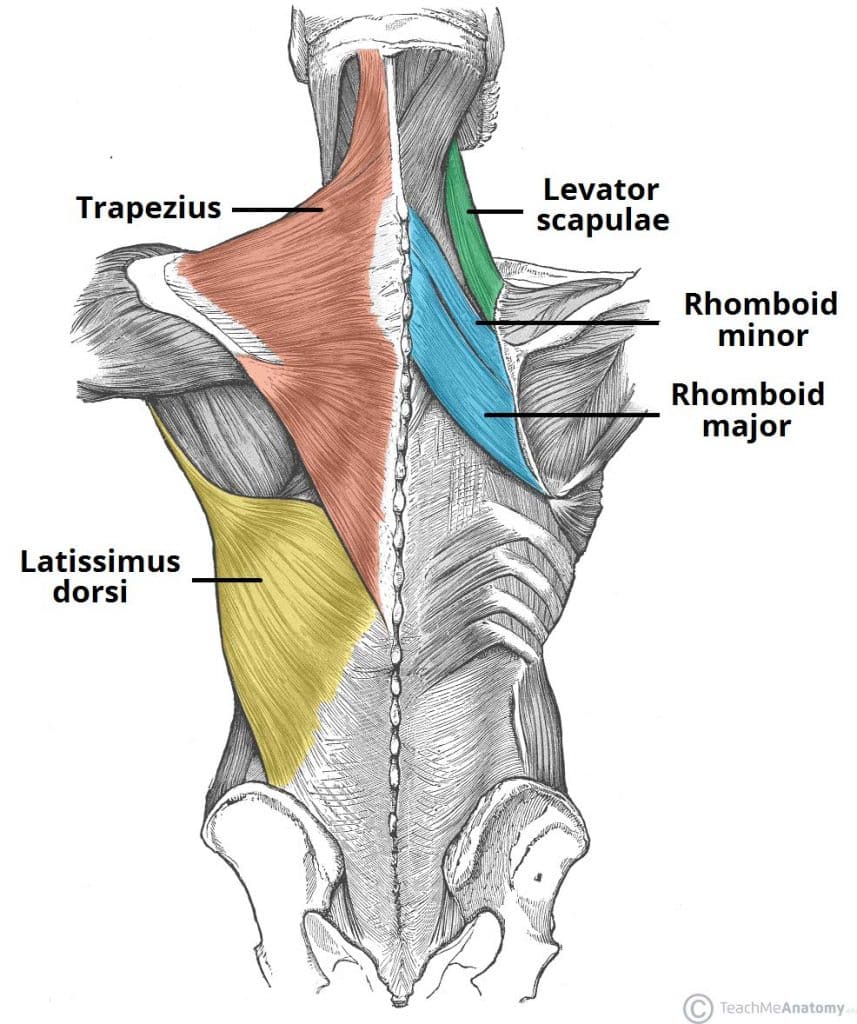
For looksmaxing especially to appear bigger in a shirt the main muscles you need to grow are your lateral deltoids and lats. Other muscles i've seen a lot of discussion about are forearms, traps, biceps, chest, and abs.
The primary action of your lateral deltoids is shoulder abduction. The best option if available would be a seated machine lateral raise but using dumbells or cables are the second best option. Training your lats has two options, a pulldown to train shoulder adduction or a seated row with tucked elbows for shoulder extension. Which one you use is up to preference but it is thought that a row will target your lower lat fibers and a pulldown will target the upper fibers. These two muscles will be your main focus if you would like to appear wider or just larger in general.

One thing to take into consideration for any exercise no matter the target muscle is the stability. Being more stable will give you more MUR and allow you to progressive overload easier without breaking down your form to force weight. Using a cuff, seatbelt, straps, or just simply doing the lift seated or resting against something if possible are all tools that can help you stay stable. You can look literally anywhere for guides or examples on how to use any of these.
This post was prolly shit but whatever
Ok, you've probably heard "mechanical tension (MT) and motor unit recruitment (MUR)" like a billion times, but what actually are they? According to sandcresearch.medium.com, "Mechanical tension is the physical, stretching force experienced by muscle fibers when they contract against an external load or are passively stretched". According to Wikipedia, "Motor unit recruitment is the progressive activation of additional motor units (a motor neuron and its muscle fibers) to increase muscle force, regulated by the central nervous system". An analogy I found a while back (No idea where so I cannot link the video) was comparing hypertrophy to teaching a kindergartener calculus. You can give them the materials (MT) but they don't have the ability (MUR) to understand and process the information. On the other hand if you give a Highschool student the same materials (MT) they would be able to understand it a lot more and learn (MUR).
I don't feel like going into the biology shit of growth one because its a lot and two because I don't know it all and Im trying to make this as reliable as I can.
Now that the nerdy shit is over how should training be structured and why? There are a few factors to take into account, volume, intensity, frequency, exercise selection, and I guess rest time
Frequency/Volume
I'm combining these two because they really go hand in hand and its also easier to explain them together.
Volume is the amount of work you do in a workout or exercise, the best way imo to track this in most situations is through counting the sets. Your volume will be based off of your frequency because you need to get a certain weekly volume in. If you have 3 training sessions for an exercise per week and 10 sets than your volume per workout would be 3 or 4 sets. Larger muscles or movements that use a lot of muscle will have a larger SRA curve time. SRA is the chart used to track your recovery to the stimulus.
Exercises that cause more muscular fatigue will take longer to recover from meaning the training frequency would have to be less to compensate. Generally you want to be training the movement pattern 2-4 times per week depending on personal preference or your schedule. An example of how I would program an exercise for someone could be 3 sets of 5-8 with 0 RIR for three sessions. This adds a combined volume total of 9 sets per week with higher intensity.
Intensity
I don't have much to write for this but there are two ways most people measure the intensity of a set RPE (Rate of Perceived Exertion) or RIR (Reps in reserve). Rir imo is more preferred because RPE becomes inaccurate on lower stress exercise. Not training with intensity because of cortosol is some bs even though it is a joke lol. Going to failure or 1 RIR is best for most people unless you have some sort of injury I guess. Progressive overload is also EXTREMELY important. You will never progress if you stay at the same weight forever because as your muscles grow you will obviously get stronger. Because of this if you do not progress weight at all for a while (2-3 weeks) than you could try changing something about your program. Changes that could be made could be your form, volume, intensity, or if nothing else works your exercise selection. You shouldn't change your exercise selection unless absolutely necessary. One misconception i'd hope people don't believe anymore is that the burn is beneficial at all. Lactic acid does not cause hypertrophy. Also why high reps are worse than lower (4-10ish). If you cannot do any more reps because it burns so bad you did not come to muscular failure therefore you won't grow as much.
Exercise Selection
For looksmaxing especially to appear bigger in a shirt the main muscles you need to grow are your lateral deltoids and lats. Other muscles i've seen a lot of discussion about are forearms, traps, biceps, chest, and abs.
The primary action of your lateral deltoids is shoulder abduction. The best option if available would be a seated machine lateral raise but using dumbells or cables are the second best option. Training your lats has two options, a pulldown to train shoulder adduction or a seated row with tucked elbows for shoulder extension. Which one you use is up to preference but it is thought that a row will target your lower lat fibers and a pulldown will target the upper fibers. These two muscles will be your main focus if you would like to appear wider or just larger in general.
One thing to take into consideration for any exercise no matter the target muscle is the stability. Being more stable will give you more MUR and allow you to progressive overload easier without breaking down your form to force weight. Using a cuff, seatbelt, straps, or just simply doing the lift seated or resting against something if possible are all tools that can help you stay stable. You can look literally anywhere for guides or examples on how to use any of these.
This post was prolly shit but whatever


