muhajudin21
cant be bothered
- Joined
- May 13, 2026
- Posts
- 365
- Reputation
- 232
-Music has to much control of your emotions
Slow rhythms put the brain into a state of alpha waves that relaxs you
Loud music spikes stress hormones stimulating beta waves that cause alertness
-Music directly impacts the brainstem BRECVEM model
Brainstem Reflex: The body’s automatic, primal reaction to acoustic features (e.g., loud bass feels urgent).
Rhythmic Entrainment: Your internal biological rhythms matching the beat.
Evaluative Conditioning: Associating a specific song with a repeated emotional setting (e.g., a song you always hear at a happy family party).
Emotional Contagion: Mimicking the expression of the music (if the music sounds sad and weeping, your brain mirrors sadness).
Visual Imagery: Metaphors or visual scenes the music conjures in your mind.
Episodic Memory: The "soundtrack" effect—when a song acts as a key to unlock a highly specific, deeply emotional personal memory.
Musical Expectancy: The satisfaction (or frustration) your brain feels when a musical pattern resolves exactly how you predicted it would
Music functions as a tool for control because it bypasses the logical center of the brain making you feel artificial emotion you wouldn't naturally feel this wouldn't be a problem because listening to music takes effort and talent and would be used under specific setting to amplify and convey a message but music can now be listened and created by anyone this causes a problem because of how powerful music as a manipulation tool is. Music is a low art form it involuntarily captivates you I see no problem when music is paired with an actual message as now active processing instead of mindless listening or ideal talk which rots you.
-The Philosophy
Plato

Philodemus of Gadara
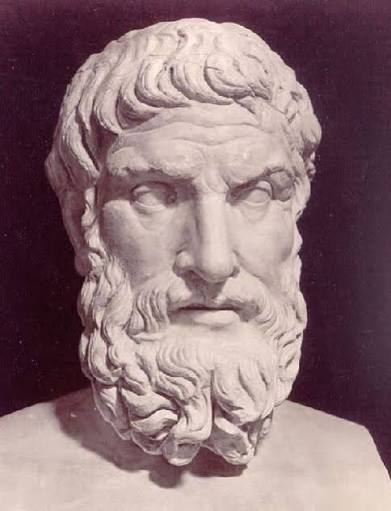
Immanuel Kant

Sextus Empiricus

Music is another form of distraction which can influence your emotions and state of mind making you worse of similarly to drug it has it use and benefits but that doesn't make any less dangerous it isn't a substitute for real emotion. Music is a tool and should be seen as such
https://pmc.ncbi.nlm.nih.gov/articles/PMC10765015/
more info
inspired by @illusion
Slow rhythms put the brain into a state of alpha waves that relaxs you
Loud music spikes stress hormones stimulating beta waves that cause alertness
-Music directly impacts the brainstem BRECVEM model
Brainstem Reflex: The body’s automatic, primal reaction to acoustic features (e.g., loud bass feels urgent).
Rhythmic Entrainment: Your internal biological rhythms matching the beat.
Evaluative Conditioning: Associating a specific song with a repeated emotional setting (e.g., a song you always hear at a happy family party).
Emotional Contagion: Mimicking the expression of the music (if the music sounds sad and weeping, your brain mirrors sadness).
Visual Imagery: Metaphors or visual scenes the music conjures in your mind.
Episodic Memory: The "soundtrack" effect—when a song acts as a key to unlock a highly specific, deeply emotional personal memory.
Musical Expectancy: The satisfaction (or frustration) your brain feels when a musical pattern resolves exactly how you predicted it would
Music functions as a tool for control because it bypasses the logical center of the brain making you feel artificial emotion you wouldn't naturally feel this wouldn't be a problem because listening to music takes effort and talent and would be used under specific setting to amplify and convey a message but music can now be listened and created by anyone this causes a problem because of how powerful music as a manipulation tool is. Music is a low art form it involuntarily captivates you I see no problem when music is paired with an actual message as now active processing instead of mindless listening or ideal talk which rots you.
-The Philosophy
Plato
"It is here, then, in music, as it seems, that the guardians must build their guardhouse... Because it is here that lawlessness easily creeps in unnoticed... It introduces itself as a diversion, promising to do no harm... But it gently gains a foothold and quietly flows into characters and habits. From these, it issues forth larger into men's contracts with one another, and from contracts, it goes on to laws and constitutions with utter shamelessness, until it finally subverts everything, public and private."
(Book IV, 424d-e)
“So when a man surrenders to the sound of music and lets its sweet, soft, mournful strains... be funnelled into his soul through his ears, and gives up all his time to the glamorous moanings of song, the effect at first on his energy and initiative of mind,...”
(Book III, 411a)
Philodemus of Gadara
"And those that say that we are sweetened by music... one may consider them perfect imbeciles... If they say that only these irrational realities provide harmony to the soul, then their error is double: it means those who can't sing or dance... can't be virtuous." On Music (Book IV, c. 60 BC
Immanuel Kant
"If we estimate the worth of the beautiful arts by the culture they supply to the mind... music has the lowest place among them... because it merely plays with sensations... Besides, there attaches to music a certain want of urbanity... [it] extends its influence further than is desired..." Critique of Judgment (§ 53, 1790):
Sextus Empiricus
"Music does not stay the swelling of the soul, but rather distracts it... just as sleep and drunkenness do not suppress grief, but bring a brief forgetfulness, so too music does not calm a passionate mind, it merely stupefies it."Against the Musicians (Pros Mousikous, c. 200 AD):
Music is another form of distraction which can influence your emotions and state of mind making you worse of similarly to drug it has it use and benefits but that doesn't make any less dangerous it isn't a substitute for real emotion. Music is a tool and should be seen as such
https://pmc.ncbi.nlm.nih.gov/articles/PMC10765015/
more info
inspired by @illusion