
EthiopianMaxxer
- Joined
- Oct 24, 2024
- Posts
- 6,802
- Reputation
- 19,822
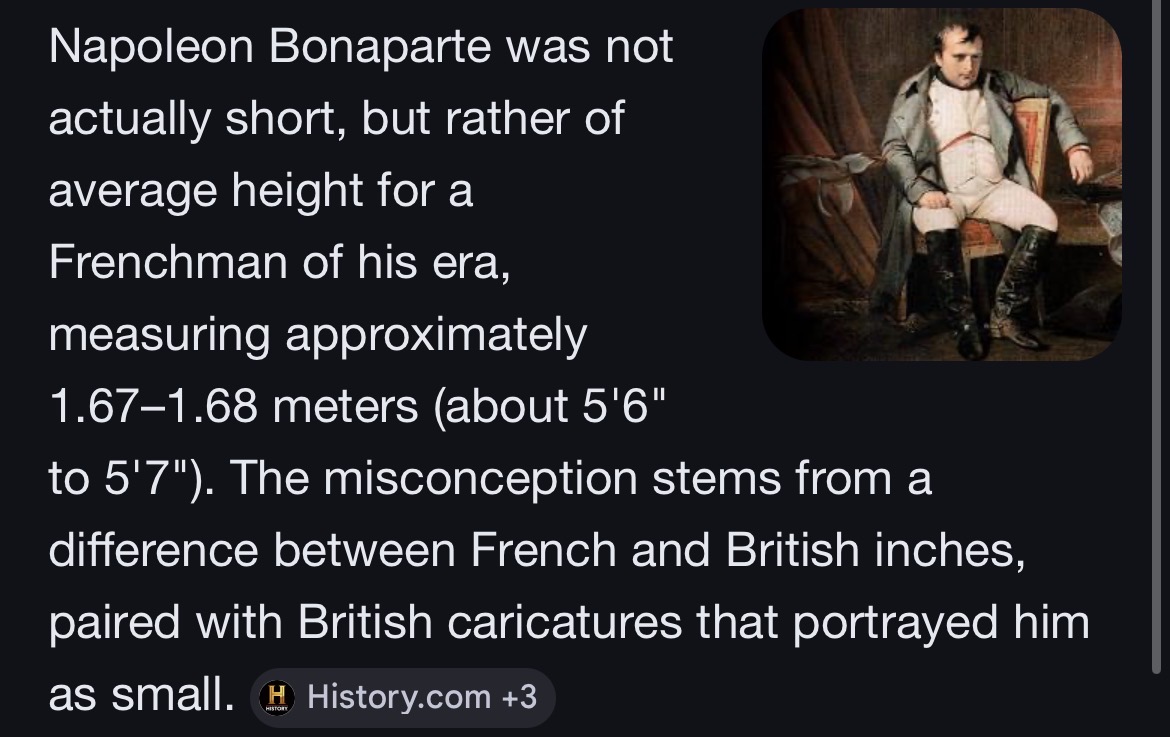
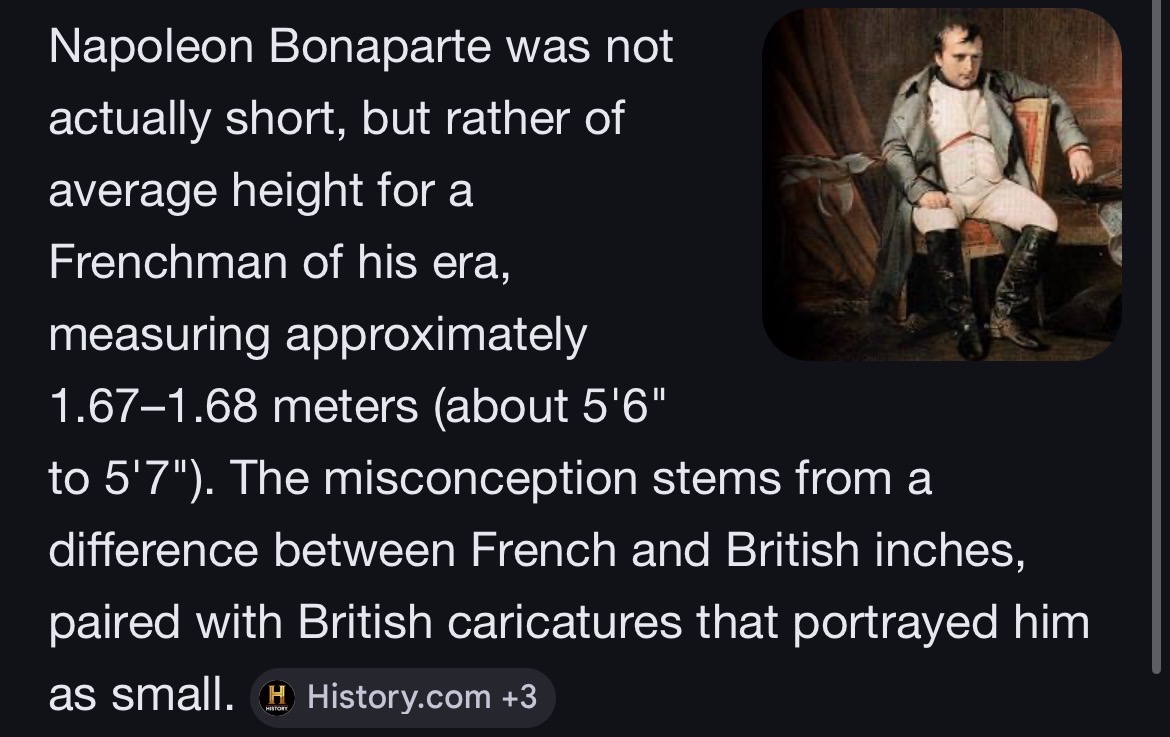
Napoleon Complex (or "short man syndrome") is a term used (by mostly women) against short men for not acting like a jester or punching bag like people want them to be. The term comes from the idea that Napoleon’s attempts to dominate Europe were meant to compensate for his "short" stature.
Researchers from the University of Central Lancashire conducting an experiment for the BBC found taller men were more likely to lose their temper:
This could be due to the fact that short men cannot afford to fight against others due to their disadvantage in strength, giving them less experience with fighting and therefore less aggressive than average/tall men. The infamous halo effect also plays a clear role.
Researchers from the University of Central Lancashire conducting an experiment for the BBC found taller men were more likely to lose their temper:
Men of different heights (ten men of 'average height' and ten men 5'5 or below) duelled with wooden sticks but one of the subjects deliberately provoked the other by rapping them across the knuckles. The research was designed to test Napoleon Complex - the theory that shorter men are more aggressive to dominate those who are taller than them. Heart monitors revealed it was the taller men who flew off the handle more quickly and hit back.
Yes ik it's a small sample size.
news.bbc.co.uk/2/hi/uk_news/6501633.stm
Yes ik it's a small sample size.
news.bbc.co.uk/2/hi/uk_news/6501633.stm
This could be due to the fact that short men cannot afford to fight against others due to their disadvantage in strength, giving them less experience with fighting and therefore less aggressive than average/tall men. The infamous halo effect also plays a clear role.
TL;DR: "Napoleon Complex" is a hoax. In reality, it is an attempt to justify hatred for short men.
@HundredManSlayer @Former Shortcel @wishIwasSalludon @Saint Casanova @greycel
@HundredManSlayer @Former Shortcel @wishIwasSalludon @Saint Casanova @greycel
Last edited: