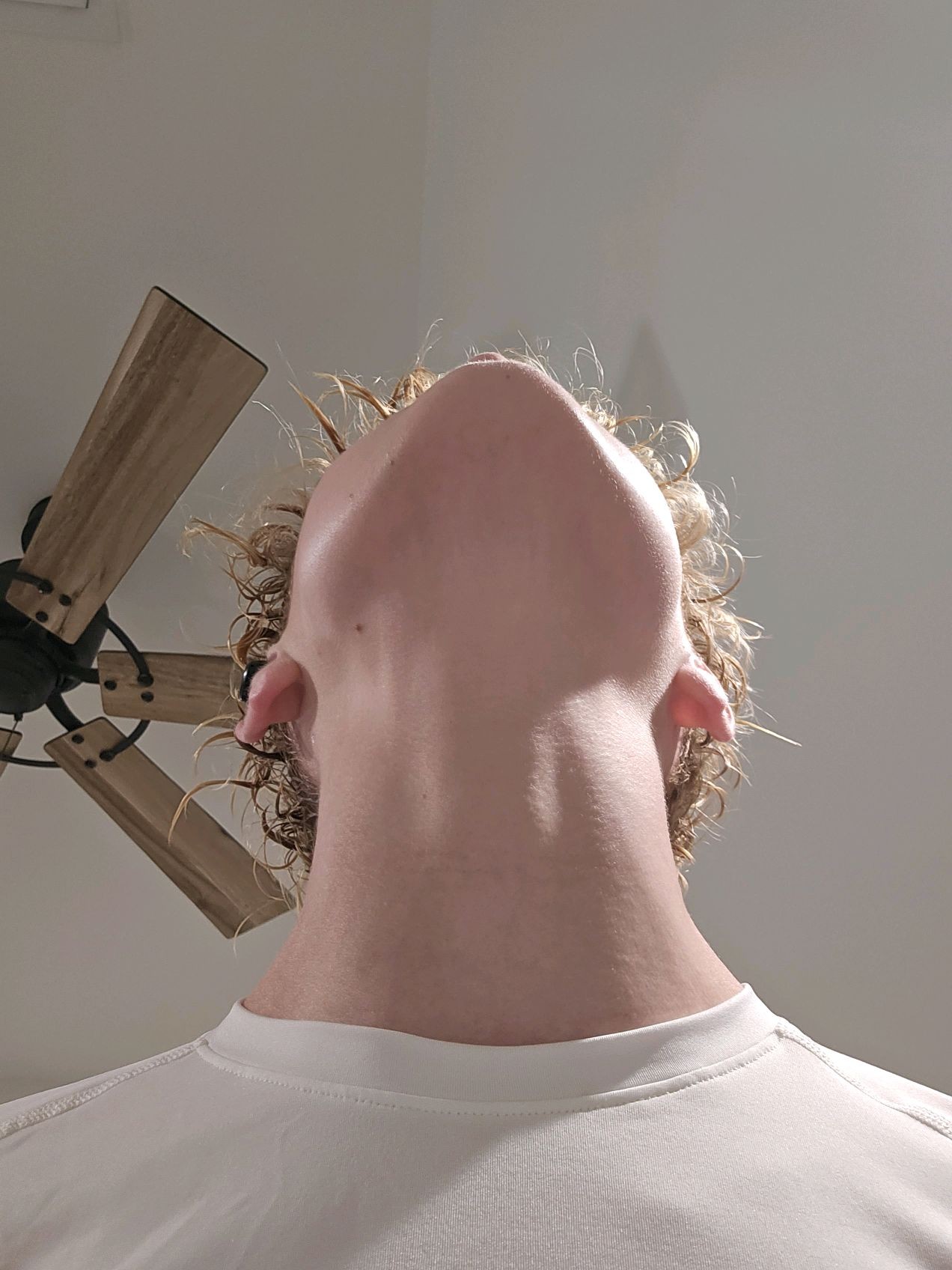
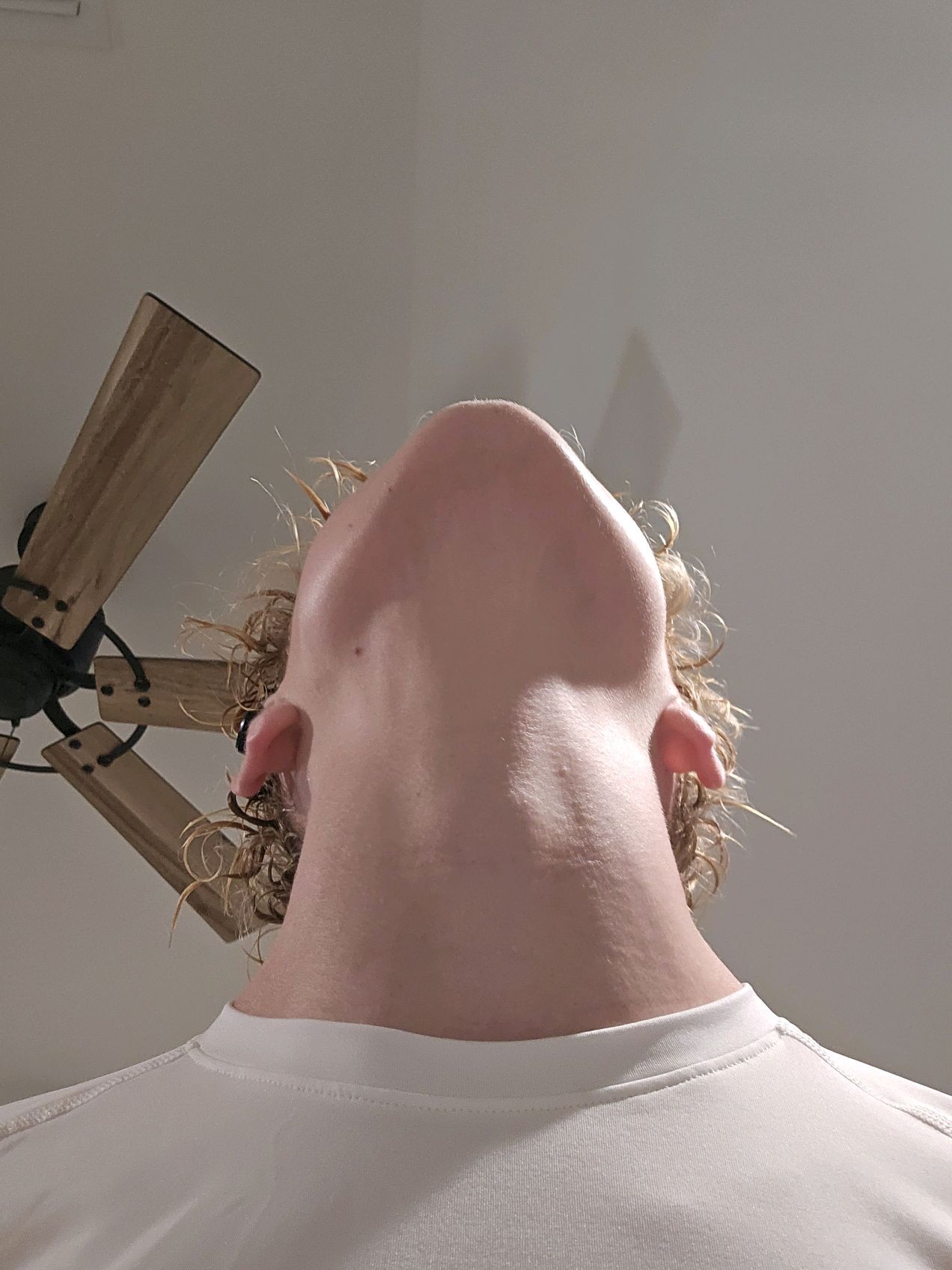
I've seen multiple threads about this and they are all full of misinformation.
Outward gonions are jaws that are turned out in the back, and the gonions are the widest part of the jaw. You can recognize outward gonions visually by a jawline where the entire length of the jawline, from the chin to the jaw angles on both sides, are visible from the front.
Inward gonions are jaws that are turned inwards at the very back. If you cannot see the full length of the jawline from the front (and the person you are looking at does not have high body fat), that person has inward gonions.
View attachment 2253767 (This guy appears to have inward gonions on one side and slightly outward on the other.)
You see the phrase "round jaw" a lot here. Anatomically, there is no such thing as a round mandible. The appearance of roundness comes from a jaw that is not large enough/wide enough to project past/support the soft tissues. The round appearance comes from unsupported soft tissues, not bones.
What people got fixated on in previous threads is the appearance of super-angular/pointy gonions. That is not a fundamental aspect of jaw development, it is just one of those 0.5% traits that PSL guys get fixated on and think are essential.
This morph just represents a person with outward gonions being given abnormally pointy gonions. It does not represent the inward/outward gonion distinction.
This site uses cookies to help personalise content, tailor your experience and to keep you logged in if you register.
By continuing to use this site, you are consenting to our use of cookies.