


YoloHatesFoids666
V!
- Joined
- Apr 20, 2026
- Posts
- 769
- Reputation
- 1,146
INTRODUCTION
In the 14th century,
an English Franciscan monk and philosopher, William of Occam,
formulated a principle that is still
a very important part of scientific thinking today and is named after him.
The famous "Occam's Razor".
In this thread I will explain this principle
to make you understand how important it is to the way we think.
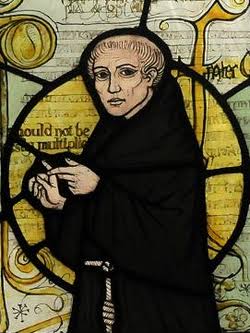
William of Ockham or Occam
WHAT IS OCCAM'S RAZOR
Occam's Razor, or "the principle of parsimony",is a scientific principle that tells us that
“No one should make more guesses than are necessary.”
Or in simpler terms,
“The simplest explanation is usually the most correct.”
And now I know what you’re thinking,
“The simplest explanations are not always the most correct.”
But don’t rush, I’ll explain exactly what this sentence means.
But before I do, we shouldn’t miss another apt definition.“Entities should not be increased when it is not necessary.”
According to the philosophical branch of Ontology,
every person has a mental list of entities that they believe to exist.
EXAMPLE
Suppose we observe a tree that has fallen after a storm.

We could assume that the wind fell the tree.
The cause, namely the wind, is already in our list of entities.
And there are also logical connections
between what we already know and what we assume. So this hypothesis does not offend our critical thinking.
But we could also make another hypothesis.
A giant alien uprooted the tree.
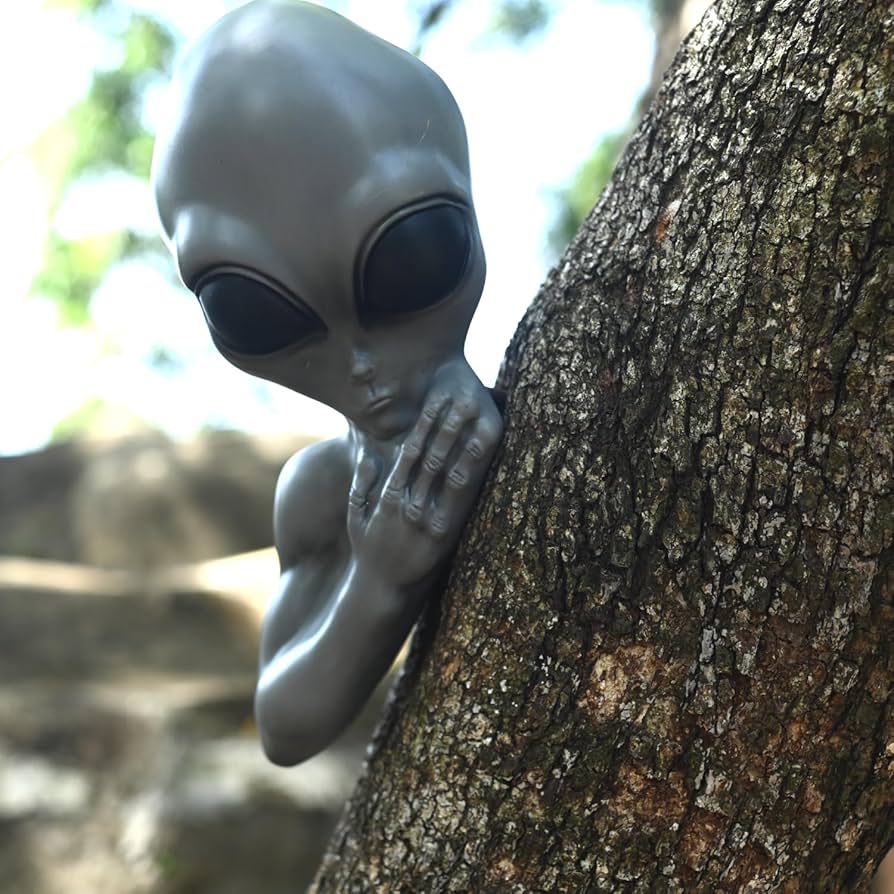
But this hypothesis presupposes more entities,
such as the existence of giant aliens on Earth,
and more assumptions,
such as their intention and ability to uproot trees, and much more.
According to Occam's razor,
if we had to choose one prevailing hypothesis,
it would be the one about the wind.
In other words, it cut out the unnecessary assumptions and entities.
After all, that's why it was called "Occam's razor."But be careful,
this means that Occam's razor does not necessarily yield correct results.
It simply means that between two explanations,
when all other factors are identical,
the simpler one is preferred.
It is essentially a compass
that points in the general direction that should be followed
in order to choose the scientific hypothesis
that contains the fewest unproven conjectures.
EXAMPLES
When we see moving lights in the night sky.

We can assume that it is some flying saucer of extraterrestrial origin,
or we can assume that it is a meteor, also known as a shooting star,
one of the many that enter the Earth's atmosphere every day.
Meteorites have been studied by scientists and we know for sure about their existence.
So this phenomenon can easily be explained by this hypothesis. On the other hand, the existence of extraterrestrial flying saucers on Earth,
increases our entities and speculations
and therefore is a hypothesis that is not worth dealing with.
If you are asking of course which possibility is more magical and beautiful,
I think there is no dilemma.
EPILOGUE
In any case, we must not forget that the scientific method is the one
that will determine whether a hypothesis is "promoted" to a scientific theory.
The razor is simply a tool that cooperates in this.
If through it we prove that a complex hypothesis is true,
then we must accept it.
And as Sherlock Holmes said, or rather Arthur Conan Doyle,

sources:

 www.britannica.com

 en.wikipedia.org

 thedecisionlab.com
@Cinnamon fan64 @Subhuman @Hess @Orka @high_ltn @iblamexyz
In the 14th century,
an English Franciscan monk and philosopher, William of Occam,
formulated a principle that is still
a very important part of scientific thinking today and is named after him.
The famous "Occam's Razor".
In this thread I will explain this principle
to make you understand how important it is to the way we think.
William of Ockham or Occam
WHAT IS OCCAM'S RAZOR
Occam's Razor, or "the principle of parsimony",is a scientific principle that tells us that
“No one should make more guesses than are necessary.”
Or in simpler terms,
“The simplest explanation is usually the most correct.”
And now I know what you’re thinking,
“The simplest explanations are not always the most correct.”
But don’t rush, I’ll explain exactly what this sentence means.
But before I do, we shouldn’t miss another apt definition.“Entities should not be increased when it is not necessary.”
According to the philosophical branch of Ontology,
every person has a mental list of entities that they believe to exist.
EXAMPLE
Suppose we observe a tree that has fallen after a storm.
We could assume that the wind fell the tree.
The cause, namely the wind, is already in our list of entities.
And there are also logical connections
between what we already know and what we assume. So this hypothesis does not offend our critical thinking.
But we could also make another hypothesis.
A giant alien uprooted the tree.
But this hypothesis presupposes more entities,
such as the existence of giant aliens on Earth,
and more assumptions,
such as their intention and ability to uproot trees, and much more.
According to Occam's razor,
if we had to choose one prevailing hypothesis,
it would be the one about the wind.
In other words, it cut out the unnecessary assumptions and entities.
After all, that's why it was called "Occam's razor."But be careful,
this means that Occam's razor does not necessarily yield correct results.
It simply means that between two explanations,
when all other factors are identical,
the simpler one is preferred.
It is essentially a compass
that points in the general direction that should be followed
in order to choose the scientific hypothesis
that contains the fewest unproven conjectures.
EXAMPLES
When we see moving lights in the night sky.
We can assume that it is some flying saucer of extraterrestrial origin,
or we can assume that it is a meteor, also known as a shooting star,
one of the many that enter the Earth's atmosphere every day.
Meteorites have been studied by scientists and we know for sure about their existence.
So this phenomenon can easily be explained by this hypothesis. On the other hand, the existence of extraterrestrial flying saucers on Earth,
increases our entities and speculations
and therefore is a hypothesis that is not worth dealing with.
If you are asking of course which possibility is more magical and beautiful,
I think there is no dilemma.
EPILOGUE
In any case, we must not forget that the scientific method is the one
that will determine whether a hypothesis is "promoted" to a scientific theory.
The razor is simply a tool that cooperates in this.
If through it we prove that a complex hypothesis is true,
then we must accept it.
And as Sherlock Holmes said, or rather Arthur Conan Doyle,
sources:
William of Ockham | English Philosopher & Scholastic Theologian | Britannica
William of Ockham was a Franciscan philosopher, theologian, political writer, and late scholastic thinker.
www.britannica.com
Occam's razor - Wikipedia
Occam’s Razor - The Decision Lab
Occam’s razor is the idea that even when it comes to more complex matters we tend to favor the simple explanation over the complicated one.
thedecisionlab.com
@Cinnamon fan64 @Subhuman @Hess @Orka @high_ltn @iblamexyz





 y
y


