




Posture and its significance
Disclaimer: This guide is for educational and research purposes only, the author assumes no liability or responsibility for any actions taken or results obtained from this information.
I AM HIGHLY AWARE OF UNPROFESSIONAL CITATIONS I CAN NOT PROFESSIONALLY CITE EVIDENCE AS THIS DOCUMENT IS BEING USED ON A WIDE RANGE OF PLATFORMS
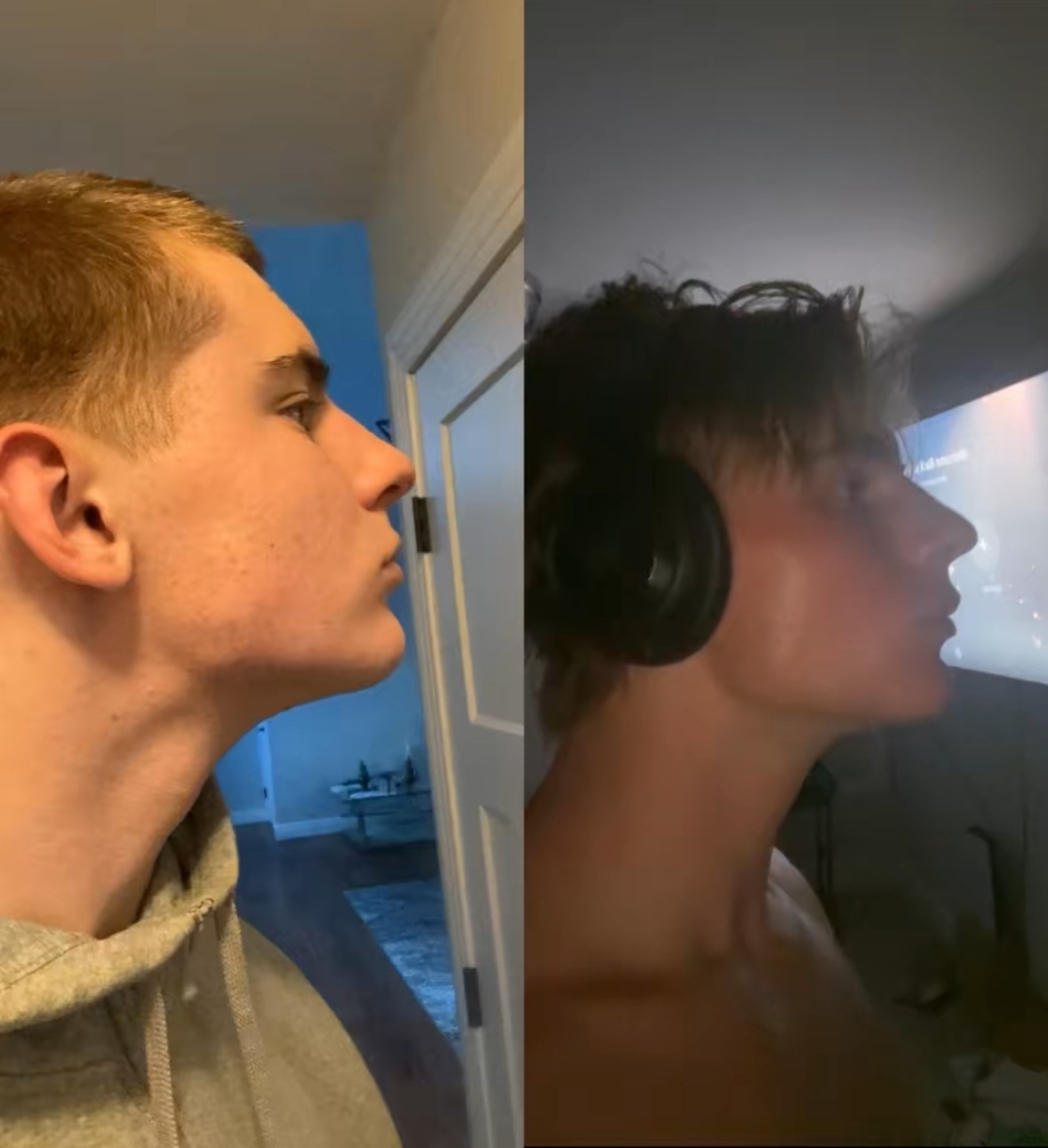
before/after 10 Month difference
Posture
The correlation between posture and the development of your facial structure is a highly prioritized concept within orthopedics and craniofacial biology. In the medical field this relationship is rooted in how the neck posture determines muscle equilibrium allowing for the influence of growth direction in the maxilla and mandible.
Forward Head Posture FHP
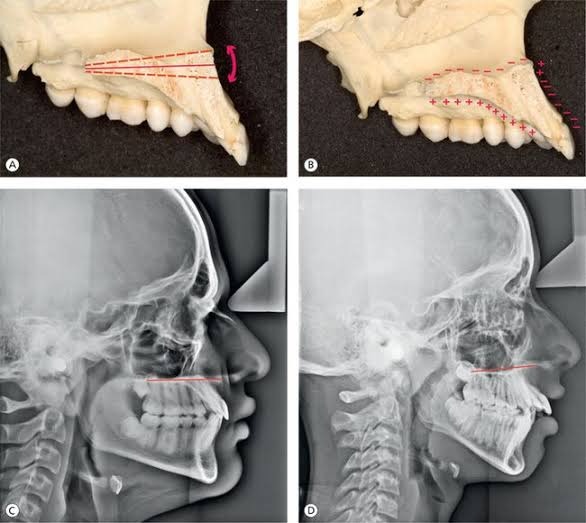
Craniofacial growth vectors and maxillary positioning. Source: Pocket Dentistry
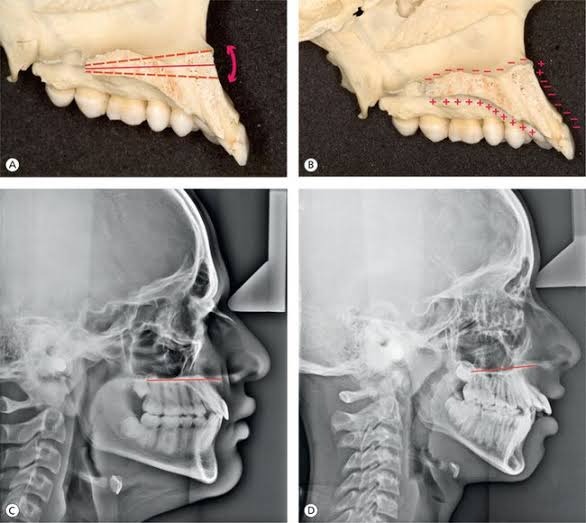
An evaluation of inter-relationship between cervical posture and skeletal malocclusions
This paper was published on researchgate written by Authors Tanvika Singh, P. Narayana Prasad, Tarun Kumar, and Tarun Sharma
Skeletal mature evidence (data from Adult Groups)


These 2 columns (NSL/CVT, FH/CVT) represent the middle craniocervical posture. The data implies a significant statistical difference; P =0.0012, P =0.033 proving class 2 has larger profile angle in contrast to class 1 and 3.
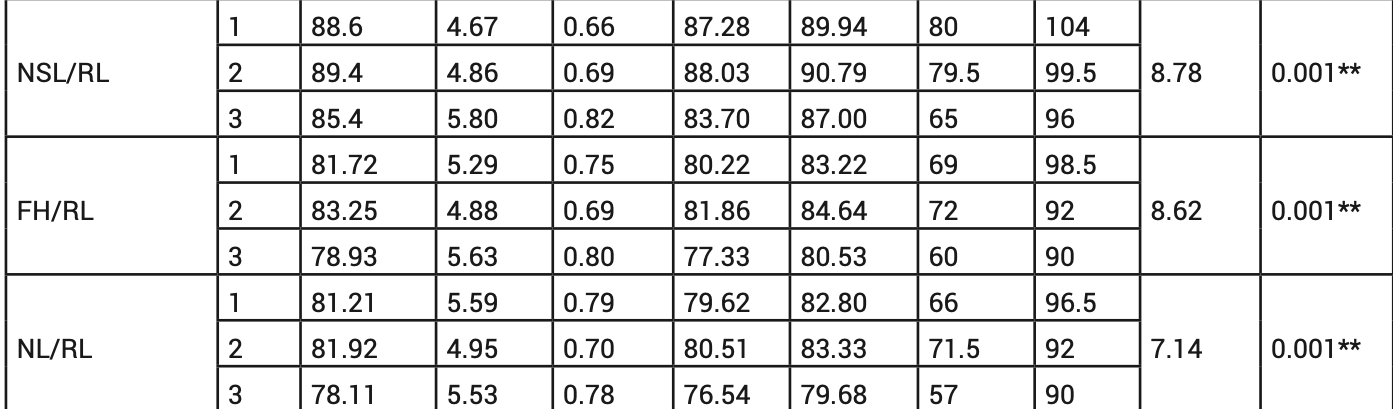
These three columns are responsible for the measurement of mandibular ramus rotation relative to the skull. Once again this table is displaying a dire difference (P =0.001) showing a strong connection between forward tilted posture and a backward-downward rotated jaw.
Disclaimer: This guide is for educational and research purposes only, the author assumes no liability or responsibility for any actions taken or results obtained from this information.
I AM HIGHLY AWARE OF UNPROFESSIONAL CITATIONS I CAN NOT PROFESSIONALLY CITE EVIDENCE AS THIS DOCUMENT IS BEING USED ON A WIDE RANGE OF PLATFORMS
before/after 10 Month difference
Posture
The correlation between posture and the development of your facial structure is a highly prioritized concept within orthopedics and craniofacial biology. In the medical field this relationship is rooted in how the neck posture determines muscle equilibrium allowing for the influence of growth direction in the maxilla and mandible.
Forward Head Posture FHP
- Slouching or exhibiting FHP where your skull is tilted relative to your spine causes a domino effect to be triggered throughout your entire craniofacial complex.
- FHP stretches your suprahyoid muscles causing the mandible to be pulled down and back
- In order for the body to be able to breath efficiently with a neck that is slouched the tongue drops from the roof of the mouth in order to clear airway
Craniofacial growth vectors and maxillary positioning. Source: Pocket Dentistry
An evaluation of inter-relationship between cervical posture and skeletal malocclusions
This paper was published on researchgate written by Authors Tanvika Singh, P. Narayana Prasad, Tarun Kumar, and Tarun Sharma
Skeletal mature evidence (data from Adult Groups)
These 2 columns (NSL/CVT, FH/CVT) represent the middle craniocervical posture. The data implies a significant statistical difference; P =0.0012, P =0.033 proving class 2 has larger profile angle in contrast to class 1 and 3.
These three columns are responsible for the measurement of mandibular ramus rotation relative to the skull. Once again this table is displaying a dire difference (P =0.001) showing a strong connection between forward tilted posture and a backward-downward rotated jaw.
- The study results concluded changes in head posture are directly connected with mandibular rotational growth patterns
- Class 2 individuals who pertained extended head posture exuded more posterior rotation of the ramus
- The hyoid bone is positioned vertically upward contrary to class 3 profiles concluding that changes in posture entirely alter muscle tension and soft tissue around the throat and lower jaw.
inclusion data for the “plates are closed it’s over” people
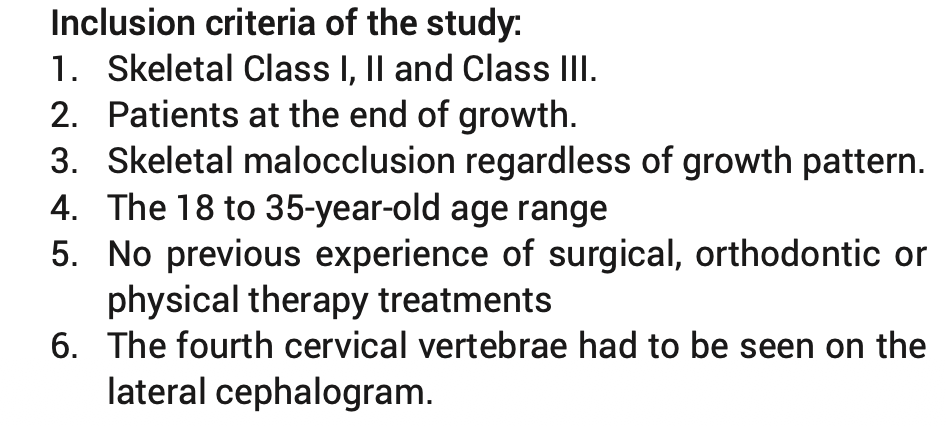
“At the end of growth” “18 to 35-year-old age range”
Ideal posture alignment
When the cervical spine is aligned and straight the head is able to sit balanced over the shoulders. This allows for tension on the jaw muscle to be relieved resulting in the mandible resting forward. The tongue will rest naturally against your palate providing consistent force allowing for the benefit of horizontal maxillary growth simulation for an individual with open plates and soft tissue and postural for someone skeletally mature. To restore the resting alignment of your jawline a 2 part physiological approach is necessary; strengthening what is weak (cervical stabilizers) and stretching what is tight (suboccipital and pectoral muscles)
How to fix
This exercise program is heavily based out of 1{Harman K., Hubley-Kozey C.L., Butler H. Effectiveness of an Exercise Program to Improve Forward Head Posture in Normal Adults: A Randomized, Controlled 10-Week Trial. J. Man. Manip. Ther. 2005;13:163–176. doi: 10.1179/106698105790824888} and 2{.Kendall F.P., McCreary E.K., Provance P.G., Rodgers M.M.I., Romani W.A. Muscles: Testing and Function, with Posture and Pain. LWW; Baltimore, MD, USA: 2014}
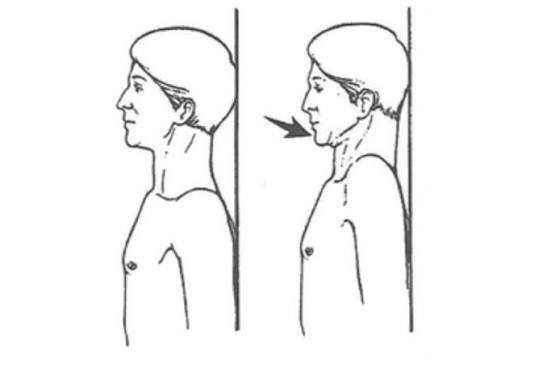
Exercise 1: Chin Tucks
Im sure a lot of people expected this but I am still leaving this as it is a very effective approach towards enhancing posture.
Sit or stand with a completely straightened spine, look ahead and pull your chin downwards then upwards
Volume: recommended online (hold for 5 seconds complete 3 sets 10-12 repetitions daily)
Volume: What I did personally (NOT PA I just found this to be more effective for myself) do them throughout your day I would do 10-12 around 8-10 times a day just by making it a habit to be highly aware and uncomfortable of my poor posture)
Exercise 2: Wall Angels
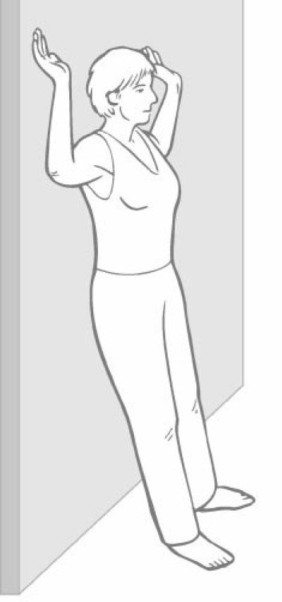
Stand with your body flat against a sold wall. Bring your arms up into a W position whilst your elbows and the backs of your hands stay in contact with the wall. Slide your arms up and down towards the ceiling
Volume: 3 sets of 10 controlled repetitions.
Exercise 3: Chin Drop while sitting down
This exercise is to be preformed siting down in order to stretch cervical extensors.
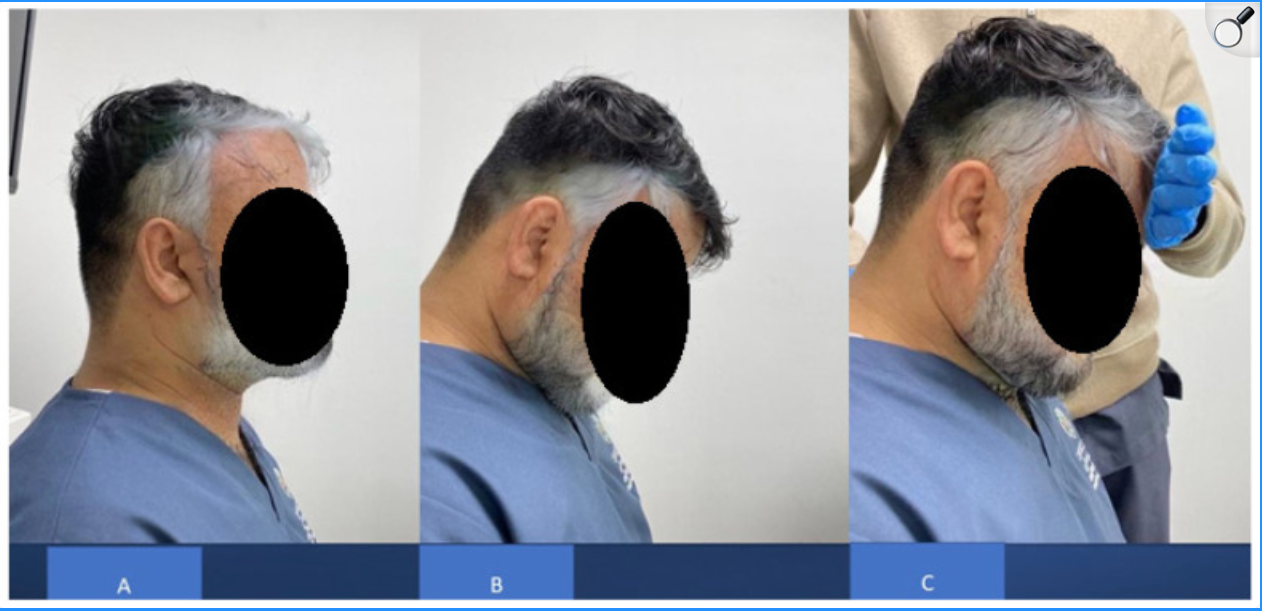
Flex the neck until good stretch is felt at base of head and then hold the final position for 5 seconds. Apply resistance with one hand by placing it under the tucked chun and lightly applying downward pressure into the hand as this maneuver is being preformed
Volume: repeat 10 times each day
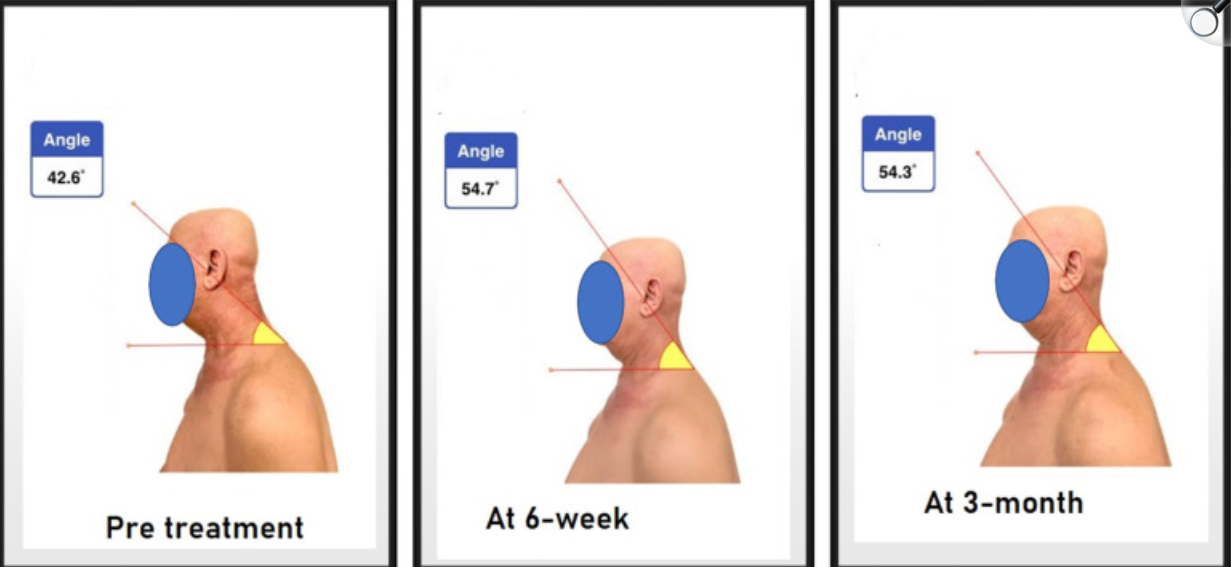
Craniovertebral Angle demonstration following these similar exercises excluding scapular retractors strengthening exercise and bilateral and bilateral pectoralis stretches
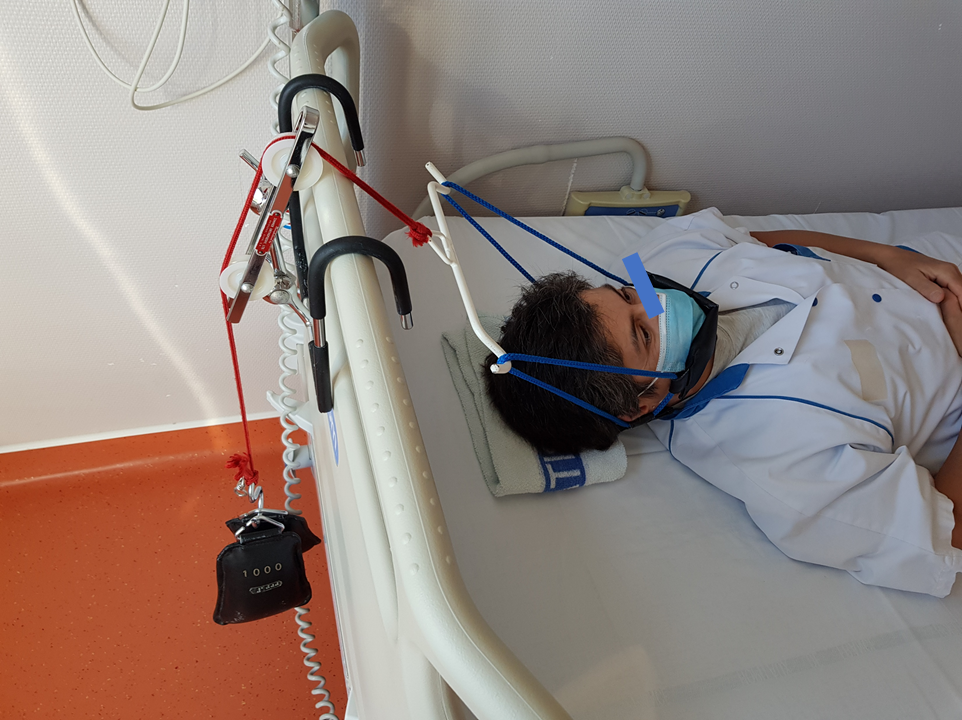
Cervical traction device
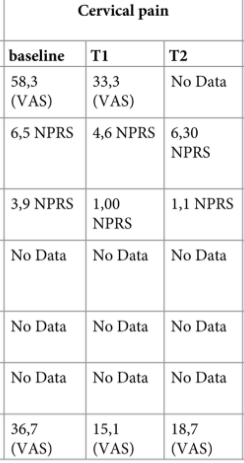
Intensive decompression allowed half of participants to immediately experience highly significant improvements in vertical head alignment
USAGE
NEVER START WITH HEAVY WEIGHT
“At the end of growth” “18 to 35-year-old age range”
Ideal posture alignment
When the cervical spine is aligned and straight the head is able to sit balanced over the shoulders. This allows for tension on the jaw muscle to be relieved resulting in the mandible resting forward. The tongue will rest naturally against your palate providing consistent force allowing for the benefit of horizontal maxillary growth simulation for an individual with open plates and soft tissue and postural for someone skeletally mature. To restore the resting alignment of your jawline a 2 part physiological approach is necessary; strengthening what is weak (cervical stabilizers) and stretching what is tight (suboccipital and pectoral muscles)
How to fix
This exercise program is heavily based out of 1{Harman K., Hubley-Kozey C.L., Butler H. Effectiveness of an Exercise Program to Improve Forward Head Posture in Normal Adults: A Randomized, Controlled 10-Week Trial. J. Man. Manip. Ther. 2005;13:163–176. doi: 10.1179/106698105790824888} and 2{.Kendall F.P., McCreary E.K., Provance P.G., Rodgers M.M.I., Romani W.A. Muscles: Testing and Function, with Posture and Pain. LWW; Baltimore, MD, USA: 2014}
Exercise 1: Chin Tucks
Im sure a lot of people expected this but I am still leaving this as it is a very effective approach towards enhancing posture.
Sit or stand with a completely straightened spine, look ahead and pull your chin downwards then upwards
Volume: recommended online (hold for 5 seconds complete 3 sets 10-12 repetitions daily)
Volume: What I did personally (NOT PA I just found this to be more effective for myself) do them throughout your day I would do 10-12 around 8-10 times a day just by making it a habit to be highly aware and uncomfortable of my poor posture)
Exercise 2: Wall Angels
Stand with your body flat against a sold wall. Bring your arms up into a W position whilst your elbows and the backs of your hands stay in contact with the wall. Slide your arms up and down towards the ceiling
Volume: 3 sets of 10 controlled repetitions.
Exercise 3: Chin Drop while sitting down
This exercise is to be preformed siting down in order to stretch cervical extensors.
Flex the neck until good stretch is felt at base of head and then hold the final position for 5 seconds. Apply resistance with one hand by placing it under the tucked chun and lightly applying downward pressure into the hand as this maneuver is being preformed
Volume: repeat 10 times each day
Craniovertebral Angle demonstration following these similar exercises excluding scapular retractors strengthening exercise and bilateral and bilateral pectoralis stretches
Cervical traction device
Cervical traction is a extremely efficient form of spinal decompression and restoration of cervical lordosis
A case study (https://journals.plos.org/plosone/article?id=10.1371/journal.pone.0255998) utilized a traction protocol consisting of 30 minute sessions twice a day for 5 days.
A case study (https://journals.plos.org/plosone/article?id=10.1371/journal.pone.0255998) utilized a traction protocol consisting of 30 minute sessions twice a day for 5 days.
Intensive decompression allowed half of participants to immediately experience highly significant improvements in vertical head alignment
USAGE
NEVER START WITH HEAVY WEIGHT
| 1 Pint of Water = ~1 lb |
| 1 Gallon of Water = ~8.3 lbs |
| Phase | Frequency | weight | Time |
| Week 1 | 1 session per day | 10lbs (4.5kg) or 10% of tbw | 5-10 minutes once per day |
| Weeks 2+ | 1 to 2 sessions per day | 12-15lbs (5.5-7kg) or 10% of tbw | Gradually increase to 20 (do not exceed 20) |
INSTALLATION
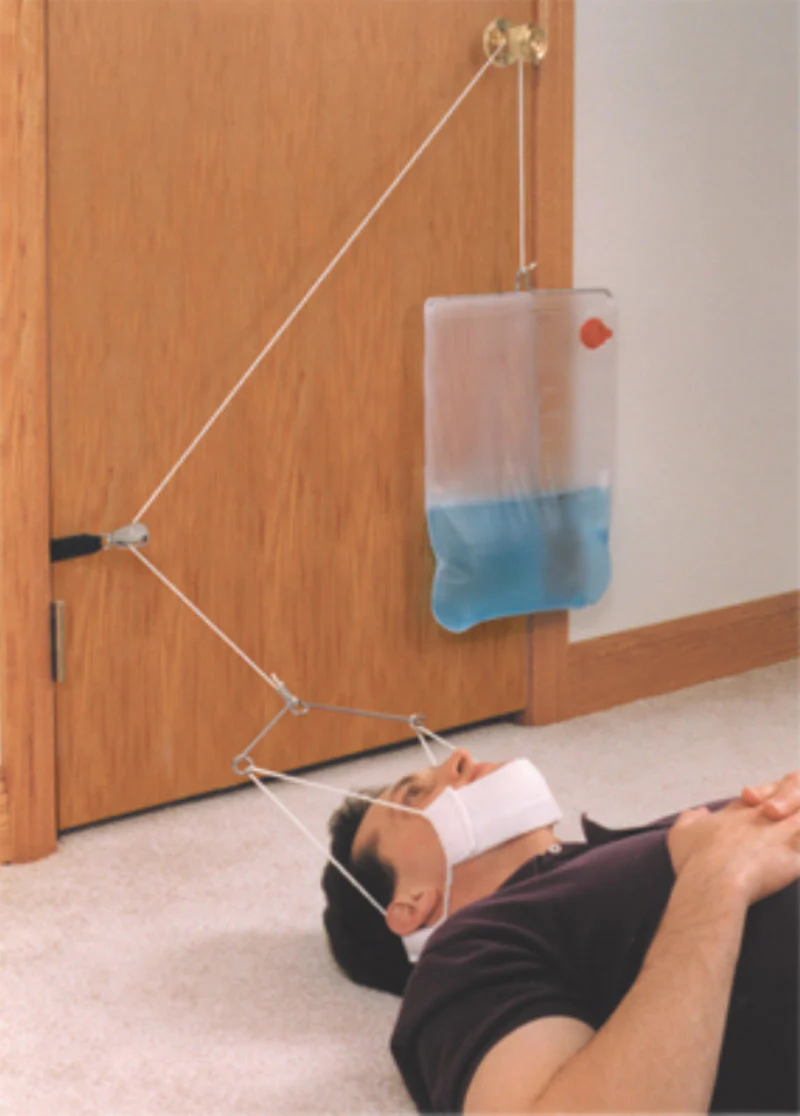
- Place the metal bracket on the top of a sturdy door. MAKE SURE TO LOCK THE DOOR SO NO ONE WALKS IN
- Hang pulley arm assembly on door bracket and thread the traction cord through the two pulley wheels (ensure rope slides smoothly on both wheels)
- Tie the end of the traction cord next to the closed end using a double half-hitch knot. Use the S-hook to clip the water bag on the open end of it (let bag sit on the floor when not using)
- Tie the opposite end of the cord to the center hook on the metal spreader bar. Clip the metal D-rings on the harness to the matching left and right slots on the spreader bar.
INSTRUCTIONS
- Set weight
- Remove any necklaces, earrings glasses or anything coming in contact with your neck. Lay comfortable on a thin mat
- Lay on your back with your head facing towards the door. Thickest padded cup goes on the base of your skull, thinner strap goes under your chin. Ensure that both side straps are secured so the device is centered and even.
- Whilst holding the spreader bar slowly slide back away from the door. Continue sliding back until bag is levitated 2-3 inches off the floor.
- Rest your arms on your side, mentally emphasize slow breathing and strictly avoid attempting to resist or tense your neck.
- Slowly slide back whilst grasping spreader bar until the water bag hits the floor.
- Cautiously unhook the D-rings from the spreader bar and take the harness off your head
- DO NOT stand up immediately after. Lie flat on your back for 2 minutes then slowly stand up.
LIFESTYLE/SLEEPING
Lifestyle
**this in itself will be extremely concise**
- Avoid looking down when using electronics always keep phone/tablet/etc at eye level
- Mewing (you can find plenty of info online and I’m sure it is a familiar concept)
- Keep your eye gaze level with the horizon
Sleeping
Approximately ⅓ of our lives are spent sleeping, during these hours our body is exposed to continuous gravitational and mechanical loads. Sleeping with unsupportive posture leads to your skeletal system being forced into static pathological loading.
Optimizing your sleep allows for an effortless way of improving your facial aesthetics without needing to do a single thing.
Obviously sleeping on your back is going to be considered the gold standard.
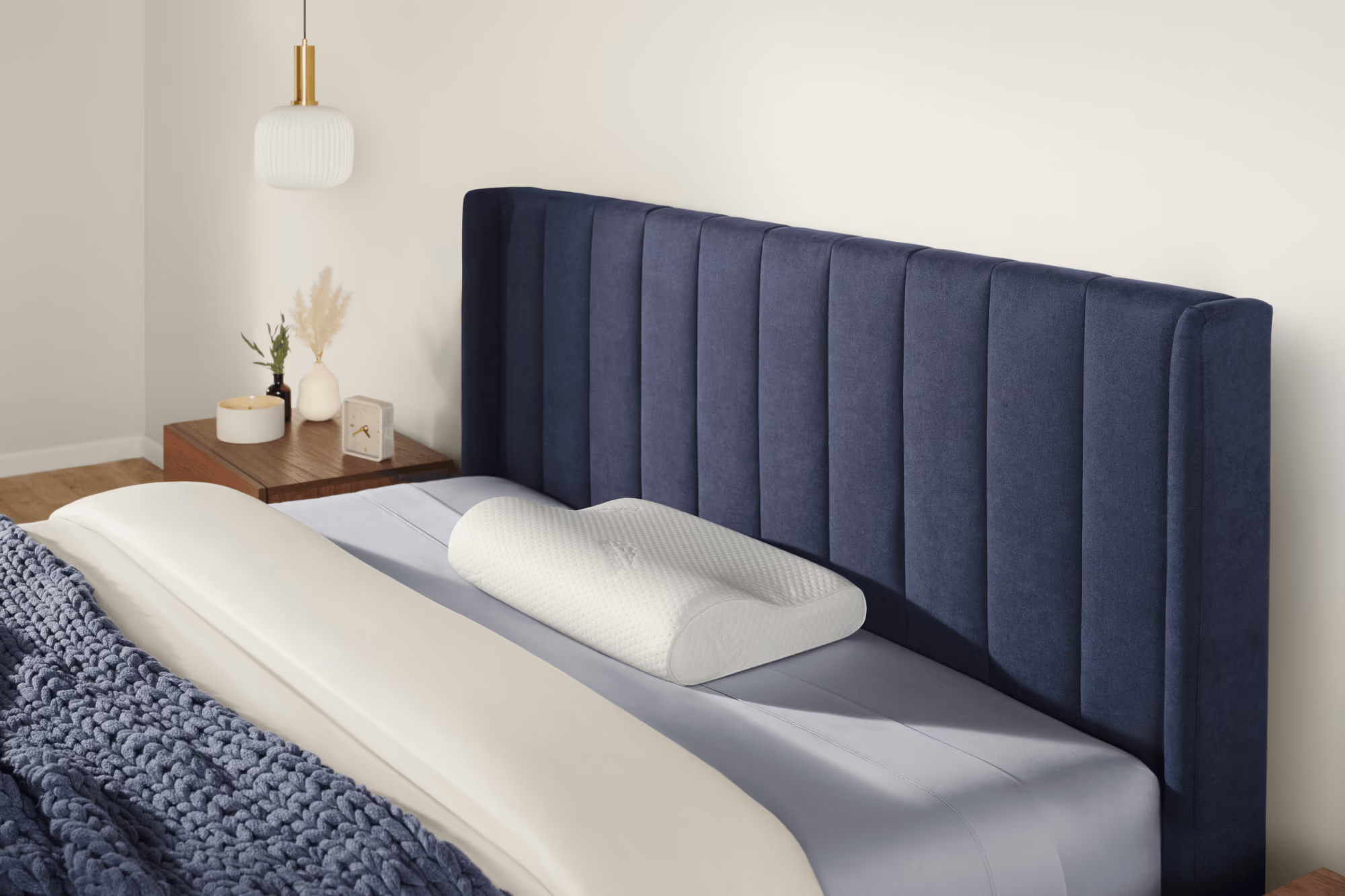
But thats not what I want to discuss; your neck requires a gentle curve pushing it forward in order to allow the back of the skull to drop. The ideal setup for maximizing sleep includes a contoured orthopedic pillow with a supportive roll under the neck
**NOTE**
THIS GUIDE ONLY ALLOWS FOR DAMAGE FROM POOR POSTURE TO BE PREVENTED OR RESTORED
IT WILL NOT CAUSE NEW BONE GROWTH





 just research I did myself over the course of time


