ThatDewd
Iron
- Joined
- Jun 30, 2026
- Posts
- 31
- Reputation
- 16
ANGIOTENSIN
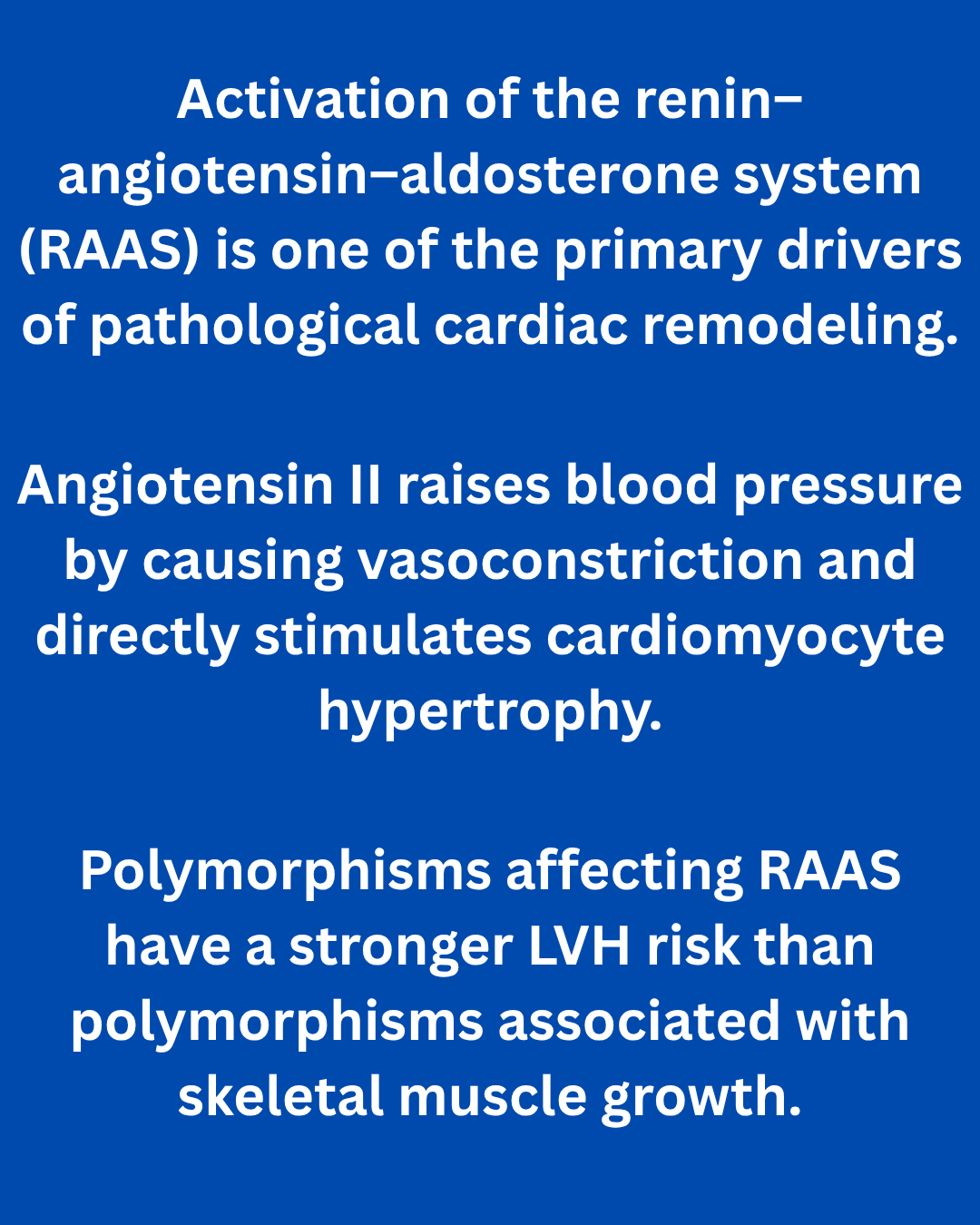
Activation of the renin-angiotensin-aldosterone system (RAAS) is one of the primary drivers of pathological cardiac remodeling.
Angiotensin II raises blood pressure by causing vasoconstriction and directly stimulating cardiomyocyte hypertrophy.
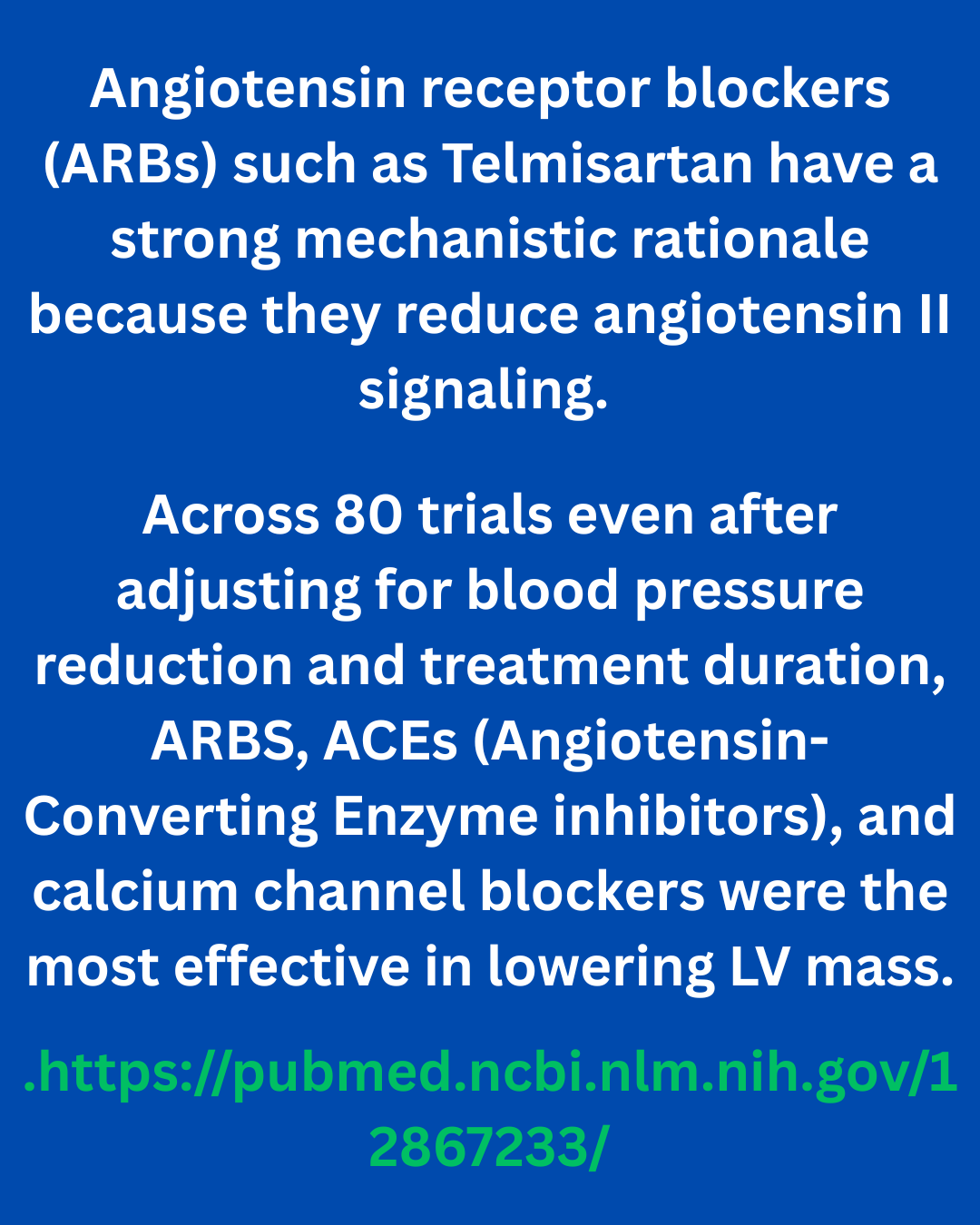
Angiotensin receptor blockers (ARBs) such as Telmisartan have a strong mechanistic rationale because they reduce angiotensin II signaling.
CALCIUM
Intracellular calcium regulates the contraction of the heart as it does the contraction of any other muscle in the body.
Increased calcium influx makes the heart beat harder and activates calcineurin/NFAT signaling, promoting cardiomyocyte hypertrophy and pathological cardiac remodeling.
Calcium channel blockers such as Verapamil have a strong mechanistic rationale because they reduce calcium entry and signaling.
CATECHOLAMINES
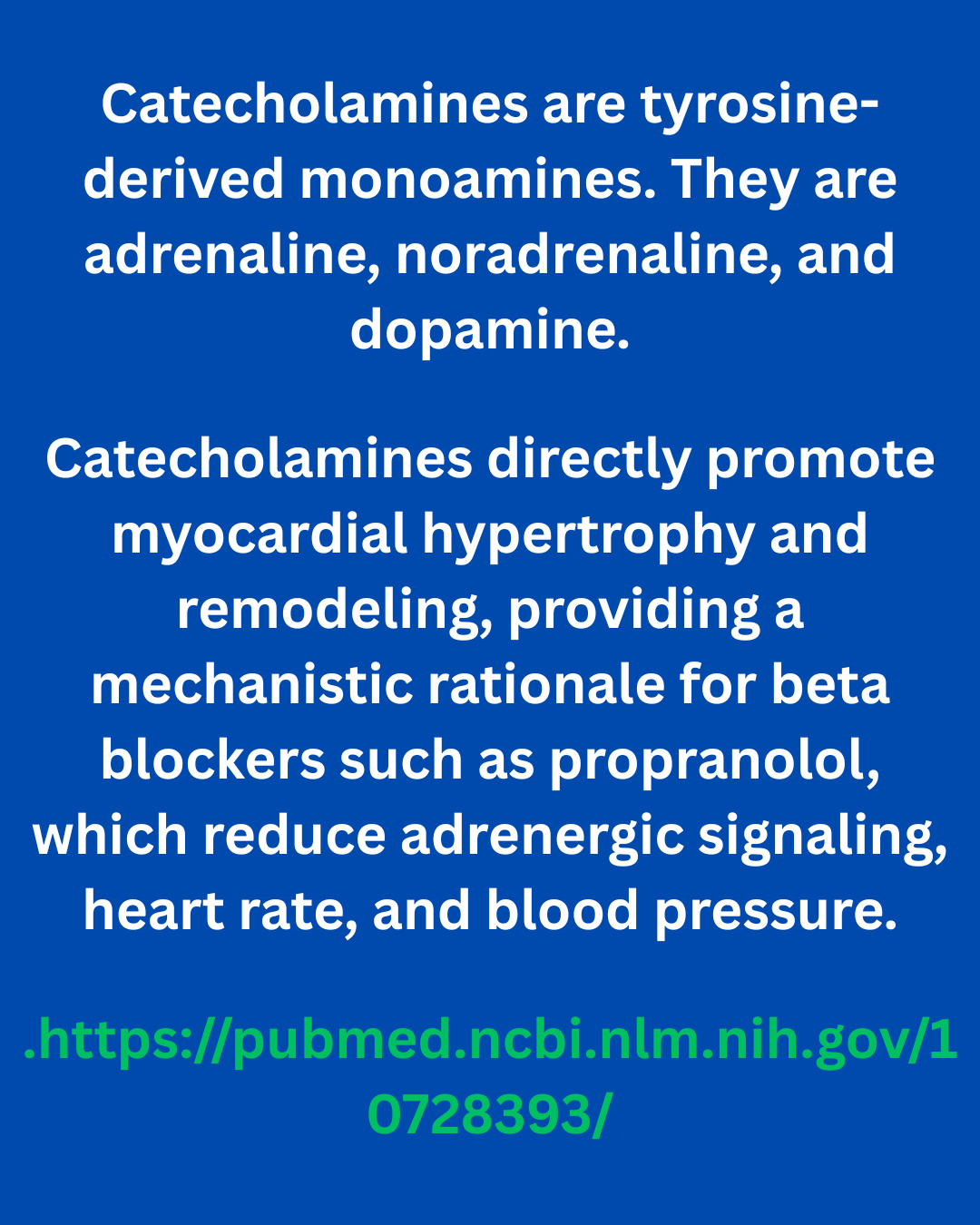
Catecholamines are tyrosine-derived monoamines. They are adrenaline, noradrenaline, and dopamine.
Catecholamines directly promote myocardial hypertrophy and raise heart rate and blood pressure.
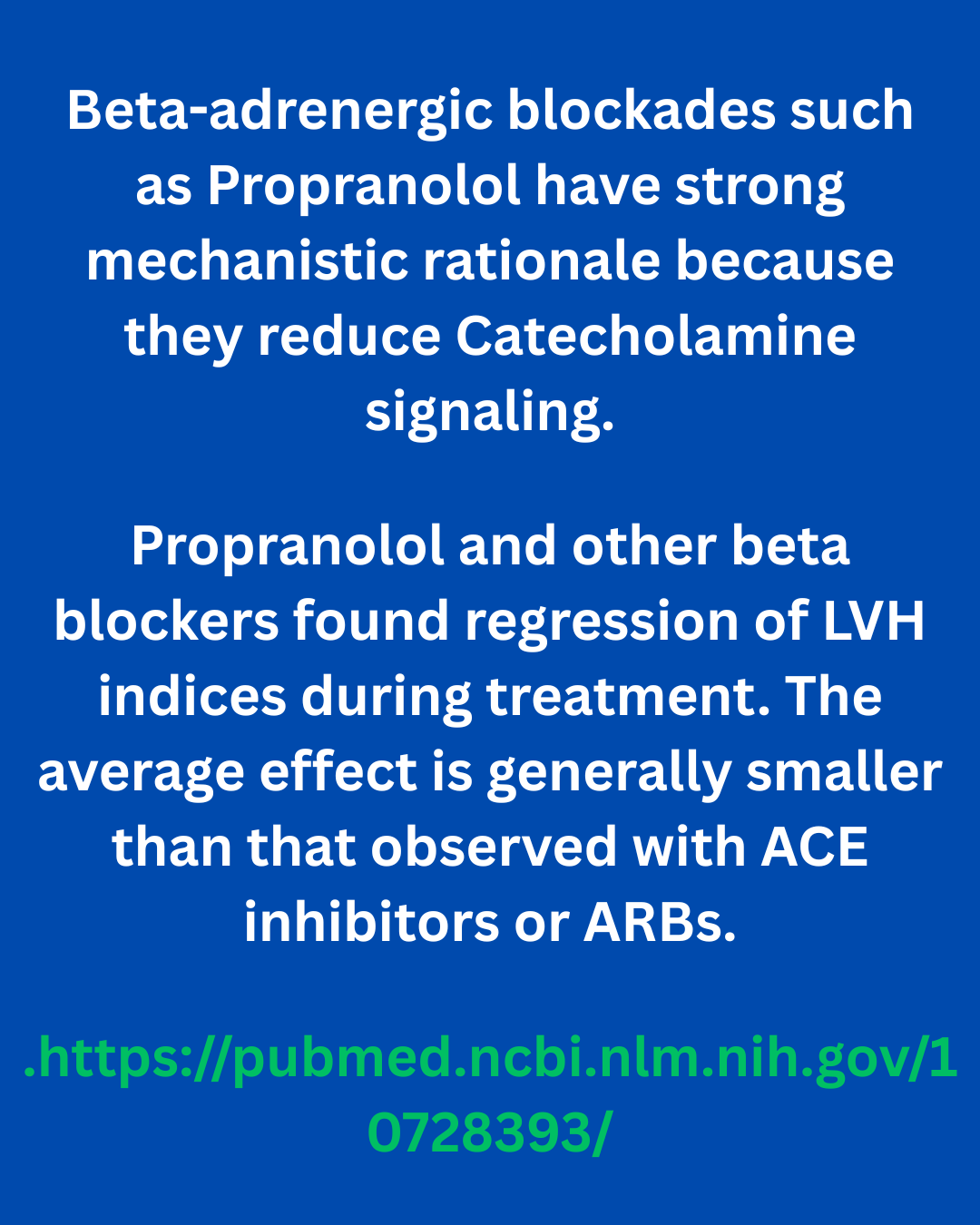
Beta-adrenergic blockades such as Propranolol have strong mechanistic rationale because they reduce Catecholamine signaling.
CONCLUSION
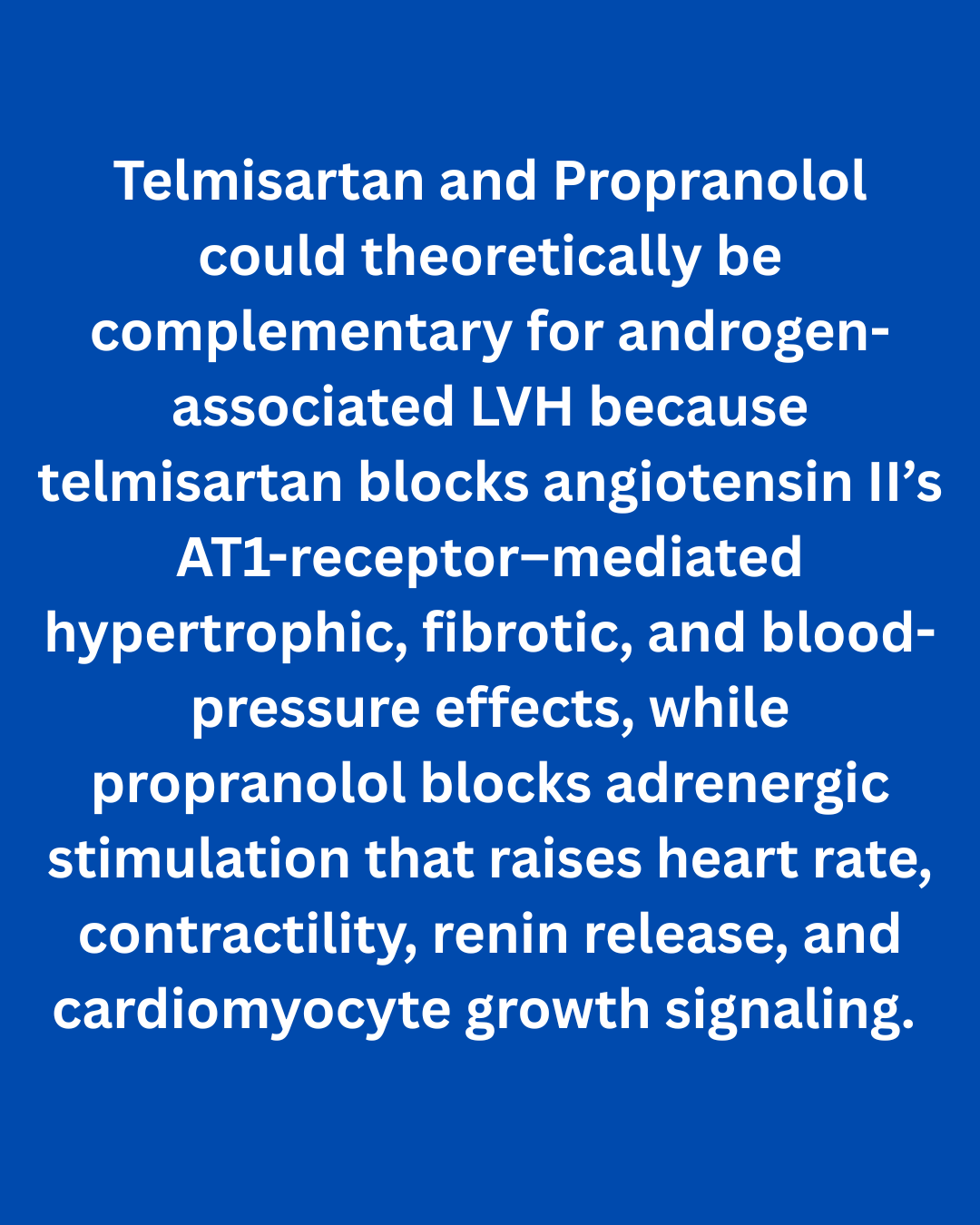
Telmisartan, propranolol, and verapamil could theoretically be complementary for androgen-associated LVH because they target different pathways involved in cardiac remodeling.
Across 80 trials LVH was reduced as follows:
13% with angiotensin II receptor antagonists (95% confidence interval [CI]: 8% to 18%)
10% with ACE inhibitors (95% CI: 8% to 12%)
11% with calcium antagonists (95% CI: 9% to 13%)
8% with diuretics (95% CI: 5% to 10%)
6% with beta-blockers (95% CI: 3% to 8%)

 pubmed.ncbi.nlm.nih.gov
Activation of the renin-angiotensin-aldosterone system (RAAS) is one of the primary drivers of pathological cardiac remodeling.
Angiotensin II raises blood pressure by causing vasoconstriction and directly stimulating cardiomyocyte hypertrophy.
Angiotensin receptor blockers (ARBs) such as Telmisartan have a strong mechanistic rationale because they reduce angiotensin II signaling.
CALCIUM
Intracellular calcium regulates the contraction of the heart as it does the contraction of any other muscle in the body.
Increased calcium influx makes the heart beat harder and activates calcineurin/NFAT signaling, promoting cardiomyocyte hypertrophy and pathological cardiac remodeling.
Calcium channel blockers such as Verapamil have a strong mechanistic rationale because they reduce calcium entry and signaling.
CATECHOLAMINES
Catecholamines are tyrosine-derived monoamines. They are adrenaline, noradrenaline, and dopamine.
Catecholamines directly promote myocardial hypertrophy and raise heart rate and blood pressure.
Beta-adrenergic blockades such as Propranolol have strong mechanistic rationale because they reduce Catecholamine signaling.
CONCLUSION
Telmisartan, propranolol, and verapamil could theoretically be complementary for androgen-associated LVH because they target different pathways involved in cardiac remodeling.
- Telmisartan: Blocks angiotensin II at the AT1 receptor, reducing RAAS-driven effects such as vasoconstriction, hypertension, fibrosis, oxidative stress, and direct cardiomyocyte hypertrophy signaling.
- Verapamil: Blocks L-type calcium channels (Cav1.2) in cardiomyocytes, reducing calcium influx that activates calcium-dependent hypertrophic pathways such as calmodulin/calcineurin/NFAT signaling. It also lowers heart rate and contractility, reducing cardiac workload and calcium stress.
- Propranolol: Blocks β-adrenergic stimulation, reducing sympathetic effects such as increased heart rate, contractility, renin release, and pro-hypertrophic signaling from chronic catecholamine exposure.
Across 80 trials LVH was reduced as follows:
13% with angiotensin II receptor antagonists (95% confidence interval [CI]: 8% to 18%)
10% with ACE inhibitors (95% CI: 8% to 12%)
11% with calcium antagonists (95% CI: 9% to 13%)
8% with diuretics (95% CI: 5% to 10%)
6% with beta-blockers (95% CI: 3% to 8%)
A meta-analysis of the effects of treatment on left ventricular mass in essential hypertension - PubMed
Antihypertensive drug classes have different effects on left ventricular mass reduction. Whether a greater reduction of left ventricular mass results in better clinical outcomes remains to be determined.
pubmed.ncbi.nlm.nih.gov