
MediterraneanMoid
z1g
- Joined
- Mar 18, 2026
- Posts
- 438
- Reputation
- 481
INTRODUCTION
This thread will mainly focus, as clearly seen in the title, on the importance of ratios themselves and their great impact at present; we will cover the main frontal ratios as well as some additional ratios at the body level and vice versa. This thread aims for you to be able to assess the importance of aesthetics and to have a strong understanding of some of the important current measures of beauty. Without further delay, let’s begin with a brief introduction: for many centuries now, aesthetics has always been an object of study not only now but also in the past. And for that, we must observe under which parameters the standard of beauty is currently established, which has been set based on the following evidence:
► 1) Art and sculpture: “Ideal” facial proportions can be derived from classical, Renaissance, and neoclassical art and sculpture.
► 2) Anthropometry: “Normal” or “average” facial proportions specific to age, sex, and ethnicity, along with acceptable ranges of normal variability, are derived from anthropometric and cephalometric data obtained from population samples. These data can be used to obtain population averages specific to age, sex, and ethnicity for the different proportional canons or guidelines being evaluated.
► 3) Attractiveness studies: Both previous sources can be tested through attractiveness studies, which provide confirmation of the perception of attractiveness of any facial parameter through the judgment of the general public and clinical professionals.
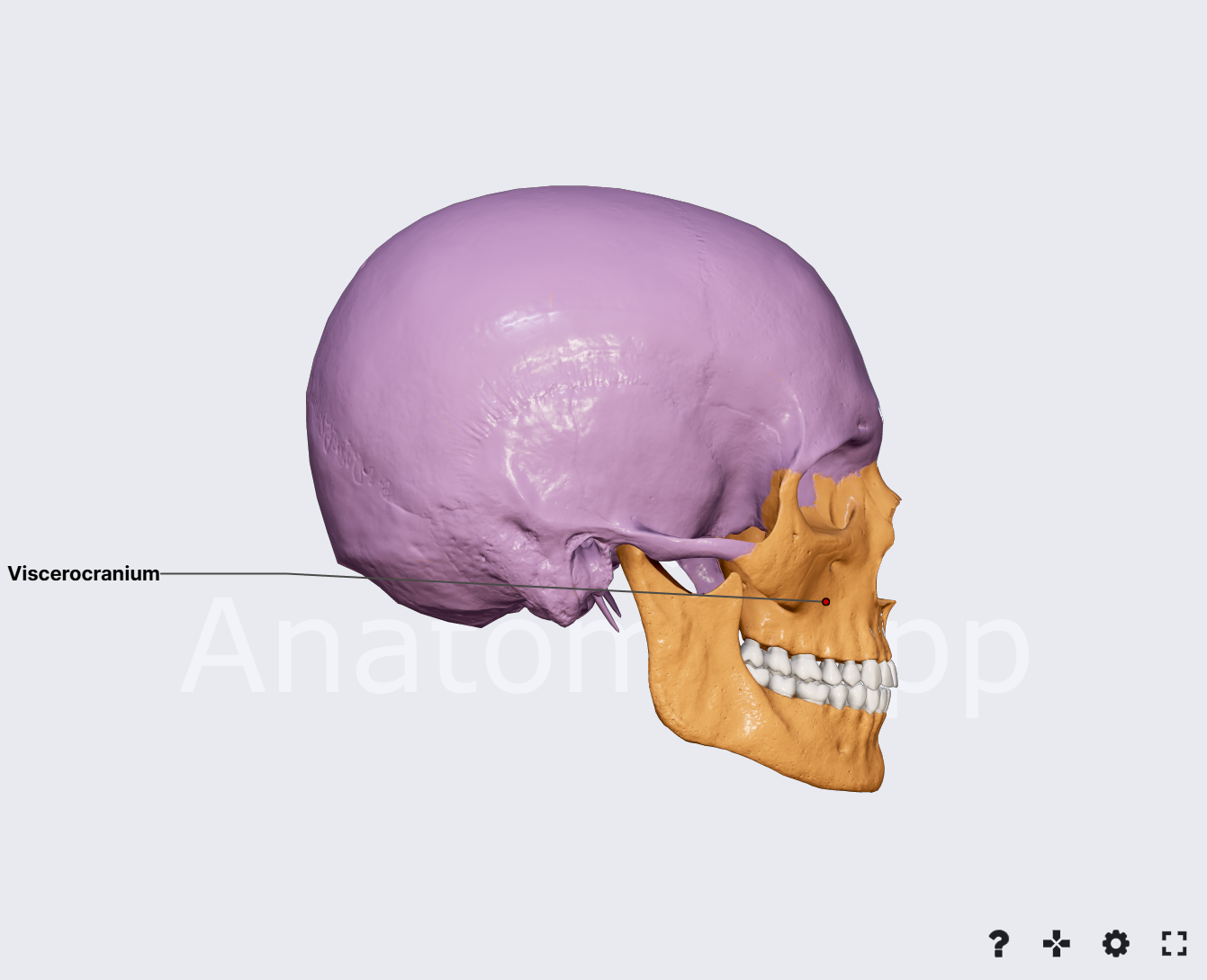
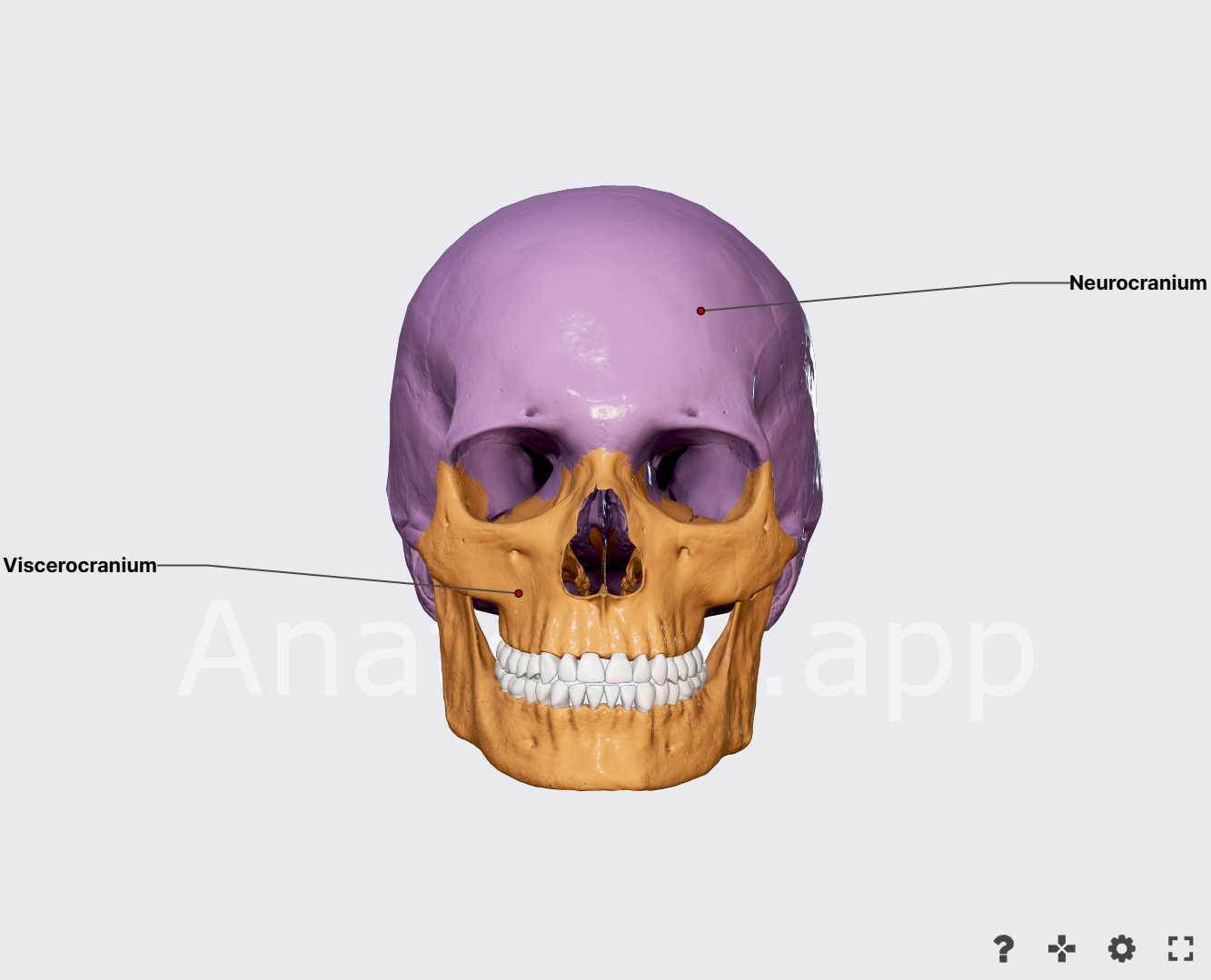
Well, before starting with the respective analysis of ratios and their demonstration, we must understand how the skull is divided in order to have a more visual understanding of what we are going to work with. On one hand we have the VISCEROCRANIUM (VC) and the NEUROCRANIUM (NC):
● VC ➨ the viscerocranium comprises the fourteen bones that make up the facial skeleton: the two maxillae, the two zygomatic bones (cheekbones), the two nasal bones, the two lacrimal bones, the two palatine bones, the two inferior nasal conchae, the vomer, and the mandible. Its development ceases between 18–25 years (the mandible is one of the last bones to stop growing.)
● NC ➨ the neurocranium is composed of eight bones that form the protective case of the brain: the frontal, the two parietals, the two temporals, the occipital, the sphenoid, and the ethmoid. Between 5 and 7 years it reaches practically 95% of its total expansion.
This thread will mainly focus, as clearly seen in the title, on the importance of ratios themselves and their great impact at present; we will cover the main frontal ratios as well as some additional ratios at the body level and vice versa. This thread aims for you to be able to assess the importance of aesthetics and to have a strong understanding of some of the important current measures of beauty. Without further delay, let’s begin with a brief introduction: for many centuries now, aesthetics has always been an object of study not only now but also in the past. And for that, we must observe under which parameters the standard of beauty is currently established, which has been set based on the following evidence:
► 1) Art and sculpture: “Ideal” facial proportions can be derived from classical, Renaissance, and neoclassical art and sculpture.
► 2) Anthropometry: “Normal” or “average” facial proportions specific to age, sex, and ethnicity, along with acceptable ranges of normal variability, are derived from anthropometric and cephalometric data obtained from population samples. These data can be used to obtain population averages specific to age, sex, and ethnicity for the different proportional canons or guidelines being evaluated.
► 3) Attractiveness studies: Both previous sources can be tested through attractiveness studies, which provide confirmation of the perception of attractiveness of any facial parameter through the judgment of the general public and clinical professionals.
Well, before starting with the respective analysis of ratios and their demonstration, we must understand how the skull is divided in order to have a more visual understanding of what we are going to work with. On one hand we have the VISCEROCRANIUM (VC) and the NEUROCRANIUM (NC):
● VC ➨ the viscerocranium comprises the fourteen bones that make up the facial skeleton: the two maxillae, the two zygomatic bones (cheekbones), the two nasal bones, the two lacrimal bones, the two palatine bones, the two inferior nasal conchae, the vomer, and the mandible. Its development ceases between 18–25 years (the mandible is one of the last bones to stop growing.)
● NC ➨ the neurocranium is composed of eight bones that form the protective case of the brain: the frontal, the two parietals, the two temporals, the occipital, the sphenoid, and the ethmoid. Between 5 and 7 years it reaches practically 95% of its total expansion.
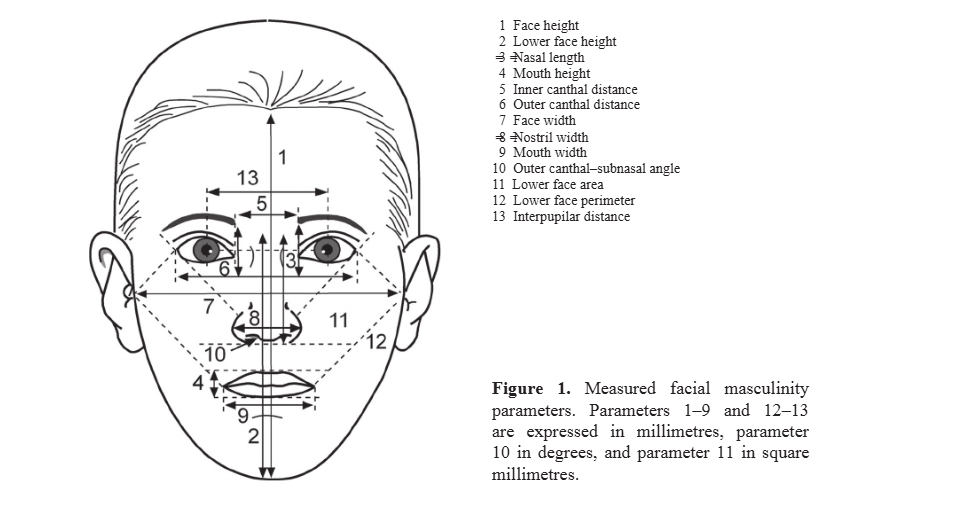
Now I will present the respective facial fields, and from there we will proceed to explain absolutely all the ratios, how the divisions are made (represented with the corresponding number) to obtain the exact measurement and its respective "ideal" value. Small note: the divisions are given with the unit of measurement in mm and in images they would be pixels (I emphasize that there are already programs that obviously measure it this way)
① TOTAL FACIAL HEIGHT (Face Height)
The measurement would go from the hairline to the chin
The division being: total facial height ÷ facial width (7) → 1 ÷ 7
Approximate ideal value: 1.45 – 1.55
② LOWER FACE HEIGHT (Lower Face Height)
The measurement would go from the subnasale to the chin
The division being: lower face height ÷ total facial height (1) → 2 ÷ 1
Ideal value: 0.30 – 0.35
③ NASAL LENGTH (Nasal Length)
The measurement would go from the nasion to the subnasale
The division being: nose ÷ total facial height → 3 ÷ 1 --- nose ÷ lower third → 3 ÷ 2
Ideal value: 3 ÷ 2 ≈ 0.85 – 1.0
④ MOUTH HEIGHT (Mouth Height)
The measurement would go from the upper lip to the lower lip
The division being: mouth height ÷ lower third → 4 ÷ 2
Ideal value: there is no exact consensus, but it should remain proportional to the lower third
⑤ INNER CANTHAL DISTANCE (Inner Canthal Distance)
The measurement would go between the inner corners of the eyes
The division being: distance between eyes ÷ facial width (7) → 5 ÷ 7
Ideal value: approximately equal to the width of one eye
⑥ OUTER CANTHAL DISTANCE (Outer Canthal Distance)
The measurement would go between the outer corners of the eyes
The division being: external ocular distance ÷ facial width (7) → 6 ÷ 7
Ideal value: proportional to facial width with bilateral symmetry
⑦ FACIAL WIDTH (Bizygomatic Width)
The measurement would go from cheekbone to cheekbone
The division being: facial width ÷ total facial height → 7 ÷ 1 --- facial width ÷ nose → 7 ÷ 3
Ideal value: 7 ÷ 1 ≈ 0.65 – 0.75 --- 7 ÷ 3 ≈ 3 – 4
FWHR (Facial Width-to-Height Ratio)
It would be the relationship between facial width and facial height
The division being: facial width ÷ facial height → FWHR
Approximate ideal value: 1.7 – 1.9
⑧ NOSTRIL WIDTH (Nostril Width)
The measurement would go from nasal wing to nasal wing
The division being: nose ÷ mouth → 8 ÷ 9 --- mouth ÷ nose → 9 ÷ 8
Ideal value: 9 ÷ 8 ≈ 1.5 – 1.6
⑨ MOUTH WIDTH (Mouth Width)
The measurement would go from commissure to commissure
The division being: mouth ÷ nose → 9 ÷ 8
Ideal value: 1.5 – 1.6
⑩ OUTER CANTHAL – SUBNASAL ANGLE
The measurement would go from the outer canthus of the eye to the subnasale
The division being: it is not a ratio, it is an angle
Ideal value: 25° – 40°
⑪ LOWER FACE AREA (Lower Face Area)
The measurement would go of the lower third of the face in terms of geometric area
The division being: there is no standard ratio
Ideal value: proportional to the rest of the facial thirds
⑫ LOWER FACE PERIMETER
The measurement would go along the mandibular contour
The division being: there is no standard ratio
Ideal value: balanced mandibular definition
⑬ INTERPUPILLARY DISTANCE (Interpupillary Distance)
The measurement would go from pupil to pupil
The division being: interpupillary distance ÷ facial width (7) → 13 ÷ 7 --- interpupillary distance ÷ nose (3) → 13 ÷ 3
Ideal value: balanced central symmetry

① TOTAL FACIAL HEIGHT (Face Height)
The measurement would go from the hairline to the chin
The division being: total facial height ÷ facial width (7) → 1 ÷ 7
Approximate ideal value: 1.45 – 1.55
② LOWER FACE HEIGHT (Lower Face Height)
The measurement would go from the subnasale to the chin
The division being: lower face height ÷ total facial height (1) → 2 ÷ 1
Ideal value: 0.30 – 0.35
③ NASAL LENGTH (Nasal Length)
The measurement would go from the nasion to the subnasale
The division being: nose ÷ total facial height → 3 ÷ 1 --- nose ÷ lower third → 3 ÷ 2
Ideal value: 3 ÷ 2 ≈ 0.85 – 1.0
④ MOUTH HEIGHT (Mouth Height)
The measurement would go from the upper lip to the lower lip
The division being: mouth height ÷ lower third → 4 ÷ 2
Ideal value: there is no exact consensus, but it should remain proportional to the lower third
⑤ INNER CANTHAL DISTANCE (Inner Canthal Distance)
The measurement would go between the inner corners of the eyes
The division being: distance between eyes ÷ facial width (7) → 5 ÷ 7
Ideal value: approximately equal to the width of one eye
⑥ OUTER CANTHAL DISTANCE (Outer Canthal Distance)
The measurement would go between the outer corners of the eyes
The division being: external ocular distance ÷ facial width (7) → 6 ÷ 7
Ideal value: proportional to facial width with bilateral symmetry
⑦ FACIAL WIDTH (Bizygomatic Width)
The measurement would go from cheekbone to cheekbone
The division being: facial width ÷ total facial height → 7 ÷ 1 --- facial width ÷ nose → 7 ÷ 3
Ideal value: 7 ÷ 1 ≈ 0.65 – 0.75 --- 7 ÷ 3 ≈ 3 – 4
FWHR (Facial Width-to-Height Ratio)
It would be the relationship between facial width and facial height
The division being: facial width ÷ facial height → FWHR
Approximate ideal value: 1.7 – 1.9
⑧ NOSTRIL WIDTH (Nostril Width)
The measurement would go from nasal wing to nasal wing
The division being: nose ÷ mouth → 8 ÷ 9 --- mouth ÷ nose → 9 ÷ 8
Ideal value: 9 ÷ 8 ≈ 1.5 – 1.6
⑨ MOUTH WIDTH (Mouth Width)
The measurement would go from commissure to commissure
The division being: mouth ÷ nose → 9 ÷ 8
Ideal value: 1.5 – 1.6
⑩ OUTER CANTHAL – SUBNASAL ANGLE
The measurement would go from the outer canthus of the eye to the subnasale
The division being: it is not a ratio, it is an angle
Ideal value: 25° – 40°
⑪ LOWER FACE AREA (Lower Face Area)
The measurement would go of the lower third of the face in terms of geometric area
The division being: there is no standard ratio
Ideal value: proportional to the rest of the facial thirds
⑫ LOWER FACE PERIMETER
The measurement would go along the mandibular contour
The division being: there is no standard ratio
Ideal value: balanced mandibular definition
⑬ INTERPUPILLARY DISTANCE (Interpupillary Distance)
The measurement would go from pupil to pupil
The division being: interpupillary distance ÷ facial width (7) → 13 ÷ 7 --- interpupillary distance ÷ nose (3) → 13 ÷ 3
Ideal value: balanced central symmetry
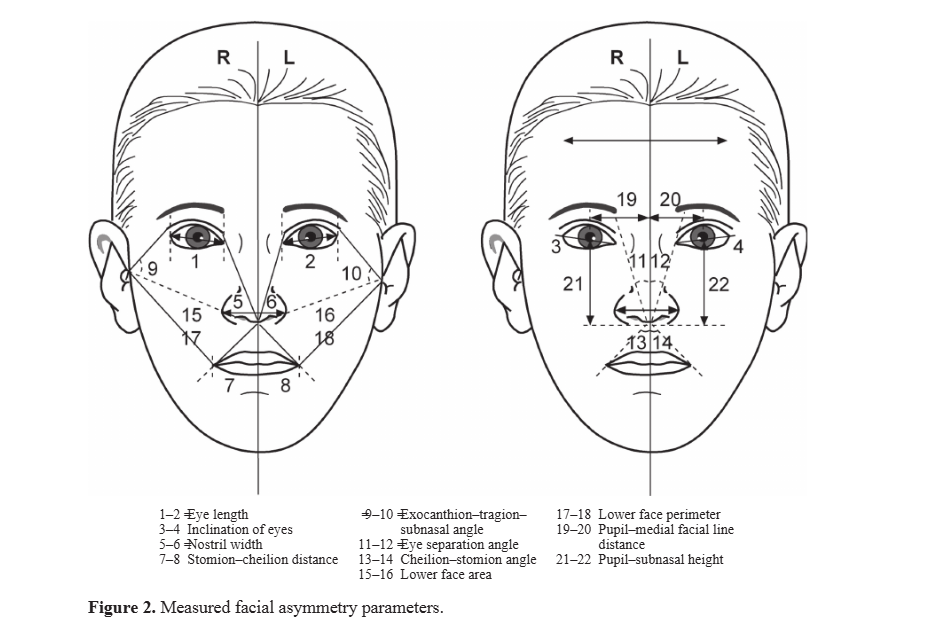
①–② EYE LENGTH (Eye Length)
The measurement would go of the horizontal width of the eye
The division being: eye ÷ inner canthal distance (5) → 1 ÷ 5
Ideal value: 0.90 – 1.10 (the eye is usually almost equal to the interocular space)
③–④ CANTHAL TILT (Canthal Tilt)
The measurement would go of the angle between the inner and outer canthus of the eye
The division being: it is not a ratio, it is an angle
Ideal value: +5° to +10° (slightly positive)
⑤–⑥ NASAL WIDTH
The measurement would go from nasal wing to nasal wing
The division being: nose ÷ mouth → (5–6) ÷ (7–8)
Ideal value: 0.70 – 0.85 (nose narrower than the mouth)
⑦–⑧ STOMION – CHEILION DISTANCE
The measurement would go from the center of the lip to the commissures
The division being: there is no standard ratio
Ideal value: almost perfect bilateral symmetry (difference < 2–3%)
⑨–⑩ EXOCANTHION – TRAGION – SUBNASAL ANGLE
The measurement would go forming a lateral facial angle
The division being: it is not a ratio
Ideal value: 30° – 45° (mid-lateral third harmony)
⑪–⑫ OCULAR SEPARATION ANGLE
The measurement would go of the horizontal orientation of the eyes
The division being: it is not a ratio
Ideal value: 0° to +5° (neutral or slightly positive alignment)
⑬–⑭ CHEILION – STOMION ANGLE
The measurement would go of the shape of the labial commissure
The division being: it is not a ratio
Ideal value: 0° to +5° (slight aesthetic elevation of commissures)
⑮–⑯ LOWER FACE AREA
The measurement would go of the mandibular area
The division being: there is no standard ratio
Ideal value: 33% – 36% of total facial area
⑰–⑱ LOWER FACE PERIMETER
The measurement would go of the complete mandibular contour
The division being: there is no standard ratio
Ideal value: defined jaw with balanced relationship (without lateral excess >10% relative to cheekbones)
⑲–⑳ LATERAL PUPILLARY SYMMETRY
The measurement would go of the pupil relative to the facial midline
The division being: left side ÷ right side
Ideal value: 0.98 – 1.02 (practically perfect symmetry)
㉑–㉒ PUPIL – SUBNASAL HEIGHT
The measurement would go from the pupil to the nasal base
The division being: (21–22) ÷ 3
Ideal value: 0.95 – 1.05 (balanced mid-face proportion)

The measurement would go of the horizontal width of the eye
The division being: eye ÷ inner canthal distance (5) → 1 ÷ 5
Ideal value: 0.90 – 1.10 (the eye is usually almost equal to the interocular space)
③–④ CANTHAL TILT (Canthal Tilt)
The measurement would go of the angle between the inner and outer canthus of the eye
The division being: it is not a ratio, it is an angle
Ideal value: +5° to +10° (slightly positive)
⑤–⑥ NASAL WIDTH
The measurement would go from nasal wing to nasal wing
The division being: nose ÷ mouth → (5–6) ÷ (7–8)
Ideal value: 0.70 – 0.85 (nose narrower than the mouth)
⑦–⑧ STOMION – CHEILION DISTANCE
The measurement would go from the center of the lip to the commissures
The division being: there is no standard ratio
Ideal value: almost perfect bilateral symmetry (difference < 2–3%)
⑨–⑩ EXOCANTHION – TRAGION – SUBNASAL ANGLE
The measurement would go forming a lateral facial angle
The division being: it is not a ratio
Ideal value: 30° – 45° (mid-lateral third harmony)
⑪–⑫ OCULAR SEPARATION ANGLE
The measurement would go of the horizontal orientation of the eyes
The division being: it is not a ratio
Ideal value: 0° to +5° (neutral or slightly positive alignment)
⑬–⑭ CHEILION – STOMION ANGLE
The measurement would go of the shape of the labial commissure
The division being: it is not a ratio
Ideal value: 0° to +5° (slight aesthetic elevation of commissures)
⑮–⑯ LOWER FACE AREA
The measurement would go of the mandibular area
The division being: there is no standard ratio
Ideal value: 33% – 36% of total facial area
⑰–⑱ LOWER FACE PERIMETER
The measurement would go of the complete mandibular contour
The division being: there is no standard ratio
Ideal value: defined jaw with balanced relationship (without lateral excess >10% relative to cheekbones)
⑲–⑳ LATERAL PUPILLARY SYMMETRY
The measurement would go of the pupil relative to the facial midline
The division being: left side ÷ right side
Ideal value: 0.98 – 1.02 (practically perfect symmetry)
㉑–㉒ PUPIL – SUBNASAL HEIGHT
The measurement would go from the pupil to the nasal base
The division being: (21–22) ÷ 3
Ideal value: 0.95 – 1.05 (balanced mid-face proportion)
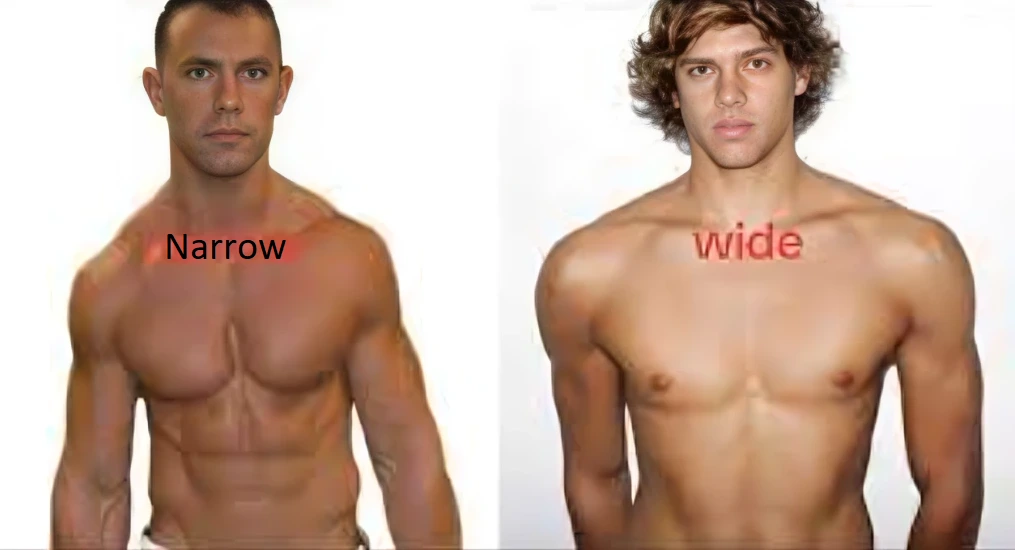
SHOULDER WIDTH (Shoulder Width – Base Measurement)
The measurement would go from the edge of one shoulder (acromion, where the arm joins the torso) to the edge of the other shoulder, passing across the back.The division being: it is not a ratio by itself, it is used as a base for body comparison.Value in centimeters: 36 – 42 cm (average)Broad value: 43 – 48+ cm
SHOULDER-TO-HIP RATIO (Shoulder-to-hip Ratio)
Formula: shoulder width ÷ hip width
Example of division: shoulders (cm) ÷ hips (cm)Interpretation:< 0.90 → narrow shoulders0.90 – 0.99 → normal proportion≥ 1.00 → broad shoulders.
TYPES OF SHOULDERS
① BROAD SHOULDERS (Broad Shoulders)
The measurement would go from acromion to acromion
The division being: shoulder width ÷ hip width
Value in centimeters: 43 – 50+ cm
Ideal ratio: 1.00 or higher (shoulders equal to or wider than hips)
② PROPORTIONAL SHOULDERS (Normal / Balanced Shoulders)
The measurement would go from shoulder to shoulder
The division being: shoulders ÷ hips
Value in centimeters: 38 – 44 cm
Ideal ratio: 0.90 – 0.99
③ NARROW SHOULDERS (Narrow Shoulders)
The measurement would go from acromion to acromion
The division being: shoulders ÷ hips
Value in centimeters: 33 – 38 cm
Ideal ratio: < 0.90

The measurement would go from the edge of one shoulder (acromion, where the arm joins the torso) to the edge of the other shoulder, passing across the back.The division being: it is not a ratio by itself, it is used as a base for body comparison.Value in centimeters: 36 – 42 cm (average)Broad value: 43 – 48+ cm
SHOULDER-TO-HIP RATIO (Shoulder-to-hip Ratio)
Formula: shoulder width ÷ hip width
Example of division: shoulders (cm) ÷ hips (cm)Interpretation:< 0.90 → narrow shoulders0.90 – 0.99 → normal proportion≥ 1.00 → broad shoulders.
TYPES OF SHOULDERS
① BROAD SHOULDERS (Broad Shoulders)
The measurement would go from acromion to acromion
The division being: shoulder width ÷ hip width
Value in centimeters: 43 – 50+ cm
Ideal ratio: 1.00 or higher (shoulders equal to or wider than hips)
② PROPORTIONAL SHOULDERS (Normal / Balanced Shoulders)
The measurement would go from shoulder to shoulder
The division being: shoulders ÷ hips
Value in centimeters: 38 – 44 cm
Ideal ratio: 0.90 – 0.99
③ NARROW SHOULDERS (Narrow Shoulders)
The measurement would go from acromion to acromion
The division being: shoulders ÷ hips
Value in centimeters: 33 – 38 cm
Ideal ratio: < 0.90
ImageJ (Manually): https://imagej.net/ij/
RatiosFace (artificial, after many tests it manages to capture it quite well, not perfect since it is subject to error but I can say quite well): https://faceratios.com/
Adobe Photoshop (quite popular): https://gizmodo.com/download/adobe-photoshop
RatiosFace (artificial, after many tests it manages to capture it quite well, not perfect since it is subject to error but I can say quite well): https://faceratios.com/
Adobe Photoshop (quite popular): https://gizmodo.com/download/adobe-photoshop