nothingforsale
Iron
- Joined
- Jan 25, 2026
- Posts
- 5
- Reputation
- 6
What is maxillary recession?
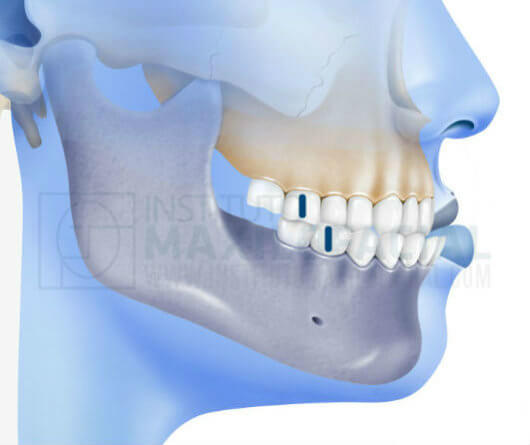
Maxillary recession, also known as maxillary hypoplasia/retrusion, refers to an upper jaw that is underdeveloped. Recession leads to skeletal malocclusion in severe cases, and aesthetic symptoms more commonly.
Credit / Instituto Maxilofacial
Why does a recessed upper jaw matter?
An underdeveloped maxilla can create, contribute to, or worsen existing chronic health issues. Some examples include sleep apnea, airway size/obstructions, and even mental health. Aesthetically, maxillary retrusion leads to the appearance of a sunken midface, and is typically accompanied by a flat upper lip as viewed from the side, a large nose, and potentially an underbite in Class III cases.
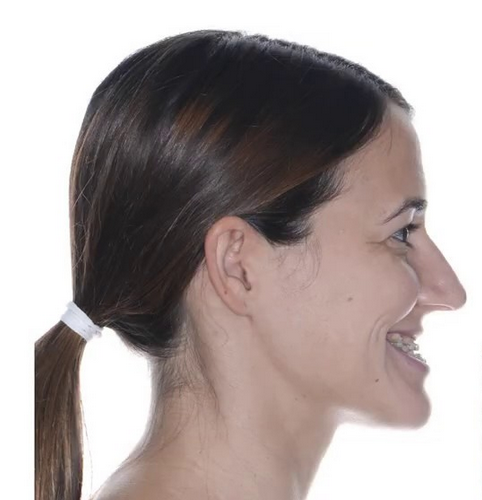
Credit / Instituto Maxilofacial Barcelona
Why determining recession is difficult
A common misconception is that one can determine whether someone has a recessed upper jaw by simply seeing a side profile picture. This is not the case. Side profiles taken by camera are subject to lens distortion, and poor or misleading lighting; not to mention, a side profile captures soft tissue as well, which masks the bones' true form and projection underneath and can lead to inaccurate interpretations.
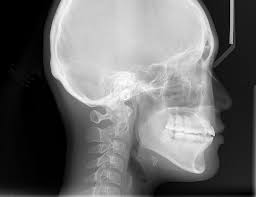
The most reliable way to determine whether someone has true maxillary retrusion is done via a lateral cephalometric radiograph. A ceph bypasses all the common issues with a side profile picture—there is equal lighting, no lens distortion, and semi-transparent soft tissue.
Credit / CephX
The rest of this post will be dedicated to the best methods for determining maxillary recession.
Method I: SNA Angle
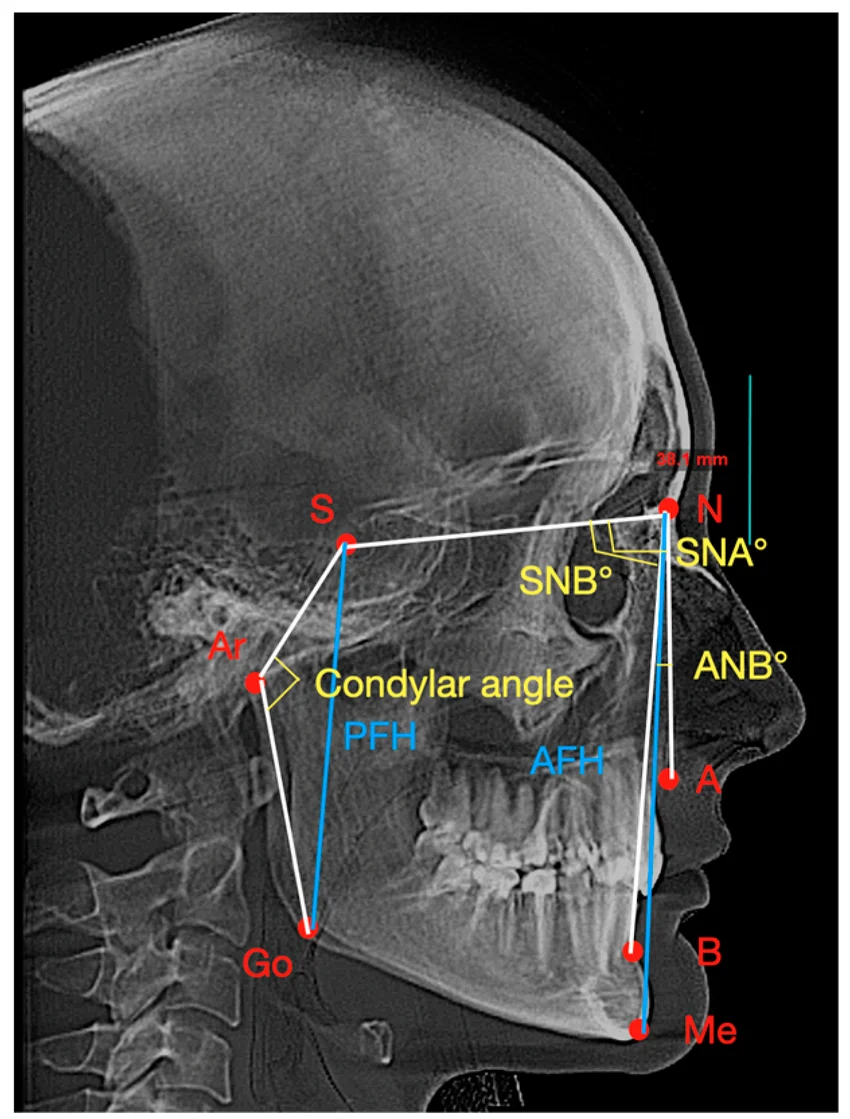
The first and most common method to determine maxillary growth/projection is by measuring the Sella-Nasion-A angle. This angle comprises the sella, or sella turcica, which sits in the depression of the sphenoid; the nasion, which is the depressed point of the nose bridge, intersecting the nasal bones with the frontal bone; and Point A, or subspinale, which sits below the anterior nasal spine at the most posterior (far back) point of the maxilla. This measurement is popular because the sella and nasion serve as excellent "static" points that are not very prone to variability, while Point A is, and thus measures maxillary growth.
Credit / Journal of Clinical Medicine
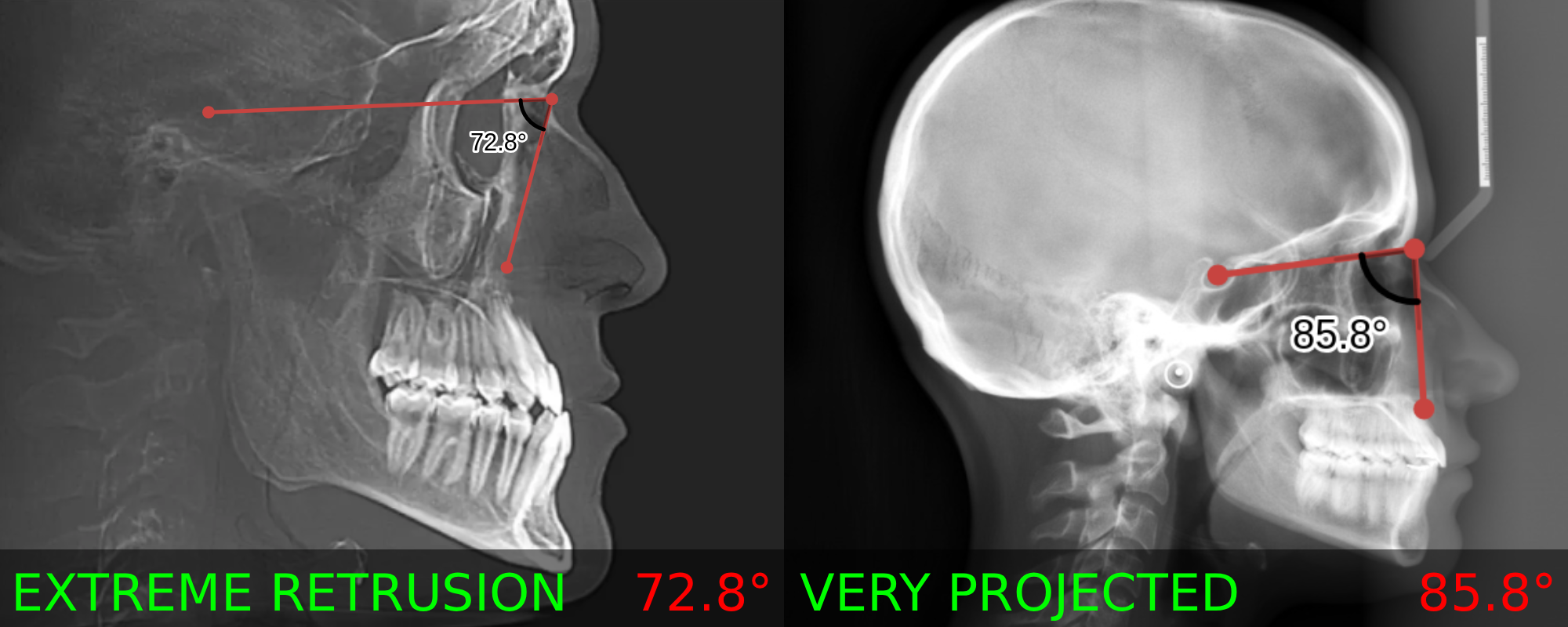
Above, you can see that SNA angle marked, as well as the S (sella), N (nasion), and A (subspinale) points. For this angle, the ideal measurement is 82 degrees, plus or minus 2. Anything less than 80 degrees is considered abnormal or "recessed", and anything greater than 84 degrees is considered projected or "forward".
Method II: Nperp to Point A
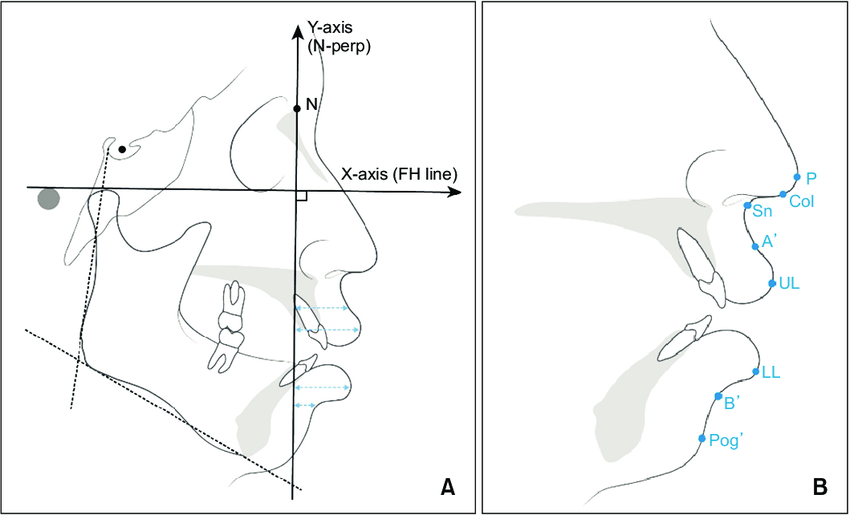
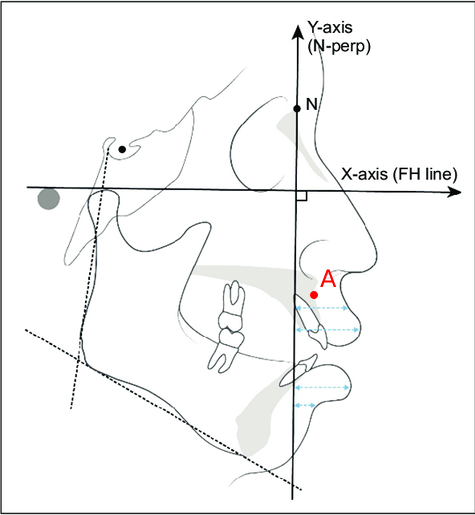
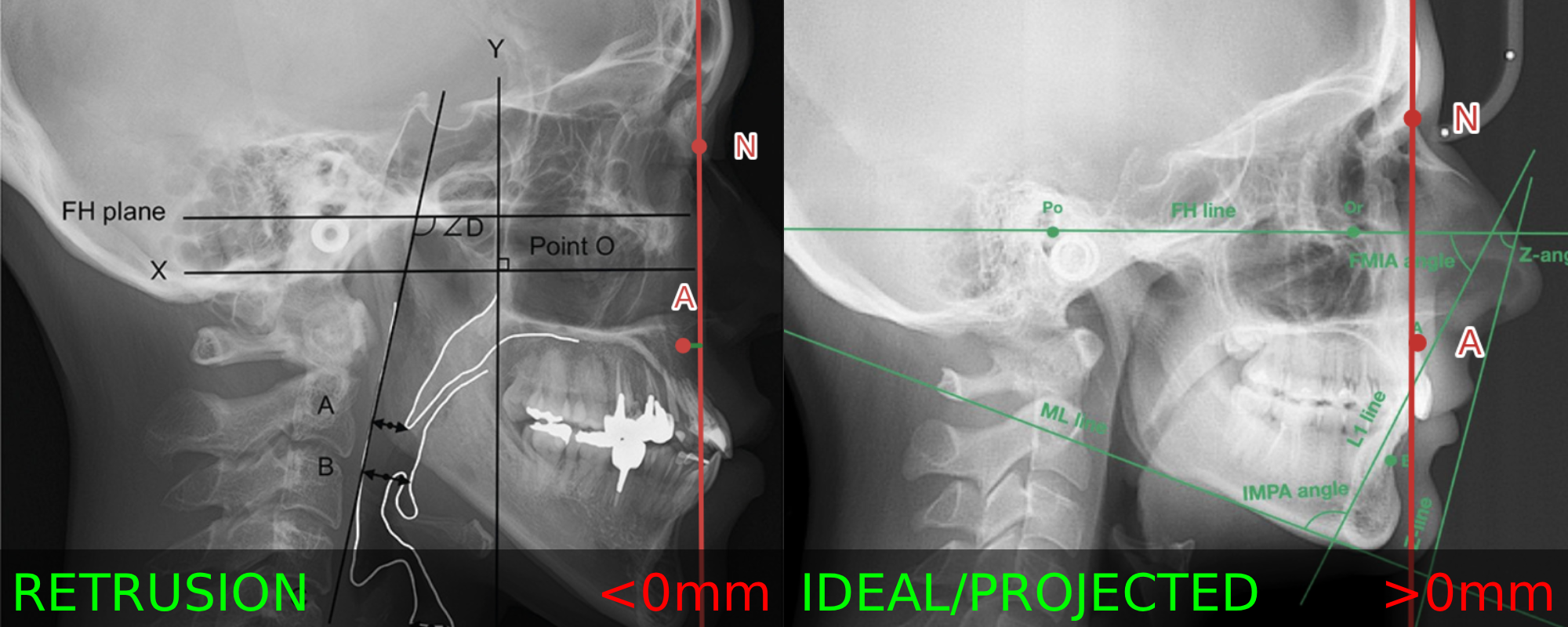
The next most common method for determining maxillary projection is via measurement of the nasion perpendicular to subspinale. Rather than measuring an angle as in Method I described above, this method finds the absolute distance in mm between a line constructed on the nasion, perpendicular to the Frankfort Horizontal plane, to Point A, the most posterior point of the maxilla.
Credit / ResearchGate (Edited)
Above, you can see the horizontal Frankfort plane/line, the nasion perpendicular line (N-perp), and Point A (subspinale). In the case above, the individual's measurement is negative, because the Nperp line sits significantly behind Point A, and thus indicates recession. For this method, an ideal measurement is between 0 to 1mm. A measurement indicating recession is less than 0mm (negative), and a measurement indicated a projected upper jaw is greater than 1mm.
Summary
In conclusion, maxillary recession has many chronic health effects, and is thus important to measure. A lateral ceph is best for determining whether one has a recessed upper jaw, and the primary two measurements that correlate with maxillary retrusion are the SNA angle and N-perp to subspinale. It is recommended to talk with an orthodontist and request a lateral cephalometric radiograph and find these measurements for yourself.
Treat these methods with some skepticism, however, as there is not an official orthodontic method to determine recession. It is recommended to speak with an orthodontist or maxillofacial surgeon for further questions.
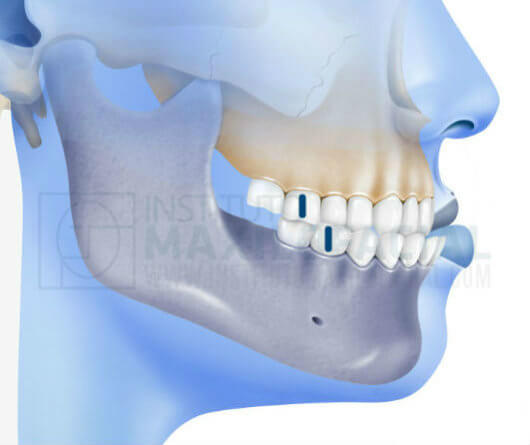
Maxillary recession, also known as maxillary hypoplasia/retrusion, refers to an upper jaw that is underdeveloped. Recession leads to skeletal malocclusion in severe cases, and aesthetic symptoms more commonly.
Credit / Instituto Maxilofacial
Why does a recessed upper jaw matter?
An underdeveloped maxilla can create, contribute to, or worsen existing chronic health issues. Some examples include sleep apnea, airway size/obstructions, and even mental health. Aesthetically, maxillary retrusion leads to the appearance of a sunken midface, and is typically accompanied by a flat upper lip as viewed from the side, a large nose, and potentially an underbite in Class III cases.
Credit / Instituto Maxilofacial Barcelona
Why determining recession is difficult
A common misconception is that one can determine whether someone has a recessed upper jaw by simply seeing a side profile picture. This is not the case. Side profiles taken by camera are subject to lens distortion, and poor or misleading lighting; not to mention, a side profile captures soft tissue as well, which masks the bones' true form and projection underneath and can lead to inaccurate interpretations.
The most reliable way to determine whether someone has true maxillary retrusion is done via a lateral cephalometric radiograph. A ceph bypasses all the common issues with a side profile picture—there is equal lighting, no lens distortion, and semi-transparent soft tissue.
Credit / CephX
The rest of this post will be dedicated to the best methods for determining maxillary recession.
Method I: SNA Angle
The first and most common method to determine maxillary growth/projection is by measuring the Sella-Nasion-A angle. This angle comprises the sella, or sella turcica, which sits in the depression of the sphenoid; the nasion, which is the depressed point of the nose bridge, intersecting the nasal bones with the frontal bone; and Point A, or subspinale, which sits below the anterior nasal spine at the most posterior (far back) point of the maxilla. This measurement is popular because the sella and nasion serve as excellent "static" points that are not very prone to variability, while Point A is, and thus measures maxillary growth.
Credit / Journal of Clinical Medicine
Above, you can see that SNA angle marked, as well as the S (sella), N (nasion), and A (subspinale) points. For this angle, the ideal measurement is 82 degrees, plus or minus 2. Anything less than 80 degrees is considered abnormal or "recessed", and anything greater than 84 degrees is considered projected or "forward".
Method II: Nperp to Point A
The next most common method for determining maxillary projection is via measurement of the nasion perpendicular to subspinale. Rather than measuring an angle as in Method I described above, this method finds the absolute distance in mm between a line constructed on the nasion, perpendicular to the Frankfort Horizontal plane, to Point A, the most posterior point of the maxilla.
Credit / ResearchGate (Edited)
Above, you can see the horizontal Frankfort plane/line, the nasion perpendicular line (N-perp), and Point A (subspinale). In the case above, the individual's measurement is negative, because the Nperp line sits significantly behind Point A, and thus indicates recession. For this method, an ideal measurement is between 0 to 1mm. A measurement indicating recession is less than 0mm (negative), and a measurement indicated a projected upper jaw is greater than 1mm.
Summary
In conclusion, maxillary recession has many chronic health effects, and is thus important to measure. A lateral ceph is best for determining whether one has a recessed upper jaw, and the primary two measurements that correlate with maxillary retrusion are the SNA angle and N-perp to subspinale. It is recommended to talk with an orthodontist and request a lateral cephalometric radiograph and find these measurements for yourself.
Treat these methods with some skepticism, however, as there is not an official orthodontic method to determine recession. It is recommended to speak with an orthodontist or maxillofacial surgeon for further questions.