SCORCHED EARTH CAPITALISM: PATRICK DRAHI

Seth Walsh

Seth Walsh

Iconoclast
Contributor
Joined
Jan 12, 2020
Posts
10,906
Reputation
22,282
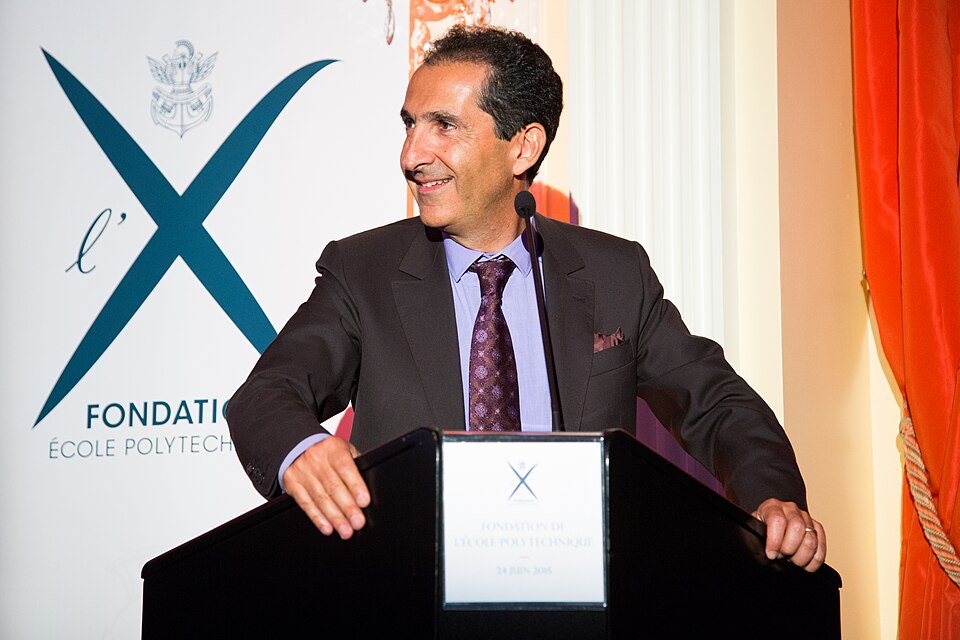
960px-Patrick_Drahi.jpg


How one owner used debt, cost-cutting and financial engineering to extract value while transferring the consequences to employees, customers and creditors.


Most owners extract profits from a functioning company.


Patrick Drahi’s distinctive achievement was learning how to extract value from the company’s entire capital structure.


The business did not merely have to produce telecommunications services. It had to support acquisition debt, refinancing fees, interest payments, asset sales, restructurings and continued owner control.


The operating company became a financial instrument.


Customers supplied recurring revenue.


Employees became removable costs.


Infrastructure became collateral.


Creditors supplied the acquisition capital.


Drahi retained control of the machine.


THE BASIC METHOD


Borrow heavily → acquire essential infrastructure → cut costs → extract cash → refinance → move or sell assets → force creditors to absorb losses → retain as much control as possible.


This was not ordinary corporate austerity. It was an ownership system built around maximum financial leverage.


Stage 1: Buy using other people’s money


Drahi built Altice through a succession of debt-financed acquisitions across France, Portugal, Israel, the United States and the Caribbean.


In 2015 alone, Altice spent approximately $28 billion acquiring the American cable companies Suddenlink and Cablevision.


By 2023, the combined debt across Altice France, Altice International and Altice USA was approximately $60 billion.


The scale of Drahi’s personal empire therefore rested on obligations carried principally by the companies beneath him.


He acquired control.


The operating businesses acquired the debt.

Altice_logo_%28new%29.png


Stage 2: Announce “synergies” that require extreme cuts


After agreeing to acquire Cablevision, Altice targeted approximately $900 million in annual savings.


Drahi publicly highlighted the number of Cablevision employees earning more than $300,000 and stated:


“This we will change.”


The sentence captures the philosophy.


A company was not a community containing accumulated knowledge, relationships and operational resilience. It was a spreadsheet containing costs that had not yet been removed.


The acquisition price could be justified by calculating an aggressively enlarged future EBITDA figure.


That enlarged EBITDA figure could then support more debt.


The promised “synergies” were therefore not merely a benefit of the transaction. They were necessary to make the transaction’s mathematics work.


Stage 3: Convert institutional capacity into short-term cash flow


Payroll can be cut quickly.


Maintenance, customer support, local journalism, store networks and long-term investment can be reduced or deferred.


The resulting cash improvement appears immediately.


The deterioration appears later.


This creates a powerful asymmetry:


  • The owner receives the immediate financial benefit.
    Employees absorb redundancy and workload pressure.
  • Customers absorb weaker service.
    The company absorbs lost knowledge and deferred investment.
  • Future owners inherit the weakened institution.


At SFR, management announced plans in 2021 to remove as many as 1,700 jobs—approximately 11% of its French workforce. The company described the departures as voluntary and linked them to digitalisation and reduced store visits.


That explanation may have been commercially defensible in isolation.


But within the wider Drahi system, labour reduction repeatedly served the same overriding requirement: increase cash generation inside companies carrying extraordinary leverage.


960px-SFR%2C_56_Rue_du_Commerce%2C_75015_Paris%2C_France_September_2016.jpg


Stage 4: Make the operating company service the acquisition


This is the central inversion.


Normally, capital exists to support the operating company.


Under extreme leveraged ownership, the operating company exists to support the capital structure.


Customer subscriptions are transformed into interest payments.


Network cash flow supports debt incurred to acquire the network itself.


Employees must continuously produce enough additional efficiency to protect a transaction they did not design and from which they received little upside.


The institution becomes permanently subordinate to the financing used to purchase it.


Stage 5: Refinance instead of resolving the underlying problem


Cheap money allowed Altice to repeatedly extend maturities and refinance obligations.


As long as interest rates remained low and lenders remained cooperative, the system could continue.


But refinancing does not eliminate leverage.


It postpones the moment when the company’s actual economic capacity must confront the size of its obligations.


When interest rates rose, the debt machine became far harder to sustain.


The empire had been designed for constant access to inexpensive capital. Once that condition disappeared, the underlying fragility became visible.


Stage 6: Make creditors accept the destruction of their own claims


Altice France entered a major restructuring after accumulating approximately €24.1 billion of debt.


The restructuring reduced this to approximately €15.5 billion.


That represented roughly €8.6 billion of debt elimination.


Creditors received 45% of the equity.


Drahi’s ownership fell from 100% to 55%.


He still retained majority control.


Consider the outcome:


  • Creditors supplied the original capital.
    The company became unable to repay the full amount.
  • Creditors surrendered billions in contractual claims.
    Drahi diluted his ownership but retained control.


This is what makes the model exceptionally ruthless.


The owner’s empire had been created using creditor capital. When the capital structure failed, the creditors did not automatically receive complete control of the asset.


They accepted massive losses while Drahi remained the majority shareholder.


Stage 7: Protect valuable assets from the original creditor perimeter


In 2026, Altice International creditors alleged that valuable assets and intercompany claims had been shifted beyond their reach.


According to reports in the Financial Times and Wall Street Journal, the disputed transactions included:


  • More than €4.5 billion to €5 billion in intercompany loans.
    Changes affecting Altice Portugal.
  • Changes involving Dominican Republic operations.
    Transfers affecting collateral originally available to creditors.
  • Transactions involving assets responsible for a substantial majority of Altice International’s earnings.


These are creditor allegations, not final judicial findings.


Altice may dispute the creditors’ legal interpretation and argue that the transactions were permitted under the relevant financing documents.


But the underlying conflict exposes the endpoint of the model.


When the business cannot comfortably satisfy every claim, the competition is no longer about building a better telecommunications company.


It becomes a fight over which group can seize, protect or move value before another group reaches it.


WHO ACTUALLY PAID?


Employees


Employees faced redundancies, reduced organisational security, heavier workloads and the loss of long-term institutional investment.


Every worker became a potential EBITDA adjustment.


Customers


Customers depended on businesses whose cash flow had competing destinations:


  • Network investment.
    Customer support.
  • Debt interest.
    Refinancing costs.
  • Owner-level strategic transactions.


The more extreme the leverage, the less freedom management had to prioritise service resilience over financial obligations.


Creditors


Creditors financed the expansion and later accepted maturity extensions, lower recoveries, debt write-offs or equity in a distressed structure.


They discovered that contractual seniority is only as powerful as the covenant protections, collateral structure and legal perimeter beneath it.


The companies themselves


The companies lost strategic freedom.


A conservatively financed telecom operator can invest through downturns, respond to competition and absorb mistakes.


A heavily leveraged operator must constantly optimise for liquidity.


It cannot simply ask:


“What investment produces the best service ten years from now?”


It must ask:


“What can we afford without breaking the capital structure?”


Society


Telecommunications networks are not ordinary discretionary businesses.


They are essential infrastructure.


When ownership treats essential infrastructure primarily as a leveraged cash-flow vehicle, the downside extends beyond shareholders.


Workers, households, businesses and public institutions rely on the service.


The financial engineering remains private.


The operational consequences become widely distributed.


WAS IT LITERALLY A NET NEGATIVE FOR EVERYONE EXCEPT DRAHI?


No serious analysis should claim that nobody else benefited.


Selling shareholders received acquisition premiums.


Investment banks, lawyers and advisers earned fees.


Some lenders received years of interest payments.


Some executives were rewarded.


Some acquisitions may have produced genuine economies of scale.


Drahi also created a major international telecommunications group rather than merely liquidating isolated companies.


But the distribution was radically asymmetric.


The upside was concentrated among the owner, sellers and transaction participants.


The downside was dispersed among employees, customers, creditors and the future institution.


Drahi’s genius was not simply cutting costs.


It was constructing transactions where:


  • He controlled the upside.
    The companies carried the leverage.
  • Employees supplied the efficiency.
    Customers supplied recurring cash flow.
  • Creditors absorbed restructuring losses.
    He remained positioned to preserve ownership after failure.


THE REAL PRODUCT WAS NOT TELECOMS


Altice sold broadband, mobile contracts, television and media.


But at the ownership level, the real product was leveraged control.


Drahi repeatedly acquired control of assets much larger than the equity capital he personally committed.


He then used the assets’ own cash flows and borrowing capacity to sustain that control.


The telecom network was the collateral.


The customer base was the annuity.


The workforce was the adjustable variable.


The creditor documents were the battlefield.


That is scorched-earth capitalism:


Extract every available unit of value from the institution, transfer the fragility outward, and preserve the owner’s claim for as long as law, leverage and negotiation allow.


Patrick Drahi did not merely ask how much profit a company could produce.


He asked how much debt it could carry, how much cost it could lose, how much collateral could be repositioned, how much creditors could be forced to surrender—and how much control he could retain when the structure finally broke.


I cannot think of a more purely extractive modern owner.


SOURCES


Reuters: Drahi’s acquisition empire and approximately $60 billion debt pile


Reuters: Altice’s debt-financed expansion and American acquisitions


Reuters: Cablevision acquisition and $900 million savings target


Reuters: Proposed elimination of up to 1,700 SFR jobs


Reuters: Altice France restructuring and Drahi retaining 55%


Financial Times: 2026 creditor allegations concerning asset transfers and intercompany loans


Wall Street Journal: Altice International creditor default allegations


Image credits: Patrick Drahi photograph and SFR photograph via Wikimedia Commons under their respective Creative Commons licences. Altice logo via Wikimedia Commons.
 
Last edited:

  • +1
Reactions: pharmagrade, Stalker, 2s2f and 2 others
Mirin effort

I thought you were quitting .org though?
 
  • +1
  • Love it
Reactions: Stalker, Seth Walsh, eology and 1 other person
dnr
 
  • Woah
Reactions: 76.1
seth, how much interest you got on your capital inside broker acc
 
  • +1
Reactions: 76.1 and 2s2f
love you tho :peepoHuggers:
 
  • +1
  • Love it
Reactions: 76.1, Seth Walsh and eology
Mirin effort

I thought you were quitting .org though?
ima do it next year after i engage on mma treatment, if youre better than everyone at some place then its not where youre supposed to be
 
  • +1
  • Woah
Reactions: 76.1 and 2s2f
Mirin effort

I thought you were quitting .org though?
No more social class pill threads. Posting them on reddit.
 
  • JFL
  • +1
  • Love it
Reactions: eduardkoopman, 76.1 and 2s2f
mirin the effort, high iq ramblings

@76.1 tagging you cause why not
 
  • +1
  • Love it
Reactions: 76.1, Seth Walsh and eology
same dude got raped over and over in those diddy parties
brutal diminishing returns to money and status
but in looks you can always be better, never good enough law
 
  • +1
Reactions: 76.1 and Stalker
960px-Patrick_Drahi.jpg


How one owner used debt, cost-cutting and financial engineering to extract value while transferring the consequences to employees, customers and creditors.


Most owners extract profits from a functioning company.


Patrick Drahi’s distinctive achievement was learning how to extract value from the company’s entire capital structure.


The business did not merely have to produce telecommunications services. It had to support acquisition debt, refinancing fees, interest payments, asset sales, restructurings and continued owner control.


The operating company became a financial instrument.


Customers supplied recurring revenue.


Employees became removable costs.


Infrastructure became collateral.


Creditors supplied the acquisition capital.


Drahi retained control of the machine.


THE BASIC METHOD


This was not ordinary corporate austerity. It was an ownership system built around maximum financial leverage.


Stage 1: Buy using other people’s money


Drahi built Altice through a succession of debt-financed acquisitions across France, Portugal, Israel, the United States and the Caribbean.


In 2015 alone, Altice spent approximately $28 billion acquiring the American cable companies Suddenlink and Cablevision.


By 2023, the combined debt across Altice France, Altice International and Altice USA was approximately $60 billion.


The scale of Drahi’s personal empire therefore rested on obligations carried principally by the companies beneath him.


He acquired control.


The operating businesses acquired the debt.


Altice_logo_%28new%29.png


Stage 2: Announce “synergies” that require extreme cuts


After agreeing to acquire Cablevision, Altice targeted approximately $900 million in annual savings.


Drahi publicly highlighted the number of Cablevision employees earning more than $300,000 and stated:


The sentence captures the philosophy.


A company was not a community containing accumulated knowledge, relationships and operational resilience. It was a spreadsheet containing costs that had not yet been removed.


The acquisition price could be justified by calculating an aggressively enlarged future EBITDA figure.


That enlarged EBITDA figure could then support more debt.


The promised “synergies” were therefore not merely a benefit of the transaction. They were necessary to make the transaction’s mathematics work.


Stage 3: Convert institutional capacity into short-term cash flow


Payroll can be cut quickly.


Maintenance, customer support, local journalism, store networks and long-term investment can be reduced or deferred.


The resulting cash improvement appears immediately.


The deterioration appears later.


This creates a powerful asymmetry:


  • The owner receives the immediate financial benefit.
    Employees absorb redundancy and workload pressure.
  • Customers absorb weaker service.
    The company absorbs lost knowledge and deferred investment.
  • Future owners inherit the weakened institution.


At SFR, management announced plans in 2021 to remove as many as 1,700 jobs—approximately 11% of its French workforce. The company described the departures as voluntary and linked them to digitalisation and reduced store visits.


That explanation may have been commercially defensible in isolation.


But within the wider Drahi system, labour reduction repeatedly served the same overriding requirement: increase cash generation inside companies carrying extraordinary leverage.


960px-SFR%2C_56_Rue_du_Commerce%2C_75015_Paris%2C_France_September_2016.jpg


Stage 4: Make the operating company service the acquisition


This is the central inversion.


Normally, capital exists to support the operating company.


Under extreme leveraged ownership, the operating company exists to support the capital structure.


Customer subscriptions are transformed into interest payments.


Network cash flow supports debt incurred to acquire the network itself.


Employees must continuously produce enough additional efficiency to protect a transaction they did not design and from which they received little upside.


The institution becomes permanently subordinate to the financing used to purchase it.


Stage 5: Refinance instead of resolving the underlying problem


Cheap money allowed Altice to repeatedly extend maturities and refinance obligations.


As long as interest rates remained low and lenders remained cooperative, the system could continue.


But refinancing does not eliminate leverage.


It postpones the moment when the company’s actual economic capacity must confront the size of its obligations.


When interest rates rose, the debt machine became far harder to sustain.


The empire had been designed for constant access to inexpensive capital. Once that condition disappeared, the underlying fragility became visible.


Stage 6: Make creditors accept the destruction of their own claims


Altice France entered a major restructuring after accumulating approximately €24.1 billion of debt.


The restructuring reduced this to approximately €15.5 billion.


That represented roughly €8.6 billion of debt elimination.


Creditors received 45% of the equity.


Drahi’s ownership fell from 100% to 55%.


He still retained majority control.


Consider the outcome:


  • Creditors supplied the original capital.
    The company became unable to repay the full amount.
  • Creditors surrendered billions in contractual claims.
    Drahi diluted his ownership but retained control.


This is what makes the model exceptionally ruthless.


The owner’s empire had been created using creditor capital. When the capital structure failed, the creditors did not automatically receive complete control of the asset.


They accepted massive losses while Drahi remained the majority shareholder.


Stage 7: Protect valuable assets from the original creditor perimeter


In 2026, Altice International creditors alleged that valuable assets and intercompany claims had been shifted beyond their reach.


According to reports in the Financial Times and Wall Street Journal, the disputed transactions included:


  • More than €4.5 billion to €5 billion in intercompany loans.
    Changes affecting Altice Portugal.
  • Changes involving Dominican Republic operations.
    Transfers affecting collateral originally available to creditors.
  • Transactions involving assets responsible for a substantial majority of Altice International’s earnings.


These are creditor allegations, not final judicial findings.


Altice may dispute the creditors’ legal interpretation and argue that the transactions were permitted under the relevant financing documents.


But the underlying conflict exposes the endpoint of the model.


When the business cannot comfortably satisfy every claim, the competition is no longer about building a better telecommunications company.


It becomes a fight over which group can seize, protect or move value before another group reaches it.


WHO ACTUALLY PAID?


Employees


Employees faced redundancies, reduced organisational security, heavier workloads and the loss of long-term institutional investment.


Every worker became a potential EBITDA adjustment.


Customers


Customers depended on businesses whose cash flow had competing destinations:


  • Network investment.
    Customer support.
  • Debt interest.
    Refinancing costs.
  • Owner-level strategic transactions.


The more extreme the leverage, the less freedom management had to prioritise service resilience over financial obligations.


Creditors


Creditors financed the expansion and later accepted maturity extensions, lower recoveries, debt write-offs or equity in a distressed structure.


They discovered that contractual seniority is only as powerful as the covenant protections, collateral structure and legal perimeter beneath it.


The companies themselves


The companies lost strategic freedom.


A conservatively financed telecom operator can invest through downturns, respond to competition and absorb mistakes.


A heavily leveraged operator must constantly optimise for liquidity.


It cannot simply ask:


It must ask:


Society


Telecommunications networks are not ordinary discretionary businesses.


They are essential infrastructure.


When ownership treats essential infrastructure primarily as a leveraged cash-flow vehicle, the downside extends beyond shareholders.


Workers, households, businesses and public institutions rely on the service.


The financial engineering remains private.


The operational consequences become widely distributed.


WAS IT LITERALLY A NET NEGATIVE FOR EVERYONE EXCEPT DRAHI?


No serious analysis should claim that nobody else benefited.


Selling shareholders received acquisition premiums.


Investment banks, lawyers and advisers earned fees.


Some lenders received years of interest payments.


Some executives were rewarded.


Some acquisitions may have produced genuine economies of scale.


Drahi also created a major international telecommunications group rather than merely liquidating isolated companies.


But the distribution was radically asymmetric.


The upside was concentrated among the owner, sellers and transaction participants.


The downside was dispersed among employees, customers, creditors and the future institution.


Drahi’s genius was not simply cutting costs.


It was constructing transactions where:


  • He controlled the upside.
    The companies carried the leverage.
  • Employees supplied the efficiency.
    Customers supplied recurring cash flow.
  • Creditors absorbed restructuring losses.
    He remained positioned to preserve ownership after failure.


THE REAL PRODUCT WAS NOT TELECOMS


Altice sold broadband, mobile contracts, television and media.


But at the ownership level, the real product was leveraged control.


Drahi repeatedly acquired control of assets much larger than the equity capital he personally committed.


He then used the assets’ own cash flows and borrowing capacity to sustain that control.


The telecom network was the collateral.


The customer base was the annuity.


The workforce was the adjustable variable.


The creditor documents were the battlefield.


That is scorched-earth capitalism:


Patrick Drahi did not merely ask how much profit a company could produce.


He asked how much debt it could carry, how much cost it could lose, how much collateral could be repositioned, how much creditors could be forced to surrender—and how much control he could retain when the structure finally broke.


I cannot think of a more purely extractive modern owner.


SOURCES


Reuters: Drahi’s acquisition empire and approximately $60 billion debt pile


Reuters: Altice’s debt-financed expansion and American acquisitions


Reuters: Cablevision acquisition and $900 million savings target


Reuters: Proposed elimination of up to 1,700 SFR jobs


Reuters: Altice France restructuring and Drahi retaining 55%


Financial Times: 2026 creditor allegations concerning asset transfers and intercompany loans


Wall Street Journal: Altice International creditor default allegations


Image credits: Patrick Drahi photograph and SFR photograph via Wikimedia Commons under their respective Creative Commons licences. Altice logo via Wikimedia Commons.
Very good essay, I personally agree alot on it.


do though, worth it

No more social class pill threads. Posting them on reddit.
Is the top class in reddit, still the "woke subculture". Or have they become normal over there by now?
I always got suspended and stuf, over there. That I just left reddit like 8 years ago.
 
  • +1
Reactions: 2s2f

Similar threads

BluntestPuppy17
Replies
10
Views
290
BluntestPuppy17
BluntestPuppy17
pluto wdty''
Replies
2
Views
76
pluto wdty''
pluto wdty''
slendermanmax
Replies
1
Views
44
Pandajbg
Pandajbg

Users who are viewing this thread

Back
Top
Sponsored
Stake.us
America's #1 Social Casino
Slots, Poker & More
Join Now →