Side Profile Guide

Side Profile Guide
This guide will explore into the concepts of side profile ratios and how to fix them. Why are we doing this, well side profile is when you are seen the most, so having an ideal facial side profile is important. Please note we may not cover all measurements but we tried to include as many as possible without cluttering the guide as we want this to be easy and simple to understand.

Please note: this guide is mainly for MEN.

Reference links:

https://pmc.ncbi.nlm.nih.gov/articles/PMC13018507/
https://looksmaxxingwiki.com/facial-convexity-angle/
https://www.neiltanna.com/face/rhinoplasty/nasal-analysis/


Features: @Topgun

Big thanks for helping me with the guide


Table of Contents
  • Facial measurements
  • How to improve them


Facial Measurements

Facial Ratios


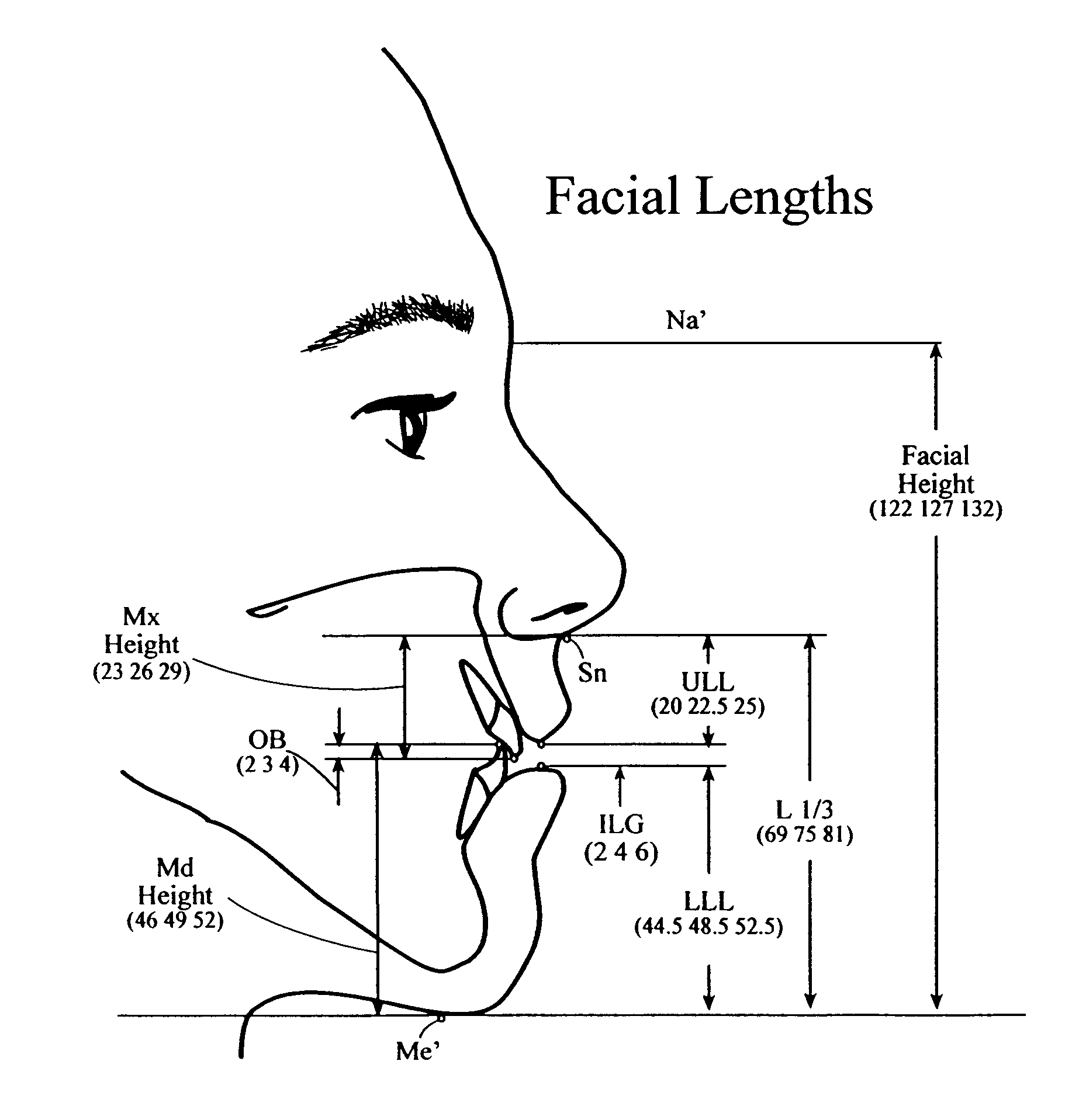
The model male side profile should contain the following due to the importance of balanced facial thirds:

The units being used in the following image, is relative to the chin to forehead of your own face. Your facial ratio in the image is referring to people with a slight convex profile, you can measure this by taking a photo of your side profile and with a ruler draw out the measurements to check.

Having balanced facial thirds is important to ensure harmony across your face, which may also contribute proportions and aesthetics. Lacking this is very noticeable across your whole front and side
1779733039119


Facial Convexity


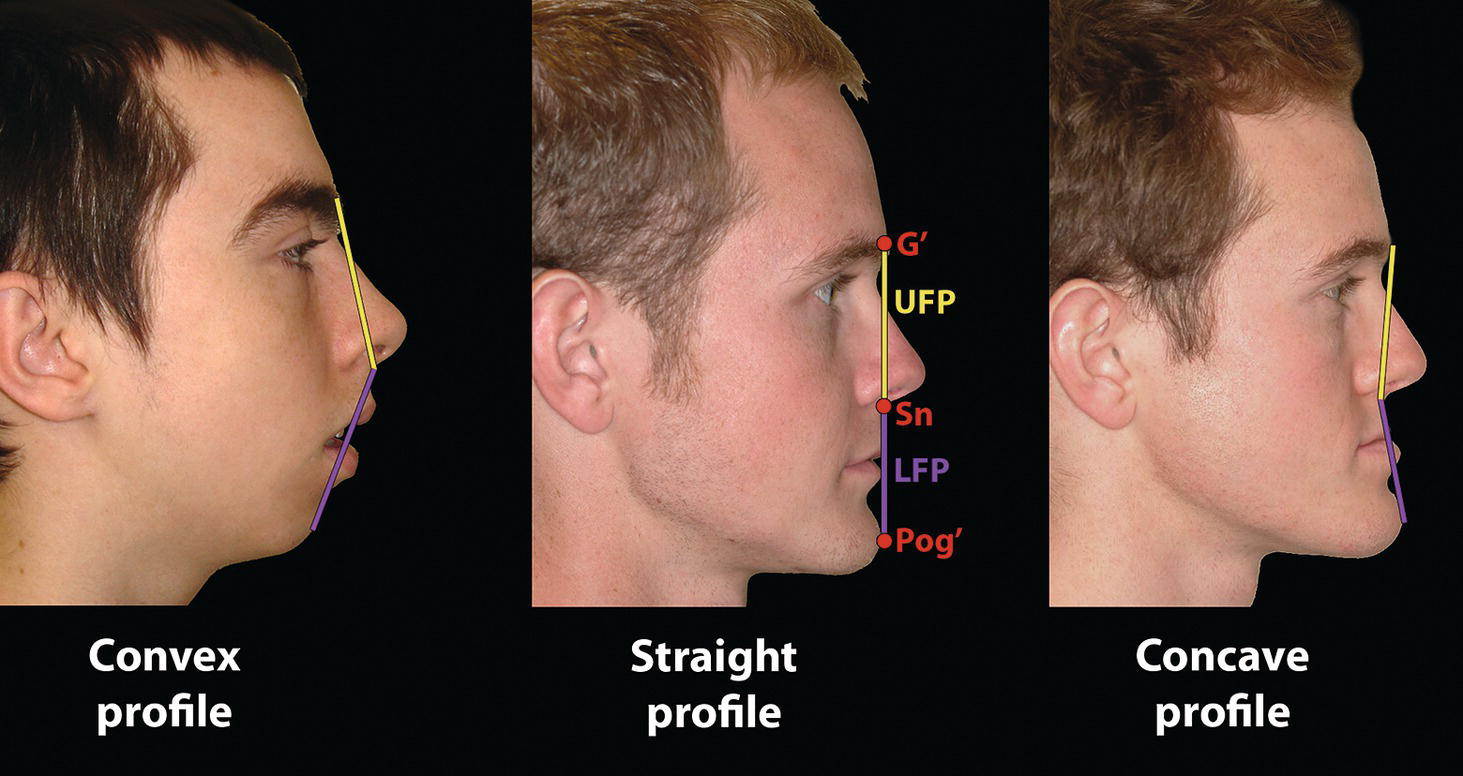
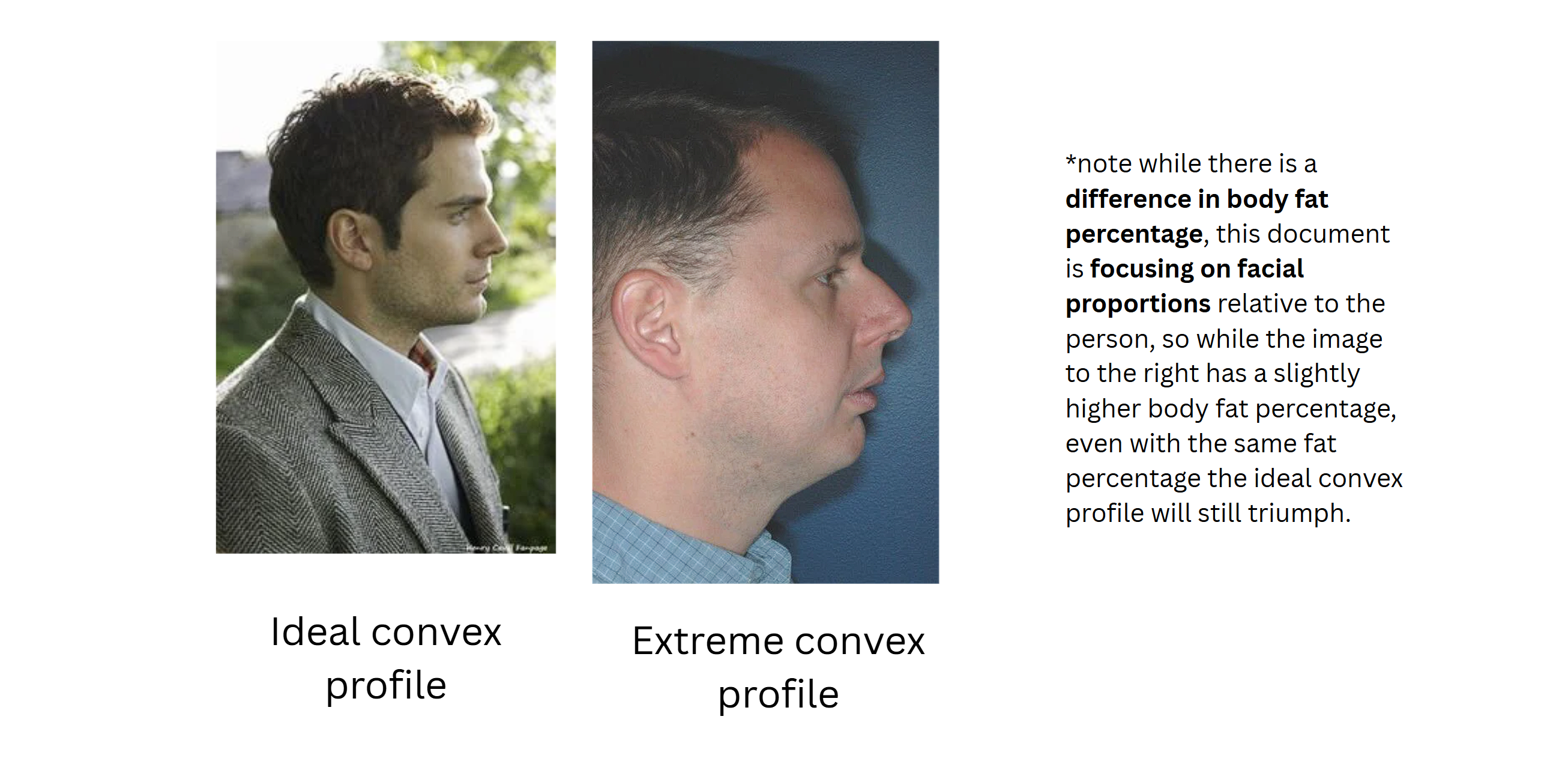
A convex facial profile refers to a side view where the forehead and the chin appear to slope backward from the nose, creating an outward curve. This is an optimal look as it is normally perceived as more attractive. While excessive profiles can cause issues with eating and breathing, they can be fixed with orthognathic surgery or orthodontics. These will lead to an optimal convex profile.

165-175 degrees

Note while there is a difference in body fat percentage, this document is focusing on facial proportions relative to the person, so while the image to the right has slightly higher body fat percentage, even with the same fat percentage the ideal convex profile will still triumph.


Facial Angles

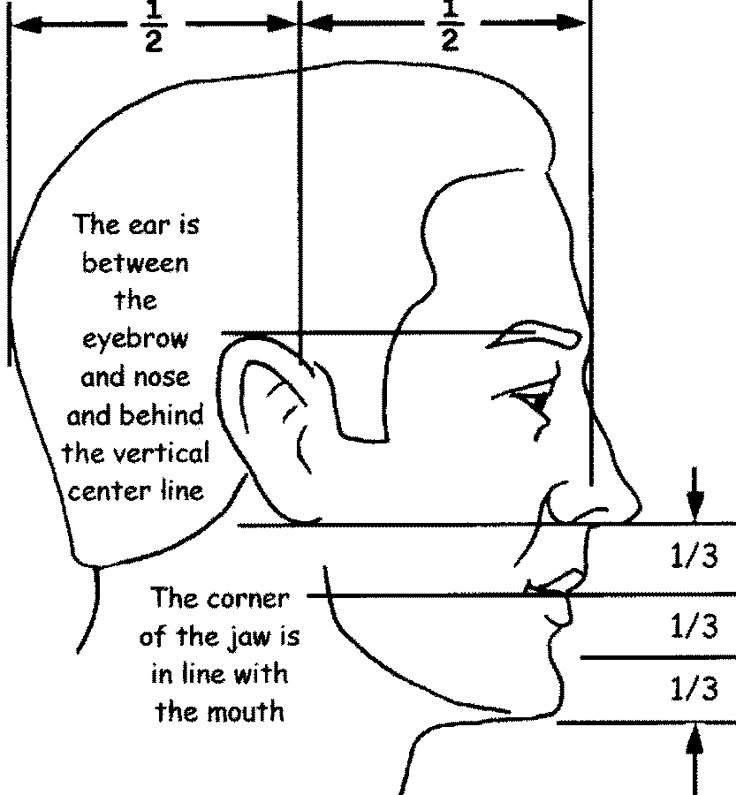
The facial convexity angle refers to the distance from the glabella to the subnasale, and then another distance line from the subnasale to the pogonion. The ideal range for this is 165 to 175 degrees, any angle below 160 degrees is considered an extreme convex profile which can make jawlines appear duller than they actually are. The nasolabial angle refers to the angel between the upper lip and base of the nose, the ideal angle for men is more acute than the convexity angle, ranging from 90 to 100 degrees.

The mentolabial angle refers to angle between the lower lip and chin, an attractive ideal angle for men is up to 115 to 145 degrees, a lower angle such as anything less than 100 degrees results in a deep indentation.
1779732910444


1779732927065


Facial Depth

Maxillary depth refers to the distance between the maxilla and the cranial base, the normal angle is for 87 - 93 degrees, anything below 87 degrees is considered retrusive and anything above 93 degrees is considered protrusive, slight protrusion is considered bad as a maxillary depth of 92 to 92 degrees is considered attractive, it provides a strong mandibular projection and manages a very balanced look. someone with an exact 90 degree maxillary depth may look flat if the chin, or vitals or soft tissue are not tightened enough, not tighten chins are due to high body fat percentages
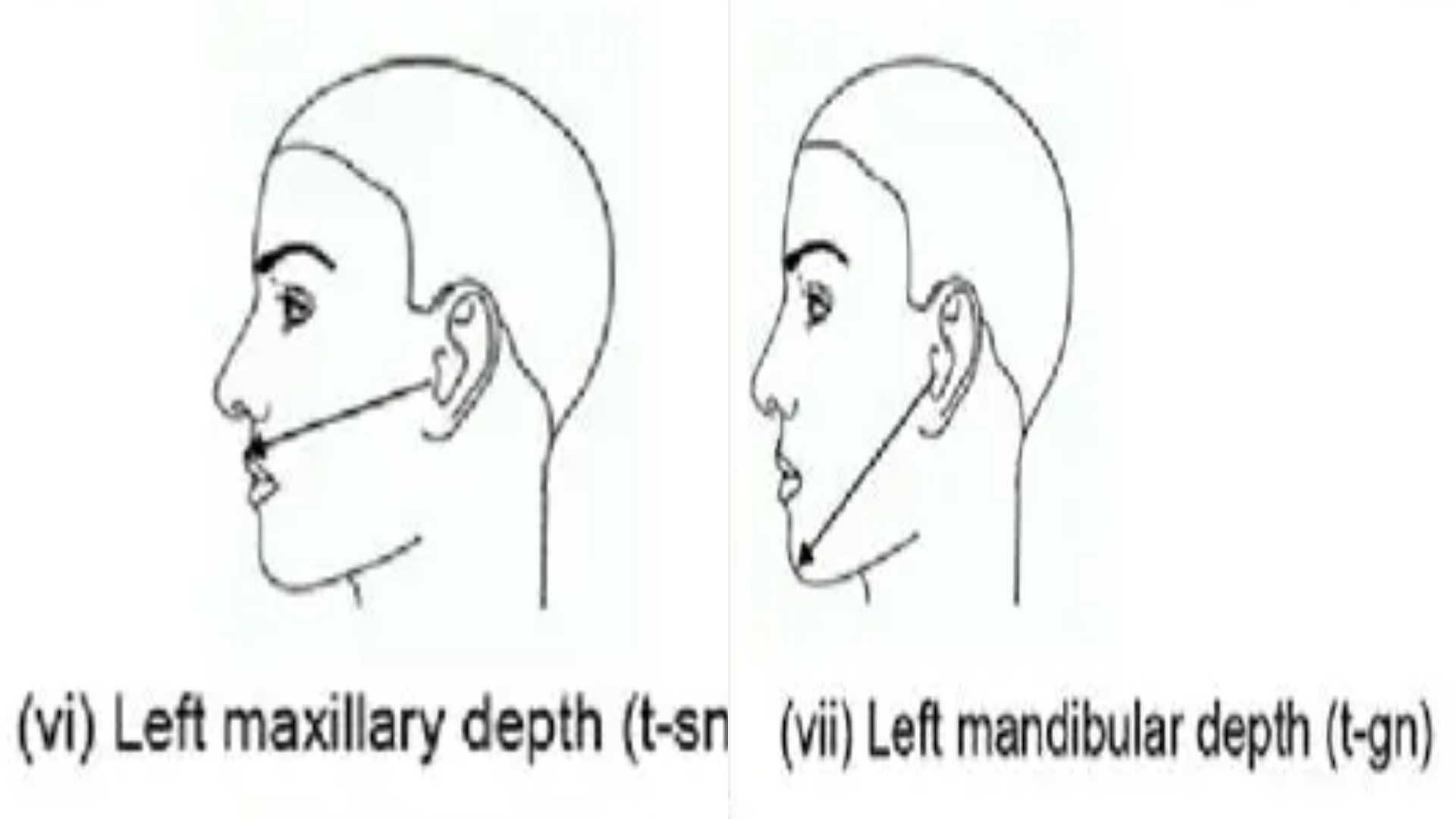

1779732943373


How to improve flaws
Improving Facial Ratios:

Dermal Fillers:
  • Add volume to cheeks
  • Add volume to chin
  • Alter width of facial thirds
  • Stretch the height of facial thirds

Liquid Rhinoplasty:
  • Smooth humps of nose
  • Lift the tip of the nose
  • Balances nose profile relative to chin and forehead

Injectables(Botox/Dysport):
  • Slims wide jaws
  • Balances asymmetries by relaxing muscles


Lifestyle changes:
  • Limiting sodium intake to not increase puffiness
  • Staying hydrated to reduce puffiness
  • Getting 7-9 hours of sleep for improvements to puffiness to act quicker


Improving Facial Convexity:

  • Chin implants
  • Fixing posture
  • Jaw surgery

Improving Facial Angles:

  • Rhinoplasty
  • Fillers

Facial Depth
  • Body fat reducing
  • Posture
  • Hair
  • Jaw realignment


If you have come across any issues within the guide please do contact me and ill change it asap.


Thanks for reading!

Tv Land Thank You For Your Time GIF by YoungerTV


Attachments

  • 1779732823837.png
    1779732823837.png
    126.4 KB · Views: 0
Last edited:
  • +1
Reactions: chitarine, theübermenschboy, oily703 and 7 others
Amazing to work with you
 
  • +1
  • So Sad
Reactions: mikail7373_, stigmaboy and Deleted member 366337
Mirin guide but photos aren't loading
 
  • WTF
  • +1
Reactions: stigmaboy and Deleted member 366337
bump
 
  • Love it
Reactions: stigmaboy
Bump
 
  • WTF
Reactions: stigmaboy
@zumechi respectfully disagree
 
Side Profile Guide
This guide will explore into the concepts of side profile ratios and how to fix them. Why are we doing this, well side profile is when you are seen the most, so having an ideal facial side profile is important. Please note we may not cover all measurements but we tried to include as many as possible without cluttering the guide as we want this to be easy and simple to understand.

Please note: this guide is mainly for MEN.

Reference links:

https://pmc.ncbi.nlm.nih.gov/articles/PMC13018507/
https://looksmaxxingwiki.com/facial-convexity-angle/
https://www.neiltanna.com/face/rhinoplasty/nasal-analysis/


Features: @Topgun

Big thanks for helping me with the guide


Table of Contents
  • Facial measurements
  • How to improve them


Facial Measurements

Facial Ratios


The model male side profile should contain the following due to the importance of balanced facial thirds:

The units being used in the following image, is relative to the chin to forehead of your own face. Your facial ratio in the image is referring to people with a slight convex profile, you can measure this by taking a photo of your side profile and with a ruler draw out the measurements to check.

Having balanced facial thirds is important to ensure harmony across your face, which may also contribute proportions and aesthetics. Lacking this is very noticeable across your whole front and side

View attachment 5117373


Facial Convexity


A convex facial profile refers to a side view where the forehead and the chin appear to slope backward from the nose, creating an outward curve. This is an optimal look as it is normally perceived as more attractive. While excessive profiles can cause issues with eating and breathing, they can be fixed with orthognathic surgery or orthodontics. These will lead to an optimal convex profile.

165-175 degrees

Note while there is a difference in body fat percentage, this document is focusing on facial proportions relative to the person, so while the image to the right has slightly higher body fat percentage, even with the same fat percentage the ideal convex profile will still triumph.


Facial Angles

The facial convexity angle refers to the distance from the glabella to the subnasale, and then another distance line from the subnasale to the pogonion. The ideal range for this is 165 to 175 degrees, any angle below 160 degrees is considered an extreme convex profile which can make jawlines appear duller than they actually are. The nasolabial angle refers to the angel between the upper lip and base of the nose, the ideal angle for men is more acute than the convexity angle, ranging from 90 to 100 degrees.

The mentolabial angle refers to angle between the lower lip and chin, an attractive ideal angle for men is up to 115 to 145 degrees, a lower angle such as anything less than 100 degrees results in a deep indentation.

View attachment 5117356

View attachment 5117360


Facial Depth

Maxillary depth refers to the distance between the maxilla and the cranial base, the normal angle is for 87 - 93 degrees, anything below 87 degrees is considered retrusive and anything above 93 degrees is considered protrusive, slight protrusion is considered bad as a maxillary depth of 92 to 92 degrees is considered attractive, it provides a strong mandibular projection and manages a very balanced look. someone with an exact 90 degree maxillary depth may look flat if the chin, or vitals or soft tissue are not tightened enough, not tighten chins are due to high body fat percentages


View attachment 5117362


How to improve flaws
Improving Facial Ratios:

Dermal Fillers:
  • Add volume to cheeks
  • Add volume to chin
  • Alter width of facial thirds
  • Stretch the height of facial thirds

Liquid Rhinoplasty:
  • Smooth humps of nose
  • Lift the tip of the nose
  • Balances nose profile relative to chin and forehead

Injectables(Botox/Dysport):
  • Slims wide jaws
  • Balances asymmetries by relaxing muscles


Lifestyle changes:
  • Limiting sodium intake to not increase puffiness
  • Staying hydrated to reduce puffiness
  • Getting 7-9 hours of sleep for improvements to puffiness to act quicker


Improving Facial Convexity:

  • Chin implants
  • Fixing posture
  • Jaw surgery

Improving Facial Angles:

  • Rhinoplasty
  • Fillers

Facial Depth
  • Body fat reducing
  • Posture
  • Hair
  • Jaw realignment


If you have come across any issues within the guide please do contact me and ill change it asap.


Thanks for reading!

Tv Land Thank You For Your Time GIF by YoungerTV


Good thread
 
  • +1
Reactions: Deleted member 366337
Side Profile Guide
This guide will explore into the concepts of side profile ratios and how to fix them. Why are we doing this, well side profile is when you are seen the most, so having an ideal facial side profile is important. Please note we may not cover all measurements but we tried to include as many as possible without cluttering the guide as we want this to be easy and simple to understand.

Please note: this guide is mainly for MEN.

Reference links:

https://pmc.ncbi.nlm.nih.gov/articles/PMC13018507/
https://looksmaxxingwiki.com/facial-convexity-angle/
https://www.neiltanna.com/face/rhinoplasty/nasal-analysis/


Features: @Topgun

Big thanks for helping me with the guide


Table of Contents
  • Facial measurements
  • How to improve them


Facial Measurements

Facial Ratios


The model male side profile should contain the following due to the importance of balanced facial thirds:

The units being used in the following image, is relative to the chin to forehead of your own face. Your facial ratio in the image is referring to people with a slight convex profile, you can measure this by taking a photo of your side profile and with a ruler draw out the measurements to check.

Having balanced facial thirds is important to ensure harmony across your face, which may also contribute proportions and aesthetics. Lacking this is very noticeable across your whole front and side

View attachment 5117373


Facial Convexity


A convex facial profile refers to a side view where the forehead and the chin appear to slope backward from the nose, creating an outward curve. This is an optimal look as it is normally perceived as more attractive. While excessive profiles can cause issues with eating and breathing, they can be fixed with orthognathic surgery or orthodontics. These will lead to an optimal convex profile.

165-175 degrees

Note while there is a difference in body fat percentage, this document is focusing on facial proportions relative to the person, so while the image to the right has slightly higher body fat percentage, even with the same fat percentage the ideal convex profile will still triumph.


Facial Angles

The facial convexity angle refers to the distance from the glabella to the subnasale, and then another distance line from the subnasale to the pogonion. The ideal range for this is 165 to 175 degrees, any angle below 160 degrees is considered an extreme convex profile which can make jawlines appear duller than they actually are. The nasolabial angle refers to the angel between the upper lip and base of the nose, the ideal angle for men is more acute than the convexity angle, ranging from 90 to 100 degrees.

The mentolabial angle refers to angle between the lower lip and chin, an attractive ideal angle for men is up to 115 to 145 degrees, a lower angle such as anything less than 100 degrees results in a deep indentation.

View attachment 5117356

View attachment 5117360


Facial Depth

Maxillary depth refers to the distance between the maxilla and the cranial base, the normal angle is for 87 - 93 degrees, anything below 87 degrees is considered retrusive and anything above 93 degrees is considered protrusive, slight protrusion is considered bad as a maxillary depth of 92 to 92 degrees is considered attractive, it provides a strong mandibular projection and manages a very balanced look. someone with an exact 90 degree maxillary depth may look flat if the chin, or vitals or soft tissue are not tightened enough, not tighten chins are due to high body fat percentages


View attachment 5117362


How to improve flaws
Improving Facial Ratios:

Dermal Fillers:
  • Add volume to cheeks
  • Add volume to chin
  • Alter width of facial thirds
  • Stretch the height of facial thirds

Liquid Rhinoplasty:
  • Smooth humps of nose
  • Lift the tip of the nose
  • Balances nose profile relative to chin and forehead

Injectables(Botox/Dysport):
  • Slims wide jaws
  • Balances asymmetries by relaxing muscles


Lifestyle changes:
  • Limiting sodium intake to not increase puffiness
  • Staying hydrated to reduce puffiness
  • Getting 7-9 hours of sleep for improvements to puffiness to act quicker


Improving Facial Convexity:

  • Chin implants
  • Fixing posture
  • Jaw surgery

Improving Facial Angles:

  • Rhinoplasty
  • Fillers

Facial Depth
  • Body fat reducing
  • Posture
  • Hair
  • Jaw realignment


If you have come across any issues within the guide please do contact me and ill change it asap.


Thanks for reading!

Tv Land Thank You For Your Time GIF by YoungerTV


Can i ask some questions in dms?
 

Similar threads

primalistic
Replies
13
Views
94
cemo27
C
SilvioMoltisantiDan
Replies
9
Views
71
SilvioMoltisantiDan
SilvioMoltisantiDan
C
Replies
7
Views
28
cemo27
C
luke1308
Replies
3
Views
42
cemo27
C
luke1308
Replies
6
Views
56
harste09
harste09

Users who are viewing this thread

Back
Top