datboijj
Fuchsia
- Joined
- Nov 15, 2020
- Posts
- 13,664
- Reputation
- 17,137
First of all yes this relates to looks, so let’s start with that, but people who can sing are found to have more brain and bodily autonomy, along with a whole bunch of other stuff it’s Brazy let’s start.
1. The Skeletal Morphology
The Claim: Vocal "power" is physically written into the jaw and palate.
Anatomy affects the Vocal Tract Length (VTL), which determines the natural "ring" of a voice.
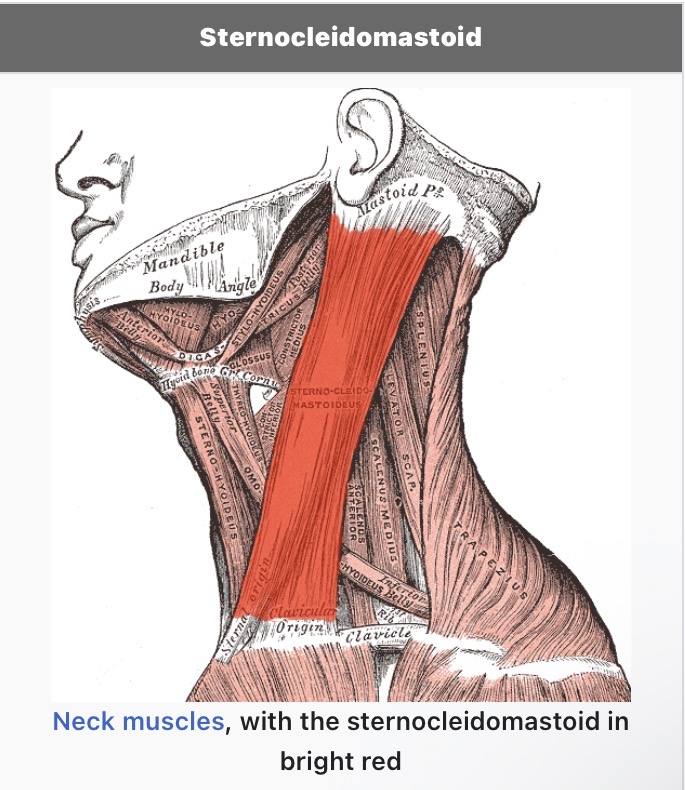
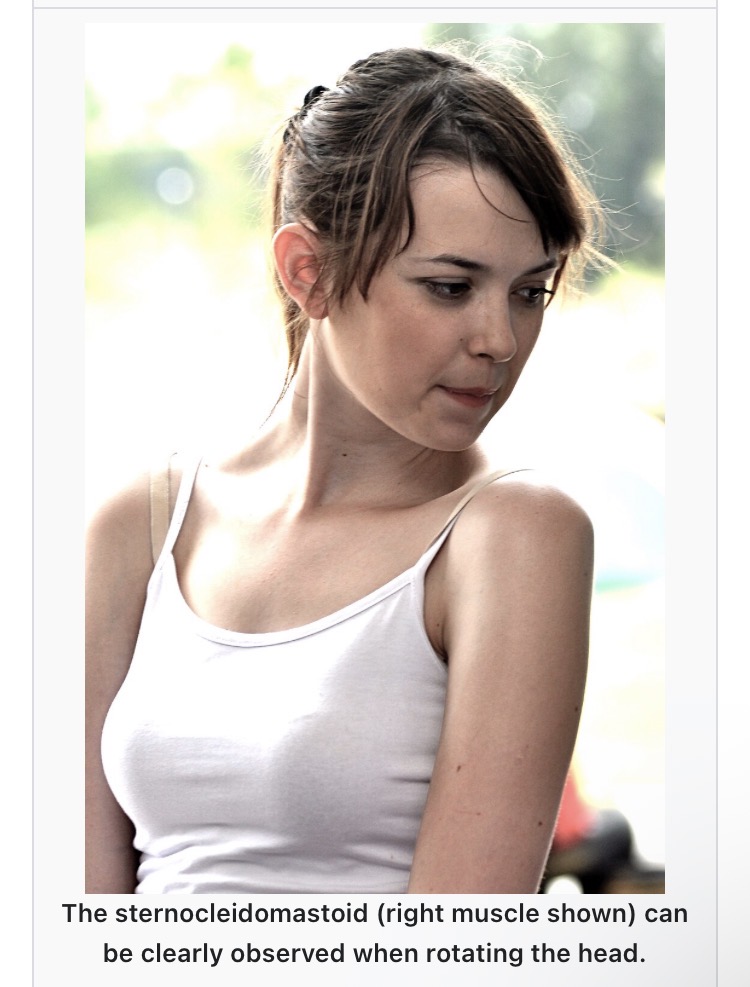
• Laryngeal Descent: The external neck muscles (Sternocleidomastoid) in trained singers are often more defined but less "tense." As seen below. Salty
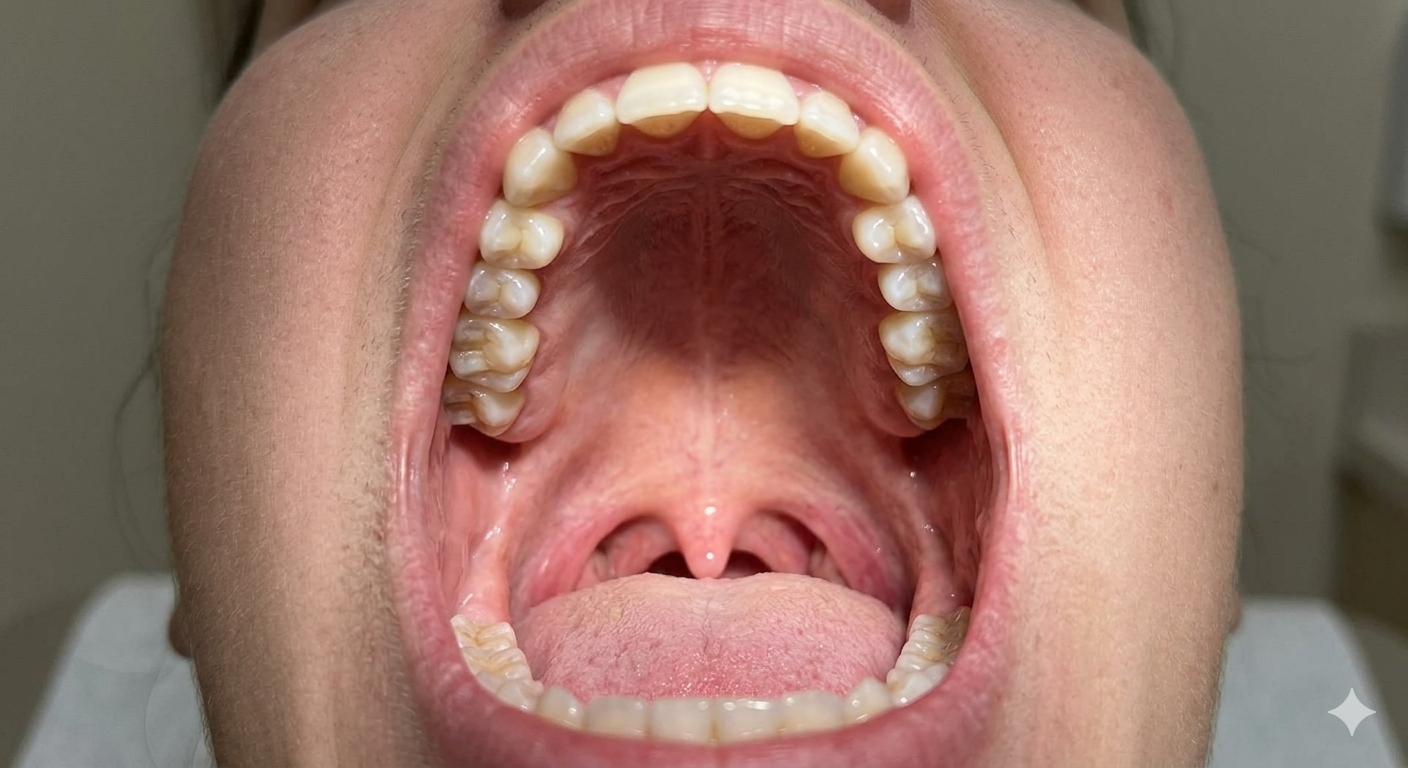
• The Findings: Stronger vocal resonance is correlated with a wider mandible (lower jaw) and a higher-arched hard palate. These features create a larger "resonant chamber."
2. Anterior vs. Posterior Tilting
The hyoid doesn't just move up and down; it tilts.
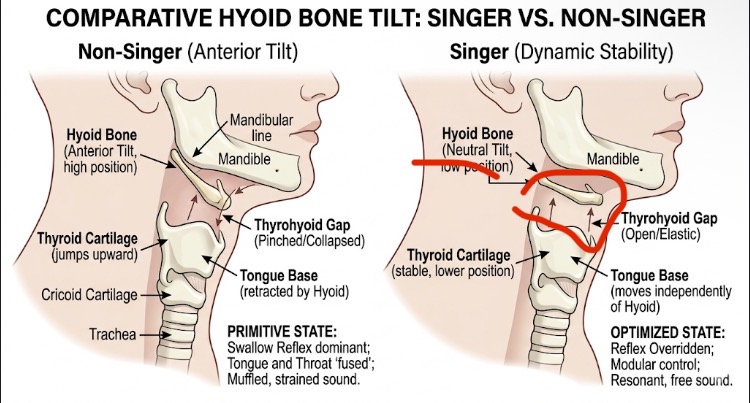
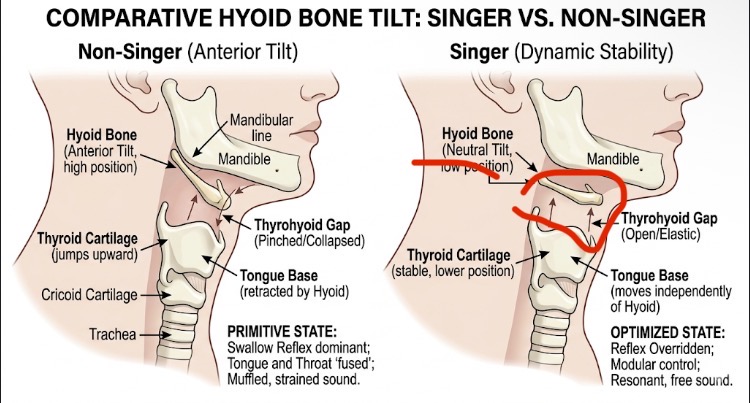
BTW THE HYOID IS ONLY LOWERED IN THE RIGHT PIC TO SHOW THE TILT CLEARLY!!!!!!!
• Non-Singer (Anterior Tilt): The hyoid often tilts forward in non-singers, which pulls the base of the tongue backward into the throat. This is a "clunky" anatomical setup that muffles the voice.
• Singer (Dynamic Stability): Singers maintain a stable hyoid tilt that allows the tongue to move independently. In your thread, you could argue that the non-singer's tongue and throat are "fused" in a primitive block, while the singer's anatomy is a "modular" system of independent parts.
3. Neurological Mapping & Plasticity
The primary difference between singers and non-singers isn't just "talent"—it’s the density and connectivity of the brain's white matter tracts.
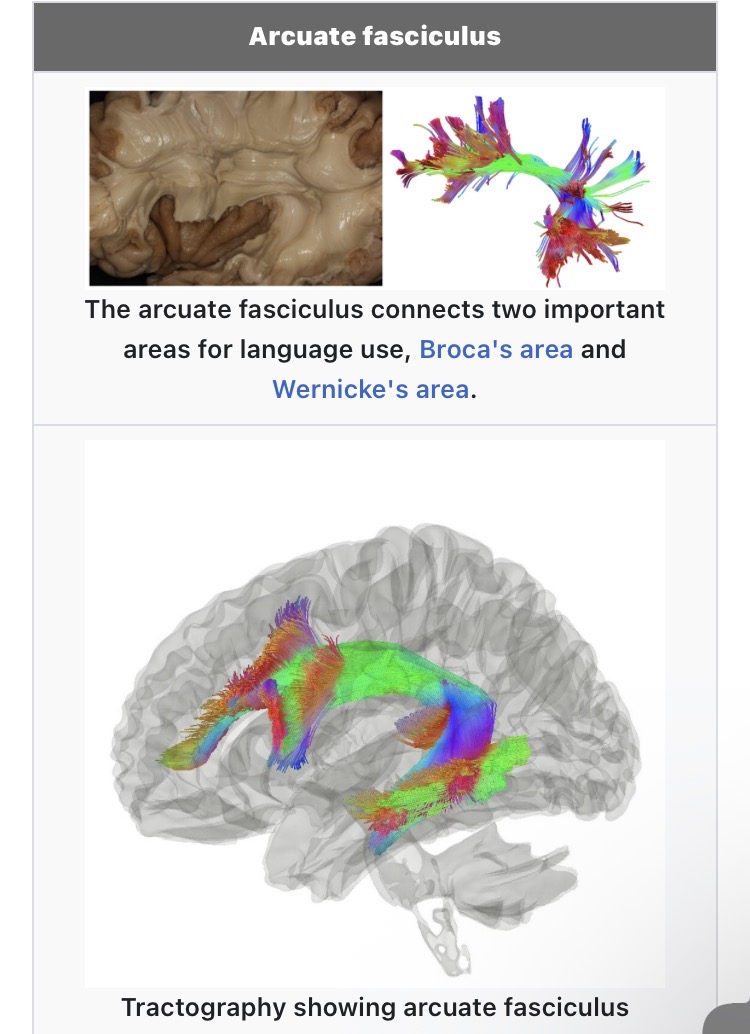
• The Arcuate Fasciculus (seen below):This is a bundle of nerve fibers that connects the auditory cortex (hearing) with the motor cortex (doing). Studies using Diffusion Tensor Imaging (DTI) show that singers have a thicker and more developed arcuate fasciculus, particularly in the right hemisphere. This allows for faster feedback loops to correct pitch in real-time.
• Neuroplasticity: Experienced singers show increased gray matter volume in the primary somatosensory cortex (representing the larynx and mouth). Their brains have literally "mapped" the vocal folds with more detail than a non-singer.
• Auditory-Motor Integration: Non-singers often suffer from a "mapping" error. They hear the note correctly but cannot translate that frequency into the specific muscular tension required to produce it.
4. Nerve Control (The Vagus System)
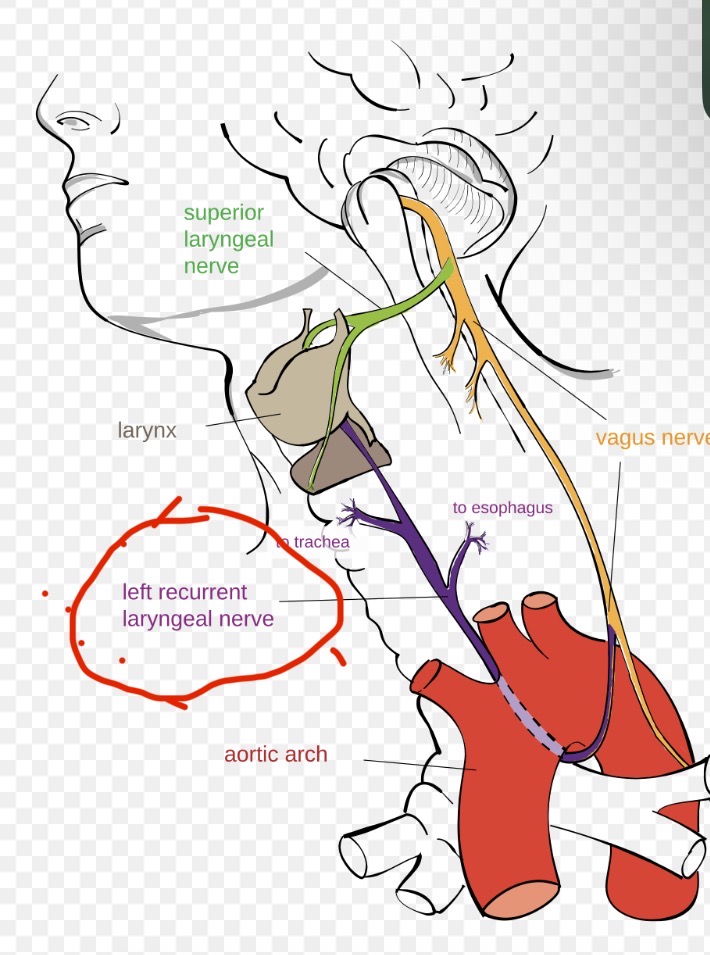
The Recurrent Laryngeal Nerve (RLN), a branch of the Vagus nerve, is the "command wire" for singing.
• Fine Motor Units: Singers generally have better recruitment of motor units within the thyroarytenoid and cricothyroid muscles.
• Proprioception: Professional singers possess superior "inner feeling" (proprioception). They can feel the position of their larynx and the tension of their vocal folds without hearing themselves. In contrast, non-singers rely entirely on external hearing, which is slower.
5. Physical Anatomy & "Flexibility"
While there is no "singing face" shape, specific internal anatomical advantages exist:
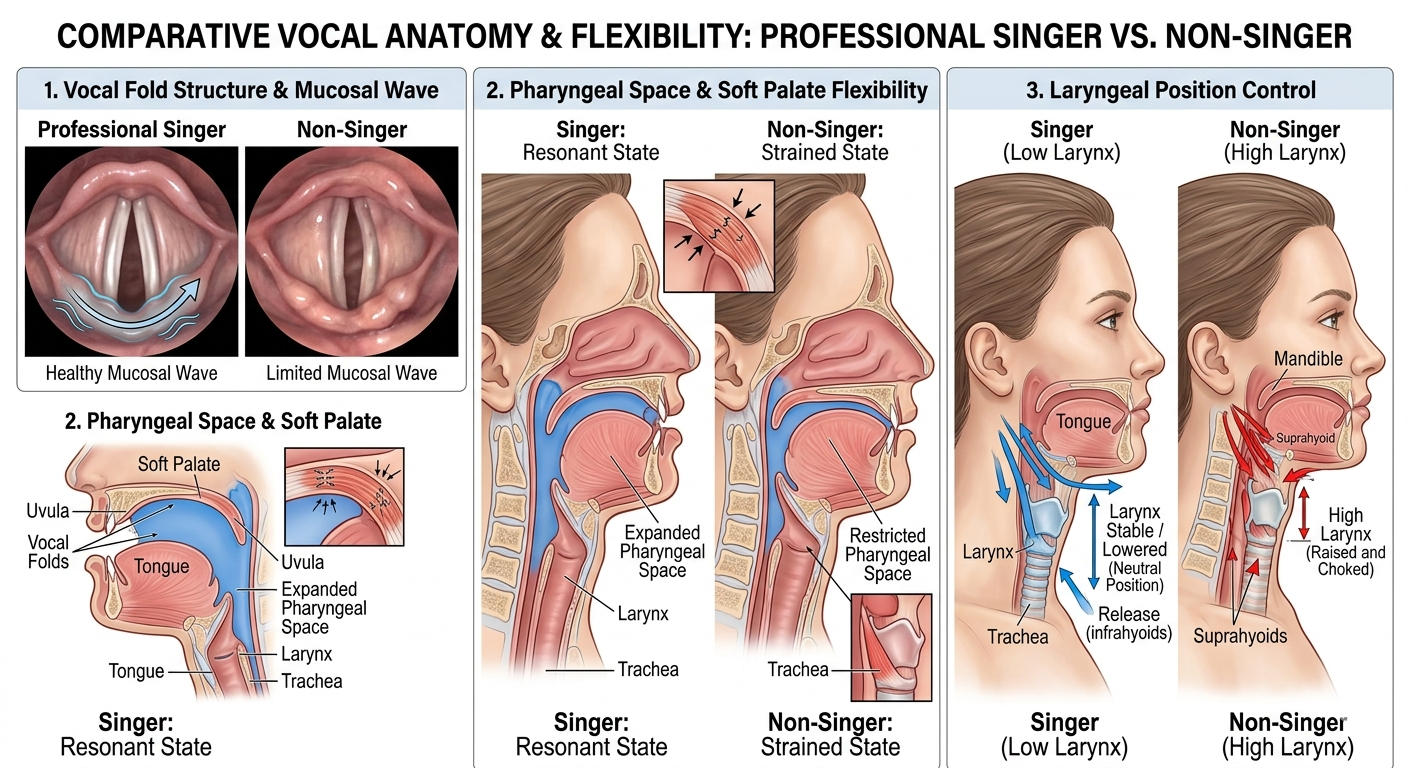
• Vocal Fold Structure: Professional singers often have highly symmetrical vocal folds with a healthy "mucosal wave" (the way the outer layer of the fold vibrates).
• The Pharyngeal Space: People who can produce "big" resonant sounds often have a more flexible soft palate (velum). The ability to lift the soft palate creates a larger "echo chamber" in the back of the throat.
• Laryngeal Position: Non-singers often have a "high larynx" when trying to reach high notes—the throat muscles tighten, and the voice box moves up, choking the sound. Singers have the muscular control to keep the larynx stable or "lowered."
Conclusion: So yeah if you can’t sing you have low bodily awareness and autonomy.
When you try to sing your brain tells your throat to get in the position to swallow cause it thinks food is coming as the brain it has no other known mechanisms other than that do the throat. Meanwhile for singers when they start to sing their brain gives multiple signals to throat, vocal cords, hyoid and larynx to get in precise positions ready to oscillate rapidly. That’s pretty brutal, take the sing pill. On hexum!!!!!
@asdvek @optimisticzoomer @momocel304 @Jason Voorhees @Aox Ofwar @StrangerDanger @Skitsuna @iamnotaracist
1. The Skeletal Morphology
The Claim: Vocal "power" is physically written into the jaw and palate.
Anatomy affects the Vocal Tract Length (VTL), which determines the natural "ring" of a voice.
• Laryngeal Descent: The external neck muscles (Sternocleidomastoid) in trained singers are often more defined but less "tense." As seen below. Salty
• The Findings: Stronger vocal resonance is correlated with a wider mandible (lower jaw) and a higher-arched hard palate. These features create a larger "resonant chamber."
2. Anterior vs. Posterior Tilting
The hyoid doesn't just move up and down; it tilts.
BTW THE HYOID IS ONLY LOWERED IN THE RIGHT PIC TO SHOW THE TILT CLEARLY!!!!!!!
• Non-Singer (Anterior Tilt): The hyoid often tilts forward in non-singers, which pulls the base of the tongue backward into the throat. This is a "clunky" anatomical setup that muffles the voice.
• Singer (Dynamic Stability): Singers maintain a stable hyoid tilt that allows the tongue to move independently. In your thread, you could argue that the non-singer's tongue and throat are "fused" in a primitive block, while the singer's anatomy is a "modular" system of independent parts.
3. Neurological Mapping & Plasticity
The primary difference between singers and non-singers isn't just "talent"—it’s the density and connectivity of the brain's white matter tracts.
• The Arcuate Fasciculus (seen below):This is a bundle of nerve fibers that connects the auditory cortex (hearing) with the motor cortex (doing). Studies using Diffusion Tensor Imaging (DTI) show that singers have a thicker and more developed arcuate fasciculus, particularly in the right hemisphere. This allows for faster feedback loops to correct pitch in real-time.
• Neuroplasticity: Experienced singers show increased gray matter volume in the primary somatosensory cortex (representing the larynx and mouth). Their brains have literally "mapped" the vocal folds with more detail than a non-singer.
• Auditory-Motor Integration: Non-singers often suffer from a "mapping" error. They hear the note correctly but cannot translate that frequency into the specific muscular tension required to produce it.
4. Nerve Control (The Vagus System)
The Recurrent Laryngeal Nerve (RLN), a branch of the Vagus nerve, is the "command wire" for singing.
• Fine Motor Units: Singers generally have better recruitment of motor units within the thyroarytenoid and cricothyroid muscles.
• Proprioception: Professional singers possess superior "inner feeling" (proprioception). They can feel the position of their larynx and the tension of their vocal folds without hearing themselves. In contrast, non-singers rely entirely on external hearing, which is slower.
5. Physical Anatomy & "Flexibility"
While there is no "singing face" shape, specific internal anatomical advantages exist:
• Vocal Fold Structure: Professional singers often have highly symmetrical vocal folds with a healthy "mucosal wave" (the way the outer layer of the fold vibrates).
• The Pharyngeal Space: People who can produce "big" resonant sounds often have a more flexible soft palate (velum). The ability to lift the soft palate creates a larger "echo chamber" in the back of the throat.
• Laryngeal Position: Non-singers often have a "high larynx" when trying to reach high notes—the throat muscles tighten, and the voice box moves up, choking the sound. Singers have the muscular control to keep the larynx stable or "lowered."
Conclusion: So yeah if you can’t sing you have low bodily awareness and autonomy.
When you try to sing your brain tells your throat to get in the position to swallow cause it thinks food is coming as the brain it has no other known mechanisms other than that do the throat. Meanwhile for singers when they start to sing their brain gives multiple signals to throat, vocal cords, hyoid and larynx to get in precise positions ready to oscillate rapidly. That’s pretty brutal, take the sing pill. On hexum!!!!!
@asdvek @optimisticzoomer @momocel304 @Jason Voorhees @Aox Ofwar @StrangerDanger @Skitsuna @iamnotaracist