1-What Causes Acne Scars?
Your skin is your largest organ. It has three main layers. They are, starting with the outermost, the epidermis, the dermis and the hypodermis. The layers protect your fragile insides from the elements, from UV rays and bacteria, and they also help produce vitamin D thanks to sunlight. Any area with sebaceous glands is prone to acne — especially the face, back and chest.
Acne scars are the result of inflammation of acne blemishes. The acne pore swells and a breakdown occurs in the wall of the pore. Some acne blemishes are small and the scars created are shallow and heal quickly. Sometimes the contents of blemishes spill into the surrounding tissue and cause deeper scars. The skin’s response is to repair the scar by forming new collagen fibers.
Acne scars take on two main forms: either a scar develops when there is a loss of tissue, resulting in an indentation in the surface of the skin; or, a scar develops that is raised on the surface of the skin. This type of acne scar, in fact, is a sign that your skin is doing its job — but, perhaps, too well. Your skin creates collagen (“repair tissue”) to help heal the wound — the acne — but, if it makes too much collagen, raised scars form.
Keep in mind that just because you have acne, that doesn’t mean you’ll get scars. And if you do (one in five people with acne will also have scarring), the good news is that not all acne scars are permanent! Treatments are available. Some treatments nearly remove the scars while others help the skin heal itself with its own collagen.
source:https://my.clevelandclinic.org/heal...-scars#:~:text=How does acne,its own collagen.
2-Scar Types
Scarring can occur as a result of damage to the skin during the healing of active acne. There are two basic types of scar depending on whether there is a net loss or gain of collagen (atrophic and hypertrophic scars). Eighty to ninety percent of people with acne scars have scars associated with a loss of collagen (atrophic scars) compared to a minority who show hypertrophic scars and keloids.
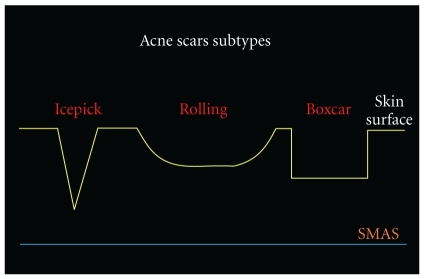
Acne scar morphological classification
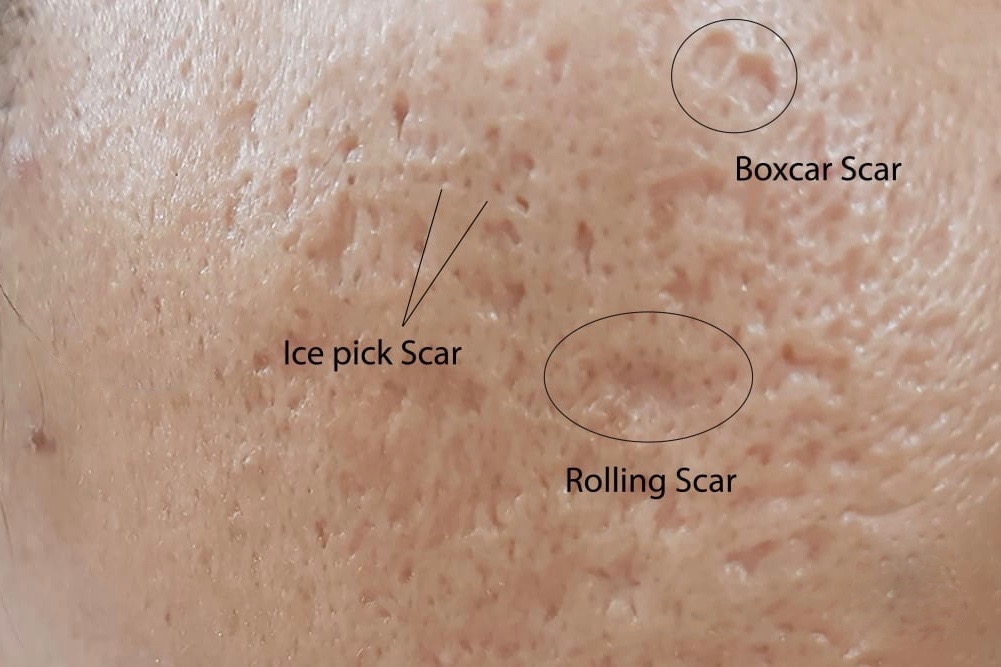
Sometimes the 3 different types of atrophic scars can be observed in the same patients and it can be very difficult to differentiate between them.
Chemical peeling is used for the reversal of signs of skin aging and for the treatment of skin lesions as well as scars, particularly acne scars. Dyschromias, wrinkles, and acne scars are the major clinical indications for facial chemical peeling [26, 27].
As regards acne scars, the best results are achieved in macular scars. Icepick and rolling scars cannot disappear completely and need sequential peelings together with homecare treatment with topical retinoids and alpha hydroxy acids [28, 29]. The level of improvement expected is extremely variable in different diseases and patients. For example, ice pick acne scars in a patient with hyperkeratotic skin are only mildly improved even if skin texture is remodeled. On the other hand, a patient with isolated box scars can obtain a significant improvement by application of TCA at 50%–90% on the single scars.
Several hydroxy acids can be used.
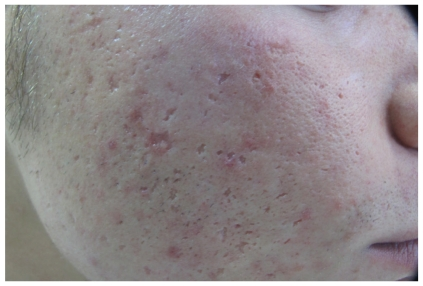
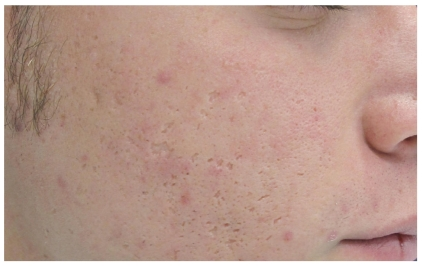
TCA Cross: patient before the treatment.
TCA Cross: patient after the treatment.
It is essential to conduct a thorough investigation of the patient's pharmacological history to ensure that the patient has not taken isotretinoin in the previous 6–12 months. As noted by some studies [60], the use of tretinoin causes delayed reepithelialization and development of hypertrophic scars.
The ablative lasers are technologies with a high selectivity for water. Therefore, their action takes place mainly on the surface but the depth of action is certainly to be correlated to the intensity of the emitted energy and the diameter of the spot used. Among the ablative lasers, Erbium technologies are so selective for water that their action is almost exclusively ablative. CO2 lasers, which present lower selectivity for water, besides causing ablation are also capable of determining a denaturation in the tissues surrounding the ablation and a thermal stimulus not coagulated for dermal protein. CO2 lasers have a double effect: they promote the wound healing process and arouse an amplified production of myofibroblasts and matrix proteins such as hyaluronic acid [62].
Clinical and histopathologic studies have previously demonstrated the efficacy of CO2 laser resurfacing in the improvement of facial atrophic acne scars, with a 50%–80% improvement typically seen. The differences in results reported with apparently similar laser techniques may be due to variations in the types of scar treated. Candidates must present a skin disease with acne off for at least 1 year; they should have stopped taking oral isotretinoin for at least 1 year; they should not have presented skin infections by herpes virus during the six months prior to treatment; they must not have a history of keloids or hypertrophic scarring. Patients with a high skin type phototype are exposed to a higher risk of hyperpigmentation after treatment than patients with low phototype.
All ablative lasers showed high risk of complications and side effects. Adverse reactions to the first generation of ablative lasers can be classified into short-term (bacterial, herpetic or fungal infections) and long-term (persistent erythema, hyperpigmentation, scarring) [63, 64]. In particular, scarring after CO2 laser therapy may be due to the over treatment of the areas (including excessive energy, density, or both), lack of technical aspects, infection, or idiopathic. It is necessary to take into account these aspects when sensitive areas such as the eyelids, upper neck, and especially the lower neck and chest are treated [65, 66].
Nonablative skin remodeling systems have become increasingly popular for the treatment of facial rhytides and acne scars because they decrease the risk of side effects and the need for postoperative care. Nonablative technology using long-pulse infrared (1.450 nm diode, 1320 and 1064 nm neodymium-doped yttrium aluminum garnet (Nd:YAG), and 1540 nm erbium glass) was developed as a safe alternative to ablative technology for inducing a controlled thermal injury to the dermis, with subsequent neocollagenesis and remodeling of scarred skin [67–72].
Although improvement was noted with these nonablative lasers, the results obtained were not as impressive as the results from those using laser resurfacing [71].
For this reason, a new concept in skin laser therapy, called fractional photothermolysis, has been designed to create microscopic thermal wounds to achieve homogeneous thermal damage at a particular depth within the skin, a method that differs from chemical peeling and laser resurfacing. Prior studies using fractional photothermolysis have demonstrated its effectiveness in the treatment of acne scars [73] with particular attention for dark skin to avoid postinflammatory hyperpigmentation [74].
Newer modalities using the principles of fractional photothermolysis devices (FP) to create patterns of tiny microscopic wounds surrounded by undamaged tissues are new devices that are preferred for these treatments. These devices produce more modest results in many cases than traditional carbon dioxide lasers but have few side effects and short recovery periods [75]. Many fractional lasers are available with different types of source. A great deal of experience with nonablative 1550 nm erbium doped fractional photothermolysis has shown that the system can be widely used for clinical purposes.
An ablative 30 W CO2 laser device uses ablative fractional resurfacing (AFR) and combines CO2 ablation with an FP system. By depositing a pixilated pattern of microscopic ablative wounds surrounded by healthy tissue in a manner similar to that of FP [76], AFR combines the increased efficacy of ablative techniques with the safety and reduced downtime associated with FP.
Topographic analysis performed by some authors has shown that the depth of acneiform scars has quantifiable objective improvement ranging from 43% to 80% with a mean level of 66.8% [77]. The different experiences of numerous authors in this field have shown that, by combining ablative technology with FP, AFR treatments constitute a safe and effective treatment modality for acneiform scarring. Compared to conventional ablative CO2 devices the side effects profile is greatly improved and, as with FP, rapid reepithelization from surrounding undamaged tissue is believed to be responsible for the comparatively rapid recovery and reduced downtime noted with AFR [78–80].
Pigmentation abnormalities following laser treatment is always a concern. Alster and West reported 36% incidence of hyperpigmentation when using conventional CO2 resurfacing compared to a minority of patients treated with AFR treatments, probably linked to shortened period of recovery and posttreatment erythema [81]. The treatment strategy is linked to establishing the optimal energy, the interval between sessions, and a longer follow-up period to optimize treatment parameters.
The laser punch-out method is better than even depth resurfacing for improving deep acne scars and can be combined with the shoulder technique or even depth resurfacing according to the type of acne scar [83].
Laser skin resurfacing with the concurrent use of punch excision improves facial acne scarring [84].
The useful modalities available are dermal punch grafting, excision, and facelifting. The selection of these techniques is dependent on the above classification and the patient's desire for improvement [86].
Split-thickness or full-thickness grafts “take" on a bed of scar tissue or dermis following the removal of the epidermis. The technique is useful in repairing unstable scars from chronic leg ulcers or X-ray scars. It can also camouflage acne scars, extensive nevi pigmentosus, and tattoos [87, 88]. It is prepackaged dermal graft material that is easy to use, safe, and effective [89].
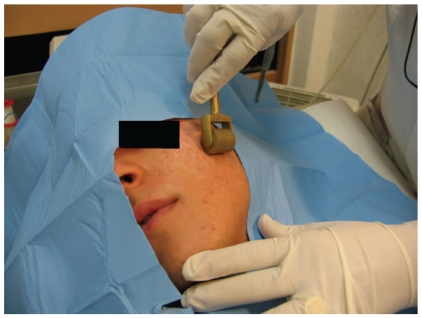
Needling: the procedure.
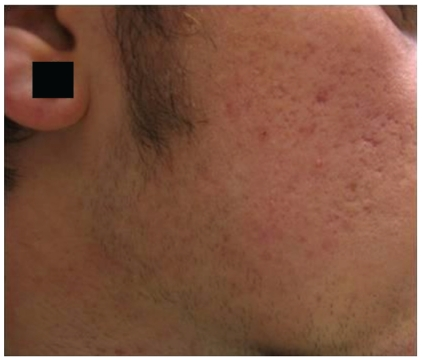
Needling: patient before the treatment.
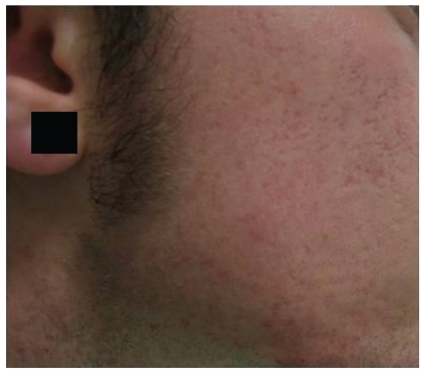
Needling: patient after the treatment.
As regards the treatment of already formed hypertrophic scars, the gel should be applied in small amounts, twice daily for at least 8 weeks to achieve a satisfactory aesthetic result. Whereas for the purposes of prevention, the same dosage is recommended for at least 12–16 weeks; the treatment should be started as soon as possible after the risk of a patient developing hypertrophic acne scars has been identified.
Treatment with silicone gel can be used in patients of any age and women of childbearing age. Moreover, the silicone gel can be used throughout the year, including summer.
Intralesional steroid therapy may be preceded by a light cryotherapy with liquid nitrogen, 10–15 minutes before injection, to improve the dispersion of the drug in scar tissue and minimize the deposition in the subcutaneous and perilesional tissue [98]. The steroid that is currently most frequently used in the treatment of hypertrophic scars and keloids is triamcinolone acetonide (10–40 mg/mL) [99]. The most common adverse reactions are hypopigmentation, skin atrophy, telangiectasia, and infections [100]. As for injuries to the face, the use of intralesional steroids is recommended for the treatment of individual elements which are particularly bulky and refractory to previous less invasive methods.
The low temperatures reached during cryotherapy sessions cause a slowing of blood flow and cause the formation of intraluminal thrombus hesitant to anoxia and tissue necrosis [101]. Age and size of the scar are important factors conditioning the outcome of this technique: younger and smaller scars are most responsive to cryotherapy [102]. Compared with intralesional injections of corticosteroids, cryosurgery is significantly more effective than alternative methods for richly vascularized injuries 12 months younger [103]. During each session of cryotherapy the patient is usually subjected to 2-3 cycles, each lasting less than 25 seconds. Cryotherapy can also be used before each cycle of intralesional injections of steroids to reduce the pain of injection therapy and to facilitate the injection of cortisone, generating a small area of edema at the level of the scar tissue to be treated [98]. Possible adverse reactions are represented by hypo- and hyperpigmentation, skin atrophy, and pain [102]. With regard to localized lesions to the face, the possible outcomes of freezing restrict the use of cryotherapy in these areas, especially in cases where the scars are numerous or for dark phenotypes. Therefore, cryotherapy can be taken into consideration especially for scars located on the trunk or for particularly bulky scars on the face.
On the contrary, the use of pulsed dye laser (PDL) has provided encouraging results in the treatment of hypertrophic/keloidal scars over the past 10 years. Several studies have been conducted to investigate how the PDL works on hypertrophic/keloidal scars. They have revealed that PDL decreases the number and proliferation of fibroblasts and collagen fibers appear looser and less coarse [109]. Moreover, PDL also produces an increase in MMP-I3 (collagenese-3) activity and a decrease in collagen type III deposition [110]. As a consequence, PDL flattens and decreases the volume of hypertrophic scars [111, 112], improves texture [113], and increases elasticity [114], usually after two to three treatments [115]. Additionally, pruritis and pain within the scars are significantly improved [116]. Besides, no recurrence or worsening of PDL-treated scars occurs during the 4-year followup after cessation of treatment [116]. The most common side effect of the PDL is purpura which can last as long as 7–10 days. Blistering can also occur as well as hypo- and hyperpigmentation which is more likely in darker skinned individuals [117]. Therefore, the ideal candidates for PDL are patients with lighter skin types (Fitzpatrick Types I–III) because less melanin is present to compete with hemoglobin laser energy absorption [118, 119].
Your skin is your largest organ. It has three main layers. They are, starting with the outermost, the epidermis, the dermis and the hypodermis. The layers protect your fragile insides from the elements, from UV rays and bacteria, and they also help produce vitamin D thanks to sunlight. Any area with sebaceous glands is prone to acne — especially the face, back and chest.
Acne scars are the result of inflammation of acne blemishes. The acne pore swells and a breakdown occurs in the wall of the pore. Some acne blemishes are small and the scars created are shallow and heal quickly. Sometimes the contents of blemishes spill into the surrounding tissue and cause deeper scars. The skin’s response is to repair the scar by forming new collagen fibers.
Acne scars take on two main forms: either a scar develops when there is a loss of tissue, resulting in an indentation in the surface of the skin; or, a scar develops that is raised on the surface of the skin. This type of acne scar, in fact, is a sign that your skin is doing its job — but, perhaps, too well. Your skin creates collagen (“repair tissue”) to help heal the wound — the acne — but, if it makes too much collagen, raised scars form.
Keep in mind that just because you have acne, that doesn’t mean you’ll get scars. And if you do (one in five people with acne will also have scarring), the good news is that not all acne scars are permanent! Treatments are available. Some treatments nearly remove the scars while others help the skin heal itself with its own collagen.
source:https://my.clevelandclinic.org/heal...-scars#:~:text=How does acne,its own collagen.
2-Scar Types
Scarring can occur as a result of damage to the skin during the healing of active acne. There are two basic types of scar depending on whether there is a net loss or gain of collagen (atrophic and hypertrophic scars). Eighty to ninety percent of people with acne scars have scars associated with a loss of collagen (atrophic scars) compared to a minority who show hypertrophic scars and keloids.
1. Atrophic Scars
Atrophic acne scars are more common than keloids and hypertrophic scars with a ratio 3 : 1. They have been subclassified into ice pick, boxcar, and rolling scars. With atrophic scars, the ice pick type represents 60%–70% of total scars, the boxcar 20%–30%, and rolling scars 15%–25%
Acne scar morphological classification
Acne Scars Subtype | Clinical Features |
|---|---|
Icepick | Icepick scars are narrow (<2 mm), deep, sharply marginated epithelial tracts that extend vertically to the deep dermis or subcutaneous tissue. 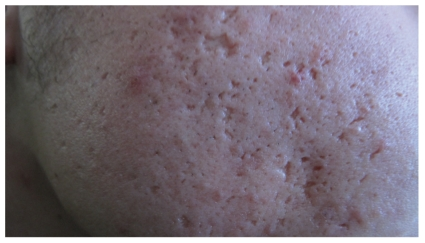
|
| |
Rolling | Rolling scars occur from dermal tethering of otherwise relatively normal-appearing skin and are usually wider than 4 to 5 mm. Abnormal fibrous anchoring of the dermis to the subcutis leads to superficial shadowing and a rolling or undulating appearance to the overlying skin. 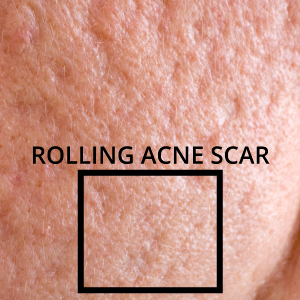
|
| |
Boxcar Shallow <3 mm diameter >3 mm diameter | Boxcar scars are round to oval depressions with sharply demarcated vertical edges, similar to varicella scars. They are clinically wider at the surface than icepick scars and do not taper to a point at the base. 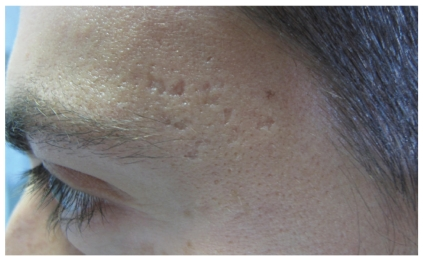
|
| |
Deep <3 mm diameter >3 mm diameter | They may be shallow (0.1–0.5 mm) or deep (≥0.5 mm) and are most often 1.5 to 4.0 mm in diameter. 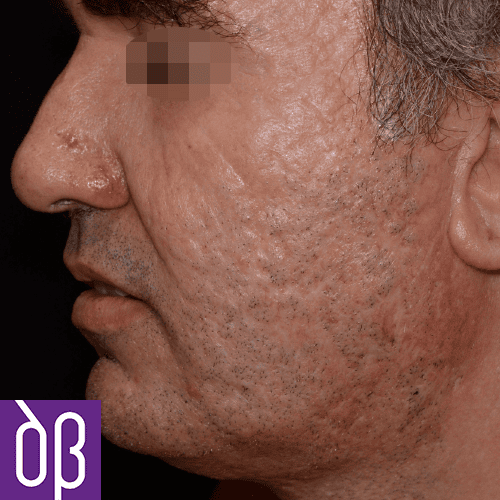
|
2. Hypertrophic and Keloidal Scars
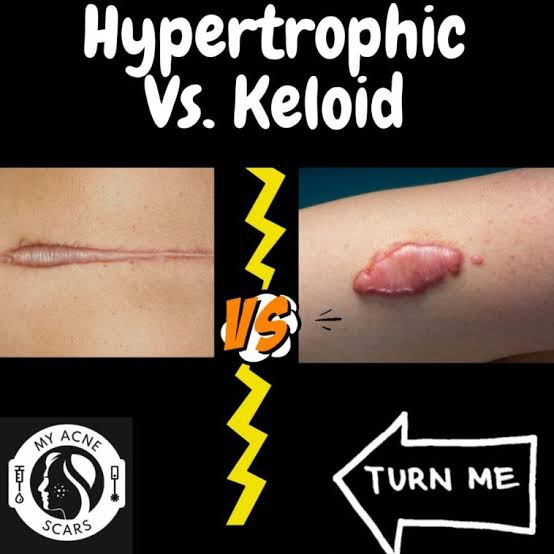
Hypertrophic and keloidal scars are associated with excess collagen deposition and decreased collagenase activity. Hypertrophic scars are typically pink, raised, and firm, with thick hyalinized collagen bundles that remain within the borders of the original site of injury. The histology of hypertrophic scars is similar to that of other dermal scars. In contrast, keloids form as reddish-purple papules and nodules that proliferate beyond the borders of the original wound; histologically, they are characterized by thick bundles of hyalinized acellular collagen arranged in whorls. Hypertrophic and keloidal scars are more common in darker-skinned individuals and occur predominantly on the trunk.
4-Treatment
New acquisitions by the literature have showed that prevention is the main step in avoiding the appearance of post-acne scars. Genetic factors and the capacity to respond to trauma are the main factors influencing scar formation [24]. A number of treatments are available to reduce the appearance of scars. First, it is important to reduce as far as possible the duration and intensity of the inflammation, thus stressing the importance of the acne treatment. The use of topical retinoids is useful in the prevention of acne scars but more than any other measure, the use of silicone gel has a proven efficacy in the prevention of scars, especially for hypertrophic scars and keloids.1. Atrophic Scars
Chemical Peels
By chemical peeling we mean the process of applying chemicals to the skin to destroy the outer damaged layers and accelerate the repair process [25].Chemical peeling is used for the reversal of signs of skin aging and for the treatment of skin lesions as well as scars, particularly acne scars. Dyschromias, wrinkles, and acne scars are the major clinical indications for facial chemical peeling [26, 27].
As regards acne scars, the best results are achieved in macular scars. Icepick and rolling scars cannot disappear completely and need sequential peelings together with homecare treatment with topical retinoids and alpha hydroxy acids [28, 29]. The level of improvement expected is extremely variable in different diseases and patients. For example, ice pick acne scars in a patient with hyperkeratotic skin are only mildly improved even if skin texture is remodeled. On the other hand, a patient with isolated box scars can obtain a significant improvement by application of TCA at 50%–90% on the single scars.
Several hydroxy acids can be used.
(A) Glycolic Acid —
Glycolic acid is an alpha-hydroxy acid, soluble in alcohol, derived from fruit and milk sugars. Glycolic acid acts by thinning the stratum corneum, promoting epidermolysis and dispersing basal layer melanin. It increases dermal hyaluronic acid and collagen gene expression by increasing secretion of IL-6 [30]. The procedure is well tolerated and patient compliance is excellent, but glycolic acid peels are contraindicated in contact dermatitis, pregnancy, and in patients with glycolate hypersensitivity. Side effects, such as temporary hyperpigmentation or irritation, are not very significant [31]. Some studies showed that the level of skin damage with glycolic acid peel increases in a dose- and time-dependent manner. The acid at the higher concentration (70%) created more tissue damage than the acid at the lower concentration (50%) compared to solutions with free acid. An increase in the transmembrane permeability coefficient is observed with a decrease in pH, providing a possible explanation for the effectiveness of glycolic acid in skin treatment [32]. The best results achieved for acne scars regard five sequential sessions of 70% glycolic acid every 2 weeks.
(B) Jessner's Solution —
Formulated by Dr. Max Jessner, this combination of salicylic acid, resorcinol, and lactic acid in 95% ethanol is an excellent superficial peeling agent. Resorcinol is structurally and chemically similar to phenol. It disrupts the weak hydrogen bonds of keratin and enhances-penetration of other agents [33]. Lactic acid is an alpha hydroxy acid which causes corneocyte detachment and subsequent desquamation of the stratum corneum [34]. As with other superficial peeling agents, Jessner's peels are well tolerated. General contraindications include active inflammation, dermatitis or infection of the area to be treated, isotretinoin therapy within 6 months of peeling and delayed or abnormal wound healing. Allergic contact dermatitis and systemic allergic reactions to resorcinol are rare and need to be considered as absolute contraindications [35, 36].
(C) Pyruvic Acid —
Pyruvic acid is an alpha-ketoacid and an effective peeling agent [37]. It presents keratolytic, antimicrobial and sebostatic properties as well as the ability to stimulate new collagen production and the formation of elastic fibers [38]. The use of 40%–70% pyruvic acid has been proposed for the treatment of moderate acne scars [39, 40]. Side effects include desquamation, crusting in areas of thinner skin, intense stinging, and a burning sensation during treatment. Pyruvic acid has stinging and irritating vapors for the upper respiratory mucosa, and it is advisable to ensure adequate ventilation during application.
(D) Salicylic Acid —
Salicylic acid is one of the best peeling agents for the treatment of acne scars [41]. It is a beta hydroxy acid agent which removes intercellular lipids that are covalently linked to the cornified envelope surrounding cornified epithelioid cells. The most efficacious concentration for acne scars is 30% in multiple sessions, 3–5 times, every 3-4 weeks [42–44]. The side effects of salicylic acid peeling are mild and transient. These include erythema and dryness. Persistent postinflammatory hyperpigmentation or scarring are very rare and for this reason it is used to treat dark skin [45]. Rapid breathing, tinnitus, hearing loss, dizziness, abdominal cramps, and central nervous system symptoms characterize salicylism or salicylic acid toxicity. This has been observed with 20% salicylic acid applied to 50% of the body surface [46]. Grimes has peeled more than 1,000 patients with the current 20 and 30% marketed ethanol formulations and has observed no cases of salicylism [47].
(E) Trichloroacetic Acid —
The use of trichloroacetic acid (TCA) as a peeling agent was first described by P.G. Unna, a German dermatologist, in 1882. TCA application to the skin causes protein denaturation, the so-called keratocoagulation, resulting in a readily observed white frost [48]. For the purposes of chemical peeling, it is mixed with 100 mL of distilled water to create the desired concentration. The degree of tissue penetration and injury by a TCA solution is dependent on several factors, including percentage of TCA used, anatomic site, and skin preparation. Selection of appropriate TCA-concentrated solutions is critical when performing a peel. TCA in a percentage of 10%–20% results in a very light superficial peel with no penetration below the stratum granulosum; a concentration of 25%–35% produces a light superficial peel with diffusion encompassing the full thickness of the epidermis; 40%–50% can produce injury to the papillary dermis; and finally, greater than 50% results in injury extending to the reticular dermis. Unfortunately the use of TCA concentrations above 35% TCA can produce unpredictable results such as scarring. Consequently, the medium depth chemical peel should only be obtained with the combination of 35% TCA. The use of TCA in concentrations greater than 35%, should be avoided. It can be preferred in some cases of isolated lesions or for treatment of isolated icepick scars (TCA CROSS) [49]. When performed properly, peeling with TCA can be one of the most satisfying procedures in acne scar treatment but it is not indicated for dark skin because of the high risk of hyperpigmentation [50].
(F) TCA Cross —
In our experience the TCA CROSS technique has shown high efficacy in the case of few isolated scars on healthy skin. CROSS stands for chemical reconstruction of skin scars method and involves local serial application of high concentration TCA to skin scars with wooden applicators sized via a number 10 blade to a dull point to approximate the shape of the scar. No local anesthesia or sedation is needed to perform this technique [51]. Unlike the reports found in the literature, in which 90% TCA is suggested, our experiences have shown that a lower TCA concentration (50%) has similar results and much less adverse reactions [52]. TCA is applied for a few seconds until the scar displays a white frosting. Emollients then needs to be prescribed for the following 7 days and high photoprotection is required. The procedure should be repeated at 4-week intervals, and each patient receives a total of three treatments. Our experiences have shown that, compared with other procedures, this technique can avoid scarring and reduce the risk of hypopigmentation by sparing the adjacent normal skin and adnexal structures [53] (Figures 4 and 5).
TCA Cross: patient before the treatment.
TCA Cross: patient after the treatment.
Dermabrasion/Microdermabrasion
Dermabrasion and microdermabrasion are facial resurfacing techniques that mechanically ablate damaged skin in order to promote reepithelialisation. Although the act of physical abrasion of the skin is common to both procedures, dermabrasion, and microdermabrasion employ different instruments with a different technical execution [54]. Dermabrasion completely removes the epidermis and penetrates to the level of the papillary or reticular dermis, inducing remodeling of the skin's structural proteins. Microdermabrasion, a more superficial variation of dermabrasion, only removes the outer layer of the epidermis, accelerating the natural process of exfoliation [55, 56]. Both techniques are particularly effective in the treatment of scars and produce clinically significant improvements in skin appearance. Dermabrasion is performed under local or general anaesthesia. A motorized hand piece rotates a wire brush or a diamond fraise. Several decades ago, the hand piece was made of aluminum oxide or sodium bicarbonate crystals, whereas now diamond tips have replaced these hand pieces to increase accuracy and decrease irritation. There is often a small pinpoint bleeding of the raw wound that subsides with appropriate wound care. Patients with darker skin may experience permanent skin discoloration or blotchiness. As regards the technique of microdermabrasion, a variety of microdermabraders are available. All microdermabraders include a pump that generates a stream of aluminum oxide or salt crystals with a hand piece and vacuum to remove the crystals and exfoliate the skin [57]. Unlike dermabrasion, microdermabrasion can be repeated at short intervals, is painless, does not require anesthesia and is associated with less severe and rare complications, but it also has a lesser effect and does not treat deep scars [58, 59].It is essential to conduct a thorough investigation of the patient's pharmacological history to ensure that the patient has not taken isotretinoin in the previous 6–12 months. As noted by some studies [60], the use of tretinoin causes delayed reepithelialization and development of hypertrophic scars.
Laser Treatment
All patients with box-car scars (superficial or deep) or rolling scars are candidates for laser treatment. Different types of laser, including the nonablative and ablative lasers are very useful in treating acne scars. Ablative lasers achieve removal of the damaged scar tissue through melting, evaporation, or vaporization. Carbon dioxide laser and Erbium YAG laser are the most commonly used ablative lasers for the treatment of acne scars. These abrade the surface and also help tighten the collagen fibers beneath. Nonablative lasers do not remove the tissue, but stimulate new collagen formation and cause tightening of the skin resulting in the scar being raised to the surface. Among the nonablative lasers the most commonly used are the NdYAG and Diode lasers [61].The ablative lasers are technologies with a high selectivity for water. Therefore, their action takes place mainly on the surface but the depth of action is certainly to be correlated to the intensity of the emitted energy and the diameter of the spot used. Among the ablative lasers, Erbium technologies are so selective for water that their action is almost exclusively ablative. CO2 lasers, which present lower selectivity for water, besides causing ablation are also capable of determining a denaturation in the tissues surrounding the ablation and a thermal stimulus not coagulated for dermal protein. CO2 lasers have a double effect: they promote the wound healing process and arouse an amplified production of myofibroblasts and matrix proteins such as hyaluronic acid [62].
Clinical and histopathologic studies have previously demonstrated the efficacy of CO2 laser resurfacing in the improvement of facial atrophic acne scars, with a 50%–80% improvement typically seen. The differences in results reported with apparently similar laser techniques may be due to variations in the types of scar treated. Candidates must present a skin disease with acne off for at least 1 year; they should have stopped taking oral isotretinoin for at least 1 year; they should not have presented skin infections by herpes virus during the six months prior to treatment; they must not have a history of keloids or hypertrophic scarring. Patients with a high skin type phototype are exposed to a higher risk of hyperpigmentation after treatment than patients with low phototype.
All ablative lasers showed high risk of complications and side effects. Adverse reactions to the first generation of ablative lasers can be classified into short-term (bacterial, herpetic or fungal infections) and long-term (persistent erythema, hyperpigmentation, scarring) [63, 64]. In particular, scarring after CO2 laser therapy may be due to the over treatment of the areas (including excessive energy, density, or both), lack of technical aspects, infection, or idiopathic. It is necessary to take into account these aspects when sensitive areas such as the eyelids, upper neck, and especially the lower neck and chest are treated [65, 66].
Nonablative skin remodeling systems have become increasingly popular for the treatment of facial rhytides and acne scars because they decrease the risk of side effects and the need for postoperative care. Nonablative technology using long-pulse infrared (1.450 nm diode, 1320 and 1064 nm neodymium-doped yttrium aluminum garnet (Nd:YAG), and 1540 nm erbium glass) was developed as a safe alternative to ablative technology for inducing a controlled thermal injury to the dermis, with subsequent neocollagenesis and remodeling of scarred skin [67–72].
Although improvement was noted with these nonablative lasers, the results obtained were not as impressive as the results from those using laser resurfacing [71].
For this reason, a new concept in skin laser therapy, called fractional photothermolysis, has been designed to create microscopic thermal wounds to achieve homogeneous thermal damage at a particular depth within the skin, a method that differs from chemical peeling and laser resurfacing. Prior studies using fractional photothermolysis have demonstrated its effectiveness in the treatment of acne scars [73] with particular attention for dark skin to avoid postinflammatory hyperpigmentation [74].
Newer modalities using the principles of fractional photothermolysis devices (FP) to create patterns of tiny microscopic wounds surrounded by undamaged tissues are new devices that are preferred for these treatments. These devices produce more modest results in many cases than traditional carbon dioxide lasers but have few side effects and short recovery periods [75]. Many fractional lasers are available with different types of source. A great deal of experience with nonablative 1550 nm erbium doped fractional photothermolysis has shown that the system can be widely used for clinical purposes.
An ablative 30 W CO2 laser device uses ablative fractional resurfacing (AFR) and combines CO2 ablation with an FP system. By depositing a pixilated pattern of microscopic ablative wounds surrounded by healthy tissue in a manner similar to that of FP [76], AFR combines the increased efficacy of ablative techniques with the safety and reduced downtime associated with FP.
Topographic analysis performed by some authors has shown that the depth of acneiform scars has quantifiable objective improvement ranging from 43% to 80% with a mean level of 66.8% [77]. The different experiences of numerous authors in this field have shown that, by combining ablative technology with FP, AFR treatments constitute a safe and effective treatment modality for acneiform scarring. Compared to conventional ablative CO2 devices the side effects profile is greatly improved and, as with FP, rapid reepithelization from surrounding undamaged tissue is believed to be responsible for the comparatively rapid recovery and reduced downtime noted with AFR [78–80].
Pigmentation abnormalities following laser treatment is always a concern. Alster and West reported 36% incidence of hyperpigmentation when using conventional CO2 resurfacing compared to a minority of patients treated with AFR treatments, probably linked to shortened period of recovery and posttreatment erythema [81]. The treatment strategy is linked to establishing the optimal energy, the interval between sessions, and a longer follow-up period to optimize treatment parameters.
Punch Techniques
Atrophic scarring is the more common type of scarring encountered after acne. Autologous and nonautologous tissue augmentation, and the use of punch replacement techniques has added more precision and efficacy to the treatment of these scars [82].The laser punch-out method is better than even depth resurfacing for improving deep acne scars and can be combined with the shoulder technique or even depth resurfacing according to the type of acne scar [83].
Laser skin resurfacing with the concurrent use of punch excision improves facial acne scarring [84].
Dermal Grafting
Acne scars may be treated surgically using procedures such as dermabrasion and/or simple scar excision, scar punch elevation, or punch grafting [85].The useful modalities available are dermal punch grafting, excision, and facelifting. The selection of these techniques is dependent on the above classification and the patient's desire for improvement [86].
Split-thickness or full-thickness grafts “take" on a bed of scar tissue or dermis following the removal of the epidermis. The technique is useful in repairing unstable scars from chronic leg ulcers or X-ray scars. It can also camouflage acne scars, extensive nevi pigmentosus, and tattoos [87, 88]. It is prepackaged dermal graft material that is easy to use, safe, and effective [89].
Tissue Augmenting Agents
Fat transplantation. Fat is easily available and it has low incidence of side effects [90]. The technique consists of two phases: procurement of the graft and placement of the graft. The injection phase with small parcels of fat implanted in multiple tunnels allows the fat graft maximal access to its available bloody supply. The fat injected will normalize the contour excepted where residual scar attachments impede this.Other Tissue Augmenting Agents
There are many new and older autologous, nonautologous biologic, and nonbiologic tissue augmentation agents that have been used in the past for atrophic scars, such as autologous collagen, bovine collagen, isolagen, alloderm, hyaluronic acid, fibrel, artecoll, and silicon, but nowadays, because of the high incidence of side effects, the recommended material to use is hyaluronic acid [91].Needling
Skin needling is a recently proposed technique that involves using a sterile roller comprised of a series of fine, sharp needles to puncture the skin. At first, facial skin must be disinfected, then a topical anesthetic is applied, left for 60 minutes. The skin needling procedure is achieved by rolling a performed tool on the cutaneous areas affected by acne scars, backward and forward with some pressure in various directions. The needles penetrate about 1.5 to 2 mm into the dermis. As expected, the skin bleeds for a short time, but that soon stops. The skin develops multiple microbruises in the dermis that initiate the complex cascade of growth factors that finally results in collagen production. Histology shows thickening of skin and a dramatic increase in new collagen and elastin fibers. Results generally start to be seen after about 6 weeks but the full effects can take at least three months to occur and, as the deposition of new collagen takes place slowly, the skin texture will continue to improve over a 12 month period. Clinical results vary between patients, but all patients achieve some improvements. The number of treatments required varies depending on the individual collagen response, on the condition of the tissue and on the desired results. Most patients require around 3 treatments approximately 4 weeks apart. Skin needling can be safely performed on all skin colours and types: there is a lower risk of postinflammatory hyperpigmentation than other procedures, such as dermabrasion, chemical peelings, and laser resurfacing. Skin needling is contraindicated in the presence of anticoagulant therapies, active skin infections, collagen injections, and other injectable fillers in the previous six months, personal or familiar history of hypertrophic and keloidal scars [92, 93].
Needling: the procedure.
Needling: patient before the treatment.
Needling: patient after the treatment.
Combined Therapy
There is a new combination therapy for the treatment of acne scars. The first therapy consists of peeling with trichloroacetic acid, then followed by subcision, the process by which there is separation of the acne scar from the underlying skin and in the end fractional laser irradiation. The efficacy and safety of this method was investigated for the treatment of acne scars. The duration of this therapy is 12 months. Dot peeling and subcision were performed twice 2-3 months apart and fractional laser irradiation was performed every 3-4 weeks. There were no significant complications at the treatment sites. It would appear that triple combination therapy is a safe and very effective combination treatment modality for a variety of atrophic acne scars [94].2. Hypertrophic Scars
Silicone Gel
Silicone-based products represent one of the most common and effective solutions in preventing and also in the treatment of hypertrophic acne scars. The silicone gel was introduced in the treatment of hypertrophic acne scars to overcome the difficulties in the management of silicone sheets. Indeed, the silicone gel has several advantages: it is transparent, quick drying, nonirritating and does not induce skin maceration, it can be used to treat extensive scars and uneven areas of skin. The mechanism of action is not fully understood but several hypotheses [95] have been advanced: (1) the increase in hydration; (2) the increase in temperature; (3) protection of the scar; (4) increased tension of O2; (5) action on the immune system. There is, currently, only one observational open label study, conducted on 57 patients. In this study, the gel was applied on the scars 2 times daily for 8 weeks with an average improvement in the thickness estimated between 40% and 50% compared to baseline.As regards the treatment of already formed hypertrophic scars, the gel should be applied in small amounts, twice daily for at least 8 weeks to achieve a satisfactory aesthetic result. Whereas for the purposes of prevention, the same dosage is recommended for at least 12–16 weeks; the treatment should be started as soon as possible after the risk of a patient developing hypertrophic acne scars has been identified.
Treatment with silicone gel can be used in patients of any age and women of childbearing age. Moreover, the silicone gel can be used throughout the year, including summer.
Intralesional Steroid Therapy
Intralesional injection of steroids is one of the most common treatments for keloids and hypertrophic scars. It can be used alone or as part of multiple therapeutic approaches. Corticosteroids may reduce the volume, thickness, and texture of scars, and they can relieve symptoms such as itching and discomfort [96]. The mechanisms of action have not been completely clarified: in addition to their anti-inflammatory properties, it has been suggested that steroids exert a vasoconstrictor and an antimitotic activity. It is believed that steroids arrest pathological collagen production through two distinct mechanisms: the reduction of oxygen and nutrients to the scar with inhibition of the proliferation of keratinocytes and fibroblasts [96]; the stimulation of digestion of collagen deposition through block of a collagenase-inhibitor, the alpha-2-microglobulin [97]. During the injection the syringe needle should be kept upright [24]. It is always preferable for the injections to be preceded by the application of anesthetic creams or be associated with injections of lidocaine [97].Intralesional steroid therapy may be preceded by a light cryotherapy with liquid nitrogen, 10–15 minutes before injection, to improve the dispersion of the drug in scar tissue and minimize the deposition in the subcutaneous and perilesional tissue [98]. The steroid that is currently most frequently used in the treatment of hypertrophic scars and keloids is triamcinolone acetonide (10–40 mg/mL) [99]. The most common adverse reactions are hypopigmentation, skin atrophy, telangiectasia, and infections [100]. As for injuries to the face, the use of intralesional steroids is recommended for the treatment of individual elements which are particularly bulky and refractory to previous less invasive methods.
Cryotherapy
Cryotherapy with liquid nitrogen can significantly improve the clinical appearance of hypertrophic scars and keloids and also determine their complete regression.The low temperatures reached during cryotherapy sessions cause a slowing of blood flow and cause the formation of intraluminal thrombus hesitant to anoxia and tissue necrosis [101]. Age and size of the scar are important factors conditioning the outcome of this technique: younger and smaller scars are most responsive to cryotherapy [102]. Compared with intralesional injections of corticosteroids, cryosurgery is significantly more effective than alternative methods for richly vascularized injuries 12 months younger [103]. During each session of cryotherapy the patient is usually subjected to 2-3 cycles, each lasting less than 25 seconds. Cryotherapy can also be used before each cycle of intralesional injections of steroids to reduce the pain of injection therapy and to facilitate the injection of cortisone, generating a small area of edema at the level of the scar tissue to be treated [98]. Possible adverse reactions are represented by hypo- and hyperpigmentation, skin atrophy, and pain [102]. With regard to localized lesions to the face, the possible outcomes of freezing restrict the use of cryotherapy in these areas, especially in cases where the scars are numerous or for dark phenotypes. Therefore, cryotherapy can be taken into consideration especially for scars located on the trunk or for particularly bulky scars on the face.
Pulsed Dye Laser
The use of lasers for hypertrophic scars and keloids was first proposed by Apfelberg et al. [104] and Castro et al. [105] in the 1980s, and since then more lasers with various wavelengths have been introduced. Unfortunately, laser therapy for hypertrophic scars has had only variable success in the past due to the minimal improvement in a high percent of patients [106–108].On the contrary, the use of pulsed dye laser (PDL) has provided encouraging results in the treatment of hypertrophic/keloidal scars over the past 10 years. Several studies have been conducted to investigate how the PDL works on hypertrophic/keloidal scars. They have revealed that PDL decreases the number and proliferation of fibroblasts and collagen fibers appear looser and less coarse [109]. Moreover, PDL also produces an increase in MMP-I3 (collagenese-3) activity and a decrease in collagen type III deposition [110]. As a consequence, PDL flattens and decreases the volume of hypertrophic scars [111, 112], improves texture [113], and increases elasticity [114], usually after two to three treatments [115]. Additionally, pruritis and pain within the scars are significantly improved [116]. Besides, no recurrence or worsening of PDL-treated scars occurs during the 4-year followup after cessation of treatment [116]. The most common side effect of the PDL is purpura which can last as long as 7–10 days. Blistering can also occur as well as hypo- and hyperpigmentation which is more likely in darker skinned individuals [117]. Therefore, the ideal candidates for PDL are patients with lighter skin types (Fitzpatrick Types I–III) because less melanin is present to compete with hemoglobin laser energy absorption [118, 119].