joshchua
Iron
- Joined
- Jul 5, 2026
- Posts
- 64
- Reputation
- 32
Hi high effort thread
When shopping for skincare products, go with a reputable brand. If a brand only seems to be found on Amazon or Ebay then I’d avoid it. Example routines are at the end of the document.
So much time and effort on here is focused on the exciting actives and procedures for maintaining collagen, and while that is absolutely important, maintaining skin health should be your first priority. Get a good routine down with cleansing, moisturising and protecting with SPF, then get started on including the actives.
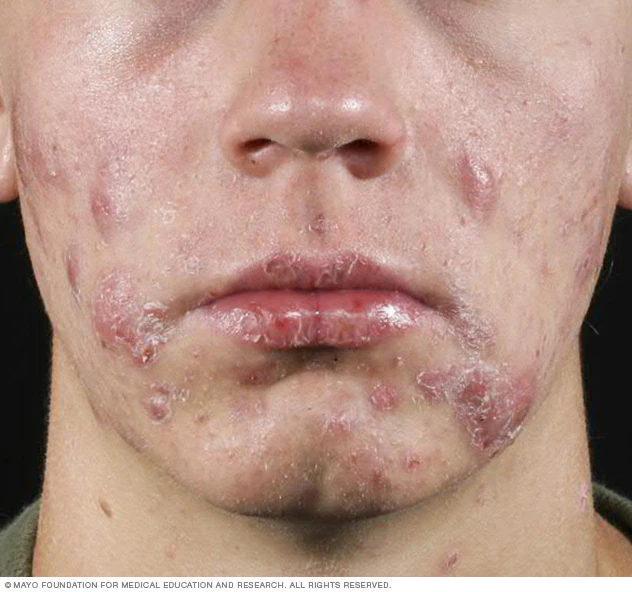
Acne signs vary depending on the severity of your condition:
high effort threadWhen shopping for skincare products, go with a reputable brand. If a brand only seems to be found on Amazon or Ebay then I’d avoid it. Example routines are at the end of the document.
So much time and effort on here is focused on the exciting actives and procedures for maintaining collagen, and while that is absolutely important, maintaining skin health should be your first priority. Get a good routine down with cleansing, moisturising and protecting with SPF, then get started on including the actives.
Acne signs vary depending on the severity of your condition:
- Whiteheads (closed plugged pores)
- Blackheads (open plugged pores)
- Small red, tender bumps (papules)
- Pimples (pustules), which are papules with pus at their tips
- Large, solid, painful lumps under the skin (nodules)
- Painful, pus-filled lumps under the skin (cystic lesions)
FIRST AND FOREMOST WE NEED TO HYDRATE OUR SKIN - So introducing Transepidermal water loss (TEWL) is an objective measurement of skin integrity measured as the amount of water lost across the stratum corneum. TEWL varies greatly across variables such as age and anatomic location, and disruptions in the skin barrier have been linked to inflammatory dermatoses such as psoriasis and atopic dermatitis. Impact of environmental conditions and pollution on TEWL has yet to be determined.
What TEWL actually means (and why it sounds so serious)
Trans epidermal water loss is simple: water leaving your body through your skin. Picture your skin as a brick wall. The bricks are your skin cells, and the mortar holding them together? That's your lipid barrier, made of ceramides, cholesterol, and fatty acids. When that mortar starts to crumble, water escapes through the gaps.
Your body naturally loses water through the skin all day long. It's meant to. The problem starts when you're losing more water than your skin can handle, and suddenly you're dealing with dryness, sensitivity, and skin that feels permanently parched.
The kicker? Most of us are making it worse without realising it.
Why your moisturiser might not be enough
Uncomfortable truth: humans are 60% water. Every cell needs it to function, from temperature regulation to waste removal. When TEWL gets out of control, it's not just your skin that suffers. You're literally dehydrating from the outside in.
Low TEWL equals happy skin. High TEWL equals skin that feels tight, looks dull, shows every fine line, and reacts to everything. If you've ever noticed your skin looking more lined after a long flight or a week of central heating, you've seen TEWL in action.
Methods are below!!
[*]Cleansing:
Be gentle, both in the products you use and in your technique. You’re cleaning your face, not your car engine. This is where you start to try to minimise any TEWL and keep intercellular lipids intact.
- Morning cleansing is optional. Sort of. If you’re using the big guns like tretinoin or other actives on an evening, I wouldn’t recommend skipping this step. If your moisture barrier is fucked and you’re trying to get it back into shape, then skipping this might be okay for you.
- Evening cleansing is not optional. I’m a big fan of the double cleanse method; first cleanse to get the shit from the day off your skin (including SPF which by design is difficult to take off), second cleanse to actually clean your skin. Depending on skin type, first cleanser should be an oil/balm or cream and second cleanser should be a cream or gel.
- Use a non-foaming cleanser for your second cleanse. If you feel like you can’t live without the foam, then choose one without harsh (anionic) surfactants.
- Be aware of the pH of your cleansers (the info should be available on google). Normal skin pH is anywhere from 4.5 to 5.5, a basic pH (ie above pH 7) is not your skin’s friend.
- Use a washcloth (I personally like the cheap ones best, but feel free to use microfibre). This will cleanse more effectively than using your hands alone and will give some regular, gentle physical exfoliation. Use a clean washcloth every day. Don’t wash your face daily with a scrub, nobody needs that much physical exfoliation. I’m also not a fan of cleansing brushes, 99% of people are way too enthusiastic with them and frankly, they’re just unnecessary.
- Cleanse with tepid water. Warm enough to be comfortable but not hot.
- With dry hands and a dry face (very few exceptions), apply the cleanser into your skin. The amount of cleanser you use will vary depending on the product, but somewhere between a blueberry and a small raspberry should suffice.
- Massage the cleanser into the skin- you should be massaging for around 20-30 seconds. Sing Happy Birthday or recite the alphabet a couple of times if it helps.
- Soak your washcloth with fresh running water, wring it out (the cloth shouldn’t be dripping water) and use this to remove the cleanser.
- Now move onto your second cleanse. Go through the same steps as in the first cleanse. Don’t worry about the fact that your face and hands will still be damp.
- Pat your face dry with a (CLEAN!) towel. Don’t rub.
- Emma Hardie Moringa Cleansing Balm (1st or 2nd cleanse; all skin types; if you’re sensitive to essential oils, stay away from this one)
- The Body Shop Camomile Sumptuous Cleansing Butter (1st cleanse only; probably best for normal to dry skin)
- Jordan Samuel The After Show Treatment Cleanser (1st cleanse; all skin types)
- Pixi + Caroline Hirons Double Cleanse (1st and 2nd cleanse; all skin types)
- La Roche Posay Toleriane Dermo Cleanser (1st or 2nd cleanse; all skin types)
- Avene Eau Thermale Cleanance Cleansing Gel (2nd cleanse; best for normal to oily skins)
- Dermalogica Ultracalming Cleanser (2nd cleanse; good for all skin types; contains essential oils)
- CeraVe Hydrating Facial Cleanser (2nd cleanse; good for all skin types)
- Tata Harper Purifying Cleanser (2nd cleanse; best for oily or acneic skin)
-
[*]Actives/Extras:
Retinoids:
Retinoids are a class of compounds which consists of vitamin A (retinol) and its derivatives. Retinoids are great for both acne and anti-ageing and can be found in consumer products, OTC formulations and prescription medications. The mechanism of action for retinoids is complex, but in short, they help to produce collagen, normalise keratinisation and are comedolytic (isotretinoin also reduces sebum production).
Since there are various retinoids, it can be confusing to figure out what you’re actually dealing with when reading a product’s INCI list. The main differences between retinoids is all down to how many conversions they have to go through once in the skin in order to be bioavailable. (I’m not going to mention the less common retinoids like hydroxypinacolone retinoate or ethyl lactyl retinoate here- if you know enough about skincare to know about them, you don’t need me)
- All- trans retinoic acid (or just retinoic acid) is the compound that your body can work with, it’s also known as tretinoin. Originally used to treat acne, the potential as an anti-ageing ingredient was quickly realised and now it is used for both. It is prescription only (UK, US, Australia, NZ and a good chunk of Europe at least), the most common brand is Retin A and is usually found in concentrations of 0.01%, 0.025%, 0.05% and 0.1%. It has a high potential for irritation but also provides the fastest effects of any topical retinoid (since there’s no conversions going on before it can get to work).
- Retinaldehyde. 1 conversion to get to retinoic acid. Less irritating, still works quickly, just not as quickly as retinoic acid.
- Retinol. 2 conversions. Even less irritating and works less quickly still. Compared to the others, it has the most evidence to support its anti-ageing ability since it’s been used the longest. Often found in concentrations of 0.3%, 0.5% and 1%, anything more claimed is almost certainly bollocks. Be aware that strong retinol formulas might be just as, if not more irritating than low concentration retinoic acid and it won’t get you to where you want to be as fast.
- Retinol esters (retinyl palmitate, retinyl propionate, etc). 3 conversions minimum. Least irritating and will take the longest to work. If you’re super super sensitive and really want to get into the retinoid game, start here. Otherwise, I’d say to start with at least a lower concentration retinol.
- There’s also adapalene (brand name Differin) which is available OTC in the US, if you’re scared of the other retinoids I’ve mentioned for anti-ageing or have acne, this could be a good option for you.
If you want to use retinoids, use them at night onto clean skin, start slowly (once a week) and gradually build up to using it each night. If you need to buffer it at first (ie, mix it with moisturiser or put moisturiser on top straight away), then do so. Please use SPF when you’re using retinoids (although you should be anyway).
Product recommendations: (I’m only going to be talking about consumer products here. You want prescription strength? Talk to a dermatologist; I’m also going to try to order these from most gentle to strongest- it won’t be exact, but you’ll get a rough idea)
- Alpha H Vitamin A 0.5% (retinol and retinyl propionate)
- Indeed Labs Retinol Reface (hydroxypinacolone retinoate and retinol)
- Skinceuticals Retinol 0.3 (retinol)
- The Ordinary Retinol 0.5% in Squalane (retinol)
- Zelens Power A Treatment Drops (hydroxypinacolone retinoate, retinol and retinyl palmitate)
- Kate Somerville +Retinol Vita C Power Serum (retinol)
- The Ordinary Retinol 1% in Squalane (retinol)
- SkinCeuticals Retinol 1.0 Maximum Strength Refining Night Cream (retinol)
- Paula’s Choice 1% Retinol Treatment (retinol; if you’ve never used a retinoid before and you start here, you’re going to fucking know about it. Just because it’s not prescription, doesn’t mean that it’s useless)
Vitamin C:
I don’t know what the obsession with making your own vitamin C serum at home is on these sites, but I would advise against it for one very simple reason: Vitamin C is a pain in the nuts to get into a formula and have it remain useable. It’s notoriously unstable and begins to degrade on contact with water, oxygen and UV light. Unless you’re making a new batch for each use, don’t bother, just buy one. (All of this advice is assuming that you actually want your serum to work effectively- if oxidised vitamin C that does jack shit is what you’re going for, then go right ahead and don’t change a thing.)
Now we’ve got that out of the way,
- Vitamin C is great for a number of reasons, it: reduces hyperpigmentation, boosts the efficacy of SPF products, stimulates collagen production and protects against environmental damage. I’d recommend using a product that contains a combination of vitamin C, vitamin E and ferulic acid to get the best results.
- I’d recommend using vitamin C products on a morning directly onto cleansed skin due to it’s photoprotective properties and to best help with any hyperpigmentation..
- You’ll likely find vitamin C in a lot of skincare products that don’t advertise the inclusion of vitamin C way down the INCI list, in these cases it’s usually just in there as an antioxidant to help keep the formula stable rather than to do anything for your skin.
- The Ordinary Vitamin C Suspension 23% + HA Spheres 2% (this does feel slightly gritty initially but it rubs in easily)
- Drunk Elephant C-Firma Day Serum (nicer experience than the product from The Ordinary, but its about 12 times the price)
- Clinique Fresh Pressed Daily Booster with Pure Vitamin C 10% (this is more of a system than a standalone product but it’s great nonetheless)
Hyaluronic Acid:
A humectant which makes up a small portion of NMF but can be used to help supplement lost NMF or even just to help hydrate.
- If your skin is particularly sensitised due to going hard with the retinoids or peels, you might not be able to use certain formulas due to their pH.
- Since hyaluronic acid is such a powerful humectant, it is possible that in low humidity conditions, instead of drawing additional moisture from the air into the skin, it may draw the moisture from the lower levels of the skin (especially in products with only one molecular weight of hyaluronic acid), so I’d recommend putting some sort of occlusive or moisturiser on top to prevent this.
- Hyaluronic acid goes after your actives, and before moisturiser.
- The Ordinary Hyaluronic Acid 2% + B5 (great, cheap and basic hyaluronic; if you’re on a budget, this is where you want to be)
- Niod Multi Molecular Hyaluronic Complex (more expensive than the option from The Ordinary, slightly nicer texture and definitely more effective though)
- Indeed Labs Hydraluron Moisture Serum (they also have a jelly formula which I’ve not tried but I’ve heard good things about)
- Jordan Samuel Hydrate Facial Serum
- Hada Labo. All of their hyaluronic acids that I’ve tried have been great. Cheap too.
- Drunk Elephant B-Hydra Intensive Hydration Serum
Niacinamide (also known as nicotinamide, although this term is used more in pharmaceuticals):
- Really great anti-inflammatory properties so it can be very helpful for acne or mild to moderate rosacea. There’s also some evidence that niacinamide can help increase ceramide and fatty acid levels in the stratum corneum, thereby reducing TEWL and improving the skin’s barrier function. Additionally there is some limited evidence that niacinamide can help with hyperpigmentation, although there are other ingredients that are better and have much more literature backing up their use in this area.
- The traditional idea has been that vitamin C and niacinamide shouldn’t be used at the same time since they each neutralise the effects of the other and may actually be counterproductive. However this idea was based on old studies which don’t realistically reflect skin care products and usage today.
- To use niacinamide, use morning and/or evening (as directed), following the general rule of application of actives of thinnest formula to thickest.
- The Ordinary Niacinamide 10% + Zinc 1%
- Alpha-H Vitamin B
- Paula’s Choice 10% Niacinamide Booster
Alpha Hydroxy Acids (AHAs):
- The most commonly used AHAs are: glycolic acid, lactic acid, mandelic acid, malic acid, tartaric acid and citric acid (roughly in that order).
- Used for: exfoliation, glycosaminoglycan formation (hyaluronic acid is a glycosaminoglycan) and collagen stimulation.
- They exfoliate by interfering with the bonds between the cells of the stratum corneum, thereby reducing the amount that the corneocytes “stick together” and causing exfoliation.
- Really great for signs of ageing or just generally dull skin.
- Ultimately, any AHA will work on any skin (yes, Fitzpatrick V and VI can use glycolic too!), but if you really want to get into it, some may be a better choice than others.
- Glycolic acid- the “strongest” as it has the smallest molecular size and can penetrate the skin most deeply.
- Lactic- good for sensitive skins and maintaining hydration.
- Mandelic- really great on particularly oily skin.
- Use immediately after cleansing either morning or evening (I personally always go with evening) and before any other “actives” (including vitamin C, if using). If you can, use an AHA daily, unless you’re particularly sensitive (either by nature or due to using other products). If you’re going hard on the retinoids, I’d lay off the AHAs for a while.
- If you shave your face, pay attention to your skin when using AHAs. If you can only use them on days you don’t shave or only once a week on the shaved areas, that’s okay.
- You should be using SPF anyway, but especially if you’re using glycolic since it causes photosensitivity.
- First Aid Beauty Facial Radiance Pads (glycolic and lactic)
- The Ordinary Glycolic Acid 7% Toning Solution (glycolic)
- The Ordinary Mandelic Acid 10% + HA (mandelic)
- Biologique Recherche Lotion P50 (lactic, citric, malic and salicylic; this does not smell great, and can be a pain in the nuts to get but to me, it’s worth it)
- Pixi Glow Tonic (glycolic)
- The Ordinary AHA 30% + BHA 2% Peeling Solution (glycolic, lactic, tartaric, citric and salicylic; this is the big guns in terms of at home chemical exfoliation products- think of it like a mask; for the love of all things holy and unholy, don’t use this daily.)
- The Inkey List PHA Toner (okay, this is PHAs instead of AHAs, but I figured that this was the best place to put it; if you have dry or very dry and sensitive skin, this could be a great option)
There’s just one BHA, salicylic acid.
- Unlike AHAs which can only exfoliate the surface of the skin, salicylic acid can also penetrate pores and exfoliate inside them. This means that it’s particularly helpful in fighting against blackheads and whiteheads.
- If you’ve got severe cystic acne, salicylic isn’t likely to do a whole lot. However, if you just get the odd breakout and want to minimise that, salicylic could be a good option.
- Paula’s Choice Skin Perfecting 2% BHA Liquid Exfoliant
- Paula’s Choice Skin Perfecting 2% BHA Lotion Exfoliant (more moisturising formula than the liquid and feels “less harsh”; this is my personal go to if I feel like a breakout is going to pop up)
- The Ordinary Salicylic Acid 2% Solution (much cheaper than the Paula’s choice, often out of stock though)
- The Ordinary Salicylic Acid 2% Masque (this can be quite drying due to the high kaolin content even with the glycerin and squalane, if you have oily skin though it might be worth trying)
I’m very much of the opinion that almost everyone can use some form of oil and it’s not something to be afraid of if you have oily skin. Oils are great to use as they prevent TEWL and can act as occlusives.
- Finding the texture and formulation that you like best can be a case of trial and error, and that’s okay.
- Good starter oils include squalane, rosehip, marula and argan oils. Squalane is particularly good if your skin is sensitised due to retinoid or other over enthusiastic active use.
- If possible, get cold pressed oils as heat degrades antioxidants (which most of these oils are full of).
- Due to their very nature, the best time to use an oil is often in the evening (unless you have incredibly dry skin and your skin can take an oil during the day, in which case, go right ahead) and it would be the final step of your routine on top of moisturiser.
- Indeed Labs Squalane Facial Oil
- The Ordinary 100% Plant-Derived Squalane (they also have a Hemi-Squalane too, which in theory should be a lighter texture but I’ve never tried it so can’t confirm)
- The Inkey List Squalane
- The Ordinary 100% Organic Cold-Pressed Rose Hip Seed Oil
- The Inkey List Rosehip Oil
- The Ordinary 100% Organic Cold-Pressed Virgin Marula Oil
- Drunk Elephant Virgin Marula Luxury Facial Oil (the price is extortionate, but it does have a great texture)
- Vintner’s Daughter Active Botanical Serum (this price is even more ridiculous, and if you can’t use essential oils then this isn’t for you)
- Clarins Blue Orchid Treatment Oil (dry or very dehydrated skin; again, contains essential oils)
-
[*]Collagen
Topical collagen isn’t going to do a hell of a lot for your skin other than act as a good humectant. It’s not going to get into your skin- sorry.
Co Q10
A good option for an antioxidant, it doesn’t have the best bioavailability (when applied topically) so it’s not my personal favourite, but I certainly wouldn’t begrudge having it in a product. Make sure you use any antioxidant products before the free radicals form (ie, before you go out in the sun).
Peptides
This is an incredibly complex subject area and the data we have on the efficacy varies from peptide to peptide. In general, I’d say they’re a really great ingredient- feel free to ask about any specifics if you have any questions.
Sebaceous filaments
Firstly, I want to clarify that sebaceous filaments are completely normal and getting rid of them through improper extraction (including pore strips) can cause damage to the skin. That being said, if you’re really bothered by them, a good cleansing routine and application of a BHA product will likely help out a lot.
Acne scarring
The type of scar you’re dealing with will dictate how you try to fix it. Hyperpigmentation is going to be easier to fix than atrophic scars. For hyperpigmentation, ingredients to look out for include: niacinamide, azelaic acid, vitamin C, glycolic acid and if you want to go down the prescription route, hydroquinone and tretinoin. For atrophic scars, your best bet is going to be in clinic treatments- microneedling, various laser options, etc.
Skin lightening
I’m not going to talk about skin lightening. Dealing with hyperpigmentation is one thing, changing the skin tone as a whole is a whole ‘nother (often dangerous) ball game.
Pores
Pores don’t open and close, they’re not doors. The same goes for “shrinking” pores. Things that claim to close pores are in reality doing fuck all to the pore itself, but are tightening the skin surrounding the pore, thereby making the pore appear smaller. The fastest way to (temporarily) make it look like you don’t have large pores is to use a silicone based foundation primer.
Microneedling
This isn’t my area of expertise so I’m very hesitant to write too much about it. In short, if you’re doing it at home: don’t use shitty equipment, keep things hygienic and don’t use really long needles.
[*]
-
[*]Example Routines:
Basic Routine:
Morning
- Cleanse
- Moisturise
- SPF
- 1st Cleanse
- 2nd Cleanse
- Moisturise
Routine with extras, without retinoids (you absolutely don’t have to use all of these extras, this is just the order that it would be if you did):
Morning
- Cleanse
- Vitamin C
- Hyaluronic Acid
- Moisturiser
- SPF
- 1st Cleanse
- 2nd Cleanse
- AHA or BHA
- Niacinamide
- Moisturiser
- Oil
Retinoid (including tretinoin) starter routine:
Morning
- Cleanse
- Moisturise
- SPF
- 1st Cleanse
- 2nd Cleanse
- Retinoid
- Wait 20-30 minutes *
- Moisturiser
After a while, you can start to slowly add in other actives one by one. You would combine the “retinoid starter routine” with the “routine with extras”. Slot the retinoid in after your second cleanse on an evening, wait 20-30 minutes and then continue with the “extras” routine. NB: If you’re using a retinoid, use the AHA or BHA on a morning (or just don’t use it at all).
PS: - Short chain paraben esters are some of the best and most thoroughly tested preservatives we have, don’t let pseudoscience scare you away from them.
Its over? i didnt hear no bell.... - Me
[*]
- @GymAesthetics @non-chalant dnr tags
Last edited: